Bipolar 2 From Inside and Out

Posts tagged ‘mental illness’

Helping Someone Else

My husband used to work in a community correctional facilityessentially a jail. The residents were considered nonviolent offenders technically on parole for mostly drug crimes, but things could still get interesting. Mostly he didn’t talk about his work because he would try to dismiss it from his mind every day as he went by a certain overpass on his way home from work.

One day, though, I was bitching in disbelief about something that had happened at my work – another editor had put his table of contents in random order instead of numerical. I was appalled by the stupidity of that.

There I was ranting about it. Then my husband said, “Boy, that’s tough. All I did today was break up a fight and spot a guy who might have a septic wound. But you – the table of contents out of numerical order? Wow!” That put me in my place.

My husband was someone who helped other people. For years after he left the job, people would come up to him when he was out and about, and reminisce with him. They’d tell him about how well they were doing, how they were clean and sober, how they had jobs, how they had improved their lives. They always said thank you to my husband.

This morning when I woke up and checked my email, I found something I wasn’t expecting. There, nestled in amongst the spam, was a response to a post that I wrote back in January, about passive suicidal ideation (https://wp.me/p4e9Hv-Me).

In the reply, the person told of having thought about suicide but not acting on it. The response ended, “I’ll follow your advice and seek professional help.”

It’s difficult to describe what I felt then. Mostly, it was gratitude that my writing had helped someone, combined with not a little surprise at receiving a response at all. Sometimes writing is like shouting down a well. You never really know if anyone even hears you or if you’ve made a difference. Most of the time when I write this blog, I have no idea how the posts will affect my readers, if at all. But this time I knew – at least if the person followed through – that I had actually helped someone.

When I started Bipolar Me, it was to share my experiences with bipolar disorder and my thoughts on mental illness and mental health. If my writing resonated with someone, good. But I wasn’t writing with the intention of being inspiring, or helping people solve problems, or being a “good example.” I’m not a professional and the kind of advice I give (when I do) is largely commonsense – don’t stop taking your meds, seek professional help, thank your caregivers, and so on.

I’m not going to break my arm patting myself on the back here. There are lots of people who do the work of caring for the desperate and hurting every day. I am privileged to know some of them and to have even been helped by some. There are people like Sarah Fader and Gabe Howard who are advocates and activists for the mentally ill, who go out on a limb to do something to help the whole mental health community.

But today, for just a moment, I felt that I had really touched someone, really helped. It was a good feeling.

So there it is. I started this blog for self-centered reasons, to chronicle my own struggles and occasional victories. If it helped anyone, fine. If not, I still had stories to share. But now I find that having helped someone else has made a difference – in the other person, in me, in the world. Now I believe that my blog and my book could do more of that.

Bipolar Moonshine

Honestly, the things they ask on Quora these days! Quora, for those of you not familiar with it, is a website that allows people to ask questions for “experts” to answer. Somehow, I have become one of the people that others come to with questions about bipolar disorder. (Also the Ivy League, but that’s another story.)

Some of the questions are serious, but others are less so. “If you could stay hypomanic all the time, why wouldn’t you?” “How can I get my bipolar dad to stay on his diabetes meds?” I actually had an answer for that: You can’t. And bipolar has nothing to do with it. 

I’ve answered a few of the questions if I had the time or if a good answer hadn’t already been given. Many of the answers are written by doctors, who can do a much better job than I.

Recently, however, I saw a question that I thought it wouldn’t take a medical degree to answer:

“Is bipolar disorder causally linked to lunar cycles?”

The argument was based on several points.

  • Sexual reproduction is always in response to lunar cycles.
  • This is based on gravity, illumination, and diurnal and lunar cycles/high tides.
  • Bipolar disorder is a disruption of sleep.
  • It first manifests at or near puberty, with the onset of hormonal cycles.
  • Something about teenagers having a different sleep cycle than adults, staying up later to reproduce while the parents sleep. (I can’t say I understood this part.)
  • During the full moon, hospitals and police report increases in both people out late at night and odd behaviors and emergencies.
  • Anecdotally, the writer noticed “elevated and depressed moods not necessarily linked to lunar cycles, but not necessarily independent of them either,” noting that “periods of mania occur during full and nearly full/new moon.”

The writer’s hypothesis, if I follow it correctly, is that bipolar disorder involves sleep-hormonal cycles related to the full moon, which evolved in the days before artificial lighting. This apparently gave a reproductive advantage of being awake at night because bipolar disrupts the sleep cycle. This is noted to be “an obvious evolutionary reproductive strategy.” There was more, but that was enough for me. (The writer admitted that statistics to prove any of this did not exist or had to be derived from “Bayesian statistical methods,” which one source I looked at called “a measure of the strength of your belief regarding the true situation.”)

So, where to start? First, if the writer thought he or she already knew the answer, why write in with the question? Obviously, to seek validation or to promote a theory (or to make me look like a fool).

I could answer each point individually. (I’m not a neurophysiologist either, but I do have some experience with rhetoric and logic. And bipolar.) But let’s just take a few.

Not all animals’ reproductive cycles are based on the moon, and neither are humans’. Women have menstrual cycles at all times of the month, and men don’t. (And what about bipolar men?)

Bipolar disorder can certainly cause a disruption of sleep, but is not caused by it. That is too simple an explanation for a complex disorder.

We’ll just skip that one about teenagers reproducing while parents sleep. Its connection with bipolar disorder is slim at best.

That one about the full moon is most likely anecdotal, as reported by police and emergency room workers, but no statistics (other than perhaps Bayesian ones) seem to bear this out. And the moon is full, nearly full, or new for more than half the month. Let’s also disregard the fact that bipolar cycles are seldom exactly a month in length. I had a depressive crisis that lasted several years.

Many causes have been theorized for bipolar disorder, from gut bacteria to early trauma to brain wiring. At the moment, as far as I know, the jury is still debating. Perhaps all of these are components of the cause, though I favor brain wiring as the principal cause. But given the actual science, I’m betting that the moon isn’t the answer.

Stone Cold Depression

I saw an ad online recently for a crystal antidepressant necklace. It was basically a crystal point hung from a chain.  The crystal was pink in color, which meant it was either rose quartz or pretending to be.

When I looked at the website, there were other colors available, such as clear (quartz), turquoise (turquoise), purple (amethyst), and black (maybe onyx?). Of course, there was always the possibility that these were not naturally occurring colors and that every crystal was plain quartz died some other hue. The turquoise certainly looked dyed to enhance its turquoise-ness, and isn’t a crystal anyway. I also had my doubts about the black one.

In point of fact, I had my doubts about all of them. Not that they weren’t authentic crystals, but that they would work. I’ll be honest here. I don’t believe in crystals as channels of psychic power or healing or whatever. I think they’re beautiful and make great jewelry, though. I have quite a collection of necklaces and earrings made from semi-precious stones, some of which are crystals. I feel better when I wear them, but that’s because I actually have taken the time to accessorize before I go out.

I think that, if crystals have any effect at all, it is the placebo effect, which I’m not discounting. That at least is a real thing. But the ad for the depression crystals got me thinking. If the 12 or so widely varied stones that were featured in the ad are all good for depression, what’s the point? I thought at least specific crystals were supposed to be good for different things.

So I researched some of the advertised crystals to see what effects they were supposed to have and how they might relate to mental health. Here are some of the associations I found:

rose quartz – emotional healing, releasing toxic emotions

turquoise – spiritual expansion, a path to your vibrationally highest self

onyx – inner strength, balance, confidence, protection

amethyst – release of addiction, relaxing energy, sound sleep

I’ll admit right off that I don’t know what “a path to your vibrationally highest self” means, but then again, turquoise is not one of my favorite stones. I have worn rose quartz, amethyst, and occasionally onyx, but felt nothing in particular regarding my emotions, confidence, or sleep (though, to be fair, I never have worn amethysts to bed). Amethysts for relief of addictions most likely goes back to medieval days, when they were thought to counteract poisons.

Then I checked another site, which connected assorted crystals and stones specifically with mental health issues. Here the results were more specific and more focused. Rose quartz was again associated with emotional turmoil, which is pretty close to releasing toxic emotions. Blue lace agate, a very pretty stone, was associated with journaling, which was both different and interesting.

Even more interesting to me were the purported beneficial effects of amber, unakite, tiger’s eye, and smoky quartz. According to this website, amber, perhaps my favorite semiprecious gem (though not technically a crystal), is particularly effective for seasonal affective disorder (SAD). Unakite, a little-known stone that mixes gray-green and dusky pink colors, is said to be beneficial for anxiety and negative thoughts, both of which I, of course, have in abundance.

Smoky quartz appears to be the recommended crystal for depression and tiger eye for mood swings. Both should therefore help with my bipolar disorder. (I don’t remember whether smoky quartz was among the crystals and stones offered in the antidepression crystal ad, but according to this website, it should have been.) I used to wear a ring of tiger’s eye, but it did nothing to ward off bipolar.

I can’t see any scientific basis for crystals having any sort of effect on a person’s emotional states. But I suppose that if these stones bring you some solace or seem to encourage your healing, I shouldn’t put them (or you) down. I don’t happen to believe in their alleged powers myself, but I also know that affirmations, CBT, and positive thinking don’t work for me, as far as my mental health goes, while they do work for other people.

But I do think it is disingenuous at best and fraudulent at worst for that particular website to advertise that these varied stones and crystals all have antidepressant effects. Even those who believe in the power of crystals believe that different ones have different effects.

Personally, I think that a black crystal would do more to reinforce depression than to ward it off. I know someone will tell me if they think I’m wrong.


When You Don’t Want to Live, but You Don’t Want to Die

“I hope I don’t wake up tomorrow morning.”

That is the classic thought of someone suffering from passive suicidal ideation. It’s not really a desire to die by suicide. It’s just a way of expressing how much it hurts to be you.

It’s not active suicidal ideation, the kind where you make an actual plan to kill yourself, even if you never put it into practice. It’s passive, meaning that you’d like to be dead but don’t intend on doing anything about it. It’s like asking the universe to take over and do it for you.

I’ve certainly had passive suicidal thoughts. Once I was very stressed and depressed while coming home from a business conference. I clearly remember thinking, “Maybe the plane will go down and keep me from having to deal with all this.” I certainly had no plan to rush the cockpit with a box cutter or anything like that. I just wanted my pain to be over. I wanted the choice taken out of my hands.

Another time I was at a business meeting in a swanky hotel that had rooms surrounding the lobby on numerous floors. I remember being on the 16th floor, looking down at the atrium beneath with what felt like idle curiosity. Would it annoy the hotel more, I wondered, if I landed on the carpeted area, necessitating a thorough cleaning or total replacement? Or would they be more upset if I landed on the marble floor portion of the lobby, making a bigger mess and potentially chipping the surface? (And was it just a coincidence that business meetings made me contemplate my mortality or did they just come packed with a lot of stressful triggers?)

At neither time was I actively suicidal. I’ve been there once too, and this was completely different. When I was suicidal, I had actual plans and plenty of means to carry out any one of them. I’m not going to discuss what those plans were. (The difficulty of choosing among them may have been what kept me from actually doing it. By then my depression had lifted just enough for me to get help.)

It was easy enough later to make jokes about the passively suicidal occasions and most people took them as exactly that – jokes. It was even plausible that they were jokes. I used to talk about jumping out a window, adding that it wouldn’t work because I lived in a basement. It was only much later that I thought about it and realized that I needed help even on those occasions. After all, isn’t pain the source of much humor and the downfall of many comedians?

Passive suicidal ideation is asking yourself “what if?” What if my troubles were over? What if my pain was gone? What if all I had to do to accomplish this was to let that bus hit me instead of stepping out of the way?

The important thing to remember is that someone passively suicidal is in great psychological pain and wants not to feel that way anymore. In that respect, it’s similar to cutting or other self-harm. And like those acts, it doesn’t end the pain at all. It may be a temporary escape valve, but it’s not a solution.

Passive suicidal ideation is certainly a bad thing and an excellent reason to see your psychiatrist or therapist as soon as possible. If you hear a friend or loved one talking this way, encourage them as strongly as possible to seek help. Let a professional decide if the person has passive suicidal ideation or active suicidal ideation. It is entirely possible that passive suicidal ideation will lead to the more active kind and even to death if it is not dealt with.

No Resolutions – Just Memories and Hopes

I don’t make New Year’s resolutions. But since January is named after Janus, the two-faced god that can look both ways, I do look to the past and the future just to see what I can see.

Last year was a very mixed bag. It brought the heights of joy and the depths of depression, along with a little hypomania and dysthymia thrown in just because my brain does that.

The big negative this year was my husband’s heart attack in August and all the medical and financial repercussions that entailed. He’s back at work now, though he’s having difficulty managing the mental and physical stresses of it, so much so that he hasn’t made it to cardiac rehab in over a week. Rehab is not just a good thing physically; Dan said it made him feel energized, productive, and cheerful. I know, I know, exercise could do the same for me.

Still, there have been good things. My book, named after this blog, has now been published. This is a huge event in my life that lifted me temporarily out of depression and into (possibly) hypomania. And I have retired, meaning only that I will start collecting Social Security next year. It will not alter my blogging, writing, or other pursuits, since what I make from them won’t be over the “allowed-to-make-in-addition” line.

As for next year, I expect to see more of the same (minus, I hope, the heart attack). There will still be problems paying the bills, including the massive hospital one, but at least I will have a steady, fixed income. It will help me with my anxiety over potential financial collapse and my unreasonable fear of losing the house.

I’m also planning to get away for another long weekend at a bed-and-breakfast on a working farm. The last time we did it, it proved enormously soothing and relaxing. Another such mini-vacation would be ideal. We certainly won’t be able to take a full vacation, so I won’t even hope for that.

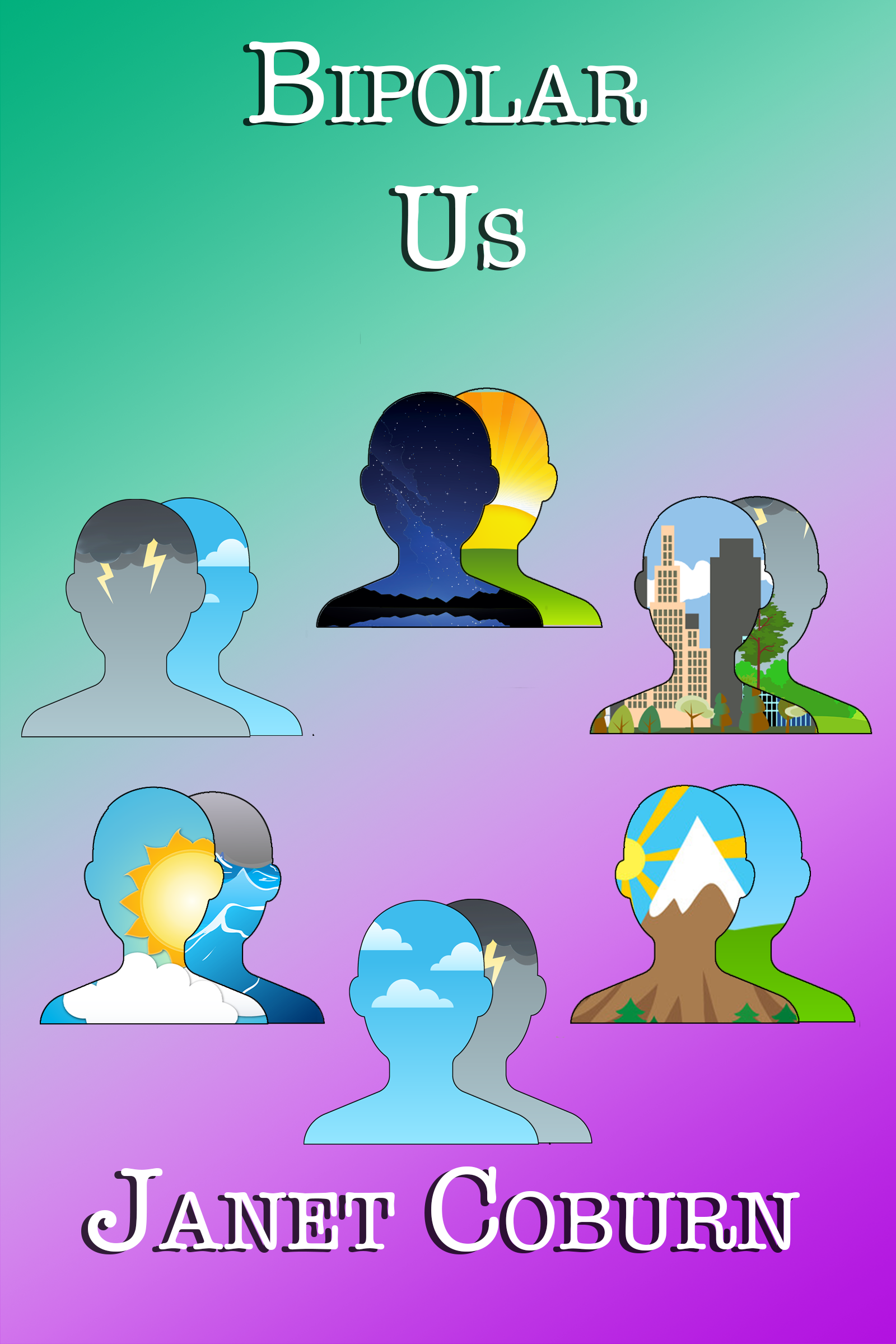
The other good news is that my second book, Bipolar Us, will be published. It may not be attended with the same level of hypomania that the first one was, but at the very least there will be real joy. Also in the coming year, I plan to finish my mystery novel and place it with an agent.

As far as my bipolar disorder, in the coming year, I will still have it. I expect that my meds will change not at all, or minimally since I’ve been relatively stable for so long. But I know it won’t go away just because I’ve crossed “publishing a book” off my bucket list. That’s not the way it works.

If this sounds like my 2019 will be more of the same, well, that’s because that is truly what I expect. Of course, my expectations will have no influence on the outcome. The year will be what it will be, as rife with unexpected events as this one was. My main hopes are that my husband’s health and my writing both improve.

I’ll try to remember the lessons learned from this year – that we are both strong and good things can happen to us. And I’ll try to plan for some positive accomplishments in 2019 and hope they’re within our reach. I won’t call them resolutions, though. Resolutions are so easily broken and I don’t like to think that my plans and hopes are.

Men, Women, and Mental Health

My husband is no stranger to situational depression. He experienced it when his father died, when a beloved pet passed unexpectedly, and when his job turned suddenly more stressful and meaningless.

But he didn’t understand clinical, chronic depression. “What would it be like if those feelings lasted for months at a time, or even years?” I asked. He said he couldn’t even picture it. “That’s the way my life is,” I explained. Then he lost his job, and after a brief period of relief from the stress, he finally experienced depression that lasted more than two weeks – two years, in fact, during which he was unable to work.

He did not seek help for it until his best friend and I both proactively encouraged (i.e., nagged) him to do something about it. He’s been on an SSRI ever since and has occasionally seen a psychologist.

Lately, there has been a movement to educate men about mental illness and mental health. Primary among its goals is to help men understand that mental illness is a thing that can affect them and that there is no shame in asking for help.

Certainly, the statistics bear out that the majority of mental health consumers are women. Psychology Today reports: “Research suggests that women are about 40% more likely than men to develop depression. They’re twice as likely to develop PTSD, with about 10% of women developing the condition after a traumatic event, compared to just 4% of men. It’s easy to write off this epidemic of mental illness among women as the result of hormonal issues and genetic gender differences, or even to argue that women are simply more ’emotional’ than men. The truth, though, is that psychiatrists aren’t really sure why mental illness is more common among women.” Perhaps the answer is that seeking treatment for mental illness is more common in women.

Prevention magazine says that there are four mental health conditions that affect women more than men: depression, anxiety, PTSD, and eating disorders. That PTSD is twice as common in women may surprise you, though the stats about eating disorders are not likely to. The fact is that, although few women experience the traumas that soldiers do, they are much more likely to experience other sorts of trauma, such as rape, which can also lead to PTSD.

But men experience societal and psychological barriers to getting help when they need it. Among the excuses you hear are these:

  • I don’t really need help.
  • I can handle this myself.
  • I don’t want to appear weak.
  • I might lose my job if anyone finds out.

In other words, a lot of bullshit that boils down to “I’m a man and mental illness is not manly. Asking for help is not manly. Talking about emotional problems is not manly. Taking medication for a personal problem is not manly. Not being able to deal with my problems, especially emotional problems, is not manly. Therefore I have no mental problems and don’t need treatment for them because I’m a man.”

Or, looked at another way, the campaigns against stigma around mental illness have been less than effective for most men. Now the attention to that problem, which is surely needed, is beginning to be heard and, one hopes, acted upon.

Still, it’s important to remember that mental illness is not just a men’s problem or a women’s problem. It is a human problem, affecting both genders (and all ages and races) if not equally, then without discriminating.

It is important to get men the mental and emotional help they need, in a timelier and more comprehensive fashion.  I would have liked to see my husband be willing to recognize when he needed to get help and to get it without being pushed. But it would be wrong to push the needs of women aside to accomplish this. This is a societal problem, and while right now spreading the word to men is particularly important, our goal should be to make sure that all people are aware of the prevalence of mental illness, the fact that it can happen to them, and that there are places to get help. That message, at least, is not gender-specific.

The Appropriate Committee


blur close up focus gavel

Photo by Pixabay on Pexels.com

When I was a teenager, my life was spent resenting the Appropriate Committee. I always ran afoul of them.

It seemed there was some nebulous group, invisibly judging us and deciding whether what we did, or wore, or how we acted was appropriate or not.

Part of the Appropriate Committee was, of course, the adult world. Teenagers were supposed to be polite and respectful and not talk or play music too loudly. To do otherwise would be inappropriate.

The social milieu was also part of the Appropriate Committee. How we monitored one another to make sure our pants weren’t too short, or that we didn’t wear ankle socks, or that we didn’t stay in the Girl Scouts past Brownies. The punishment was derision.

Of course being bipolar didn’t help. Both adult and junior versions of the Appropriate Committee took note of my mood swings – my loud, inappropriate laughter; my extreme, inappropriate crying; my extended, inappropriate isolation.

I tried to defy the Appropriate Committee. I laughed at them, thought they were stupid, and vowed not to let them run my life. They did anyway, of course. They were all-powerful and I had not yet gained the wherewithal not to care. It was like a pervasive, invasive form of bullying: Everything I did or said was wrong. The rules changed capriciously. I was punished with disapproval, mocking, and the wrong kind of laughter.

And they broke me. At times I tried desperately to fit in, to live up to expectations, to suppress my differences. At other times, when the effort became simply too much, I let my natural weirdness float to the surface and looked for the few other like-minded individuals that could tolerate that. Depression set in and, rarely, hypomania. I still dressed “wrong.” I still laughed at the wrong things, and too loudly. I still isolated and wept.

I thought that when I grew to adulthood, I would no longer be subject to the censure of the Appropriate Committee, Of course, that was completely delusional. I learned that the Appropriate Committee for Adults was a powerful force. It is particularly insidious in the business world, where it judges not just your appearance, but even seemingly minor matters such as where and how you eat lunch (with the “cool kids,” of course) and how you spend your breaks (cigarettes OK, crossword puzzles not). There’s still the problem of being laughed at in meetings and needing to go into the restroom to cry.

I finally realized that the Appropriate Committee exists in part to perpetuate stigma. So many of the behaviors of people with mental illness defy societal norms. It’s the Committee that insists we fit in, no matter what we’re feeling. It’s the reason that neurodivergent people are so reluctant to admit their differences in public and try their best to “play through the pain,” something that isn’t good for them, or for athletes either, really.

I’ve had enough of the Appropriate Committee over the years. Now that I’m properly diagnosed and medicated and relatively stable, I could undoubtedly fit in better than at any time previously in my life. But I dress how I like, even if it’s pajamas. I play my music as loud as I want and laugh or cry along with it if I feel like it. I embrace my weirdness, my differences, and seek out like-minded weird friends who are also living in defiance of the Committee.

Maybe the Appropriate Committee is needed for some places and times and people, like theater audiences or church services. Maybe. But for the mentally ill the Committee is hurtful, and stigmatizing, and unrealistic. We can strive to overcome our differences and sometimes we need to. But sometimes it’s better just to embrace weirdness, differentness, and our membership in the group of the neurodivergent.

And when I despair, I remind myself of songwriter Steve Goodman’s lyric: “I may not be normal, but nobody is.” And I let it blast.

The Golden Glow and the Spoons

art board cooking flowers

Photo by Aphiwat chuangchoem on Pexels.com

Hypomania is as insidious as it is enjoyable.

I remember when I quit my 9–5 office job to go freelance. I remember when I made the decision. I had gotten my first bad review, ever, shortly after disclosing my bipolar disorder to my new boss.

I remember driving around shortly thereafter, running errands in the middle of the day. I felt the warm, golden glow that goes with either happiness or hypomania. I could wake when I pleased and work when I pleased. I could run those errands when I wanted. I could take my mother to her doctor’s appointments whenever I needed to. I could make and go to my own appointments as necessary.

Best of all, I felt as though I had enough spoons to do all this. I was able to keep up with the work and the errands and the appointments and, hey, if I got tired I could take a nap in the middle of the day.

But.

Eventually the glow wore off and the spoons ran out. Hypomania dumped me back into the depression I was oh-so-familiar with. I had more work to do and less energy to do it. My mother’s problems increased and I had to take over her finances as well as my own. I was teetering on the edge of a major depression, and then I fell off that cliff.

Anymore I don’t trust hypomania. First of all, I can’t distinguish it from actual happiness, competence, or satisfaction. I always question its sincerity and watch out of the corner of my eye for the coming crash. In other words, when I’m happy I can’t even enjoy happiness without reservation.

One way I keep track of my hypomania is by being aware of the number of spoons I have. If I’m flying on a hypomanic cloud, I feel replete with spoons. It never occurs to me that I will run out. When I’m experiencing garden-variety happiness, I still suffer at some point from lack of spoons. No matter how many pleasing things are scheduled for the day, I know deep inside that I cannot simply dive into all that bounty. My joy is measured out, as the poet said, in coffee spoons or in this case metaphoric spoons which I always visualize as small white plastic ones.

Stability for me does not mean that I can ignore my supply of spoons, either. I may be on an even keel, able to do most of what I want, but inevitably the spoon depletion hits, sooner or later. There is simply no more that I can do, much as I want to. And if I force myself past that point, I will surely pay for it in exhaustion, irritability, or isolation.

Spoons, therefore, run my life. If I am too happy, I have to watch for incipient spoon depletion.  If I am level, I know that I must still keep track of the spoons I use. And if I am low, my spoons can disappear altogether, to the familiar point of not being able to get out of bed.

I think the trap of hypomania is the worst of all. On a high like that I can lose track of my spoons – even forget that they are necessary. Fortunately, I don’t get the full-blown version of mania. I fear I would squander spoons recklessly, leaving me a terrible absence of any.

Spoons are a useful way to explain the energy demands of chronic and/or mental illnesses. My husband and I speak spoonie shorthand. But I wish I could experience that golden glow, that haze of happiness, that feeling of floating, without having to keep one eye on the spoon-meter.


Bipolar Sex: Drought and Abundance

two people laying on a bed covered with a floral comforter

Photo by rawpixel.com on Pexels.com

Here’s something bipolar people talk about amongst themselves but not so much with the world outside: sex.

The two poles of bipolar, depression and mania, govern a person’s appetite for sex. A lot of other factors determine whether the sex will be any good, or good for the participants.

Of course the above is true for neurotypical people as well. Moods and emotions – things in the brain – have as much or more to do with sex than stuff in the body. Thinking about sex and wanting sex, for example, start in the brain and without them, nothing else is likely to happen anywhere else.

The depression side of bipolar sex is easy enough to map out. After all, some of the hallmarks of depression are numbness, inability to enjoy things that once gave pleasure, and a tendency to isolate. It’s hard to get your motor revving with all that going on.

Still, the depressed person may want to have sex, or at least want to want to. That’s the way it’s been with me. When I’m in a thoroughly depressed state, sex doesn’t even cross my mind. When I’m not quite as depressed, I think I might like to have sex but don’t have the energy for it. And when I’m relatively stable, there’s the meds.

It’s well known that medications for bipolar disorder can kill the sex drive and in men the ability to get or maintain an erection. Some drugs supposedly have less effect on sexuality, but I’ve never found the magic combination. Or the supposed sex-friendly drug has had side effects I can’t tolerate.

So if bipolar depression is largely a big zero for bipolar sex, how about mania?

Overactive sex drive combined with a lack of impulse control can lead to sexual excess. The tendency to minimize risk-taking behaviors means that some of that sex can be detrimental to one’s health, relationships, and self-esteem. Riding that wave is exhilarating, but then, inevitably, comes the crash and the need to pick up the pieces.

Full disclosure here: Since I have bipolar 2 and my hypomania tends to turn sideways and come out as anxiety, I don’t experience that manic sex high. On the whole, I think I am grateful for this. Sex has never been such an important part of my life that I would risk everything for it.

Once, though, I did experience what you might call a hypomanic sex drive. It smoldered for a long time, requited but unconsummated, until the right set of circumstances presented themselves. It was a restlessness, an obsessive thought, a longing for connection, rather than an ungovernable rush of need. It gave me, perhaps, a glimpse of what it might be like to be manic and sexually stimulated. But I’ll never really know.

I do know that I am glad I had the experience, whatever it was. I’m glad it was safe sex.  I’m glad it didn’t destroy relationships. But just to feel that desire again, even if only for a brief time, even with the anxiety it provoked – and there was lots – it was a kind of affirmation that my body and brain are still connected in some vital way.

Most of the time I limp along with only thoughts of sex too fleeting to act upon. And maybe this is not the best way to live, but I have made my peace with it. And once in a great while, every now and then, I still am reminded that I can have a sexual existence.

Even though I have bipolar.

Of course, as always, your mileage may vary.

What Schools Are – and Aren’t – Doing About Mental Health

I believe that mental health education belongs in schools. I’ve written about that (https://wp.me/p4e9Hv-Jw). There’s good news about the subject and there’s less-good news. I’ll let you sort out which is which.

First, two U.S. states are now required by law to include mental health in their curriculum – New York and Virginia.

New York’s law mandates teaching the subject as part of the K-12 health curriculum, which has only two other specifically required topics: alcohol, drug and tobacco abuse and the prevention and detection of certain cancers. According to the law, the new education requirements seek to “open up dialogue about mental health and combat the stigma around the topic.” Free resources for New York schools, such as teacher training, are available online. These include lesson plans, though schools and teachers are free to design their own curricula.

In Virginia, mental health education is required only in grades 9-10. Huffington Post reports that the legislation came about “after state Sen. R. Creigh Deeds (D-Charlottesville) saw that three high school students had researched, developed and presented the proposed legislation, which struck close to home for the legislator, who had lost his son to suicide in 2013.”

Indeed, those laws are good things, though one could wish that the other 48 states would take note and do likewise. They are, of course, not forbidden to teach mental health education, and many do, especially around the topics of drug and alcohol prevention and suicide prevention. Some of them even require education on those two topics, along with bullying. Many of these efforts are sincere, significant, and even life-saving, but it is worth noting that bullying and student suicide are events for which schools are at risk of legal liability. One might wonder whether that has influenced the laws, rather than supporting more comprehensive mental health education.

Contrast the U.S. experience with England, where all secondary school teachers and other school staff are being given training that will help them identify mental health issues in children, including depression and anxiety, self-harm, and eating disorders. This is thanks in part to Prince Harry’s openness about needing counseling to help him deal with the death of his mother, Princess Diana, which happened when he was 12. The Prime Minister has said that the prince’s disclosures will help “smash the stigma” regarding mental illness and the need for getting help.

“The programme is delivered by social enterprise Mental Health First Aid (MHFA) England, backed by £200,000 in Government funding,” notes the Telegraph, “and will be extended to primary schools by 2022.”

The campaigns around the mental health mandate, especially those featuring Princes William and Harry, have focused on the need for Britons to abandon their “stiff upper lip” image and to accept that men can and do need to seek help for mental difficulties. While that is indeed a vital message, one hopes that girls and women do not get left behind in the efforts.

What about U.S. states where mental health education is not a fact of life?

For schools in the U.S. that have not mandated mental health education, the National Alliance for Mental Illness (NAMI) has developed resources that can help districts, schools, teachers, and families address the problem through the NAMI Parents & Teachers as Allies program of training.

They have also developed a presentation for students called NAMI Ending the Silence, “designed for middle and high school students that includes warning signs, facts and statistics and how to get help for themselves or a friend.” These programs are offered free to schools and communities. For more information, go to https://www.nami.org/Learn-More/Public-Policy/Mental-Health-in-Schools.

For a more DIY approach, youth.gov (https://youth.gov/youth-topics/youth-mental-health/school-based) recommends that schools “partner with community mental health organizations and agencies to develop an integrated, comprehensive program of support and services.” Among the actions they recommend are for schools and partnerships to:

  • develop evidence-based programs to provide positive school climate and promote student skills in dealing with bullying and conflicts, solving problems, developing healthy peer relationships, engaging in activities to prevent suicide and substance use, and so on.
  • develop early intervention services for students in need of additional supports such as skill groups to deal with grief, anger, anxiety, sadness, and so on.

In other words, for schools to spend the time and energy to do for themselves what the state and national governments are unwilling or unlikely to do.

To me, this is one of those times when a national curriculum makes sense, or at the very least a mandate in every state. Mental health education should be comprehensive, freely available, easy to access, and scientifically accurate for all schools and schoolchildren. The education this would provide and the statement it would make would be invaluable. Drug and alcohol, bullying, and suicide prevention are just a start, but a start that many states have not made.