Bipolar 2 From Inside and Out

Posts tagged ‘my experiences’

The Myth of Closure

For some reason, it’s called “closure.” But for some wounds there is no such thing. And for some of us – those with emotional and mental disorders – there is no way to achieve closure.

Take, for example, the invisible injuries I experienced while living with Rex (a pseudonym), for a year in college. He was a master of intermittent reinforcement, the trap that keeps abused women (and men sometimes) from getting themselves out of the situation to someplace safe. He was never physically abusive, which I have vowed never to put up with (and to this day haven’t), but verbally and emotionally, he was, well, a veritable artist of psychological bullying.

Here are just a few examples.

When he was unhappy with me for some reason, he would sigh and glare. I swear he could sigh and glare even over the telephone. And when I would freeze up and not be able to think of any word that would make things better, he said my silence made him want to kick me.

I slept in the car on the streets of Buffalo if there was a late-night party he wanted to go to. It was out of the way to take me back to where we were staying.

When I was responsible for feeding guests, and botched it, he said I had tarnished his honor.

He took the decision to tell my parents about our relationship out of my hands, ripping apart the face-saving fiction that I was renting a room in his large house. After I left, I even sent him money to pay the supposed rent.

When I asked him to go to couples counseling with me, he said, “Are you sure? The therapist and I could have you declared a danger to yourself and have you put away.” At the session, he tenderly held my hand and asserted that he just wanted to get help for me.

So what does this all have to do with mental health? I certainly wasn’t mentally healthy when I met him, and was a basket case by the time I left. When I was immobilized, I was not embracing his projects with “alacrity.” When I was insomniac, only his cat comforted me. When I was in the Pit of Despair, everything was All My Fault.

So what do people tell you in cases like this?

Look how much you learned from the experience. And I always reply that the lesson wasn’t worth the price I paid. All that I want to keep from that time are a few dear friends.

Forgive and forget. I can’t do either. The memories have faded over time and seldom give me flashbacks anymore. (The dreams still come.) As for forgiving? He’s never asked for it and never would. I’m sure he doesn’t think he did anything that needed forgiving. If that makes me a hard-hearted bitch or a bad Christian, so be it.

That emotional abuse happened, and I can’t forget it. It was my first serious relationship and I left chunks of my soul and most of my barely existent self-esteem in that house on the hilltop. I had failed – at the relationship, at meeting my parents’ expectations, at so many things. I felt I was the one who needed forgiveness and spent much of the following years repeating incessantly, “I’m sorry.”

Let go of anger; it will only hurt you. When I first left, I didn’t feel anger toward Rex. I felt a lot of other things, mostly directed at myself. But I didn’t recognize or own my anger until much later, after lots of therapy and the good kind of love. Now that I realize I was (and am) angry, it feels wrong to think of him without feeling that. The things he did were wrong, and it is not irrational of me to still believe that. I earned that anger. It is part of me now. I can lay it aside to the extent that I don’t have revenge fantasies, but that’s about all.

So, closure? Not a chance. Saying as Oscar Wilde did, “Living well is the best revenge”? That’s more like it. Even learning to live well has been an uphill battle. I’m still struggling with the definition.

The wound may scab over, or it may continue to trickle blood at times. Some of it may even form scars. But take my word for it, the wounds are still there. They never really close.

Why I’m Not Like Sheldon Cooper

Obviously, I’m not a man or a theoretical physicist or a character on The Big Bang Theory. But also, I can’t say, as he often does, “I’m not crazy. My mother had me tested.” I’d like to have that t-shirt, but it would be false advertising.

I am crazy and my childhood was entirely free of psychological testing.

It probably shouldn’t have been, because the crazy had taken full hold during my tender years. Crippling depression. Massive anxiety. But both my parents were ordinary folk from Kentucky transplanted to a bland Ohio suburb. They stayed true to their roots and never considered testing or counseling for me or my sister. According to their upbringing, having crazy relatives might be upsetting or embarrassing, but that’s just the way it was. You tried to shelter them from the outside world – and vice-versa – but you didn’t involve agencies or doctors or hospitals.

My crazy got too obvious to ignore when I was in junior high school. I developed a nervous tic – my head would jerk up and to the left uncontrollably. This was very distracting, not only to me, but to whoever was sitting behind me in class. It got me noticed.

It did not, however, get me to a psychologist or other mental health professional. I didn’t want to see one anyway, because I had the irrational notion that being “shrunk” would go on my permanent record and I would never get into a good college.

Instead, I was taken to our family doctor. He prescribed Valium, which did stop the twitching but did absolutely no good for my depression.

Later, during my college years – at a good school, I might add – I had another run-in with Valium. This time my symptom was pain like a railroad spike being driven into the side of my head. Naturally, I thought it was a brain tumor.

I went to the doctor, who said, “I can do any test you want, but I can tell just by looking at you what your problem is. Your jaw is crooked.” He diagnosed me with temporomandibular joint (TMJ) disorder, explained that tension made my muscles contract unevenly and cause excruciating pain in my temples. He sent me away with a prescription for Valium. Which helped with the stabbing pain, but again not with the depression. (Also, I was self-medicating with wine, which just made the crazy train run faster.)

It was not until years later, after college, that I got half a diagnosis – depression – and a non-Valium prescription – Prozac. And many years after that until I got the more accurate diagnosis (bipolar 2) and an appropriate regimen of drugs, which does include Ativan, but not prescribed alone or with wine.

And that’s another thing I don’t have in common with Sheldon Cooper. He’s not taken any psychotropics (or wine) and is happily stuck in his supposed non-craziness. I’ve accepted my craziness, gotten help for it, and am slowly rising, if not above it, at least to where I can peek over the top of it.

Family Matters

No one in my family understands me.

Actually, no one in my family understands my illness.

My mother-in-law doesn’t believe that mental illness exists. And in a way she has a point. If she hasn’t experienced something, for her it doesn’t exist. Most people are a bit like that sometimes, especially regarding mental disorders. There are only a few varieties of broken arms, and when you’ve got one, you know it. When you’re talking synapses and neurotransmitters, thoughts and feelings, it’s obvious why “invisible illnesses” aren’t obvious or well understood.

I didn’t understand my disorder at first, either. I remember driving past a building with a sign: South Community Mental Health. I didn’t know what I was feeling, but I was pretty sure it wasn’t mentally healthy. I went in and began the journey.

My family had the following reactions when I told them I was going into therapy and when I first started taking medication:

Dad: Just as long as I don’t have to go.

Mom: I’ve heard Prozac is a ticking time bomb.

Mom (later): I thought you would feel better after you found a good job.

Sister: Why should you spend $100 a month just to talk to someone? (The clinic was on a sliding scale, so I actually paid only $5 per visit.)

I understand some of those reactions. Dad had heard about how psychologists blame parents for messed-up kids and he wasn’t going to someone to be told he was crazy, and a bad parent besides. And his fear was not that unreasonable. Dysfunctional kids often do come from dysfunctional families. But underlying my disorder was brain chemistry. I never asked him to join the couch gang.

Mom watched Phil Donahue (for you youngsters, think Dr. Phil). And there was at first over-prescribing of Prozac and suicides once the patients gained enough energy. Plus she thought my depression and anxiety were reactive and would clear up when my living situation was more stable.

My sister, I don’t know. I don’t understand her either. I’m sure she has psychological problems too, of one sort or another. But I’ve been diagnosed, so I’m the crazy one.

My husband, who has a background in psychology, “got it” a little better once he stopped trying to “fix” me. But he never understood in a visceral way until he had his own first meltdown.

“You know how you’re feeling now?” I said. “Try feeling that way for a couple of years instead of a month.” Later he did. So at least he knew what half of bipolar was all about. He still hasn’t felt the rapid cycling or the constant roller coaster or the extreme physical and mental battering of going on and off medication after medication, hoping the next one will do more than make his hands shake worse or his memory turn into Swiss cheese.

Still, it’s better to be partly understood than completely dismissed, and to have a family that tries. And to have a family of choice that does understand, because a lot of them are in the same leaky, patched boat.

I could have done a lot worse.


The Abilify Saga Continues

It turns out, Abilify works for me. Except now I have to work for Abilify. To afford it, I mean.

I now wake up around 7:30 or 8:00 instead of 10:00. I can concentrate long enough to read whole chapters of books, and am enjoying that immensely. I am able to get showered and dressed and go out to run a few errands. I can decide what to eat and even recognize when it’s time for me to eat.

And I can work. I have taken on a mega-project, which has required my attention up to eight hours a day, researching, writing, editing, and proofreading. I don’t know how well I’m doing (there are some differences of opinion about that), but I’m doing it, goddammit.

I may be pushing myself a little too hard, despite the new energy and focus. The other day I had to force myself, one pitiful step at a time, to address a dozen Christmas cards. “You have the list, you can put the addresses on the envelopes. You’ve got enough stamps, you can surely put them on the envelopes. (Don’t call me Shirley.) Better put return addresses on. You can do that much, then stop. You can slip the cards into the envelopes. How hard can that be? You had them printed with your names, so you don’t really have to sign them if you don’t want to and won’t have to fake your husband’s signature because he’s not here. That would be too much. Now lick the envelopes. All you have to do is stick out your tongue. Might as well take them to the mailbox. You need to get cat food out of the car anyway. Okay, now you can crash. Egg sauce, Ted.”

Many’s the year when all that was Just Too Much. According to the Mystic Law of Reciprocal Cards, we get about four nowadays, and are very grateful for those.

And grateful for the Abilify. Except it’s $800 a bottle, even for the tiny dose I’m taking. I got one free month and one discounted month ($650) from the manufacturer and have spent a lot of time since worrying and seeking solutions.

There will (we hope) be a generic in April. Yay.

I know someone who was taking it and has some left over.

I know someone in Canada.

Will my doctor prescribe a higher dosage so I can break them in half and stretch them (and the cost) out?

I may have at last solved the problem. After hours on the phone and hours more on hold, we finally have new insurance. It costs about as much per month as a bottle of Abilify, but the drug benefit kicks in before we’ve paid the deductible (which is way lower than previously). So our many, many other drugs will magically shrink to $15 per – or less with mail-away – and we’ll come out ahead. A little. Probably. If I can keep up the pace on work.

Plus, now we have dental, and oh lord do I need that. But that’s another story for another time.

Happy Humbug

It’s a truism that holidays are difficult, not to say hazardous, for those of us with mental disorders. But there are a variety of reasons and a variety of reactions and – dare I say it – a variety of coping mechanisms.

First, let me say, that despite the fact that I was already depressed or bipolar as a child, the holidays were marvelous. Our granny, maiden aunt, and uncle lived a few hours away and we spent Every Holiday there. (My uncle drank, but not when we were kids.)

On Thanksgiving, we’d arrive, the adults would eat themselves into a coma, and then nap while we kids were sent of to the movies.

Christmas was similar, except that we’d get up, open presents from our parents (and “Santa” for the biggies), pile into the car, and head to granny’s. The adults would eat themselves into a coma, and then nap while we kids were sent of to the movies. (I specifically remember The Sting and The Andromeda Strain, during which I saw my first picture of a naked male butt.)

There was no tension involved – no grand dining table, no fancy dress, no distant relatives, no formal manners. We’d simply fill a plate with home cooking, perch on a sofa (which was called the davenport) or chair, and chow down.

My birthday falls between Thanksgiving and Christmas, but poised well enough between the two that it was never combined with either one. Back then, birthdays were simple – cake and frosting from box mixes, four to six neighbor kids, presents (no gift bags), and maybe a couple of party games. (It was at someone else’s birthday party that I was traumatized during a game of Pin the Tail on the Donkey.)

How could anything in later life measure up to those?

Well, it couldn’t. My first Thanksgiving away from home was when I was at college, and we ate lasagna, not turkey. I believe it was the first time I had lasagna. Ever.

Since then all the holidays have gone downhill, or I have.

Any more, they’re a chore, a relentlass gray blob from November through January. (Halloween starts it off. I can’t get with that either.)

For years, I kept up some of the traditions for my parents’ sake. My mother in particular loved everything to do with Christmas – the Macy’s parade, the tree with my father’s favorite old smudge-faced angel on top, crocheted holiday sweaters and snowflakes and handmade ornaments from her foreign penpals and neighbors and church friends.

.muzz3

My first Christmas in my own apartment, I had a small fake tree. When I got married my husband and I tried to get into the spirit with surprise gifts and selecting and decorating my mother’s tree and inviting a divorced friend to dinner with us.

But I was sinking rapidly. At various places I worked, all the ladies sported store-bought Christmas sweaters and sweatshirts (Halloween ones, too) that I thought were just awful. But one year, in a desperate attempt to fit in, I bought holiday sweaters on sale in January to wear the next year. Of course, by then I had lost the job.

Dan and I continued the tradition of dining with our friend John, but our venue changed to Chinese restaurants, where we were kept company by Jews, pagans, atheists, and, no doubt, other depressives and bipolars.

One year Dan was visiting his mother and I was on my own. I tried. I really did. I trotted out a festive holiday sweater and little wrapped-present earrings, and went out to a buffet that offered turkey and beef and ham. But I sat by myself and listened surreptitiously to my iPod. And not holiday music, either. By then about all I could stand was the Christmas jazz from the Charlie Brown TV show.

This year, we ate out on Thanksgiving – but not at the swanky hotel buffet we sometimes took my mother to, or any of the other mega-buffets. We went to a diner that John used to love. I had pork chops and lemon pie. On Christmas I’m likely to be by myself again and may just get festive with a Stouffer’s mac-n-cheese.

Comfort food seems appropriate, and the cats like to lick the dish. Then for dessert – Zoloft and Ativan and Lamictal and Abilify and Ambien. Yum. Visions of psychotropics dance in my head.


P.S. I wrote about a Thanksgiving with John on my other blog. If you’d like to see it, go to http://janetcobur.wordpress.com/2014/07/25/thanksgiving-ratatouille-and-a-near-death-experience/

And if you’d like to see my rant about the “War on Christmas,” go to http://janetcobur.wordpress.com/2014/11/09/lets-call-a-truce-on-christmas/


Missing Friends

Last week I wrote about the controversial subject of self-harm. In my post, I said:

One of my dearest friends once said that if he ever found out I was a cutter, I would never hear from him again. Except for his publicly mocking me for being so stupid.

Naturally, this sort of reaction, though common, is not helpful. I didn’t tell him (or practically anyone else). And I didn’t tell him that at least two other people he knew – one fairly intimately – were also cutters.

Anyway, Tom, if you’re reading this and still feel the same, I guess this is goodbye – just not the long goodbye. I would rather skip the public mocking, though. I’ll just assume you’ve done it while I wasn’t there, mm-kay?

Finally, I got tired of wondering, withholding a part of my past from someone with whom I have practically no secrets, sometimes to the point of TMI.

So I called him and asked, “Are we OK?” At first he didn’t know what I meant, since he hadn’t read the post, but after a brief nudge I could tell he knew exactly what I was referring to.

Just as a (very rational) mutual friend had predicted, Tom chalked it up to the hyperbole of his callow youth and reassured me that we were fine.

Still.

I had lived with the fear of losing that important relationship (and being publicly mocked) for over 20 years. I had never dared mention it to any people in our circle either.

And, let’s face it, I have lost other friends and can attribute at least some of these losses to my bipolar disorder. It harms me, but it also harms those around me, and especially relationships.

I have shot my mouth off and driven away friends and colleagues with bitterness and sarcasm but without realizing how I sounded.

I have ratted out a friend to his therapist and his wife when he was suicidal, which he found unforgivable.

I have turned down invitations to go out or agreed to and then backed out one too many times. My friend gave up the effort since I wasn’t responding.

I have abused the hospitality of friends. When I was at my still functioning moderately well, I would visit and we would enjoy activities, food, conversation, and music. When I was near or at the depths, I would invite myself to visit and turn into an uncommunicative, disengaged, immobilized lump. I was a mooch and a leech, and a real downer generally. I didn’t like spending time with myself, so it’s no wonder they didn’t either.

And I miss every single one of them. I wish I hadn’t driven them away. I wish I could make things right again, now that I’m functioning at a higher level. But I can’t. And that hurts.

In some cases, I’ve tried – sent brief notes of apology. They have been acknowledged with cold politeness that does not invite more contact. I don’t know what else I can do.

Bipolar is a cyclical illness and, though I’m much improved, I can’t promise that I will never sink that low, be that inconsiderate, offend those I deeply care about again. And I can’t blame them for not wanting to deal with that. I don’t want to deal with it.

But I have no choice in the matter. And that hurts too.

Fortunately, there’s one friend I cannot lose, no matter what – my husband. He’s ridden the roller coaster with me, put up with the huge mood swings, ignored the irrational remarks, offered to help in any way, encouraged me to go out but understands when I can’t, and dispensed hugs on a regular basis. He respects alone time and is there when I need company or distraction. If things are really bad, he gets me to eat and helps me shower and takes care of the pets and picks up my refills and does whatever else needs doing.

He’s a man who takes “in sickness and in health” seriously. I wouldn’t have made it this far without him. And I won’t ever lose him, till death do us part.

Cutters

If that title wasn’t enough of a trigger warning, well, here goes:

TRIGGER WARNING: Self-Harm

Recently a small discount store a couple of miles from my house was caught up in a furor because a “Princess Wand” toy they were selling (ominously named an “EvilStick”) would reveal a hidden image of a teenage girl cutting her arm with a knife. Here’s a link to a local news story about it, and the snopes.com report verifying it. If you want to, you can easily search out a copy of the image, but I don’t recommend it.

Self-Injury

http://www.snopes.com/photos/odd/evilstick.asp

The “toy” is in horrifically bad taste (so, for that matter, is the snopes article’s headline, “Wristcutters – A Toy Story”). But items that adults consider dreadful can attract kids (remember the Garbage Pail Kids trading cards?). The image of the teenage cutter looks like a macabre Halloween costume rather than anything realistic (I’ve seen it), but we don’t really know whether a mistake, an error in judgment, a misunderstanding, or a prank at the factory that went way over the line resulted in the image on the toy. I kind of hope so, because if it was intentional, that’s way worse.

But bad taste is the least of the problem. The toy and the reaction to it have introduced the subject of cutting to a wider audience, if they choose to look beyond the squick factor and think about what the image really means. Cutting is a reality that’s mostly hidden from view.

Of course, it’s not always cutting. Burning is popular too. But cutting is perhaps the most common name. There are websites devoted to it, some offering help, facts, and information on quitting (see below) – but others glorifying it as, I don’t know, a creative expression of teen angst or something.

The name does keep changing. The last I heard, the “approved” psychiatric term was “Non-Suicidal Self-Injury” (NSSI). Self-mutilation, deliberate self-harm, non-fatal self-harm, self-destructive acts, self-inflicted violence, parasuicide, and self-wounding are all names for the dangerous practice performed by desperate people. The subject still isn’t talked about much and carries a huge stigma. As if the mental and physical scars were not enough.

Some facts: Self-harm is not attempted suicide, though with some miscalculation it can lead to serious permanent injury or death. Most people associate it with teenage girls, but I’ve know at least one man in his 50s who cut himself fairly regularly. It is not a matter of attention-seeking, since most cutters hide their physical wounds.

As I understand it, the practice results from one of two phenomena: the build-up of painful pressure such as perfectionism, or a feeling of severe alienation to the point of numbness. Cutting is a coping mechanism, though a dangerous, dysfunctional, and unsuccessful one, to deal with pain.

In my case, it was probably the numbness. I was feeling a lot of psychological pain at the time (college age) and irrationally wondered if physical pain would lessen that, or increase it, or feel any different. Like I said, irrational. All this was before I was diagnosed bipolar, had a therapist, or was medicated.

I made a few small cuts on my wrist to watch the blood well up. (Ironically, they became mildly infected; I neglected to sterilize the knife.)

I wasn’t suicidal. They weren’t that kind of cuts. I do know the difference. (I didn’t realize that I could have damaged tendons or nerves in my hand or arm, perhaps permanently.) It was more like when you stand on a bridge or balcony and look over the edge. You walk away. But you know the bridge is always there.

All told, I cut myself maybe three or four times. The scars are very faint now, white against my pale inner wrist, almost invisible. The memories are vivid. A friend who’s a psychologist once asked me why I stopped. “Because I didn’t need to any more,” was the only answer I could give. I’ve only felt the urge once since, and it was easy enough to push aside. But I recognized it.

I hesitated to write and post this, though I knew I would have to sooner or later, if I meant this blog to share my experiences truthfully. One of my dearest friends once said that if he ever found out I was a cutter, I would never hear from him again. Except for his publicly mocking me for being so stupid.

Naturally, this sort of reaction, though common, is not helpful. I didn’t tell him (or practically anyone else). And I didn’t tell him that at least two other people he knew – one fairly intimately – were also cutters.

Anyway, Tom, if you’re reading this and still feel the same, I guess this is goodbye – just not the long goodbye. I would rather skip the public mocking, though. I’ll just assume you’ve done it while I wasn’t there, mm-kay?

Cutting isn’t going away if we ignore it. It won’t go away even if we do talk about it. (Or mock it, or gasp in horror.) But understanding self-injury is a big step.

If you’re a cutter, or know someone who is, here are some places you can go for information, hope, and help:
Suffering and Train Wrecks

What doesn’t kill you makes you stronger.

Right.

This is one of the world’s biggest falsehoods, right up there with “Sticks and stones may break my bones, but words will never hurt me.”

But it’s a platitude we hear all the time, particularly those of us with mental illnesses.

And it’s about time to call bs on the saying. Here’s why people say it:

Suffering hurts. It grinds you down. It makes you less able to function. It keeps you from being the person you want to be.

Except in literature. There, suffering ennobles one – makes one a finer person, a more worthy person, and, yes, stronger.

Once in a graduate-level literature class, I objected to this. I said the thing about suffering hurting and grinding you down.

I got called a sociologist, which apparently is a terrible insult in literary circles. But they were talking about literature and I was talking about real life, so maybe we both had a point.

But back to the saying. There are lots of things that don’t kill you, but also don’t make you stronger. Train wrecks, for example. If they don’t kill you, they can leave you on the brink of death or physically maimed or with PTSD. You may recover some, with help, but your back will still hurt and your leg won’t regrow and you can suffer from memories and dreams.

I’ve compared some relationships with train wrecks – probably most of us have. They simply cause you to suffer and the memories of them may always pain you like a damaged joint in bad weather. One can come through ordinary bad relationships and be stronger for it. But train wreck relationships, the toxic ones that erode your soul, do not ennoble or strengthen you.

Mental disorders can be like that. Yes, you may improve. Yes, you may become stronger in some ways. You may become more compassionate, more aware of others’ pain, better able to avoid situations that will cause you harm, capable of rebuilding a different life with the parts you want to keep. But it’s just as likely that when your brain breaks, it will never be good as new again. There will be cracks in your emotions or reasoning or moods that will be weaker, not stronger, and more likely to rupture again in the future.

We sufferers need strength, but it won’t come from platitudes and bumperstickers.

And you can’t explain this to people who haven’t been there.

Also, don’t get me started on that thing about God not giving you more than you can handle. We’ll be here all week.

As always, these are my experiences only. Your mileage may vary.

Maybe Another Manic Monday

The great Abilify experiment continues. I’m still roller-coastering, which is “normal” for me, but I really can’t tell whether the drug is affecting the ups and downs.

The highs and lows do seem to be higher and lower (respectively). I am dubious about this being a Good Thing. For several days I was so thoroughly depressed that I was ready to call Dr. R. and tell him I need to stop taking the drug. Then I leveled out to my usual place on the continuum – functioning, but not spectacularly well or consistently.

Now I think I’m starting to get manicky. One way I can tell is that I actually had fun, laughing and playing with my husband the other night and exulting in getting an old friend to walk straight into an awful joke. (Me: Have you heard the new Ebola joke going around. Him: No, what is it? Me: Eh, you probably won’t get it. Him: No, c’mon, try me. Me: That WAS the joke. Him (in evident pain): Oh! Oh! Oh! Oh! Oh! Oh!)

But the real clue that the upswing may be swinging more than it should. I’m thinking about starting more blogs.

I already have two – this one and a general purpose blog called Et Cetera, etc. (janetcobur.wordpress.com, if you’re interested). For over six months I met my goal of posting something in both of them once a week.

Then the big low hit me. But I’m back on track now, after several weeks’ absence.

The thing is, I have ideas for two other blogs. I just don’t know if I could handle them.

One would be Cats, Etc. – stories and anecdotes about life with cats, cat care and health, and so forth. We have three cats right now (Louise, Garcia, and Dushenka), plus many former fur-family members, so there would be no shortage of material.

The other idea is Books, Etc. I’m an avid reader, and though the bipolar has sapped my concentration so much that it varies between 20 minutes to two hours at a time, I’m starting to see some progress. And I find myself wanting to write about what I’m reading – maybe book reviews, maybe lists or quotations, maybe even some lit crit (my original background).

But could I maintain them? And not have them drain off the limited energy that I should use to do the freelance work that pays the bills.

I think it is a sign that I’m still fairly well anchored that I haven’t rushed off and started them already. But the yearning to do more reading and writing keeps getting stronger. Maybe I could keep my current two at once a week, and do the others on alternate weeks. But that would still mean three blog posts per week, plus the freelance. Frankly, I don’t know if I could handle it. I keep asking myself, should I try? Or should I wait to see if my moods level out on the Abilify and it becomes clear whether they are Good or Bad Ideas, or even possible.

Words – both reading and writing them – have sustained me for most of my life. It was a sign of my most profound depression when I found myself unable to maintain enough focus to read. Now that I can again read and write to some extent, do I dare to push myself, push the boundaries? Can I? Should I?

Good thing I see my psychotherapist today.

Bipolar Me vs. DisneyWorld

Once a group of us were on a business trip to Anaheim. “If any of you want to take clients to Disneyland, I can get you tickets,” the boss said.

“I can’t even imagine myself wanting to do that,” I replied.

The others laughed, though I wasn’t trying to be funny. I get that a lot.

I have always had deeply mixed feelings about Walt Disney and his creations. How could I not? A place that bills itself as The Happiest Place on Earth vs. Bipolar 2 That Has Caused Depression Since Childhood. (To be fair, I used to like “Wonderful World of Color,” particularly the nature films, even when we had only a b&w TV. Gray Tinkerbelle is a metaphor for. . . well, something involving depression.)

So what explains this picture of a dear friend, me, and my husband being photo-bombed by a Lego dragon?

smithdragon

The first thing you have to know about Tom (left) and Leslie (the photographer) is that their inner child is, let’s say, very close to the surface. They are DisneyWorld aficionados. And they know all (well, almost all) about my mental disorders.

We desperately needed a vacation, and they offered to be our guides for an adult-friendly, non-teacup visit. Also, it was the Millennium celebration and early in December, which promised no sweltering heat, interesting decorations (as much or as little as I could stand) and other spiffy stuff, including few children, who would not yet be on Christmas break. (Ah, the high-pitched shrieks of laughter from children meeting their cartoon heroes. It cuts right through me like a knife.)

Here’s what I learned.

• The restaurants there are incredible. Eat your way around Epcot.

• I dreaded the Tower of Terror because I thought my stomach would drop out. This proved not to be the problem; my inner ear objected, though. Our friends got me on it by telling me to repeat the mantra, “Disney will not kill me. They want more of my money later.” It was one of those things that I’m glad I did and now Will Never Do Again.

• The Explorer’s Club is extremely cool.

• There are lots of nifty tiny things that aren’t rides and attraction that you can try to spot – bits of the sidewalk that light up randomly like a surprise Dance Dance Revolution, Mouse ear shapes in unexpected places, such as the wing nuts on shelves in the many gift shops, and so on. This is where knowledgeable guides come in particularly handy.

• At night, you can see the stars from the top of that mining train-roller coaster thing, something I didn’t expect, given all the ambient light an amusement park puts out.

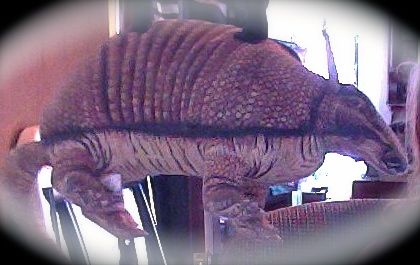
• Also, we all won giant purple-and-red plush armadillos at one of the games. That’s one thing my inner child can appreciate.

• STAY AWAY from the teacups and It’s a Small World. They will turn you into a whimpering, burbling puddle of regret and sugar-shock. When your mother asks later, just say, “Oh, yes. They were nice. You would have loved them.”

If you go with the right people, do not try to make it into the Bataan Fun March, and rest and eat or retreat to the hotel when you need a break, it’s survivable and even – dare I say? – enjoyable. Sufficiently medicated with Prozac and Ativan, I could handle it.

I’d have to give this round to Disney, but really it was all Tom and Leslie.

P.S. Also, the Food and Wine Festival is a great experience. I spent three months in Orlando and a co-worker got us tickets. Cute guys with devastating Australian accents chatting about Australian wine. What could possibly be more satisfactory?