Bipolar 2 From Inside and Out

Posts tagged ‘anxiety’

In Remission

My bipolar disorder is in remission. I know I’m not cured. There is currently no cure for bipolar. But I’ve reached a point where I’m stable enough that I don’t expect a crash or a buzz to descend on me at just any old time.

I still get moods, of course. They’re just not severe or long-lasting enough to be symptomatic. Yesterday, for example, I spent several hours wrestling with phone trees and people who wouldn’t switch me to a supervisor when all I was trying to do was straighten out a couple of bills that contained errors. Afterwards, I felt frustrated, cranky, and a bit sad. But those were normal emotions, based on what I had just gone through. After a nap I felt better, and dinner blew out the remaining cobwebs. Napping is definitely better than staying in bed the entire next day.

Of course, I didn’t achieve remission alone. It took years of doctor visits, therapy, and medications to reach this state. I am particularly grateful for mood levelers. For me, they actually do what they’re intended to do. They keep my moods within an acceptable range, or at least one that’s acceptable to me.

Too many people fear mood levelers, I think. Level moods sound boring – as though there are no variations, just a blank, straight line. That simply isn’t so. Mood levelers have pushed the spikes that used to go wild in either direction to a less extreme range. If you think of mood as an EEG, mood levelers prevent the lines from going off the charts, settling them to fluctuate within a middle range that most non-bipolar people have naturally.

I think the term “mood leveler” scares some people. They seem to think that such a drug would make them perfectly level, robotic, unchanging. They fear that any spark of personality or creativity would be lost.

That’s not the case. Instead, with level moods – and especially for depression-prone bipolars – a person has much more ability to explore his or her creative side.  I know that’s true for me. Now that my moods are stable and level, I’m able to get more writing done, but also to tell whether the work is good or needs serious revising before I post it.

My doctor recently increased the dosage of one of my medications, a mood leveler, because I was having trouble with hypomania that wouldn’t let me sleep. And it worked. I am now getting seven to eight hours of sleep each night and have enough energy to at least face the day, if not always to conquer it.

Don’t think mine has been a case of spontaneous remission. I’m not sure I believe that’s possible with bipolar disorder. It’s taken a lot of years and a lot of work to get to where I am today. For example, it took literally years for assorted doctors and me to find a combination of chemicals, a cocktail of psychotropics, that would work for me. And during all that time, it was as if I was not medicated at all. Only the right combo of drugs and dosages would unlock my brain and level my moods.

So, here I am, in remission – and I love it. My moods aren’t blunted, they’re leveled. I am not as fearful now that my extreme moods may return and wreak havoc on my life. Oh, I still have some symptoms and side effects that remind me I’m not cured. But now I know that remission is possible, with work, with luck, and with the right mood levelers.

Nothing to See Here

Many people with SMI are afraid that it shows, that other people can see automatically that there is something wrong with them. They feel as though they stand out in a crowd. Everyone notices them, and probably talks about them.

I have the opposite problem. My bipolar depression makes me feel invisible. It’s not just that SMI is often an invisible illness. It’s that I myself seem to become invisible. I think of myself as a particularly ineffectual ghost, frightening no one and unable to affect anything in my environment. Some people call this dissociation.

At first, I made the best of it. I’m especially invisible when I’m out in public and reading a book. So I found that if I was at a business convention and wanted to remain invisible, my best strategy was to sit alone at a table and read a book. Only once did a man approach me while I was so engaged. No one else ever did.

Apparently, though, I don’t need a book to disappear. Maybe it’s anxiety that makes me keep quiet when people around me are discussing something interesting. Maybe it’s my instinct not to be noticed so I won’t be subject to derision or worse. Either way, I can’t seem to catch anyone’s eye or add my bit to the conversation. I blend into the crowd, even if it’s only a crowd of three or four.

It’s almost like there’s some aura around me when I’m out in public that says, “Don’t notice me,” like Harry Potter’s cloak of invisibility. I do not use my invisibility for pranks or mischief, though. I don’t use it intentionally at all (except for using a book, as I mentioned).

Why do I think this invisibility is part and parcel of my bipolar disorder? It could be imposter syndrome at work. I feel so unworthy that I don’t want anyone to see me for what I am. Or it might be the anxiety component of my hypomania that keeps me from presenting myself more assertively. Or maybe people can see that I have a troubled mind and simply look away.

I am slowly learning to make myself seen and heard. I find that calling people by name makes it easier for them to see me. It seems to signal them that there’s another person in the vicinity. And once I even set up an occasion where I would be the center of attention, speaking about my bipolar disorder at a signing for my book.

I also use my writing to make myself “visible.” This blog (and my other one, http://butidigress.blog) and my books give me a presence, though not a physical one, even at a distance. When I see likes and follows and sales, I know that someone has noticed me, or at least discovered that I exist.

I sometimes think that going out in public more – practicing being visible – might help. But actually, that’s when I feel the most overlooked, the most unseen and unheard. The most lost.

Perhaps what I need is to go out and meet a specific person, someone who expects to see me. Then I could be guaranteed of one person who would see me.

But it has been suggested to me that I may not want to be seen at all – that I would prefer to fade into the background, not put myself forward and disappear from the stresses of being seen. Perhaps that is true, or at least once was.

Now I think I would prefer to be seen, flaws and all. If someone cannot tolerate the sight of me, a mentally disordered person, or glances over me as if I did not exist, I think I shall insist on being seen. I will use my voice, my (admittedly glitchy) brain, and my human physicality to assert that I exist, that I matter, that I have something to say.

And in social situations I will try to assert myself (if politely) to join the public discourse and add my two cents, whether the subject is mental illness or the latest bestseller.

I exist. I deserve to be seen. I will not remain invisible.

Do I Have PTSD?

Once a therapist I was considering going to put down on my form that I was suffering from PTSD. She based this on the fact that I was having nightmares and flashbacks to the toxic relationship that I counted as a significant part of my past.

It was rubbish, I thought. I had never been in the Vietnam or Iraq war. And her idea of my trauma was that I supposedly had been coerced by an older man into doing sexual things that, had I been in my right mind, I would have objected to.

I chose a different therapist, who was bemused, to say the least, at that therapist’s notes. I had had a relationship with an older man and done sexual things that were not precisely the plainest vanilla, but I had surely not been coerced into them. (The gaslighting was a separate issue, one I did not recognize at the time.)

I still have the dreams of being back in his house, and I am occasionally triggered by things that remind me of the relationship, especially when I am depressed or otherwise vulnerable, but by and large, I don’t think that I have PTSD based on that.

Then, recently, I was hit with a more physical trauma. I survived a tornado that destroyed the house I was living in, taking the roof off the second floor where I was sleeping. I have also had nightmares about that and anxiety whenever there are storms and lightning. So, do I have PTSD now?

Let’s see. For starters, mirecc.va.gov provides a “civilian checklist” of PTSD symptoms:

  • Avoid activities or situations because they remind you of a stressful experience from the past
  • Trouble remembering important parts of a stressful experience from the past
  • Loss of interest in things that you used to enjoy
  • Feeling distant or cut off from other people
  • Feeling emotionally numb or being unable to have loving feelings for those close to you
  • Feeling as if your future will somehow be cut short
  • Trouble falling or staying asleep
  • Feeling irritable or having angry outbursts
  • Having difficulty concentrating
  • Being “super alert” or watchful on guard
  • Feeling jumpy or easily startled

To begin with, many of the symptoms which I have are also indicative of depression, anxiety or bipolar disorder – loss of interest in enjoyable pursuits, sleep problems, difficulty concentrating. And I have noticed a few of the other signs – jumpiness and irritability, for example.

But, by and large, aside from the dreams and flashbacks, I have few symptoms that are attributable to PTSD but not to bipolar disorder.

I was talking with my therapist the other week and posed the question to her: Could I have PTSD?

“There are all kinds of trauma,” she said, “and all kinds of reactions to it.” I think what she meant was that I didn’t need to worry about having a specific label. I have been through traumatic events and I have had reactions to them. The reactions and symptoms may not rise to the level that constitutes clinical PTSD, but I have been affected by them nonetheless.

I don’t want to minimize the suffering of those who have been diagnosed with PTSD or those who are suffering from it without ever acquiring the label. I know that what I have experienced cannot compare to what some of them have experienced, and I can only hope it never does.

But still I think there are a lot of us out there who could count ourselves among the “walking wounded,” who have experienced physical or psychological traumas and still have adverse reactions to them. Call it borderline PTSD or some other type of stress disorder, if using the label PTSD seems arrogant or insensitive.

But know that there are other traumas besides war that can leave a person damaged, struggling to find themselves among the shards of a shattered world. We may not have lost a part of our physical selves, but the damage to our psyches can be just as real.


The Stressor I Didn’t Realize I Had

You’ve seen those lists of life stressors, the ones where they assign you so many points for each stressful life event that occurred during the past year and use the total to calculate the likelihood of your becoming physically ill. Death of a spouse or child is at the top of the list, for 100 points. Marriage, divorce, taking out a mortgage (or losing your home), and even retirement are on the list.

The lists you find in various places differ in the details. Some list only ten major stressors, while others list 20 or more. (Nowhere in any of the lists does being diagnosed with, or living with, a serious mental illness appear. Apparently, only physical illnesses are considered stressful.)

I’ve managed to avoid a lot of the major stressors this year, though I can count retirement, my husband’s heart attack, and losing our home in my total. But there was one life event on one of the lists that I hadn’t even considered: changing one’s residence.

When I thought about it I could understand it, though. Moving is a major disruption of your life. It entails endless details, physical effort, and a need for psychological stamina. Packing up your life in boxes is itself a stressful process. (Hell, I get stressed just packing for a vacation.)

In the past month and a half, we’ve moved a total of four times, if you count the night we were evacuated from our tornado-damaged house to the Red Cross shelter. (Not that we did any packing for that. The rescue squad just yelled, “Grab your medications and come with us!”) We then moved to a hotel, then a pet-friendly hotel, and finally to a rental house where we can stay for up to a year while our house is rebuilt. (We had good insurance.)

It was the last move that was possibly most traumatic, though it was the one that brought us closest to a “normal” situation. A whole house. A full kitchen. A backyard. A mailing address. Like the hotels, it came with various rented amenities such as linens and dishes that made the transition easier, but it was still foreign to us.  We’ve been here for a couple of weeks now and are adjusting, but it’s undeniable that the whole process has stressed us very badly.

I know that we are fortunate in so many ways. The closest we came to true homelessness was the day spent in the Red Cross shelter. We both survived the tornado physically intact, and so did our cats. We know we still had a lot to be thankful for, and we were, and are.

The tornado was the really big stressor, but I only recently realized how much stress the constant moving added to the toll. As a person with bipolar disorder, I find all these moves jarring as well as stressful. I like to cocoon, rarely leaving the house. I want my comfort objects around me. The series of moves tapped into my fear of abandonment, my anxiety around packing, and my feeling of being overwhelmed by life. My husband, who is given to depression, feels the loss of all the things that embodied his memories very keenly. Our local paper observed that many of the tornado victims were suffering PTSD. I may be among them, as I have had tornado dreams and other sorts of upsetting ones.

Will we succumb to stress-induced physical illness? Who knows? Have we been suffering from the psychological effects of stress? Definitely. If you had asked me two months ago whether moving was a stressor, I would most likely have said yes.  But I had no idea of the reality. We had intended to stay in our home for the rest of our lives. When suddenly that became not an option, we came unmoored both physically and psychologically.

Stability has always been a problem for me, but now my husband and I have even less of it than usual. When we finally get a chance to settle in, take a deep breath and a day off, perhaps the stress will lift a little. But until then, we’ll keep slogging through it.


My Emotional Support Animals

As I mentioned last week, my home was destroyed in the Memorial Day tornadoes. Although I was upstairs in bed when it hit and blew the roof off, I emerged physically without a scratch. The emotional effects have not begun to hit me yet, except for a feeling of numbness. Part of what’s keeping me together is my emotional support animals.

The first and most important is my husband. He earned this title when I had to go to the dentist a few years ago (which terrifies me). “Can I bring my emotional support animal?” I asked, gesturing toward Dan. It was meant as a joke, to lighten the mood, but he indeed came into the procedure room with me, sat in a chair in the corner, and placed his hand on my ankle, the only part of me he could reach. And it really did help, that physical contact that helped keep me grounded, and a sympathetic pat from time to time. 

He was much more than that to me this time around. Dan was at work when the tornado hit. I called him and told him the roof was gone. “I’ll be there,” he said. Although his work is only about three or four miles away, it took him an hour to reach me. He drove into our plat until he couldn’t drive anymore, blocked by downed power lines. Then he set off on foot.

It was midnight dark and all the landmarks were gone, as the many trees had fallen or been blown away. It took him an hour to navigate that last half mile. He crawled over huge tree trunks. He fell backward into a creek. He clawed his way up a muddy bank. He lost track of where he was in relation to the house. He had no flashlight. 

But he got to me and we huddled together amongst the dust, dirt, and insulation until the rescue people came. He looked after me at the shelter, made sure I ate and got a shower, and generally acted as my interface with the Red Cross and church volunteers until we left there for a hotel, where we stayed for almost a week.

Meanwhile, back at the house, our cats remained. Every day we had to go to the shell of our home, give Toby and Dushenka food and water, and make sure they were still okay. We couldn’t get them out of the house for days because there was no way to carry them through the obstacle course of trees, branches, utility cables, roofing, boards, and other debris.

Days later a path to the house was cleared and we were able to rescue them. The motel where we were living did not allow pets, but our vet agreed to board them as long as necessary and our insurance agreed to pay for it. They were treated for the difficulties they suffered from having tried to clean their fur when it was matted with insulation. We were their emotional support animals, visiting them and loving them, and playing with them, and making sure they got good care. They needed us and caring for them gave us something to focus on besides ourselves and the devastation in our lives.

Finally, we were moved to a hotel that was pet-friendly and our little family was reunited. It really is an emotional comfort to have our cats with us again, sleeping on the bed with us, exploring the room, and returning that little bit of peace and normality to us. It’s now less of just a hotel room and more of a temporary home.

In a way, taking care of the cats has provided emotional support for us as well. When we need comfort, there is someone there to respond with affection and trust. When we are lonely, there is another being there to pet and cuddle. When we get short-tempered, we can find solace and distraction in their purring.

Our cats aren’t trained service animals, of course. But they give us emotional support just the same, especially when our ability to support each other wears thin. We and our animals have been emotional supports for each other and helped us bear up under these difficult times so that we can be the emotional support animals when needed, too.


Anxiety Says No, but Mental Health Says, “Do It!”

It’s tough enough for someone with bipolar or depression or anxiety to go outside, where it’s all people-y. It’s another level of achievement when such a person deliberately puts herself or himself out into the public eye.

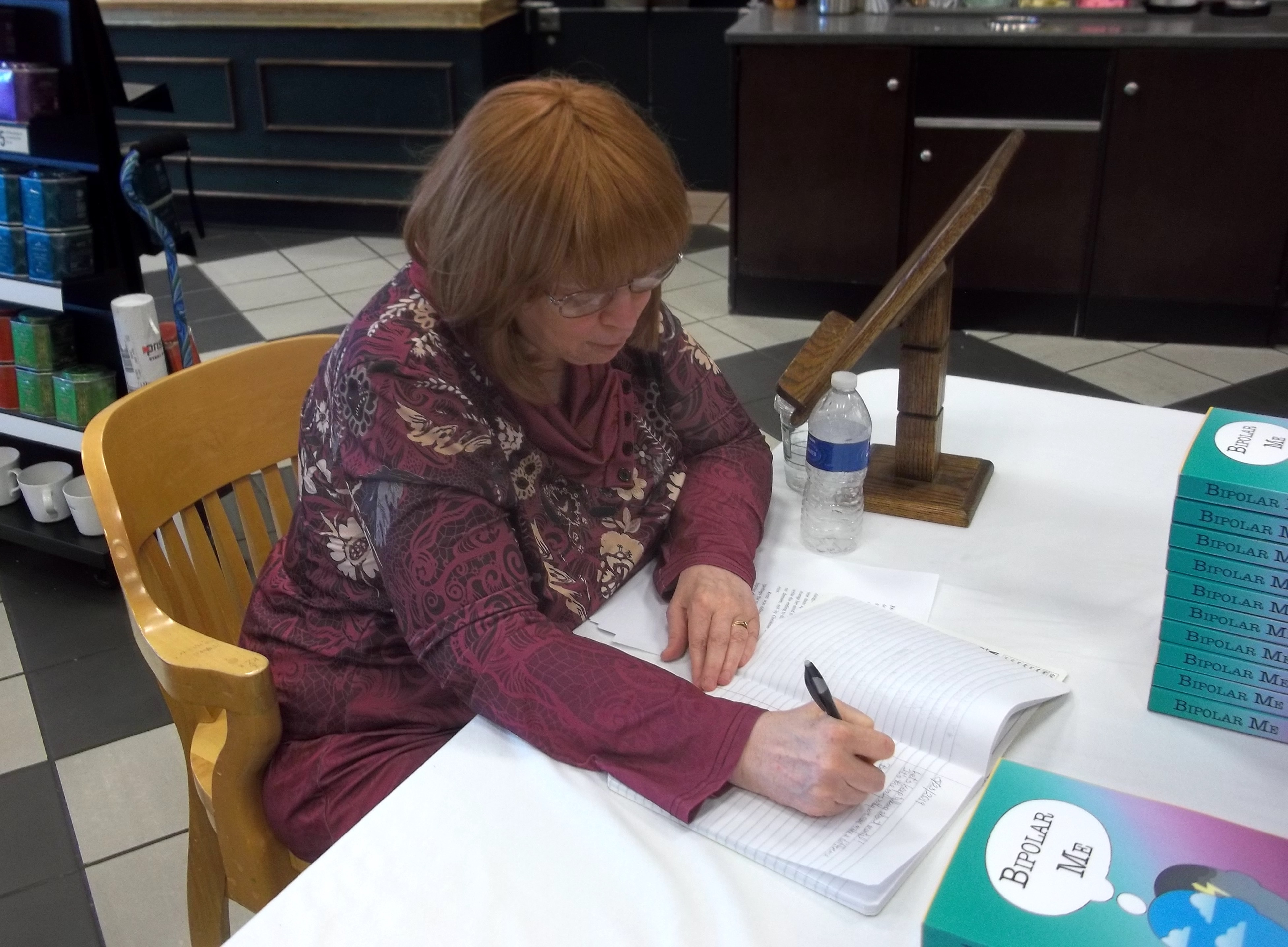
But that’s just what I did this week. My publisher arranged for me to do a reading and signing of my book at a local branch of a national bookstore. And I agreed to do it. Thursday night was my debut.

Let me go back a few steps. I do have some experience speaking in public, so it wasn’t going to be a completely novel experience. Those occasions were, shall we say, a bit distant in time, mostly before my bipolar disorder reached its heights (or depths). In high school, I did debate and extemporaneous speaking. In grad school, I taught introductory English classes. During my somewhat-less-than-successful business years, I once addressed a power breakfast meeting. I even opened with a joke.

I was prepared to open with a joke (or at least a witticism) this time, too. But my plans soon flew out the window.

I had prepared – or over-prepared, probably – somewhat obsessively. I spent spoons like they were disposable plastic. I picked out an outfit and a back-up outfit, including earrings and back-up earrings. I did my hair. I agonized over which pieces from my book to read, then printed them out in huge type so I wouldn’t have to squint at them. I took an anti-anxiety pill and Immodium, just in case. I was fortunate that Thursday was my day off and also my husband’s, so he could be present as my emotional support animal, wearing one of my book t-shirts.

My expectations, such as they were, took a nose-dive when only two people showed up – both friends of mine, one of whom had already bought my book. It was time to rearrange my plans on the spot, not really one of my strong suits. Why had I knocked myself out making plans if the universe wasn’t going to cooperate with them? I had thought that at least half a dozen people would turn up. I was trying to keep my expectations reasonable, after all.

I’ll admit that when I saw such a small audience, I felt a wave of despair. In actuality, it proved good that they were both friends of mine, because they were a receptive audience who wished me well.

Given the meager audience, though, I abandoned my introduction (though I worked my joke in later). These people already knew me. I gave a brief synopsis of “What is bipolar disorder?” and plunged into my readings.

I had tried out one of my readings previously, when I was on a podcast for indie authors. Of course, I had no eye contact with my audience then and no real idea how my performance went over. On Thursday, I explained Spoon Theory, as it came up in one of the pieces I was to read. I had chosen two of my more light-hearted pieces, though on serious topics (psychotropics and side effects, and cognitive dissonance). Then I finished with a reading of a piece on why I write about bipolar disorder and why I put myself out there to the extent that I do in this blog and my book, and indeed my public appearance.

The big surprise of the evening came when I invited a Q&A session. My husband fed me questions to get things started and my friends also had queries. What I hadn’t been expecting, however, was that a few people in the bookstore cafe where this all occurred got sucked into the discussion and had questions of their own, though they had no idea that the event was scheduled at all. One worked at a local university and had heard his students talking about having bipolar disorder. Another was a woman studying psychology in order to become a counselor. I didn’t always have the answers, and I’m sure I bobbled some of the explanations, but I did my best to come up with reasonable answers about treatments and medications, self-care, and so on.

Then came the signing portion of the evening. I signed a book for one of my friends and the counselor-in-training asked me to sign her notebook with any little inspirational words I might have. (I winged it. I was tired by then and am not usually inclined to be inspirational.)

Then my husband and one of my friends and I went out for milkshakes, which I highly recommend as a way to decompress after such a fraught experience.

All things considered, I’m glad I took the risk and gave it the old college try, as it were. If nothing else, it was good practice for the next time I speak in public, perhaps when my second book comes out.

The reason that I write about bipolar disorder and my experiences with it is that I want to share what I’ve learned and lived. I think I did that Thursday, even if not to the extent that I had hoped. I don’t regret the anxiety and the preparation that went into it and, all things considered, count it as a win. When I think about the melt-downs I could have had – before, during, and after – I feel pride that I kept my depression and anxiety at bay for long enough to share information about bipolar and healing and mental health.

I think it was worth putting myself out there.


The Languages of Love and Bipolar Disorder

In 1995, Dr. Gary Chapman published his popular relationship book, The Five Love Languages. In it he proposed that there are different ways – or “languages”  – that people use to communicate their love. Problems happen when one partner doesn’t speak the same language as the other; for example, when one gives the other literal gifts while the other yearns for time together.

I’ve been thinking quite a bit about love and bipolar disorder lately and it occurred to me that the five love languages could be a helpful lens for looking at relationships. In particular, they might help a person realize what the other one needs when experiencing symptoms of the disorder.

Here are the five love languages and how they might be helpful if you are in a relationship with someone who has bipolar disorder.

Words of affirmation. I’m not talking here about the kinds of affirmation we are supposed to look in the mirror and give ourselves. I mean words of affirmation that come from outside, from another person, and are gifts of love. Everyone needs affirmations at times, but for people whose love language is words of affirmation, they can be positively soul-feeding.

For the bipolar person, these affirmations can be as simple as, “Thank you for coming out with me,” or “Congratulations on getting the bills paid,” or even, “I know you can do it,” or “I knew you could do it!” And for the bipolar person who struggles with self-esteem, imposter syndrome, or lack of motivation, these can be the words that keep us going.

Quality time. Quality time doesn’t have to mean an elaborate outing or a two-week vacation. It can be as simple as sitting on the sofa with your partner watching a movie, or cooking together. Especially when there’s something else you could be doing. Giving up that other activity to spend time with your loved one is another kind of love-gift.

Quality time – extended periods of togetherness – can be extra special to someone with bipolar who feels lonely, isolated, or unlovable. Just the idea that someone wants to spend time with you, even though you can barely stand to be with yourself, sends a powerful message.

Receiving gifts. There are people who value physical gifts and see in them the care and attention that another person spends selecting just the right thing. Diamond rings are unnecessary. In this language of love, a simple houseplant can even be preferable.

You probably shouldn’t expect a physical gift to “cheer up” a person with bipolar depression. As with any gift, the important thing is knowing what the person values and providing it to them. Comfort objects such as plush animals, mp3s of calming or favorite music, or a weighted blanket to ward off panic may be just the thing. Even a silly coffee mug with an appropriate saying can become a treasured item.

Acts of service. If the person you love values acts of service, then your way of speaking that love is accomplished when you do something for her or him. Doing the dishes or some other chore that usually falls to the loved one is one example.

For the bipolar person, acts of service that speak of love may be as simple as handling phone calls and visitors, or doing the shopping when he or she just can’t face the grocery store. “I’ll do it for you” is a powerful message that says, “I care about you and want to help ease your burdens.”

Physical touch. Strange as it may seem, some people never think of physical touch as a language of love unless they’re talking about sex. Of course, the physical and emotional intimacy of sex can speak love, but other kinds of touch do just as well for some people.

Bipolar people in the manic phase can have a high sex drive and appreciate some sexual attention even if you wouldn’t ordinarily want it at that time of day, for example.  But the bipolar person can crave touch without sex as well. Hugging and cuddling, sitting close with an arm around the shoulders, and even a touch on the shoulder as you leave a room can speak volumes.

The important part of this is to learn and know what your partner values – what language of love she or he speaks – and to give it to them. Mixed signals, speaking the language that you would want instead of the one that your partner does, will not be processed as love. Physical gifts to one who hears love in affirmations will miss the mark.

Obviously, the best thing to do is to ask your partner which “language” they speak. But she or he may not even realize that there are different languages or which one is theirs. Observation, attention, and even trial and error may be necessary to get the communication going. But if you want to speak love to a person with bipolar disorder, these are communication skills that can be vital.

The One Pill I’m Embarrassed About Taking

I know that there are lots of people – and not just the bipolar ones – who don’t like taking medication and especially don’t like needing to take them. It’s a reminder of their illness, I guess, or a dependence on a chemical answer when we’ve been told for so long, “Just say no to drugs” and indoctrinated by DARE. The only thing they leave out is that some drugs are good for you – the prescribed ones that allow you to live and function.

I don’t mind my psychotropic medications. In fact, in many ways I love them. They are the things that keep me relatively stable, on a mostly even keel, and make sure that none of my mood swings lasts more than a couple of days. I loathe pill shaming and consider it just one more kind of stigma that attaches to mental illness (and other chronic illnesses).

But there is one medication I take every day that gives me pause. It is my sleeping pill. My psychiatrist prescribes them and I take one every night, along with my other nighttime pills. In about 20 minutes to an hour, I’m asleep, and I stay asleep usually until 8:00 a.m. or so. It means I get about eight or nine hours of uninterrupted sleep per night.

I do need that sleep. I’m not one of those people who can function on four or five hours of sleep, the way tech geniuses and high-powered execs claim they can. If I don’t get my eight hours – and sometimes even if I do – I take naps during the day. Not just naps: mega-naps. My brain and body sneer at 20-minute catnaps. If I’m going to sleep, they say, it must be an hour at a minimum. Two is even better.

It’s not like I want to go back to the days before the sleeping pills, either. I do still remember the long nights of fear and sorrow, the fits of crying, the panicky sensation of not being able to breathe. The endless mental replay of every stupid thing I’ve ever done. The anticipation of the disasters the next day would bring. The hopelessness and the helplessness and the loneliness. The feeling that I was the only being awake, maybe in the world. If a single little pill can save me from all that, I should be glad to take it.

Why, then, does it bother me?

Perhaps it’s because it doesn’t feel necessary in the way my psychotropics do. They are prescribed for my bipolar condition and somehow make the difference in how my neurotransmitters operate. The sleeping pill feels like a different category of drugs.

Or perhaps it is because sleeping pills are often a drug of abuse and even suicide. My psychiatrist trusts me with them, though, and has for years. Plus, my anti-anxiety med is also often abused and I feel no guilt about taking that.

Maybe it’s because a sleeping pill feels in some way like a luxury. I don’t think it does anything specific for my bipolar disorder – except that sleepless nights are certainly associated with depression and my middle-of-the-night anxiety as well.

I hate to think it, but maybe the pill-shamers have gotten to me. I take such a cocktail of assorted psychotropics that it’s perhaps natural I should ask myself every now and then if I’m overmedicated (my doctor doesn’t seem to think so) and whether I could do without any of the drugs. The sleeping pill is the only one that might be in that category.

But no. I don’t want to go back to the nights of distress, despair, and devastation. I don’t want to wake my husband up as I gasp for breath and need him to stroke my hair until I fall asleep. And I surely don’t want to go through those bad feelings all alone in the night while he works the third shift.

All in all, I think the sleeping pill is a good thing for me and that I shouldn’t try to give it up. I just wish I didn’t feel so ambivalent about it.


My Turn to Care

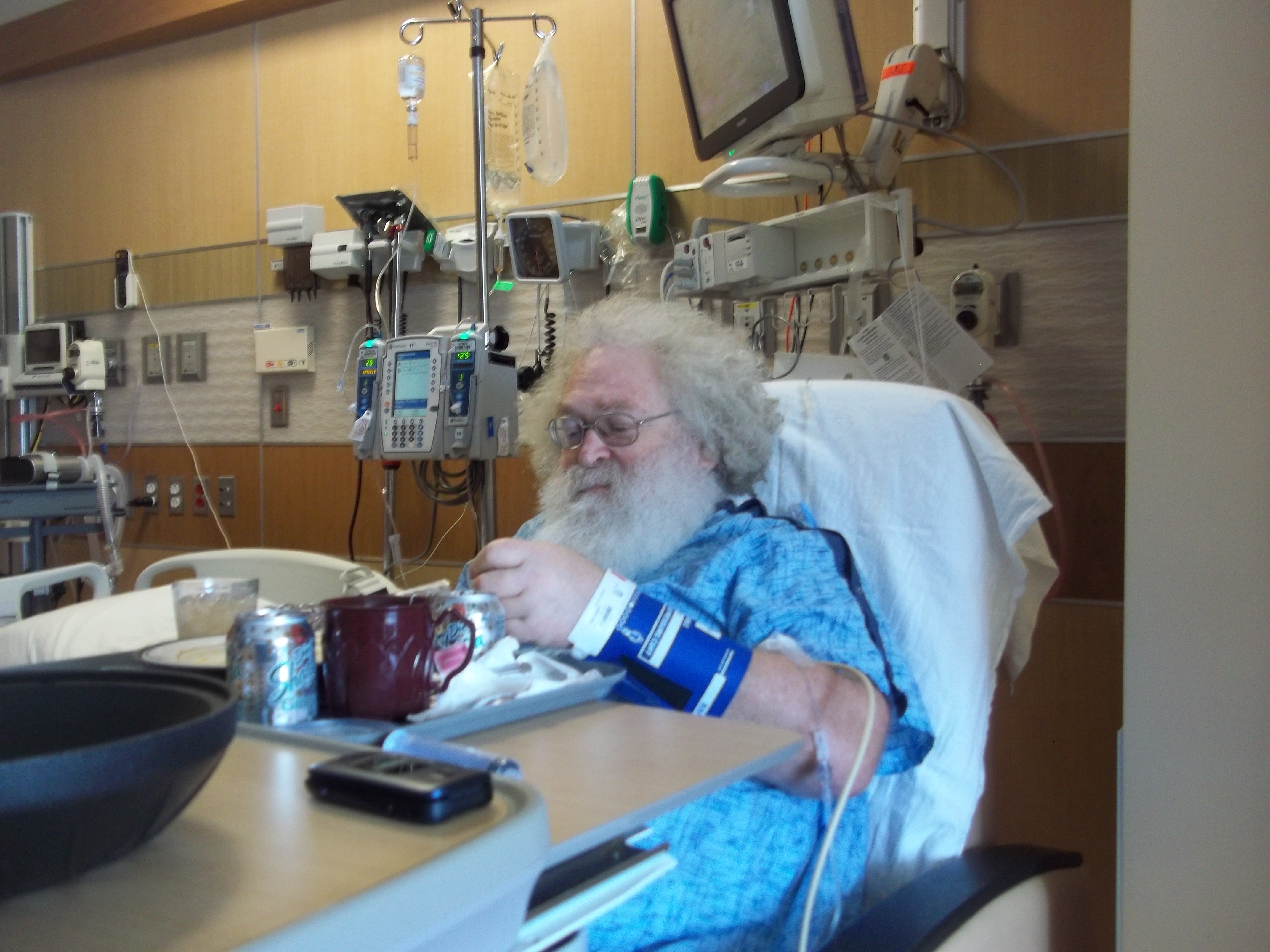
My husband had a heart attack this fall. He got a total of five stents, avoided open heart surgery, and is now in cardiac rehab. And I am helping take care of him.

Dan has been my caregiver as long as I’ve known him. He has stuck with me through the various ups and downs of bipolar disorder – when I was untreated, when I was struggling with finding the proper medication, when I shouted at him, when I was immobilized – whatever. I couldn’t have got through what I’ve been through without him.

Now I get to pay him back, at least a little, for all he has done for me. I have no training and little experience as a caregiver. But there a few things I can do for him, in addition to loving and supporting him as he has loved and supported me.

I can facilitate his appointments, meds, and procedures. Dan has a tendency to forget when is next appointment is, and with which of his many doctors. I have a perfectly good whiteboard in my study on which I note my own appointments as well as keep track of my work. It’s no trouble at all to add his and remind him.

Getting to his appointments is another area where I can help, especially since his cardiologist has a number of offices in various parts of town and in nearby suburbs where he practices on different days of the week. Since I’ve lived here most of my life, I know the area better than he does and I go with him to navigate. (He’s never gotten used to GPS.) I suggest routes that are easy to retrace and figure out when to leave to get there on time.

Dan has in the past had a habit of forgetting to take his various medications.  When that involved sertraline, I didn’t worry much since I know that once a certain level has built up in the body, missing a dose is not such a big deal. But with his blood thinner, a missed dose could lead to a clogged stent and another heart attack. So I proactively encourage him (as my therapist suggests I call nagging) to take them daily and on time.

I can handle financial stuff. With Dan being off work for so long and hospital and doctor bills adding up, our finances are getting pretty tricky. I can make sure I have steady work and even take on extra sometimes. I can fill out the forms for short-term leave, financial assistance, insurance, and other necessities.

I’ve even been able to set up PayPal and Facebook funding pleas to help us get a little extra cash to pay the utilities and other bills. (GoFundMe may be next once all the medical bills are in.)

I can handle computer stuff. Finding locations of offices and hospitals and the cardiac rehab place, phone numbers of financial aid programs, and names and side effects of medication are easier and quicker for me to do on my Mac than for him to do on his ancient PC. I can find things he needs on ebay for the lowest price. I can find and email various forms and records of expenses to wherever they need to go. This may sound minor, but believe me, it can take up a lot of time and frustration. I think of it under the heading of relieving his stress.

I also know how to network. A Facebook friend of mine teaches Tai Chi at a local Y. Through him I found out that the Y does not charge for his classes. And through Google I found that this month the Y waives membership fees if you donate canned goods to a local food pantry. The Y’s amenities include exercise classes and water aerobics, which I also could use. I also found a local Senior Center that has yoga and free weights (and community theater) as well.

I can understand his depression. Being faced with intimations of one’s mortality, combined with money problems and not being able to work can make anyone depressed. And Dan was already taking meds for depression before this current crisis even started. I am, of course, a third-degree black belt when it comes to depression. I know how he feels, why he’s feeling it, and what will and won’t work in helping him through it. I can be patient, supportive, and there to communicate or simply hug when he needs to, as he has so often done for me.

There’s not much care that my husband needs in the way of actual physical care. He is not so incapacitated that he needs help with feeding, dressing, bathing, or other tasks of daily living (other than changing his bandages when he cut his finger open and required eight stitches).

But I like to think that the support I can give him helps in his recovery by taking some of the stress off him, which his doctor recommends and which he has done for me innumerable times. We’re a team and this time it’s my turn to take some of the weight.

Bipolar Sex: Drought and Abundance

two people laying on a bed covered with a floral comforter

Photo by rawpixel.com on Pexels.com

Here’s something bipolar people talk about amongst themselves but not so much with the world outside: sex.

The two poles of bipolar, depression and mania, govern a person’s appetite for sex. A lot of other factors determine whether the sex will be any good, or good for the participants.

Of course the above is true for neurotypical people as well. Moods and emotions – things in the brain – have as much or more to do with sex than stuff in the body. Thinking about sex and wanting sex, for example, start in the brain and without them, nothing else is likely to happen anywhere else.

The depression side of bipolar sex is easy enough to map out. After all, some of the hallmarks of depression are numbness, inability to enjoy things that once gave pleasure, and a tendency to isolate. It’s hard to get your motor revving with all that going on.

Still, the depressed person may want to have sex, or at least want to want to. That’s the way it’s been with me. When I’m in a thoroughly depressed state, sex doesn’t even cross my mind. When I’m not quite as depressed, I think I might like to have sex but don’t have the energy for it. And when I’m relatively stable, there’s the meds.

It’s well known that medications for bipolar disorder can kill the sex drive and in men the ability to get or maintain an erection. Some drugs supposedly have less effect on sexuality, but I’ve never found the magic combination. Or the supposed sex-friendly drug has had side effects I can’t tolerate.

So if bipolar depression is largely a big zero for bipolar sex, how about mania?

Overactive sex drive combined with a lack of impulse control can lead to sexual excess. The tendency to minimize risk-taking behaviors means that some of that sex can be detrimental to one’s health, relationships, and self-esteem. Riding that wave is exhilarating, but then, inevitably, comes the crash and the need to pick up the pieces.

Full disclosure here: Since I have bipolar 2 and my hypomania tends to turn sideways and come out as anxiety, I don’t experience that manic sex high. On the whole, I think I am grateful for this. Sex has never been such an important part of my life that I would risk everything for it.

Once, though, I did experience what you might call a hypomanic sex drive. It smoldered for a long time, requited but unconsummated, until the right set of circumstances presented themselves. It was a restlessness, an obsessive thought, a longing for connection, rather than an ungovernable rush of need. It gave me, perhaps, a glimpse of what it might be like to be manic and sexually stimulated. But I’ll never really know.

I do know that I am glad I had the experience, whatever it was. I’m glad it was safe sex.  I’m glad it didn’t destroy relationships. But just to feel that desire again, even if only for a brief time, even with the anxiety it provoked – and there was lots – it was a kind of affirmation that my body and brain are still connected in some vital way.

Most of the time I limp along with only thoughts of sex too fleeting to act upon. And maybe this is not the best way to live, but I have made my peace with it. And once in a great while, every now and then, I still am reminded that I can have a sexual existence.

Even though I have bipolar.

Of course, as always, your mileage may vary.