Bipolar 2 From Inside and Out

Posts tagged ‘anxiety’

My Turn to Care

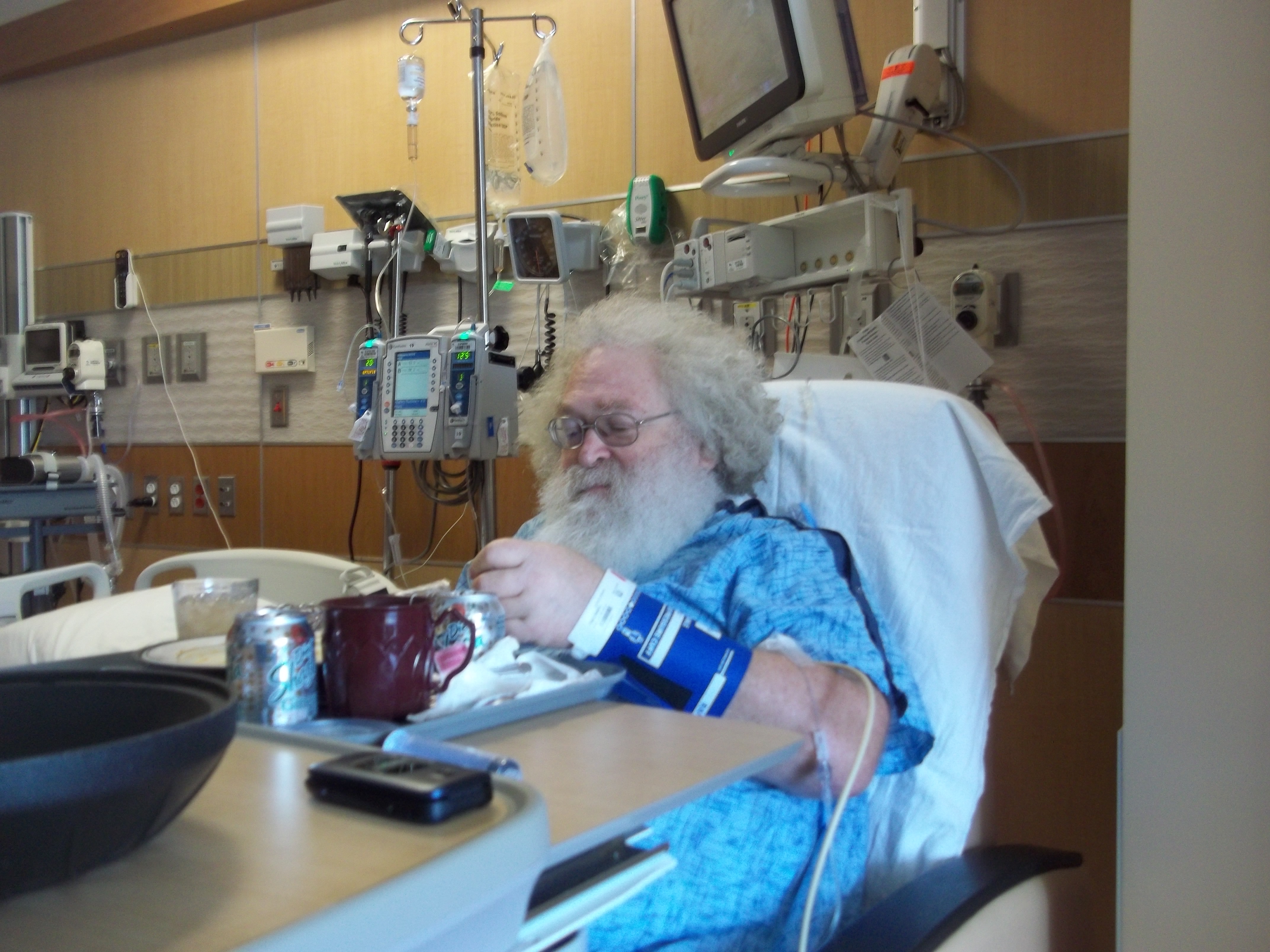
My husband had a heart attack this fall. He got a total of five stents, avoided open heart surgery, and is now in cardiac rehab. And I am helping take care of him.

Dan has been my caregiver as long as I’ve known him. He has stuck with me through the various ups and downs of bipolar disorder – when I was untreated, when I was struggling with finding the proper medication, when I shouted at him, when I was immobilized – whatever. I couldn’t have got through what I’ve been through without him.

Now I get to pay him back, at least a little, for all he has done for me. I have no training and little experience as a caregiver. But there a few things I can do for him, in addition to loving and supporting him as he has loved and supported me.

I can facilitate his appointments, meds, and procedures. Dan has a tendency to forget when is next appointment is, and with which of his many doctors. I have a perfectly good whiteboard in my study on which I note my own appointments as well as keep track of my work. It’s no trouble at all to add his and remind him.

Getting to his appointments is another area where I can help, especially since his cardiologist has a number of offices in various parts of town and in nearby suburbs where he practices on different days of the week. Since I’ve lived here most of my life, I know the area better than he does and I go with him to navigate. (He’s never gotten used to GPS.) I suggest routes that are easy to retrace and figure out when to leave to get there on time.

Dan has in the past had a habit of forgetting to take his various medications.  When that involved sertraline, I didn’t worry much since I know that once a certain level has built up in the body, missing a dose is not such a big deal. But with his blood thinner, a missed dose could lead to a clogged stent and another heart attack. So I proactively encourage him (as my therapist suggests I call nagging) to take them daily and on time.

I can handle financial stuff. With Dan being off work for so long and hospital and doctor bills adding up, our finances are getting pretty tricky. I can make sure I have steady work and even take on extra sometimes. I can fill out the forms for short-term leave, financial assistance, insurance, and other necessities.

I’ve even been able to set up PayPal and Facebook funding pleas to help us get a little extra cash to pay the utilities and other bills. (GoFundMe may be next once all the medical bills are in.)

I can handle computer stuff. Finding locations of offices and hospitals and the cardiac rehab place, phone numbers of financial aid programs, and names and side effects of medication are easier and quicker for me to do on my Mac than for him to do on his ancient PC. I can find things he needs on ebay for the lowest price. I can find and email various forms and records of expenses to wherever they need to go. This may sound minor, but believe me, it can take up a lot of time and frustration. I think of it under the heading of relieving his stress.

I also know how to network. A Facebook friend of mine teaches Tai Chi at a local Y. Through him I found out that the Y does not charge for his classes. And through Google I found that this month the Y waives membership fees if you donate canned goods to a local food pantry. The Y’s amenities include exercise classes and water aerobics, which I also could use. I also found a local Senior Center that has yoga and free weights (and community theater) as well.

I can understand his depression. Being faced with intimations of one’s mortality, combined with money problems and not being able to work can make anyone depressed. And Dan was already taking meds for depression before this current crisis even started. I am, of course, a third-degree black belt when it comes to depression. I know how he feels, why he’s feeling it, and what will and won’t work in helping him through it. I can be patient, supportive, and there to communicate or simply hug when he needs to, as he has so often done for me.

There’s not much care that my husband needs in the way of actual physical care. He is not so incapacitated that he needs help with feeding, dressing, bathing, or other tasks of daily living (other than changing his bandages when he cut his finger open and required eight stitches).

But I like to think that the support I can give him helps in his recovery by taking some of the stress off him, which his doctor recommends and which he has done for me innumerable times. We’re a team and this time it’s my turn to take some of the weight.

Bipolar Sex: Drought and Abundance

two people laying on a bed covered with a floral comforter

Photo by rawpixel.com on Pexels.com

Here’s something bipolar people talk about amongst themselves but not so much with the world outside: sex.

The two poles of bipolar, depression and mania, govern a person’s appetite for sex. A lot of other factors determine whether the sex will be any good, or good for the participants.

Of course the above is true for neurotypical people as well. Moods and emotions – things in the brain – have as much or more to do with sex than stuff in the body. Thinking about sex and wanting sex, for example, start in the brain and without them, nothing else is likely to happen anywhere else.

The depression side of bipolar sex is easy enough to map out. After all, some of the hallmarks of depression are numbness, inability to enjoy things that once gave pleasure, and a tendency to isolate. It’s hard to get your motor revving with all that going on.

Still, the depressed person may want to have sex, or at least want to want to. That’s the way it’s been with me. When I’m in a thoroughly depressed state, sex doesn’t even cross my mind. When I’m not quite as depressed, I think I might like to have sex but don’t have the energy for it. And when I’m relatively stable, there’s the meds.

It’s well known that medications for bipolar disorder can kill the sex drive and in men the ability to get or maintain an erection. Some drugs supposedly have less effect on sexuality, but I’ve never found the magic combination. Or the supposed sex-friendly drug has had side effects I can’t tolerate.

So if bipolar depression is largely a big zero for bipolar sex, how about mania?

Overactive sex drive combined with a lack of impulse control can lead to sexual excess. The tendency to minimize risk-taking behaviors means that some of that sex can be detrimental to one’s health, relationships, and self-esteem. Riding that wave is exhilarating, but then, inevitably, comes the crash and the need to pick up the pieces.

Full disclosure here: Since I have bipolar 2 and my hypomania tends to turn sideways and come out as anxiety, I don’t experience that manic sex high. On the whole, I think I am grateful for this. Sex has never been such an important part of my life that I would risk everything for it.

Once, though, I did experience what you might call a hypomanic sex drive. It smoldered for a long time, requited but unconsummated, until the right set of circumstances presented themselves. It was a restlessness, an obsessive thought, a longing for connection, rather than an ungovernable rush of need. It gave me, perhaps, a glimpse of what it might be like to be manic and sexually stimulated. But I’ll never really know.

I do know that I am glad I had the experience, whatever it was. I’m glad it was safe sex.  I’m glad it didn’t destroy relationships. But just to feel that desire again, even if only for a brief time, even with the anxiety it provoked – and there was lots – it was a kind of affirmation that my body and brain are still connected in some vital way.

Most of the time I limp along with only thoughts of sex too fleeting to act upon. And maybe this is not the best way to live, but I have made my peace with it. And once in a great while, every now and then, I still am reminded that I can have a sexual existence.

Even though I have bipolar.

Of course, as always, your mileage may vary.

Exhaustion as an Antidote for Panic

Wednesday afternoon my husband called his doctor complaining of chest pain and was instructed to go immediately to the ER. Actually, he had had the chest pain off and on for several days but he A) attributed it to Taco Bell, B) is good at denial, and C) is stubborn.

So off to the ER we went. We were tucked into Bay 22 and after a time, a nurse drew my husband’s blood. While we were waiting for results, we watched The Big Sleep on the room’s TV, possibly not the best choice at that particular time. We were there from 4:30 to 10:00, when they reported that Dan’s cardiac enzymes were a “little high.” I left shortly thereafter and Dan was admitted.

Although in the past ER visits with my parents caused massive anxiety which then caused a variety of physical symptoms, this time I did not panic. I was too exhausted. I even had a little trouble driving home. The streets in our plat seemed the wrong length or something and I wasn’t absolutely sure where to turn. When I got home I fed and watered the cats and then collapsed. Sleeping, not weeping.

The next morning I had to get up and finish a work project, then go to see Dan for a few hours, then back home to more work. Again, an early collapse. Still no panic.

Today (Friday) I am writing this post after finishing the work project and while waiting to hear that Dan’s angiogram is done so that I can go and see him. Again, I am not panicking. Numb, maybe, and tired, but not anxious.

I used to hate not knowing. Waiting for the proverbial other shoe to drop was torture. I am given to catastrophizing at the least provocation. But now, when there is an event that lends itself easily to catastrophizing I find I’m not. I have decided to postpone panicking until I truly have something to panic about.

At the moment Dan is fairly comfortable, in a very good hospital with attentive staff and even therapy dogs. There is nothing that I can do except visit him and call him.  I figure that when he calls with the results of the angio and info on whether they gave him a stent, I can panic then if required. Say, if he has to have bypass surgery.

But I’m disinclined to panic until or unless they tell me that’s the case.

And … I just got a phone call from his doctor. Dan had multiple artery blockages and required four stents, but no bypass surgery for now. I’m relieved, of course, but my main feeling is still one of exhaustion. Maybe I’ve been worrying in the back of my brain at a subconscious level and that has added to my exhaustion. Maybe when this is all over I’ll let loose and have a good cry, when he’s back home.

My friends have been sending me and him thoughts and prayers, hugs, light, and even good juju. They have also been reminding me to take care of myself, to remember to eat and sleep and I’ve been doing that at least on some kind of level. A bowl of cereal now, cheese sticks as a bedtime snack, a visit to the Waffle House when I’m too tired to make a meal. And eight hours of sleep a night. I can’t say the sleep has been dreamless or restful. I wake up still exhausted but at least my body is taken care of in a reasonable manner.

So there you have it. A potentially dire situation happened but I did not panic. Was it postponing the catastrophizing that helped? The exhaustion? I don’t know, but whatever coping mechanism it was, I’m glad it kicked in.

Dan has done so much for me through the years. I’m glad I will have an opportunity to pay him back even if only a fraction as much.

Low-Jacked Pills and High-Tech Mental Health

I’m a known geek and ordinarily a fan of technology – though not technology for its own sake. It has to do something useful and needed.

Imagine my surprise to learn that tech companies are now doing what so many of our public institutions aren’t, and devising possible solutions to assorted mental health problems. Stat reported (in their Business section) that now:

with an influx of funding, companies are revamping pills with digital sensors, designing virtual reality worlds to treat addiction and other conditions, and building chatbots for interactive therapy.

But are these techno-wonders likely to be any help? Let’s take the innovations in reverse order, shall we?

Chatbots. We already have remote counselors, which may be a godsend for people with no access to mental health clinics (although they charge a fee, which may be prohibitive for some). I’ve never investigated this service, so maybe some of you who have can tell me how they work and how well.

Remote counselors rely on already existing technology, however, and are therefore not of interest to tech innovators (or potential funders). Chatbots are something else. They are, essentially, computers that respond to human input with output that is supposed to simulate human responses.

To my knowledge, no computer has ever passed the “Turing Test,” which means that a person has no idea whether they’re chatting with a real person or a computer. A psych computer is likely to respond with generic responses such as, “Why do you feel angry with your sister?” “What do you mean when you say anxiety?” “Explain how depression affects you,” and “Tell me more about your mother.” The supposed AI is in no way trained in psychology or any therapeutic techniques.

One company that received funding for “telepsychiatry” (called Regroup Therapy and Woebot Labs) brands their idea as “Your charming robot friend who is ready to listen, 24/7.” Admittedly, many persons with mental health issues need someone who’ll listen, but that’s far from all they need.

Virtual reality for addiction (and other conditions). Startup Limbix wants to sell its programs to therapists and clinics. According to Stat,

Among the company’s VR programs is an exposure therapy for patients with phobias or trauma associated with driving. While patients strap on the headset, clinicians can work with them to introduce different conditions (a clear or rainy day) or different road situations (a bridge or a tunnel or blind left turns).

This sounds promising, though the cost of VR headsets and the programming for various conditions again might be prohibitive for your average community or campus or rural mental health clinic. I’m not clear on how it would work for addiction, unless combined with aversion therapy, which is generally brutal.

Pills with digital sensors. Aren’t psychotropic medications already too expensive, especially for people who have no insurance? Now we need technological pills that must make a profit for both drug and tech companies?

And what a pill they’re talking about. Basically, it’s a pill that rats you out if you don’t take it, or rather alerts your doctor when you do take it. Presumably, your doctor has enough staff to monitor whether clients take the pills and record it if they don’t. Then what? A robocall telling you to take your meds? A visit from a social worker?

Admittedly, such low-jacked pills might have a place in situations where schizophrenics are court-ordered to take their medication, but again there is the problem of what to do about non-compliance.

Another company plans to sell “a cardiac drug meant to be popped like a mint to people anxious about public speaking and first dates.” Would people need prescriptions for those, or will they be dispensed like Tic-Tacs? Even anti-anxiety drugs aren’t meant to be “popped like a mint.” And a cardiac drug? I can’t see any possible downside there.

If only the ingenuity and investment that goes into these products were instead available to fund and repair the shaky mental health system instead. What we need are more psychiatrists and therapists, more hospital beds for psych patients, less expensive drugs, better insurance, more education for the public about mental illness, and an end to stigma.

But those would require systemic reform and political backing, not just some new-fangled gadget. And good luck getting investors for those.

Reference

https://www.statnews.com/2018/07/20/tech-developers-tackle-mental-health/

Realistic Self-Care

woman in white long sleeved shirt holding white ceramic mug

I hate articles about self-care for mental illness such as the one I saw recently that said:

…[W]ays I practice self-care include swimming and Pilates, getting regular massages, spending time with friends and family, since staying connected is an essential part of emotional health at every age, watching TV, and seeing movies. I also love going for walks, especially near Santa Monica beach, and reading or listening to books.

If I could do all those things, I wouldn’t need self-care! When I’m depressed or anxious, I cannot make myself swim or exercise, or even get out of bed and shower at times, which lets out going to the movies and spending time with friends, too. I can maybe read a book or listen to a podcast if I’m not too twitchy and if my attention span and concentration will cooperate. And I can sit on the sofa and watch TV, but that feels like uselessness, not self-care.

Plus, guess what? A lot of those activities cost money.  Massages, movies, exercise classes (for which you need exercise clothes), and swimming (for which you need a swimsuit) would all require “shopping therapy,” which I loathe IRL and can’t afford online.

I personally would love a massage, but that’s not self-care for everyone. As Emily Roberts points out in “Self-Care for Mental Health: Find Ways That Work for You”:

The myth of a massage as an essential self-care activity – or anything that makes you more anxious – isn’t helpful for your mental health. I didn’t listen to my body the first time I booked a massage and guess what? It was so triggering to my body I couldn’t even finish it….I started to cry and couldn’t compose myself 10 minutes into the appointment. I was embarrassed and confused. I thought, “This stuff works for all the people in the magazines. What is wrong with me?”

I decided that booking an extra appointment with my therapist and having a date with my best friend was more helpful as self-care for my mental health than pushing myself to practice self-care in the way the media was telling me to.

One person’s mani-pedi can be another’s nightmare. I much prefer small ideas for self-care rather than big expeditions or splurges. For me, comfort food is one form of self-care. It has to be something I can make easily, though, like frozen mashed potatoes, mac-n-cheese, or French bread pizzas. (The microwave is my friend.)

Of course, these comforts require a little planning when I’m not overwhelmed to the point that I need self-care to restore me. I must think ahead, during those times when I’m able to go to the store, to bring home the foods that are easy to make yet soothing.

Another self-care technique I came across is definitely more my speed. Caiti Gearsbeck, in “Make Your Own Mental Health Self Care Kit” offers a simple, DIY alternative. She recommends filling a shoebox or other box with soothing things that appeal to all five senses, plus a few activities. Here are a few of her examples:

Sight: photos, cards, and letters

Smell: essential oils or candles

Taste: chocolate or tea

Sound: meditation CD or an mp3 player with a playlist

Touch: soft cloth or stuffed animal, stress ball or fidget cube

Activities: coloring books and pencils, a journal, a favorite movie

She adds: Whatever works for you!

For me, that box would contain photos, Irish Spring soap, oolong tea, an mp3 player, a stuffed animal (I have lots to choose from), and a CD of The Mikado. I’d need a cat in the box, too. But given the nature of cats, there would probably be one in there anyway, whether I wanted it or not. All of that is stuff I have around the house, unless I’m out of Irish Spring or oolong. Add a quiet room like the bedroom or my study and I’m all set. At least until I can afford a massage.

References

https://blogs.psychcentral.com/millennial/2017/10/make-your-own-mental-health-self-care-kit/

https://www.jwi.org/articles/mental-health-and-self-care

https://www.healthyplace.com/blogs/buildingselfesteem/2018/5/self-care-for-mental-health-find-ways-that-work-for-you

On Pain and/or Suffering

Recently, when I was reading Every Patient Tells a Story: Medical Mysteries and the Art of Diagnosis by Lisa Sanders, I came across this:

Eric Cassell, a physician who writes frequently about the moral dimensions of medicine, argues, in a now classic paper, that pain and suffering are very different. Pain, according to Cassell, is an affliction of the body. Suffering is an affliction of the self. Suffering, writes Cassell, is a specific state of distress that occurs when the intactness or integrity of the person is threatened or disrupted.

Later, when I was reading M Is for Malice, by Sue Grafton, I read this: “Pain was better than anxiety any day of the week and sweat was better than depression.”

The universe seemed to be telling me to focus my attention on pain and/or suffering.

Cassell (as quoted by Sanders), could have been (but probably wasn’t) talking about bipolar disorder when he defined suffering as “a specific state of distress that occurs when the intactness or integrity of the person is threatened or disrupted.” I certainly don’t feel intact or integrated while in the midst of a bipolar episode – either hypomanic or depressive. I suffer. My personhood is certainly threatened and disrupted.

It’s common to hear bipolar described this way: “I suffer from bipolar disorder.” I prefer to say “I live with bipolar disorder,” which I feel is more accurate. It’s always there, but I’m not always suffering. I live with it and it lives with me.

I think Cassell was wrong, though, about pain being a purely bodily sensation. I addressed the concept back in the early days of this blog. with a post called “Depression Hurts” (https://wp.me/p4e9Hv-6Z). In it I claimed that bipolar (or depression specifically) caused physical pain as well as emotional pain. I still maintain that one is as valid as the other and that they are virtually inseparable. The mind and the body not being entirely separate, or separable, you see. You get both for the price of one.

Grafton, on the other hand, through her character Kinsey Millhone, was talking about the physical act of running. We all know by now (or should) that exercise is recommended for those who have bipolar disorder or other mental/emotional conditions. But again, there is this idea that physical discomforts (pain and sweat) are better than emotional distress (anxiety and depression). She seems to be saying that pain is the antidote for suffering.

This can be dangerous territory. As someone who used to self-harm, I can easily see how one might think that pain is preferable to anxiety, or numbness, or dissociation – to suffering, that is. But in such cases, pain is really just another aspect of suffering, expressed in bodily terms. Again, the two are inextricably intertwined.

Personally, I would be delighted to avoid all four sensations – pain, anxiety, sweat, and depression. But I don’t think that’s possible, even with avoiding both exercise and self-harm. Sweat is the easiest to dispense with, thanks to modern toiletries, but there have been plenty of times when my anxiety has caused me to sweat. Think about being summoned to a tax audit, for instance, and you’ll see what I mean. Pain is unavoidable; no one goes through life without stepping on a nail or some such. Anxiety and depression occur at least occasionally in the neurotypical as well as the mentally disordered.

The human condition itself involves feeling both pain and suffering. Bipolar disorder involves both pain and suffering. Well, what do you know? We’re only human, after all.

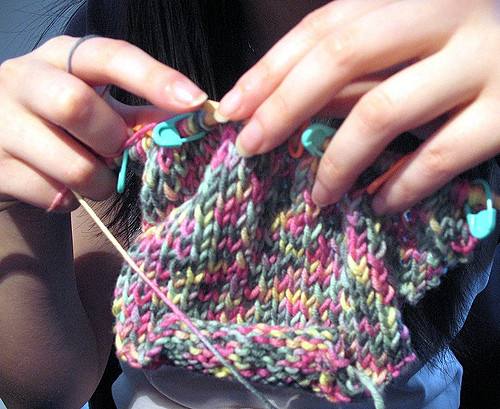
Knitting Away Depression and Anxiety

Photo by Athena, Creative Commons

Last week I dissed a story that I read online about self-care for bipolar disorder, which consisted of praise for sleep, pets, and creativity, things which anyone with bipolar already knows are good for their mental health.

It was pointed out to me by someone who should know that I was wrong to make fun of the researchers, since they were students learning valuable lessons about how to conduct research studies in the first place. Which led me to believe that it was all the reporter’s fault for presenting their results as news.

Anyway, as an apology to researchers and grad students everywhere, I’m now going to praise a research study that would otherwise get a “well, duh” from me.

Huffington Post (UK) shared the good news:

Knitting could save the NHS [National Health Service] vital funds because it leads to a healthier population, reducing depression and anxiety, slowing the onset of dementia and distracting from chronic pain, a new report has found.

The study was primarily focused on the benefits of knitting for the aging, but since depression and anxiety were two of the conditions that it reportedly relieves, I thought it might be relevant to bipolar disorder too. Now someone can do a study to confirm or deny this idea.

The report added that knitting “is a sociable activity that helps overcome isolation and loneliness, too often a feature of old age,” and, I might note, of mental illness.

There are many, many articles that extol the benefits of creative pursuits for those with bipolar disorder and other mental illnesses. Although the notion of “basket-weaving” is outmoded and stigmatizing, other creative activities are commonly suggested as part of self-care. (I discussed this in a post called “Tools for Tackling Bipolar Disorder.”)

Coloring seems to be the most popular recent trend, but drawing, painting, collages, and all sorts of needlework are well thought of too. (I would certainly put crocheting in the same category as knitting.)

But then there’s the other side of bipolar – mania. I don’t know a lot about creativity and mania because I only get hypomania. But I do know that when I’m hypomanic I can get a lot of writing done. (Whether it’s good writing is another question.)

However, if you’ll forgive anecdotal evidence, I once knew a woman who did experience full-blown mania as part of her disorder and was not well controlled on medication. One year at Christmas she decided to make green velvet dresses for all three of her daughters.

As she spoke of her progress over the ensuing weeks, however, it was clear that the project was not going well. She kept rethinking – and redoing – all the sewing. She didn’t like the design, or she didn’t think they’d fit right, or she saw some other flaw. She never finished the dresses.

Other people may have better experiences with mania and creativity, of course. I hope you’ll share with me if you have.

The idea of creativity as a way to be sociable intrigues me. Sewing circles are a time-honored tradition among neurotypical people as well as those with mental disorders. (A friend of mine and her cronies had what they called the “Stitch and Bitch Club.”) Needlepoint, quilting, and indeed all of the fabric arts can be group activities.

For those who aren’t into those kinds of needle-centric activities, there are classes in scrapbooking, drawing, painting, ceramics, sculpture, or other creative art forms, often available through local adult education programs, museums, or shops that sell arts and crafts supplies. And of course, writers’ groups abound at bookstores and other venues (though presenting one’s own work at such a gathering may be too daunting for some with self-esteem issues).

I should probably get involved with a writer’s group myself. I’ve had to give up needlework because of my eyesight and shaking hands. But I’m all for doing something for my brain. Lord knows, it needs all the help it can get.


References:

http://www.huffingtonpost.co.uk/entry/knitting-linked-to-health-benefits-including-reducing-depression-and-slowing-dementia-report-reveals_uk_5aa63cb0e4b07047bec7feee?ncid=tweetlnkukhpmg00000001

knitforpeace.org.uk

“Tools for Tackling Bipolar Disorder” https://wp.me/p4e9Hv-uT


Bipolar Me, Looking for Work

I have been very fortunate over the last few years in that I have been able to work and that, combined with my husband’s far-from-large – but steady – paycheck, we have been able to pay the bills. Now that seems to be changing.

After my last big emotional crash, I was unable to work at all, and after my husband’s major burnout, he was not able to work for a while. We ran through our IRAs and ended up in the situation where we are now.

I do writing, editing, and proofreading jobs from my home computer. It is really ideal, in that the projects usually come sporadically, with time in between them, so I seldom require more energy than I have available. I do not have to go out very much, or dress up very often and can work in my comfort zone, in my comfortable study, in my comfy pajamas. In these respects I am lucky or blessed, or however you wish to define it.

But clients have become a little thin on the ground lately. And I am afraid. I fear both a financial crash and an emotional one. The two are not unrelated. Finances and dealing with them were two of the largest triggers that started the major depression-plus-anxiety that swallowed me up for quite a few years.

Now I am feeling the pinch again. I felt it back in August, when my “proactive hypomania” helped me get through (https://wp.me/p4e9Hv-y4). But one can do that only so many times. Or at least I can’t summon the necessary mood at will. (Surprise, surprise.)

I have a writing project now, but it will run out in January. I have another client, but work from them is not as consistent as it used to be. We are already behind on some of our bills, including the mortgage.

So I am looking for more work, and it is scary.

The kind of work I’ve been doing is ideal, even when my symptoms increase. It lets me work around the deficits that bipolar heaps upon me. If I have a project due Monday, I can work during the weekend. If I have insomnia, I can work at night. If I am immobilized, I can usually schedule my deadlines so they don’t all hit at once.

I try to network, also at home from my computer, but that lets out job fairs and professional organizations and groups inhabited by people. I should put together a resume and sample packet and then try to figure out whom to send it to. Which is kind of like throwing spaghetti at the wall and seeing if any of it sticks. And the impressive kind of packet – slick, personalized, colorful, foil stamped, business-carded, sample-stuffed, stationeried – costs money to prepare, which of course is itself a problem since you have to spend it before you get results, if any.

So I have signed up with a number of sites that provide leads on jobs, and some of them don’t even want me to drive for Uber or move to Massachusetts.

Each time I apply, I ask myself, “Can I really do this job?”

Sometimes the answer is “Probably not, but I’m going to apply anyway.” Those are the 9-to-5 office jobs that would require me to upgrade my wardrobe just the teensiest little bit and try to keep the depressive phases under control if not totally under wraps. I have serious doubts about my ability to be “on” for eight hours a day, five days a week.

The Americans With Disabilities Act says that certain categories of people are entitled to “reasonable accommodations” in order to fulfill their job requirements. For someone like me, accommodations might include flextime, doing part of my work at home, time off for doctor appointments, and the like. If I got one of those jobs, I would have to reveal my mental disorder in order to receive accommodations, and I would have to decide whether to speak up about it before or after I got the job. Probably after.

The not-quite-as-frightening jobs are part-time ones, like working the circulation desk at the local library. They have their drawbacks too, including the same ones as full-time jobs, with less pay besides. Would it provide enough income to make a difference? Maybe not. Would I be able to do a part-time job and still squeeze in a little freelance work? I just don’t know. The idea is still daunting, to say the least.

(Another potential solution would be for my husband to get a better-paying job, but he is in the process of changing his meds, so that doesn’t seem likely either, at least for now.)

I know this seems like a better class of problem than many people with bipolar disorder have. Trying to keep up the mortgage payments is better than living under the Third St. bridge, fighting stray dogs for cold french fries. My husband’s job may be low-paying, but at least it’s steady and has a health insurance plan. I am truly grateful for these things.

And I am truly scared nonetheless. And tired. And sliding back down into depression.

Ten Opinions That May Offend Someone

Recently I noticed that I have been reluctant to offend people, particularly on Facebook. I keep my opinions to myself, especially on social and political matters, and dread being “unfriended” or starting (or continuing) a “flame war.”

This is not just a matter that relates to my bipolar disorder, though it is certainly that too. I have written a number of times about how having bipolar disorder and the behaviors it has brought out in me have cost me friends, even ones that I thought were “forever-friends.” These losses have affected me greatly, at times pushing my anxiety and depression buttons nearly as far as they can go.

Just as I have toned down my comments on subjects such as liberal vs. conservative issues, I have also let pass by posts in bipolar support groups and mental health memes on people’s general Facebook timelines that I’ve disagreed with. Oh, when I see a particularly incorrect or egregiously stigmatizing remark, I’ve been known to smack the person on the nose with a rolled-up newspaper, but often in a soft, “In my experience, you may not be correct” manner.

There are also conflicts within the bipolar world that I have strong opinions about but have not jumped into, for fear of offending someone. And I have to ask myself, what would be the consequences of offending someone in such a discussion?

Yes, I might be unfriended. More likely I would be ignored. Or (virtually) yelled at. In other words, if I offend someone with my opinions, they may in turn offend me with their opinions. And while that’s not a productive state of affairs, it’s hardly the end of the world. In an ideal world, I might cause someone to question or consider or engage in fruitful discussion. Not likely, but possible.

So, if I am trying to overcome my fear of offending people with my positions on guns, abortion, health care, climate change and the like, what am I to do about my opinions regarding bipolar disorder and mental health in general?

Well, first of all, I can state where I’m coming from: straight, white, female, married, childless, bipolar type 2, 60 years old, diagnosed for years and on any number of medications for years as well. Not much controversial there. That’s just facts about me and hard to deny.

But here are some things I believe that I know are sometimes subject to differences of opinion. And for what it’s worth, here’s my take on them.

  1. Psychotropic medications are good things. Yes, they can be overprescribed or improperly prescribed, but when dispensed and used correctly, they help.
  2. The Scientologists are way off base. Mental illness exists, and so do treatments for it.
  3. “Natural” or “holistic” treatments for mental illness are not enough to replace medication and talk therapy.
  4. Sunshine, exercise, and positive affirmations are good things, but also are not enough to replace medication and talk therapy. They do good for a number of people, less for others, and not much at all for some.
  5. We’ve got to change the popular dialogue about mental illness and violence. We must not let it go unchallenged. For that matter, we must change the popular dialogue about mental health in general.
  6. While it’s a good thing if those with mental illness take their medications properly, it is absolutely their right to refuse treatment.
  7. Health care (and insurance plans) should cover mental health care at the same levels as physical health. (Okay, that one’s not really controversial among the mental health community.)
  8. Emergency responders including police should all receive training in dealing with mental health issues, but they probably won’t.
  9. Most people don’t/won’t/can’t understand mental illness until it touches their own life in some way, and maybe not even then.
  10. Education about mental health issues should begin in grade school.

There. If you disagree with any of those statements or feel that I am an idiot for stating them, so be it.

Oh, and while we’re at it, persons with a mental health diagnosis should not automatically be prevented from owning guns, but people with domestic violence convictions should be.

From Panic to Manic to Proactive

Hypomania isn’t all bad. Right now I’m facing one of my worst triggers, and instead of retreating into depression, I kicked into hypomania. Then I harnessed as much of it as I could and channeled it to work for me.

Here’s the sitch. My longest and most vicious major depressive episode (which lasted literally several years, even when I was under treatment and on medication) was triggered by, among other things, massive financial problems. (There were other factors involved: health problems, family health problems, family problems, irrational thinking, strained relationships, and bad ol’ neurotransmitters.) I was unable to work. There was plenty of anxiety along with the depression, you can be sure.

So here I am again, almost a decade later, once again in dire financial straits. I’m able to work, but only part-time and telecommuting. Then one of my biggest, most reliable clients cut way, way back. I made the mortgage this month, but next month looks iffy at best.

In the past, this would have resulted in major mental symptoms, and physical ones as well. (Better you shouldn’t ask, but my digestive tract responds to stress in an overwhelming manner. I know, TMI.) I would be immobilized, unresponsive, and spend most of my days on the sofa when I wasn’t in the bathroom. I would abandon the financial problems – and myself – to my husband’s care, for as long as he could keep everything together. Until he burned out too.

During this new version of assorted crises, I seem to have a better handle on things, and I credit hypomania. I am trying to better the situation, though not yet particularly effectively, but steadily.

I am looking for new clients and more work from my old ones. I am looking for other sorts of telecommuting jobs, and even part-time outside work that seems to be within my modest-at-this-point capabilities.

(This process is hindered by the fact that all the job search engines are lousy. When I say I am a writer, I get leads for technical aerospace writing and service writers for car repair shops. When I say I’m an editor, I get invitations to become a driver for Uber. True story.)

I pursue these avenues every day. Soon after this post goes up, I have a networking “date” with a former client and a former co-worker.

And in the meantime? When the days stretch out with nothing happening and the sofa calling my name?

I blog. I work on my novel. And I take surveys.

Admittedly, none of these pursuits brings in mortgage-payment-sized money. But the surveys bring in a couple of dollars a day, which is pitiful, but helping with a getaway my husband and I planned before the finances went belly-up. (My husband is still working, but his wages alone aren’t enough to pay all the bills. We need both of us, a situation familiar to millions of people in the U.S., with or without mental illness.)

And, aside from the getaway, which it’s too late to cancel, we’ve instituted cutbacks. We typically spend way too much on food and now must revisit our newly married days, when we subsisted on mac-n-cheese and tomato sandwiches. It’ll be good for us, I tell myself. We could both stand to lose some weight.

I don’t know how long my “proactive hypomania” will last, when our financial situation will improve, or whether my energy level will survive after it does. Or, for that matter, whether we’ll end up eating cat food under the Third Street Bridge and fighting stray dogs for cold french fries.

But right now, for now, I’m dealing. And that’s something I couldn’t do before.