Bipolar 2 From Inside and Out

Big Box Mental Health

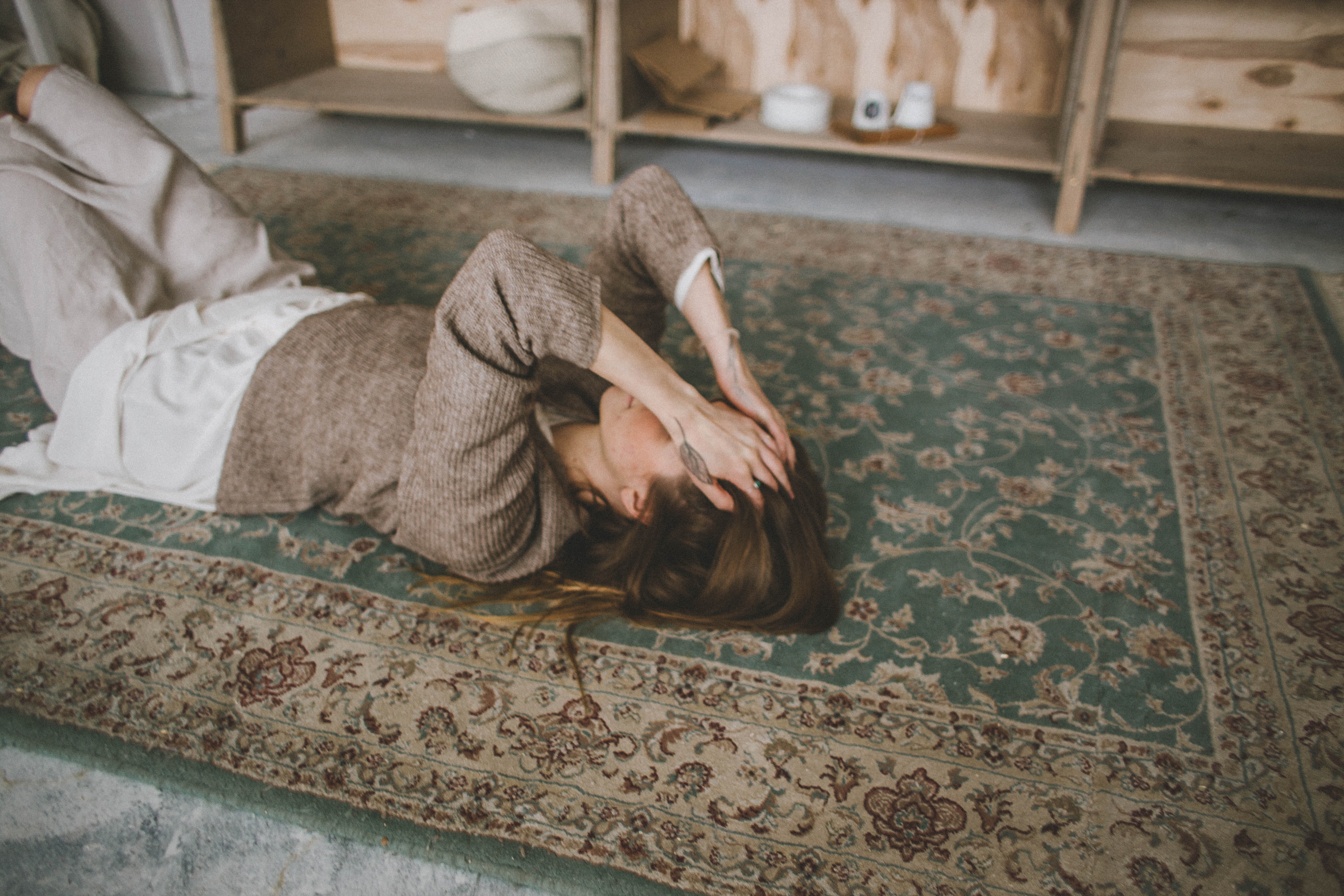
photo by rawpixel.com from Pexels

According to an article published on the blogsite She Knows, “a Boston-based company that manages mental health care for 40 million people, has opened a small clinic in a Walmart location in Carrollton, Texas, and has plans to expand the program in other retail locations throughout the country.”

And I don’t know whether to vomit or applaud.

Walmart’s ubiquity is one point in its favor. They’re everywhere. And for some people, whether they love or despise Walmart, it’s the only choice they have for groceries, household goods, or much of anything else. Those areas are also likely to be underserved by the mental health system, such as it is.

And sparse as the options offered by the Walmart walk-in clinics is – treatment for anxiety, depression, grief, relationship issues, and stress management – it’s more than a lot of people have access to now. The trial site is said to be staffed with one licensed clinical social worker, has a sliding fee scale for those with no insurance, and will soon be approved for Medicaid reimbursement (it is hoped). There will even be remote Skype therapy services if necessary.

All that is good, as far as it goes. But does it go far enough? Will people be able to get more than a pat on the head and a pep talk as they do their weekly or monthly shopping? How will the walk-in clinic handle referrals for people with serious mental illness or a need for psychotropic medication, something that clinical social workers can’t provide? How many people can get help from a single professional? How good is internet therapy? And what percentage of Walmart shoppers have access to the internet?

The walk-in clinics are touted as reducing stigma around mental health issues. After all, the thought is, getting your mental health services at Walmart will become as natural as getting a haircut or an eye exam there. Well, maybe. On the other hand, how many people are willing to have their friends and neighbors see them publically, sitting in the waiting room or ducking surreptitiously through the door? It seems to me it might perpetuate stigma, rather than lessening it.

Besides, Walmart is hardly a bastion of high-quality goods and services. Will the mental health services be second-rate as well? It could be that even second-rate care is better than no care at all. But it’s surely not enough to deal with issues that require long-term therapy with actual treatment plans; scheduled repeat visits; building a relationship with a particular therapist; access to medications; and all the other aspects of more effective treatment, especially considering complicated disorders like bipolar, OCD, or anorexia.

I fully admit that I hate Walmart – the way they have driven out local Mom and Pop stores, for example, and the way they treat their employees. But I have many choices of where to shop near where I live, and access to both therapists and psychiatrists, and insurance that covers my appointments and medications. If I weren’t looking through the lens of privilege, I might see things a lot differently.

So for now, I guess my attitude is to wait and see. One test location does not a Walmart Psych Empire make. Perhaps it will succeed; perhaps not. Perhaps it will become the Great Clips of the psychotherapy world.

But while I’m waiting, I’m hot holding my breath.


Birthdays on the Tightrope

One year on my birthday I woke up in Venice. The next year on my birthday I woke up in excruciating physical pain. For me, anyway, birthdays are like that–a crapshoot.

It’s been a long time since I really enjoyed birthdays (except for the one in Venice). As a young teen, I experienced a humiliating, traumatic event at a birthday party that triggered a severe depression. It wasn’t my birthday party, but it left me deeply wary of birthdays in general and birthday parties in particular.

Now my birthday is approaching again and I don’t know which way it’s going to go. Oh, I know I won’t wake up in Venice and I hope I don’t wake up in excruciating pain. But it’s going to be a crapshoot for sure.

You see, this year I’m walking that tightrope so familiar to people with bipolar disorder. Though I’ve been fairly stable through most of the year, now I find myself teetering. If I fall off to one side, there’s depression waiting to catch me. If I stumble the opposite way, hypomania beckons. One way or the other, I fear I’m going to be triggered.

Last week I wrote about my husband’s heart attack and how it was my turn to be the caregiver (https://wp.me/p4e9Hv-Kx). In that post I blithely claimed that I could handle the financial stuff for us. What I mean was that I could handle dealing with the bills and bureaucracy and the assorted financial frustrations that go with a medical crisis.

What I can’t do is make enough money to get us through it all. Dan hasn’t been able to work since his heart attack in late August. We’ve gotten by so far largely due to the generosity of family and friends, which I have been able to organize, track, budget, and spend. But now we’re running out of money.  And I’m afraid.

Naturally, I’m catastrophizing, one of my less-effective “coping” mechanisms. We might make the next mortgage payment, but after that I just don’t know. Even with Dan going back to work next month (we hope) and the small amount I make, I know it won’t stretch to cover the mortgage and all the other bills. I imagine that soon we will be living under the Third Street bridge and fighting stray dogs for cold french fries.

Plus, desperate finances, particular long-lasting and seemingly unrelenting, is one of my depression triggers. Dealing with our own finances at the same time as taking over my mother’s was deeply involved in the last major meltdown I experienced.

Dan is already taking up the slack, planning and coming up with ideas to get some more money to tide us over. But then I feel defeated, as though I’m not shouldering my weight in the caretaking department.

The ensuing chaos should descend right around my birthday. And I may descend right along with it.

On the other side of the tightrope lurks hypomania. My first book (on bipolar disorder) is getting closer to being published by Eliezer Tristan Publishing, which is a brainchild of Sarah Fader of Stigma Fighters. Publishing a book is a goal I’ve had for a good many decades and to have it about to happen is a real rush.

But. I can already feel myself planning fabulous things once the book exists. A launch party. T-shirts. Bookmarks. A promotional sign. Speaking engagements. Networking. Bookstore visits and author signings.  I may just be getting ideas that are beyond my ability to organize and pay for. I’ve already bought a top to wear to the not-yet-and-maybe-never-existing launch party. I may be planning things that I don’t have enough spoons to accomplish. I may be getting overwrought at the thought of reaching this goal and that way lies hypomania.

Or maybe depression, when reality doesn’t meet with my unnaturally inflated notions. Or both, I suppose. I have little experience with mixed states and may not recognize one until it bites me.

When my birthday comes, I may still be teetering this way and that. Or I may have either fallen or flown. I suppose it’s possible that I won’t lose my hard-won balance, though I’m not counting on it.

Whatever way it goes, it looks to be an interesting birthday. And not in the festive sense.


My Turn to Care

My husband had a heart attack this fall. He got a total of five stents, avoided open heart surgery, and is now in cardiac rehab. And I am helping take care of him.

Dan has been my caregiver as long as I’ve known him. He has stuck with me through the various ups and downs of bipolar disorder – when I was untreated, when I was struggling with finding the proper medication, when I shouted at him, when I was immobilized – whatever. I couldn’t have got through what I’ve been through without him.

Now I get to pay him back, at least a little, for all he has done for me. I have no training and little experience as a caregiver. But there a few things I can do for him, in addition to loving and supporting him as he has loved and supported me.

I can facilitate his appointments, meds, and procedures. Dan has a tendency to forget when is next appointment is, and with which of his many doctors. I have a perfectly good whiteboard in my study on which I note my own appointments as well as keep track of my work. It’s no trouble at all to add his and remind him.

Getting to his appointments is another area where I can help, especially since his cardiologist has a number of offices in various parts of town and in nearby suburbs where he practices on different days of the week. Since I’ve lived here most of my life, I know the area better than he does and I go with him to navigate. (He’s never gotten used to GPS.) I suggest routes that are easy to retrace and figure out when to leave to get there on time.

Dan has in the past had a habit of forgetting to take his various medications.  When that involved sertraline, I didn’t worry much since I know that once a certain level has built up in the body, missing a dose is not such a big deal. But with his blood thinner, a missed dose could lead to a clogged stent and another heart attack. So I proactively encourage him (as my therapist suggests I call nagging) to take them daily and on time.

I can handle financial stuff. With Dan being off work for so long and hospital and doctor bills adding up, our finances are getting pretty tricky. I can make sure I have steady work and even take on extra sometimes. I can fill out the forms for short-term leave, financial assistance, insurance, and other necessities.

I’ve even been able to set up PayPal and Facebook funding pleas to help us get a little extra cash to pay the utilities and other bills. (GoFundMe may be next once all the medical bills are in.)

I can handle computer stuff. Finding locations of offices and hospitals and the cardiac rehab place, phone numbers of financial aid programs, and names and side effects of medication are easier and quicker for me to do on my Mac than for him to do on his ancient PC. I can find things he needs on ebay for the lowest price. I can find and email various forms and records of expenses to wherever they need to go. This may sound minor, but believe me, it can take up a lot of time and frustration. I think of it under the heading of relieving his stress.

I also know how to network. A Facebook friend of mine teaches Tai Chi at a local Y. Through him I found out that the Y does not charge for his classes. And through Google I found that this month the Y waives membership fees if you donate canned goods to a local food pantry. The Y’s amenities include exercise classes and water aerobics, which I also could use. I also found a local Senior Center that has yoga and free weights (and community theater) as well.

I can understand his depression. Being faced with intimations of one’s mortality, combined with money problems and not being able to work can make anyone depressed. And Dan was already taking meds for depression before this current crisis even started. I am, of course, a third-degree black belt when it comes to depression. I know how he feels, why he’s feeling it, and what will and won’t work in helping him through it. I can be patient, supportive, and there to communicate or simply hug when he needs to, as he has so often done for me.

There’s not much care that my husband needs in the way of actual physical care. He is not so incapacitated that he needs help with feeding, dressing, bathing, or other tasks of daily living (other than changing his bandages when he cut his finger open and required eight stitches).

But I like to think that the support I can give him helps in his recovery by taking some of the stress off him, which his doctor recommends and which he has done for me innumerable times. We’re a team and this time it’s my turn to take some of the weight.

anise aroma art bazaar

Photo by Pixabay on Pexels.com

FDA looks to ban trans fats. Exceptions made if consumed while depressed, anxious, or without anything better to do.

The Daily Show

If that were true, I could eat all the trans fats I wanted, because my bipolar 2 often leaves me depressed and/or anxious.

In fact, my friend Leslie, who is my partner in depression, invented the perfect snack for depressive times: a ruffled potato chip dipped in cream cheese with an M&M on top. My husband starts to worry about me when I ask him to get those ingredients at the store.

But there’s a reason for our peculiar snack. Leslie and I are simply self-medicating.

“Blood sugar and carbohydrate intake are very important to the brain,” according to Everyday Health. “Your brain runs on glucose and depends on carbohydrates to supply the energy it needs. Carbohydrate intake also prompts the production and release of important neurotransmitters, such as serotonin, which creates a feeling of calm and well-being and reduces depression. So people with bipolar disorder may be indulging in a form of self-medication when they eat sugary snacks during depressive lows or manic highs.”

Not that self-medication is good for us. Bipolar people are more likely to have type 2 diabetes than the rest of the population. Three times more likely. One of the risk factors for type 2 diabetes is excessive weight and we all know and bitch about the weight gain from our assorted meds. Prescribing ourselves the Ben & Jerry’s treatment is not going to help, even though it may feel like it at the time.

So what are we supposed to be eating to help stabilize our moods? Of course, people will recommend turmeric, cider vinegar, or the latest “superfood.”  But every serious list I saw looked like this:

  • complex carbohydrates, especially fruits, vegetables, and whole grains
  • protein in the form of lean meats, poultry, fish, and low-fat dairy
  • omega-fatty acids from fatty fish (such as salmon), walnuts, and flaxseeds

In other words, exactly the kind of diet that is recommended to everyone for general good health! I think this comes under the heading of self-care, which is not always easy to do. Especially when I’m so depressed I can’t even manage a microwave cup of mac-n-cheese, or when my husband brings home a rack of ribs that he bought on sale.

But if I am stable enough to shop and cook and eat properly, those recommended foods may be good for my mood disorder as well as my body. According to bipolar.newlifeoutlook.com, eating protein “promotes serotonin and improved moods.” They also note that researchers in Italy say “increased consumption of omega fatty acids helps reduce depressive episodes and decreases the risk for suicide in patients with bipolar.” So apparently fish is brain food after all.

The other common suggestion in this realm of self-care is to keep a food journal, or I guess in this case a food and mood journal, to keep track of what you’re eating and how it affects your moods. If you’re the journalling sort, by all means, give this a try. As for me, I blog rather than journal and I know you don’t want to see a lot of “ate salmon, felt energized; ate chips with cream cheese and M&Ms, felt sad.”

The fact that food and mood are related is just one more example of how the brain and the body are intertwined, interdependent. It gives us a clue about the kinds of self-care that may do the most to help us stabilize our moods. And it gives us a chance to take more control, if we can, of our mental as well as physical health.

Mental Illness and Voting

people standing with signage on street

Photo by Rosemary Ketchum on Pexels.com

No, I’m not going to tell you how to vote. And I’m not going to say the country is bipolar just because we’re so divided. What I am going to do is talk about the issues you should be concerned with during these mid-term elections and what you need to do in order to make your vote count.

Despite the fact that mid-term elections are usually boring, plagued by low turn-outs and minor local issues, this time they are likely to have national significance. This time we are voting on people – representatives, senators, and governors – who will make the policy for our states and our nation, including policies that affect the mentally ill.

Health policy. We’re not voting directly on national health policy, but we are voting for or against the people who make those policies. Those policies include support for the ACA (Obamacare), especially its protections for those with pre-existing conditions.

This has become a hot-button issue this year and you will likely hear and see ads that tout the various candidates’ support for insurance that covers pre-existing conditions. The key here is to do a tiny bit of research. Whatever a candidate says now, has he or she always supported coverage for pre-existing conditions? Or does the candidate have a history of trying to do away with such insurance coverage? Promises are not the point here. Past actions are. Given the choice between an incumbent and a newcomer, I personally will go for the newcomer if the incumbent has a track record of trying to dismantle coverage for pre-existing conditions.

Another important issue for the mentally ill is safety net programs, particularly Social Security, Medicare, and Medicaid. Many people with mental illness depend on these programs to cover their basic living and medical expenses. Believe a candidate who wants to gut these programs. Many of them see the people who benefit from these programs, particularly SSDI, as “moochers,” “freeloaders,” and drags on society. If you or a loved one needs this kind of assistance, vote accordingly.

There may also be local issues regarding police training, housing, and the homeless that are relevant to persons with mental illness. Spend a few minutes researching before you vote. Some Internet sites such as BallotReady.org and Vote411.org can help.

Your vote. Your vote only counts if you actually cast it and that can be a problem for those with mental or emotional disorders. Going to the polls can seem an impossible feat. But given the significance of the coming elections, spending some spoons to do so can have long-term repercussions.

If you have trouble getting to the polls, first make sure you know where your polling place is this year. It may have changed since the last time you voted. Then ask around. Some cities, like mine, are offering free bus rides to polling places and some services like Uber are offering discounted fees. Neighbors who go to the same polling place or members of support groups you belong to can potentially provide transport. Don’t forget to ask friends and family, if you can. They may not realize how important voting is to you or the difficulty you have getting to the polls.

If your difficulty is not getting to the polling places, but being at them, plan ahead. There are likely to be crowds this year and you may want to have a support person with you, especially one who also plans to vote. You may even be able to call the polling place ahead of time and find out when their peak voting times are so you can avoid them. If possible, avoid the noon rush, when many people take a voting break from work, and just after local businesses close for the day.

You may have heard rumors of intimidation at the polls this year. These are likely exaggerated, as are predictions of civil unrest after the results are known.  If anyone tries to interfere with or influence your voting, find an official poll worker or ask for a provisional ballot, which is your legal right. Call the police if you have to. Rely on a support person to help you get through the process.

Remember that this year’s elections are important. If at all possible, VOTE.


The Appropriate Committee


blur close up focus gavel

Photo by Pixabay on Pexels.com

When I was a teenager, my life was spent resenting the Appropriate Committee. I always ran afoul of them.

It seemed there was some nebulous group, invisibly judging us and deciding whether what we did, or wore, or how we acted was appropriate or not.

Part of the Appropriate Committee was, of course, the adult world. Teenagers were supposed to be polite and respectful and not talk or play music too loudly. To do otherwise would be inappropriate.

The social milieu was also part of the Appropriate Committee. How we monitored one another to make sure our pants weren’t too short, or that we didn’t wear ankle socks, or that we didn’t stay in the Girl Scouts past Brownies. The punishment was derision.

Of course being bipolar didn’t help. Both adult and junior versions of the Appropriate Committee took note of my mood swings – my loud, inappropriate laughter; my extreme, inappropriate crying; my extended, inappropriate isolation.

I tried to defy the Appropriate Committee. I laughed at them, thought they were stupid, and vowed not to let them run my life. They did anyway, of course. They were all-powerful and I had not yet gained the wherewithal not to care. It was like a pervasive, invasive form of bullying: Everything I did or said was wrong. The rules changed capriciously. I was punished with disapproval, mocking, and the wrong kind of laughter.

And they broke me. At times I tried desperately to fit in, to live up to expectations, to suppress my differences. At other times, when the effort became simply too much, I let my natural weirdness float to the surface and looked for the few other like-minded individuals that could tolerate that. Depression set in and, rarely, hypomania. I still dressed “wrong.” I still laughed at the wrong things, and too loudly. I still isolated and wept.

I thought that when I grew to adulthood, I would no longer be subject to the censure of the Appropriate Committee, Of course, that was completely delusional. I learned that the Appropriate Committee for Adults was a powerful force. It is particularly insidious in the business world, where it judges not just your appearance, but even seemingly minor matters such as where and how you eat lunch (with the “cool kids,” of course) and how you spend your breaks (cigarettes OK, crossword puzzles not). There’s still the problem of being laughed at in meetings and needing to go into the restroom to cry.

I finally realized that the Appropriate Committee exists in part to perpetuate stigma. So many of the behaviors of people with mental illness defy societal norms. It’s the Committee that insists we fit in, no matter what we’re feeling. It’s the reason that neurodivergent people are so reluctant to admit their differences in public and try their best to “play through the pain,” something that isn’t good for them, or for athletes either, really.

I’ve had enough of the Appropriate Committee over the years. Now that I’m properly diagnosed and medicated and relatively stable, I could undoubtedly fit in better than at any time previously in my life. But I dress how I like, even if it’s pajamas. I play my music as loud as I want and laugh or cry along with it if I feel like it. I embrace my weirdness, my differences, and seek out like-minded weird friends who are also living in defiance of the Committee.

Maybe the Appropriate Committee is needed for some places and times and people, like theater audiences or church services. Maybe. But for the mentally ill the Committee is hurtful, and stigmatizing, and unrealistic. We can strive to overcome our differences and sometimes we need to. But sometimes it’s better just to embrace weirdness, differentness, and our membership in the group of the neurodivergent.

And when I despair, I remind myself of songwriter Steve Goodman’s lyric: “I may not be normal, but nobody is.” And I let it blast.

art board cooking flowers

Photo by Aphiwat chuangchoem on Pexels.com

Hypomania is as insidious as it is enjoyable.

I remember when I quit my 9–5 office job to go freelance. I remember when I made the decision. I had gotten my first bad review, ever, shortly after disclosing my bipolar disorder to my new boss.

I remember driving around shortly thereafter, running errands in the middle of the day. I felt the warm, golden glow that goes with either happiness or hypomania. I could wake when I pleased and work when I pleased. I could run those errands when I wanted. I could take my mother to her doctor’s appointments whenever I needed to. I could make and go to my own appointments as necessary.

Best of all, I felt as though I had enough spoons to do all this. I was able to keep up with the work and the errands and the appointments and, hey, if I got tired I could take a nap in the middle of the day.

But.

Eventually the glow wore off and the spoons ran out. Hypomania dumped me back into the depression I was oh-so-familiar with. I had more work to do and less energy to do it. My mother’s problems increased and I had to take over her finances as well as my own. I was teetering on the edge of a major depression, and then I fell off that cliff.

Anymore I don’t trust hypomania. First of all, I can’t distinguish it from actual happiness, competence, or satisfaction. I always question its sincerity and watch out of the corner of my eye for the coming crash. In other words, when I’m happy I can’t even enjoy happiness without reservation.

One way I keep track of my hypomania is by being aware of the number of spoons I have. If I’m flying on a hypomanic cloud, I feel replete with spoons. It never occurs to me that I will run out. When I’m experiencing garden-variety happiness, I still suffer at some point from lack of spoons. No matter how many pleasing things are scheduled for the day, I know deep inside that I cannot simply dive into all that bounty. My joy is measured out, as the poet said, in coffee spoons or in this case metaphoric spoons which I always visualize as small white plastic ones.

Stability for me does not mean that I can ignore my supply of spoons, either. I may be on an even keel, able to do most of what I want, but inevitably the spoon depletion hits, sooner or later. There is simply no more that I can do, much as I want to. And if I force myself past that point, I will surely pay for it in exhaustion, irritability, or isolation.

Spoons, therefore, run my life. If I am too happy, I have to watch for incipient spoon depletion.  If I am level, I know that I must still keep track of the spoons I use. And if I am low, my spoons can disappear altogether, to the familiar point of not being able to get out of bed.

I think the trap of hypomania is the worst of all. On a high like that I can lose track of my spoons – even forget that they are necessary. Fortunately, I don’t get the full-blown version of mania. I fear I would squander spoons recklessly, leaving me a terrible absence of any.

Spoons are a useful way to explain the energy demands of chronic and/or mental illnesses. My husband and I speak spoonie shorthand. But I wish I could experience that golden glow, that haze of happiness, that feeling of floating, without having to keep one eye on the spoon-meter.


two people laying on a bed covered with a floral comforter

Photo by rawpixel.com on Pexels.com

Here’s something bipolar people talk about amongst themselves but not so much with the world outside: sex.

The two poles of bipolar, depression and mania, govern a person’s appetite for sex. A lot of other factors determine whether the sex will be any good, or good for the participants.

Of course the above is true for neurotypical people as well. Moods and emotions – things in the brain – have as much or more to do with sex than stuff in the body. Thinking about sex and wanting sex, for example, start in the brain and without them, nothing else is likely to happen anywhere else.

The depression side of bipolar sex is easy enough to map out. After all, some of the hallmarks of depression are numbness, inability to enjoy things that once gave pleasure, and a tendency to isolate. It’s hard to get your motor revving with all that going on.

Still, the depressed person may want to have sex, or at least want to want to. That’s the way it’s been with me. When I’m in a thoroughly depressed state, sex doesn’t even cross my mind. When I’m not quite as depressed, I think I might like to have sex but don’t have the energy for it. And when I’m relatively stable, there’s the meds.

It’s well known that medications for bipolar disorder can kill the sex drive and in men the ability to get or maintain an erection. Some drugs supposedly have less effect on sexuality, but I’ve never found the magic combination. Or the supposed sex-friendly drug has had side effects I can’t tolerate.

So if bipolar depression is largely a big zero for bipolar sex, how about mania?

Overactive sex drive combined with a lack of impulse control can lead to sexual excess. The tendency to minimize risk-taking behaviors means that some of that sex can be detrimental to one’s health, relationships, and self-esteem. Riding that wave is exhilarating, but then, inevitably, comes the crash and the need to pick up the pieces.

Full disclosure here: Since I have bipolar 2 and my hypomania tends to turn sideways and come out as anxiety, I don’t experience that manic sex high. On the whole, I think I am grateful for this. Sex has never been such an important part of my life that I would risk everything for it.

Once, though, I did experience what you might call a hypomanic sex drive. It smoldered for a long time, requited but unconsummated, until the right set of circumstances presented themselves. It was a restlessness, an obsessive thought, a longing for connection, rather than an ungovernable rush of need. It gave me, perhaps, a glimpse of what it might be like to be manic and sexually stimulated. But I’ll never really know.

I do know that I am glad I had the experience, whatever it was. I’m glad it was safe sex.  I’m glad it didn’t destroy relationships. But just to feel that desire again, even if only for a brief time, even with the anxiety it provoked – and there was lots – it was a kind of affirmation that my body and brain are still connected in some vital way.

Most of the time I limp along with only thoughts of sex too fleeting to act upon. And maybe this is not the best way to live, but I have made my peace with it. And once in a great while, every now and then, I still am reminded that I can have a sexual existence.

Even though I have bipolar.

Of course, as always, your mileage may vary.

I believe that mental health education belongs in schools. I’ve written about that (https://wp.me/p4e9Hv-Jw). There’s good news about the subject and there’s less-good news. I’ll let you sort out which is which.

First, two U.S. states are now required by law to include mental health in their curriculum – New York and Virginia.

New York’s law mandates teaching the subject as part of the K-12 health curriculum, which has only two other specifically required topics: alcohol, drug and tobacco abuse and the prevention and detection of certain cancers. According to the law, the new education requirements seek to “open up dialogue about mental health and combat the stigma around the topic.” Free resources for New York schools, such as teacher training, are available online. These include lesson plans, though schools and teachers are free to design their own curricula.

In Virginia, mental health education is required only in grades 9-10. Huffington Post reports that the legislation came about “after state Sen. R. Creigh Deeds (D-Charlottesville) saw that three high school students had researched, developed and presented the proposed legislation, which struck close to home for the legislator, who had lost his son to suicide in 2013.”

Indeed, those laws are good things, though one could wish that the other 48 states would take note and do likewise. They are, of course, not forbidden to teach mental health education, and many do, especially around the topics of drug and alcohol prevention and suicide prevention. Some of them even require education on those two topics, along with bullying. Many of these efforts are sincere, significant, and even life-saving, but it is worth noting that bullying and student suicide are events for which schools are at risk of legal liability. One might wonder whether that has influenced the laws, rather than supporting more comprehensive mental health education.

Contrast the U.S. experience with England, where all secondary school teachers and other school staff are being given training that will help them identify mental health issues in children, including depression and anxiety, self-harm, and eating disorders. This is thanks in part to Prince Harry’s openness about needing counseling to help him deal with the death of his mother, Princess Diana, which happened when he was 12. The Prime Minister has said that the prince’s disclosures will help “smash the stigma” regarding mental illness and the need for getting help.

“The programme is delivered by social enterprise Mental Health First Aid (MHFA) England, backed by £200,000 in Government funding,” notes the Telegraph, “and will be extended to primary schools by 2022.”

The campaigns around the mental health mandate, especially those featuring Princes William and Harry, have focused on the need for Britons to abandon their “stiff upper lip” image and to accept that men can and do need to seek help for mental difficulties. While that is indeed a vital message, one hopes that girls and women do not get left behind in the efforts.

What about U.S. states where mental health education is not a fact of life?

For schools in the U.S. that have not mandated mental health education, the National Alliance for Mental Illness (NAMI) has developed resources that can help districts, schools, teachers, and families address the problem through the NAMI Parents & Teachers as Allies program of training.

They have also developed a presentation for students called NAMI Ending the Silence, “designed for middle and high school students that includes warning signs, facts and statistics and how to get help for themselves or a friend.” These programs are offered free to schools and communities. For more information, go to https://www.nami.org/Learn-More/Public-Policy/Mental-Health-in-Schools.

For a more DIY approach, youth.gov (https://youth.gov/youth-topics/youth-mental-health/school-based) recommends that schools “partner with community mental health organizations and agencies to develop an integrated, comprehensive program of support and services.” Among the actions they recommend are for schools and partnerships to:

  • develop evidence-based programs to provide positive school climate and promote student skills in dealing with bullying and conflicts, solving problems, developing healthy peer relationships, engaging in activities to prevent suicide and substance use, and so on.
  • develop early intervention services for students in need of additional supports such as skill groups to deal with grief, anger, anxiety, sadness, and so on.

In other words, for schools to spend the time and energy to do for themselves what the state and national governments are unwilling or unlikely to do.

To me, this is one of those times when a national curriculum makes sense, or at the very least a mandate in every state. Mental health education should be comprehensive, freely available, easy to access, and scientifically accurate for all schools and schoolchildren. The education this would provide and the statement it would make would be invaluable. Drug and alcohol, bullying, and suicide prevention are just a start, but a start that many states have not made.


The stigma and the misinformation surrounding mental illness are staggering.

How many adults believe that depression is “just being sad”? That the weather can be “bipolar”? That you can call yourself OCD because you’re a little too organized? That suicide threats are never acted on? That mentally ill people are dangerous? That prayer, or sunshine, or positive thinking will cure all mental disorders?

We can’t do much about educating and informing the adult population that all those beliefs are false. But we can avoid raising another generation that buys in to these misconceptions – if we start now with mental health education in schools.

Whenever someone proposes this idea, there are common objections. You want kindergartners to learn about schizophrenia. You’ll have impressionable kids thinking they have every disorder you teach about. Discussing suicide will give teens ideas.

Again, those are misconceptions. Mental health education in schools could look like this:

In kindergarten and grades 1-2, part of the health curriculum should be a unit about understanding emotions and how to deal with them. This is already being done when teachers tell kids to “use your words” or “use your indoor voice.” But more could be done in the area of teaching children how they can keep from letting anger, sadness, frustration, and other emotions cause them difficulties. Yes, this may involve techniques that resemble meditation and yes, these may be controversial, but the outcomes will be beneficial.

I also think that young children ought to be taught about autism, though it’s not strictly speaking a mental illness. They will certainly meet autistic children in their classes at this age. Helping them understand the condition at their age level will, one can hope, lead to more inclusion and less bullying of kids who are “different.”

Older elementary children can learn about mental illness in their science or health classes. This should be a unit that covers the basic facts: that mental illness is like physical illness in some ways, that treatment is available, that mental or emotional disorders will affect one in four Americans in their lifetimes, and that mentally ill persons are not generally dangerous.

Middle schoolers can be taught some more specifics: the names and symptoms of some of the most common disorders, the kinds of treatments available, famous people who have succeeded in spite of mental disorders and ordinary people who live fulfilling lives despite them. Speakers from local mental health centers or the school guidance counselor would be helpful.

The topics of self-harm and suicide should be brought up at the middle school level. It is sad but true that children in the middle school age range are affected by both – if not directly, by knowing a classmate who is. And suicide is the third leading cause of death for children ages 10-14. Learning the facts may help students who need help find it before it is too late.

In high school, the focus can shift to human psychology; more detail about serious psychological conditions; and the possibility of careers in mental health treatment, nursing, or advocacy. Topics of self-harm and suicide should be covered in greater detail, with discussions of how suicide affects the families and loved ones of those who die by suicide, how to recognize possible signs that a person is thinking about suicide or self-harm, and what does and doesn’t work when a person shows those signs.

The details of mental health education in schools still need to be worked out. These suggestions come from my experience as a person with bipolar disorder, who began showing symptoms while I was a child. Organizations such as NAMI (National Alliance on Mental Illness) and NIMH (National Institute of Mental Health) provide resources that can help in understanding the need for mental health education among school-aged children.

Understanding mental health is as important for schoolchildren as understanding physical health. Why should one get all the attention and the other virtually none? Mental health education that begins early can help children and their families in ways that will resonate far into the future.

Most adults have little to no understanding of the realities of mental illness. It doesn’t have to be the same for the next generation.