Bipolar 2 From Inside and Out

Posts tagged ‘mutual support’

I Chose Fat Over Misery

I was a skinny kid who grew a lot less skinny.

Do my bipolar meds have something to do with that?

Probably.

Do I care?

No.

I’ve noticed a lot of people with bipolar disorder panicking over the topic of weight gain. “I know I need meds, but I’m afraid of weight gain.” “What meds can I take that don’t cause weight gain?” “I tried X med but I quit because of the weight gain.”

It’s true that mental health and physical health are linked – what affects one may affect the other. And it’s true that medications have side effects, among which may be weight gain.

What I don’t get is why some people are so afraid of weight gain that they would sacrifice their mental health to avoid it.

Actually, I do sort of get it. There are ads everywhere that promote thinness – even to the point of illness – as the ideal for both feminine and masculine. There is a “War on Obesity” and plenty of people who will tell you that your body mass index is the most important number that identifies you. There are fat people jokes and gags that could not be told about any other group, be it race, sex, ethnicity, or religion. Plenty of comedians have made a good living making fun of fat – even their own. On TV, the fat character is never the hero.

Now back to the skinny, scrawny, bony kid I was. Undiagnosed and untreated. Aware that there was something wrong with me, but no idea what.

I had mini-meltdowns and major meltdowns. I had anxious twitches. I burst into tears when certain songs came on the radio – and not necessarily sad ones. “Take Me Home, Country Roads” tore me up. “I Am a Rock” could leave me sobbing. I took walks in the rain till I was soaked to the skin. I would laugh out loud for no reason that anyone else could see.

I was a mess. But a thin one.

It’s relatively recently that doctors and scientists have explored the connection between psychotropic medications and weight gain. Some have speculated that people who are depressed don’t eat much. Then, when their meds kick in and they feel better, their appetites return. In my case, I ate more when depressed and less when anxious. By the end of my undergraduate years, I was drinking banana milkshakes so my parents wouldn’t worry about how thin I was when they saw me at graduation.

Slowly, I got better with therapy and meds. Slowly, I gained weight. At first I didn’t notice. Then I did. I tried prescription diet pills and Lean Cuisine, which worked – for a while. But eventually, as is true of most dieters, I started piling the pounds back on. If one of my psychotropics was to blame, I couldn’t pinpoint which one, what with going on and off so many different ones and the cocktail of several I ended up with.

But as I got better and gained weight, I also started making friends, going on dates, finding lovers, and eventually meeting the man I would marry. Some of them were overweight, too. But that wasn’t what mattered most to them – or to me. Oh, I suppose there were people who were turned off by my well-padded physique. Maybe some of them were marvelous people, and maybe I would have enjoyed their company if they could have seen past the weight.

But the fact is, I now have plenty of close friends who just don’t give a damn about weight. Sometimes one of us will need to lose weight for a specific health reason like diabetes, and the rest of us will offer encouragement. But for the most part, we are who we are and love each other that way.

Given the choice – and I do have the choice – I will take the psychotropics that keep me reasonably stable and happy and productive. And yes, overweight. I remember the misery, the despair and pain, and no matter how I look, I don’t ever want to go back there. Self-esteem, for me at least, is better if it comes from the inside out, not the other way around.

The bottom line?

I’ve been skinny. I’ve been fat. Either way, I’m still me.


A Tattoo Is for Life…

…this one, especially so.

As soon as I learned about the semicolon tattoo, I knew I had to get one – and not just because I’m a huge grammar nerd. Because I’m bipolar and want to spread the word about mental health issues.

In writing, the semicolon indicates a place where a writer could have finished a sentence, but instead chose to go on. This makes the semicolon an effective and beautiful symbol for suicide prevention efforts and those who struggle with mental disorders.

Every day we choose to get out of bed; choose to take our medications; choose to make and go to our therapist appointments; choose to live another day; and choose to go on with our story.

This is not something I invented. Here are the people behind it: http://www.projectsemicolon.com/. And here are some stories about the phenomenon that have been working their way through the media and around the internet.

http://www.upworthy.com/have-you-seen-anyone-with-a-semicolon-tattoo-heres-what-its-about?c=ufb1

http://www.upworthy.com/9-beautiful-semicolon-tattoos-our-readers-shared-to-destigmatize-mental-health-challenges?c=ufb1

Here is my story.

I am possibly the last person you would ever expect to get a tattoo. I am probably the last person I would ever expect to get a tattoo. I’m in my 50s, a former English teacher, married for over 30 years, fond of reading and word puzzles and cats.

Nevertheless, the professionals at Monkey Bones Tattoos in Beavercreek, OH, did not seem surprised when I showed up one day and presented my wrist.

The naked wrist.

The naked wrist.

When I explained what I wanted – to put down a deposit and book an appointment to get a semicolon tattoo – I learned that they had a cancellation and could ink me right away.

What the hell, I thought. Might as well. I had learned about the tattoos about a month before and had thought it over plenty. It was by no means a spur-of-the-moment (or drunken) impulse.

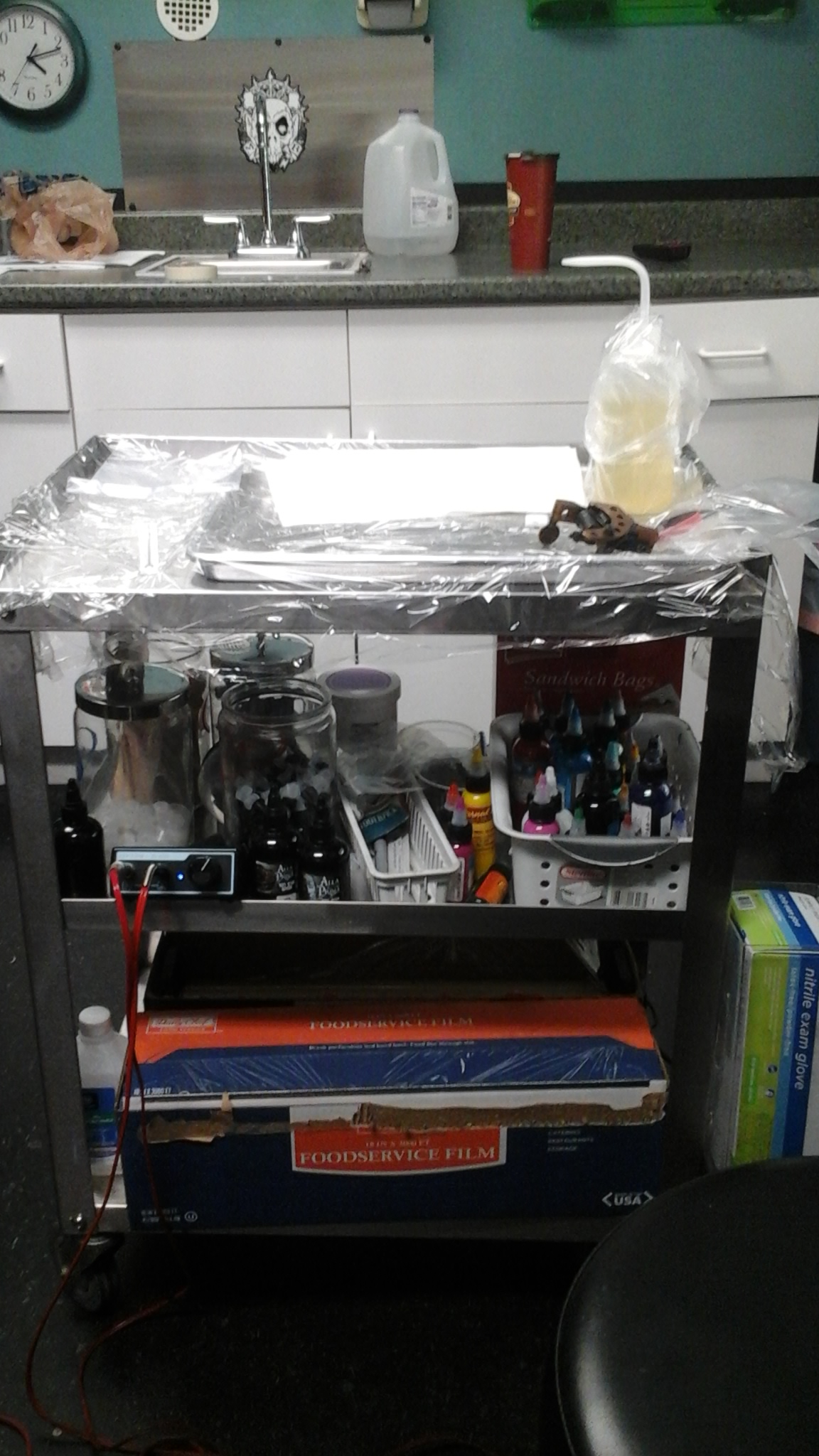
Mike Guidone showed me into his studio and explained the procedure.

The tattoo artists work station.

The tattoo artist’s work station.

He presented me with stencils of three different sizes of semicolons. I chose the in-between one. My wrist is fairly small, so the big one would have looked out of place, but the small one wasn’t noticeable enough. The idea is for people to see it and ask, so you can share the meaning and talk to them about mental health and combatting the stigma.

I sat in the dentist-type chair, listened to a brief explanation, got answers to some questions, and was ready to start.

In progress.

Did it hurt? Not particularly. It was a feeling between a scratch and a sting, and took only about ten minutes. Some aftercare instructions and I was done.

finished1

Success!

Then I paid ($80, the shop minimum), tipped Mike, and was on my way. Now I care for the tattoo while it heals, anointing it with unscented lotion several times a day, avoiding sunlight or soaking, and trying my very best not to scratch or pick at it.

The results.

The results.

Am I happy with it? You bet!

And, like I said, it’s for life! My story isn’t finished yet.

I Have This Friend . . .

To have a friend, be a friend.

That’s how the saying goes, and it goes double for friends with mental disorders.

But.

There are limits. Boundaries. You may call them self-serving or self-saving, but there they are.

When you are depressed, you neglect friends, and I have certainly done that. I permanently lost one friend over it. But another kept reaching out to me and I eventually responded. (We then had a good game of “I’m a bad friend.” “No, I’m a bad friend.” She thought she hadn’t reached out often enough. I was glad she put up with my silence as long as she did, until I was able to reach back.)

But I have this friend. We used to be tight. When we were both depressed, we shared our misery and so lessened it. But now that the Pit of Despair is no longer my permanent abode…I have to limit my contact.

Why? My social skills have never been terrific, but now I frequently find myself walking that invisible line between Bad Friend and burnout.

Why is it so hard to be a Good Friend?

First, there is the Disaster Report. Whenever I talk to her, I hear a litany of all that is going wrong in her life. Almost never anything else. I’m no fan of relentless positivity, but its opposite is sometimes hard to bear too, even though I’ve been guilty of the same.

Then there is the fact that any suggestions are pushed away, denied as impossible, dismissed as unworkable. Granted, we have completely different styles of coping, but I feel discounted, unheard. Eventually I gave up sharing anything but a few of my own tribulations, some awful jokes, and commiseration.

Then I get off the phone or off Facebook, usually after half an hour or so. That’s about my limit.

I still keep reaching out. I don’t want to be a Bad Friend. I know I can’t fix her, or even her day-to-day difficulties, the kind even non-depressed people have. But I sure wish there were a way I could help, short of climbing down into the Pit with her. I hope that listening, even half an hour at a time, does some good.

And when I talk to other friends of mine, I try to remember to ask how their day was and what’s new in their life and have they seen any good movies and what is a mutual friend doing. I try to listen if they have something to share, good or bad, and I try not to overwhelm them or play whose-life-sucks-the-most. I try to be a Not-Bad Friend, even if I do have to lean on my friends, at times pretty heavily.

And they do likewise, when they can.

The Lighter Side of Insomnia

I’ve had insomnia. Lots. January seems to be an especially bad time of year for me. A sleeping pill reduced the frequency, but nothing banishes it completely – the obsessive thoughts, the catastrophizing, the worrying, the worrying about how worried I am. We’ve all been there at 3:00 a.m., trying to will ourselves to sleep.

What could possibly be light-hearted about that?

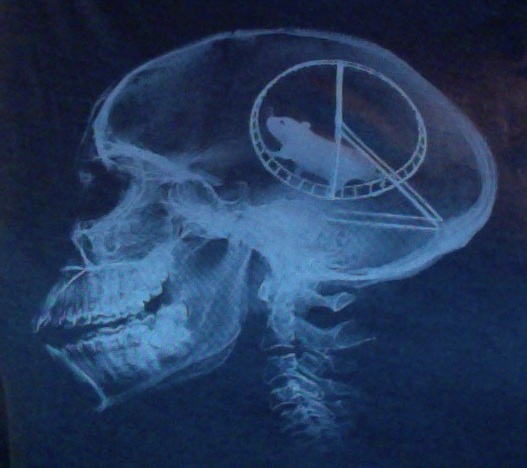
Just this: An actual x-ray of my insomniac self:

T-shirt by Headline Shirts. Photo by me.

Indeed, my friend Leslie and I, both afflicted with insomnia, recognized this as our mutual problem. We began to end our late-night commiseration with the sign-off, “Death to Hamsters!”

Our mutual friend, the incomparable, incorrigible Tom Smith, heard of this and ran with it. Here is the result, for your amusement.

Imagine, if you will, this performed as a sing-along with a hundred people joining in on the chorus. It may not put you to sleep, but at least it puts insomnia in some kind of loony perspective.

At least it does for me.

Notes:

No hamsters were harmed in the making of this blog post. A rubber duck may have been squeezed, but it had nothing to squawk about. So if you’re with PETA, chill already.

Lyrics to Hamster Brain available here: http://www.tomsmithonline.com/lyrics/hamster_brain.htm.

Surviving High School (and Reunions)

I’ve only ever gone to one of my high school reunions – the 25th. Now the 40th is nearly here.

I was terrified then. This time is not as bad. I don’t have the energy or the attention span to get all worked up about it. Will I go? Probably not. It’s like the Tower of Terror at DisneyWorld – I did it once and I’m glad I did, but I have no desire to do it again.

My difficulties with the reunion even made the local paper. I went to a high school friend, Mary, for advice. She was quite helpful. She also, with my permission, wrote about my panic in her newspaper column.

Here’s what I told her: “Over the last quarter century I’ve confronted and dealt with a number of pieces of my past and tried to make my peace with them. High school, however, is not one of those things. I’m afraid I’ll have flashbacks.”

Mary did note that “Janet had more reason than most to be apprehensive. While I had been actively ignored, she had been, at times, actively picked on – one of those kids too brainy, too head-in-the-clouds, to comprehend how to navigate the social firmament.”

Pretty close. Except that I wouldn’t have called it “actively picked on.” High school was merely another part of the continuum of bullying and harassment that I experienced from childhood on. In high school no one threw literal rocks at me, but by then they didn’t have to. I was conditioned to cringe.

The head-in-the-clouds part was also not entirely accurate. As I walked through the halls between classes, my head was down and my nose was in a book. I was trying to perfect my “invisible” act and practice that advice that the bullied always get – “just ignore them.”

And I wouldn’t call the social milieu in high school “the firmament.” Just sayin’.

I did go to the reunion, though. I got my hair done for the event and told my stylist to make me look “successful and sane.” She replied, “Oh, no, here comes the wish list.” “At least I didn’t ask for young and thin,” I pointed out.

I went, taking along my husband and telling him not to leave my side. I’m sure the husband came as a surprise to most people there, proof that I had at least managed to navigate that particular social firmament. And if my hairstyle did proclaim some degree of sanity, that was likely a surprise as well.

I survived. My big insight: “Not everyone hated me.” I should have known that already, since I had friends like Mary and a few others I’m still in touch with. But old fears die hard.

Mary was much more philosophical: “In adolescence our images are refracted through so many distorted lights – the way we see ourselves, the way everyone else sees us, the way we fancy everyone else sees us. What mattered was that we could all talk face to face, as adults, as equals, as friends.”

She may have been right, though “Not everyone hated me” was, in its way, a major alteration in my outlook and pretty much as far as I’d gotten by then in my continuing struggle to come to grips with my life.

Things have changed a lot since then and so have I. Now I realize I have nothing to prove, and no need to try.

Taking Turns

For the past several days, I have been dealing with a husband in severe pain from osteoarthritis, plantar fasciitis, and back spasms.

I have driven him to Urgent Care, picked up prescriptions, provided him with a walking stick and a cane, set up a heating pad, researched his conditions on the computer, talked him through his exercises, and more. I wish I could do all this without getting cranky. I wish he would follow my advice more, especially when I tell him to see a doctor. But sometimes he’s such a guy.

What I have been doing for him is nothing – at all – compared to what he did for me and how he supported me when I had my last breakdown, which lasted several years. He did everything. Shopping, pet care, cooking, paying bills, earning a paycheck. Not to mention loving me through the despair, irrational thinking, sobbing uncontrollably, immobilization, and all the rest.

He really took that whole “in sickness and in health” thing to heart. Now it’s my turn to do likewise.

I am completely out of spoons. I will carry on anyway. He deserves it.

Risky Business

It’s always a risk when you admit publicly to having a mental disorder. But I am thinking of doing just that.

I have not had uniform success when I have revealed to others that I have bipolar disorder (or chronic depression, either). There have been a lot of “me too’s” and “so’s my brother/sister/mother/friend/etc.” and then we compare diagnoses and symptoms and meds and war stories and have a jolly time.

Other times, well… My mother hoped my problems would go away after I got a “good, steady job.” My father said he didn’t mind if I went to a therapist “as long as he didn’t have to go too.” My mother-in-law “doesn’t believe in mental illness.” My rotten-ex-boyfriend “jokingly” suggested that if we went to couples counseling, he and the therapist could agree that I was a danger to self and others and have me put away. (I knew that wasn’t true and told him so. We went. It didn’t help.)

Recently I have started two blogs, this one for mental health issues and a more general one called Et Cetera, etc. (which you’re welcome to visit if you like). I have linked Et Cetera to my Facebook account, but so far I haven’t linked this one.

Starting these blogs feels like a risk to me, especially since I’ve set WordPress to remind me to post at least once a week. Making a commitment that I will pull myself together four times a month (eight if you count the other blog) and write is something I’m not completely sure I can do. I have good days and bad days, and sometimes those bad days pile up in a bunch.

But I have also taken a bigger risk. Creative Nonfiction magazine requested submissions to be considered for its Mental Health Anthology. So I submitted one. If it gets chosen, I will be “coming out” as bipolar and a mental patient. When (if) that happens, I will likely do the “big reveal” on Facebook. A fair number of my close friends already know, but they constitute only a small segment of my FB friends.

(Creative Nonfiction accepts only manuscripts that have not been published elsewhere. If they don’t accept mine, you can bet it’s going up on this blog the next day.)

So, having thoroughly terrified myself, I will anxiously await the results. And in the meantime, I’ll try to keep up the regular blogging.

Wish me luck.

Blog for Mental Health

“I pledge my commitment to the Blog for Mental Health 2014 Project. I will blog about mental health topics not only for myself, but for others. By displaying this badge, I show my pride, dedication, and acceptance for mental health. I use this to promote mental health education in the struggle to erase stigma.”

For those of you interested in this campaign, find more information at http://acanvasoftheminds.com/2014/01/07/blog-for-mental-health-2014/

As you know, my blog is all about mental health, so I am delighted to join with other bloggers to promote our experiences and interests.

Isn’t It Romantic?

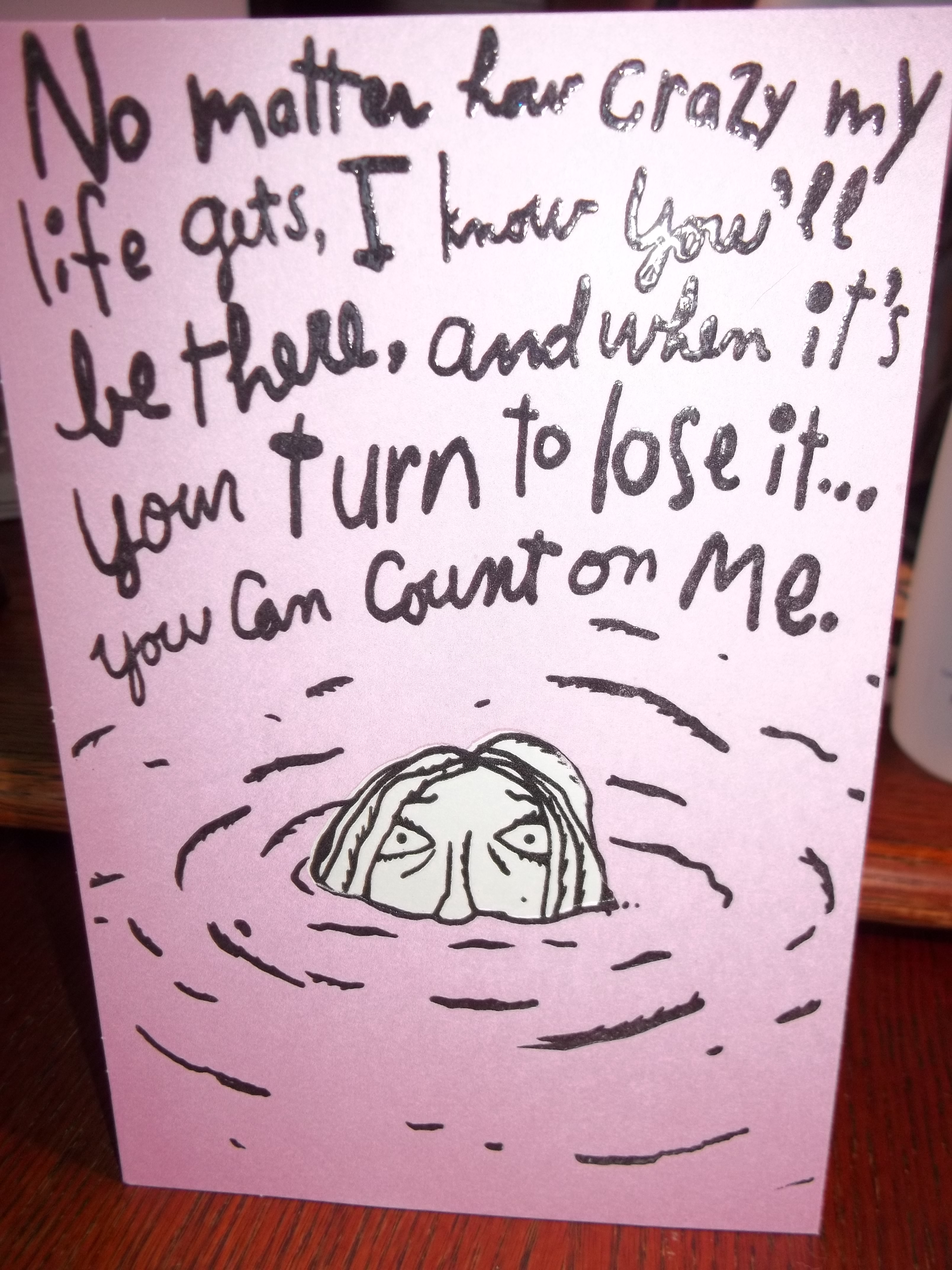
Here is the Valentine’s card my husband gave me.

outside

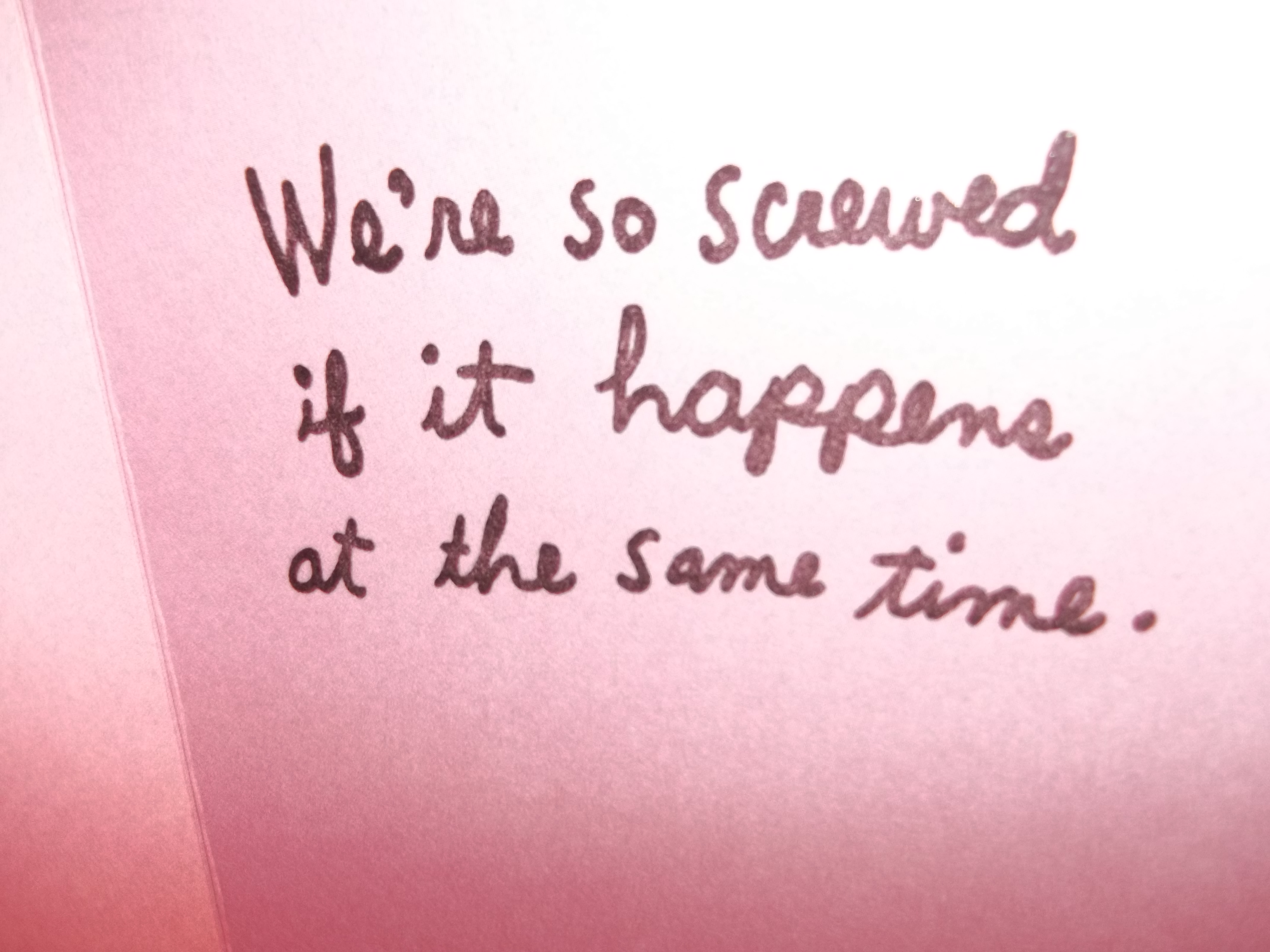
And here’s what it said inside.

inside

Truer words were never … well, mass-produced.

(He doesn’t have bipolar disorder (any type), but has had a couple of depressive episodes, enough to know what the experience is like. Even took Prozac for a while.)