Bipolar 2 From Inside and Out

Posts tagged ‘mutual support’

What My Husband Has Learned From My Bipolar Disorder

First, let me say I’ve learned a lot from my husband and from my bipolar disorder. The two of us have been married for more than 35 years and I’ve been bipolar all that time. I’ve learned a lot from him about caregiving, steadfast love, and coping, among many other things.

But he’s also learned a few things from living with me and my disorder. I asked him to tell me about it, and here’s what he said he learned.

He can’t fix me or control my emotions. (Of course, the corollary to this is neither can I.) “It’s not necessarily my fault when she feels bad and it’s not my responsibility to make her feel better,” he says. This particular lesson caused both of us a lot of trouble early in our marriage. Dan would blame himself for my moods and become angry when he couldn’t do anything to make me feel better or even respond to his attempts. He was in there trying, but he had to learn to let go and help me find ways to work toward my own healing.

He knows my comfort items and my triggers. Over the years, Dan has learned that while he can’t make me better by himself, he can help me get the things that bring me comfort and avoid the things that trigger me. For example, he knows I find watching cooking shows calming. Him, not so much. But often he joins me on the sofa while I indulge. “Sometimes I’ll sit and be with her even if I’m not really interested in the cooking shows,” he says. “Just to be with her. I do it because I want to be with her.” Sometimes I do that with him too, when he watches shows about treasure hunting or weird science. Sometimes we even sit together and watch shows we both like, such as Forged in Fire.

He has also learned about things that trigger my anxiety, such as loud noises. “I have to be mindful if she’s in a place where loud noises affect her,” he says.  “If I do have to hammer or pound on something, I give a warning so that she’s not blindsided or startled by it.” “There’s going to be a crashing noise,” he says, or “Everything’s okay. I just dropped a pan.” He also lets me know where he’s going to be and how to get hold of him in case I panic badly.

He knows to ask, offer, or get out of the way. I can be needy at times, but don’t always know what it is I need. At times like that he’ll ask, “Do you need a hug? Do you need to eat?” Other times he’ll simply give me that hug or put on one of my comfort movies (The Mikado or The Pirates of Penzance usually draws me out of bed). If neither one of us can figure out what might help, he’ll simply let me alone until I feel better or until I think of something.

If I do ask for something I need he’ll say, “You can get that.” If he can’t do what I need, we’ll sometimes negotiate a partial solution. Or he’ll give me the tools to do it myself.

He knows how to help with self-care. Like so many people with bipolar disorder, I find that taking a shower, getting dressed, and going out requires quite a number of spoons, sometimes more than I have. Dan helps with that. For example, he’ll give me a clean towel and clean clothes, and remind me that I need that shower. Or he’ll encourage me to get out of the house by negotiating how many errands we’ll do on a given day or by including a stop at a bookstore or a favorite restaurant among them.

He knows that self-care is important for him too. Sometimes he’s the one who needs that hug or that alone time, and he asks for it. He knows that I have learned that he needs these things too and that I will ask him what he needs, or offer it, or say, “You can get that” to him. As the saying goes, you can’t pour from an empty vessel.

A lot of what we’ve both learned from my bipolar disorder are just the things that any partners need to learn: Tolerance. Give-and-take. Negotiation. Touching. Sharing. Civility. Support. We’ve both grown from the experience and that to me is very important. This marriage would never have worked if either one of us had stayed stuck in the way we were in the early days.
My Turn to Care

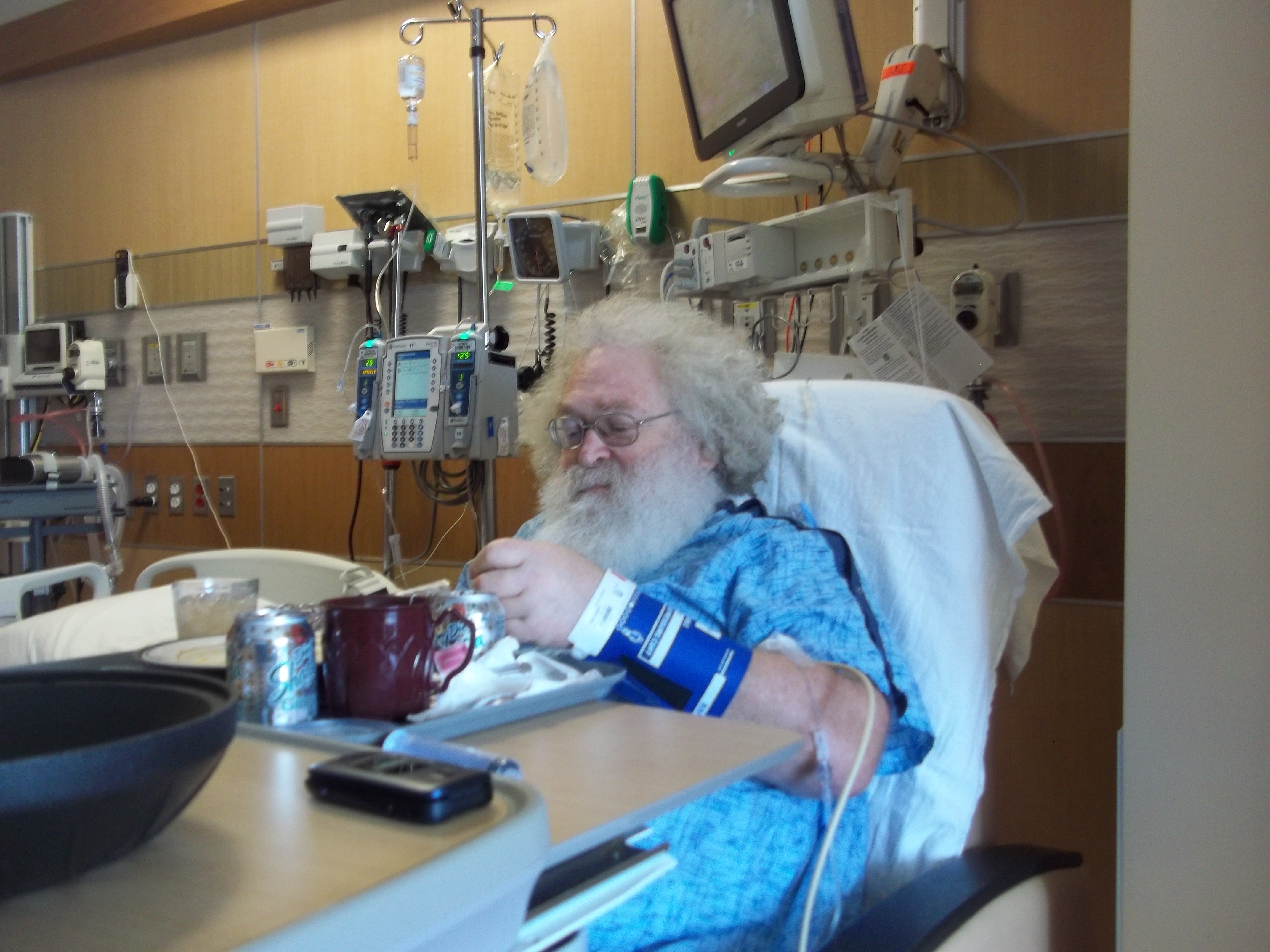
My husband had a heart attack this fall. He got a total of five stents, avoided open heart surgery, and is now in cardiac rehab. And I am helping take care of him.

Dan has been my caregiver as long as I’ve known him. He has stuck with me through the various ups and downs of bipolar disorder – when I was untreated, when I was struggling with finding the proper medication, when I shouted at him, when I was immobilized – whatever. I couldn’t have got through what I’ve been through without him.

Now I get to pay him back, at least a little, for all he has done for me. I have no training and little experience as a caregiver. But there a few things I can do for him, in addition to loving and supporting him as he has loved and supported me.

I can facilitate his appointments, meds, and procedures. Dan has a tendency to forget when is next appointment is, and with which of his many doctors. I have a perfectly good whiteboard in my study on which I note my own appointments as well as keep track of my work. It’s no trouble at all to add his and remind him.

Getting to his appointments is another area where I can help, especially since his cardiologist has a number of offices in various parts of town and in nearby suburbs where he practices on different days of the week. Since I’ve lived here most of my life, I know the area better than he does and I go with him to navigate. (He’s never gotten used to GPS.) I suggest routes that are easy to retrace and figure out when to leave to get there on time.

Dan has in the past had a habit of forgetting to take his various medications.  When that involved sertraline, I didn’t worry much since I know that once a certain level has built up in the body, missing a dose is not such a big deal. But with his blood thinner, a missed dose could lead to a clogged stent and another heart attack. So I proactively encourage him (as my therapist suggests I call nagging) to take them daily and on time.

I can handle financial stuff. With Dan being off work for so long and hospital and doctor bills adding up, our finances are getting pretty tricky. I can make sure I have steady work and even take on extra sometimes. I can fill out the forms for short-term leave, financial assistance, insurance, and other necessities.

I’ve even been able to set up PayPal and Facebook funding pleas to help us get a little extra cash to pay the utilities and other bills. (GoFundMe may be next once all the medical bills are in.)

I can handle computer stuff. Finding locations of offices and hospitals and the cardiac rehab place, phone numbers of financial aid programs, and names and side effects of medication are easier and quicker for me to do on my Mac than for him to do on his ancient PC. I can find things he needs on ebay for the lowest price. I can find and email various forms and records of expenses to wherever they need to go. This may sound minor, but believe me, it can take up a lot of time and frustration. I think of it under the heading of relieving his stress.

I also know how to network. A Facebook friend of mine teaches Tai Chi at a local Y. Through him I found out that the Y does not charge for his classes. And through Google I found that this month the Y waives membership fees if you donate canned goods to a local food pantry. The Y’s amenities include exercise classes and water aerobics, which I also could use. I also found a local Senior Center that has yoga and free weights (and community theater) as well.

I can understand his depression. Being faced with intimations of one’s mortality, combined with money problems and not being able to work can make anyone depressed. And Dan was already taking meds for depression before this current crisis even started. I am, of course, a third-degree black belt when it comes to depression. I know how he feels, why he’s feeling it, and what will and won’t work in helping him through it. I can be patient, supportive, and there to communicate or simply hug when he needs to, as he has so often done for me.

There’s not much care that my husband needs in the way of actual physical care. He is not so incapacitated that he needs help with feeding, dressing, bathing, or other tasks of daily living (other than changing his bandages when he cut his finger open and required eight stitches).

But I like to think that the support I can give him helps in his recovery by taking some of the stress off him, which his doctor recommends and which he has done for me innumerable times. We’re a team and this time it’s my turn to take some of the weight.

Mental Illness and Voting

people standing with signage on street

Photo by Rosemary Ketchum on Pexels.com

No, I’m not going to tell you how to vote. And I’m not going to say the country is bipolar just because we’re so divided. What I am going to do is talk about the issues you should be concerned with during these mid-term elections and what you need to do in order to make your vote count.

Despite the fact that mid-term elections are usually boring, plagued by low turn-outs and minor local issues, this time they are likely to have national significance. This time we are voting on people – representatives, senators, and governors – who will make the policy for our states and our nation, including policies that affect the mentally ill.

Health policy. We’re not voting directly on national health policy, but we are voting for or against the people who make those policies. Those policies include support for the ACA (Obamacare), especially its protections for those with pre-existing conditions.

This has become a hot-button issue this year and you will likely hear and see ads that tout the various candidates’ support for insurance that covers pre-existing conditions. The key here is to do a tiny bit of research. Whatever a candidate says now, has he or she always supported coverage for pre-existing conditions? Or does the candidate have a history of trying to do away with such insurance coverage? Promises are not the point here. Past actions are. Given the choice between an incumbent and a newcomer, I personally will go for the newcomer if the incumbent has a track record of trying to dismantle coverage for pre-existing conditions.

Another important issue for the mentally ill is safety net programs, particularly Social Security, Medicare, and Medicaid. Many people with mental illness depend on these programs to cover their basic living and medical expenses. Believe a candidate who wants to gut these programs. Many of them see the people who benefit from these programs, particularly SSDI, as “moochers,” “freeloaders,” and drags on society. If you or a loved one needs this kind of assistance, vote accordingly.

There may also be local issues regarding police training, housing, and the homeless that are relevant to persons with mental illness. Spend a few minutes researching before you vote. Some Internet sites such as BallotReady.org and Vote411.org can help.

Your vote. Your vote only counts if you actually cast it and that can be a problem for those with mental or emotional disorders. Going to the polls can seem an impossible feat. But given the significance of the coming elections, spending some spoons to do so can have long-term repercussions.

If you have trouble getting to the polls, first make sure you know where your polling place is this year. It may have changed since the last time you voted. Then ask around. Some cities, like mine, are offering free bus rides to polling places and some services like Uber are offering discounted fees. Neighbors who go to the same polling place or members of support groups you belong to can potentially provide transport. Don’t forget to ask friends and family, if you can. They may not realize how important voting is to you or the difficulty you have getting to the polls.

If your difficulty is not getting to the polling places, but being at them, plan ahead. There are likely to be crowds this year and you may want to have a support person with you, especially one who also plans to vote. You may even be able to call the polling place ahead of time and find out when their peak voting times are so you can avoid them. If possible, avoid the noon rush, when many people take a voting break from work, and just after local businesses close for the day.

You may have heard rumors of intimidation at the polls this year. These are likely exaggerated, as are predictions of civil unrest after the results are known.  If anyone tries to interfere with or influence your voting, find an official poll worker or ask for a provisional ballot, which is your legal right. Call the police if you have to. Rely on a support person to help you get through the process.

Remember that this year’s elections are important. If at all possible, VOTE.


Inspiration and Mental Illness

high angle view of pencils on table

Photo by Pixabay on Pexels.com

I was manicky this week and it affected my blog writing. I had a post all ready to go this morning, but last night I thought about it and realized it was crap. It meandered, without focus. The ideas were confused. It sucked. So I got up this morning to write something different instead.

Many of you may recognize this aspect of mania or hypomania. You do something that you think is fantastic  while in the grip of mania and when you come down, you can’t see what you ever saw in it. Or you begin an ambitious project that you work on and work on but never can complete.

I was toying with the idea of “inspiration porn” – the sort of post or story or TV show that holds someone up as an ideal, usually because they’ve lost a bunch of weight and gotten themselves into shape, or have an illness or disability and managed to do – whatever – again. Think “The Biggest Loser.” Or amputees who’ve learned to eat with their feet. It’s put out there for entertainment and to make everyone feel good that whoever it is conquered whatever it was. It takes a regular person out of the context of their lives and reduces them to their condition. And the subtext is that if this brave person can become able to do or be whatever again, so can everyone else with the same problem.

It happened to a friend of mine who was at a gym on a treadmill. A woman came up to her and said how inspiring it was to see her working so hard to lose all that weight. “Excuse me?” was my friend’s reaction. She was doing it for herself, not for anyone else, and especially not to inspire some random stranger.

The thing is, there really isn’t any mental health inspiration porn. For one thing, it would make lousy TV. Oh, they’d get advertisers – all those purveyors of psychotropics that clog the airwaves. But who would watch a depressed person finally getting out of bed and taking a shower, unless she had a coach yelling at her?

Inspiration for those of us with mental health problems takes other forms. Celebrities who speak about their struggles with mental illness are one. They are inspiring because they break the taboo about talking about mental illness in public and because they have done so to help other people.

Then there are the superstars of mental health inspiration. Carrie Fisher, Glenn Close, and Jenny Lawson, to name a few. These are people who focus light on the difficulties and struggles of mental illness. Their communications don’t stop with the announcement that they have a condition and encouraging people to get treatment, though those are also good things. But the real inspirations are those who open their lives, take others with them through the journey of symptoms, treatments, relapses, small triumphs, and bigger successes. They speak and keep speaking and keep speaking their message. They don’t make the process sound easy, because it isn’t. And they speak with authenticity and authority because we know they’ve been there.

They do inspire us because they are honest and open, and they clearly care about helping others in the same proverbial boat.

We lost a true inspiration when we lost Mama Carrie. No one will ever really take her place. But you can tell that she was an inspiration by the many people whose life she touched and how they remember her. If someday they make a movie of her life, I hope it features not only her personal struggles, but all that she did for others. Her speaking and continuing to speak despite – or because – of her ongoing struggles.

We can carry on her work by doing the same, by shedding the stigma, by talking to others, even family and friends. Recently a friend “came out” to me that she takes an antidepressant and an anti-anxiety med (the same ones I take). I was proud of her, but I didn’t make a big deal of it. But I was impressed and pleased that she was able and willing to share even that much. She was saying that she was part of our tribe.

As Jenny Lawson reminds us, in this we are alone together. And that’s inspiring. 

Talking to Ourselves

people woman relaxation girl

Photo by Public Domain Pictures on Pexels.com

Recently on Facebook I asked how many of my friends knew the meaning of the semicolon – other than as a mark of punctuation. About two-thirds of those who responded did. The rest either didn’t or had some vague idea but no real knowledge. But I’m pretty vocal about mental health issues and a fair number of my friends have similar problems and difficulties, so that two-thirds figure is likely not representative of the population at large.

Yet I see increasing numbers of t-shirts, bracelets, and other paraphernalia adorned with semicolons and sometimes colorful butterflies or the word “warriors.” But nowhere does it say what the semicolon stands for. For those of you who don’t know, the semicolon marks that place in a sentence where a writer could have stopped, but chose to go on. As such, it has become a symbol for suicide prevention and mental health awareness.

I have a semicolon tattoo myself. I don’t regret getting it. It reminds me, as the saying goes, that my story isn’t over. But when I got it, I also hoped it would be a tool for education – that I could explain to those who saw it and asked what the symbol meant.

Unfortunately, no one has asked.

I’d hate to think that the semicolon has become like a secret handshake that identifies members of our tribe to one another, but leaves out the rest of the world. As stigma-fighting symbols go, it doesn’t seem terribly effective.

The political conversation has become so fraught that no one talks to anyone who doesn’t believe in the same things. And I’m afraid that, like them, we’re largely talking to ourselves.

Self-talk is important – definitely something we should pay attention to and work on improving. But if we really want to fight stigma, we need to talk to other people about it.

I see a fair number of stigma-fighting memes and discussions, but unfortunately, most of them take place in mental health support groups, where the message is not as much needed as in the larger world outside our band of the mentally ill.

Of course, there are organizations such as NAMI, Bipolar Awareness – Stop the Stigma, and Stigma Fighters that dedicate effort to reducing stigma. And they are doing a good, necessary thing.

But what about the rest of us? What can we do to break out of our shells and involve the rest of the world in our cause?

One thing is to question other people’s assumptions when we see or hear them. When you read a post that calls the weather bipolar, answer it. Explain why that’s not a good comparison – that it trivializes a very real problem that millions of people face every day. And when someone assumes that a mass shooter or other terrorist must be mentally ill (or “off his meds”), remind them that those with mental illness are more often the victims of violence that they are the perpetrators of it.

Will people get the message, or will they just dismiss you as “politically correct” or a “social justice warrior”? Personally, I can think of worse names to be called, and many of us have been called them. But just as “retarded” and “gay” are no longer acceptable as synonyms for “weird” or “stupid,” we should try our best to make “crazy” and “mental” and “psycho” and that annoying little twirl of the finger by the temple no longer acceptable as shorthand for behavior that one doesn’t understand. (I still haven’t figured out how “dumb” and “lame,” both ableist language, have managed to skate by.)

What I’m saying is that to fight stigma we need to engage with the world outside. We need to explain why certain uses of language are hurtful and what the truth is about the many people who are affected by mental illness.

I’ve had to smack a few friends on the nose with a rolled-up newspaper when they get it wrong and I try to put my two cents into other discussions that are portraying the mentally ill insensitively. I think about what I’m going to say and even practice it before I speak or press send. (Sounding well-informed and reasonable is the way I want to express my message.) I post my blog entries to “public” as well as to friends and support groups. Sometimes I even talk to my family about stigma.

As a group, we need to do a whole lot better at not hiding from stigma but confronting it wherever we see it. We can live with stigma or we can fight it.

Reaching Out and Reaching In

A lot has been said in recent days about reaching out when you’re in trouble psychologically. And that’s always a good idea. Reach out to your friends, your family, your therapist, your psychiatrist, your church or synagogue or temple.

hands people friends communication

Photo by Pixabay on Pexels.com  

Unfortunately, not everyone has those resources. And sometimes when you reach out to them, they do not reach back to you or even respond in hurtful ways.

Sometimes – many times – you’re just not able to reach out. That’s true of me, anyway. When major depression hits me like a truck, I get immobilized. Uncommunicative. Isolated. I usually have the wherewithal to get to my therapist, if my husband drives me, but not much more.

My family and friends can tell when I’m in trouble. And they do reach out, even when I don’t reach back.

My mother always knew when I hit a particularly bad spot because she could recognize it in my voice – it lacked animation, even if I was talking about something I loved. Not that I talked much or felt much. Depression can damp down all your feelings sometimes. You don’t cry, you don’t feel sad. You feel nothing. And it shows to someone who knows how to look and listen.

This is called “flat affect” by psychiatrists. The person’s face, voice, mannerisms do not reflect emotions, sometimes not even anxiety or despair. And sometimes people adopt a flat affect so as not to betray their inner turmoil. (It can still leak out around the eyes, even to relative strangers. And I don’t mean crying.)

My husband knows I’m depressed when I turn monosyllabic. Ordinarily, I enjoy talking to my husband about anything and nothing – things we’ve read or heard, what’s happening at work (his, mostly), funny things the cats did, and so forth. But when I stop responding and communicating, or respond only with “yeah,” “nah,” and “meh” sorts of answers, or don’t laugh or at least groan at his jokes, he knows I’m headed downward.

I stop communicating other ways, too. I don’t post on Facebook or only pass along the occasional pass-along. I skip commenting on posts regarding things I usually care about. I spend hours alone reading, if my sometimes-dubious powers of concentration let me. Or I sleep, and nap, then sleep some more. I certainly don’t leave the house or even make plans to go out. I don’t call friends. I isolate. I don’t reach out, like the memes say I’m supposed to.

I am fortunate to have friends that do reach out to me. John would lend me books, talk about them with me, and listen if I needed to vent. Peggy would call and invite me to visit, even when she knew I wasn’t leaving the house. Pete sometimes IM’s every day just to check in and JB assures me that when he IM’s and I don’t feel like chatting that’s still okay. Robbin calls me and tells me all about her life even when I can’t talk about mine, then says, “Let me know when you surface.” If she doesn’t hear from me for awhile, she calls again and reminds me that I can call her too. (She can also “read” my voice and knows when there’s some topic I’m avoiding.) My husband offers a hug or kisses me on the head. My mother prayed for me. I am fortunate indeed to have had people like these around me when I really need them.

Reaching out to others is good. So is reaching in to the suffering. Best is a combination of both. But that takes work and not everyone is able to do it.

If you can reach out, reach out.

If you can reach in, reach in.

If you’re lucky, you’ll meet in the middle, where hope lives.


Books About Bipolar and Other Fun Topics

I love reading. Always have – except for the period when a major depressive episode stole it from me –https://wp.me/p4e9Hv-qp. I’m never more than two feet away from a book or, at this point in my life, an ereader. Reading is how I explore the world.

So naturally, in trying to better understand my disorder, I read about it. And because I’m interested in psychology in general, in addition to books about bipolar disorder, I read about other mental illnesses as well.

Let me share some of my reading with you.

For sheer delight as well as profound insights, try Jenny Lawson’s Furiously Happy: A Funny Book About Horrible Things. Amid the hilarious stories of life in her other-than-typical family are insights into depression and social anxiety, along with a manifesto of defiance – the will to be, well, furiously happy.

The other easily approachable book is Allie Brosh’s Hyperbole and a Half: Unfortunate Situations, Flawed Coping Mechanisms, Mayhem, and Other Things That Happened. What started as a humorous blog grew into a book (with quirky illustrations) featuring two chapters in particular, “Adventures in Depression” and “Depression Part Two,” which are about as good as writing about depression gets. A second book, Solutions and Other Problems, was scheduled but has been postponed indefinitely.

And while we’re on the subject of funny books about mental illness, there’s Surviving Mental Illness Through Humor, an anthology edited by Jessica Azar and Alyson Herzig.

Perhaps the best-known book in the field of bipolar disorder is An Unquiet Mind: A Memoir of Moods and Madness, by Kay Redfield Jamison. In it, Jamison deals openly and honestly with bipolar disorder, particularly with mania and psychosis, along the road to becoming a doctor herself. She has also written Robert Lowell, Setting the River on Fire: A Study of Genius, Mania, and Character, about the famous modern poet, but I haven’t read it yet, so I can’t comment.

Birth of a New Brain: Healing from Postpartum Bipolar Disorder, by Dyane Harwood, is another recent book that I haven’t read yet, either. But I know Harwood’s writing and expect it to be a stand-out, as well as the only book I know of on that particular topic.

Other books on bipolar disorder include Lost Marbles: Insights into My Life with Depression & Bipolar by Natasha Tracy.

For books about depression, the definitive work is The Noonday Demon: An Atlas of Depression, by Andrew Solomon. A thorough examination of depression, including the author’s own, it is practically a reference book on the topic, though much less dry than that makes it sound.

Darkness Visible: A Memoir of Madness, by William Styron, is another classic on depression that I really ought to read, but haven’t yet because I’m not that fond of Styron’s writing. (Sophie’s Choice is his best-known work.)

For mania, I recommend Just Like Someone Without Mental Illness Only More So: A Memoir, by Mark Vonnegut, M.D. The son of Kurt Vonnegut, Jr., the author deals less with his celebrity father, instead focusing on his saving-the-world-style mania during his pursuit of an M.D. degree.

Other books that I can recommend include:

  • My Lobotomy, by Howard Dully, a memoir of a boy who was lobotomized for no particular reason other than the fact that his stepmother hated him, and the difficulties he encountered in and out of institutions.
  • Ten Days in a Mad-House, by Nellie Bly, early undercover journalism at its finest. (I wrote about her experiences in one of my earlier posts: https://wp.me/p4e9Hv-hG.)
  •  Shrinks: The Untold Story of Psychiatry, by Jeffrey A. Lieberman, a history of the development of the field from the buried memories days to the biological understanding of today.
  • The Man With the Electrified Brain: Adventures in Madness, by Simon Winchester (who also wrote The Professor and the Madman, about the making of the Oxford English Dictionary). Despite the title, this is not about electroshock treatment, but rather dissociative states.
  • Rebooting My Brain: How a Freak Aneurysm Reframed My Life, by Maria Ross; and My Life Deleted: A Memoir, by Scott Bolzan. These books, about a cerebral accident and amnesia, respectively, don’t speak directly to bipolar disorder, but I found them interesting as accounts of rebuilding one’s life after a significant mental condition.

And for an opposing point of view, if you must, there’s Anatomy of an Epidemic: Magic Bullets, Psychiatric Drugs, and the Astonishing Rise of Mental Illness in America, by Robert Whitaker. Once you’ve read the title, you pretty much know how the book’s going to go; I don’t recommend this anti-psychiatry screed.

What books do you recommend? Which have helped you?

Twelve-Step Groups for Bipolar?

Why are there no 12-Step groups for persons with bipolar disorder?

There are a number of support groups, both online and in local areas – and even a Facebook page called Bipolar Anonymous (https://www.facebook.com/bipolaranonymous38/) – though it’s not a 12-Step group and seems to consist mostly of posted memes of encouragement. They describe themselves as:

a group page for people who suffer from a Mental Illness, or are having a rough time of things, to seek out people with like problems, for support and a place to vent.

My short answer is that a 12-Step program would not work for bipolar disorder.

It’s not that people with bipolar don’t need AA. Some do. As James McManamy says at Health Central (https://www.healthcentral.com/article/bipolar-and-alcoholism-is-aa-the-only-game-in-town):

One-half of those with bipolar experience alcoholism at some stage in their lives, far more than the general population. Four in ten experience other substance use issues. This extra burden comes at a huge personal and family and social cost. As if bipolar weren’t bad enough, already.

However, at many 12-Step meetings, according to David Oliver (http://www.bipolarcentral.com/articles/articles-644-1-Ailcoholics-Anonymous-and-Bipolar-Disorder.html), alcoholism is the only condition discussed at meetings. Bipolar disorder is considered an “outside issue.” However, he also notes that for those with a dual diagnosis:

Part of the program of Alcoholics Anonymous is to get a “sponsor.” A sponsor is a person who will help the member through the 12 steps of the program, to help them stay sober, and to help them deal with the issues surrounding their alcoholism.

Hopefully, the member with bipolar disorder can find a sponsor who is sensitive to the fact that bipolar disorder is one of the issues that does, in fact, affect their sobriety.

Another facet of AA that can be applicable to those with bipolar disorder is Reinhold Niebuhr’s Serenity Prayer: God, grant me the serenity to accept the things I cannot change, Courage to change the things I can, And wisdom to know the difference.

But as to the 12 Steps themselves, only a few are likely to be helpful to bipolar sufferers, and several apply not at all. Let’s take a look at a few:

  • We admitted we were powerless over alcohol – that our lives had become unmanageable.
  • Came to believe that a Power greater than ourselves could restore us to sanity.

These, the first two steps, are problematic if you replace alcohol with bipolar. We are not powerless over bipolar. There are treatments, involving therapy and/or medication, that give us power to manage how bipolar affects us. And that Higher Power so essential to AA – often expressed as “God as we understand Him” – will not restore us to sanity, through prayer may help us get through the difficult times associated with the disorder. (https://wp.me/p4e9Hv-B6)

On the other hand, a few of the 12 Steps may be relevant:

  • Made a list of all persons we had harmed, and became willing to make amends to them all.
  • Made direct amends to such people wherever possible, except when to do so would injure them or others.

Few would deny that bipolar disorder has often been a factor that affected our relationships with others. We can certainly acknowledge that we have hurt others as well as ourselves while in the grip of mania and/or depression, and we can offer or try to make amends.

But, overall, it seems that 12-Step programs are not for us.

What is there to suggest instead? Here are two places to look:

  • Therapist-led support groups in your area
  • Depression and Bipolar Support Alliance (DBSA), which offers online and in-person peer support groups or chapters http://www.dbsalliance.org/site/PageServer?pagename=home

DBSA has a page that helps you locate support groups in your area. Unfortunately, there are none within a reasonable distance of where I live.

However, I could always start one. And so could you.

Also, I invite you to write any number of steps that would be appropriate for a support group along the AA model.

Gaslighting and Bipolar Disorder: A Follow-Up

Over a year ago, I wrote about gaslighting and bipolar disorder (https://wp.me/p4e9Hv-pm). In my post I said:

[W]hat does gaslighting have to do with bipolar disorder? Someone who is in the depressive phase of bipolar – especially one who is undiagnosed – is especially susceptible to gaslighting. The very nature of depression leaves a person wondering, “Am I insane?” To have another person reinforcing that only strengthens the idea.

Since then, gaslighting has become a hot topic, appearing all over the Web, so I thought I’d write about it again.

The essence of gaslighting is that someone denies your reality and substitutes his own. (Gaslighters are mostly – though not exclusively – men.)

What I believe is driving the interest in gaslighting is the “#MeToo” movement. Women everywhere are speaking up about incidents of sexual harassment, sexual abuse, sexual assault, and even rape that they had not spoken of before. Or that they had spoken of but not been believed.

In many of these cases, gaslighting was involved. The women say, “This happened.” The men say, “It was a joke/flirting/a compliment/not that big a deal/consensual.” Until now men have denied the women’s perception of abusive reality and substituted their own innocent explanation. And, for the most part, the men’s reality has been accepted. Again and again.

Some of the high and mighty have recently been brought low by revelations of misconduct. The more we hear, the more it seems that men who achieve prominence in any field see women and especially their bodies as just another perk – like a company car or a key to the executive washroom. An audience for a dick pic. A pussy to grab.

Those are the cases that make the news. But the problem goes all the way down to the least prestigious situations. Any male in a position of power over a woman has the opportunity to exploit that relationship. Many are decent men and don’t. But many – from your local McDonald’s manager to the city bus driver to the head janitor – do. That’s millions of men and millions of women, the gaslighters and the gaslit.

Again, why discuss this in a bipolar blog? Because the very nature of our disorder makes us a little unsure of reality anyway. Perhaps this is mania and my boss is complimenting me because I really am sexually appealing. Perhaps this is depression and I deserve the degrading thing that just happened to me. Perhaps this is somewhere in between and I can’t guess what’s what.

A person unsure of her emotions is more likely to take the “bait” that the gaslighter dangles. A person unsure of her reality is more likely to accept someone else’s definition of it.

The #MeToo movement is empowering. It allows women to bring into the light the shameful things that have been hidden away. And it gives the bipolar person a more objective standard against which to measure reality. “That happened to me too! I was right that it was inappropriate!” “I saw that happen to my friend. Next time I’ll be strong enough to speak up!” “I see what’s happening. I’ll teach my daughter not to put up with that behavior. And my son not to do it.”

And it says to the bipolar person, “You have an objective reality outside your moods. You can trust your perceptions on these matters. You too have a right to live without these insults, these aggressions, this gaslighting. You can trust your feelings when you perceive that someone has stepped over that line.”

We have bipolar disorder. We are not the disorder. And it does not rule every aspect of our lives. When we perceive a situation as unprofessional, harmful, insulting, degrading, we can say so – and deserve to be believed. Just because we have a mental disorder does not make us any less worthy of decent, respectful treatment by the men in our lives, whether they be boyfriends, husbands, fathers, employers, or supervisors.

We have enough problems in our lives. We shouldn’t have to deal with gaslighting too.


Surviving College While Bipolar

I had two goes at college, and they were very different from each other, based on the state of my bipolar disorder at the time.

The first time I went to college, for my undergraduate degree, I was undiagnosed and unmedicated – except for self-medication. I was away from home for the first time – that was my first goal when choosing a college, being after a “geographical cure.” I ended up in the Ivy League, a scholarship student and a fish out of water. And profoundly depressed.

I did manage to hit the ground hiking, as the university sponsored backpacking trips led by juniors and seniors for entering students. We used to joke that it was meant to lose a few along the way, but really it was for orientation. Campfire chats about college life and the like.

On that hike through the Adirondacks, I met Caren, Roberta, and Cyndi, who instantly became my best friends and were my support system throughout the five years I spent there.

Yes, five, though only four of them were really at the university. After my first year, I took a year off. My depression had gotten so bad that I was given to sitting on the floor in the hallway, staring at a poster for hours at a time instead of sleeping. During my year away, I worked a dreary but educational job as an evening shift cashier at a restaurant. When I returned, I had a new major and the same old depression.

Oh, I did have fits of hypomania. I joined a sorority during one, though I deactivated later in a depressive downturn. And I went through the ups and downs exacerbated by several failed romances, including one total trainwreck.

The only help I got, aside from the support of my friends, was one brief therapy group at the campus mental health center and a brief stay at the university clinic, because of some suicidal ideation that my friends recognized.

Needless to say, I came out in no better mental shape than I went in, but I did manage to snag a B.A. degree. Now I feel that I missed a lot of opportunities along the way. It was just another occasion when I felt that my lack of mental health got in the way of what could have been a more productive time, as a well as a happier one. When I left college I was still almost as ill-prepared to function as when I went in.

By the next time I gave college a try, I was, if not mentally healthy, at least mentally healthier. And being back in the town I had been so eager to leave, I had a larger support system, now including a therapist, parents, close friends, and a husband. This time I had help.

I was still a mess, but less of one. With my depression lifting, I was able to teach introductory courses and manage my own course load. I remember my first semester teaching as a blaze of hypomania as I adored the subject and thought I was sweeping all the students along with my enthusiasm. Then one of the students gave me a bad review and I plunged again, never to recover that soaring sensation. I plodded through the next three semesters of teaching.

This time I came out with an M.A. and better job prospects. The day after I graduated I was working as a temporary editorial assistant, a job I kept for 17 years, moving up to editor along the way.

What did my experiences with college teach me (aside from modern poetry and how to swallow aspirin without water)?

  1. Making it through college is possible when you’re unmedicated and have minimal support, but I don’t recommend it.
  2.  Even with diagnosis, medication, and support, it’s still not easy. You know how hard it is to get out of bed and take a shower some days? Now think about going to a class on top of that, where your work will be critiqued. Taking a year off was one of the best things I ever did.
  3. Being bipolar isn’t your only identity, though it looms large in your life. I was also a student, a teacher, a friend, a daughter, a wife, a poet, a cashier, and so many other things. I may not have enjoyed them as I should, gotten as much from them as I could, but they were as much a part of me as bipolar was.

I can’t see myself at this point going back to college and getting a Ph.D. Which is not to say I’ve never considered it. But I like to think that, were I to try, this time I would have a better chance of getting through, sanity intact, with something more to show for it than a piece of paper to hang on the wall. This time, I tell myself, I wouldn’t let Bipolar Me take the experience away from Me.