Bipolar 2 From Inside and Out

Posts tagged ‘husband’

The Perils of Working Full-Time Again

Working full-time is a bitch. Working full-time while mentally ill is even worse.

I work as a writer and editor, but lately I’ve been working mostly as a transcriptionist. Dan works as a clerk in a big box store and grocery. Neither one of us makes very much money at this.

Both of us used to work in more professional settings. Neither one of us is able to now. Working at home in my jammies suits me fine. I don’t know that I’m capable now of dressing up like a competent businesswoman and going to an office where it’s all people-y and I have to be professional and appropriate for eight hours straight. My husband suffered serious burn-out and depression and can no longer handle a managerial position.

The freelance lifestyle has been a godsend for me. Mostly, when bipolar depression hit, I could declare myself a “mental health day” and not work. Most of my deadlines used to be flexible enough to accommodate an iffy schedule. Now not so much.

The transcription job changed from part-time to full-time when the financial crunch crunched. It involves listening to the audio of assorted business meetings, podcasts, and the like and typing them. And there are definitely deadlines. Often very tight ones, but always very specific. I can’t get away with saying, “I’ll have this for you Monday, or Tuesday at the latest.” In fact, I have to take the tightest deadlines I can get because they pay better. I’ve been taking extra work on my days off, too, just for the extra bit of money. But it’s wearing me down, mentally and emotionally. (Sitting at a desk all day isn’t doing wonders for my back either.)

So here I am, dealing with many of the difficulties of full-time work – setting an alarm to wake me up, working when I don’t feel well enough, not being able to take breaks when I need them, fighting the stress of tight deadlines. I am fortunate, and I know it, to be able to work at all, what with the bipolar and the anxiety. I shouldn’t complain. But the freelance market is tight these days and transcription is almost all I can get. It’s leaving me feeling battered and afraid. The work is said to slow down drastically between Christmas and New Year. But the bills don’t, of course.

Dan’s work is less mentally stressful but more physically challenging. Working third shift requires him to sleep most of the next day just to recover and his depression is kicking in as well. His brush with mortality and enforced inactivity depressed him further. Plus, he has to deal with me and my mood swings, from resigned numbness to hypomanic panics. We’ve often said that when both of us are emotionally afflicted at the same time, things get pretty ugly. Neither one of us can truly be there for the other, or only in small bursts.

But until or unless our circumstances ease up, here we are – fighting our way through full-time work and part-time mental function. I just keep pounding these keys and he just keeps stocking those shelves. There’s no time off for bipolar and depression.

 

Men, Women, and Mental Health

My husband is no stranger to situational depression. He experienced it when his father died, when a beloved pet passed unexpectedly, and when his job turned suddenly more stressful and meaningless.

But he didn’t understand clinical, chronic depression. “What would it be like if those feelings lasted for months at a time, or even years?” I asked. He said he couldn’t even picture it. “That’s the way my life is,” I explained. Then he lost his job, and after a brief period of relief from the stress, he finally experienced depression that lasted more than two weeks – two years, in fact, during which he was unable to work.

He did not seek help for it until his best friend and I both proactively encouraged (i.e., nagged) him to do something about it. He’s been on an SSRI ever since and has occasionally seen a psychologist.

Lately, there has been a movement to educate men about mental illness and mental health. Primary among its goals is to help men understand that mental illness is a thing that can affect them and that there is no shame in asking for help.

Certainly, the statistics bear out that the majority of mental health consumers are women. Psychology Today reports: “Research suggests that women are about 40% more likely than men to develop depression. They’re twice as likely to develop PTSD, with about 10% of women developing the condition after a traumatic event, compared to just 4% of men. It’s easy to write off this epidemic of mental illness among women as the result of hormonal issues and genetic gender differences, or even to argue that women are simply more ’emotional’ than men. The truth, though, is that psychiatrists aren’t really sure why mental illness is more common among women.” Perhaps the answer is that seeking treatment for mental illness is more common in women.

Prevention magazine says that there are four mental health conditions that affect women more than men: depression, anxiety, PTSD, and eating disorders. That PTSD is twice as common in women may surprise you, though the stats about eating disorders are not likely to. The fact is that, although few women experience the traumas that soldiers do, they are much more likely to experience other sorts of trauma, such as rape, which can also lead to PTSD.

But men experience societal and psychological barriers to getting help when they need it. Among the excuses you hear are these:

  • I don’t really need help.
  • I can handle this myself.
  • I don’t want to appear weak.
  • I might lose my job if anyone finds out.

In other words, a lot of bullshit that boils down to “I’m a man and mental illness is not manly. Asking for help is not manly. Talking about emotional problems is not manly. Taking medication for a personal problem is not manly. Not being able to deal with my problems, especially emotional problems, is not manly. Therefore I have no mental problems and don’t need treatment for them because I’m a man.”

Or, looked at another way, the campaigns against stigma around mental illness have been less than effective for most men. Now the attention to that problem, which is surely needed, is beginning to be heard and, one hopes, acted upon.

Still, it’s important to remember that mental illness is not just a men’s problem or a women’s problem. It is a human problem, affecting both genders (and all ages and races) if not equally, then without discriminating.

It is important to get men the mental and emotional help they need, in a timelier and more comprehensive fashion.  I would have liked to see my husband be willing to recognize when he needed to get help and to get it without being pushed. But it would be wrong to push the needs of women aside to accomplish this. This is a societal problem, and while right now spreading the word to men is particularly important, our goal should be to make sure that all people are aware of the prevalence of mental illness, the fact that it can happen to them, and that there are places to get help. That message, at least, is not gender-specific.

My Turn to Care

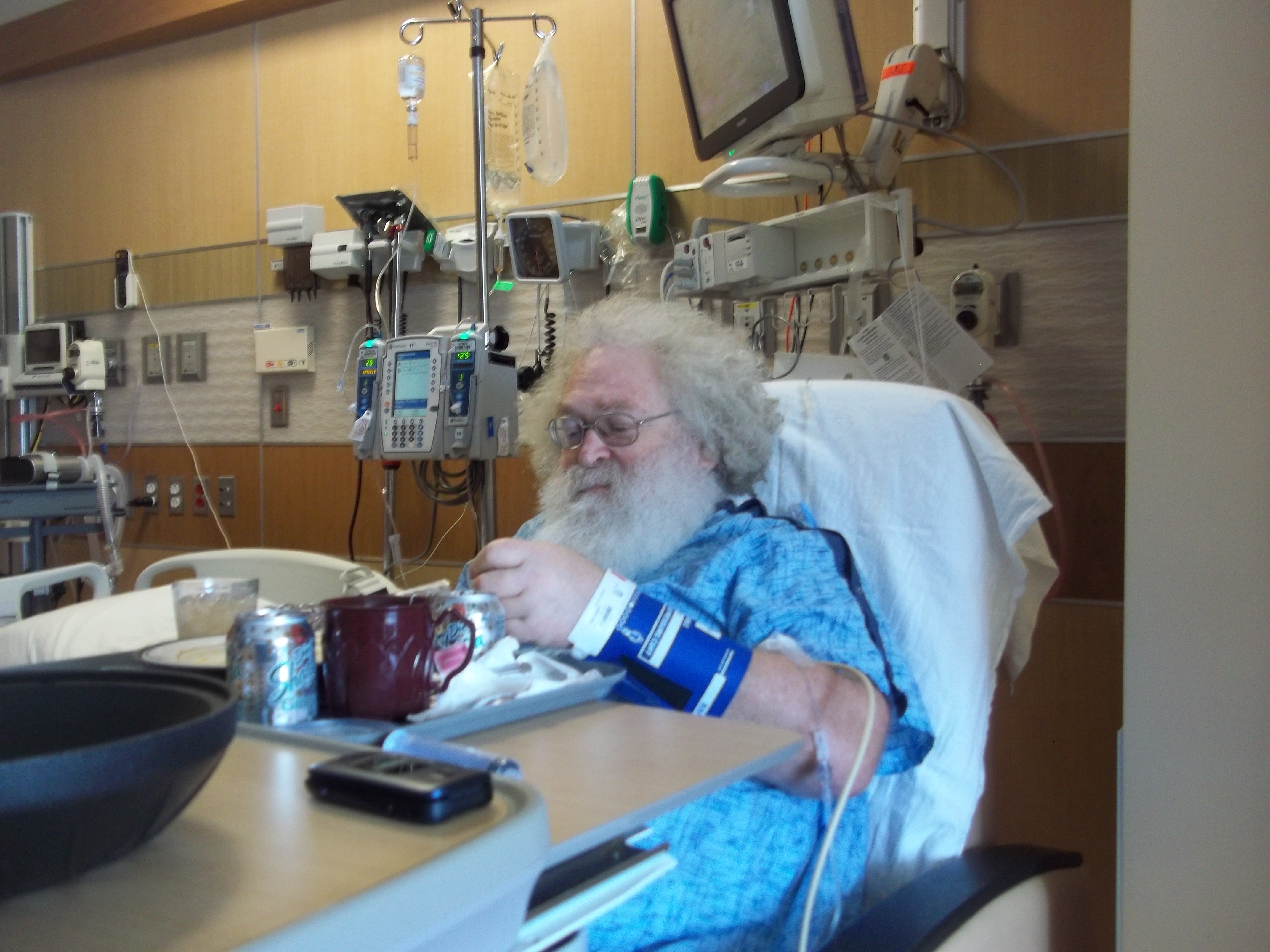
My husband had a heart attack this fall. He got a total of five stents, avoided open heart surgery, and is now in cardiac rehab. And I am helping take care of him.

Dan has been my caregiver as long as I’ve known him. He has stuck with me through the various ups and downs of bipolar disorder – when I was untreated, when I was struggling with finding the proper medication, when I shouted at him, when I was immobilized – whatever. I couldn’t have got through what I’ve been through without him.

Now I get to pay him back, at least a little, for all he has done for me. I have no training and little experience as a caregiver. But there a few things I can do for him, in addition to loving and supporting him as he has loved and supported me.

I can facilitate his appointments, meds, and procedures. Dan has a tendency to forget when is next appointment is, and with which of his many doctors. I have a perfectly good whiteboard in my study on which I note my own appointments as well as keep track of my work. It’s no trouble at all to add his and remind him.

Getting to his appointments is another area where I can help, especially since his cardiologist has a number of offices in various parts of town and in nearby suburbs where he practices on different days of the week. Since I’ve lived here most of my life, I know the area better than he does and I go with him to navigate. (He’s never gotten used to GPS.) I suggest routes that are easy to retrace and figure out when to leave to get there on time.

Dan has in the past had a habit of forgetting to take his various medications.  When that involved sertraline, I didn’t worry much since I know that once a certain level has built up in the body, missing a dose is not such a big deal. But with his blood thinner, a missed dose could lead to a clogged stent and another heart attack. So I proactively encourage him (as my therapist suggests I call nagging) to take them daily and on time.

I can handle financial stuff. With Dan being off work for so long and hospital and doctor bills adding up, our finances are getting pretty tricky. I can make sure I have steady work and even take on extra sometimes. I can fill out the forms for short-term leave, financial assistance, insurance, and other necessities.

I’ve even been able to set up PayPal and Facebook funding pleas to help us get a little extra cash to pay the utilities and other bills. (GoFundMe may be next once all the medical bills are in.)

I can handle computer stuff. Finding locations of offices and hospitals and the cardiac rehab place, phone numbers of financial aid programs, and names and side effects of medication are easier and quicker for me to do on my Mac than for him to do on his ancient PC. I can find things he needs on ebay for the lowest price. I can find and email various forms and records of expenses to wherever they need to go. This may sound minor, but believe me, it can take up a lot of time and frustration. I think of it under the heading of relieving his stress.

I also know how to network. A Facebook friend of mine teaches Tai Chi at a local Y. Through him I found out that the Y does not charge for his classes. And through Google I found that this month the Y waives membership fees if you donate canned goods to a local food pantry. The Y’s amenities include exercise classes and water aerobics, which I also could use. I also found a local Senior Center that has yoga and free weights (and community theater) as well.

I can understand his depression. Being faced with intimations of one’s mortality, combined with money problems and not being able to work can make anyone depressed. And Dan was already taking meds for depression before this current crisis even started. I am, of course, a third-degree black belt when it comes to depression. I know how he feels, why he’s feeling it, and what will and won’t work in helping him through it. I can be patient, supportive, and there to communicate or simply hug when he needs to, as he has so often done for me.

There’s not much care that my husband needs in the way of actual physical care. He is not so incapacitated that he needs help with feeding, dressing, bathing, or other tasks of daily living (other than changing his bandages when he cut his finger open and required eight stitches).

But I like to think that the support I can give him helps in his recovery by taking some of the stress off him, which his doctor recommends and which he has done for me innumerable times. We’re a team and this time it’s my turn to take some of the weight.

Exhaustion as an Antidote for Panic

Wednesday afternoon my husband called his doctor complaining of chest pain and was instructed to go immediately to the ER. Actually, he had had the chest pain off and on for several days but he A) attributed it to Taco Bell, B) is good at denial, and C) is stubborn.

So off to the ER we went. We were tucked into Bay 22 and after a time, a nurse drew my husband’s blood. While we were waiting for results, we watched The Big Sleep on the room’s TV, possibly not the best choice at that particular time. We were there from 4:30 to 10:00, when they reported that Dan’s cardiac enzymes were a “little high.” I left shortly thereafter and Dan was admitted.

Although in the past ER visits with my parents caused massive anxiety which then caused a variety of physical symptoms, this time I did not panic. I was too exhausted. I even had a little trouble driving home. The streets in our plat seemed the wrong length or something and I wasn’t absolutely sure where to turn. When I got home I fed and watered the cats and then collapsed. Sleeping, not weeping.

The next morning I had to get up and finish a work project, then go to see Dan for a few hours, then back home to more work. Again, an early collapse. Still no panic.

Today (Friday) I am writing this post after finishing the work project and while waiting to hear that Dan’s angiogram is done so that I can go and see him. Again, I am not panicking. Numb, maybe, and tired, but not anxious.

I used to hate not knowing. Waiting for the proverbial other shoe to drop was torture. I am given to catastrophizing at the least provocation. But now, when there is an event that lends itself easily to catastrophizing I find I’m not. I have decided to postpone panicking until I truly have something to panic about.

At the moment Dan is fairly comfortable, in a very good hospital with attentive staff and even therapy dogs. There is nothing that I can do except visit him and call him.  I figure that when he calls with the results of the angio and info on whether they gave him a stent, I can panic then if required. Say, if he has to have bypass surgery.

But I’m disinclined to panic until or unless they tell me that’s the case.

And … I just got a phone call from his doctor. Dan had multiple artery blockages and required four stents, but no bypass surgery for now. I’m relieved, of course, but my main feeling is still one of exhaustion. Maybe I’ve been worrying in the back of my brain at a subconscious level and that has added to my exhaustion. Maybe when this is all over I’ll let loose and have a good cry, when he’s back home.

My friends have been sending me and him thoughts and prayers, hugs, light, and even good juju. They have also been reminding me to take care of myself, to remember to eat and sleep and I’ve been doing that at least on some kind of level. A bowl of cereal now, cheese sticks as a bedtime snack, a visit to the Waffle House when I’m too tired to make a meal. And eight hours of sleep a night. I can’t say the sleep has been dreamless or restful. I wake up still exhausted but at least my body is taken care of in a reasonable manner.

So there you have it. A potentially dire situation happened but I did not panic. Was it postponing the catastrophizing that helped? The exhaustion? I don’t know, but whatever coping mechanism it was, I’m glad it kicked in.

Dan has done so much for me through the years. I’m glad I will have an opportunity to pay him back even if only a fraction as much.

Reaching Out and Reaching In

A lot has been said in recent days about reaching out when you’re in trouble psychologically. And that’s always a good idea. Reach out to your friends, your family, your therapist, your psychiatrist, your church or synagogue or temple.

hands people friends communication

Photo by Pixabay on Pexels.com  

Unfortunately, not everyone has those resources. And sometimes when you reach out to them, they do not reach back to you or even respond in hurtful ways.

Sometimes – many times – you’re just not able to reach out. That’s true of me, anyway. When major depression hits me like a truck, I get immobilized. Uncommunicative. Isolated. I usually have the wherewithal to get to my therapist, if my husband drives me, but not much more.

My family and friends can tell when I’m in trouble. And they do reach out, even when I don’t reach back.

My mother always knew when I hit a particularly bad spot because she could recognize it in my voice – it lacked animation, even if I was talking about something I loved. Not that I talked much or felt much. Depression can damp down all your feelings sometimes. You don’t cry, you don’t feel sad. You feel nothing. And it shows to someone who knows how to look and listen.

This is called “flat affect” by psychiatrists. The person’s face, voice, mannerisms do not reflect emotions, sometimes not even anxiety or despair. And sometimes people adopt a flat affect so as not to betray their inner turmoil. (It can still leak out around the eyes, even to relative strangers. And I don’t mean crying.)

My husband knows I’m depressed when I turn monosyllabic. Ordinarily, I enjoy talking to my husband about anything and nothing – things we’ve read or heard, what’s happening at work (his, mostly), funny things the cats did, and so forth. But when I stop responding and communicating, or respond only with “yeah,” “nah,” and “meh” sorts of answers, or don’t laugh or at least groan at his jokes, he knows I’m headed downward.

I stop communicating other ways, too. I don’t post on Facebook or only pass along the occasional pass-along. I skip commenting on posts regarding things I usually care about. I spend hours alone reading, if my sometimes-dubious powers of concentration let me. Or I sleep, and nap, then sleep some more. I certainly don’t leave the house or even make plans to go out. I don’t call friends. I isolate. I don’t reach out, like the memes say I’m supposed to.

I am fortunate to have friends that do reach out to me. John would lend me books, talk about them with me, and listen if I needed to vent. Peggy would call and invite me to visit, even when she knew I wasn’t leaving the house. Pete sometimes IM’s every day just to check in and JB assures me that when he IM’s and I don’t feel like chatting that’s still okay. Robbin calls me and tells me all about her life even when I can’t talk about mine, then says, “Let me know when you surface.” If she doesn’t hear from me for awhile, she calls again and reminds me that I can call her too. (She can also “read” my voice and knows when there’s some topic I’m avoiding.) My husband offers a hug or kisses me on the head. My mother prayed for me. I am fortunate indeed to have had people like these around me when I really need them.

Reaching out to others is good. So is reaching in to the suffering. Best is a combination of both. But that takes work and not everyone is able to do it.

If you can reach out, reach out.

If you can reach in, reach in.

If you’re lucky, you’ll meet in the middle, where hope lives.


Bad Thoughts and Tattoos

Sometimes I have bad thoughts. We all do. I find that mine fall into three groups.

The first kind of bad thoughts are when I want to snap or snipe or snark at my husband, despite the fact that he is indispensable to me. He takes care of me, understands me, helps me, hugs me, feeds me in ways I can’t begin to describe.

When those bad thoughts arise, I have a brief internal chat with myself. (It looks like I’m thinking what to say because that’s exactly what I’m doing.) Then I choose not to say the nasty thing or I think of a less-nasty way of saying it. (I’ve written about the phenomenon before in “Managing My Anger” https://wp.me/p4e9Hv-kw.)

The skills involved are impulse control, the use of “I statements,” and the ability to rephrase. I try to say something that will get my point across without hurting or making things worse. These are techniques I have learned over the years, which makes me think they are things that can be developed with a little practice.

Learning to restrain myself has prevented many a fight. Some people find this style of communication inauthentic or wishy-washy – that I am tiptoeing around my husband instead of saying what I really think. All I can say to that is that it works for me and for our marriage.

The next kind of bad thought is the kind that comes with depression: I’m useless. I’m pathetic. I can’t do anything right. I’m worthless. Jenny Lawson (aka The Bloggess) talks about these thoughts in her book Furiously Happy, and she has one thing to say about them: Depression lies. These are the thoughts of a biochemically influenced brain that makes you miserable and sometimes wants to kill you, or at least kill your possibility of happiness.

Fortunately, my husband has read Jenny Lawson too. When I express these bad self-thoughts – and it’s best if you have a safe person to tell them to – he reminds me. He doesn’t try to deny the thoughts (You know you’re not worthless. You do lots of things right). He tells me, “That’s depression lying to you.” I used to get stuck in these cycles a lot before I was properly medicated and before I had his help and that of my therapist.

Then there are the really bad thoughts, those of self-harm or worse. Most of the time I don’t have these anymore, but when I do, there is one thing I can do. (Actually, there are more things I can do, but this is one that works for me.) I look at my tattoos.

The one on the right wrist is a symbol for bipolar disorder made up of punctuation : ) :  in the form of a smiley face/frowny face. This reminds me that my brain isn’t working right and is sometimes out to get me.

The other is on my left wrist, near my scars from self-harm. It is a semicolon. You may have heard about the Semicolon Project or seen the semicolon symbol on t-shirts or jewelry.

The semicolon is my favorite punctuation mark. It comes at the place in a sentence where a writer could choose to put a period and stop; instead, she continues the sentence. The semicolon says, “My story isn’t over,” something you’ll also see on t-shirts and such. (I’m thinking of making that sentence my third tattoo.)

Recently I had a bout of those really bad thoughts. But I looked at my tattoos and told myself, “My story isn’t over yet. I still have things I need to do.” One of them is to tell my story, in this blog and in a book I’m trying to write.

My tattoos helped me get over the bad thoughts. They have paid for themselves many times over. I never regret getting them. They may have saved my life.

The Other Holiday

I’m not going to write the standard “Surviving the Holidays” post this year. You all probably know what that one says: Self-care, self-care, self-care. Avoid toxic people, and if you can’t, get away from them as soon as possible. Don’t drink. Take your meds. Make sure you’re not alone unless that is what you truly want. And if you don’t know these things, you can read them in dozens, if not hundreds, of places. There’s not a lot I can add to that.

No, I’m going to write about the other holiday – the one we all have. The one that happens to fall – for me – right during the other holidays. The birthday. I wrote earlier this year about birthdays, and parties, and surprise parties in particular (https://wp.me/s4e9Hv-surprise), and I also wrote about the low-grade depression that dogs me this year (https://wp.me/p4e9Hv-AC). The two, I suppose you’ve guessed, are not unrelated.

After I experienced a severe trigger at a birthday party while in my teens, I tried to disown my birthday. In my dysfunctional way, I told people that it was on March 1, rather than in December. This was a stupid coping mechanism, not unlike the time prescription Ibuprofen caused me stomach trouble in college and I sat by the door in my classes, hoping that the burping would be less noticeable there. Don’t ask me why. Irrational thinking, I guess. My birthday didn’t go away (the burping didn’t either), my family still baked me cakes, and I still got presents or cards.

Eventually, I reclaimed my actual birthday. As the years went by and my friends scattered and my general holiday depression got more debilitating, I barely celebrated at all. Now it’s pretty minimalist – a meal out with my husband, a non-wrapped present or two, and on with the regular day. Dan tries to make it special, God love him, but my definition of “special” is telling the wait staff not to gather around me and sing. Then Facebook came along and now I have the opportunity to count the number of people who wish me happy birthday. As excitement goes, it’s not much.

I can’t say my lack of enthusiasm for birthdays is limited to myself, either. On Dan’s birthday, we have the same sort of celebration, except with fewer presents. (Dan stashes away little gifts for me all year long and often gives me things he’s bought back in July. I lack the wherewithal, in terms of energy, to do likewise.) Online shopping has made things easier, but Dan brings in the mail, so he usually has an idea what he’s getting, based on the size and return address of the package.

In a way, I suppose it’s more efficient to have my birthday tucked in among the other holidays so that one gray fog can cover them all. I could also be experiencing a bit of Seasonal Affective Disorder, but I’ve never been diagnosed with that, so let’s stick with what I know I’ve got. (I’ve tried using natural sunlight bulbs, but I really couldn’t notice any difference.)

Do I ever get hypomania at the holidays? Rarely. Although there was that one Christmas when I got Dan socks and underwear and wrapped each sock and t-shirt in a separate, different-sized package.

But we were talking about birthdays (or at least I was). Maybe it’s aging, and maybe it’s my bipolar disorder, but I’m content these days just to let birthdays slide by with an emotion that ranges from meh to Bah, Humbug, depending on the year.

I know, I know: self-care, self-care, self-care. It’s not just for Christmas anymore.


The Gray Dog and Me

Nothing is really wrong.

Feeling like I don’t belong.

– The Carpenters “Rainy Days and Mondays”

After quite a long spell of stable feelings (and maybe some productive hypomania – https://wp.me/p4e9Hv-y4), I’ve hit the wall of depression again.

Not full-blown depression, like I’ve had so often in my life. This is technically dysthymia, which is psych-speak for a low-grade depression, sort of like a low-grade fever that makes you tired and headachey and not wanting to get out of bed. To curl up in a blanket and sleep. To take aspirin and forget about everything else.

That’s where I am. I’m not wrestling with the Black Dog (https://wp.me/p4e9Hv-5Y). Call it the Gray Dog.

I am finding it very hard to write this, but I am pushing to do it, because at the moment, that’s one of the few positive things that I can point to – that my husband can point to – and remind me that depression lies.

What depression is telling me now is that I haven’t accomplished anything in my life. That I skated through high school and missed wonderful opportunities in college. That my jobs have been a pointless series of minimal value to anyone. That my writing is self-indulgent crap, unoriginal and meaningless.

Depression is telling me that I don’t matter. That I am becoming invisible. And that it’s my own fault, for never going out, for not reaching out. It’s not quite the self-pitying whine of “If I died, no one would come to my funeral.” It’s more like turning into a particularly ineffectual ghost – frightening no one, bringing no message from beyond, just fading and losing substance.

Depression is telling me that the future is bleak. I have a writing assignment now, but in a month it will be over and I’ll be right back where I was – at the edge of panic or worse, despair, or worst, both.

Depression is telling me that I’m a terrible burden and I don’t deserve my husband, who takes care of me when I’m like this.

At the moment I don’t have the ability to believe that all these are lies.

I do know that this won’t last forever. I’ve come far enough in my healing to believe that. And comparatively, it’s not that bad. I am quietly leaking tears, not weeping copiously. My bad thoughts are not as ugly as they could be, have been.

I haven’t given up.

But I almost want to.

It’s the “almost” that makes this the Gray Dog and not the Black Dog. That keeps me taking my meds and waiting for the Gray Dog to depart. That tells me to write this, even though I doubt its usefulness.

Useless sums up how I feel. Old and tired. Detached from society.

As depression goes, I’m really in a not-terribly-bad place. Which doesn’t make it much easier to live through. A little, though. I still have my support system, and I did get out of bed today (after noon), and I’m writing, even as I doubt my ability. But if I’m quoting The Carpenters, I can’t help but feel just a wee bit pathetic.

The Gray Dog is with me. One day soon but not soon enough, it won’t be.


Surviving College While Bipolar

I had two goes at college, and they were very different from each other, based on the state of my bipolar disorder at the time.

The first time I went to college, for my undergraduate degree, I was undiagnosed and unmedicated – except for self-medication. I was away from home for the first time – that was my first goal when choosing a college, being after a “geographical cure.” I ended up in the Ivy League, a scholarship student and a fish out of water. And profoundly depressed.

I did manage to hit the ground hiking, as the university sponsored backpacking trips led by juniors and seniors for entering students. We used to joke that it was meant to lose a few along the way, but really it was for orientation. Campfire chats about college life and the like.

On that hike through the Adirondacks, I met Caren, Roberta, and Cyndi, who instantly became my best friends and were my support system throughout the five years I spent there.

Yes, five, though only four of them were really at the university. After my first year, I took a year off. My depression had gotten so bad that I was given to sitting on the floor in the hallway, staring at a poster for hours at a time instead of sleeping. During my year away, I worked a dreary but educational job as an evening shift cashier at a restaurant. When I returned, I had a new major and the same old depression.

Oh, I did have fits of hypomania. I joined a sorority during one, though I deactivated later in a depressive downturn. And I went through the ups and downs exacerbated by several failed romances, including one total trainwreck.

The only help I got, aside from the support of my friends, was one brief therapy group at the campus mental health center and a brief stay at the university clinic, because of some suicidal ideation that my friends recognized.

Needless to say, I came out in no better mental shape than I went in, but I did manage to snag a B.A. degree. Now I feel that I missed a lot of opportunities along the way. It was just another occasion when I felt that my lack of mental health got in the way of what could have been a more productive time, as a well as a happier one. When I left college I was still almost as ill-prepared to function as when I went in.

By the next time I gave college a try, I was, if not mentally healthy, at least mentally healthier. And being back in the town I had been so eager to leave, I had a larger support system, now including a therapist, parents, close friends, and a husband. This time I had help.

I was still a mess, but less of one. With my depression lifting, I was able to teach introductory courses and manage my own course load. I remember my first semester teaching as a blaze of hypomania as I adored the subject and thought I was sweeping all the students along with my enthusiasm. Then one of the students gave me a bad review and I plunged again, never to recover that soaring sensation. I plodded through the next three semesters of teaching.

This time I came out with an M.A. and better job prospects. The day after I graduated I was working as a temporary editorial assistant, a job I kept for 17 years, moving up to editor along the way.

What did my experiences with college teach me (aside from modern poetry and how to swallow aspirin without water)?

  1. Making it through college is possible when you’re unmedicated and have minimal support, but I don’t recommend it.
  2.  Even with diagnosis, medication, and support, it’s still not easy. You know how hard it is to get out of bed and take a shower some days? Now think about going to a class on top of that, where your work will be critiqued. Taking a year off was one of the best things I ever did.
  3. Being bipolar isn’t your only identity, though it looms large in your life. I was also a student, a teacher, a friend, a daughter, a wife, a poet, a cashier, and so many other things. I may not have enjoyed them as I should, gotten as much from them as I could, but they were as much a part of me as bipolar was.

I can’t see myself at this point going back to college and getting a Ph.D. Which is not to say I’ve never considered it. But I like to think that, were I to try, this time I would have a better chance of getting through, sanity intact, with something more to show for it than a piece of paper to hang on the wall. This time, I tell myself, I wouldn’t let Bipolar Me take the experience away from Me.

From Panic to Manic to Proactive

Hypomania isn’t all bad. Right now I’m facing one of my worst triggers, and instead of retreating into depression, I kicked into hypomania. Then I harnessed as much of it as I could and channeled it to work for me.

Here’s the sitch. My longest and most vicious major depressive episode (which lasted literally several years, even when I was under treatment and on medication) was triggered by, among other things, massive financial problems. (There were other factors involved: health problems, family health problems, family problems, irrational thinking, strained relationships, and bad ol’ neurotransmitters.) I was unable to work. There was plenty of anxiety along with the depression, you can be sure.

So here I am again, almost a decade later, once again in dire financial straits. I’m able to work, but only part-time and telecommuting. Then one of my biggest, most reliable clients cut way, way back. I made the mortgage this month, but next month looks iffy at best.

In the past, this would have resulted in major mental symptoms, and physical ones as well. (Better you shouldn’t ask, but my digestive tract responds to stress in an overwhelming manner. I know, TMI.) I would be immobilized, unresponsive, and spend most of my days on the sofa when I wasn’t in the bathroom. I would abandon the financial problems – and myself – to my husband’s care, for as long as he could keep everything together. Until he burned out too.

During this new version of assorted crises, I seem to have a better handle on things, and I credit hypomania. I am trying to better the situation, though not yet particularly effectively, but steadily.

I am looking for new clients and more work from my old ones. I am looking for other sorts of telecommuting jobs, and even part-time outside work that seems to be within my modest-at-this-point capabilities.

(This process is hindered by the fact that all the job search engines are lousy. When I say I am a writer, I get leads for technical aerospace writing and service writers for car repair shops. When I say I’m an editor, I get invitations to become a driver for Uber. True story.)

I pursue these avenues every day. Soon after this post goes up, I have a networking “date” with a former client and a former co-worker.

And in the meantime? When the days stretch out with nothing happening and the sofa calling my name?

I blog. I work on my novel. And I take surveys.

Admittedly, none of these pursuits brings in mortgage-payment-sized money. But the surveys bring in a couple of dollars a day, which is pitiful, but helping with a getaway my husband and I planned before the finances went belly-up. (My husband is still working, but his wages alone aren’t enough to pay all the bills. We need both of us, a situation familiar to millions of people in the U.S., with or without mental illness.)

And, aside from the getaway, which it’s too late to cancel, we’ve instituted cutbacks. We typically spend way too much on food and now must revisit our newly married days, when we subsisted on mac-n-cheese and tomato sandwiches. It’ll be good for us, I tell myself. We could both stand to lose some weight.

I don’t know how long my “proactive hypomania” will last, when our financial situation will improve, or whether my energy level will survive after it does. Or, for that matter, whether we’ll end up eating cat food under the Third Street Bridge and fighting stray dogs for cold french fries.

But right now, for now, I’m dealing. And that’s something I couldn’t do before.