Bipolar 2 From Inside and Out

Posts tagged ‘depression’

Take a Hike: Nature and Mental Health

photo from the author’s collection

 As a child and as a teenager, I was a Girl Scout. We hiked. We camped. We did all sorts of nature-related crafts. We ate wild plants. Well into my 20s, I was an outdoorsy-type person, hiking on the Appalachian Trail, walking to all my classes through the leafy green environs of my college campus, even trudging contentedly through the copious snowfall. One year I lived in a log cabin on a hilltop so far from civilization that you had to go to town to pick up your mail.

All the while, I had bipolar disorder, and it was relentless, I experienced the inevitable mood swings, the crashing lows, the tempestuous highs, the confusing mixed states. 

Now, everywhere you turn, there are articles and memes touting how time spent in nature is good for various psychiatric conditions. When you look more closely, though, the studies often refer to simply alleviating bad moods or improving cardiovascular health. Very few of them seem to apply to actual mental illnesses. Perhaps this is to be expected, since improvements in emotions or mental health are largely self-reported or tracked by means of a survey. It’s hard to quantify mental health. But let’s take a look at some of the studies anyway.

Harvard Men’s Health Watch published an article called “Sour Mood Getting You Down? Get Back to Nature.” The subtitle on the piece read, “Research suggests that mood disorders can be lifted by spending more time outdoors.” Then the article went on to suggest that “ecotherapy” shows “a strong connection between time spent in nature and reduced stress, anxiety, and depression.” 

The subtitle suggests that the outdoors has an effect on alleviating mood disorders. The body of the article, though, stresses alleviating unpleasant moods in general, not primarily what psychiatrists would class as mood disorders. The article cited a 2014 study saying that “people who had recently experienced stressful life events like a serious illness, death of a loved one, or unemployment had the greatest mental boost from a group nature outing.” Stressful and sad events, certainly, but not mood disorders such as PTSD, clinical depression, or bipolar disorder.

The article also cites a report published online March 27, 2017, by Scientific Reports, which suggests that “listening to natural sounds caused the listeners’ brain connectivity to reflect an outward-directed focus of attention, a process that occurs during wakeful rest periods like daydreaming. Listening to artificial sounds created an inward-directed focus, which occurs during states of anxiety, post-traumatic stress disorder, and depression.” It does mention psychiatric disorders, but it says only that inward-directed focus occurs during these states, not that inward-directed focus causes them.

Greater Good published an article that claims, among other things, that “scientists are beginning to find evidence that being in nature has a profound impact on our brains and our behavior, helping us to reduce anxiety, brooding, and stress, and increase our attention capacity, creativity, and our ability to connect with other people.” Again, this says nothing about actual psychiatric disorders.

The article also cited a Japanese study: “Results showed that those who walked in forests had significantly lower heart rates and higher heart rate variability (indicating more relaxation and less stress), and reported better moods and less anxiety, than those who walked in urban settings.” The researchers concluded that there’s something about being in nature that had a beneficial effect on stress reduction, above and beyond what exercise alone might have produced.

This, of course, does not apply to those in urban settings who do not have much access to forests or sometimes even parks. And the abstract of the Japanese study says, “Despite increasing attention toward forest therapy as an alternative medicine, very little evidence continues to be available on its therapeutic effects. Therefore, this study was focused on elucidating the health benefits of forest walking on cardiovascular reactivity.” It doesn’t really deliver what the headline offers: “How nature makes you kinder, happier, more creative.” Good heart health is, of course, a good thing, but to extrapolate that to mental health benefits is quite a stretch.

The UK’s Mind.org does offer a link between ecotherapy and mental health in one instance, at least: “Being outside in natural light can … be helpful if you experience seasonal affective disorder (SAD), a type of depression that affects people during particular seasons or times of year.” This article also acknowledges that there are “other options for treatment and support – different things work for different people….You might do an ecotherapy programme on its own, or alongside other treatments such as talking therapies, arts and creative therapies and/or medication. Some ecotherapy sessions follow a set structure, and incorporate types of talking therapy, such as cognitive behavioural therapy (CBT). People in the group may or may not have experience of mental health problems, but the main focus is usually working together on the shared activity.” This at least sounds both more scientific and more likely to produce results.

If a walk in a natural setting does you good and alleviates your symptoms of mental illness, then by all means, make it part of your routine (or do it as often as you can manage). My bipolar depressions, however, are so debilitating that I am unable to plan, much less embark on, a walk in nature, even as far as the mailbox. Bringing nature indoors is, of course, an alternative. But the little plant pictured here, which needs two ounces of water once a month, is all I can really handle.

Resources

https://www.health.harvard.edu/mind-and-mood/sour-mood-getting-you-down-get-back-to-nature

https://greatergood.berkeley.edu/article/item/how_nature_makes_you_kinder_happier_more_creative

https://www.hindawi.com/journals/ecam/2014/834360/

https://www.mind.org.uk/information-support/tips-for-everyday-living/nature-and-mental-health/how-nature-benefits-mental-health/

A Letter From the Future to Bipolar Me

by sosiukin via adobestock.com

Dear Me:

You’re 13 years old now, and there are a few things you should know.

You have bipolar disorder. No one knows this, not even you. But a lot of people notice that you act “weird” at times. You have decided to embrace your weirdness, which is fine, but what you really need is psychological help. And medication.

Don’t pass up any chance to get that help. Your high school will recommend to your parents that you get counseling. When your parents leave the choice up to you, take it. It will not go on your permanent record, and you will still get into a college. A very good college, in fact.

I know that at times you sit alone and cry. Other times you laugh at things no one else finds funny. This is not just “weirdness.” This is a mood disorder, called bipolar disorder, type 2. Your mood swings will make it difficult for you to make and keep friends. Keep trying. The friends you will find are worth it and will stand by you when you really need them. You will not be alone in dealing with this.

Your choice to go to college out of state will be a good one. There you will have a variety of experiences that will make you grow in unexpected ways. Your mood disorder will go to college with you, though. Leaving Ohio will not mean you will leave bipolar disorder behind. You will still feel the mood swings, and most of them will be depression.

It’s a good idea to take that year off between freshman and sophomore year. I know it will feel scary, but at that point you will be in no shape to carry on with academics. Instead, you will get a job which, while not great, will introduce you to more new people and new ways of life. At least one of those people will stick with you till you are old and gray.

Returning to school will be a good decision. Your parents will support you in that decision. They won’t object to your year off, because they know you will go back. It still won’t be easy, but you will have a core group of friends that accept you, even though you are different from them.

Your bipolar disorder will follow you back to college. It will make you miss some opportunities and choose others that will not be good for your mental health. You will be unhappy most of the time, but you will find that music helps you through it.

Try not to self-harm. I know you will feel numb and want to feel something else, but cutting yourself is a bad decision and will not help. You will carry those scars forever.

When you meet Rex, though, you will be encountering a problem too big for you to handle, and the relationship will leave you scarred as well. It would be best if you were to steer clear of him altogether. But then again, you will find some true friends in his circle, and it would be a shame to miss them. Try your best to hold yourself together, remember what I said about self-harm, and don’t give up on who you are. You are not your disorder, and you will get through this, despite everything.

I know you never gave a thought to marrying, but you will meet a man and in a few years you will marry him. This, I assure you, is a good decision. He will stick by you no matter what and help you find help.

Going into the building that says “South Community Mental Health” will be a good decision. Whatever you will be feeling at this point – most likely misery – it’s not mentally healthy. This will be the place where you will start to climb out of the hole you have found yourself in.

At last, a doctor will tell you that you have bipolar disorder – most often depression, but also anxiety. He will work with you to find a combination of medications that will help you. When that happens, you will become reacquainted with your brain and relearn how to function in the world at large. Your brain will function in a new way, one with fewer out-of-control feelings. You will experience life more fully and be glad of your new outlook.

It won’t be quick, and it won’t be easy, but you will have therapists, and friends, and work, and love, all of which will help see you through. You will have bipolar disorder all your life, but it will not be your life, though it seems that way now.

Reach out for help whenever and wherever you find it. Cherish your friends. Keep trying, even when you want to give up. Better times are on the way.

I promise.

Love, me (older and maybe wiser)

When Overthinking Takes Over

Overthinking, or analysis paralysis, as it’s sometimes known, is the great immobilizer. Your brain goes temporarily out of control and prevents you from making choices, doing things you need to do, or even getting out of bed in the morning. There are many ways in which it can accomplish this and ways in which you can fight it.

Night thoughts. When you’re trying to get to sleep and your thoughts keep revolving like a small rodent on an exercise wheel, that’s what my friends and I call “Hamster Brain.” Really, the only way to stifle these thoughts is to get up and do something else. Clean, read, exercise, get your tax documents in order – anything that tires your brain and/or your body. Then try sleeping again.

Random thoughts. Sometimes the oddest thoughts occur at the oddest times. Once it occurred to me that I didn’t know whether my passport was up to date. A friend was worried about her children’s religious education. If possible, check out whatever has popped into your head. I dug out my passport and saw that it was, indeed, up to date. My friend couldn’t get an immediate answer, but later received validation that, yes, she had done all right by her boys.

Your every mood. Depression – and particularly bipolar depression – can make you doubt your every mood. Am I just sad, or am I teetering on the edge of a major depressive episode? Do I feel good, or am I just kidding myself? Maybe I’m trying to cover my depression with a smile. You can analyze your moods until you really don’t know what you feel. Look for clues in your life. Did a beloved pet die recently? You may be experiencing reactive depression, nor clinical depression. If you feel happy, don’t analyze – just go with it!

• Your every move. Sometimes it seems that you have a little recorder in your brain that keeps a copy of every foolish thing you’ve ever done or said, and plays them back at unexpected moments. Most people I know with depression experience this and end up beating themselves up over events long-gone. It may be a comfort to know that, with time and proper treatment, that recording machine goes away, or at least plays back your words and actions less often. If you notice that happening, it is a sign of healing.

Decisions. Making decisions, especially important ones, is a hallmark of analysis paralysis. Weighing choices can be difficult for anyone. Depression can cloud your thoughts and make it even more difficult. Should I use what energy I have to meet friends for coffee? Should I tell my employer about my depression? Should I take a full-time job?

For life-altering decisions, careful thought, not overthinking, is needed. Make a list of pros and cons. Talk to a trusted friend about the situation. If what you can’t decide is less earth-shattering, use a simpler solution. Flip a coin. Draw a number out of a hat. Anything to make the decision for you. If you do that, you’ll quickly discover if that’s the choice you really want.

The good and the bad. Overthinking often comes down to deciding what is good for you and what is bad for you. At times like these, focus on your mental state. Will this career decision make my depression worse? Is this spending decision really my hypomania talking? The question you need to ask may be “How do I feel about this?” rather than “What do I think?”

Going off on a tangent. Once in a while, you may be thinking about one thing, only to have your brain flit to something else and start obsessing about it. I once heard a metaphor regarding mindfulness and meditation: When you find your thoughts wandering off-track, imagine them as a puppy that wants to wander off. Gently corral it and pull it back. Then go back to what you were originally thinking about. It may be necessary to do this several times until the “puppy” gets the idea and doesn’t wander off.

I’m often subject to analysis paralysis. It’s been said that I have a third-degree blackbelt in overthinking. I like to think, though, that I get into such traps less often now, or at least get out of them more quickly. Really, overthinking adds nothing good to your life and mental well-being – indeed, it detracts from them. For many of us, overthinking is sometimes inevitable. Developing a few techniques to deal with such thoughts can be a blessing.


When My Carer Needs Care

By Farknot Architect / adobestock.com

My husband is the mainstay of my support system and, in large part, my caregiver. I cannot count the things he has done for me and does for me every day. We’ve been married for over 35 years and during that time he has helped me through daily life, major depression, anxiety attacks, loneliness, irrational thoughts, school, therapy. He makes sure I practice self-care and cares for me as needed.

Recently, though, he needed my help and care. The other day he experienced distressing eye-related symptoms – a large “floater” (dark spot) in his vision and unexpected flashes of light. What could I do about it? First, I answered his request to get a flashlight and look in his eye, but I saw nothing.

Next I arranged an appointment for him at our eye doctor. Dan used to be terrible at admitting when he needed medical treatment, but since a heart scare he’s been much more amenable to seeing a doctor. That particular evening, he was scared and cranky, and made up excuses. He left his phone in the car. That’s okay. I had mine right there. He didn’t know the number. That’s okay. I have it programmed into my phone. I waited on hold. “Forget it,” he said. “Never mind,” I replied. “I’ve got nothing else to do.” He said he didn’t see the floater any more. I pointed out that his eyes were closed. I got through to the doctor and made him an appointment for the next day.

Naturally, I drove him to the appointment, as they would have to dilate his eyes. Then, afterward, I drove him on several other errands (including an appointment with a different doctor) and made sure he ate lunch. I canceled one of the errands and put off others when I saw how tired and nervous he was getting. I took him home and tucked him in bed. (The floater turned out to be nothing truly alarming, just an effect of his aging eyes. He named it “Freddie the Free-Floater.”)

Dan has done almost exactly the same for me, many times. I could usually make my own appointments, but he encouraged me to do so. He has driven me to appointments countless times. He makes sure I eat. When I run out of spoons, he cancels or postpones errands, or even runs them for me. He reminds me when I need to have a lie-down or to sleep or to shower.

It was unusual for me to be the caregiver in this situation, and at times difficult, but I didn’t begrudge it. How could I possibly?

Of course, later in the day, I had a crisis and a mini-meltdown of my own, and there was Dan, ready to be with me, talk me through it, and make sure I didn’t skip a meal.

I know this is what marriage is supposed to be – partners helping each other through their individual and mutual times of difficulty. I also know that mental illness can put a terrible strain on a relationship. I admit that I am very needy at times, and was even more so at other times in my life.

But this time I got to be the strong one and take care of his needs before my own. And I was pleased and proud to be able to do that. Often there’s little enough that I can do for him, except offer him encouragement and remind him that I love him and appreciate him and all he does for me. If he asks for something he needs, I try to make sure he gets it (except for the $900 woodchipper, I mean). And I do what I can that benefits both of us – working to bring in money, paying the bills, doing computer research, handling phone calls, reminding him of appointments when I can – mostly stuff that involves computers and phones and recordkeeping and occasionally knowing where missing stuff is. And reassuring him when he gets trapped in the depression that he also suffers from that I love him and that he is strong and good and that he needs to take care of himself, and that if he can’t, I will try and do my best.

My Hypothetical Baby

By pololia / adobestock.com

Having bipolar disorder was one of the reasons I decided not to have children. Really, it was having major depression, which was what I was diagnosed with at the time.

I wasn’t so much concerned with passing my condition on to any potential offspring, since, at the time when I was contemplating motherhood, the genetic links were not yet that firmly established. Now that I know more about it, I think that might have been another deterrent. My parents had no idea what to do with me when bipolar symptoms started happening, and there’s no guarantee that I would have done any better. I’d like to think I would, but there’s no telling, really.

No, what I feared was having to go off my medication while pregnant (and breastfeeding, should it come to that). I was terrified of being unmedicated and I knew that psychotropic drugs were not good for pregnant women or their developing babies. Once I had discovered the benefits of Prozac and other mood-regulating meds, I knew I never wanted to be without them again. I never wanted to again fall into the pit that I had clawed my way out of. (In truth, that pit was waiting for me anyway, when I experienced a major depressive episode many years later.) 

Postpartum depression scared me too. I had heard the horror stories of women killing their children and/or themselves while suffering from the illness. I knew how out of control I could get with just plain ol’ garden-variety depression and anxiety. Adding postpartum hormones to the mix could be a really bad thing.

But the main reason that I decided my bipolar disorder made it unwise to have a child was that it would be unfair to the child. How to explain to a toddler that mama couldn’t get out of bed today or that she burst into tears for no apparent reason? How to explain weeks or months like that? How to deal with a child jazzed up on mama’s sudden hypomanic jag, who would then be let down when she crashed? How to soothe a child’s anxieties when mine were making me jump out of my skin? How to take care of a child’s essential needs, when I suck at taking care of my own?

Is that selfish? I know there are people who would say it is. That when the time came, I would suck it up and do the best I could. And I might. But would that “best I could” be good enough? I’ve heard it phrased that I was too involved with giving birth to myself – a relatively stable, reasonably happy, mostly functioning self – to give birth to someone else. And I think there’s some truth in that. It’s been a struggle, filled with despair, misery, hard work, setbacks, immobilization, dangerous thoughts, and living too much in my own head. To do the work of bringing myself to some baseline of functioning while trying to nurture and bring up another person daunts me.

I do understand that there are women with bipolar disorder and even postpartum depression who have children and that those children can be happy, healthy, and as well-adjusted as any modern child ever is. I don’t know how they do it, though. I was fortunate that I had a choice of whether or not to have children. I know that not all women do, and that many are delighted with their choice – whichever way they decide. I know that there are those who desperately want children and are unable to have them. I was fortunate that my husband didn’t push the issue, despite the fact that he would have welcomed a child.

I also had irrational thoughts about that potential child. I imagined that if the child were a boy (which run in my husband’s family), Dan (whose inner child is, shall we say, close to the surface) and the little boy would be natural allies and I the odd one out. He would be the fun dad and I the not-fun mama. And while that’s somewhat irrational, it also might be partly true. It took a long time for me to learn how to relax and have fun and share it with another person.

The one time I was open to having a child was when my father was dying a slow death. I thought that if he was going to see his grandchild, I’d better produce one promptly. Fortunately, it didn’t happen. I later realized that that was a really poor reason to bring a new life into the world.

What I’m saying is that the decision is not – was not – an easy one. Having a mental disorder makes it even more difficult.


When You Face Too Many Options

Delphotostock/ from adobestock.com

It often seems that bipolar disorder and especially bipolar depression narrow your life down to the fewest possible choices. Try to take a shower or stay in bed. Eat a handful of cereal or skip eating. Cry or … cry. And that’s all true. These disorders are quite limiting.

However, it’s also true that sometimes we’re faced with too many choices. Right now I am in the process of having our house rebuilt after it was destroyed by a tornado. Every other day it seems the contractor has something new we have to pick out – paint colors, floor coverings, lighting fixtures, ceiling fans – even the color of the grout between the tiles in the kitchen, an aspect of decorating I didn’t know even existed. It’s overwhelming.

The worst was the paint colors. Sherwin Williams has a color palette about 100 pages thick, with seven different shades on every page. My husband and I have a hard time trying to pick a place to go for lunch, much less what color paint we’ll likely have to live with for the rest of our lives.

Needless to say, I dithered for a long time about the colors. The only reason that it didn’t totally immobilize me is that I employed the technique of weeding. Once I had decided on a color for each room (my husband left that largely up to me, except for his study), I began looking at the paint samples and not choosing what I liked, but pitching out what I hated. No beige anywhere. No teal, not even for the bathrooms. And so on. What was left was a much smaller assortment of choices, which hubby and I were able to process. He always liked the lightest version of a color and I the next darker, but we were never far apart.

We got through the process in just a couple of weeks, and with only one real regret (the green we chose was yellower than we really liked, but we’ll mitigate that by covering the walls with photos, posters, and art prints).

Exhaustion is another aid to making choices. I have some mobility issues and can’t walk for very long, especially on the concrete floors in home improvement warehouses. And I’ve always hated shopping, except on the internet. At some point in the process of looking and comparing, I just throw up my hands and say, “What the hell! That’ll do!” and arbitrarily pick one of the two light fixtures that have most attracted my attention. It’s not like my world will fall apart if I don’t get the one, exact light fixture that complements the room. I just need to be able to see. Then I go home, have some iced tea, and put my poor, tired feet up.

One of my therapists once taught me another technique for making decisions – flipping a coin. This sounds obvious, but it’s not. The simple act of coin-flipping can work in one of two ways. Either you can leave the choice in the hands of the coin (as it were), or the result of the flip can focus your mind on what it is you really want. Any number of times Dan and I have played, “Heads, lunch at Frisch’s; tails, Waffle House.” If it comes up tails, we often instantly realize that it was Frisch’s we were wanting all along.

Frankly, I don’t know whether it’s better to have a limited number of choices or a lot. Either way can be mind-numbing, a seemingly insoluble riddle that threatens to stymie you into making no choice at all. (Or, as the therapists tell us, “Not to decide is to decide not to.”) But it is possible to develop techniques that allow you to make those choices and continue with your life.

Of course, I know these are comparatively trivial decisions. I sure couldn’t have figured out “leave or stay” by flipping a coin, especially as seriously unmedicated and out of control as I was at the time. “Get a job or go back to college” was also an important one, but ultimately an easier one to make – I envisioned the situations and asked myself which I’d rather be doing, writing press releases or reading books. The choice was clear at that point. Both were major turning points in my life, but one was excruciating and the other just another choice. I attribute that in large part to the medication and therapy I’d had in between and the coping mechanisms that I had learned and practiced.


Fear of Offending

By Drobot Dean from Adobestock.com

I have to keep a close watch on what I say in public or post online. I am afraid of offending people. Many times I have lost friends because of things I’ve said or done.

Is losing friends because of my bipolar disorder? In a way, yes. Is being afraid of offending others because of my bipolar disorder? In a way, yes.

I was not very well socialized as a child. The house I grew up in was very insular. My parents made few attempts to mix and mingle with neighbors or other school parents, so I didn’t see much of that as a young person and learn the unwritten rules. (My father did mix and mingle with the local gun club, but there were not many persons of my age and gender there.) I never went to preschool because I had a sister, we were very close in age, and my mother figured we could simply play with each other. (This was in the days before formal “playdates.”)

As I got older and my bipolar disorder began to manifest, I was even more out of sync with what the other kids were doing and saying. My mood swings left me laughing uproariously at things no one else thought were funny, or being gloomy and surly as a self-isolating hermit. I never learned the rules at school, either, of how to negotiate the complex patterns of behavior required as a student. I didn’t even know enough not to show off my intelligence, which didn’t win me many friends.

As I grew older, I got in the habit of tapping my face – symbolic slaps – whenever I said something that I realized I ought not to have said. (This was both puzzling and annoying to my companions.) It was a reminder to me to keep more of what I thought under wraps.

Of course, at the time I didn’t know that I was bipolar. I thought I was just weird. It never occurred to me that my brain was different, that I reacted in peculiar ways because of something I could not, at the time, control. I tried to be quiet and unobtrusive, but the manic humor kept leaking out, usually when no one else thought whatever it was was funny. I garnered a reputation as an oddball, even among the odd people who befriended me.

Later on, in the world of work, I was even more out of my depth. I still didn’t know how to socialize. I couldn’t manage “team-eating,” the mysterious rituals of the groups of workers who lunched together. I consciously practiced my socializing with the few people who would put up with me. I observed social interactions, but I never really internalized them.

I made statements that were meant to be funny, but they came out sarcastic, and I lost friends. I made statements that were meant to be assertive, but they came out bossy and I lost friends. I became more and more afraid to say anything that might be seen as hurtful, but I still did.

All of this made me afraid to offend people, so I began to shut down. I kept my jokes to a minimum. I didn’t even try to join the ladies who lunch. My social life was practically nonexistent.

Then came the internet and, especially, Facebook. Every time I wanted to post something, I had to run the content through the internal filters I’d built. Was it too racy? Too political? Too self-revealing? Too something? Would it offend someone and lose me more friends?

I developed techniques to soften my replies to other people’s posts. I’d agree with any part of a post I could and then add my real opinion, very softly. (I agree with you that there’s a lot wrong with our economic system, but it’s very complex and I think more regulations will be needed to improve it. I agree that most police are protective and well-regulated, but I think training in dealing with mentally ill persons would benefit everyone.) I became wishy-washy.

How does this reflect my bipolar disorder? Losing friends was one of the big traumas I went through as a child and I never wanted it to happen again. My first physical trauma was at the hands of other children, who threw rocks at me. My first bipolar “break” was a result of being humiliated by my best friend. (“Kids can be mean,” my parents said, but I knew deep inside it was all my fault.) Losing friends became one of my major triggers, something I would try anything to avoid. I just wasn’t very good at avoiding it.

Gradually, I am getting better at socializing and at speaking up without the constant fear that my words and actions will drive away people who care about me. I still try not to be confrontational, but if a meme expresses something I care deeply about, well, I will repost it. I still try not to insult the persons closest to me, but sometimes it takes me a while to figure out how to say something with just the right words in just the right tone of voice.

Bipolar? I think my glitchy brain got sidetracked by the illness when I should have been learning the ways most people behave. Now that my illness is mostly under control, I am trying to make up for lost time.


I Don’t Need a “Pep Talk”

MarekPhotoDesign.com/adobestock.com

Here’s the thing. Many people, when you mention a problem, feel obliged to help you fix it or fix it for you. When the problem is related to mental illness, though, that can be counterproductive.

The fact is, most serious mental illness can’t be fixed, at least not by a friend or loved one. To try is to invite frustration on the part of the fixer and worse feelings on the part of the fixee.

Some of the worst help we are offered are pep talks, which are meant to be encouraging. Smile more. Keep trying. Other people have it worse. Everyone goes through this.

No, says my stubbornly glitchy brain. Everyone does not go through a major depressive episode. And when I’m having one is not the time I can concentrate on what constitutes “worse.” I can try all I want, but my bipolar disorder isn’t going to just go away. And smiling when I’m ready to cry is a suggestion that denies my perception of reality and encourages me to lie about my feelings.

You can see much of this kind of advice on Facebook, for example. There are always memes that exhort you to look on the sunny side, have a positive mental attitude, or choose to be happy. But it’s easy enough to scroll by them.

These pep talks hurt more when they’re offered in person by someone you know or even love, especially when that person knows you have a mental disorder. You can’t just scroll by someone you love telling you that, in effect, it’s your own fault that you don’t get better.

I know these sentiments are kindly meant (except for the ones that blame you for your own condition). But the reality is that we can’t cure ourselves of SMI by smiling, or jogging, or thinking happy thoughts, or eating turmeric. We can’t cure ourselves at all.

But we can make things better, through therapy and medication, and yes, through some things that are not cures themselves but adjuncts to healing – physical activity, engagement, mindfulness, self-care, and the like. Who knows? Maybe even turmeric.

So, if pep talks don’t work, what can you do instead? What might actually help your friend or loved one? Here are a few suggestions.

Treat the person with mental illness the way you would treat a person with any other illness. I’m not suggesting sympathy cards are appropriate, but a phone call or text message saying you care is usually welcome.

Listen without judgment. Don’t offer advice. If the person opens up to you, respect that. Don’t minimize the problems. If the person doesn’t respond, wait a while and try again.

None of that will “fix” the person, but you know what? Neither will a pep talk. My brain, for one, is simply unable to process them, digs in its metaphoric heels, and says, “Oh, yeah?”

So, what are some things you can say instead of giving a pep talk? Try these.

I’m here for you.

You can always call me.

I’m sorry you’re hurting.

Tell me if you need anything.

Do you need distraction?

Do you need to be alone for a while?

Do you need to talk?

What can I do for you? (The answer may be, “nothing,” but at least you cared enough to ask.)

If you are also suffering from SMI, there is even more you can do. You can say, “I understand how you feel,” and mean it. You can recommend a therapist. You can congratulate the person on any accomplishment, the kind that wouldn’t seem like an accomplishment to anyone else.

In general, stay away from platitudes, feel-good sentiments, and quick fixes – unless you know that the person responds well to that kind of encouragement. They’re too easy to say and too hard to follow through on. Save them for people who are simply having a bad day, not someone who has mental illness.

How I Became a Mental Health Blogger

Of course, blogging didn’t exist when I started writing. It was quite a journey ending up where I am today. Even mental health services were a big blank to me when I was young, something that no one I knew experienced or even talked about, except to make jokes about going to “Wayne Avenue,” the location of the nearest insane asylum (as we called it then).

But it’s hard to remember a time when I didn’t write. Childish poems fueled by voracious reading. Hideously depressive poems fueled by burgeoning bipolar disorder. (I still commit poetry from time to time, writing sonnets and villanelles about bipolar disorder.)

But before I returned to poetry with more structure, I indulged in free verse – unrhymed, unmetered verse that relied on the juxtaposition of images rather than formal style. I studied creative writing in high school and college. But the bipolar disorder was undeniably with me, influencing the topics I wrote about: “Two Ways of Looking at the Same Pain” and “Whiskey on the Knife,” a poem about self-harm, are two examples.

As my poetry developed, it started reading more and more like prose, strung out in sentences that relied on line breaks with twists and jarring pauses to create poetic effects. Eventually, I gave up on poetry and simply gave in to prose. I made my living doing prose, and nonfiction at that, writing for magazines about education, technology, child care, and even martial arts.

Bipolar disorder took that away from me. After being diagnosed with clinical depression for years, I finally was identified as having bipolar 2. It was treatment-resistant for many years and during that time I was often unable to write.

My mental health blog, which you’re reading now, grew out of a journaling exercise. I began by listing what I did each day – not much, as I was stuck in a major depressive episode and not able to do much. But once again, what started as something else turned into prose. And by that time blogging was a thing.

I started blogging largely as an exercise for myself, to explore bipolar disorder, its symptoms and treatments, and my particular version of it. I set myself the task of posting once a week, a schedule that I still keep. I wrote short essays and longer pieces, whatever I was thinking about at the time. Hardly anyone read the blog. I sometimes wonder if the title “Bipolar Me” was a turn-off, but really that summed up my knowledge about bipolar – my own experiences.

Slowly, I started finding my voice. and finding things to say with it. Things other than what was inside my own head. Oh, I still wrote about my symptoms and my meds and my coping mechanisms, major depression and hypomania, mood swings and roller coasters. But I also started approaching the wider world of bipolar. Bipolar in the news. Bad science reporting about bipolar. TV commercials about bipolar meds. Bipolar disorder and gun violence. All of this was still through the lens of my own experience, as I have no degree in psychology, counseling, or biochemistry, for that matter.

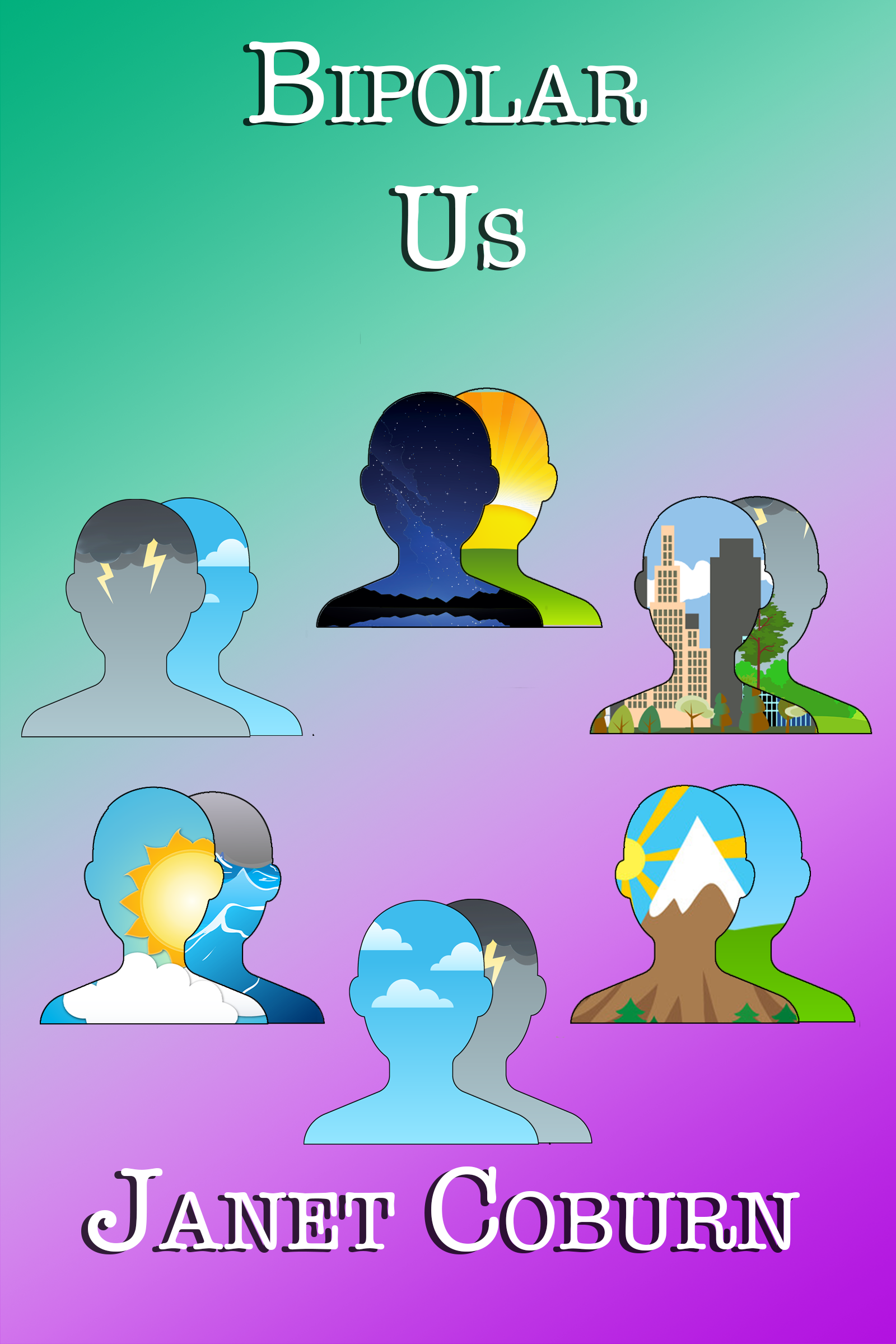
And I started reaching a wider audience. My writing appeared in The Mighty, Invisible Illness, IBPF, Thought Catalog, Medium, and as guest posts on other bloggers’ sites. Eventually, I had enough material to make Bipolar Me into a book of the same name. And then a sequel, Bipolar Us. Both are still available on Amazon and through other outlets.

I know I’m not in the same league with mental health bloggers like Pete Earley and Gabe Howard. They are true activists and influencers, as well as terrific writers. Their work reaches thousands of people with information, analysis, inspiration, and more impact than I will likely ever have.

But I won’t give up blogging just because I’m not the best. I’ll be here every Sunday, posting my bipolar thoughts and opinions, sharing my bipolar experience, and chronicling my bipolar life.

Caution: Wide Mood Swings

imageBroker – stock.adobe.com

Mood swings are universal. Everybody has them at one time or another.

Bipolar disorder is not just mood swings. Not everyone has moods that can last for months or years at a time or moods that are so extreme that they interfere with one’s daily life. The depths of despair and the rocketing highs are not what most people experience – and they should be glad they don’t. Bipolar disorder is a serious mental illness (SMI). It can be more or less severe, and it can be well or poorly controlled with medication and therapy, but the reality is that bipolar is a mood disorder, an illness, and a curse. 

Of course, the mood swings of bipolar disorder don’t always last for months or years. Sometimes you go spinning out of control every few weeks. This is called “rapid cycling.”

But even rapid cycling doesn’t describe the lightning-quick mood changes that can happen within a day or two. That’s called “ultra-rapid cycling,” and it’s like being whip-sawed by your brain. Those valleys and peaks come so closely together that you don’t even have time to catch your breath between them.

I think that the official criteria miss the mark on this. Many of them define rapid cycling as experiencing four mood swings within a year. Ultra-rapid cycling seems not to have a specific definition, but I and a lot of other people with bipolar disorder experience moods that swing not over the course of months, but over the course of weeks, or even days.

Ultra-rapid cycling blurs the lines into mixed episodes. Those are occasions when high and low moods occur at the same time. For many bipolar sufferers, this means simultaneous exaltation and despair, which is a terrible combination and a bitch to experience. For me, a person with bipolar type 2 whose hypomania expresses most of the time as anxiety, a mixed episode is a frightening blur of defeat and nervousness, a simultaneous feeling that the worst has already come and that it is about to descend to even lower levels. It’s like ricocheting off the insides of your own skull.

What to do at a time like this is a puzzle. Do I try the things that soothe me when anxiety strikes? Do I try self-care for depressed moods? Do the two strategies cancel each other out, leaving me swinging helplessly? Do I try to suppress both moods, knowing that the consequent numbness will make it all the more difficult for me to feel “normal” moods again? Once those walls are built, they are hard to tear down.

Ultra-rapid cycling and mixed episodes may be handy jargon to describe mood swings that don’t fit the common mode of bipolar disorder.  But they’re hell to live through. And since mood levelers, antidepressants, and anti-anxiety meds generally take a while to build up in the bloodstream enough to have an effect, there is little in the way of pharmaceutical help. An anti-anxiety pill may relieve the jitters and racing thoughts, but may also leave you more susceptible to the inevitable lows.

I don’t know if there’s much research going on regarding rapid cycling and mixed episodes. It seems like they’ve barely been named, much less defined or studied. And it’s true that there is a lot about plain old garden-variety bipolar disorder that remains to be understood and treated.

But for those of us who don’t fit the mold of months-long or years-long mood states, rapid cycling can be an uncomfortable way of life. When I was undiagnosed and unmedicated, I experienced those long, interminable lows. They did last months, years, until the depths of hell were all that I could see. The jags of ambition seldom visited me, but the creeping, lingering anxiety could easily take over. Now that I’m no longer subject to those excruciating extremes, I still am subject to the quick-change, rapid-fire series of moods. My mood levelers do work, in the sense that they reduce the peaks and valleys, but they never seem to put me on a totally even keel.

Perhaps that’s too much to expect. I’ll have to admit that I prefer a life of rapid- or ultra-rapid-cycling bipolar to the monotonous despair of long depressive cycles. At least now I have a firm conviction that the moods will end, or at least shift, to something more tolerable, and that that will happen sooner rather than later.

Given the choice between the lingering depths and the more rapid changes, I’ll take the one that doesn’t leave me in misery for years at a time.