Bipolar 2 From Inside and Out

Posts tagged ‘addiction’

What Does the $700 Million of Funding Really Mean?
You may have heard about the $700 million that the U.S. government has allocated for funding “behavioral health programs.” A number of different programs are getting slices of that money, as announced by HHS Secretary Robert F. Kennedy, Jr. The Safety Through Recovery, Engagement and Evidence-based Treatment and Support (STREETS) Program, for example, will receive $96 million, while those other programs get to split up $612 million, all in service of President Trump’s Great American Recovery Initiative. Kennedy said that the money would address the “addiction and serious mental illness that fuel homelessness across America.”

Where Is The Money Coming From?

Mindsite News reports that behavioral health experts responded to the announcement by saying that the $700 million was really the release of funds that Congress had already authorized. The spending was already planned to be spent before Secretary Kennedy’s announcement seemed to promise new funding. Until now, the money had been held up rather than being distributed to state and local treatment organizations. The STREETS funds may be pulled from existing programs as well.

Where Is the Money Going?

That $700 million is intended to benefit “multi-agency, street-based behavioral health systems integrating government, healthcare, housing, law enforcement, and courts for people experiencing homelessness with SMI/SUD.” Interestingly, according to Medical Economics, the money will “exclude housing-first approaches and harm-reduction services, aligning awards with the Great American Recovery Initiative and shaping allowable evidence-based models for homelessness-related behavioral health care.”

In other words, if I’m reading this correctly, the funds are really designed mostly to combat homelessness (which the Secretary says will “move people from the streets into treatment and recovery, strengthen families, save lives, and make communities safer”). Getting unhoused people off the streets and out of the public gaze seems to be a more important goal than mental health or addiction services per se. And it ignores the fact that most people with addiction problems or mental illnesses are not unhoused. They could use funding, too.

Experts have suggested that, rather than trying to fund new programs, the money should be spent on what is already working within the treatment and recovery community, as well as on deficiencies in the current state of affairs regarding mental illness, addiction, and homelessness. Kennedy claimed that new, innovative programs would result from the money spent, but behavioral health advocate and political consultant Andrew Kessler points out that many existing problems, such as “a shorthanded workforce, poor reimbursement, and not enough resources to handle the challenges we face,” could be addressed with increased funding.

If that $96 million portion for STREETS doesn’t sound like it will make a dent in the problems nationwide, well, it won’t. It’s going to eight communities, which will each get up to $3 million per year for four years, “to develop multisector, state-of-the-art care systems for people who are homeless and have substance use disorders, serious mental illness, or co-occurring disorders.” Presumably, any success in those locations will be replicated in other communities, or at least other communities will be encouraged to replicate it, though it seems unlikely that they will get federal money to do so.

988 UPDATE

When I posted about the 988 helpline a couple of weeks ago, I promised that if I heard anything new regarding Option 3 of the helpline, which is designated to help people in the LGBTQ+ community, I would let you know. Here it is:

Mindsite News, citing a story in The Advocate, reports that Congress has directed the agency that administers the 988 helpline “to reactivate the [Option 3 for LGBTQ+ crisis calls] service, but says it must do so in accordance with Trump’s Executive Order 14168, which recognizes only two sexes and rejects federal recognition of trans and nonbinary gender identities.” Mindsite adds that “the administration hasn’t explained how the two mandates can coexist or whether transgender youth will be included at all in any restored program.” The administration expects Option 3 to be restored by the end of the year.
A New Addiction

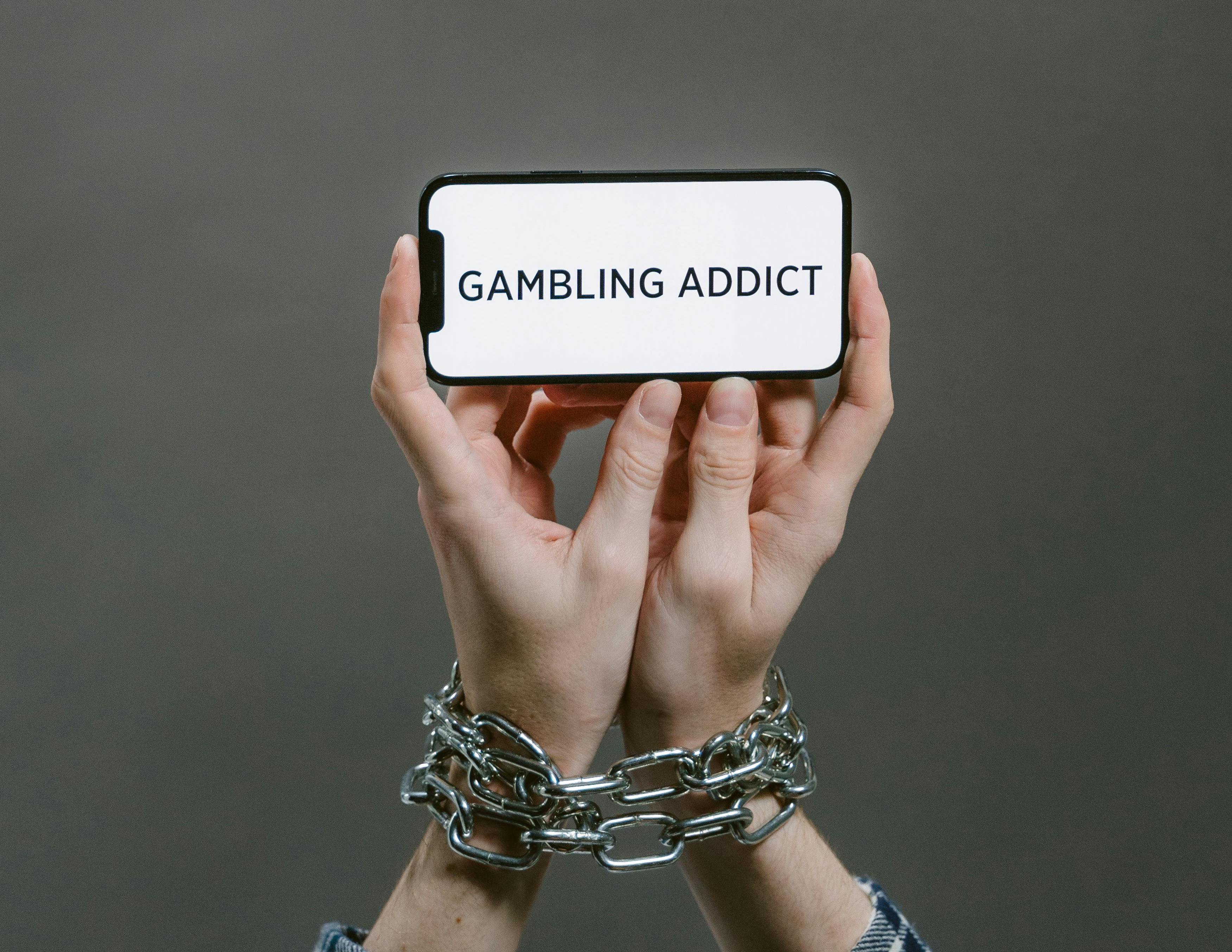
You see a lot in the news these days about gambling addiction, particularly since there are booming sites for online gambling, prediction markets, and sports betting platforms.

Digital gambling can rise to the level of an addiction. And addiction, as the DSM tells us, is a disorder. You can have a narcotics abuse disorder or an alcohol abuse disorder. In both of those disorders, you use something—alcohol or drugs.

But gambling addiction is different. You aren’t consuming any substance. You’re performing a behavior—risking money on an outcome. It shares all the characteristics of gambling, however: risk, reward, and uncertainty.

How Digital Gambling Addicts You

Gambling addiction, and especially digital gambling addiction, works by using some of the same strategies that other addictions do, and some that are specific to technology. Here’s how apps that appeal to kids turn into digital casinos:

Solitude: Most often, it’s just you and the machine. The social cues that tell you to stop aren’t operative. This is particularly true of children, who often play gambling games online, alone in their bedrooms. That encourages, if not addiction, at least problematic usage,

Continuousness: Gambling apps provide endless content that plays automatically. The slot wheels keep turning, and the card games keep going. Other online games trap you with continuing levels and new, open-ended content. The player wants more and more stimulation and continues playing.

Speed: The faster you play slots, the longer you gamble. It’s a lot like other social media. Scrolling through new content makes it difficult for you to stop. Infinite scrolling accelerates the presentation of more content in a feedback loop.

AI: When you play against an AI system, it feeds you what you’re interested in and teases you with promises of more and new content. However, they don’t give you exactly what you want. Instead, they tease you with something close to what you want, and you keep playing to reach the reward.

Brain chemistry: When you do win, even a small amount, your brain receives a hit of dopamine, and you feel good. The sensation of winning just makes you want to play more.

Money: Online sports gambling, in particular, offers the possibility of winning actual money on the outcome of games or even plays within those games. It’s the same as the promise held out by the stock market. If you’re really quick and clever, you can reap rewards. And literally anything can be bet on. Recently, a man with insider information won $400,000 by predicting when a world leader would be toppled.

These factors combine to create a state in which a user is metaphorically glued to their device. You lose track of place and time in a kind of dissociative state that is difficult to break free from, especially for children.

The Companies That Run the Games

Online gambling really took off during the COVID pandemic, when people were sheltering at home with limited choices of amusement other than their computers and smart phones. And it has snowballed from there.

What to do about this “public health crisis,” as gambling addiction has been called? “You regulate the distribution, the speed, the type, the access to the product, because the product is what’s dangerous,” Harry Levant, director of gambling policy at the Public Health Advocacy Institute (PHAI), has said, calling for gambling to be treated like alcohol or tobacco. “The problem is the product, not the people.”

There are consequences for the players, but now there are starting to be consequences for the purveyors of online gambling and addictive digital pastimes. Both Meta and Google were tried and found liable for endangering children via their addictive products. They’re appealing, of course.

But the cases have put parents on notice that their children may not be doing homework alone in their darkened rooms. In addition to harassing classmates and posting nude pictures, they may be playing addictive games, either with points or money as the reward. If it’s money that gets exchanged, parents need to keep their credit card information secure. There have been cases in which children have lost thousands of dollars of their parents’ money playing online games. And the game companies have been notoriously indifferent to pleas for restitution. They claim that players have to be a certain age, and that they know they are spending or risking money in order to play.

Some of their “clients” have started as early as middle school. “If I had a bad day I’d gamble. If I had a good day I’d gamble,” one said. “Gambling was my best friend.”

What can be done about online gambling addiction? “If they come into the office, we do what we do for any other addictive disorder,” Dr. Timothy W. Fong, clinical professor of Psychiatry at the Jane and Terry Semel Institute for Neuroscience and Human Behavior at UCLA, has said. “We do psychotherapy, we have Gamblers Anonymous, we have medication, and strategies to get people to work hard on their recovery, where their addiction can be contained.”