Bipolar 2 From Inside and Out

Work Hacks

Yay me! I just finished a big project (or at least the first phase of it) for which I will be paid actual money!

I am very fortunate/grateful that I am able to do freelance work at home, on my own schedule (mostly), using my education and skills, in my pajamas. Telecommuting is so way cool!

I can’t work an eight-hour day in an office any more (and likely won’t again). I can only concentrate for a max of three hours at a time, and some days not even that. Occasionally, if there’s a tight deadline, I can manage two sessions, or one and a half.Just Get Through It message on a dry erase board encouraging you to stick with your project or challenge during a stressful time in your work or life

Of course motivation is a factor. Deadlines and money are two really good ones. But sometimes I have to force myself – or trick myself – into doing actual work. This was true even when I did work in an office.

Anyway, here are some of my techniques – work hacks, as I guess they’re now called.

Taking breaks. Now of course, I can take breaks whenever I want, from a quick game of Candy Crush to an actual nap. My brain and body let me know when it’s time. They just crap out.

When I worked at the office, I tried taking crossword puzzle breaks at my desk. But apparently smoking was the only permissible break activity. Hiding in the bathroom didn’t work. People were known to track me down and ask questions anyway. (“Do you mind if I wipe and flush first?” Sarcasm seemed called for.)

When I got twitchy, I walked around the third floor or even more than one floor until I calmed down. The trick is to carry a clipboard or a few manila folders and walk sort of briskly so it looks like you’re going somewhere and doing something. It works best if the office has more than one room.

Pretending to work. I developed this technique at the office, but it can also be used at home. I would say to myself, “I don’t know how to get started. I’ll just write one sentence, so if someone walks by my cube, it looks like I’m working.” It was surprising to find that once the first sentence was on the screen, I knew what the second one should be – or that the first one was horrible and I could revise it, which also looked like work. Once I built some momentum this way, I was rolling. I don’t have anyone looking over my shoulder now, but the idea is the same – one sentence is the minimum, then see what happens.

Bribery and rewards. These are actually more or less the same. If I do X amount of work, I can check my email or eat a cookie or call a friend. I get to feel virtuous for working and satisfied by the little treat.

Forcing myself. If I’ve got a really tight deadline, I have to apply some internal pressure, especially if it’s one of those I-don’t-think-I-can-get-out-of-bed-days. Everyone in this house likes to eat. (The cats insist on it.) My pay will cover the mortgage, so we won’t be living under the Third St. bridge next month. This is dangerous, because I am a great catastrophizer, but sometimes it’s the only thing that works.

Artificial goals and lying to myself. If I can just do five more pages I can quit for the day. I know I can make it to the end of this section (that would be the lying part).

Stupid work. There are a lot of fairly pointless tasks that must be done anyway, but can be done by rote – adding headers and footers and page numbers, alphabetizing, running spell-check (or typing-check, as I prefer to think of it), that sort of thing. To me, that counts as actual work, and some days it’s all I can manage.

Unfortunately, none of these are effective for housework. No one pays me for that.


Silver pocket clock in wooden box isolated on white“Look at where you are now compared to where you were when we started. Look how far you’ve come.” This is what my therapist frequently tells me. And she’s right.

When I first came to see her I was a total mess. It is a measure of my progress that I no longer refer to myself as “pathetic.” it has been months – years –since I have used that word to describe myself.

And she is right to point out my progress. Not only am I no longer the despondent, distraught, weeping mess that came to her, I am now a person who has acquired coping skills – at least a few – that I can use in everyday life without much prompting from her.

But when I look back at how far I’ve come, how far back should I look?

Do I look back to my childhood, when there was something wrong with me that I didn’t understand? Do I look back to the everyday traumas that a typical person would have dealt with, if not easily, then at least adequately, that often left me a crumpled figure in the corner weeping copiously and, yes, pathetic.

Since those days, I’ve learned what my disorder is, and have learned to anticipate and deal with some of those everyday traumas.

Do I look back to my teenage years, when I had little clue how to make and keep friends? When I was an outcast for my oddities?

Since then I have rediscovered old friends and made new ones that love and support me, many of whom are just as odd as I am.

Do I look back to my college days, when the bright promise of my intellect was dulled by my inner turmoil, when I missed out on opportunities because I was not capable of reaching out to grasp them?

Since then I have tried to make the most of opportunities that come my way, and to use my talents as best I can.

Do I look back to my first significant other and how that relationship shredded what I had managed to accumulate of self-esteem and confidence?

Since then I have been trying to recover as much as I can of what I lost. And I now have a stable, supportive, long-term relationship.

Do I look back to the days when I first lived independently, teetering on the edge of financial disaster? The days when I could barely function in the world of work and living, when the loss of a job put me deep in the Pit of Despair?

Since then, I have learned to accept help from others and to know that the Pit of Despair is not my permanent home.

Do I reflect on the job that sustained me for many years, until my emotional state became so fragile that I was no longer reliable enough to do it?

Since then I have gotten work that I can do reliably and found a niche for myself in the world of work.

Do I look back to that dreadful time when my brain broke, I became unable to work at all, unable to take care of myself, unable to function in anything like normalcy?

Since then, I have been rebuilding my life – not as good as new, but the best I can.

Admittedly, the distance I’ve come since then has been vast. I can’t take the credit for it, however. Medications, therapy, a support system, a supportive husband, lots of reading about depression and anxiety and feminist issues and bipolar disorder have helped me survive and helped me grow.

Like many people with bipolar disorder I often have the sense that all along I was faking it, that during the periods when I seemed to be functioning best, I was actually pretending. Sometimes I think that’s what I’m doing now.

What’s that they say? Fake it till you make it?

But how do you know when you’ve made it?

I guess it’s when you look back and remember, but no longer viscerally feel, what you went through. I still have unanswered questions, unresolved conflicts, and unanswered puzzles from all those former times.

I no longer think that I will get answers to all of them. I suppose their purpose now is simply to be mile markers, measuring the distance I have come. I can look back if I choose to, or not. I can look back at who and what I was, or as my therapist says, how far I’ve come. But I’m not pathetic anymore.

So this is how far I’ve come. Can I look back without fear? Without despair? Sometimes I can. And that’s not something I’ve always been able to say. It’s progress.

Struggles and Tears

In the past week I have had to deal with:

  • My husband being out of town
  • Said husband driving home for 10 hours with faulty brakes
  • My insurance company going belly-up
  • My meds running out before new insurance could be implemented
  • My cat going missing
  • My check being late, so I could not pay mortgage, pay new insurance, pay for meds, pay power bill
  • Being immobilized and unable to leave the house

Out of all of those, which do you think came nearest to breaking my brain, causing me to catastrophize and dissolve into prolonged fits of weeping?

received_10154269586979820

Woodcut by Peggy McCarty. Used by permission.

If you guessed the missing cat, you’re right. One day she trotted out the deck door while I was feeding the dog, a thing she had never done before. I scooped her up and put her back inside, and resolved to close the door further in the future. Louise is 20 and rather thin, so it’s easy to misjudge what she can squeeze through.

When my husband got back (safely), he took over feeding the dog. Then the next day, Louise didn’t show up for her morning breakfast. Or lunch. Or dinner. She usually has a hearty appetite and meows quite loudly if a meal is late.

Naturally, I thought she had gotten outside again and was lost. We searched through the house, calling her name, and went around outside the house doing likewise. My husband thought she might be feeling poorly and holed up somewhere, most likely in the basement, which is also the garage and not easy to search because of all the clutter.

I thought she must have gotten out and succumbed to some fate out in the woods – a dog or other animal, the rain, hunger, illness and debilitation.

I was convinced she was gone for good. And I had thought I still had more time with her, despite her advanced age (20+). I was inconsolable. My precious cat, gone. No knowing what had happened to her. No chance to say goodbye. No way to comfort her in her last hours on earth.

Dan told me that everything would be all right, but I didn’t believe him.

Then, the next day, she showed up at mealtime, bellowing that she wanted food NOW! Dan had been right. She had hidden somewhere in the house and came out when she was ready to.  I had my darling Louise back, for however long she still has.

Then, after the long holiday weekend, the check came and I paid the bills and set up the new insurance and got my meds and went out to lunch with Dan and everything was all right.

Just a little while ago, I wrote about how having a cat saved my sanity (http://wp.me/p4e9Hv-jS) and how they can be good for people with mental disorders. I even said that losing a pet could teach us something about the grieving process.

But when my own cat disappeared, all that philosophizing went out the window (or the deck door). Louise was gone and I was bereft. Nothing anyone could say could make it better. And the situation was complicated by the fact that both one of our other cats and our dog are also ancient. I know I will go through their loss, and likely soon.

Will I hold up any better?

I really don’t know. The other cat and the dog are my husband’s, bonded to him the way Louise is bonded to me. Likely his grief will be greater than mine. Or maybe when they pass they will remind me of how close I came to losing Louise. Maybe I’ll be able to support him in his loss, or maybe my brain will break again. Maybe it will happen when I am more stable, with fewer disasters and near-disasters clustering around my head.

That’s the thing with pets. You never know how long you have with them. You never know whether you’ll be relatively stable when you have to face their loss.

But I know I won’t give them up. The loneliness of not having them is even worse than the pain of their going.

ETA: Dan’s ancient cat Garcia passed away peacefully at home this morning (Saturday). We were both with him at the end.

Managing My Anger

Many people need to control their anger by learning not to let it out. They can take anger management courses.

My anger problem is keeping it all in. I never know when it’s safe to let some of it out. And I don’t think they have courses for that.

Why do I need to let my anger out? Wouldn’t I be happier and life be easier if I were pleasant and agreeable all the time?

No. There are reasons I need my anger, and need to express it.A LOADING Illustration with Black Background - Anger

I need to vent. I was at the office once and a coworker had done some crazy thing or other. I went to my boss and spouted off. Wisely, he just tsk-tsked about it and didn’t try to fix anything. He knew that it was just a frustrating situation and I needed to express my feelings.

Stuffing your feelings is unhealthy. It’s especially bad if you push the feelings of anger down and then try to smother them with food or alcohol. A character on Dharma and Greg once said, “If you’re going to bottle up your feelings, you might as well pickle them first.” Taking advice from sitcoms is usually not the best idea.

Swallowed feelings don’t go away. They stay inside you and fester. Sooner or later you may explode and cause real damage – the kind you can’t fix. Better to let off a little anger at times than to save it all for later.

Sometimes, anger is justified. Anger at injustice or when you’ve been wronged is appropriate. If you don’t express it, the injustice or wrongful behavior will simply continue.

Having bipolar disorder makes dealing with my feelings of anger even trickier. I’ve spent too many years not recognizing that I even have anger and that it’s sometimes an appropriate feeling. That leads to being a doormat, which I also have years of experience with.

Dealing with my bipolar issues has meant dealing with anger as well. Here are a few things I’ve learned.

There are people I can vent to. One of them is my therapist; some of my male and female friends provide good outlets too. These are not people I am angry at, at least not at the time I vent. As with my former boss, I just need someone to hear and acknowledge my feelings of anger. I have separate categories – a friend to discuss my husband with, another one for work issues, and so forth – so no one has to listen to too much of my anger spillover.

I need to pick my battles. Living with anyone causes friction, which can lead to anger. Just this week I was mad at my husband. I wanted to shout at him, “If you had done your errands yesterday instead of watching movies, you wouldn’t be jammed up today and laying them off on me!” But really, how would that have helped? Could he go back to yesterday and do the errands himself? Would it have helped to refuse to do the errands and then sulked all day? Was there any real reason I couldn’t help out? Best to let this one go.

I have to measure my words. Perhaps I do this too much, but some amount is necessary. What was helpful this week was to say to my husband (after I had run the errands), “I need to tell you that I’m frustrated that you left all these errands until today and I had to take over some of them. There were other things I needed to be doing today.” (My things could be postponed; his couldn’t.) By that time I had cooled off enough that “frustrated” was more accurate than “angry,” and less likely to trigger a major shouting match. (Also notice the “I” statements that psychologists recommend.)

If I am angry and I do express it, it’s survivable. My husband and I have gotten through some very bad spells when both of us have been extremely angry. Some of them have required couples therapy, while others have been solved through time and negotiation. Other parts of my life have not turned out as well. I had to cut ties with a toxic relative for whom I had an unhealthy level of anger, with no hope of either of us changing.But I survived – and was the better for it, mentally and emotionally. Sometimes that’s necessary, for either your own or the other person’s mental health and safety.

It helps to have a good emotional vocabulary. Seriously. I don’t have to jump straight to anger when something upsets me. Maybe I really am just frustrated. Or disturbed. Or annoyed. Inconvenienced. Irritated. Miffed. Insulted. Disappointed. Cranky. Those feelings are easy to mistake for anger. It may be better for me to step back and ask, “Do I really feel angry?”

It helps to have a repertoire of behaviors. Not all anger has to be dealt with the same way. I could lash out and say something hurtful. But I could also walk away until I calm down, or have a good cry. I could say, “I’m too angry to discuss this now.” I could release my anger in a physical activity (actually, my husband is much more likely to do this). I could write a “never-send” letter (or a “to-be-sent” one).

But the first step to all of these is recognizing that I do indeed feel anger, and have a right to own my anger and express it. Anger may be harmful, but denying it is harmful too.

Last week I mentioned that my husband and I were planning a day trip to Cuyahoga National Park to see Brandywine Falls. This was based on a sudden, nearly inexplicable urge to get out of the house, get some fresh air, and see nature, despite my aversion to exercise. Maybe I was a little manicky. Who knows?mesign

I’m happy to report that the trip was a success, as you can see from these pictures. The drive up was long and hot (so was the drive back), but that gave us plenty of time for conversation. We got lost a couple of times in the park area (it’s a big, oddly shaped park), but with a little help we found the right parking lot and even grabbed a space near the trailhead. As advertised, there was a boardwalk that led right to the falls, or at least to an overlook with a great view.

stairsThere were also 69 steps leading down to the falls, or, more to the point, 69 steps leading back up to the boardwalk and the overlook. I declined to attempt the stairs, but my husband did, and got some pretty good pictures. janfalls

Since it was Father’s Day, there were a number of families there, but not so many that the trail seemed like a line for the rides at DisneyWorld. The weather was ungodly hot – in the 90s as we were driving home – but the boardwalk was shady and there was a bit of a breeze.falls3

So, what did I learn from this little adventure? First, that travel, at least on a small scale, is possible for me. I liked it so well that I am looking forward to taking another such trip, though most likely when the weather is cooler.

I drove the whole way up and back and was not bothered by my fears of drivers in the other lanes or railings and concrete dividers being too close to our car. (This is a thing that used to happen, even when I was a passenger. Driving was out of the question back then.)

Second, that I could make this trip with only minimal panic. I did have a moment on the way home. We stopped to eat, and as I rummaged in my bag for my regular glasses, I couldn’t find them. I thought they were pretty likely to be in the car, though I had visions of the case lying on one of the benches along the boardwalk. I was even trying to figure out whom to call or write that might be in charge of lost and found.

However, I managed to suppress the feelings, read the menu with my sunglasses on (that actually may have been the hardest part), resist the urge to ask Dan to go out to the car and check, and get through the meal.

The glasses case proved to be in the car and I managed to avoid either panic or mini-meltdown. I call that success. I finished driving home, we fed the animals, and then collapsed. It was exhausting and exhilarating and adventurous and restorative, and most of all, proof that I could travel again, at least for a medium-short jaunt. Travel was one of my greatest joys and one of the things I’ve missed most since the bipolar stole so many parts of my life. I am delighted to be able to say that I am beginning to reclaim it.

All photos by Dan Reily


Brandywine Falls

Brandywine Falls

If everything goes according to plan (which we all know it never does), this post will be publishing itself while I am at or on my way to this scenic location, Brandywine Falls in Cuyahoga National Park.

I was attracted to this particular location when I read on the Internet that, in addition to access via a 1.75-mile hiking trail, the falls could also be reached using a wooden boardwalk from a nearby parking lot.

This easy access appeals to me because I have balance problems and sometimes use a cane, as well as because I seldom leave the house and have difficulty walking any distance. My husband encourages me to get out and walk, reminding me that exercise is good for depressive episodes, but just getting out of the house for doctors’ appointments and a few errands leaves me with no spoons for recreational walking. It’s a pretty dreary life, though there is a nice window in my study, through which I can see shrubs and trees, the occasional hummingbird or squirrel, or that stupid bird that sometimes flies straight into the glass and bonks itself silly.

There were actually tears in my eyes when I mentioned the expedition to Dan.

“What’s the matter?” he asked.

“Would you drive a long way with me to do something that requires very little time to do?”

“What do you want to do?”

“See this waterfall,” I said, pointing at the screen. I explained about the parking lot and the boardwalk.

“How far is it?”

“Near Cleveland. About three hours. Each way.”

It sounded ridiculous even as I said it. A six-hour drive to walk a very short distance and look at a waterfall.

“We could stop along the way to get something to eat. Or we could pack a picnic. You could bring your camera and take nature photos.”

I needn’t have worked so hard to make it sound attractive. Getting out of the house to go see something scenic and outdoors is something my husband has been longing for us to share.

Naturally, as soon as we agreed to go, my brain went into overdrive, doing my usual job of trying to anticipate everything. We would need to GoogleMap directions, of course. We would need some kind of waterproof bag with cold packs and bottles of water. Bandanas to moisten and wipe our sweaty brows (the temperature will likely be in the 80s and I don’t do well in heat). Bug spray. My cane and maybe a walking stick for him. At times like this, I tend to plan the Normandy Invasion.

This is a ridiculous idea/plan. After the last month and a half I’ve had, it’s a wonder that I’m not just crouched in a corner going beeble-beeble-beeble. But if it works, we may make the same drive in a few weeks to go to a horticultural center and canopy walk, if only so I can make the old, bad joke (You can lead a horticulture, but you can’t make her think) and we can meet up with some Cleveland-area friends we haven’t seen in far too long.

So. Getting out. Exercise. Nature. Relaxation. Fresh air. No computer access. Potential socializing. I don’t know whether these things will have any actual positive effects, but I like to think that my therapist will be proud of me.

Never mind that there are plenty of places nearer – even locally – to walk short distances and see nature. Never mind that my therapist often recommends that I take baby steps. This is a baby step. For God’s sake, I used to be able to hike in the Adirondacks. To travel. To Europe. By myself.

I don’t know why I was able to do that then, but can’t now. Bipolar disorder didn’t strike me suddenly, after I had done all those things. Maybe back then I was better at functioning. Maybe life and bipolar had not yet overwhelmed my ability to cope. Maybe I was in remission (or whatever they call it). Maybe I was hypomanic. It’s a mystery to me.

But maybe, just maybe, I can take this baby step toward reclaiming some of the things that used to bring me pleasure. It’s about damn time.


Forced to Face My Fear

A little while ago, I posted about my severe dental phobia (http://wp.me/p4e9Hv-cG). So of course fate pushed me to the wall and left me no choice but to confront it.

tooth fairy illustrationHere’s the backstory. My teeth are awful, and my dental phobia has a lot to do with it. Realizing this, we borrowed some money and put it aside for my dental work. The reason that we had to borrow that much money was not just because we’re broke (we are) or that our dental insurance is so crappy as to be nonexistent (it is), but the fact that the last time I got any dental work done (years ago), I was so terrified that I had to have a traveling anesthesiologist brought in to put me completely under. And that approximately doubles the cost of already-pricey, though necessary, procedures.

Then another disaster ate the money we had put aside. There was no choice in the matter. The dental money had to be sacrificed.

Then fate stepped in. Last Saturday I got a toothache. Of epic proportions. Not realizing that the dentist had a 24/7 emergency number, I toughed it out till Monday, when my face was hideously swollen and the combined powers of Anbesol and Tylenol were insufficient to let me sleep. I got in to see the dentist on Tuesday.

That one tooth was definitely going to have to come out and the abscess drained (did I mention there was an abscess?). And there were a few other highly recommended procedures that needed doing as well. None of which the crappy insurance would pay for.

But that wasn’t the real problem, or at least not the only problem. The traveling anesthesiologist was out. The dental slush fund no longer existed. Normally (that is, for normal patients) the dentist offers “oral sedation,” which turns out to be triazolam (Halcion). But since I already take lorazepam (Ativan), that wasn’t considered safe.Apparently the two don’t work and play nicely together.

“You’re going to do this without anesthesia AND without oral sedation?” the dentist said.

“I have no choice,” I replied. He had given me Vicodin for the pain (as well as an antibiotic for the abscess), but I couldn’t really take that long-term. And so I was cornered. I had to have the procedure, no matter what. (My husband offered to get a rubber mallet and knock me out, or knock the tooth out, or something. I politely declined.)

The plan we worked out was this: On Thursday, when they were to do the procedure, I would take two Vicodin and increase my lorazepam from .5 mg to 1.0 mg. (with my pcp’s permission). Then I would have nitrous oxide, which had never worked for me before, but hey, worth another try, right?

And I would have my husband there in the procedure room, as my comfort animal. He had to stay out of the way, but was able to reach over and pat me on the ankle. Which was comforting, actually.

Double Vicodin (I was permitted two but had been taking only one) and double Ativan (plus one prophylactic Immodium) left me suitably stoned. I was totally confused when the hygienist asked me, “Bubble gum or orange creamsicle?” I was stoned, but that made no sense. Turns out nowadays they have scented nose cones for the nitrous. (I chose mint.) I could barely feel the numbing shots, and the extraction went smoothly. I didn’t hear/feel the terrifying, sickening crunch that went from my jaw directly through my brain when I had my wisdom teeth out. My husband said I didn’t even flinch. He patted my ankle anyway.

Then we paid about the same as we recently had for two vet visits for our ancient cat, but nowhere near what we had borrowed, put aside, then spent.

I didn’t even disgrace myself, though I had spare underwear in my purse, just in case.

All in all, it went way better than I expected. Have I conquered my fear? I don’t honestly know, and probably won’t until the next time. (And there will be a next time.)

But at least I’ve proved that I can do it. I can have a dental procedure done without anesthesia and without oral sedation, if it’s really, really necessary. Pain is surely a great motivator. I am no longer a huge wuss, I guess – just a regular wuss. I do hope, however, that when the clot heals and the infection clears up, and the swelling has gone away, that I do not have to go through this again for a very, very long time.

(At least this time I did better than when I faced my apiphobia (http://wp.me/p4e9wS-7H).)


Queen LouiseAny pet can help with mental health, really. But in my case, it was a cat.

I was living alone after a bad breakup that had shattered me, mind and spirit. After moving twice, once from another state and once from an apartment complex after I lost the job that paid for it.

I was damaged, and I was alone, in the upstairs of a small house in a small town. I asked my landlady if I could have a cat. She was dubious, but said yes.

I found a cat at a shelter. She was an adult tortoiseshell calico named Bijou. She was small and shy and quiet. The first night I took her home, she slept across my throat.

We needed each other. I needed someone to care about, to focus my attention outward on. She needed someone  to draw her out of her shell, to care for and about her.

We took it slowly. At first she didn’t like to be held. When I got home from work she would meet me at the door. I would pick her up, give her a quick kiss on the head, and set her right back down. Soon she learned that being held wasn’t such a bad thing.

Since then I have never been without a cat.

And they have improved my mental health. Pets do.

Pets entertain when we need distraction.  They can make us smile and even laugh.

Petting them brings tactile comfort and purring offers a soothing sound.

Caring for a pet makes us feel – be – needed. Even when we have a hard time caring for ourselves, a pet becomes a responsibility bigger than we are.

Losing a pet teaches us about the process of necessary grieving. Then getting another pet teaches us about the process of loving someone new, opening our hearts again.

Pets listen. They don’t judge.

Pets communicate with us, and teach us their personal language.

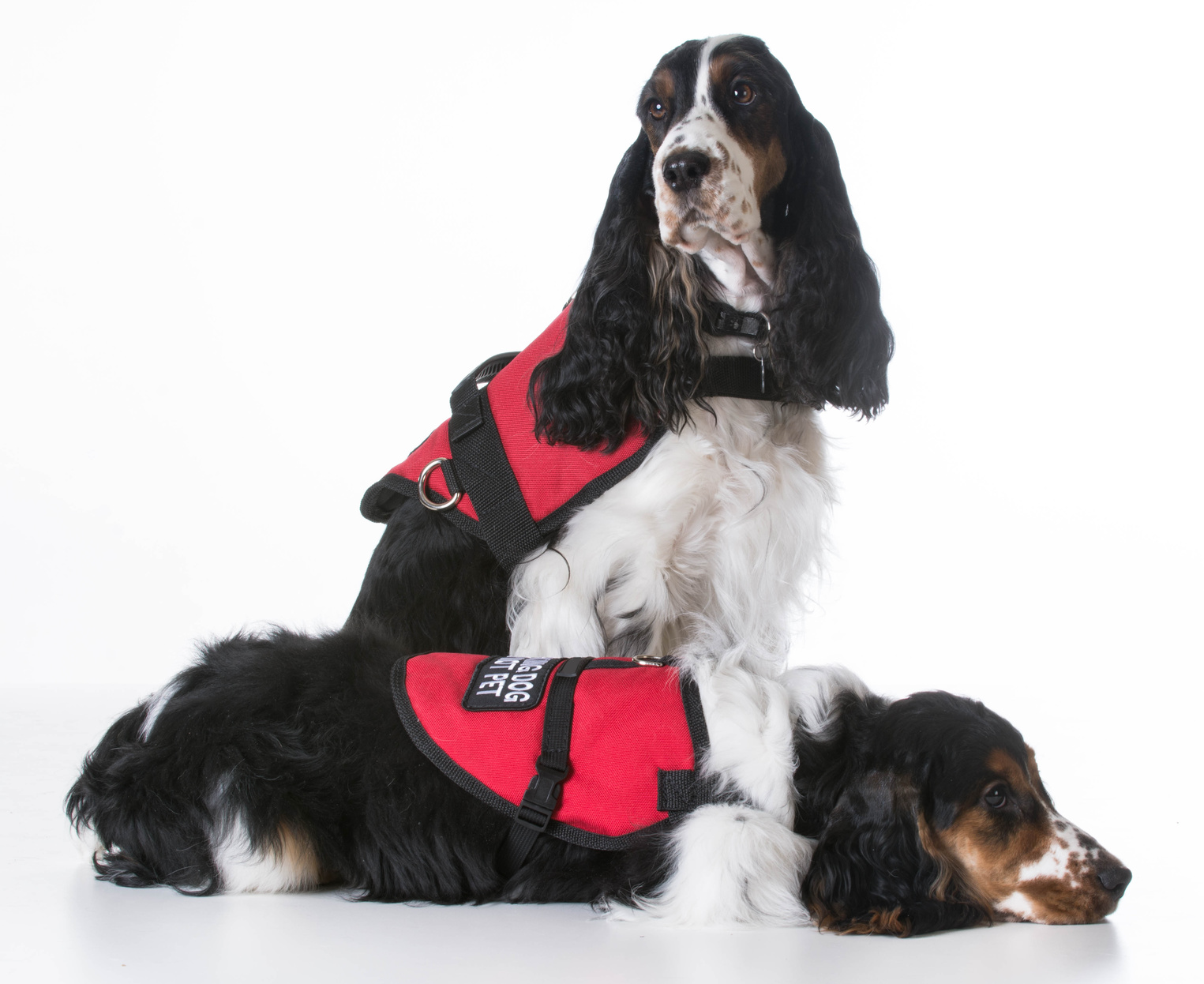
Pets are now being used as therapy animals and comfort animals for the anxious, the aged, prisoners – and psychiatric patients. The laws and policies regarding “assistance animals” are only just beginning to be enacted. They are far from catching up with the need.

Even visits with farm animals – lambs and chickens and ponies – are fulfilling vital roles in people’s lives.

I’ve written about “crazy cat ladies” before and even identified myself as one (http://wp.me/p4e9Hv-bI). There is a stigma that goes along with the label – yet another kind of stigma that we would be better off without. Admittedly, we can become obsessed with our companion animals, even to an extent that is unhealthy. They can be burdens, and annoyances, and expenses.

There are some people – perhaps people with rage issues, for example – who should not own pets. Having pets is a choice that should only be made if they and you fit together well. We’ve all read the stories and seen the pictures online of people who abuse pets horribly. Now those are the ones that I consider crazy.

Pets may not me be the right choice for other reasons. A person who travels a lot, or has extended hospital stays, may not be able to make the commitment. Germophobes and emetophobes may not be able to handle the inevitable messes that come with pets. Even pet fish need their bowls cleaned.

Personally, I would avoid fish, unless the care of, say, tropical fish fascinates you. And their placid swimming can be calming. But for most of us, a pet that interacts with us is preferable. Birds aren’t very cuddly, but they make agreeable (to some) sounds. Reptiles have their own fascination and aficionados. Me, I want something I can pet.

The picture that accompanies this post is of Louise (aka The Queen of Everything). She is 20 years old and, although she is hanging in there, I will be devastated when she goes. My husband’s 17-year-old cat, Garcia, has some health problems, though again, not terrible ones considering his age. Then there are our youngsters, Dushenka and Toby.

I don’t think it’s too much of a stretch to say that they are as much a part of my support system as I am theirs.


May Update

I fear May has broken my spirit and possibly my brain. Fortunately, I see my brand-new psychiatrist on Saturday and my therapist on Monday.

I thought my social skills were bad until I encountered a woman who asked me, “Do you have mental problems?” (She recognized me from our mutual psychiatrist’s waiting room, but still….)

expression

With practice, however, I have been able to improve my casual conversation skills, at least enough to get by in some situations, as long as they don’t last more than an hour. Here are my secrets. They do take practice. I have been fortunate to have had people to practice with – friends, coworkers, and of course my husband.

Introductions. Actually, I taught this one to my husband. Often when we met someone that he knew, he would fail to introduce me, leaving me standing there like the proverbial bump on a log. He claimed that the problem was that usually he couldn’t remember the person’s name. “Just point to me and say, ‘This is my wife, Janet.'” Then I will stick out my hand to shake and say, “And you are?” That way we both learn the person’s name. It works like a charm, every time.

Very Brief Conversations. Conversation with strangers – just a sentence or two – is also relatively easy to learn. The trick is the innocuous comment and there are two ways to go about it. The first is to make the comment yourself – “Those are great shoes! They make your feet look really small.” “What a lovely handbag. My mother had one that was similar.” Make an observation and then a related remark, usually complimentary. They don’t even have to be true technically. If you can’t think of anything else to say, a comment on the color of an outfit is usually good. There’s hardly any way someone can take offense at “That’s a great shade of blue on you.”

The other side of the equation is to get someone else to make a comment to you. This requires a prop most of the time. I used to carry a purse shaped like an armadillo, and that proved a great conversation starter. I memorized several responses that I could use when the other person said, “Oh, what an unusual purse!” I could say, “My mother gave it to me for Christmas one year” or “A friend found it in some catalog.” The purse went over  big, especially if there were children present.

Longer Conversations. These require more practice. Luckily at one of the jobs I had, there were a couple of people that I could invite out to lunch and practice conversation with. (I suspect that they knew what I was doing, but they never mentioned it. In effect, they played along.) Mary, for example, had two adopted children, and questions about them we’re always good for a few minutes of interesting listening. They also had a cat and a snake. Pets and children make good topics.

Sometimes it’s best to steer clear of work-related subjects, but if the person is really understanding, you may be able to vent. You should also be able to listen to the other person too. The secret to that is not to try to fix the problem. Simply listen and validate the person’s feelings. “That sounds awful! Does she do that all the time?”

Formal Settings. Mary also provided me with the opportunity to learn about a sometimes-necessary but difficult situation – funerals. Mary and a few other people invited me to go with them to the viewing of a person that I knew only slightly in a work context, so the stakes were low. From watching Mary and her friends, I learned that the proper procedure is to stand briefly at the coffin looking solemn, then go to the bereaved, shake hands or hug (depending on whether they proffer a hand or two arms), and say, “I’m sorry for your loss” or “My deepest sympathy” and at least one remark about the departed. It can be as simple as “He was a pleasure to work with” or “Everyone at work is going to miss her.”

Not Melting Down. Another important social skill is not having a major meltdown in front of other people. When I first visited my husband’s family, I became very uncomfortable quite often because everyone seemed to be yelling at each other. Loud, angry voices tend to upset me, especially if they continue for any length of time. The technique I developed was to go into the other room and make a cup of tea. Making tea is socially acceptable. (If you’re in the kitchen, go to the bathroom or step outside for fresh air.)

Much later I learned that my husband didn’t realize that his family reacted to even minor questions with argumentative responses in loud voices. To him, and to them, this was simply the normal style of conversation. It wasn’t what was normal in my family, and it triggered my aversion to confrontation. I guess whatever you grow with grow up with seems normal to you.

One other piece of advice: Don’t attempt flirting unless you have a coach. It’s really tricky and possibly dangerous. Not for the novice (especially not the kind of novice who wears a habit).