Bipolar 2 From Inside and Out

Posts tagged ‘Spoon Theory’

What Is It With Showers Anyway?

Girl is choosing cosmetics in bathroomIt is fairly widely known that people with bipolar disorder and/or depression have trouble taking a daily shower. It’s not that we don’t know what’s involved in taking a shower, or why it would be good for us to do so, it’s simply that showering uses up a tremendous number of spoons.

Here’s what showering looks like according to Andrew Solomon, author of the now-classic The Noonday Demon:

I ran through the individual steps in my mind: You sit up, turn and put your feet on the floor, stand, walk to the bathroom, open the bathroom door, go to the edge of the tub…I divided it into fourteen steps as onerous as the Stations of the Cross.

I performed a similar exercise in one of my blog posts and here’s my version:

First I have to find a clean towel and a bar of soap, get undressed without seeing myself in the mirror, fiddle with the water temperature, wash and shampoo, dry off, find clean underwear, and that’s not even thinking about drying my hair and figuring out what I can wear! Oh, my God, I’ve used up all my spoons just thinking about it! I should just eat Cocoa Puffs and go back to bed.

Now let me say, first of all, that I don’t really like showers. I grew up taking baths and have never enjoyed the sensation of water spraying in my face. But with my bad back and bad knees, getting up from sitting in a bathtub is nearly impossible these days. (Please don’t ask me why anyone would want to sit in dirty water. Everyone says that when I say I prefer baths. I have a nice long soak, steeping in the clean water like a big teabag, and only then wash up and get right out. Used to, I mean.)

To most people, showering is a single act that requires the expenditure of a single spoon. Take a shower; that’s it. But for those of us with invisible illnesses, each separate step may require its own spoon. Take something as simple as finding a towel, for instance. Go to the linen closet, grab a towel and voilà! Only a fraction of a spoon, if that.

But surely you don’t think I have had the spoons to fold and put away my laundry. It is all there in a jumble on top of the dryer. (Who needs a wrinkle-free towel anyway?) I have to root around to find one, and maybe twice if a cat has thrown up on the first one I pick. (They love sitting on clean laundry.)

If I have to go to a business meeting I force myself to use some of those spoons showering and getting dressed and acting respectable. But I will pay for it later, collapsing after the meeting in need of a mega-nap.

Now here’s a little secret I’ll tell you. Most people believe you gain spoons by going out of the house – walking in the fresh air, meeting friends for lunch, shopping, going for a drive (does anyone do that anymore?). But the fact is that, according to Spoon Theory, you get a certain number of spoons every day when you wake up. You cannot gain, buy, beg, borrow, or steal any more spoons, not even by breathing fresh air. You can only spend them.

Given the mathematics of spoons, I don’t spend a single one that I don’t absolutely have to. Not going out? No shower. Have to go out for a loaf of bread or a drive-through meal? Wash up in the sink. If I need a shower between outings, my husband reminds me and facilitates by, for example, rummaging on the dryer for a clean towel and clean clothes or a clean nightshirt.

I need those spoons for doing my work at home in my smelly pajamas more than I do for the ordeal of showering.

Dear Bipolar Disorder

Dear Bipolar Disorder,

We’ve had a relationship for decades now, though it’s one I never chose. To tell the truth, I can’t even remember when we met. Gradually, you just moved in. So I guess we’re stuck as roommates for the rest of my life. You can’t break your lease and I can’t move out. That being said, there are some things I need to talk to you about. We’ve never been friends. We never will be. I have some issues with you; there are compromises we need to make.

I’ll take my meds faithfully if you back off when I do. By that I mean no major depressions of longer than a week and no panic attacks while I’m trying to sleep.

I’ll pay for those meds, as long as you settle down enough to let me keep working and earning money and paying for meds. Just leave me enough concentration to do that and to read, and I’ll be satisfied.

I won’t go to Chuck E. Cheese or Cici’s Pizza or shopping at a mall anytime after Thanksgiving if you will let me go out at other times to other places without getting your figurative undies in a bundle.

I will try to minimize the stress in my life (see above) if you will cut out the physical symptoms when there is stress anyway. You know the ones I’m talking about. Ick. Just ick. I hate cleaning up after you.

And can we talk about spoons? I know you only give me a limited number per day, but it would sure help if I knew what that number was. Is there any way you can be more consistent? If I have to borrow spoons from the next day or force myself to attend to some vital call or lengthy errand despite not having spoons, I promise to spend the next day in bed, just to satisfy you.

Please, if you can, give me some non-anxiety-laden hypomania so that I can go out and enjoy things with my husband and friends. If you agree to this, I will occasionally let you buy things off the Internet, for $20 or less.

And while we’re on the subject of enjoyment, I would appreciate it if you would give me back my libido. So would my husband. I know you don’t take orders from him, but it would be esteemed a favor.

Don’t even talk to me about hurting myself. I won’t listen. No matter how loud you get.

Don’t get between me and my friends. You’ve done that too often already and I just can’t put up with it anymore.

No more screwing with my memories. I’ve already lost enough. You can keep the ones of everything stupid I’ve ever done, but I will not watch when you push play on my internal video playback.

Now that I’ve finally got some self-esteem back, you just keep your claws off it. I need it and you don’t.

No dogs allowed. Especially large Black Dogs.

Oh, and tell your buddy Depression to leave my husband alone.

No love,

Me

Brain vs. Brain

Having bipolar disorder is like having cognitive dissonance all the time.

What is cognitive dissonance? When people ask, I usually describe it as when the two halves of your brain slam forcefully into each other and give you a brain-ache. It’s also known as “brain go ‘splodey.”

Take, for instance, the time when I saw excerpts from the musical Cabaret, with the dancers portrayed by women of at least 65. As I reeled out of the theater, my mother saw the dazed look on my face and said, “Don’t you like Cabaret?”

“I love Cabaret!” I replied. Meanwhile, the other side of my brain was saying, ”Oh my God, if they had tried to do the Bob Fosse choreography, someone would have broken a hip for sure!” Slam! Pow! ‘Splodey! Cognitive dissonance.

You can probably see how this relates to bipolar. One half of your brain says, “If you just take a shower, you can go out to lunch.” The other half says, “A shower?!? First I have to find a clean towel and a bar of soap, get undressed without seeing myself in the mirror, fiddle with the water temperature, wash and shampoo, dry off, find clean underwear, and that’s not even thinking about drying my hair and figuring out what I can wear! Oh, my God, I’ve used up all my spoons just thinking about it! I should just eat Cocoa Puffs and go back to bed.”

Instant cognitive dissonance.

Or try this scenario: You see on your newsfeed that the government is considering a new law with a feel-good title regarding mental health issues. “Hooray!” one side of your brain says. “At last! Everyone should support this fabulous bill!” Then you look at the whole article and find that one provision in the bill allows violating the privacy protections of HIPAA, as an example.

“Oh no!” the other half of your brain says. “Any person, even one who’s mentally ill, has the right to medical privacy. What if an abuser gets information about his victim? I’ve got to write a letter protesting this bill. Where are my spoons? Did someone steal my spoons?

There are lots of these situations, hence the near-permanent state of cognitive dissonance.

I want to be around people but I don’t want to talk to anyone.

I want to be left alone but then I’m lonely.

I really want to make love to my partner but I can’t get aroused.

I want to be cured but I hate the idea of being “normal.”

That degree of cognitive dissonance is positively exhausting. No wonder we never want to do anything but lie in bed, not read, not interact, not reach out, not try to do anything but survive another day.

If we think too hard about anything, our brains may go ‘splodey.

It’s All People-y Out There

What’s the relationship between bipolar disorder and introversion? My friend and I were discussing this topic. She had noted my aversion to going out and being around people and thought it might be because I was an introvert instead of my having bipolar depression.

She also noted that Spoon Theory sounded a lot like introversion as well – that people who ran low on spoons wouldn’t have enough left to go out and have coffee with a friend, for instance.

She and I still have lots to discuss on the subject, and she is lending me a book on introversion to see if I agreed with her after reading it. I await the arrival of the book, but here are some thoughts I have on the subject. I write them here just to collect my thoughts on the subject.

First, to point out the obvious, introversion is a character trait and bipolar disorder is a mental illness. Character traits do not generally require (or respond to) medication. Bipolar can and often does. Introversion, like many mental disorders, may respond to therapy such as group therapy – unless, of course, the person is too introverted to attend group sessions.

Bipolar depression – or any kind of depression, really – can manifest as an unwillingness to be around other people. The feelings of hopelessness, failure, and unworthiness can make it painful to be in the presence of people, especially ones who don’t know about the disorder or that you have it.

But depression isn’t all there is to bipolar disorder. There’s also mania (or hypomania). Mania can produce the opposite effect, driving the person to desire and enjoy the company of other people, even to the extent of being “the life of the party.” Hypersexuality may come into it, too, which almost certainly requires another person, or even people. Hypomania can produce, if not a full burst of energy, at least a lift that can make being around other people less painful.

I have bipolar disorder, which probably began when I was a child or a teen, though I wasn’t diagnosed until much later. I remember walking through the halls of my school between classes, reading a book the whole way. (Hence the picture, which isn’t me but could have been.) Was I shy? Was I introverted? Was I avoiding attracting the attention of the school bullies, on the theory that I’m invisible when I’m reading? Was I fascinated by the book I was reading and unwilling to put it down?

There’s an argument to be made that reading was my form of escapism and school hallways, notoriously people-y, were a thing I wanted to escape from. But there’s also an argument to be made that I was affected by bipolar depression. I certainly felt that I didn’t fit in, that I was different somehow. Maybe that difference was my disorder. I did have friends, though, and I remember laughing wildly with them at in-jokes in the cafeteria, which was also people-y.

As for spoon theory, I can see what my friend was getting at. Spoon theory generally applies to people who have chronic illnesses, and I maintain that mental illnesses fall into that category. My friend said that she thought perhaps introverts start their days low on spoons and run out of them early in the day, making socializing virtually unachievable.

My take on it is that, as introversion is not a chronic illness or mental disorder, an introvert will likely start the day with the same amount of spoons as non-spoonies – if I’m right, an introvert will start the day with ten or 12 spoons, while the chronically ill may start with only five and have to choose very carefully how to use them. Plus, getting dressed for work might take one spoon for the healthy or neurotypical, while spoonies often spend one whole spoon just taking a shower, let alone choosing clothing, dressing, and getting out the front door.

Does an introvert experience the exhaustion, depletion of energy, and feeling of being totally flattened that a chronically ill or mentally ill spoonie does when the spoons run low or out? Or do they choose to use their remaining spoons in ways other than socializing, such as caring for a pet, pursuing a craft, reading, or shopping online? These are things that, when spoonies crash, they are often unable to do, just as much as they’re unable to go out to dinner with friends. Hell, a lot of the time they don’t have the spoons left to make or even eat dinner. Collapse into a chair or a bed is the most likely choice of activity.

Granted, I haven’t read the book on introversion yet. And I’m not a teacher of psychology like my friend. But I still think that my bipolar disorder is likely the cause of my not wanting to go out among people, rather than introversion. And I absolutely don’t believe that introversion caused my bipolar disorder. I’m of the school that blames that on neurotransmitters being out of whack.

But maybe my friend has a point. I’ll read the book, and we can toss ideas around, maybe via email or phone if I can’t go out where it’s people-y.

All Mixed Up

Leigh-Prather/Adobestock.com

As I mentioned a few posts ago, my psychiatrist and I are working on a medication change that will, I hope, pull me out of bipolar depression. The medication that we changed was a mood-leveler, which sounds like a productive way to start.

We’re increasing the dose, which means it shouldn’t take the time it would for the old drug to “wash out” of my bloodstream (and/or brain) while we’re waiting for the new one to kick in. I’ve been that route before, and it’s miserable.

While I haven’t noticed my moods becoming exactly stable since the change, I have noticed certain effects. I am able to get through the minimum of what I need to do each day, though nothing more. And I have noticed that I am getting irritable. This does not happen so much when I’m depressed. When I’m depressed, I don’t care enough about anything to be irritable.

In fact, irritability is one of the ways that hypomania manifests for me, before I get to the euphoria/super-productive/reckless spending stage. I get snappy with my husband about all his annoying habits, like never giving me a straight answer to a simple question. (What are you watching? A movie. What did you get at the store? Food.) I think he thinks he’s being funny, but I find it frustrating. Not that I don’t have annoying habits too, especially when I’ve either depressed or irritable.

So, I guess in one way, the irritability is a good sign. It doesn’t mean I have level moods yet, but it seems to mean that I’m not totally stuck in the depression. (I explained to my husband what was happening with me, and he seems to understand more. Though it remains to be seen if he’ll answer simple questions informatively.)

I think what I’m experiencing is a phenomenon know as mixed states. If to be depressed is to care about nothing and mania is to care about everything, a mixed state is some hellish combination of the two. Imagine being immobilized and jumpy all at the same time. That’s what it’s like, paradox that it is.

I haven’t had mixed states too often in my life, though I have had emotions that swerve drastically from happy to depressed in an instant (which is an extreme version, I think, of what’s known as ultra-rapid cycling). This is something different, though.

Now, I use up all my spoons early in the day and nap, or I stay up but go to bed at around 8:00. Ordinarily, if I went to bed that early, I’d read for a couple of hours, but these days half an hour or 45 minutes is it, tops.

Still, I think (or hope) that this mixed state of affairs is a step along the way to level moods that are higher than the numbness and not-caring of depression. It’s not comfortable to go through, but then neither is depression or mania, even hypomania.

It’s been about six weeks since the change in my medication. Within another four to six weeks, it will likely become apparent whether the change, once set in motion, will have an outcome I can live with. Until then, I need to spend my spoons as wisely as I can and try to remember not to snap at my husband, even when he’s being annoying.

Missing the Finer Things in Life

By GoodIdeas / adobestock.com

One of the ways I know when I’m slipping into bipolar depression is when I lose my sense of humor. Not even my husband’s awful jokes get a rise out of me. I also lose interest in many things that I ordinarily enjoy – reading, puzzles, and games, to name a few. The joys of life are few and far between.

Lately, I’ve noticed that I seem to be slipping again. I don’t feel overly depressed yet, but the signs are creeping up on me.

I think I first noticed it when it occurred to me that I had not done the New York Times crossword puzzle for at least a week. The Sunday Times puzzle is, or was, something I looked forward to every week. Now, I may not get around to playing it till mid-week or simply wait for next week’s, in hopes that I feel better. Most of my other entertainments have fallen by the wayside as well.

I know part of the problem is lack of spoons. I have been taking on extra work in my transcription job, simply to make extra money, which we do need. But it means I have given up almost all my days off and have had to get up very early to finish assignments. There’s little of me left over to do frivolous things, the things that bring joy.

On top of that, I have a house to furnish from top to bottom. I do not find shopping relaxing or enjoyable. In fact, I loathe it. Yet there I am, once or twice a week, at the vast home improvement store, picking out lighting or flooring or something else the contractor needs right away. It’s exhausting, not rewarding, and it eats into my spoons and my days off even more. It’s almost like having a second job, what with all the research, phone calls, appointments, choices, and decisions. Perhaps I’ll be able to rejoice in our new digs when it’s all done, but right now I can barely picture it.

The lockdown isn’t helping, either. One of the things I used to enjoy was going out to my favorite restaurants or discovering new ones. Now that is right out. I know some people are again indulging, but I’m not willing to risk my life for a cheeseburger and a brew or even tiramisu. My space and my life are constricted to a one-bedroom apartment, with a laundry/utility area substituting for my beloved study.

I do still have some comfort in my life, which is a mercy. When it all gets too much for me, I knock off for a while and watch some cooking shows on TV, which I find soothing, or read a chapter in a book before I fall asleep. At least I haven’t lost my ability to read, which I did once during a major depressive episode. And I’ve been able to maintain my blogs, which gives me satisfaction.

But as to joy, there is none. Life has become a tedious slog through one damn thing after another. One of the questions they always ask you during the depression screener at the doctor’s office is, “Do you no longer enjoy things you used to?” 

I’d say that’s true. Or at least I no longer have the wherewithal to do the things that I used to enjoy. Is it a marker of bipolar depression, or simply a reaction to all the things piling up on me right now? And which one causes the other?

On the surface, my retreat from joy is not excessively alarming. It has not yet reached the point of a major depressive episode. I can still do my work and my work on completing the house. What I can’t do is find a way to take mental time off – and I know that’s not good for my emotional stability.

I guess I’m just afraid that, in my life as it stands right now, there is no room left over for enjoyment. And that feels a lot like psychic numbness and depression. Perhaps when life settles down a little bit – if it ever does – I will get some of the enjoyment back. Perhaps it will become clear to me whether this exhaustion is circumstantial or anhedonia, a symptom.

Nevertheless, I plod onward, hoping for the day when satisfaction, relaxation, engagement – joy – will return. So far, it always has, though sometimes it seems forever before it does. That’s the nature of this illness and of recovery.


When Self-Care Seems Impossible

It seems the days when I most need self-care are also the days when I’m least able to accomplish it. I mean, when I can’t even get out of bed, I’m not likely to have the wherewithal to perform any kind of self-care regimen.

I’m not talking here about the take-yourself-to-the-spa type of self-care, either. That’s beyond my means and my capacity. What I’m thinking about are the most basic needs that must be met – meds, food, sleep, and the like. But there are sometimes things that prevent me from accomplishing even these.

Part of the reason, of course, has to do with lack of spoons. It takes energy to shower and dress, make a meal, go to appointments, and all the other tasks that should actually make me feel better. According to Spoon Theory, we wake up with an unknown amount of spoons every day and must choose how to spend them. Some days I wake up with only a few or even zero.

The other obstacle I’ve noticed that inhibits my self-care is my occasional inability to plan. Yes, I can make sure I eat at least one meal a day, but on some days only if I have gone to the grocery store earlier in the week and bought at least a box of Cocoa Puffs and some bottled water to keep by my bed. Not much of a meal, I know. It’s the bare minimum I can do, but sometimes all I can manage.

Taking my meds is the only part of self-care that is an essential that I don’t do without. I usually have that bottle of water right next to my bottles of pills, but even if I don’t, back in college I learned to swallow pills with only spit. But again, this takes a little planning – calling in prescriptions and getting to the pharmacy to pick them up.

On days when I have slightly more spoons, I have to plan and prepare for the days when I don’t have enough for proper self-care. Even the planning and preparing use up spoons.

But there are also days when I can manage a little self-care. On those days, if the spoons are low, but not completely nonexistent, I take shortcuts. I wash up in the sink instead of showering. I put a piece of salami between two pieces of bread and call it a meal. I put on clean pajamas and underwear instead of getting all the way dressed. I use mouthwash instead of brushing my teeth. I pet the cat instead of calling friends.

And I call it good enough.

Admittedly, those are some low standards for self-care. It would be nice if I could do more – and on some days I can. But on many days, the obstacles seem overwhelming. Inertia takes over and entropy sets in. I know it’s not good for me and can slow my recovery from spoon deficit spending, but that’s just the way depression is sometimes. It sucks you down into a hole that’s hard to climb out of when it’s at its worst.

But, thanks to the aforementioned meds and the minimal self-care I’m able to do, I know that one day I’ll be out of the hole and able to work on some proper self-care. Even plan for the next time that self-care seems impossible.

Anxiety Says No, but Mental Health Says, “Do It!”

It’s tough enough for someone with bipolar or depression or anxiety to go outside, where it’s all people-y. It’s another level of achievement when such a person deliberately puts herself or himself out into the public eye.

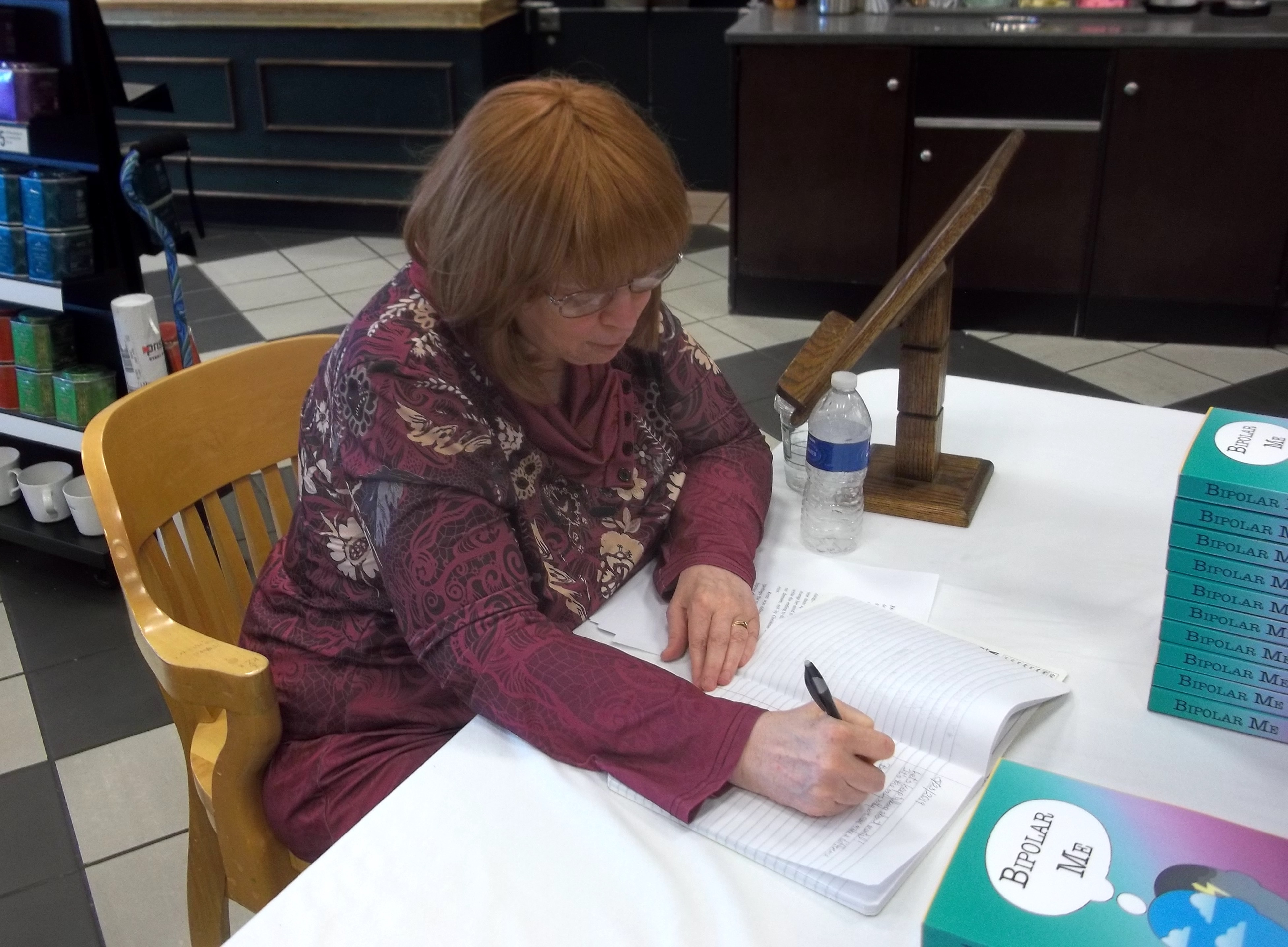
But that’s just what I did this week. My publisher arranged for me to do a reading and signing of my book at a local branch of a national bookstore. And I agreed to do it. Thursday night was my debut.

Let me go back a few steps. I do have some experience speaking in public, so it wasn’t going to be a completely novel experience. Those occasions were, shall we say, a bit distant in time, mostly before my bipolar disorder reached its heights (or depths). In high school, I did debate and extemporaneous speaking. In grad school, I taught introductory English classes. During my somewhat-less-than-successful business years, I once addressed a power breakfast meeting. I even opened with a joke.

I was prepared to open with a joke (or at least a witticism) this time, too. But my plans soon flew out the window.

I had prepared – or over-prepared, probably – somewhat obsessively. I spent spoons like they were disposable plastic. I picked out an outfit and a back-up outfit, including earrings and back-up earrings. I did my hair. I agonized over which pieces from my book to read, then printed them out in huge type so I wouldn’t have to squint at them. I took an anti-anxiety pill and Immodium, just in case. I was fortunate that Thursday was my day off and also my husband’s, so he could be present as my emotional support animal, wearing one of my book t-shirts.

My expectations, such as they were, took a nose-dive when only two people showed up – both friends of mine, one of whom had already bought my book. It was time to rearrange my plans on the spot, not really one of my strong suits. Why had I knocked myself out making plans if the universe wasn’t going to cooperate with them? I had thought that at least half a dozen people would turn up. I was trying to keep my expectations reasonable, after all.

I’ll admit that when I saw such a small audience, I felt a wave of despair. In actuality, it proved good that they were both friends of mine, because they were a receptive audience who wished me well.

Given the meager audience, though, I abandoned my introduction (though I worked my joke in later). These people already knew me. I gave a brief synopsis of “What is bipolar disorder?” and plunged into my readings.

I had tried out one of my readings previously, when I was on a podcast for indie authors. Of course, I had no eye contact with my audience then and no real idea how my performance went over. On Thursday, I explained Spoon Theory, as it came up in one of the pieces I was to read. I had chosen two of my more light-hearted pieces, though on serious topics (psychotropics and side effects, and cognitive dissonance). Then I finished with a reading of a piece on why I write about bipolar disorder and why I put myself out there to the extent that I do in this blog and my book, and indeed my public appearance.

The big surprise of the evening came when I invited a Q&A session. My husband fed me questions to get things started and my friends also had queries. What I hadn’t been expecting, however, was that a few people in the bookstore cafe where this all occurred got sucked into the discussion and had questions of their own, though they had no idea that the event was scheduled at all. One worked at a local university and had heard his students talking about having bipolar disorder. Another was a woman studying psychology in order to become a counselor. I didn’t always have the answers, and I’m sure I bobbled some of the explanations, but I did my best to come up with reasonable answers about treatments and medications, self-care, and so on.

Then came the signing portion of the evening. I signed a book for one of my friends and the counselor-in-training asked me to sign her notebook with any little inspirational words I might have. (I winged it. I was tired by then and am not usually inclined to be inspirational.)

Then my husband and one of my friends and I went out for milkshakes, which I highly recommend as a way to decompress after such a fraught experience.

All things considered, I’m glad I took the risk and gave it the old college try, as it were. If nothing else, it was good practice for the next time I speak in public, perhaps when my second book comes out.

The reason that I write about bipolar disorder and my experiences with it is that I want to share what I’ve learned and lived. I think I did that Thursday, even if not to the extent that I had hoped. I don’t regret the anxiety and the preparation that went into it and, all things considered, count it as a win. When I think about the melt-downs I could have had – before, during, and after – I feel pride that I kept my depression and anxiety at bay for long enough to share information about bipolar and healing and mental health.

I think it was worth putting myself out there.


Mental Illness and Voting

people standing with signage on street

Photo by Rosemary Ketchum on Pexels.com

No, I’m not going to tell you how to vote. And I’m not going to say the country is bipolar just because we’re so divided. What I am going to do is talk about the issues you should be concerned with during these mid-term elections and what you need to do in order to make your vote count.

Despite the fact that mid-term elections are usually boring, plagued by low turn-outs and minor local issues, this time they are likely to have national significance. This time we are voting on people – representatives, senators, and governors – who will make the policy for our states and our nation, including policies that affect the mentally ill.

Health policy. We’re not voting directly on national health policy, but we are voting for or against the people who make those policies. Those policies include support for the ACA (Obamacare), especially its protections for those with pre-existing conditions.

This has become a hot-button issue this year and you will likely hear and see ads that tout the various candidates’ support for insurance that covers pre-existing conditions. The key here is to do a tiny bit of research. Whatever a candidate says now, has he or she always supported coverage for pre-existing conditions? Or does the candidate have a history of trying to do away with such insurance coverage? Promises are not the point here. Past actions are. Given the choice between an incumbent and a newcomer, I personally will go for the newcomer if the incumbent has a track record of trying to dismantle coverage for pre-existing conditions.

Another important issue for the mentally ill is safety net programs, particularly Social Security, Medicare, and Medicaid. Many people with mental illness depend on these programs to cover their basic living and medical expenses. Believe a candidate who wants to gut these programs. Many of them see the people who benefit from these programs, particularly SSDI, as “moochers,” “freeloaders,” and drags on society. If you or a loved one needs this kind of assistance, vote accordingly.

There may also be local issues regarding police training, housing, and the homeless that are relevant to persons with mental illness. Spend a few minutes researching before you vote. Some Internet sites such as BallotReady.org and Vote411.org can help.

Your vote. Your vote only counts if you actually cast it and that can be a problem for those with mental or emotional disorders. Going to the polls can seem an impossible feat. But given the significance of the coming elections, spending some spoons to do so can have long-term repercussions.

If you have trouble getting to the polls, first make sure you know where your polling place is this year. It may have changed since the last time you voted. Then ask around. Some cities, like mine, are offering free bus rides to polling places and some services like Uber are offering discounted fees. Neighbors who go to the same polling place or members of support groups you belong to can potentially provide transport. Don’t forget to ask friends and family, if you can. They may not realize how important voting is to you or the difficulty you have getting to the polls.

If your difficulty is not getting to the polling places, but being at them, plan ahead. There are likely to be crowds this year and you may want to have a support person with you, especially one who also plans to vote. You may even be able to call the polling place ahead of time and find out when their peak voting times are so you can avoid them. If possible, avoid the noon rush, when many people take a voting break from work, and just after local businesses close for the day.

You may have heard rumors of intimidation at the polls this year. These are likely exaggerated, as are predictions of civil unrest after the results are known.  If anyone tries to interfere with or influence your voting, find an official poll worker or ask for a provisional ballot, which is your legal right. Call the police if you have to. Rely on a support person to help you get through the process.

Remember that this year’s elections are important. If at all possible, VOTE.


The Golden Glow and the Spoons

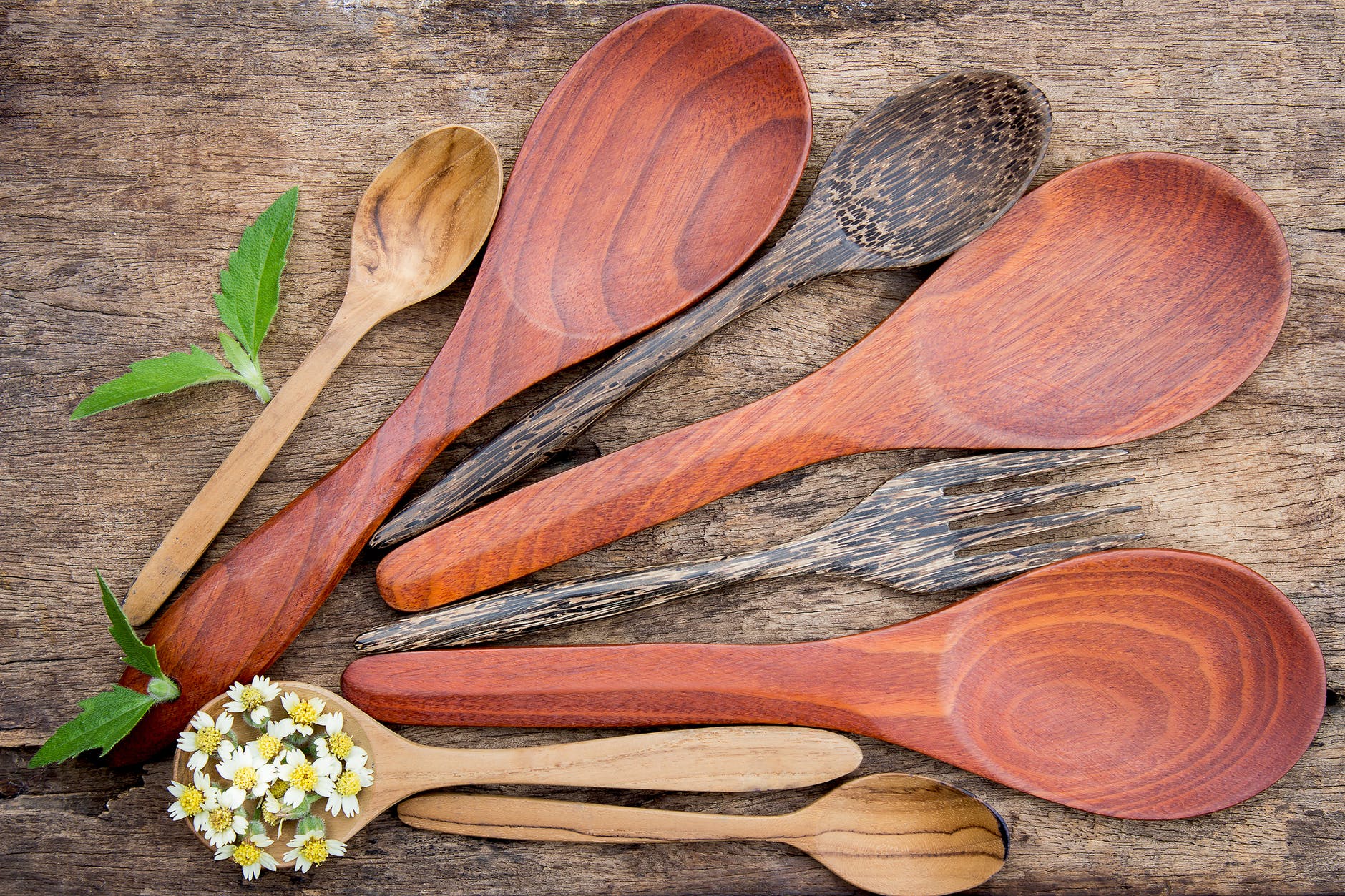
art board cooking flowers

Photo by Aphiwat chuangchoem on Pexels.com

Hypomania is as insidious as it is enjoyable.

I remember when I quit my 9–5 office job to go freelance. I remember when I made the decision. I had gotten my first bad review, ever, shortly after disclosing my bipolar disorder to my new boss.

I remember driving around shortly thereafter, running errands in the middle of the day. I felt the warm, golden glow that goes with either happiness or hypomania. I could wake when I pleased and work when I pleased. I could run those errands when I wanted. I could take my mother to her doctor’s appointments whenever I needed to. I could make and go to my own appointments as necessary.

Best of all, I felt as though I had enough spoons to do all this. I was able to keep up with the work and the errands and the appointments and, hey, if I got tired I could take a nap in the middle of the day.

But.

Eventually the glow wore off and the spoons ran out. Hypomania dumped me back into the depression I was oh-so-familiar with. I had more work to do and less energy to do it. My mother’s problems increased and I had to take over her finances as well as my own. I was teetering on the edge of a major depression, and then I fell off that cliff.

Anymore I don’t trust hypomania. First of all, I can’t distinguish it from actual happiness, competence, or satisfaction. I always question its sincerity and watch out of the corner of my eye for the coming crash. In other words, when I’m happy I can’t even enjoy happiness without reservation.

One way I keep track of my hypomania is by being aware of the number of spoons I have. If I’m flying on a hypomanic cloud, I feel replete with spoons. It never occurs to me that I will run out. When I’m experiencing garden-variety happiness, I still suffer at some point from lack of spoons. No matter how many pleasing things are scheduled for the day, I know deep inside that I cannot simply dive into all that bounty. My joy is measured out, as the poet said, in coffee spoons or in this case metaphoric spoons which I always visualize as small white plastic ones.

Stability for me does not mean that I can ignore my supply of spoons, either. I may be on an even keel, able to do most of what I want, but inevitably the spoon depletion hits, sooner or later. There is simply no more that I can do, much as I want to. And if I force myself past that point, I will surely pay for it in exhaustion, irritability, or isolation.

Spoons, therefore, run my life. If I am too happy, I have to watch for incipient spoon depletion.  If I am level, I know that I must still keep track of the spoons I use. And if I am low, my spoons can disappear altogether, to the familiar point of not being able to get out of bed.

I think the trap of hypomania is the worst of all. On a high like that I can lose track of my spoons – even forget that they are necessary. Fortunately, I don’t get the full-blown version of mania. I fear I would squander spoons recklessly, leaving me a terrible absence of any.

Spoons are a useful way to explain the energy demands of chronic and/or mental illnesses. My husband and I speak spoonie shorthand. But I wish I could experience that golden glow, that haze of happiness, that feeling of floating, without having to keep one eye on the spoon-meter.