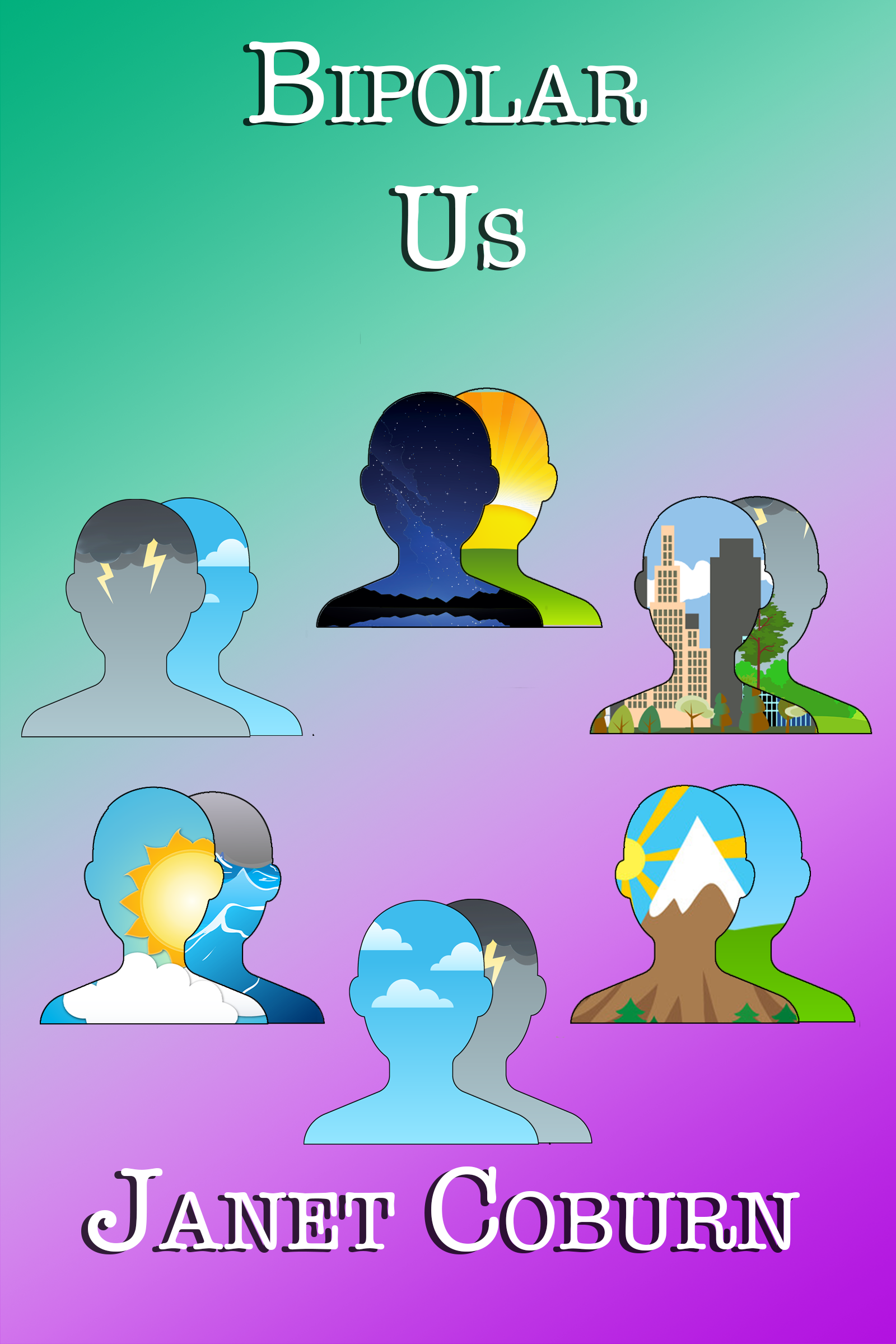
Bipolar 2 From Inside and Out

Posts tagged ‘depression’

Diagnosis and Dickinson

The Brain — is wider than the Sky —
For — put them side by side —
The one the other will contain
With ease — and You — beside —

The Brain is deeper than the sea —
For — hold them — Blue to Blue —
The one the other will absorb —
As Sponges — Buckets — do —

The Brain is just the weight of God —
For — Heft them — Pound for Pound —
And they will differ — if they do —
As Syllable from Sound —
Emily Dickinson

I ran across this poem in a book called Shrinks: The Untold Story of Psychiatry (about which more some other time) and it made me think.

Dickinson was, by all accounts a recluse. She seldom went out and, when visitors came, she sometimes sat behind a screen while she talked to them. She never dared to submit her poems for publication. Less than a dozen were published in her lifetime, and those only because someone else submitted them without her knowledge. Her wealthy, loving family sheltered and nurtured her so that she never had to face the outside world.

Emily Dickinson had Social Anxiety Disorder.

And Abraham Lincoln suffered clinical depression. So did Charles Dickens.

Bipolar sufferers include Beethoven, Schumann, and Isaac Newton.

Charles Darwin, Michelangelo, and Nikola Tesla were all obsessive-compulsive.

Autism, dyslexia, and various learning disabilities affected Einstein, Galileo, Mozart, and even General Patton.

And Van Gogh! Let me tell you about Van Gogh. He had epilepsy. Or depression. Or psychotic attacks. Or bipolar disorder. Or possibly some combination thereof.

I call bullshit. I’m not saying none of those people had assorted mental disorders. My point is that we can’t tell from this distance in time.

In none of these cases, as far as I know, did any of the aforementioned people see a psychiatrist, psychoanalyst, psychotherapist, or even a phrenologist. None were diagnosed with any psychiatric condition, and no record of such a diagnosis has come down to us from any reliable source. Some even lived before psychiatry was invented.

People – mental health workers, but also art and literary critics, biographers, and the general public – have looked at these extraordinary people’s lives and work and decided that their behavior and their art look like those of a person who might be bipolar or obsessive-compulsive or psychotic. (They also like to retro-diagnose physical conditions there is no record of or only vague names for. King Tut, Henry VIII, and Napoleon are particularly good theoretical patients.)

Why the tendency to ascribe mental disorders to famous people? I can see two reasons, beyond the thrill of solving a mystery and feeling clever.

The first is the old saying about there being a thin line between madness and genius. These historical figures were geniuses, so they must have been mad. Or as we say now, suffering from mental disorders.

The other is the need for role models and inspiration. If Van Gogh could become one of the most famous artists ever (though not successful in his own lifetime), you too may rise above – even use – your disorder to accomplish greatness.

It’s possible, I guess, but it’s not likely. Certainly those with mental disorders can aspire to and achieve rich, full lives, satisfying relationships and jobs and artistic pursuits. These are the ordinary accomplishments of ordinary people, both with and without mental illness, and it’s a small miracle that people can achieve any one or more of these. Not everyone does – again with or without mental troubles or psychiatric diagnoses.

And for me, at least, it’s enough.

Can the spark of imaginative genius strike a person with a mental disorder? Of course. Can that person succeed and achieve lasting fame? Maybe, though the odds aren’t good. Is a person saying, “Look, I can be Van Gogh!” likely to fall short? Almost certainly. Can that failure to achieve greatness make a person feel worse about himself or herself instead of better? You tell me.

There’s nothing wrong with aiming high, and nothing that says a person with a psychiatric diagnosis can’t do just that. It’s a good idea for anyone. (As one of Lois McMaster Bujold’s characters says, “Aim high. You may still miss the target but at least you won’t shoot your foot off.”)

But pinning your hopes on a similarity with a non-psychiatric, perhaps non-existent, diagnosis of a genius may not be the best way to get there.

Better to look in these geniuses’ work for insights that can help you understand your own condition or pull you through tough times. Here’s another of Emily Dickinson’s poems that has always spoken to me about the experience of a depressive crisis and its aftermath.

After great pain, a formal feeling comes —
The Nerves sit ceremonious, like Tombs —
The stiff Heart questions ‘was it He, that bore,’
And ‘Yesterday, or Centuries before’?

The Feet, mechanical, go round —
A Wooden way
Of Ground, or Air, or Ought —
Regardless grown,
A Quartz contentment, like a stone —

This is the Hour of Lead —
Remembered, if outlived,
As Freezing persons, recollect the Snow —
First — Chill — then Stupor — then the letting go —

Was Emily herself depressed? We’ll never really know. And as long as we have her poems, I don’t really care.

Mind Like a Steel Trap

Rusty. Unhinged. Not really good for trapping things.

Especially memories.

That’s not quite true. I have that uncanny ability that all depressed people seem to have to remember every stupid, clumsy, embarrassing thing I’ve ever done, as well as every trauma. It’s like a mental DVD that stores them up, then plays them at random moments. Or maybe not so random. Maybe just when I think I’m doing okay.

The memories can be as traumatic as the time other children threw rocks at me or as trivial as the time one person asked for a glass of water and I gave it to someone else.

Unfortunately, the recording feature only works for bad memories. A lot of the good ones are MIA. I don’t remember huge chunks of my childhood, except as stories that family members have told me. I don’t really know if the memories are mine or theirs. And I’m scared to compare notes.

My theory about these childhood memory deficits – and to tell the truth, all the way through my teens and early twenties – is that when you are profoundly depressed, memories don’t imprint the way they’re supposed to. Whatever synapses and neurochemicals are involved in memory are out of whack. I’m also afraid to do the simple Googling required to find out whether this is even a plausible theory. If it’s not, I don’t think I want to know. I have an explanation that makes sense to me, and the memories won’t come back if I learn my theory is wrong.

Later in life, medication has helped controlled the depression and, after it was diagnosed, the other effects of bipolar 2. But if I thought my memory was going to function properly, I was wrong. Some of the drugs left me with a memory like Swiss cheese.

My memory lapses seem more random now. Good things, bad things, neutral things, all disappear into the Pit of Unavailability. Sometimes they are embarrassing – I forgot a friend’s father had died and asked how he was. Other times they are more distressing – mere scraps left of trips I’ve taken. Sometimes they’re heart-searing – total nonrecall of a never-to-be-repeated sexual encounter.

Good and bad, gone.

(“Oh, yes,” said the doctor. “That drug will do that. You can stop taking it now.”)

I guess I’m lucky. If I’d had the electroshock, my memory would probably be as raggedy as old underwear. And about as useful.

Churchill’s Dog

Winston Churchill famously compared depression to a black dog. Here’s a video that takes that metaphor and runs with it.

https://www.youtube.com/watch?v=vBjl7yqLWOw&t=49

Andrew Solomon, author of The Noonday Demon: An Atlas of Depression, says, “Depression minutes are like dog years, based on some artificial notion of time.” He goes on to describe how the simple act of getting out of bed and taking a shower can consume hours, leave you exhausted, or be simply impossible without help.

The Noonday Demon

There’s even a Black Dog Institute in Australia, which is a non-profit organization that provides information about depression, bipolar disorder, suicide, and other topics.

Home

There are other metaphors. J.K. Rowling, creator of Harry Potter, talked about depression and dementors. Here’s a link to a post I wrote about that.

Read Your Way to Sanity

The black dog is with me now.

The Creative Bipolar Brain

Sun or shade
feel or know
safe or strayed
stall or flow

Thought or whim
drought or rain
sink or swim
heart or brain

Stop or start
bound or free
light or dark
bipolar me

I have a lot of friends who are creative – writers, musicians, singers, woodworkers, knitters, and other craftspeople. I also have a lot of friends who have assorted mental or emotional disorders – depression, bipolar, PTSD, OCD, autism spectrum disorders, and probably many more that I don’t know about. In many cases, the two categories overlap.

Common wisdom holds that there is a link between creativity and madness. Look at Van Gogh, for example. People have spent years debating what specific disorder he may have had, but nearly everyone agrees that he had something. The question is, would he have been the great artist without the mental or emotional disorder? Or, perhaps, would he have been an even greater artist if his brain functioned in a more typical matter? Science so far has given us no answers.

Many creative people realize that their everyday functioning is impaired, but they are reluctant to seek treatment for it. They fear that tampering with their brain or thought processes will somehow inhibit their creativity – make them less than they were in some fundamental way. When you start tampering with brain chemistry, who knows what will happen?

It’s a valid concern.

Throughout my life, my brain has been all that I have, or nearly so. My intelligence and creativity were the things I was most proud of. How could I risk losing those simply because I was eternally miserable? The question seems absurd now.

Eventually I decided that I had plenty of brain cells to spare, and that if taking Prozac took away a few of them or lessened their ability, I could live with that. (Just in case, I took up pursuits that are supposed to strengthen the brain – math puzzles in addition to word puzzles, music in addition to writing. Not everything I tried was a success, but I hope they stretch my brain muscles.)

My experience with that first psychotropic med convinced me that Better Living Through Chemistry is not just a chemical company’s slogan. It turns out that – surprise, surprise – thinking more clearly and feeling more well-adjusted actually empower one’s creativity. My output changed from poems full of young adult angst to creative nonfiction, personal essays, and the occasional short story. I now make my living doing freelance writing and editing – an unstructured process that I couldn’t have made a go of before having my mood disorder treated. The ability to concentrate – to focus – is what enables me to sustain a creative effort.

So to all those people out there who wonder if they are sabotaging themselves and their creative impulses by seeking treatment, I say go for it! You have nothing to lose but your immobility. You have everything to gain – the ability to create, to express yourself and do it clearly, and the possibility to create something truly wonderful.

Sylvia Plath was a poetic genius. But she could have given so much more of her talent and vision to the world if she had not killed herself. Perhaps her poetry, had she been treated for her mood disorder, would not have been as searing and powerful. The point is, we will never know. Would she have become more ordinary, or more extraordinary? Dying young obviates the answer.

I believe – for me – that psychological treatment, appropriate medication, and more stable moods have expanded my creative process. And I try to prove it every week when I post in this and my other blog. Whether I succeed is for you to determine.

Have I lost a step? Maybe. But two forward and one back beats the hell out of one forward and two back.

Yes, I Am Crazy. Thanks for Asking.

I’ve been called a lot of things in my time, from schoolyard taunts (loony tunes, weirdo) to psychiatric labels (clinically depressed, bipolar 2). This used to bother me, but anymore, I don’t mind.

It’s not because of the old saying, “Sticks and sones can break my bones, but words will never hurt me. We all know that’s a damn filthy lie. I think it’s because I’ve developed a sense of humor about the “crazy” thing. If Al Yankovic can embrace “Weird,” I can embrace “squirrel-bait” or “wacko.” Even “bat-shit” or “bug-fuck” crazy don’t get me riled, though many find them offensive – and I can’t fault them for that. Everyone has a different level of tolerance and sense of what’s funny.

Take, for example, the time when my sister Kathy gave me a t-shirt that said, “Leave Me Alone. I’m Having a Crisis.” Her husband was dubious about the gift, thinking that I would be offended. I wasn’t. Kathy thought it was a hoot and so did I. (I just bought a t-short that says, “You Won’t Believe the Crazy Shit That Happens Next…” I’m going to wear it to my next psychotherapist appointment.)

I admit to being disconcerted when publicly confronted by a person who asks “Are you the one there’s something wrong with?” or “Do you have mental problems?” (In the first case, the elderly gentleman was thinking of my sister-in-law, who had MS, and in the second, the person recognized me from the psychiatrist’s waiting room.) But I’m not offended. Mostly I regret that I didn’t have snappy come-backs. (I thought of some great ones later.)

There are still some assumptions that do offend or at least irritate me. Here’s a link to an article that enumerates a few of the touchy subjects and unwelcome phrases.

10 Harmful Myths About People with Bipolar Disorder

That sums it up pretty well. I’m not going to walk into a fast food outlet and start shooting up the place. Mania is not fun. I’ve decided not to reproduce, but nobody can tell me that I shouldn’t.

Oh, and there’s one other thing. In the past, when I’ve mentioned my mood disorder to acquaintances or co-workers, they feel obliged to take my emotional temperature five times a day. “Are you okay? How are you feeling?” So I would add to the list: Not all people with bipolar disorder are rapid cycling.

So, am I crazy? Yes. But I don’t think that’s necessarily a bad thing. Most people use the word “crazy” to describe how they feel when they’re in love. And I’m good with that.

https://www.youtube.com/watch?v=EE34cSvZCd8

Not Waving but Drowning

Consider this a trigger warning. The third section is going to talk about some difficult stuff, although in mostly general terms.

Here’s a list of how I know how bad my mood disorder is at any given time. Being bipolar, I cycle in and out of these phases, along with periods of reasonably competent functioning and even, occasionally, contentment or even happiness.

There are basically three stages of increasing dysfunction.

Starting to Sink
My sense of humor takes a hike.
I need more alone time.
I take mega-naps.
I forget that music can help.
I snap at my husband.
Noises irritate me.
I can force myself to work.

Floundering
I don’t want to eat.
I turn off my phone.
I sleep up to 14 hours a day.
Attention span is one hour (or one average book chapter).
I can trick myself into working.

Going Under
Can’t sleep.
Can’t work.
Can’t read.
Attention span: 15 minutes max.
Thinking “Maybe the plane will crash and I won’t have to deal with this anymore.”
Regretting I flushed my stash of pills.
Urge to cut.

Fortunately, I am well-medicated enough that category 3 doesn’t happen nowadays, though I remember it clearly and am appalled. At that point, the only things I can do are keep seeing my doctors and taking my meds. And remember to thank my husband when I come out of it.

(The title of this post is from a poem by Stevie Smith. The last two lines are: I was much too far out all my life / And not waving but drowning.)

The Myth of Closure

For some reason, it’s called “closure.” But for some wounds there is no such thing. And for some of us – those with emotional and mental disorders – there is no way to achieve closure.

Take, for example, the invisible injuries I experienced while living with Rex (a pseudonym), for a year in college. He was a master of intermittent reinforcement, the trap that keeps abused women (and men sometimes) from getting themselves out of the situation to someplace safe. He was never physically abusive, which I have vowed never to put up with (and to this day haven’t), but verbally and emotionally, he was, well, a veritable artist of psychological bullying.

Here are just a few examples.

When he was unhappy with me for some reason, he would sigh and glare. I swear he could sigh and glare even over the telephone. And when I would freeze up and not be able to think of any word that would make things better, he said my silence made him want to kick me.

I slept in the car on the streets of Buffalo if there was a late-night party he wanted to go to. It was out of the way to take me back to where we were staying.

When I was responsible for feeding guests, and botched it, he said I had tarnished his honor.

He took the decision to tell my parents about our relationship out of my hands, ripping apart the face-saving fiction that I was renting a room in his large house. After I left, I even sent him money to pay the supposed rent.

When I asked him to go to couples counseling with me, he said, “Are you sure? The therapist and I could have you declared a danger to yourself and have you put away.” At the session, he tenderly held my hand and asserted that he just wanted to get help for me.

So what does this all have to do with mental health? I certainly wasn’t mentally healthy when I met him, and was a basket case by the time I left. When I was immobilized, I was not embracing his projects with “alacrity.” When I was insomniac, only his cat comforted me. When I was in the Pit of Despair, everything was All My Fault.

So what do people tell you in cases like this?

Look how much you learned from the experience. And I always reply that the lesson wasn’t worth the price I paid. All that I want to keep from that time are a few dear friends.

Forgive and forget. I can’t do either. The memories have faded over time and seldom give me flashbacks anymore. (The dreams still come.) As for forgiving? He’s never asked for it and never would. I’m sure he doesn’t think he did anything that needed forgiving. If that makes me a hard-hearted bitch or a bad Christian, so be it.

That emotional abuse happened, and I can’t forget it. It was my first serious relationship and I left chunks of my soul and most of my barely existent self-esteem in that house on the hilltop. I had failed – at the relationship, at meeting my parents’ expectations, at so many things. I felt I was the one who needed forgiveness and spent much of the following years repeating incessantly, “I’m sorry.”

Let go of anger; it will only hurt you. When I first left, I didn’t feel anger toward Rex. I felt a lot of other things, mostly directed at myself. But I didn’t recognize or own my anger until much later, after lots of therapy and the good kind of love. Now that I realize I was (and am) angry, it feels wrong to think of him without feeling that. The things he did were wrong, and it is not irrational of me to still believe that. I earned that anger. It is part of me now. I can lay it aside to the extent that I don’t have revenge fantasies, but that’s about all.

So, closure? Not a chance. Saying as Oscar Wilde did, “Living well is the best revenge”? That’s more like it. Even learning to live well has been an uphill battle. I’m still struggling with the definition.

The wound may scab over, or it may continue to trickle blood at times. Some of it may even form scars. But take my word for it, the wounds are still there. They never really close.

Family Matters

No one in my family understands me.

Actually, no one in my family understands my illness.

My mother-in-law doesn’t believe that mental illness exists. And in a way she has a point. If she hasn’t experienced something, for her it doesn’t exist. Most people are a bit like that sometimes, especially regarding mental disorders. There are only a few varieties of broken arms, and when you’ve got one, you know it. When you’re talking synapses and neurotransmitters, thoughts and feelings, it’s obvious why “invisible illnesses” aren’t obvious or well understood.

I didn’t understand my disorder at first, either. I remember driving past a building with a sign: South Community Mental Health. I didn’t know what I was feeling, but I was pretty sure it wasn’t mentally healthy. I went in and began the journey.

My family had the following reactions when I told them I was going into therapy and when I first started taking medication:

Dad: Just as long as I don’t have to go.

Mom: I’ve heard Prozac is a ticking time bomb.

Mom (later): I thought you would feel better after you found a good job.

Sister: Why should you spend $100 a month just to talk to someone? (The clinic was on a sliding scale, so I actually paid only $5 per visit.)

I understand some of those reactions. Dad had heard about how psychologists blame parents for messed-up kids and he wasn’t going to someone to be told he was crazy, and a bad parent besides. And his fear was not that unreasonable. Dysfunctional kids often do come from dysfunctional families. But underlying my disorder was brain chemistry. I never asked him to join the couch gang.

Mom watched Phil Donahue (for you youngsters, think Dr. Phil). And there was at first over-prescribing of Prozac and suicides once the patients gained enough energy. Plus she thought my depression and anxiety were reactive and would clear up when my living situation was more stable.

My sister, I don’t know. I don’t understand her either. I’m sure she has psychological problems too, of one sort or another. But I’ve been diagnosed, so I’m the crazy one.

My husband, who has a background in psychology, “got it” a little better once he stopped trying to “fix” me. But he never understood in a visceral way until he had his own first meltdown.

“You know how you’re feeling now?” I said. “Try feeling that way for a couple of years instead of a month.” Later he did. So at least he knew what half of bipolar was all about. He still hasn’t felt the rapid cycling or the constant roller coaster or the extreme physical and mental battering of going on and off medication after medication, hoping the next one will do more than make his hands shake worse or his memory turn into Swiss cheese.

Still, it’s better to be partly understood than completely dismissed, and to have a family that tries. And to have a family of choice that does understand, because a lot of them are in the same leaky, patched boat.

I could have done a lot worse.


All in Our Heads

Well, mental disorders probably are mostly in our heads, or at least our brains (and genes), but I keep seeing news features that “offer hope” for new diagnostic tools and treatments that “may someday” alleviate the suffering.

Here’s an example from the University of Pennsylvania:

Many factors, both genetic and environmental, have been blamed for increasing the risk of a diagnosis of schizophrenia. Some, such as a family history of schizophrenia, are widely accepted. Others, such as infection with Toxoplasma gondii, a parasite transmitted by soil, undercooked meat and cat feces, are still viewed with skepticism. A new study used epidemiological modeling methods to determine the proportion of schizophrenia cases that may be attributable to T. gondii infection. The work suggests that about one-fifth of cases may involve the parasite.

Great. I am sure that schizophrenics will be comforted by the thought that their problems are caused by brain parasites and cat poop.

I noticed that the study showed that only 20 percent of schizophrenia “may” involve the parasite. What about the other 80 percent? Are those cases caused by some other parasite? And how will the parasites be detected? Blood test? Brain biopsy? Could be a world of horrors there for the already mentally unstable. And, perhaps most important, will real-world results back up the computer simulations?

Schizophrenia is far from the only illness being studied. Bipolar disorder and our old pal depression come in for their share of lab work too. USA Today recently reported on a procedure that might help with depression:

The treatment — transcranial magnetic stimulation — was approved by the Food and Drug Administration in 2008 for the treatment of patients with medication-resistant depression.

Magnets generate a directed, pulsed magnetic field — similar to an MRI in strength — to the prefrontal cortex, the front part of the brain behind the forehead. The magnetic fields induce small electrical currents, which encourage a mood-lifting chemical reaction in the brain.

The treatment is daily, for four to six weeks. If the patient improves enough, the treatment is then provided as a periodic booster.

Never mind that it’s entirely subjective when a patient has improved “enough” or even shows anything other than a placebo effect. And never mind the effects of having 42 MRI-strength treatments in a row.

Apparently scientists and insurance companies are battling it out on the money front (there’s a surprise).

Plus, as always, there are nay-sayers:

The National Institute of Mental Health describes the treatment as effective for some patients, but notes that studies of its efficacy have been “mixed.” The American Psychiatric Association’s guidelines for depression treatment states the procedure conveys “relatively small to moderate benefits.”

To the desperate, any potential “cure” or even palliative treatment eventually seems worth a try. I should know. I came that close (imagine several millimeters here) to having a go at electro-convulsive therapy (ECT). Formerly know as shock treatment.

The thing is, you only hear about theories that “might” be correct and treatments that “may” help. Studies are hardly ever published that say, “You know that treatment we said was going to relieve the suffering of millions? Turns out, not so much.” If the general public even gets to see the negative results, they may still cling to the hope offered by the earlier reports.

Just look at the anti-vaxxers. It has been repeatedly proved that childhood vaccines do not cause autism. The experiment that reported that finding was a fraud and the author (Andrew Wakefield) has been discredited – investigated and found guilty of “four counts of dishonesty and 12 involving the abuse of developmentally challenged children.” Basically, he’s been kicked out of medicine altogether and given the Lifetime Achievement in Quackery award by the Good Thinking Society. (I’m not making that up.)

And yet epidemics of measles and other deadly diseases continue to rise as parents yield to fear and refuse to have their children vaccinated.

I’m not trying to say that a parasite doesn’t cause some cases of schizophrenia or that magnetic therapy will never relieve anyone’s depression.

I’m just saying that if those theories are proved false, we’ll likely never hear about it from the popular press.


Happy Humbug

It’s a truism that holidays are difficult, not to say hazardous, for those of us with mental disorders. But there are a variety of reasons and a variety of reactions and – dare I say it – a variety of coping mechanisms.

First, let me say, that despite the fact that I was already depressed or bipolar as a child, the holidays were marvelous. Our granny, maiden aunt, and uncle lived a few hours away and we spent Every Holiday there. (My uncle drank, but not when we were kids.)

On Thanksgiving, we’d arrive, the adults would eat themselves into a coma, and then nap while we kids were sent of to the movies.

Christmas was similar, except that we’d get up, open presents from our parents (and “Santa” for the biggies), pile into the car, and head to granny’s. The adults would eat themselves into a coma, and then nap while we kids were sent of to the movies. (I specifically remember The Sting and The Andromeda Strain, during which I saw my first picture of a naked male butt.)

There was no tension involved – no grand dining table, no fancy dress, no distant relatives, no formal manners. We’d simply fill a plate with home cooking, perch on a sofa (which was called the davenport) or chair, and chow down.

My birthday falls between Thanksgiving and Christmas, but poised well enough between the two that it was never combined with either one. Back then, birthdays were simple – cake and frosting from box mixes, four to six neighbor kids, presents (no gift bags), and maybe a couple of party games. (It was at someone else’s birthday party that I was traumatized during a game of Pin the Tail on the Donkey.)

How could anything in later life measure up to those?

Well, it couldn’t. My first Thanksgiving away from home was when I was at college, and we ate lasagna, not turkey. I believe it was the first time I had lasagna. Ever.

Since then all the holidays have gone downhill, or I have.

Any more, they’re a chore, a relentlass gray blob from November through January. (Halloween starts it off. I can’t get with that either.)

For years, I kept up some of the traditions for my parents’ sake. My mother in particular loved everything to do with Christmas – the Macy’s parade, the tree with my father’s favorite old smudge-faced angel on top, crocheted holiday sweaters and snowflakes and handmade ornaments from her foreign penpals and neighbors and church friends.

.muzz3

My first Christmas in my own apartment, I had a small fake tree. When I got married my husband and I tried to get into the spirit with surprise gifts and selecting and decorating my mother’s tree and inviting a divorced friend to dinner with us.

But I was sinking rapidly. At various places I worked, all the ladies sported store-bought Christmas sweaters and sweatshirts (Halloween ones, too) that I thought were just awful. But one year, in a desperate attempt to fit in, I bought holiday sweaters on sale in January to wear the next year. Of course, by then I had lost the job.

Dan and I continued the tradition of dining with our friend John, but our venue changed to Chinese restaurants, where we were kept company by Jews, pagans, atheists, and, no doubt, other depressives and bipolars.

One year Dan was visiting his mother and I was on my own. I tried. I really did. I trotted out a festive holiday sweater and little wrapped-present earrings, and went out to a buffet that offered turkey and beef and ham. But I sat by myself and listened surreptitiously to my iPod. And not holiday music, either. By then about all I could stand was the Christmas jazz from the Charlie Brown TV show.

This year, we ate out on Thanksgiving – but not at the swanky hotel buffet we sometimes took my mother to, or any of the other mega-buffets. We went to a diner that John used to love. I had pork chops and lemon pie. On Christmas I’m likely to be by myself again and may just get festive with a Stouffer’s mac-n-cheese.

Comfort food seems appropriate, and the cats like to lick the dish. Then for dessert – Zoloft and Ativan and Lamictal and Abilify and Ambien. Yum. Visions of psychotropics dance in my head.


P.S. I wrote about a Thanksgiving with John on my other blog. If you’d like to see it, go to http://janetcobur.wordpress.com/2014/07/25/thanksgiving-ratatouille-and-a-near-death-experience/

And if you’d like to see my rant about the “War on Christmas,” go to http://janetcobur.wordpress.com/2014/11/09/lets-call-a-truce-on-christmas/