Was My Family Dysfunctional?
Leo Tolstoy said, “All happy families are alike; each unhappy family is unhappy in its own way.” Nowadays, we don’t talk about happy and unhappy families. We talk about functional and dysfunctional ones.
If you ask, most people will say that all families are dysfunctional. They differ only in the degree of dysfunction and the ways that dysfunction presents.
But is that true? Is there really no such thing as a functional family?
First, we need to look at some definitions.
What Is a Dysfunctional Family?
According to certain stats, 70% to 80% of families are dysfunctional. But what does that mean?
Fortunately, the term “broken home” has been retired, and single-parent families are no longer considered automatically dysfunctional. In fact, a dysfunctional family can result in a separation or divorce that makes the remaining family structure much more functional.
In addition to dysfunctional families, we talk of “toxic” families, “traumatic” families, and “estranged” families. (There’s obviously considerable overlap.)
But are those the only kinds of dysfunctional families?
A 2024 article by Kaytee Gillis in Psychology Today says, “Having one or two unhealthy behaviors crop up occasionally is usually not cause for concern. Traumatic dysfunction involves patterns of behavior that are harmful and pervasive, such as emotional or physical abuse, neglect, or extreme manipulation that occurs over a long period of time. This type of dysfunction creates an environment of fear, instability, and ongoing emotional pain, leading to significant psychological scars and lasting trauma that likely impacts you today.”
In a 2023 article, also in Psychology Today, Gillis identified five different kinds of dysfunctional families.
• The family that believes they have no problems because they project them all onto other people.
• The family that worries about what others think of them and carefully controls appearances.
• The family with one “scapegoat” member who is blamed for any and all problems.
• The unpredictable family that changes based on traumas like mental illness, addiction, or abuse. (This is what most people think of when they consider dysfunctional families.)
• The family that faces challenges from extreme conditions such as generational poverty or violence.
Nidra Nittle, in VeryWellMind, lists three kinds of dysfunctional families:
• The emotionally unavailable family.
• The family of addicts and enablers.
• High-conflict and abusive families.
Soulaima Gourani, writing in Forbes, says “subtle issues such as the inability to give unconditional love, … and poor boundaries contribute to dysfunction. Regardless of what the cause is, the outcome is the same. An unhealthy emotional connection can lead to the breakdown of the family unit and residual shame.” She adds, “I believe strongly that the concept of family is up for discussion. We can define family for ourselves and break the cycle of dysfunction. How we do this depends on our resolve to make a different choice.” Many people these days are creating new family structures that they hope will be less dysfunctional than the ones they grew up in. “Chosen family” is edging out “blood kin” as a preferred family pattern.
Was My Family Dysfunctional?
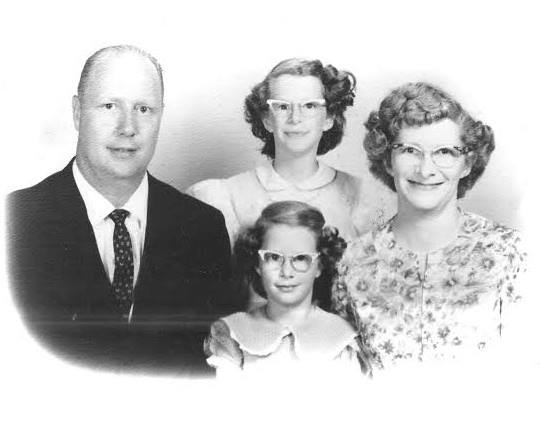
I didn’t grow up in a ’50s television family, though my parents took the roles of breadwinner and homemaker. They never had loud arguments or violent behavior. We had an alcoholic uncle and a “bad girl” cousin, but neither of them lived with us, so we weren’t exposed to their behavior much. My parents weren’t very outgoing, but my father did have some friends in the neighborhood and at his work. He was part of the gun culture, but deeply law-abiding and a stickler for safety. My mother was quiet but creative, exchanging crochet patterns with friends around the world. She also had a strength that most people never noticed. And we had at least one “chosen” family member, a friend of mine whose parents were divorced and who became an acknowledged sister to me.
All of that says that we were pretty darned functional. I can’t identify us as any one of Gillis’s five types or Nittles’s three types of dysfunctional families. But there was mental illness in the family (mine, undiagnosed at the time), which no one had any idea how to cope with, and some devastating health problems that directly or indirectly affected us all (cancers and a heart attack). My sister and I are now estranged (by my choice), so that likely indicates some dysfunction somewhere. I’m not in touch with uncles, aunts, or cousins either, and have surrounded myself with people I have chosen to be close to.
Put all that together, and I’m probably the closest thing my family had to a dysfunctional member. The family structure seems to have been as functional as anyone’s ever is.
All in all, I’ll take it.
 Janet Coburn


Recent Comments