Bipolar 2 From Inside and Out

Posts tagged ‘bipolar disorder’

Prayer and Bipolar Disorder

My mother believed in the power of prayer, and thought I should do more of it. I can’t say she was wrong. She prayed for self-improvement (for God to take away her bitterness at a relative) and for social issues (returning prayer to schools). I don’t know whether she ever prayed for an end to my bipolar disorder (she kept most of her praying private between her and God), but I never have. I don’t think it works that way.

So, what do I think about bipolar disorder and prayer? I think there are many things about bipolar disorder that you could pray about.

You could pray that science finds better treatments for bipolar disorder.

You could pray that you find a support system that helps you (or give thanks for the one you already have).

You could pray that you find a therapist, or a therapy, or a psychiatrist, or a medication that helps you. (Though I would recommend putting some effort into doing this one yourself as well as praying.)

You could pray that you have the strength to get out of bed in the morning or the peace to sleep at night.

You could pray for understanding of what you’re going through—from another person, an employer, the world at large, or even yourself.

You could pray that you don’t do too much harm while in the grip of mania or depression.

You could pray that you will recognize when someone is reaching out to you and that you will have the ability to accept.

You could pray that you have the courage to reach out to someone else, and the wisdom to keep reaching.

In my opinion, what you can’t do is “pray away” the bipolar disorder. If you’ve got it, you have to find a way to live with it. If prayer helps you do that, more power to you. But, again, in my opinion, prayer is not a cure for the disorder. There are some things that are meant for religion or philosophy to make better, and things that science has a better shot at.

You can point to various miraculous remissions of cancer or other diseases, or make the argument that removing demonic possession would now be called healing of mental illness. And if those give you comfort or hope, again, good for you.

St. Dymphna is the patron saint of the mentally afflicted (though personally, I think she should be the patron saint of abused children). If she, or God, or some other higher power of whatever religion or denomination or sect can lessen your suffering, go for it.

I just don’t believe that you—or I—personally will be cured of bipolar disorder by prayer.

Feel free to disagree with me.

SMI in Higher Ed

I recently discovered a book written by Katie Rose Guest Pryal called Life of the Mind Interrupted: Essays on Mental Health and Disability in Higher Education. I was a little behind on reading the book—it came out in 2017. But I can’t imagine much in academia has changed since then.

In the book, Pryal presents short, readable essays about her experiences and those of other people who experience bipolar disorder, OCD, anxiety, ADD, and schizophrenia and must navigate the systems of working in academia. Pryal herself, now a law professor specializing in disability studies, says in the introduction that “academia isn’t an easy place to be if your brain isn’t quite right.” One interviewee remarked, “They hired you for your mind…Why would you volunteer that there’s something wrong with it?” The first chapter includes essays on disclosure.

If that were all the book covered, it would still be a revelation and an important work. But The Mind Interrupted is relevant to people with SMI in other areas of life as well. Just look at these essay titles: Disclosure Blues, Breaking the Mad Genius Myth, Working When Your Brain Isn’t, Handling Personal Tragedies Around You, How to Have the Accommodations Talk, Believe Your Colleagues With Disabilities, Trigger Warnings Are a Disability Issue, and more. These are issues that everyone with SMI has to deal with, whether they work in a burger joint, a business office, or aren’t employed at all. Given her circumstances, it’s understandable that Pryal focuses on higher education, but I feel that this is a valuable book for anyone living with SMI.

I’ve written before about how we refer to mental illness, SMI, brain illness, behavioral health, etc. Pryal uses a term that hadn’t occurred to me—psychiatric disability. It brought me up short. I have bipolar disorder. Is my condition a psychiatric disability? Ignoring the fact that I didn’t get disability when I applied for it, I would have to say it is. I have limitations that interfere with my ability to make a living. I have to deal with the question of whether to disclose my mental status whenever I apply for a job. I’m lucky that I now work independently from home and can basically make my own hours, an accommodation that likely would not have been available in the publishing companies where I used to work, even if I had asked for it.

When I was in academia as a grad student and teaching assistant, I hadn’t been diagnosed with bipolar, but I certainly had it. The stress was nearly incapacitating. I remember having a meltdown in a poetry class, which was ignored by the other students and the professor, aside from a few sidelong looks. I got one bad student review—scathing, really—and couldn’t bring myself to read any student reviews for the remaining three semesters. It’s similar to an experience that Pryal recounts in Life of the Mind Interrupted.

My experiences bear out what Pryal says in her book. As she explains, “This is a book about mental illness and academia. But this is also a book about so much more than that: it’s about grief, and friendship, and collegiality, and accessibility, and tragedy. It is about trying to get by in a world that fears you, that believes you are unfit for your job, that wants to take your children away….I’d spent my years in academia in hiding.” And so did the people Pryal interviewed for her book. As they were struggling to reach the safety of tenure, disclosure was not an option. Accommodations such as altered schedules were not requested or offered, even though people with mental illness are a protected class under ADA.

There’s so much more in Life of the Mind Interrupted: intersectionality, motherhood, creativity, language, students with disabilities, stigma, teaching, allies, privacy, and other essential topics. If you skip this book because you’re not in the institutions of higher education, you’re missing something truly important.

An Irrational Thought

I just bought a laptop because the air conditioner isn’t working. If that seems like an irrational thought I acted on, it is. It’s also a measure of my anxiety. And a consequence of my current mixed state.

Let me explain.

Our central air conditioner puts out a tiny bit of coolish air, but not enough to make the house comfortable. The weather has gotten up into the 80s, and the temp in the house is sometimes higher than that. And I know that July and August are coming, so temps over 100 degrees are likely. I’m afraid I’ll have heat stroke and die or at least have heat exhaustion and be incapacitated. I spend most of the day working at my desk, with fans on and cold beverages readily available, but still the heat gets to me. And I really need to do the work. We need the money, modest as my pay is.

So why (I hear you ask) don’t we call an AC repair service? My anxiety plus hoarding mean we don’t let people in the house. I suppose there’s a chance that they would only have to look at the outdoor unit, but I can’t count on that. There’s still a possible solution my husband can try. He’s going to get a tester and check the fuses. If that’s the problem, it’s easily fixable.

There’s the anxiety. What about the mixed state?

When I get hypomanic, one of my behaviors is online shopping. And there was just a sale at Best Buy on Apple computers that lasted three days. I ordered a laptop. I made sure it was a refurbished one to keep the price down, but I also bought the mouse, the subscription to Microsoft Office, and a carrying case. It was a tidy sum, money that we don’t have because of car repairs, but I put it on our Best Buy credit card. I also told myself that it was still cheaper than air conditioning repair. (A quick Google suggests that it’s likely a wash.)

How does this solve the air conditioning dilemma? If I have a laptop computer, I can take it to Panera, McDonald’s, or some other air-conditioned place and do my work while sipping on iced tea. (Panera has plugs and outlets conveniently located, I know.) Work accomplished. Body temperature regulated. Achievement unlocked.

Of course, I realize this is a slightly ridiculous plan. I know that my anxiety and hypomania are largely responsible. Ultimately, though, I’m responsible.

There’s still the chance that Dan can get the AC working again, if the fuses are the problem. If that happens, I can return the laptop (within 15 days after I receive it). So I have options, which I love.

I’m still left with confusing feelings. Maybe I’m too fearful of the heat or too dubious about being able to do my work in an overheated room. (I don’t think so, because I’m older and have had bad reactions to heat before. Computers also have bad reactions to heat.) Maybe I was too impulsive when I ordered a new laptop and all the fixings. Maybe even with the money I earn, the credit card expense will strain our finances further. I fortuitously just received a raise at work, so maybe that will help make up the difference.

I’m not asking for advice. I’ll work this out on my own somehow or at least with the help of my husband. He knows I’m in a mixed state, but the family finances are my responsibility and he usually goes with what I think we should do.

Things should be clearer by the time I post this.

Anxiety and Big Life Stuff

Anxiety about health is a common phenomenon. It’s only natural to worry about the human body breaking down, especially as one ages. But how much anxiety is too much? How little is too little?

When anything goes awry with my body, I get panicky. I catastrophize, imagining the worst. I have anxiety disorder in addition to bipolar, so that’s not surprising.

Once, for example, I woke up in the middle of the night with something strange happening to my arm. There was a hard spot along the side of it the size and shape of a cuttlefish bone. Instantly, I got dressed and headed to the emergency room. They took x-rays (which were ambiguous) and sent me home. If I hadn’t been so panicky, I would have realized that the problem could easily have waited until the next morning or whenever I could get in to see my doctor. But I was frightened and anxious because it was something I had never heard of and couldn’t explain.

It turned out to be sarcoid, which was treated with steroids. (There was also a spot of it on my head, which my doctor biopsied, so I now have a divot on my forehead.) The sarcoid backed off, leaving me embarrassed at having reacted so strongly.

My husband, who doesn’t have anxiety, is just the opposite. He takes injuries and illnesses much more lightly. He’s a bit accident-prone, often cutting himself or otherwise mangling his fingers and hands cooking or doing repair work. I used to have to burst into tears to get him to go for treatment, stitches, or whatever was called for. He would wrap the injury in a paper towel and some duct tape, which I understand is a guy thing. (A heart attack that he almost waited too long to get help for changed his ways. Now I don’t have to cry. He goes to the ER as needed.)

Now, however, we’re facing more serious medical possibilities. I won’t go into Dan’s, since he’d prefer to keep that story private, but it’s Big Life Stuff.

I have plenty of anxiety to talk about. Over the past few years, my knees have been getting worse and worse. At first, it only affected my balance, which was enough to make me anxious right there, fearing that I would fall in public. I started using a cane. I did fall once, at a student union where my therapist’s office was located. A flock of young women (nursing students?) swooped in, picked me up, and offered me a hot beverage. Ever since, my anxiety about falling has increased, exacerbated by a couple of falls at home.

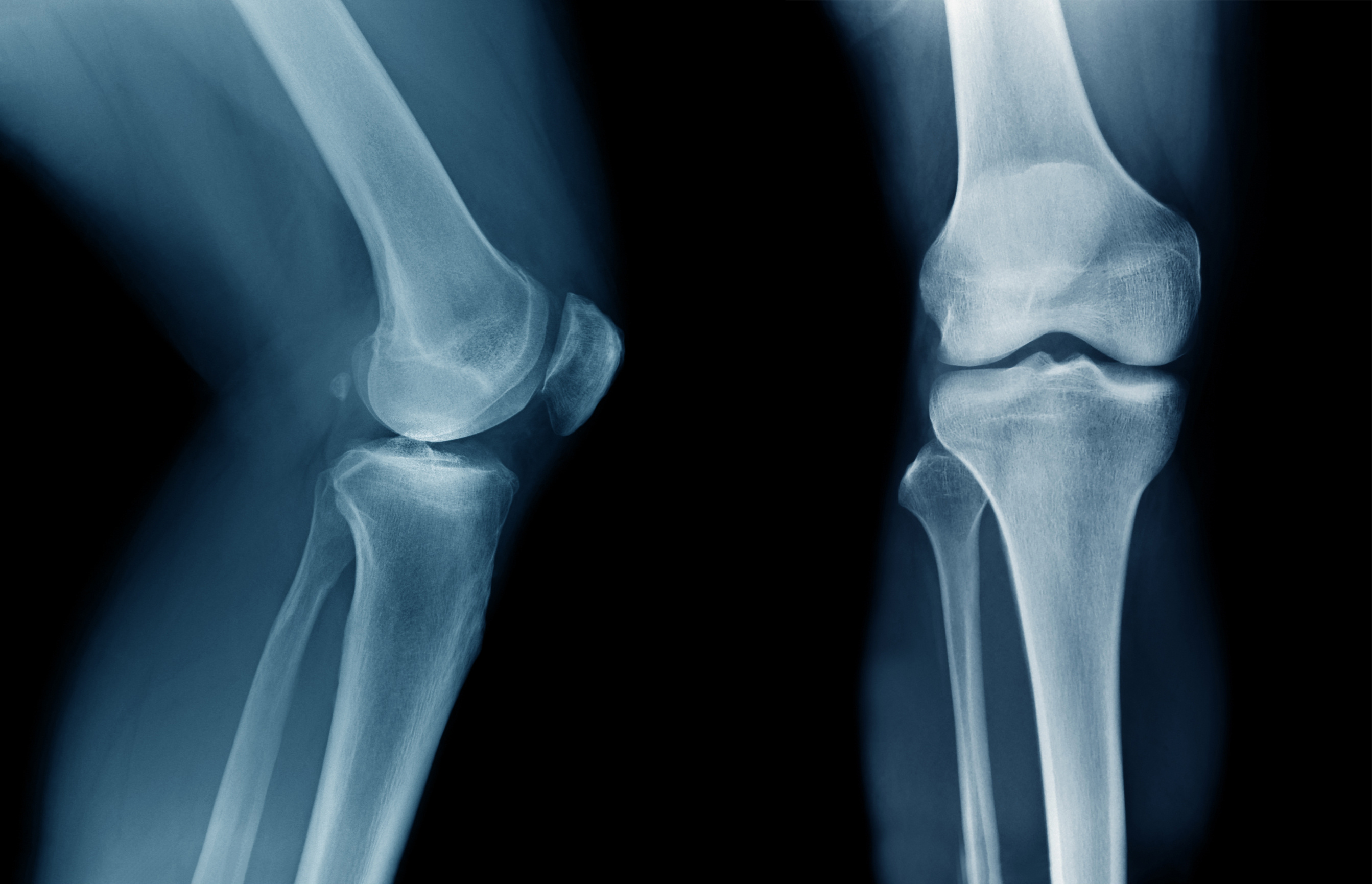
Now, however, I’m facing more serious anxiety. My knees have deteriorated to the point that I need steroid shots every six weeks and am afraid to walk. (The doctor’s words were “bone on bone.”) The steroids work for now but won’t last. Eventually, I’ll have to get both my knees replaced. And that ramps up my anxiety to new levels.

Today, I stumbled on the stairs and my left knee almost gave out. My right knee took up the slack, but I envisioned myself lying in a heap at the bottom of the stairs. Since then, my left knee has been twinging, and I’m doubting its ability to hold up until the next round of steroids.

The orthopedist says I could need the knee replacements anytime from six weeks to six years from now. So, of course, I’m anxious that it will be sooner rather than later. I’m catastrophizing, envisioning weeks lying immobile on the couch, taking pain pills, and unable to care for myself. I understand that the doctor said it might not happen for years, but I’m reacting as if it will be next month.

To me, this is Big Life Stuff, and not just because it’s a major operation (two actually, one for each knee). I fear losing control of my body. I worry that knee replacement won’t help. I anticipate going downhill rather than improving. It’s not that I don’t trust my doctors. I’m just consumed by anxiety. I’m looking at ads for mobility scooters and fold-out chair-beds for my study. I can’t envision a future in which things will be any better.

I’m being crippled with anxiety about being crippled. And no amount of reassurance, education, or time is lessening it.

Review: Bipolarized

My husband pointed out to me a movie available on one of our streaming services—Bipolarized: Rethinking Mental Illness, a 2014 documentary created by Ross McKenzie, a man who was diagnosed with bipolar disorder himself. In the film, he documented his journey to find treatments other than drugs for his condition. I watched it with interest and wanted to share my impressions with you. (IMDb gave it 5.7 out of 10 and said it “challenges conventional wisdom about mental illness and drug therapy through the raw personal journey of a man diagnosed as bipolar.”)

First, full disclosure: I take psychotropic medication (though not lithium, the villain of this piece) and am very satisfied with the results. However, I know that not everyone has the same experience and that there are people who are virulently against it. I’m not here to debate that today. I want to share what I learned from the movie.

The film follows McKenzie—not always in linear fashion—through his experiences with mental illness, psychotropic medications, and natural treatments. I’ll do my best here to unravel the chronology. The child of a seemingly perfect Canadian family (and more on that later), McKenzie experienced a psychotic break in 1993 when he gave away his money and clothes to street people in New York City and thought he could fly off the Empire State Building and land safely. His family convinced him to come home and were shocked at his manic behavior. At first, he was diagnosed as schizophrenic and hospitalized.

McKenzie escaped from the hospital, barged into a stranger’s house to use their phone, and ended up running down the street naked until he was subdued by police, taken back to the hospital, and put in a straightjacket in a padded room. (I didn’t know they still did that, even in 1993.) These scenes were recreated for the film.

At some point (I’m not too clear on this) his diagnosis was changed to bipolar disorder and he was given lithium. McKenzie became anhedonic, and the doctors told him this was it for the rest of his life—lithium and never accomplishing much of anything.

Determined to get his life back, McKenzie began a journey to heal himself through natural means. In 2010, he went through a lithium detox in Costa Rica. He notes that he had already tried to wean himself off lithium unsafely, making him debilitated and depressed. In Costa Rica, his detox included screaming headaches and vomiting, but was successful in getting him to kick lithium.

Next, McKenzie went to a naturopath who diagnosed him with lithium toxicity (two and a half years after he kicked it in Costa Rica) and prescribed a series of 30-40 chelation treatments to get the substance out of his system. The doctor measured his neurotransmitter levels, his bloodwork, and his kidney function for residual effects of the lithium. He also noted that McKenzie had high levels of lead and mercury (though those don’t come from lithium) and treated him for those as well.

McKenzie then traveled to Colombia, where he was treated by a shaman/psychic/psychic surgeon. It involved lying on a bed for two hours, covered in sheets of aluminum foil which were later bundled up and spit on, and meeting with his deceased father’s spirit. When back in the US, he also sampled cupping, acupuncture, and yoga, which he said helped ground him.

Other scenes in the movie include a parody commercial for “addictarin,” with McKenzie frolicking in a lawn sprinkler and sharing ice cream with a dog, before a crawl of “side effects” ran on and on, ending with death and halitosis. There was a visit with a former big pharma rep who had since denounced the system that she said was designed to addict people to psychotropics. There was footage of a protest outside an APA conference in Philadelphia which included marchers holding signs and chanting, “Hey, hey, APA! How many kids have you killed today?” McKenzie also interviewed debunker Robert Whitaker, author of Mad in America and Anatomy of an Epidemic.

At last, McKenzie saw Dr. Charles Whitfield, who said that half of patients with a psychiatric history of drugs and trauma actually have PTSD. Whitfield said McKenzie was never bipolar. Another practitioner, Peter Levine, a somatic therapist, worked with McKenzie in front of an audience to explore his family of origin and surface memories of his domineering, abusive father. One exercise involved imagining both himself and his father as seven-year-olds interacting.

The film, although it won awards, was not universally lauded. A review by H. Steven Moffic in Psychiatric Times titled “Warning: This Movie May Have Psychiatric Side Effects,” called the film a “movie selfie” and pointed out that there was no mention in it of conventional psychotherapy—only drug therapy. It also noted that no mention was made of McKenzie’s family’s evident privilege, which allowed him to travel to Costa Rica and Colombia for treatment. Most of the review, however, cited the film’s polarizing effect, pitting alternative treatments against mainstream ones, and said that he would be “very cautious” about recommending it to patients or the public. (I can’t imagine who else would be interested. Maybe psychologists?)

All in all, it was a difficult documentary to watch at times, and I thought some of the treatments seemed unlikely to help (especially the “psychic surgeon”). I’ve heard most of the debunking of psychotropic drugs before, but this was particularly vivid in the film. I think its major value lies in exposing the traumatic effects of McKenzie’s going on lithium in the first place.

Ross McKenzie now offers “mental health coaching services,” and, as stated in his 2024 blog, specializes in people “disempowered by labels” whose “perceptions were distorted by powerful psychotropics.”

The Overwhelming Problem

screaming (Uma painting)It’s been said that time is nature’s way of keeping one damn thing after another from being every damn thing all at once. I know that taking things one at a time—eating the elephant one bite at a time—is a sound idea.

However, every now and then the damn things gang up on you. The elephant is starting to go bad and you have to eat all you can right away – to use a disgusting metaphor that I will not take any further. (You’re welcome.)

Last month was one of those months. They happen every so often. But if they happen very often, I tend to get overwhelmed. And when I get overwhelmed for too long, my brain breaks. I have a meltdown, or I decompensate, or whatever the proper psychiatric term is. In practical terms, it means that I’m severely depressed and non-functional, for longer than usual. Days. Weeks. Months. Even years.

The things that overwhelm me are quite predictable – financial difficulties, health problems, relationship glitches, and free-floating anxiety of all sorts, either my own or my loved one’s. I know that these are situations that cause difficulty for everyone, but to a person with bipolar disorder, they can seemor even be—insurmountable. Especially when they cluster and refuse to go away.

Over the years I have become good (or at least better) at recognizing when I am about to be overwhelmed. I know the symptoms—the whirling thoughts, the jumping-out-of-my-skin feeling, the insomnia, the inability to concentrate, and the feeling that doom or disaster is impending.

There is little I can do to stave off these feelings. But I know I have to. I have to keep functioning at some level, higher or lower, to maintain the things that I want to have – productive work, a loving relationship, a nice house, caring friends, and so forth. At the time of my last major breakdown, I came uncomfortably close to losing much of that.

I try my usual remedies for anxiety, of course. I distract myself. I color. I watch mindless TV. I play stupid clicky games on the computer. I turn off my phone. But if the anxiety builds up too much, if the feared disaster is real and really is impending, none of these works. The anxiety shreds my last nerve, and the depression starts to settle in. I isolate. I stay in bed. One task at a time, I stop being able to function.

I have taken one step that has helped, however. An anti-anxiety pill is one of my daily medications—one in the morning and one at night. A few years ago, as the stress was building and approaching overwhelming, I asked my psychiatrist if I could have permission to take one more a day if I needed it.

He agreed.

I have not needed to take the extra pill every day. Sometimes I take one in the mid-afternoon if I start feeling jumpy, twitchy, or panicky. Sometimes I take one at night if I haven’t gotten to sleep within 2 – 3 hours after taking my regular nighttime pills. I know it sounds strange that a depressant helps me stave off depression, but my diagnosis is actually bipolar disorder and anxiety disorder. The med catches me at the point where the one starts to turn into the other.

I’m glad my psychiatrist trusted me not to abuse what I consider a privilege as well as a necessity. By the time I made this request, of course, we had been working together for a number of years and had built up a certain trust. I think there have been only a couple of times when I have had to take two extra pills in a day—one in the afternoon and an additional one at night. And both times, I felt guilty about it and made sure I didn’t make it a habit.

I don’t want to start gobbling pills at the least sign of difficulty. All I want is to be able to eat my elephant in peace and in pieces.

You May Be Bipolar

If you take three different meds at night and two more in the morning…you may be bipolar.

If your therapist is on your speed dial…you may be bipolar.

If you know the difference between rapid cycling and ultra-rapid cycling…you may be bipolar.

If you have depression clothes and mania clothes…you may be bipolar.

If you’ve stayed in bed for three days and not gone to bed for three days…you may be bipolar.

If your significant other is also your emotional support animal…you may be bipolar.

If all your Facebook friends have psych diagnoses…you may be bipolar.

If your refrigerator door has 40 affirmations on it…you may be bipolar.

If you know who Gabe Howard is…you may be bipolar.

If you have a semicolon tattoo…you may be bipolar.

If you’ve ever watched a show with a bipolar character and said to yourself, “No, that’s not it”…you may be bipolar.

If Carrie Fisher is one of your heroes and you call her “Space Mom”…you may be bipolar.

If you’ve gone through a dozen medications trying to find one that works…you may be bipolar.

If you’ve ever felt depressed and jazzed at the same time…you may be bipolar.

If taking a shower is a major event…you may be bipolar.

If you keep a box of Cocoa Puffs beside your bed…you may be bipolar.

If you’ve had a yearly raise and spent it in a month…you may be bipolar.

If all these statements apply to you…you’re DEFINITELY bipolar.

Is It Bipolar or BPD?

When I first started looking at the literature regarding SMI, I became confused by the abbreviation BPD. At first, I thought it was a typo or an alternative for Bipolar Disorder. Of course, I found out that it wasn’t—BPD stood for Borderline Personality Disorder.

Even if you know what the abbreviation means, it’s easy enough to get confused between the two. In fact, bipolar is often misdiagnosed for borderline, or vice versa. There are some similarities between the two disorders as well. Both involve mood swings. Both can cause reckless behavior. Both can be associated with childhood trauma. And both can lead to suicidal ideation or completed suicide. They’re both very serious diagnoses.

Johns Hopkins says that Borderline Personality Disorder “may also be called emotionally unstable personality disorder. People with BPD have unstable moods and can act recklessly. They also have a hard time managing their emotions. If you have BPD, you may have problems with daily tasks, obligations, and life events. You may have trouble keeping jobs and relationships.”

Sounds familiar, doesn’t it? The same could be said of bipolar disorder. So what’s the difference between the two?

VeryWellMind says the difference lies in the fact that “People with bipolar disorder tend to experience mania and depression, while people with BPD experience intense emotional pain and feelings of emptiness, desperation, anger, hopelessness, and loneliness. In BPD, mood changes are often more short-lived. They may last for only a few hours at a time.”

Not to get picky about it, but as a person with bipolar, I’ve experienced intense emotional pain and feelings of emptiness, desperation, hopelessness, and loneliness while in the throes of a major depressive episode. (Not so much anger.) They did, however, last for months rather than a few hours at a time.

People with BPD can also experience dissociation and paranoia, and reckless behavior. They tend to have intense, unstable relationships. Dissociation is sometimes also seen in manic episodes of bipolar disorder and reckless behavior is a symptom of bipolar mania as well. Bipolar disorder can cause difficulty with relationships too. In between mood episodes, the person with bipolar can achieve stability, while that’s less likely for BPD.

So it seems that BPD might be seen as “bipolar on fast-forward.” The short time span of BPD episodes is one of the major differences between the two conditions. (It’s been described as “pervasive instability.”) But since the two sets of symptoms overlap, even clinicians sometimes mistake one for the other. BPD appears to have a strong genetic component; the cause of bipolar is thought to be a combination of brain functions, genetics, and early trauma.

When it comes to treatment, there are more options for bipolar than BPD. With BPD, medication is generally limited to symptomatic relief, such as with antianxiety agents. Dialectic behavioral therapy is the treatment of choice, along with psychotherapy. There are dozens of medications available for bipolar, as we know from TV commercials if nothing else.

It’s important to note that the two diagnoses can coexist. When they both affect a person, which is possible, they can be even more difficult to diagnose and treat. It’s easy to see how that can happen. Mood swings, reckless behavior, and potential dissociation can be effects of either one. Seeing a person only once a week, as many therapists do, can make it difficult to track the symptoms and see the patterns. And if the person sees a therapist or psychiatrist less often than that, the difficulty is compounded. Symptomatic relief may seem sufficient at first, but long-term is no solution.

Am I satisfied with my bipolar diagnosis? I’d have to say I am. While I despise the long-lasting mood swings, those are now largely controlled on medication. My destructive relationships haven’t been quick but have still been intense, and now I’ve achieved stability in that too. All things considered, I’ll stick with what I’ve got—not that I have a choice in the matter. If I had been afflicted with BPD, I hope I would have done as well.

Structure in My Bipolar Days

I used to be a fly-by-the-seat-of-my-pants kind of gal. Work provided the only structure to my days, back when I was able to work in an office. It wasn’t always the same structure, depending on the job, of course. I have worked various shifts over the course of my checkered career—first, second, and third. I adjusted to them fairly well (except when I was working third shift and going to grad school in the mornings).

That all changed when I quit my last office job. I remember feeling so free. I basked in the ability to do freelance work whenever, run errands whenever, go to sleep and wake up whenever. Of course, I was hypomanic at the time, which I should have recognized because of the golden glow that seemed to envelop my days. Naturally, the crash came, along with the absence of freelance work to do. Then, when I fell into a deep depression, anything resembling a schedule fell apart. I didn’t have a specific time for going to bed or waking up, for eating, reading, errands including bill paying, and even showering. Without that structure, I had trouble finding a reason to get out of bed.

Now I’m stable on medication and therapy, and my days have fallen into more of a pattern. I still work at home, but for a company that gives me ghostwriting work. It has a built-in rhythm to it. Most of my assignments are 30,000 words long and due in 21 days. They want us writers to average 1,500 words a day. I divide that up into 750 words in the morning and 750 in the afternoon. I work weekends at this pace, too.

Fortunately, I find 1,500 words a day eminently doable. My daily schedule consists of mornings spent breakfasting, paying bills, keeping track of appointments, or making necessary phone calls (which is my usual role in running the household).

Then, mid-morning, my husband calls on his break from work. Part of the reason is to make sure I’m okay, but most of the time I’m fine and we simply talk, often about what I’ve scheduled for the rest of the week. (I keep track of his appointments and phone calls too. Sometimes I feel like I have a second job as Dan’s secretary.) After we talk, I begin my first stint of writing for the day, my first 750. I’m generally done in time to have lunch around 12:00. Dan calls again in the early afternoon, and I begin my second 750 afterward. When he gets home, we spend time together and have dinner around 7:00.

Those are my daily schedules, which I don’t really need a planner for. When it comes to weekly schedules, I do use a computer app. Our “weekend” is Sunday and Monday because of Dan’s work, but I work on my writing anyway. My calendar is filled with bills to pay by a certain date, appointments we each have to go to (which I remind Dan about), and notes indicating when my 30,000 words are due. I also make note of which weeks are for recycling. (The day before trash day, there’s frantic cleaning.) I have this and another blog that I post in on Sundays. I have a weekly internal schedule for that, too. I start writing them on Tuesdays, have them at least mostly finished on Fridays, tweak and tag them on Saturdays, and publish on Sunday mornings at 10:00.

Having these systems in place keeps me on an even keel which, after all, is my goal as a person with bipolar disorder. My days are predictable, but not boring because I don’t find writing boring, even if it’s on someone else’s topic. Does it seem too regimented? All I know is, it works for me.

This past week, I went on vacation, so for one week, my schedule was largely out the window. I looked forward to staying up late, sleeping late, having meals whenever we felt like it, spending time reading or shopping or sightseeing or watching movies whenever we wanted. Because, as much as I like my structure, I need a break from it at times. Sometimes I take a few days off between book assignments to work on other projects like organizing my jewelry armoire or my desk.

It’s a balancing act, really. Enough structure to keep me focused, but not so much that it becomes a rut. Dan’s phone calls help. Having time in the mornings and evenings before and after I write helps. And my most important routine, of course—taking my meds in the morning and at night. That’s a part of my day’s structure I never want to neglect.

Bipolar Poetry

I used to write poetry, since I was in second grade. I continued through high school and college. I stopped because they kept turning into prose. So I wrote prose. I knew I could never make a living writing poetry anyway.

Recently, though, I decided to try poetry again. I thought that instead of the free verse that wanted to turn into prose, I would try my hand at more structured poetry—villanelles and sonnets. And my subject: bipolar disorder, of course. Here’s what I came up with.

Villanelle

We understand there is both loss and gain
and much besides we cannot think to know
In trying to control the cycling brain

as we daily live with depths of pain
and wait to grasp the high amidst the low
We understand there is both loss and gain

and minds that bend and crack beneath the strain
or falter, limping, halting, slow.
In trying to control the cycling brain

we snatch the fleeting highs and yet retain
the memory of how we’ve suffered so.
We understand there is both loss and gain

in swing from scorching sun to drowning rain
and have our deepest feelings put on show
in trying to control the cycling brain.

A search for level ground remains the main
unfinished task that asks for yes or no.
We understand there is both loss and gain
In trying to control the cycling brain.

Sonnets

1.

Where is the light that once so brilliant blazed?
Turned now to dim and gray before the night,
it creeps in shadows hungry for the sight
yet dreads the time when shades are sudden raised.

And I am past the daylight, stunned and dazed
by darkened air that smothers, clinging tight
till breath itself turns faint and pulse is slight,
but when the dawn returns I am amazed.

The rings the sun runs round the endless dark
bring distant hints of what there yet may be
whenever night fades as it must or will,

when color blooms in contrast hot and stark;
my eyes ajar that I may briefly see
the world whirl past my prison’s windowsill.

2.

The air is still and blankets all my sense.
I’m muffled, muzzled in the sheltering dark
but dare not pray for fire, with bright, intense,
loud flames that rend the silence with a spark.

I breathe, or not? It’s sometimes hard to tell
when swathed in clinging, stifling, musty scent
that fills my nostrils and my brain as well;
which cannot will the veil be shredded, rent

to save from suffocation. How shall I
withstand this cycle till the day appears
and breezes blow the dust away from my
stopped ears and eyes and lungs, plugged full with fears?

Pull off the cover and let free the soul.
Take broken breath and heal it into whole.