Bipolar 2 From Inside and Out

Posts tagged ‘anxiety’

I’m Not Introverted. I Just Don’t Want to Leave the House.

Maybe you would call me an introvert. I stay in the house for weeks at a time, never sticking my nose out into the fresh air. I wear pajamas all day, most days. My husband does the grocery shopping, picks up my prescriptions, and does most of the other errands.

I go out when I have a doctor’s appointment or when Dan entices me out with the promise of a restaurant meal.

I don’t consider myself an introvert.

I do consider myself a social person.

Why, then, do I stay indoors?

First, because my bipolar disorder makes me sensitive to noise and crowds. Technically, I think this is more agoraphobia than introversion. I can handle being in small groups of people or audiences, but hundreds milling around, as at a mall, make me panicky. And forget places that are both noisy and people-y, like Chuck E. Cheese or other family-intensive restaurants.

Second, I like to be social – on my own terms. That largely means Facebook, Twitter, LinkedIn, various online bipolar support groups, IM, email, Skype, and the good old-fashioned telephone. In the years since I’ve been on Facebook, for example, I’ve connected more deeply with old friends and coworkers, reconnected with old schoolmates and Girl Scout troop members, gained new relationships with friends-of-friends, and discovered things I never knew about my acquaintances. I keep up with birthdays; look at baby, travel, and pet pictures; and cheer on accomplishments, as I would in person. (Except for the hugs. Virtual hugs are just not the same. But my husband takes up the slack there)

Most of all, I stay inside because I can. My husband enables me in this, as when he does the grocery shopping. We tried splitting the shopping, but even with the little runabout scooter-with-a-basket (mobility issues), I was overwhelmed and exhausted after shopping just one-half of the store.

I’m able to work, at least some, and the work I do is conducive to telecommuting. I can sit in front of my keyboard and monitor, in my pajamas, and still be a useful, productive member of society. I have clients and interact with them in the aforementioned ways.

I haven’t had an assignment that involves leaving the house in years – not even to do research. I used to have to visit libraries occasionally, and while they’re not known for being noisy and people-y, Google and the Internet put virtually any information I need right on my screen or hard drive.

Admittedly, getting out into the fresh air would be good for me. We live in a nice secluded area that would be good for walking, and there are any number of parks nearby, if I want variety. I know that going out and getting at least a small amount of exercise would be good for my bipolar depression, but I haven’t been able to force myself to do it yet. Going outside to walk involves getting out of my jammies into real clothes, and possibly taking a shower, either before I leave or when I get back. And many of you know what a challenge showers are for people with depression, bipolar or otherwise.

But again, this is a symptom of my bipolar disorder and the immobility it causes, rather than introversion. I’m not afraid of meeting people while out walking, or even having conversations with them. Usually “hi” is all that’s needed in these situations, and I have the ability to make small amounts of small talk appropriate to the occasion. (“Sure is windy today.” “Are those shoes comfortable?”) Since I seem to be riding a hypomanic swing these days, perhaps I’ll be able to get out and walk occasionally. I know my husband would heartily endorse the idea and most likely go with me to offer me encouragement.

Bottom line? I can go out amongst people if I want to. I just usually don’t want to.

Can I? Can’t I? Bipolar and Business

I work freelance at writing and editing, and as many of you know, that life is fraught with insecurity. How much work will I get? How much will I be paid for it? Will the check be enough to cover the mortgage and the health insurance? Anything else, like light and cable and phone, which I need in order to work from home?

Since  I’m bipolar, these questions are laced with more than the usual amount of anxiety. Especially since the progression toward my last major breakdown was a lot of what caused me to lose that 9–5, well-paying job. My attendance became spotty, my attention refused to focus, my relationships with coworkers went downhill, my evaluations took a turn for the worse, and I bailed.

I stayed immobilized for a long time, applied for disability (didn’t get it), then embarked on freelance work.

I’m much more stable now. I’ve have published this blog and my other one for over two years, and proved to myself that I can attend business meetings, at least once in a while. My paying work has built up to the point where we can at least live paycheck to paycheck, but not much more. Time to spread my wings?

So I started looking around for other jobs, in addition to my faithful, steady client who has sustained me for years now. First I asked them if they could send any more work my way. Then I started expanding my platform, as we say in the writing biz.

I joined LinkedIn. And there, one day, I saw a listing for someone who needed an editor. One with exactly my skillset. Precisely my experience. The kind of work I love to do.

But.

It was full-time, likely high-pressured, and 45 miles away (during rush hour). I knew those factors would make it impossible for me to succeed at the job, even if I got it.

But.

I wanted it. I wanted to have back the things I lost after my breakdown – my competence, my confidence, my pride. Oh, and the money too.

But.

Much as I wanted to, I couldn’t let myself apply for it. I didn’t want to trigger the kind of meltdown I had before. I didn’t want another period of literally years when I could do nothing – not work, not take care of myself, not cook, not read. Nothing.

So, with reluctance, I let the opportunity pass by. I went back to my blog posts and my irregular freelance work. I occasionally do some non-paying work for organizations like the International Bipolar Foundation (IBPF), or Sheknows.com, TheMighty.com, and even redtri.com. I lined up a gig editing a friend’s dissertation.

Then, as it sometimes happens, another opportunity appeared – a part-time paid position with a company that already knew my work. Steady work. Pay. Work at home. All this could be mine if I applied, passed the editing test, and was able to work the number of hours per week I rather optimistically said I could. I’ve taken the test (it was two hours long and grueling, the kind I used to give to other people). And now I wait, more or less patiently, never my best quality.

And while I wait, I wonder. Am I even capable of doing half-time paid work at home, plus my other freelance assignments, plus my blogs, plus the novel I’ve written about 1/3 of? Can I do the part-time job (if I get it), without my disorder screwing me up too badly to do it or anything else well? Is hypomania tricking me again? Do I have to give something up to get something better? Will it really be better?

The answer to all those questions is, “I don’t know.”

My disorder surely lost me the 9–5 job I once had. It made me give up the idea of trying for that similar job that seemed “just right.” But at least now I have some ambitions again.

Can I? Can’t I? This balancing act of higher ambitions and lowered expectations is delicate.


But What Happens in January?

Health insurance is a hassle, especially when you’re talking about mental health. And it’s an even bigger hassle when the government gets involved. That’s not necessarily a bad thing, but it does add a layer of complexity to the insurance process.

For quite a while I was uninsurable, or functionally so. My husband and I both had decent insurance when he worked for the county, but after he left that job, it was all downhill. We muddled through without coverage, paying for our meds out of pocket and avoiding the doctor’s office unless death seemed imminent or we had to have blood work. Mammograms, flu shots, and other preventive services fell by the wayside.

Then came the Affordable Care Act, aka Obamacare. Our pre-existing conditions were no longer a factor. My mental health coverage was guaranteed without going through the county’s EAP plan (Employee Assistance Plan, a six-week, take-the-therapist-we-give-you, cure-’em-quick affair).

The only problem (well, the major problem) was that, even with the ACA subsidy, the insurance cost us $650 per month. And my doctor started prescribing Abilify (cost: $800 per month, and wouldn’t you know, it wasn’t on the insurance plan’s formulary of preferred drugs). Fortunately, the generic came out soon after. It still wasn’t cheap, but it was somewhat lower.

The next year we switched plans. Unfortunately, the new company, a co-op, went under and we were transferred to yet another plan. It was no better than the previous one. In many ways, it was worse.

Prescriptions, for example. After getting them filled at our pharmacy for a certain number of months, we were told that almost all our meds MUST be ordered for home delivery, or the insurance company would not pay for them.

Which would be fine, as they were maintenance drugs. Except that meant paying $1100 for three months of generic Abilify, in addition to the monthly premium for the insurance. I can’t scrape together a lump sum like that, so through GoodRx coupons (https://www.goodrx.com/?c=criteo_au&utm_campaign=activeuser) and the local Kroger, I managed to get my prescription for under $200 per month.

Then the real fun started. My husband’s meds and my non-psychotropics went through the mail-order system easily. The ones my psychiatrist prescribed, not so much.

I’ve just spent the time between November 19 and now trying desperately to get the mail-order place and my doctor’s office to talk to each other, fax each other, send smoke signals or carrier pigeons to each other, to get me my drugs. As I gradually ran out of meds, which I’ve written about before (http://wp.me/p4e9Hv-kO).

I finally got a little action when I went to my doctor’s office, camped out in the waiting room, talked to one mail-order person on the phone while the receptionist talked to another one on another phone, and the nurse worked the fax machine. Then I went home, called mail order again, jumped up and down, threatened to hold my breath until I turned blue, asked for the supervisor, talked to the actual pharmacist, and almost burst out sobbing. Yesterday I got my pills.

This time when I had to pick a new insurance plan or renew my old one, I found one that was almost exactly as crappy as our previous one, but at one-third the cost. And the company representative says that all generics can be bought, at either the pharmacy or via mail order, at the same low co-pay. Including generic Abilify.

We’ll see.

The next problem is, as I’m sure you’re all aware, the president-elect and Congress have sworn to repeal Obamacare as soon as they get into office, whether or not they have a plan to replace it.

What will happen then?

Will I be able to get affordable insurance?

Will I be able to get insurance at all? (Even crappy insurance is better than none.)

Will it cover mental health services? Outpatient? Inpatient? Both psychiatrists and psychotherapists?

Will it cover psychotropic drugs at the same rates as others? Or will the meds that really work for me not be in the formulary of preferred drugs?

And how long will it be before even the crappy, but lower-cost, insurance that begins on January 1st, disappears?

I’m guessing (hoping) that our insurance won’t vanish immediately, given the pace at which the government usually moves. But repealing Obamacare (though not replacing it) has been touted as one of the first things the new administration will do. And anxiety is one of my psychiatric problems. How long will I have to wait, unknowing, to learn what those answers will be?

Generally, I have anxiety when I don’t know what’s going to happen. I catastrophize, then feel at least a little better when the answer comes. (It’s usually not as bad as I had anticipated.)

But this time, when the answer comes, will it lessen or increase my anxiety?

And will I be able to afford the medicine that keeps my anxiety in check and the psychiatrist who prescribes it?

Furry Friends and Helpers

I’m sure we’ve all seen memes that say the best therapist has four legs and fur. When I’ve been feeling cranky, I have occasionally written responses to the people who post them. They demean the very hard and real work that psychiatric and psychological professionals do. And after all, what do the memes really say? “Have a mental illness? Just get a dog.”

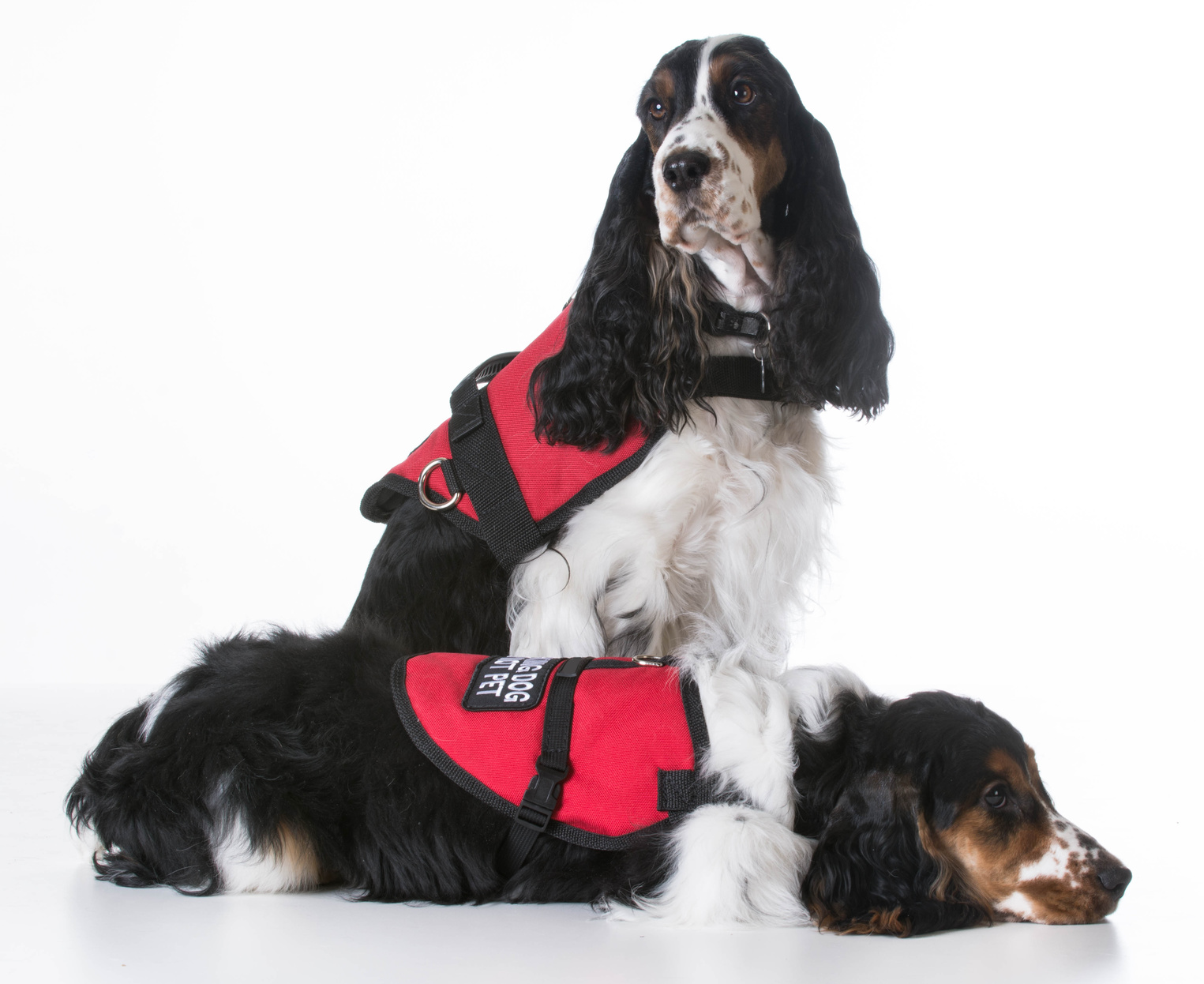
Still, there are circumstances in which an animal can help a person with a mental or emotional disorder. It’s not as simple as going to the pound and picking out a pup, though. For an animal to assist a psychiatric (or other) patient, there are a number of hoops for the person to jump through.

Most people nowadays are used to the presence – or at least the idea – of service animals such as seeing eye dogs. Less common are Therapy Animals, Emotional Support Animals (ESAs) and Psychiatric Service Animals (PSAs). But they all have parts to play in promoting and maintaining mental health in persons with bipolar and other emotional disorders.

Therapy animals are most often used with geriatric patients and children with emotional disturbances. In some nursing homes and convalescent centers you find programs that bring small animals to interact with the residents. Even farm animals – chickens, lambs, piglets – may spark memories that had been hidden away for years. The animals help residents get in touch with those memories and caregivers get in touch with residents. Libraries sometimes bring calm, well-behaved dogs in so that children can read to them. The soothing presence of a well-trained dog can help a child self-regulate her or his emotions – and get reading practice at the same time.

Emotional Support Animals are dogs or cats (or, less commonly, other animals such as miniature horses or guinea pigs) that live with and provide comfort to a person with a psychiatric disorder. Typically, in order for an emotional support animal to be allowed in rental housing, documentation such as a letter is required from a physician or mental health professional stating that the animal’s presence alleviates symptoms of a patient’s psychiatric condition – one that qualifies as a disability under the Americans with Disabilities Act (ADA).

Regulations covering comfort or emotional support animals apply mostly to residences and airlines, but not other places where service animals are allowed, such as stores, restaurants, and public buildings. There, health codes trump emotional support.

Some folks confuse Emotional Support Animals with Psychiatric Service Animals. They think that “training” a dog to offer a kiss on command, or jump in their lap, or be hugged is a task qualifying the animal as an official service animal. While these are indeed ways that an animal can calm a person in distress, service animals, including psychiatric service animals, must receive special training that teaches them how to alleviate the symptoms of an ADA-defined disability.

Legitimate tasks for PSDs (psychiatric service dogs) include counterbalance/bracing for a handler dizzy from medication, waking the handler at the sound of an alarm when the handler is heavily medicated and sleeps through alarms, doing room searches or turning on lights for persons with PTSD, blocking persons in dissociative episodes from wandering into danger (i.e., traffic), leading a disoriented handler to a designated person or place, and so on.

In The Possibility Dogs: What I Learned from Second-Chance Rescues About Service, Hope, and Healing, author Susannah Charleson recounts how rescue dogs – the unwanted, unlikely-to-be-adopted dogs that languish in shelters or are destroyed – have been matched with persons who need them.

One of the stories she tells involves training a dog to help a person with OCD. The dog was taught to identify when the handler had returned to the stove three times (to check the burners). Then the dog would interrupt the person, leaning against her leg to distract her. For a person who could approach a door but not go outside, the dog brought a leash to encourage leaving the house for a fun activity.

By the way, forget about cats as service animals. Just try training a cat to do anything it doesn’t want to do. (I know that cats have been trained to run obstacle courses for agility competitions, but that doesn’t really qualify as a service for an individual with a disability.) If you are able to register your cat as an Emotional Support Animal or get a medical/psychiatric recommendation, you may be able to have your cat live with you in a pet-free community, or have the fee for a pet waived. But that’s about it where cats are concerned.

So, animals can’t be actual therapists, but they can assist in treatment and life skills for people who need help with mental disorders. When I’m less cranky, I keep scrolling past the pet-as-therapist memes and feel grateful that my cats offer me emotional support, whether they’re trained to do so or not.


The 5 Stages of Depression

One of my depression triggers has been well and truly tripped and I am experiencing the long plunge downward. It’s been quite a while since this has happened, but oh, how well I remember it.cracked egg conceptual image for birth

In the classical Five Stages of Grieving, depression is the fourth, right before acceptance. For me, in the Five (or however many) stages of depression, the first stage is (duh) depression. I guess the next four would be immobility, numbness, despair, and Total Meltdown.

Right now I would have to say that I am somewhere between depression and immobility. I got out of bed for a few hours today, and I am writing this. I managed to get a big project done before this bout of depression hit, which was a Good Thing. I also now have a good supply of meds on hand, which is, I think, an Even Better Thing.

The Best Thing is that I have Dan, my husband. He just made sure I got a hot meal and is now giving me space and alone time, which is what I need more than attempts at engagement. And a cat just licked my face, which would be comforting if he hadn’t just been licking his butt.

As Jenny Lawson says, depression lies. Right now it’s telling me I’m useless, helpless, guilty, and ashamed. I hope that at least some of these are lies, though at the moment they’re what my brain is telling me is true. Then add in a large helping of catastrophizing, which at the moment is more likely to happen than not. I can’t see a way out.

Since I’ve been through this process before, I know the things that will help (at least a little) and those that won’t. I’ll try to keep my brain engaged enough to continue writing, and I’ll try to intersperse the doom and gloom with some ideas I made notes on before all this hit. I feel a responsibility to this blog and its readers to keep the thing going as best I can.

Based on my estimate, this episode is likely to last a minimum of two months. Maybe this time I can stop the slide before Total Meltdown. Wish me luck.

Self-Care and Sleep: Fact or Fiction?

Every article you see about self-care for bipolar disorder will tell you, Get enough rest or Get enough sleep.

Sleep is that golden chain that ties health and our bodies together.  – Thomas Dekker

But what did Thomas Dekker know? For many of us, proper, beneficial sleeping is easier said than done.

Neon light owlEven with my prescribed Ambien and Ativan, I’ve done the wide-awake-at-3:00-don’t-get-to-sleep-till-5:30 thing. And the unsettled-from-nightmares-afraid-to-go-to-sleep thing. (Also the just-one-more-chapter thing, but that’s my own fault.)

Then the next day I have to take a mega-nap (http://wp.me/p4e9wS-iO), which leads to guess what? More insomnia.

But this coin has another side as well. There are days when all I do is sleep. A full night plus (at least 10 hours), then a mega-nap, then right back to bed after dinner.

I don’t think I was awake for much of my childhood. I did a lot of napping. This might have been a defensive measure against encroaching depression. – Michael Ian Black

I know that part of my problem is my husband’s work schedule – third shift – and wanting to be awake at least at some of the same times that he is.

Another part of the problem is my medication. If I wake at 8:30 (yeah, I work at home) and take my meds, I’m down for the count again until at least 10:30. Or 11:00. Or even noon. I hope my clients think that I run errands in the morning or work on my projects with chat, IM, and phone turned off so as not to be disturbed.

And then there is my meal schedule, which is just as erratic as my sleep schedule. Most days I try to eat at least one good, full, hearty meal (another self-care recommendation, though they usually advise more than one meal). But after I eat – especially a hefty meal – I get postprandial torpor, the technical term for why you fall asleep on Thanksgiving after eating all that turkey. (And you thought it was the tryptophan.) And there comes another nap.

The repose of sleep refreshes only the body. It rarely sets the soul at rest. The repose of the night does not belong to us. It is not the possession of our being. Sleep opens within us an inn for phantoms. In the morning we must sweep out the shadows.  – Gaston Bachelard

But recently, it’s been the not-able-to-sleep thing. There’s a Tarot card that symbolizes the feeling – the 9 of Swords. In the Rider-Waite deck, the image is of a person sitting up in bed, hiding her face, with nine parallel swords floating in the background. I always refer to it as The Dark Night of the Soul. (The 6 of Cups usually means something like Childhood Memories, but for me it means “See Your Therapist.”)

(Note: I had a rather irregular introduction to the Tarot deck, and for me it acts sort of like a Thematic Apperception Test. I apologize to those of you I have just offended in one way or another.)

Sleep is when all the unsorted stuff comes flying out as from a dustbin upset in a high wind. – William Golding

Anyway, a recent event caused me a fair amount of trauma that I had to suppress at the time, and it came out immediately as bloody horrible nightmares the next time I slept. I haven’t had any more of those since, but I suspect they’re still lurking at the back of my brain.

That we are not much sicker and much madder than we are is due exclusively to that most blessed and blessing of all natural graces, sleep. – Aldous Huxley

I guess what I mean by all this is that sleep as self-care is wonderful, if it cooperates. But there are so many things that can go wrong and screw it all up – grief, guilt, depression, sorrow, anxiety, fear, loneliness, restlessness, obsessive thoughts, worries. It doesn’t feel like something that I have much control over.

A Crowd-Hater at a Conference

“I’m gonna kick butt at this writers’ conference!”

I was a wee bit manicky.

“I am a writer and I know it! I’ve had articles published in lots of magazines! I have two blogs and I write in them every week! I can do this!”

It was a conference for humor writers.

“I know I can do this! I’ve written funny things about ratatouille (http://wp.me/p4e9wS-2z) and possums (http://wp.me/p4e9wS-46) and being burgled by Frenchmen (http://wp.me/p4e9wS-1B).”

So, comes the conference…at a time when I’m not the least bit manicky.

Forget what I said about having developed a few social skills (http://wp.me/p4e9Hv-2M). I was there alone, and confronted with a large group, not small groups or individuals.

And I had paid a lot of money to attend.

Yellow ladybird is marginalizedIt was noisy. It was people-y. It had multiple panels scheduled all day. Every day lunch was an Event with big round tables. Every dinner was an Event with big round tables and important speakers. Everyone there blogged daily or had three blogs, an agent, and/or a book contract.

What to do?

Give myself permission to do what I could do. And skip the other stuff. Ignore the money. Build in breaks. Find quiet spaces. Admit when I’m exhausted and go home. (I lived in the area. If I had stayed in the hotel, that would have been “take naps” and the quiet spaces would have been easier to find. If I had better social skills, I might have made a friend and asked to borrow her hotel room.)

This is how I got through it all. Or most of it, anyway.

Do what I could. I combed the program book for Sessions I Must Attend, Sessions I Would Like to Attend, and Sessions I Can Skip. Then I looked for sessions that were offered more than once and decided which offering fit my schedule better. I tried to avoid more than two back-to-back sessions.

Ignore the money. Yeah, I paid quite a chunk of change for this. But it would have been ridiculous for me to calculate how much money each session was worth and try to make back my investment. I had to tell myself that I spent a lump sum and that whatever I got from the conference was worth it.

Build in breaks. The conference had what they called breaks – 15 minutes between sessions when everyone rushed the snack tables, compared schedules, and chattered up a storm. My idea of a break was to sit in the lobby in a comfy chair, stare at the program book so no one interrupted me, and carry snacks with me (boxes of raisins are good).

Find quiet spaces. When I needed something quieter than a hotel or conference center lobby, I searched for unused classrooms. In a hotel, the bar is usually pretty empty during a conference and is a good place to sit and relax with a nice glass of iced tea and maybe even complementary peanuts. Sometimes I was lucky enough to find that if I went to the room I wanted for the next session, it would be empty or contain only a few people. When all else fails, there are always the restroom stalls. (Unless there’s a line.)

Leave when exhausted. On the last full day of the conference I found myself slumped in a chair in the lobby, totally wrung out. There were events scheduled that evening that sounded fun and that I had signed up for while manicky (see above). But I just couldn’t. The events were mostly entertainment rather than educational anyway, and I was not in a headspace where I could absorb entertainment. The fact that there was a flu going around made my disappearance more understandable (even though I wasn’t physically sick).

So did I learn anything at the conference? Did I make new friends? Did I come back revitalized?

Sort of. I learned that the one-on-one “speed dating” with experts was perhaps the most valuable thing I did. I learned that showing up early for a session allowed me the opportunity to meet one of my idols (the speaker) and spend a little time with her and a small group before the session started. I learned that if I sat near the door it was easier to slip out when panic struck.

I even learned a thing or two about writing – how to write a better query letter, how to improve my blogs, when to consider self-publishing, and so forth. I learned that, despite my manicky expectations, I was no better or worse than the other attendees. We all had skills and valuable experiences and we all had things to learn.

Did I make a lot of new writing friends? No. At least not then. The conference had a Facebook page for attendees and I got involved afterward, online, where I am more comfortable than in crowds. I recognized names I had seen on nametags and had conversations with them. I posted some material from my blogs and read what others posted. I commented and read comments. I “followed” some of the instructors. I read books that attendees had recommended.

To tell the truth, I think I got more from the conference after it was over than when it was going on.

Am I glad I went? Yes. The experience was good for me in more ways than one. Paying attention to my own limits and not trying to live up to artificial expectations made for a good – and survivable – learning experience.

Work Hacks

Yay me! I just finished a big project (or at least the first phase of it) for which I will be paid actual money!

I am very fortunate/grateful that I am able to do freelance work at home, on my own schedule (mostly), using my education and skills, in my pajamas. Telecommuting is so way cool!

I can’t work an eight-hour day in an office any more (and likely won’t again). I can only concentrate for a max of three hours at a time, and some days not even that. Occasionally, if there’s a tight deadline, I can manage two sessions, or one and a half.Just Get Through It message on a dry erase board encouraging you to stick with your project or challenge during a stressful time in your work or life

Of course motivation is a factor. Deadlines and money are two really good ones. But sometimes I have to force myself – or trick myself – into doing actual work. This was true even when I did work in an office.

Anyway, here are some of my techniques – work hacks, as I guess they’re now called.

Taking breaks. Now of course, I can take breaks whenever I want, from a quick game of Candy Crush to an actual nap. My brain and body let me know when it’s time. They just crap out.

When I worked at the office, I tried taking crossword puzzle breaks at my desk. But apparently smoking was the only permissible break activity. Hiding in the bathroom didn’t work. People were known to track me down and ask questions anyway. (“Do you mind if I wipe and flush first?” Sarcasm seemed called for.)

When I got twitchy, I walked around the third floor or even more than one floor until I calmed down. The trick is to carry a clipboard or a few manila folders and walk sort of briskly so it looks like you’re going somewhere and doing something. It works best if the office has more than one room.

Pretending to work. I developed this technique at the office, but it can also be used at home. I would say to myself, “I don’t know how to get started. I’ll just write one sentence, so if someone walks by my cube, it looks like I’m working.” It was surprising to find that once the first sentence was on the screen, I knew what the second one should be – or that the first one was horrible and I could revise it, which also looked like work. Once I built some momentum this way, I was rolling. I don’t have anyone looking over my shoulder now, but the idea is the same – one sentence is the minimum, then see what happens.

Bribery and rewards. These are actually more or less the same. If I do X amount of work, I can check my email or eat a cookie or call a friend. I get to feel virtuous for working and satisfied by the little treat.

Forcing myself. If I’ve got a really tight deadline, I have to apply some internal pressure, especially if it’s one of those I-don’t-think-I-can-get-out-of-bed-days. Everyone in this house likes to eat. (The cats insist on it.) My pay will cover the mortgage, so we won’t be living under the Third St. bridge next month. This is dangerous, because I am a great catastrophizer, but sometimes it’s the only thing that works.

Artificial goals and lying to myself. If I can just do five more pages I can quit for the day. I know I can make it to the end of this section (that would be the lying part).

Stupid work. There are a lot of fairly pointless tasks that must be done anyway, but can be done by rote – adding headers and footers and page numbers, alphabetizing, running spell-check (or typing-check, as I prefer to think of it), that sort of thing. To me, that counts as actual work, and some days it’s all I can manage.

Unfortunately, none of these are effective for housework. No one pays me for that.


I Got Away Successfully!

Last week I mentioned that my husband and I were planning a day trip to Cuyahoga National Park to see Brandywine Falls. This was based on a sudden, nearly inexplicable urge to get out of the house, get some fresh air, and see nature, despite my aversion to exercise. Maybe I was a little manicky. Who knows?mesign

I’m happy to report that the trip was a success, as you can see from these pictures. The drive up was long and hot (so was the drive back), but that gave us plenty of time for conversation. We got lost a couple of times in the park area (it’s a big, oddly shaped park), but with a little help we found the right parking lot and even grabbed a space near the trailhead. As advertised, there was a boardwalk that led right to the falls, or at least to an overlook with a great view.

stairsThere were also 69 steps leading down to the falls, or, more to the point, 69 steps leading back up to the boardwalk and the overlook. I declined to attempt the stairs, but my husband did, and got some pretty good pictures. janfalls

Since it was Father’s Day, there were a number of families there, but not so many that the trail seemed like a line for the rides at DisneyWorld. The weather was ungodly hot – in the 90s as we were driving home – but the boardwalk was shady and there was a bit of a breeze.falls3

So, what did I learn from this little adventure? First, that travel, at least on a small scale, is possible for me. I liked it so well that I am looking forward to taking another such trip, though most likely when the weather is cooler.

I drove the whole way up and back and was not bothered by my fears of drivers in the other lanes or railings and concrete dividers being too close to our car. (This is a thing that used to happen, even when I was a passenger. Driving was out of the question back then.)

Second, that I could make this trip with only minimal panic. I did have a moment on the way home. We stopped to eat, and as I rummaged in my bag for my regular glasses, I couldn’t find them. I thought they were pretty likely to be in the car, though I had visions of the case lying on one of the benches along the boardwalk. I was even trying to figure out whom to call or write that might be in charge of lost and found.

However, I managed to suppress the feelings, read the menu with my sunglasses on (that actually may have been the hardest part), resist the urge to ask Dan to go out to the car and check, and get through the meal.

The glasses case proved to be in the car and I managed to avoid either panic or mini-meltdown. I call that success. I finished driving home, we fed the animals, and then collapsed. It was exhausting and exhilarating and adventurous and restorative, and most of all, proof that I could travel again, at least for a medium-short jaunt. Travel was one of my greatest joys and one of the things I’ve missed most since the bipolar stole so many parts of my life. I am delighted to be able to say that I am beginning to reclaim it.

All photos by Dan Reily


Forced to Face My Fear

A little while ago, I posted about my severe dental phobia (http://wp.me/p4e9Hv-cG). So of course fate pushed me to the wall and left me no choice but to confront it.

tooth fairy illustrationHere’s the backstory. My teeth are awful, and my dental phobia has a lot to do with it. Realizing this, we borrowed some money and put it aside for my dental work. The reason that we had to borrow that much money was not just because we’re broke (we are) or that our dental insurance is so crappy as to be nonexistent (it is), but the fact that the last time I got any dental work done (years ago), I was so terrified that I had to have a traveling anesthesiologist brought in to put me completely under. And that approximately doubles the cost of already-pricey, though necessary, procedures.

Then another disaster ate the money we had put aside. There was no choice in the matter. The dental money had to be sacrificed.

Then fate stepped in. Last Saturday I got a toothache. Of epic proportions. Not realizing that the dentist had a 24/7 emergency number, I toughed it out till Monday, when my face was hideously swollen and the combined powers of Anbesol and Tylenol were insufficient to let me sleep. I got in to see the dentist on Tuesday.

That one tooth was definitely going to have to come out and the abscess drained (did I mention there was an abscess?). And there were a few other highly recommended procedures that needed doing as well. None of which the crappy insurance would pay for.

But that wasn’t the real problem, or at least not the only problem. The traveling anesthesiologist was out. The dental slush fund no longer existed. Normally (that is, for normal patients) the dentist offers “oral sedation,” which turns out to be triazolam (Halcion). But since I already take lorazepam (Ativan), that wasn’t considered safe.Apparently the two don’t work and play nicely together.

“You’re going to do this without anesthesia AND without oral sedation?” the dentist said.

“I have no choice,” I replied. He had given me Vicodin for the pain (as well as an antibiotic for the abscess), but I couldn’t really take that long-term. And so I was cornered. I had to have the procedure, no matter what. (My husband offered to get a rubber mallet and knock me out, or knock the tooth out, or something. I politely declined.)

The plan we worked out was this: On Thursday, when they were to do the procedure, I would take two Vicodin and increase my lorazepam from .5 mg to 1.0 mg. (with my pcp’s permission). Then I would have nitrous oxide, which had never worked for me before, but hey, worth another try, right?

And I would have my husband there in the procedure room, as my comfort animal. He had to stay out of the way, but was able to reach over and pat me on the ankle. Which was comforting, actually.

Double Vicodin (I was permitted two but had been taking only one) and double Ativan (plus one prophylactic Immodium) left me suitably stoned. I was totally confused when the hygienist asked me, “Bubble gum or orange creamsicle?” I was stoned, but that made no sense. Turns out nowadays they have scented nose cones for the nitrous. (I chose mint.) I could barely feel the numbing shots, and the extraction went smoothly. I didn’t hear/feel the terrifying, sickening crunch that went from my jaw directly through my brain when I had my wisdom teeth out. My husband said I didn’t even flinch. He patted my ankle anyway.

Then we paid about the same as we recently had for two vet visits for our ancient cat, but nowhere near what we had borrowed, put aside, then spent.

I didn’t even disgrace myself, though I had spare underwear in my purse, just in case.

All in all, it went way better than I expected. Have I conquered my fear? I don’t honestly know, and probably won’t until the next time. (And there will be a next time.)

But at least I’ve proved that I can do it. I can have a dental procedure done without anesthesia and without oral sedation, if it’s really, really necessary. Pain is surely a great motivator. I am no longer a huge wuss, I guess – just a regular wuss. I do hope, however, that when the clot heals and the infection clears up, and the swelling has gone away, that I do not have to go through this again for a very, very long time.

(At least this time I did better than when I faced my apiphobia (http://wp.me/p4e9wS-7H).)