If You like This Blog…
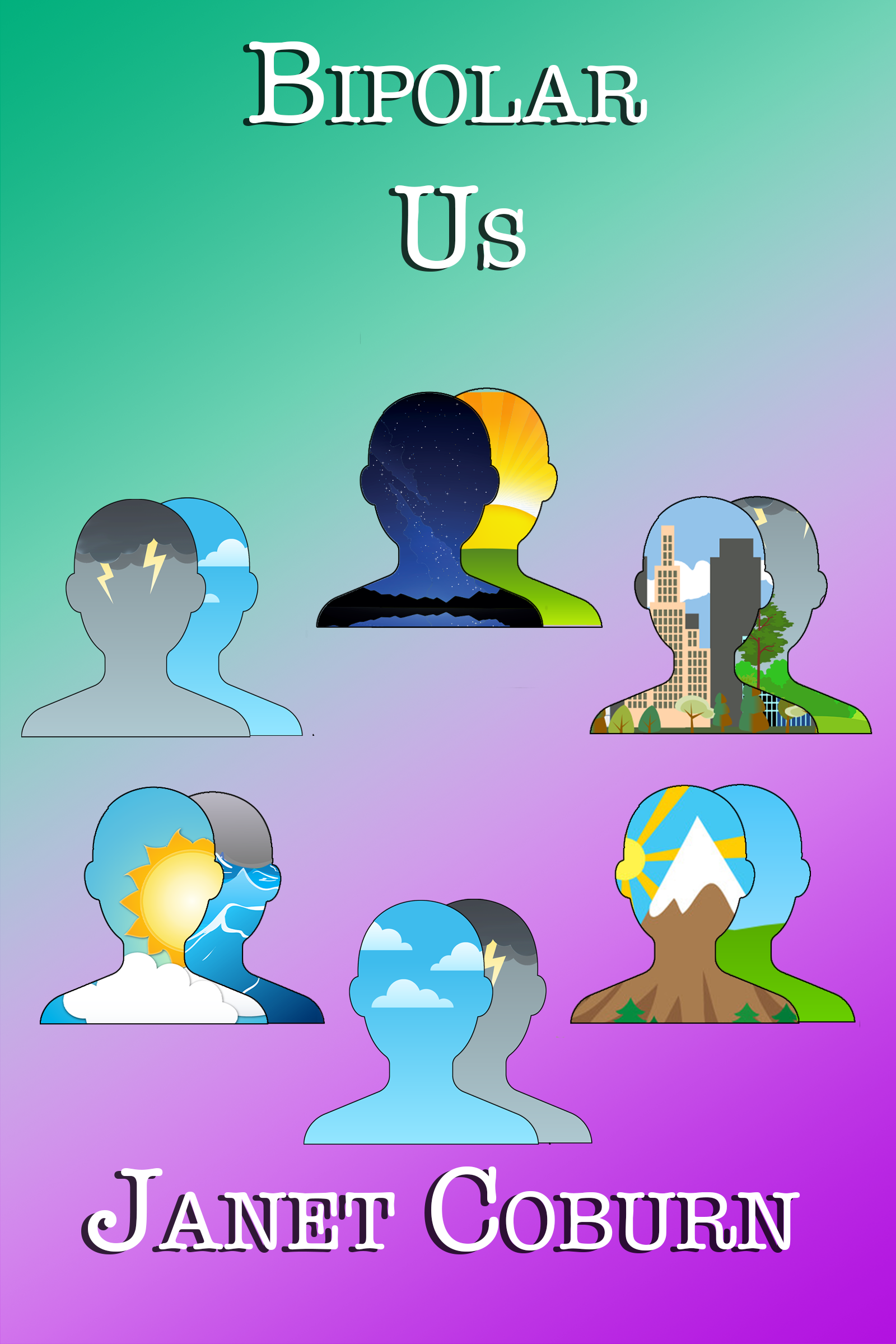
If you like this blog, you might also like my new book of the same name, from Eliezer Tristan Publishing. Now available on Amazon in both paperback and Kindle formats.
The relationship between law enforcement and mental health is, to say the least, fraught. It often seems that every other day we hear about a police officer shooting someone who is mentally ill or mentally disabled. Throw in the present militarization of police and the remains of a shoot-first-ask-questions-later culture, and you’ve got tragedies in the making.
The good news is that there are police departments around the country that are trying to revamp systems so that the needs of the mentally ill are considered and treated more sensitively. Part of this is in response to the fact that many jails and prisons have become de facto mental institutions. Part of it seems to be an offshoot of the community policing movement. Some of the programs sound progressive or at least promising. Others may be more dubious.
The effort I read about recently that struck me as dubious is Indianapolis’s approach. As the IndyStar reported, “Ten officers with the Indianapolis Metropolitan Police Department are testing out a tool designed to help them assess whether a person is exhibiting symptoms related to a possible mental illness.” The “tool,” or questionnaire, “is still being developed, so all officers are testing now is how easy it is to use and whether the questions that are part of the assessment aren’t too ‘technical’ or ‘cumbersome’ for officers in the field, IMPD Lt. Catherine Cummings said.” Which is probably a good thing, seeing that the tool uses “questions that medical professionals use to detect mental illnesses, according to [Paul] Babcock, [Director of the Office of Public Health and Safety (OPHS)].” It is designed to be used from a cell phone or laptop.
That does indeed sound technical and cumbersome, not to mention the fact that it is rather difficult to see how police officers would use it in the field. It’s hard to picture officers with cell phones and laptops filling out a questionnaire to determine if someone needs to go to jail or to the emergency room. The project is still in the testing phase, so it has a long way to go before it sees use in Indianapolis or elsewhere.
The Iowa approach seems more practical. It is “a response to the increased burden law enforcement agencies face in trying to make America’s frayed mental health system function. The team helps get people into treatment before they spiral further out of control and wind up arrested for behavior rooted in their mental struggles.” Police officers, often in small towns where they know the people they serve and protect, do this partially by “bringing people in for court-ordered treatment….They also provide security at a threadbare courtroom at [the local medical center], where commitment hearings are held several days a week.”
One of the deputies says he “focuses on the fact that the people he’s tracking down are experiencing mental troubles that could happen to anyone. He doesn’t want them to feel like they’re being arrested. ‘These people are not criminals,’ he said. ‘They haven’t done anything wrong. They’re people in need of our assistance.'”
Mental health advocate and activist Pete Earley sees the problem as one requiring a number of solutions: “We still need to work on building supportive housing. We still need to push for expanding problem solving dockets (mental health and drug courts). We now need our judges and prosecutors to understand that individuals charged with both misdemeanors and felonies should be eligible for diversion because it is not the crime that should be the determining factor but whether or not the accused has a criminogenic personality. (Persons with chronic, serious mental illnesses often get charged with felony assault for resisting arrest.)”
He is undoubtedly right. But most of these approaches remain rather far in the future. Finding the political, municipal, departmental, and financial will to implement them is, for many jurisdictions, simply not possible.
And of course, the problems are hardly solely the fault of law enforcement. Sensitive, caring police officers exist nearly everywhere and people who work in correctional facilities recognize that their institutions have become substitutes for mental health treatment and that this is hardly a solution.
But at least some people in some places are beginning to address the problem.
One year on my birthday I woke up in Venice. The next year on my birthday I woke up in excruciating physical pain. For me, anyway, birthdays are like that–a crapshoot.
It’s been a long time since I really enjoyed birthdays (except for the one in Venice). As a young teen, I experienced a humiliating, traumatic event at a birthday party that triggered a severe depression. It wasn’t my birthday party, but it left me deeply wary of birthdays in general and birthday parties in particular.
Now my birthday is approaching again and I don’t know which way it’s going to go. Oh, I know I won’t wake up in Venice and I hope I don’t wake up in excruciating pain. But it’s going to be a crapshoot for sure.
You see, this year I’m walking that tightrope so familiar to people with bipolar disorder. Though I’ve been fairly stable through most of the year, now I find myself teetering. If I fall off to one side, there’s depression waiting to catch me. If I stumble the opposite way, hypomania beckons. One way or the other, I fear I’m going to be triggered.
Last week I wrote about my husband’s heart attack and how it was my turn to be the caregiver (https://wp.me/p4e9Hv-Kx). In that post I blithely claimed that I could handle the financial stuff for us. What I mean was that I could handle dealing with the bills and bureaucracy and the assorted financial frustrations that go with a medical crisis.
What I can’t do is make enough money to get us through it all. Dan hasn’t been able to work since his heart attack in late August. We’ve gotten by so far largely due to the generosity of family and friends, which I have been able to organize, track, budget, and spend. But now we’re running out of money. And I’m afraid.
Naturally, I’m catastrophizing, one of my less-effective “coping” mechanisms. We might make the next mortgage payment, but after that I just don’t know. Even with Dan going back to work next month (we hope) and the small amount I make, I know it won’t stretch to cover the mortgage and all the other bills. I imagine that soon we will be living under the Third Street bridge and fighting stray dogs for cold french fries.
Plus, desperate finances, particular long-lasting and seemingly unrelenting, is one of my depression triggers. Dealing with our own finances at the same time as taking over my mother’s was deeply involved in the last major meltdown I experienced.
Dan is already taking up the slack, planning and coming up with ideas to get some more money to tide us over. But then I feel defeated, as though I’m not shouldering my weight in the caretaking department.
The ensuing chaos should descend right around my birthday. And I may descend right along with it.
On the other side of the tightrope lurks hypomania. My first book (on bipolar disorder) is getting closer to being published by Eliezer Tristan Publishing, which is a brainchild of Sarah Fader of Stigma Fighters. Publishing a book is a goal I’ve had for a good many decades and to have it about to happen is a real rush.
But. I can already feel myself planning fabulous things once the book exists. A launch party. T-shirts. Bookmarks. A promotional sign. Speaking engagements. Networking. Bookstore visits and author signings. I may just be getting ideas that are beyond my ability to organize and pay for. I’ve already bought a top to wear to the not-yet-and-maybe-never-existing launch party. I may be planning things that I don’t have enough spoons to accomplish. I may be getting overwrought at the thought of reaching this goal and that way lies hypomania.
Or maybe depression, when reality doesn’t meet with my unnaturally inflated notions. Or both, I suppose. I have little experience with mixed states and may not recognize one until it bites me.
When my birthday comes, I may still be teetering this way and that. Or I may have either fallen or flown. I suppose it’s possible that I won’t lose my hard-won balance, though I’m not counting on it.
Whatever way it goes, it looks to be an interesting birthday. And not in the festive sense.
My husband had a heart attack this fall. He got a total of five stents, avoided open heart surgery, and is now in cardiac rehab. And I am helping take care of him.
Dan has been my caregiver as long as I’ve known him. He has stuck with me through the various ups and downs of bipolar disorder – when I was untreated, when I was struggling with finding the proper medication, when I shouted at him, when I was immobilized – whatever. I couldn’t have got through what I’ve been through without him.
Now I get to pay him back, at least a little, for all he has done for me. I have no training and little experience as a caregiver. But there a few things I can do for him, in addition to loving and supporting him as he has loved and supported me.
I can facilitate his appointments, meds, and procedures. Dan has a tendency to forget when is next appointment is, and with which of his many doctors. I have a perfectly good whiteboard in my study on which I note my own appointments as well as keep track of my work. It’s no trouble at all to add his and remind him.
Getting to his appointments is another area where I can help, especially since his cardiologist has a number of offices in various parts of town and in nearby suburbs where he practices on different days of the week. Since I’ve lived here most of my life, I know the area better than he does and I go with him to navigate. (He’s never gotten used to GPS.) I suggest routes that are easy to retrace and figure out when to leave to get there on time.
Dan has in the past had a habit of forgetting to take his various medications. When that involved sertraline, I didn’t worry much since I know that once a certain level has built up in the body, missing a dose is not such a big deal. But with his blood thinner, a missed dose could lead to a clogged stent and another heart attack. So I proactively encourage him (as my therapist suggests I call nagging) to take them daily and on time.
I can handle financial stuff. With Dan being off work for so long and hospital and doctor bills adding up, our finances are getting pretty tricky. I can make sure I have steady work and even take on extra sometimes. I can fill out the forms for short-term leave, financial assistance, insurance, and other necessities.
I’ve even been able to set up PayPal and Facebook funding pleas to help us get a little extra cash to pay the utilities and other bills. (GoFundMe may be next once all the medical bills are in.)
I can handle computer stuff. Finding locations of offices and hospitals and the cardiac rehab place, phone numbers of financial aid programs, and names and side effects of medication are easier and quicker for me to do on my Mac than for him to do on his ancient PC. I can find things he needs on ebay for the lowest price. I can find and email various forms and records of expenses to wherever they need to go. This may sound minor, but believe me, it can take up a lot of time and frustration. I think of it under the heading of relieving his stress.
I also know how to network. A Facebook friend of mine teaches Tai Chi at a local Y. Through him I found out that the Y does not charge for his classes. And through Google I found that this month the Y waives membership fees if you donate canned goods to a local food pantry. The Y’s amenities include exercise classes and water aerobics, which I also could use. I also found a local Senior Center that has yoga and free weights (and community theater) as well.
I can understand his depression. Being faced with intimations of one’s mortality, combined with money problems and not being able to work can make anyone depressed. And Dan was already taking meds for depression before this current crisis even started. I am, of course, a third-degree black belt when it comes to depression. I know how he feels, why he’s feeling it, and what will and won’t work in helping him through it. I can be patient, supportive, and there to communicate or simply hug when he needs to, as he has so often done for me.
There’s not much care that my husband needs in the way of actual physical care. He is not so incapacitated that he needs help with feeding, dressing, bathing, or other tasks of daily living (other than changing his bandages when he cut his finger open and required eight stitches).
But I like to think that the support I can give him helps in his recovery by taking some of the stress off him, which his doctor recommends and which he has done for me innumerable times. We’re a team and this time it’s my turn to take some of the weight.

Photo by Pixabay on Pexels.com
FDA looks to ban trans fats. Exceptions made if consumed while depressed, anxious, or without anything better to do.
The Daily Show
If that were true, I could eat all the trans fats I wanted, because my bipolar 2 often leaves me depressed and/or anxious.
In fact, my friend Leslie, who is my partner in depression, invented the perfect snack for depressive times: a ruffled potato chip dipped in cream cheese with an M&M on top. My husband starts to worry about me when I ask him to get those ingredients at the store.
But there’s a reason for our peculiar snack. Leslie and I are simply self-medicating.
“Blood sugar and carbohydrate intake are very important to the brain,” according to Everyday Health. “Your brain runs on glucose and depends on carbohydrates to supply the energy it needs. Carbohydrate intake also prompts the production and release of important neurotransmitters, such as serotonin, which creates a feeling of calm and well-being and reduces depression. So people with bipolar disorder may be indulging in a form of self-medication when they eat sugary snacks during depressive lows or manic highs.”
Not that self-medication is good for us. Bipolar people are more likely to have type 2 diabetes than the rest of the population. Three times more likely. One of the risk factors for type 2 diabetes is excessive weight and we all know and bitch about the weight gain from our assorted meds. Prescribing ourselves the Ben & Jerry’s treatment is not going to help, even though it may feel like it at the time.
So what are we supposed to be eating to help stabilize our moods? Of course, people will recommend turmeric, cider vinegar, or the latest “superfood.” But every serious list I saw looked like this:
In other words, exactly the kind of diet that is recommended to everyone for general good health! I think this comes under the heading of self-care, which is not always easy to do. Especially when I’m so depressed I can’t even manage a microwave cup of mac-n-cheese, or when my husband brings home a rack of ribs that he bought on sale.
But if I am stable enough to shop and cook and eat properly, those recommended foods may be good for my mood disorder as well as my body. According to bipolar.newlifeoutlook.com, eating protein “promotes serotonin and improved moods.” They also note that researchers in Italy say “increased consumption of omega fatty acids helps reduce depressive episodes and decreases the risk for suicide in patients with bipolar.” So apparently fish is brain food after all.
The other common suggestion in this realm of self-care is to keep a food journal, or I guess in this case a food and mood journal, to keep track of what you’re eating and how it affects your moods. If you’re the journalling sort, by all means, give this a try. As for me, I blog rather than journal and I know you don’t want to see a lot of “ate salmon, felt energized; ate chips with cream cheese and M&Ms, felt sad.”
The fact that food and mood are related is just one more example of how the brain and the body are intertwined, interdependent. It gives us a clue about the kinds of self-care that may do the most to help us stabilize our moods. And it gives us a chance to take more control, if we can, of our mental as well as physical health.

Photo by Aphiwat chuangchoem on Pexels.com
Hypomania is as insidious as it is enjoyable.
I remember when I quit my 9–5 office job to go freelance. I remember when I made the decision. I had gotten my first bad review, ever, shortly after disclosing my bipolar disorder to my new boss.
I remember driving around shortly thereafter, running errands in the middle of the day. I felt the warm, golden glow that goes with either happiness or hypomania. I could wake when I pleased and work when I pleased. I could run those errands when I wanted. I could take my mother to her doctor’s appointments whenever I needed to. I could make and go to my own appointments as necessary.
Best of all, I felt as though I had enough spoons to do all this. I was able to keep up with the work and the errands and the appointments and, hey, if I got tired I could take a nap in the middle of the day.
But.
Eventually the glow wore off and the spoons ran out. Hypomania dumped me back into the depression I was oh-so-familiar with. I had more work to do and less energy to do it. My mother’s problems increased and I had to take over her finances as well as my own. I was teetering on the edge of a major depression, and then I fell off that cliff.
Anymore I don’t trust hypomania. First of all, I can’t distinguish it from actual happiness, competence, or satisfaction. I always question its sincerity and watch out of the corner of my eye for the coming crash. In other words, when I’m happy I can’t even enjoy happiness without reservation.
One way I keep track of my hypomania is by being aware of the number of spoons I have. If I’m flying on a hypomanic cloud, I feel replete with spoons. It never occurs to me that I will run out. When I’m experiencing garden-variety happiness, I still suffer at some point from lack of spoons. No matter how many pleasing things are scheduled for the day, I know deep inside that I cannot simply dive into all that bounty. My joy is measured out, as the poet said, in coffee spoons or in this case metaphoric spoons which I always visualize as small white plastic ones.
Stability for me does not mean that I can ignore my supply of spoons, either. I may be on an even keel, able to do most of what I want, but inevitably the spoon depletion hits, sooner or later. There is simply no more that I can do, much as I want to. And if I force myself past that point, I will surely pay for it in exhaustion, irritability, or isolation.
Spoons, therefore, run my life. If I am too happy, I have to watch for incipient spoon depletion. If I am level, I know that I must still keep track of the spoons I use. And if I am low, my spoons can disappear altogether, to the familiar point of not being able to get out of bed.
I think the trap of hypomania is the worst of all. On a high like that I can lose track of my spoons – even forget that they are necessary. Fortunately, I don’t get the full-blown version of mania. I fear I would squander spoons recklessly, leaving me a terrible absence of any.
Spoons are a useful way to explain the energy demands of chronic and/or mental illnesses. My husband and I speak spoonie shorthand. But I wish I could experience that golden glow, that haze of happiness, that feeling of floating, without having to keep one eye on the spoon-meter.

Photo by rawpixel.com on Pexels.com
Here’s something bipolar people talk about amongst themselves but not so much with the world outside: sex.
The two poles of bipolar, depression and mania, govern a person’s appetite for sex. A lot of other factors determine whether the sex will be any good, or good for the participants.
Of course the above is true for neurotypical people as well. Moods and emotions – things in the brain – have as much or more to do with sex than stuff in the body. Thinking about sex and wanting sex, for example, start in the brain and without them, nothing else is likely to happen anywhere else.
The depression side of bipolar sex is easy enough to map out. After all, some of the hallmarks of depression are numbness, inability to enjoy things that once gave pleasure, and a tendency to isolate. It’s hard to get your motor revving with all that going on.
Still, the depressed person may want to have sex, or at least want to want to. That’s the way it’s been with me. When I’m in a thoroughly depressed state, sex doesn’t even cross my mind. When I’m not quite as depressed, I think I might like to have sex but don’t have the energy for it. And when I’m relatively stable, there’s the meds.
It’s well known that medications for bipolar disorder can kill the sex drive and in men the ability to get or maintain an erection. Some drugs supposedly have less effect on sexuality, but I’ve never found the magic combination. Or the supposed sex-friendly drug has had side effects I can’t tolerate.
So if bipolar depression is largely a big zero for bipolar sex, how about mania?
Overactive sex drive combined with a lack of impulse control can lead to sexual excess. The tendency to minimize risk-taking behaviors means that some of that sex can be detrimental to one’s health, relationships, and self-esteem. Riding that wave is exhilarating, but then, inevitably, comes the crash and the need to pick up the pieces.
Full disclosure here: Since I have bipolar 2 and my hypomania tends to turn sideways and come out as anxiety, I don’t experience that manic sex high. On the whole, I think I am grateful for this. Sex has never been such an important part of my life that I would risk everything for it.
Once, though, I did experience what you might call a hypomanic sex drive. It smoldered for a long time, requited but unconsummated, until the right set of circumstances presented themselves. It was a restlessness, an obsessive thought, a longing for connection, rather than an ungovernable rush of need. It gave me, perhaps, a glimpse of what it might be like to be manic and sexually stimulated. But I’ll never really know.
I do know that I am glad I had the experience, whatever it was. I’m glad it was safe sex. I’m glad it didn’t destroy relationships. But just to feel that desire again, even if only for a brief time, even with the anxiety it provoked – and there was lots – it was a kind of affirmation that my body and brain are still connected in some vital way.
Most of the time I limp along with only thoughts of sex too fleeting to act upon. And maybe this is not the best way to live, but I have made my peace with it. And once in a great while, every now and then, I still am reminded that I can have a sexual existence.
Even though I have bipolar.
Of course, as always, your mileage may vary.
Recent Comments