Bipolar 2 From Inside and Out

Posts tagged ‘public perception’

John Oliver Takes on the U.S. Mental Health Crisis
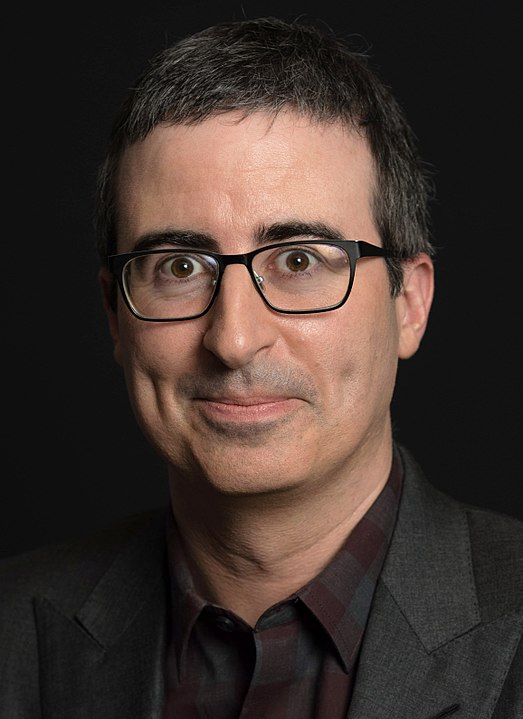
You’ve no doubt heard that the mental health care system in the U.S. is broken. You’ve probably experienced that for yourself. But have you heard what John Oliver had to say about it? On August 1, on Oliver’s Last Week Tonight program, the comedian/commentator devoted a full 25 minutes to examining the flaws that plague mental health care.

During the broadcast, Oliver presented appalling statistics (some of which even I had never heard before) and clips of interviews with participants in the mental health system, including people who have been affected by it, practitioners, and insurance executives. With his trademark sardonic humor, exasperated outrage, and comic zingers, Oliver deftly skewered the insurance industry and remote mental health companies, among other targets. It was an enlightening and satisfying performance.

Here are some of the highlights.

Oliver started with a flashback from the 1950s of women entering a beauty parlor (!) to receive makeovers that were supposed to solve their mental problems. “I don’t know what’s more alarming there — nurses being forced to take on the skills of a Sephora brand ambassador or the fact that ‘can make-up cure sad?’” Then he tackled the PSA on mental illness stigma featuring Harrison Ford, which was designed to make discussions of mental health “cool and trendy” and dissed the gallbladder for some reason.

Next, he went through some stats on why such a PSA was necessary – the lack of access to mental health care, particularly since “for every ten clinicians entering work in mental health clinics there, 13 leave. And if we continue at that rate, one day, we’re going to wind up with negative therapists.”

Oliver noted that nearly 85% of all psychologists are white, and ran an interview with an African-American couple. The man said that he “couldn’t find a black man to save my life,” which Oliver said was “something you expect to hear about the crowd on January 6th, or all ten seasons of “Friends.” He also played a video of another man who couldn’t find treatment. His friends said, “Everything will be fine tomorrow. Suck it up, buttercup,” a response that to him meant “a 12-pack of something or a bottle of something.”

Oliver also reported on the fact that hospital ERs are overrun, with one interviewee suffering a stay of 27 days there, and then receiving advice to go from the ER to a doctor. Oliver noted that 27 days in an ER is “not calming” and that seeking help is serious, that “you can’t just put off mental healthcare indefinitely. It’s not a check engine light.”

Some of Oliver’s most biting comments were reserved for AI programs that claim to counsel users on mental health issues. One of the free services was Woebot – “Bot as in robot and ‘woe’ as in ‘Whoa, that’s a dumb name.'” Their mascot is a robot waving a wrench (“He’s going to fix my brain with that!”). And when questioned about anxiety and lack of sleep, which affect 18% of people, the AI responded, “I can’t wait to hop into my jammies later.” Oliver also reported that when Woebot was confronted by the BBC with a test case of a 12-year-old reporting sexual abuse, it replied with the comment that it “shows me how much you care about connection, and that’s really kind of beautiful.”

He did note that teletherapy is valuable and it can fill some the gaps in care. But Oliver also highlighted investigations of sites that were “pill mills,” one of which claimed that 95% percent of their users “should get a scrip.” Noting that it was not 100%, Oliver compared it to the saying, “It’s not arson if you only burn most of a building down.”

Regarding lack of accessibility and insurance parity despite laws requiring it, the program noted that the issue was complicated by finding a provider who will take your insurance. The Labor Department has investigated only 74 claims against insurance companies in the past year (but closed only 12 of the complaints) and has issued fines only 13 times since 2017.

And insurance payments are often based on their own opinions on when a treatment is “medically necessary.” Oliver likened it to an insurance company, saying, “Imagine an insurance company reversing their decision in the middle of any other serious treatment. ‘Hey, we love how this heart surgery is going, just popping in to say, it’s done. Yeah, it’s done now. Hit the showers, everyone, great job. Don’t bother closing anything up, that’s not medically necessary.’” California, Oliver noted, requires insurers to “base medical necessity determinations on current, generally accepted standards of mental health care, instead of just making up the criteria for themselves.”

Insurance companies also have “ghost networks” that offer patients providers who aren’t taking new patients or even practitioners who have died. Phone numbers can be wrong too, some of them reaching “jewelry stores and boutiques,” which Oliver admitted that, “to be fair, if you’re a woman in the 1950s, a boutique and a jewelry store is apparently the only mental health care you need.” 

The segment ended with the statement and plea, “It can’t be the case that, when people ask for help, our only option is to tell them to ‘suck it up, buttercup.’”

We can only hope that Last Week Tonight‘s take on the U.S. mental health care system will reach its literally millions of viewers with the news that something needs to be done – and soon. You can see the whole segment at https://www.youtube.com/watch?v=jtIZZs-GAOA or on John Oliver’s official website, https://iamjohnoliver.com/. It’s definitely worth a visit.

This post originally appeared on The Mighty (themighty.com).

Mental Health and Awareness Campaigns

There certainly are a lot of mental health campaigns going on. There’s one or more in every month. Most of these are “awareness” days, which is a little bit confusing. People who already have the assorted disorders are already aware of them, as are probably their families and perhaps their friends.

When it comes to awareness, though, most non-affected people (or people who don’t realize they are affected) find out about them through TV commercials – during Men’s Health Month, in ads for medications, or from organizations like the Wounded Warriors Project. There may be local events, too, but I haven’t seen any in my area. I don’t even see much of anything on my Facebook timeline, even though my friends list contains a lot of people with mental health concerns. I note that there isn’t a Women’s Mental Health Month, even though most people who receive treatment for mental illnesses are women. (There are many, many special days not related to mental health that I knew nothing of until I started to research this post, such as World Animal Road Accident Awareness Day (though I have some experience with this phenomenon), Insect Repellent Awareness Day, and even Spider-Man Day.)

Here’s what I did find.

January

Mental Wellness Month

February

Children’s Mental Health Week

International Boost Self-Esteem Month

National School Counseling Week

National Eating Disorders Week

March

Self-Harm Awareness Month

Brain Injury Awareness Month

World Bipolar Day (which I had never heard of, despite being bipolar myself)

April

National Stress Awareness Month

National Counseling Awareness Month

May

Mental Health Awareness Month

National Maternal Depression Month

National Borderline Personality Disorder Awareness Month

Tourette Awareness Month (May into June)

Children’s Mental Health Awareness Week

June

PTSD Awareness Month

Men’s Mental Health Month

July

International Self-Care Day

BIPOC (or Minority) Mental Health Month

August

National Grief Awareness Day

September

World Suicide Prevention Day (and National Week and Month)

October

World Mental Health Day

National Depression and Mental Health Screening Month

ADHD Awareness Week

OCD Awareness Week

November

National Family Caregivers Month

International Stress Awareness Week

International Survivors of Suicide Day

December

International Day of Persons With Disabilities

National Stress-Free Family Holidays Month

So, how are people made aware of most of these various disorders? By people wearing different colors of ribbons that correspond to them. The idea, I guess, is to prompt people to ask, “What is that silver ribbon for?” and to be told, “It’s for Borderline Personality Disorder Awareness.” If the person inquires further, it’s a chance to educate them, but most people don’t ask at all or ask only what the color means.

There are only a couple of colored ribbons that everyone knows the meaning of – yellow and pink. The yellow ribbon campaign was started in 1979 to show support for persons held hostage in Iran, but now means support for the Armed Forces. The pink ribbon for the Breast Cancer Awareness campaign started in 1991 and is probably the most successful ribbon awareness symbol there is.

Here are the colors of various ribbons and what mental health concerns they are intended to promote awareness of.

Peach – Invisible Illness

Yellow – Suicide Prevention

Periwinkle blue – Anorexia Nervosa

Teal – Agoraphobia, Anxiety Disorders, Dissociative Identity Disorder, OCD, Tourette Syndrome, Stress Disorders, Social Anxiety Disorder, PTSD, Panic Disorder

Green – Mental Health, Bipolar Disorder, Major Depressive Disorder

Lime green – Mood Disorders, Psychosis, Depression, Mental Illness, Postpartum Depression, Childhood Depression, Maternal Mental Health

Purple – Binge Eating Disorder, Bulimia Nervosa, Eating Disorders, Caregiver Appreciation

Purple and Teal – Suicide, Survivors of Suicide, Family Members of Suicide

Gray – Personality Disorders

Orange – ADHD, ADD, Self-Harm

Silver – Borderline Personality Disorder

So now you know what color ribbon to wear and what month to wear it in. I hope that if you do, people will ask about it and allow you to expand on what it means. I don’t expect that, however. Almost no one has ever asked me about my semicolon tattoo for Suicide Prevention and Awareness. (I occasionally get to explain it if I point it out to them.) Probably the most effective reminders are t-shirts that identify the condition and maybe the awareness month date, but those are harder to come by, except for Break the Stigma and Mental Health Matters ones. (I do have a t-shirt and a hoodie for The Mighty, a website for mental illness and other chronic illnesses.)

Whatever you do to promote mental health and awareness of mental illnesses, though, keep trying. We need to get the word out!

Dissociative Identity Disorder: The Basics

I had a friend, Hal, who had Dissociative Identity Disorder (DID). I never met any of his alters until once we went to the corner store. He giggled. He grabbed numerous bags of chips and other snacks. When we got home, I mentioned this to him, and he said, “You just met Julie. She’s a teenage girl.” Later, I met an alter known only as The Angry Man, which is part of why we’re no longer friends.

DID, as its name says, is a dissociative disorder, one of three different kinds – Dissociative Amnesia, Depersonalization Disorder, and Dissociative Identity Disorder. DID is the most severe of the three conditions. All involve symptoms such as memory loss, “out of body” experiences, emotional numbness, and lack of self-identity. DID is thought to be a reaction to the trauma of extreme physical, emotional, and sexual abuse that occurs usually before the age of six.

Some trace the history of DID to 1584, when the records of a French woman who was exorcised recounted symptoms that today would very likely be attributed to DID. It’s likely that more cases that were actually DID have over the years been attributed to demonic possession. Later, it was seen as a form of hysteria, another disorder with dissociative symptoms.

DID really hit the big time in the 1950s through the 1970s, when the books The Three Faces of Eve and Sybil became best-sellers and were made into movies. The books, written by Corbett H. Thigpen and Flora Rheta Schreiber, respectively, were accounts from psychoanalysts about the diagnosis and treatment of DID, which was at the time called Multiple Personality Syndrome, since the disorder was notable for “alters,” or separate personalities that appeared while the primary personality was unaware that they existed. “Eve” had three alters, while “Sybil” had 16.

Since that time, both of those cases have been controversial, with exposes purporting to reveal that neither Eve nor Sybil really had multiple personalities. The theories were that either the subjects were faking the disorder, or that the doctors suggested to them via leading questions and hypnosis that they had multiple personalities. (This was related to the “repressed memory” controversy in the 1980s to 1990s, which raised many of the same issues. Healthline recently reported that “the majority of practicing psychologists, researchers, and other experts in the field question the whole concept of repressed memories. Even Freud later discovered many of the things his clients ‘remembered’ during psychoanalysis sessions weren’t real memories.”)

Still, DID is real enough to have made it into the DSM. (We should remember, though, that diagnoses of “illnesses” such as homosexuality were present in earlier editions but later removed.) There are therapists who treat it with Cognitive Behavioral Therapy (CBT), Dialectical Behavior Therapy (DBT), medications, Eye Movement Desensitization and Reprocessing (EMDR), and/or hypnosis, which started to be a treatment in the 1830s and is said to lead to a rapid recovery. Although hypnosis for diagnosis or treatment of DID is still controversial, it may be useful for reintegrating the alters back into the primary personality.

DID has also been used as a potential criminal defense in legal cases over the past several decades, in cases that range from drunk driving to murder. It has been used to support a plea of “Not Guilty by Reason of Insanity” (NGRI). This defense is used in less than 1% of felony cases and is successful in only a fraction of them. The theory that a crime was committed not by the primary personality but by one of the alters has not always proved persuasive. It’s difficult to prove, for one thing, and there are professional witnesses and psychologists who testify that either DID does not exist or that even if an alter committed the crime, the primary person is legally responsible for it. The DID defense did work in 1977 for Billy Milligan, who was said to have 24 separate personalities, two of whom were claimed to be responsible for his crimes of rape.

DID is subject to a number of myths or beliefs. For example, many people believe that DID is either nonexistent or an overdiagnosed “fad” seen only in North America. Some believe that it is caused by the doctors who treat it rather than by childhood trauma, or that it is in reality the same as Borderline Personality Disorder (BPD). However, there have been neuroanatomical changes recorded by MRI in cases of DID: “The neuroanatomical evidence for the existence of DID as a genuine disorder is growing and the structural differences seen in DID patients’ brains…contribute to that growth.” So, although DID is believed by some to be nonexistent, there are studies that back up its reality.

As for me, I have experienced a few mild instances of dissociation related to my bipolar disorder, but nothing even remotely like what occurs in DID. But then, I didn’t have the childhood trauma associated with it. (During the “repressed memory” days it was said that the only truthful answer to “Have you experienced extreme childhood trauma?” is “Not that I’m aware of.”) Nonetheless, I find the subject fascinating, as well as dissociation in general. (This is not intended to diminish the experiences of people who have a dissociative disorder.) But I look forward to learning more about DID, particularly the neuroanatomical changes when they become available.

How Do We Talk About Mental Illness?

Language matters. What we call things matters. Does language shape thought or does thought shape language? Either way, both are important when it comes to brains.

The latest discussion in the debates over language is what to call mental illness (which is what I’m used to saying). Many of the words and phrases that have been in use for years no longer seem quite accurate.

Take mental health, for example. When policymakers talk about subjects like mass violence, they often speak of “mental health issues” and what should be done about them. The thing is, if someone is mentally healthy, nothing really needs to be done about that. But mental illness is a term that doesn’t sound so easily addressed. Policymakers are notorious for using language that soft-pedals actual problems. Not to mention the fact that when they talk about mental health, they’re usually talking about addiction issues or homelessness (though they still aren’t particularly effective in addressing those either).

Mental health is still a better term than “behavioral health.” I remember when community treatment centers and insurance programs were called behavioral health plans. Again, there was a lot of lumping psychiatric illnesses and addiction together. It was also wildly inaccurate. It was not the behavior that was unhealthy (the way smoking is). Behavior may have looked like the problem, but it wasn’t the cause. Something to do with thought or the brain was. Also, there was no equivalent term “behavioral illness.” That wouldn’t even make sense.

So. We have mental illness as the term currently most used, with SMI (Serious Mental Illness) often used for disorders like bipolar and schizophrenia. Lately, though, there has been a push to replace those terms with “brain illness.” (The companion term is “brain health.”) It hasn’t caught on yet with the general public, though it’s gaining some traction among practitioners, advocates, and those affected by assorted conditions. I’ve heard some people are frustrated that it hasn’t caught on more widely already. They feel the process is going too slowly.

Calling schizophrenia, bipolar, and other disorders “brain illnesses” certainly makes one sit up and take notice more than “behavioral health.” And it jibes with the notion that these mental disorders (there’s another term) are caused by something going wrong in the brain. This is not without controversy, however. There are those who think that referring to depression or bipolar disorder as “chemical imbalances” in the brain or faulty neurotransmitters (or their receptors) is inaccurate. There are various theories as to what causes these conditions, all the way from childhood trauma to gut bacteria. To me, the most likely scenario is that there’s a combination of brain-related factors and environmental influences at work here. Nature and nurture, in other words.

Brain illness is certainly an attention-getting term. That should make it more likely to catch on with policymakers, but I suspect it won’t. It’s not a comfortable concept and there are no easy-sounding solutions to it. I doubt that it will catch on with the general public either. We still haven’t gotten people to move away from crazy, insane, maniac, psycho, or even nuts and stop throwing them around indiscriminately. Hell, we haven’t even been able to convince people that psychiatric institutions don’t use straightjackets anymore.

Does “brain illness” make these conditions sound more treatable? Is it likely to increase compassion for those who have them? Is it likely to make any kind of a difference? I don’t think we’ll really know until it penetrates the consciousness of the person-on-the-street. And I have my doubts about when or if that might happen.

Garden-Variety Jerks

I see a lot of questions of this kind: My neighbor/sister/friend does this [unpleasant behavior]. Is this caused by his/her bipolar disorder?

There certainly are behaviors of people with bipolar disorder that are unpleasant to those surrounding them. Not taking showers for a week when the person is depressed is one of them. Another, when the person is in the grip of mania, is having sex outside a relationship. Being unable to leave the house is a bipolar-related behavior. So is gambling away your savings. So is standing you up or ghosting you. And blaming themselves for everything. And taking on too many projects and finishing none of them. Talking too fast or too slowly.

Playing their music too loud or parking across your driveway is not a bipolar-related behavior. Neither is littering. Or insisting that you take the garbage out. Or yelling when they are angry. Or becoming huffy when you criticize them.

There are some behaviors that may or may not be bipolar-related – for example, talking about themselves too much. This could be an indication that the person is depressed and brooding (if the talk is about how worthless they are) or manic and aggrandizing (if the talk is about how great they are). Or it may just be that the person has low or high self-esteem that doesn’t rise to the level of pathology. Feeling that everyone is picking on them could go either way. So could taking offense at every little remark. It’s sometimes hard to tell, particularly if you’re not a psychologist.

It’s more than a little weird that people are willing to attribute all kinds of bad behavior to mental illness. But think of all the racist haters and killers that are assumed to be mentally ill. While some may be, it’s an automatic and often unwarranted assumption. It takes away from the attention that ought to be given to real mental disorders and it perpetuates the stigma associated with mental illness. Or it assumes that racism and hatred are mental illnesses. These are extreme cases, of course.

Sometimes bad behavior is not due to mental illness at all. Sometimes what you’re dealing with is a garden-variety jerk. To address the picture above, it’s not pathology to be messy and it’s not a sign of mental illness to be mad at a roommate for being messy.

There’s not a lot you can do if the behavior you object to is caused by mental illness. You may have to simply understand or let the annoyance go. The person may resent that you assume their behavior is a sign of mental illness, even if it is. And about all you can do in that case is help the person get help if you can.

When you’re dealing with a garden-variety jerk, there are other sorts of remedies you can apply. You can call the police on the neighbor with the loud stereo. You can ask the messy roommate to straighten up or leave. You can set boundaries of what you will and won’t put up with and enforce those boundaries firmly but fairly when they are violated.

Of course, there’s always the possibility that the person in question has a mental illness and is also a jerk. If you can figure out what to do in those cases, please let me know.

I’m not saying that mental illness should be an excuse for bad behavior or absolve a person of the consequences of their actions. I am saying that it’s easy to assume that all bad behavior is due to mental illness, just as much as it’s easy to assume that all bad behavior comes from being a jerk, or worse.

In a lot of cases, you simply have to live with it.

Understanding Mental Illness

My friend Martin Baker (https://www.gumonmyshoe.com/) recently posted a series of prompts for mental health bloggers. Number 29 was: Can you ever really understand if you’ve not experienced mental ill health yourself? Here are my thoughts.

In general, I do believe that having a mental illness yourself is the best and perhaps the only way to truly understand the reality of mental illness – the daily struggles, the need for self-care, the loneliness, and the stigma.

I’ve noted before that my mother-in-law didn’t really understand the concept of mental illness. It was like the time when she saw some women on the Phil Donahue show who were talking about their hysterectomies and the pain and suffering they went through. “Those women are such liars,” she said. “I had it done and it wasn’t like that at all.” It’s a matter of assuming your own experience is true for the rest of the world as well, a common logical fallacy. (Later she came around to believing mental illness existed, at least. I attribute this to spending time with me and my husband and reading one of the books I wrote, Bipolar Me.)

Even my husband – who has lived with me for 40 years, sympathized greatly, and helped me unselfishly – didn’t really “get depression” until he got depression. It was a situational depression that deepened into clinical depression. He’s still on medication for it. I remember him saying that he felt miserable and despondent, and had for months. “Try doing it for years,” I said. “I couldn’t,” he replied.

With a person who doesn’t understand – or even believe in – mental illness, there’s not a lot you can do to change their mind. The images and stories they get from the news, movies, novels, and TV shows tell them that anyone with a mental illness is likely to be a serial killer or a crazed gunman, probably psychotic or at least delusional. Conversely, they can believe that any notorious evildoer must have been mentally ill and probably “off their meds” at the time the atrocity occurred.

We often say that education is the answer. Informing people about the reality of mental illness is supposed to raise their consciousness and help eradicate stigma. That’s all well and good, but getting accurate and informative materials into people’s hands is not that easy. Sure, there are websites, books, and blogs, but the general population simply doesn’t run across these on their own. We who deal with mental illness daily must point them to these resources. Even then, there’s no guarantee that they’ll read or interact with the resources. They have to be interested in and open to the topic.

Public awareness campaigns featuring movie stars and top athletes may help in getting the audience to believe in mental illness in others, and even if they have a mental disorder such as depression themselves. Whether these can counteract the inaccurate and insensitive portrayals of mental illness in the media is still, I think, an open question. Even commercials for various medications for psychiatric illnesses can help people understand a little bit more, though I still believe that many of these ads present a less-than-accurate picture of depression, for example, making it seem no worse than a hangover. And many of the ads promote telemedicine sites for those who have – or suspect they have – some sort of mental disorder. They are less useful for the totally uninformed.

Still, we keep trying to inform and educate. But are we shouting down a rabbit hole or into an echo chamber? Maybe seeing posts from Facebook friends who have mental disorders really does help. I know that some of my Facebook friends have said that my posts and blogs on bipolar disorder have helped them learn.

But in general, I’m pessimistic about people understanding mental illness until or unless they experience it for themselves or in their own families – and maybe not even then. There are those who deny that they have depression, for example, or who may suspect they have a psychiatric disorder but feel that getting help is “for the weak.”

Or maybe I’m just pessimistic today.

Nevertheless, I’ll go on writing this blog in the hope that it will make a difference to someone.

Is Stigma a Problem? Is Systemic Breakdown?

Some people who have mental illnesses say that stigma is a problem. Others say that’s not the real problem – a lack of social or political action is. I say, why not combine the two?

Stigma Fighters (https://stigmafighters.com/) and other organizations such as the International Bipolar Foundation (ibpf.org/), the National Alliance on Mental Illness (NAMI) (https://www.nami.org/Get-Involved/Pledge-to-Be-StigmaFree), and even Facebook groups, promote the eradication of the stigma surrounding mental health issues. They say that mental illness is stigmatized in our society – some even deny that it exists – because people don’t understand it. This happens when churches say that mental illness is a sign of sin or refuse to welcome people with mental problems into their congregations or have any kind of outreach to them. It happens when a person is honest about having a mental illness and tells her boss or friends about it and receives negative feedback, incomprehension, or the back-away-slowly-and-don’t-make-eye-contact look.

People who believe that stigma is a problem say that stigma is one of the largest reasons that people refuse to seek treatment for their mental disorders. Being seen going into a psychiatric clinic, people finding out that the person sees a psychiatrist, and being ignored or discounted when talking about mental illness are seen as ways that stigma propagates.

People who believe that stigma is a problem promote education as the main solution. If more people understood what mental illness is and how many people suffer from it, they would be less likely to discriminate against those who have mental conditions. Stories about celebrities who have mental dysfunctions or whose relatives do are considered inspiring and helpful. Stars who speak out encourage others to seek treatment (though it’s increasingly true that public expressions of mental illness diagnoses are tied to specific online therapy businesses).

People who believe that political action is necessary also try to effect changes in people’s thinking, but, more importantly, support changes in the systems that are supposed to provide services to the mentally ill. These systems include schools where mental illness plays no part in the curriculum; lack of beds for psychiatric patients in hospitals; the response of police to calls regarding people with mental disturbances; the number of medical schools that provide no information to doctors; the lack of psychiatrists, especially in rural communities, which mean people must wait a long time for services or have no access to them at all; politicians who put mental health issues low on their list of priorities; law enforcement that reacts with deadly violence to calls involving persons with mental illnesses; and health insurance and EAP (Employee Assistance Programs) that treat mental illness differently than physical illness or even addictions. NAMI promotes grassroots activism as one facet of the appropriate response to such problems (https://www.nami.org/Advocacy/Advocate-for-Change).

People advocating for political change also see education as one partial solution to the problems caused or exacerbated by insurance companies, educators, medical schools, media, law enforcement personnel, correctional facilities, and politicians. Political action is seen as the right course to take to improve conditions. (Though it should be noted that people have sent books about the breakdown in societal responses to mental illness to politicians and receive only standardized, unhelpful “thank you” letters that are mostly signed and sent by staffers rather than the political figure.)

I say that education is the best response to both of these problems. Education of the general population about the realities of mental illness will lead to less stigma. Education of the voters, their representatives, and their local communities will help to lessen the inequities and difficulties that now abound.

This will not be easy. Education about the realities of mental illness is hard to convey to either citizens at large or politicians and others who have some degree of authority. Until it touches their own lives, people will largely be blind to the problems. Educational campaigns and the testimony of celebrities may help educate individuals. But politicians are likewise only affected by the aspects that touch their own lives, such as the public revelations by those like Kitty Dukakis (wife of former presidential candidate Michael Dukakis), who has been quite open about her mental difficulties and her ECT treatments (https://www.amazon.com/Shock-Healing-Power-Electroconvulsive-Therapy/dp/1583332839).

What I fear is that these individual occurrences will motivate only a small number of people enough to make a change in society as a whole. It’s easy enough to say, “Oh, Catherine Zeta-Jones has bipolar disorder. Too bad for her, but that doesn’t affect me” or “Someone in my family has a mental illness, but my constituents won’t support legislation to benefit the homeless mentally ill or to provide halfway houses in their neighborhoods. Better to spend my time and influence on stopping terrorism or drugs.”

But until or unless something changes, mental health will still be swept aside or ignored outright. People at large need to understand that just because mental illness hasn’t touched their lives so far, it still could in the future. Public officials and public servants need to believe that mental illness issues are vital to their communities and something that can be made better if only they have the courage and compassion to make the necessary changes.

Stigma-fighting or political action? Both are problems that need solving and education is at least part of the solution to both. And it appears that it’s up to us, those who have mental illnesses, to do the educating.

The Rights of Mental Patients: An Early Crusader

In 1887, investigative journalist Nellie Bly pretended to be insane so that she could report on the conditions in a New York asylum. The results of her sojourn there were the subject of her book Ten Days in a Madhouse and became the catalyst of increased funding for mental institutions. (I wrote about her in https://bipolarme.blog/2016/03/20/what-is-sanity/.)

Now there is a book that recounts an even earlier example of a woman who publicized the conditions in an insane asylum. It has a bearing on the rights of mental patients and involuntary commitment.

The legal rights of mental patients have been much discussed of late. Involuntary commitment is a particularly thorny subject. Some people decry it as a violation of civil rights. Others point to its usefulness in cases of extreme danger to self and others, but also in cases of anosognosia that do not quite meet that standard. “Assisted outpatient therapy” is one version of involuntary commitment that has many supporters. (See my post https://bipolarme.blog/2020/03/08/systemic-breakdown-and-involuntary-commitment/.)

Long before this became a matter of debate, and a couple of decades before Nellie Bly’s exposé, a woman crusaded for the rights of mental patients and against the practice of involuntary commitment. Of course, the involuntary commitment she decried was of married women by their husbands, and in 1860s Illinois, husbands were perfectly able to do that. The causes cited could be as varied as novel reading and masturbation (two separate categories). For Elizabeth Packard, the reason her husband gave was that she was insane because she disagreed with his religious opinions and dared to teach her opinions to others.

Karen Moore’s book The Woman They Could Not Silence recounts Packard’s story, in detail. Meticulously researched (as was Moore’s previous book, The Radium Girls), the nonfiction work is based on many primary sources, including Packard’s own writings (from when she was in the asylum and hid her papers, in one case inside her hat, as well as the book and pamphlets she published) and newspaper accounts of her crusade and her trial.

Packard’s trial was a result of a law she had promoted requiring a civil jury trial before a married woman could be committed, instead of on her husband’s word and the recommendation of an asylum doctor. Interestingly, immediately before the jury trials were mandated to begin, hundreds of married women were miraculously “cured” and released from the asylum where Packard had been held.

Once released from the asylum, three years after being committed, Packard became a tireless campaigner for the rights of the involuntarily committed and of married women (who at the time were not entitled to their own money or property, or even their own children). Packard also exposed the abuses that mental patients suffered at the hands of asylum staff, including isolation, beatings, and cold water baths (near-drowning) used as punishment. Another policy that she sought to have changed was withholding mail from mental patients. Packard had been prevented from reading supportive letters that her relatives had written.

Women dabbling in politics was not common, or approved of, at the time. Packard was able to influence lawmakers and other officials with a combination of her compelling speaking style, her eloquent presentation of her cause, and her remarkable tenacity. To say that she had an agenda is putting it mildly.

The prologue to The Woman They Could Not Silence begins, “If she screamed, she sealed her fate. She had to keep her rage locked up inside her, her feelings as tightly buttoned as her blouse,” and the book ends, “There was a world out there that needed reforming. And she was determined to do it.”

The Woman They Could Not Silence (subtitled One Woman, Her Incredible Fight for Freedom, and the Men Who Tried to Make Her Disappear) was selected by A Mighty Girl (http://www.amightygirl.com/), which serves as a clearinghouse for books, toys, and other products for adults and children, as one of their “Pick of the Day” recommended books for adults.

I highly recommend it too.

COVID News and Mental Health

Many people have been blaming COVID for depression and other mental health problems. They have said that quarantining and uncertainty have raised the level of anxiety in the general population, and quarantining has caused depression. These increased levels may be – probably are – accurately reported, but I don’t think they necessarily indicate an increase in the incidence of mental illness in our society.

The depression and anxiety that people are feeling are, I believe, natural and expected reactions to the pandemic conditions that prevail. I’m not trying to minimize these experiences, but most people have never experienced clinical depression or anxiety and so don’t understand the nature of the actual illnesses. What depression and anxiety the pandemic has caused is likely to clear up when (if) the pandemic does. This is situational depression and anxiety.

This is not to say that people experiencing pandemic-related depression and anxiety don’t need help. Of course they do. “Talk therapy” may do them a lot of good, and there has been an upswing in the number of online and virtual counseling services available. Whether these people need antidepressants and anti-anxiety meds is a question I’m not able to answer. My best guess is that they don’t, at least not long-term courses of drug treatment, as their symptoms are probably not indicative of mental illness. Short-term anti-anxiety meds may do some good.

I do think that the pandemic and the reactions to it have been triggering for many people who do have mental health conditions. People with OCD who are germophobic saw their most extreme fears become reality. People who have Seasonal Affective Disorder may have suffered more from lack of sunlight during the stay-at-home orders and quarantines.

Many people are in extreme denial, believing that the pandemic is a hoax and refusing to take any steps to prevent its spread. Is this a symptom of mental illness? I don’t see how threatening officials and doctors who promote pandemic precautions is a sign of mental health, but are the people who do this delusional or are they merely at one extreme end of the anxiety spectrum?

I understand that people’s perceptions of reality differ, but it annoys me when people deny mine, which currently is made up of snot and phlegm, as well as depression and anxiety. We can have these academic debates, but for my husband and me, at least, the pandemic has pushed us from believing that it is “out there” to realizing that it’s in here, in the most literal and alarming sense.

My husband has tested positive for COVID, and I have a terrible sore throat and cough, so I likely have it too. We’re resting and taking Coricidin until we hear from our doctors what to do. A dear friend has sent us a pulse oximeter, with instructions to get more help if our O-sats fall below 90.

All this is messing with my head. I was entering a depressive phase anyway. Now I’m not sure if it was due to my bipolar disorder or my immune system crapping out. (Just FYI, my husband and I are both triple-vaxxed. He probably got the virus at work and undoubtedly passed it on to me. I can’t imagine I would test negative now.)

I don’t think our illness is life-threatening, though honestly, it could be. You never know with COVID. And now, that’s part of my reality.

Sharing About Bipolar

Sometimes I despair. I have realized that part of the meaning in my life is to share with other people the realities of bipolar disorder. At times, I think I have failed. I know I shouldn’t let the fact that others, such as Gabe Howard, Pete Earley, and Laura Pogliano, to name but a few, do it better than I do discourage me. This is not a contest. Everything any of us does to spread the word about bipolar and other mental disorders is a positive thing.

Here are some things I have tried.

Books. I wrote two books based on my blog posts. Neither of them sold very many copies. The first one was published by what I’d call a seat-of-the-pants indie company, and the other one half by them and half by myself, so quasi-self-published. I had a book reading/signing at the local Barnes & Noble. Two people came. We did have an interesting question-and-answer session, even drawing in a couple more people from the cafe where we set up.

I promoted my books, but not very well. There were a couple of podcasts. On one, for first-time authors, it was evident that the host had never read my book, though I sent him one. He asked me questions like, “Are there any other creative people in your family?” My interview on Bipolar Girl went better, but I had no way to gauge the response. I got a write-up in the local paper, but it was clear they wanted me to buy an ad, which I was unable to afford and my publishing company was unwilling to fund. The publishing company did send out form letters to various outlets, but I completely misjudged who should receive them. There were no reviews.

Tattoos. The idea behind the Semicolon Project was that people concerned with suicide awareness and prevention would get tattoos of semicolons. (The idea was that a semicolon is a place in a sentence where a writer could have put a period and stopped, but chose to go on.) When people asked about the peculiar punctuation tattoo, one was supposed to open a dialogue with them about suicide, suicide helplines, and the like. I got the semicolon tattoo and also a bipolar tattoo (a colon, half a parentheses, and another colon to make both a smiley and frowny face). Like this : ) : Gabe Howard has used this symbol on his merchandise, such as t-shirts, mugs, and stickers, and I hope he has achieved a great response. But no one has asked about either of my tattoos, so I have never had to explain them.

Blog. This blog is the most successful of my methods of reaching out to others to get across my message about bipolar disorder and mental health. It reaches a few dozen readers every week, unlike the thousands of viewers that many sites get. I cross-post my blogs to other sites like The Mighty, Medium, and Thought Catalog, when appropriate. I had somewhat of a better following on Medium, but then their Invisible Illness section decided they wanted posts with more research than I was able to provide, and from writers with higher academic degrees than I have.

The Mighty has been the most consistent in featuring my posts and the most successful in garnering responses. They also sent me a The Mighty t-shirt and hoodie, which, again, no one asks about.

I don’t mean to whine (though I suppose I am), but I sincerely wish I could reach more people. There are many in this world who need to hear the messages about mental health in general and bipolar disorder in particular. Of course, I’m not a celebrity, so I’m not likely to be featured in news stories or TV ads. But, since I am out of other ideas, I will keep on with this blog and any way I can think of to spread the message.