Bipolar 2 From Inside and Out

Posts tagged ‘mental illness’

What Should Medical Students Learn About Mental Illness?

I recently saw a news story reporting that a single medical school, Des Moines (IA) University, has made it mandatory for medical students to learn how to care for patients with mental illness.

Funny. I would have thought that was already happening in medical schools across the country. Apparently not. Although medical schools teach prospective doctors to diagnose mental illness, the article notes, they do not require students to learn how to care for the mentally ill. When the class started in 2018, it was an elective, but it later became a requirement.

The curriculum includes having people in recovery from mental illness, loved ones of patients, and healthcare providers speak to the class. It is hoped that this will combat the stigma that arises from student doctors only seeing mental patients on locked wards when they are in severe crisis.

Of course, confinement on a locked ward is not typical for people with SMI. Many people with bipolar disorder and even schizophrenia, for example, require inpatient treatment only occasionally, spending the majority of their lives receiving treatment, medication, and therapy as outpatients. One wonders if the stigma surrounding mental patients extends to them as well. Do some GPs tend to ignore physical disorders while focusing on the mental ones? It’s fairly well known that doctors sometimes focus on a person’s weight as being the cause of all their symptoms instead of looking for (or testing for) other conditions. Might there be a similar narrowing of focus regarding mental patients?

Looking at the course, the answer may be yes. Interestingly, the main concern in developing the course seems to be that because doctors were so uncomfortable treating psychiatric patients that they focused on the SMI and never diagnosed and treated conditions such as heart disease, hypertension, and other medical problems. Professor Dr. Lisa Streyfeller cites what she calls “really horrifying statistics that folks with severe mental illnesses die on average 15 to 30 years earlier than people who don’t have those illnesses.”

As important as it is that people with SMI receive treatment for their psychiatric conditions, physicians need to be aware that such people have physical needs and illnesses as well. And as encouraging as it is that mental patients themselves, and their loved ones and caregivers, are included in the curriculum, the article made no mention of teaching prospective doctors how to interact with mental patients they encounter in their practices. If such courses do not exist in medical schools other than DMU, where are doctors going to learn how to talk with and understand the many, many patients they will have who suffer with anxiety, depression, mania, anorexia, and the dozens of other diagnoses?

In some communities, first responders such as police and EMS workers are beginning to have mental health practitioners go on “ride-alongs” to help educate emergency personnel on how to handle situations involving the mentally distressed. Classes like the one at DMU (if others existed) could benefit from having students “ride along,” doing internships or rotations with established doctors who treat the physical as well as the mental symptoms of their patients. Perhaps psychiatric rotations in medical schools could include student practice in community or campus mental health centers instead of just locked wards. Perhaps medical schools could involve students in role-plays involving speaking with and treating the mentally ill, the way they sometimes do for prospective doctors’ encounters with terminal patients.

With NAMI reporting that 1 in 5 U.S. adults – 20% – experience mental illness each year and that
1 in 25 U.S. adults – 4% – experience serious mental illness each year, the odds are overwhelming that future doctors will need to learn how to treat patients both physically and mentally, as well as simply on a human level.

Here’s hoping that the DMU model class idea spreads – and that medical school education on mental health someday will be covered more thoroughly than a single class and a visit to the locked ward.


Reference:

https://whotv.com/2020/01/08/dmu-becomes-first-medical-school-to-require-mental-health-course-for-students/

Beautiful at the Broken Places

The Japanese have an art form or maybe a philosophy called kintsugi, which involves embracing the flawed or imperfect. Cracks or breaks in a pottery or ceramic vessel are repaired using gold dust and resin.

According to Wikipedia, “Japanese aesthetics values marks of wear by the use of an object. This can be seen as a rationale for keeping an object around even after it has broken and as a justification of kintsugi itself, highlighting the cracks and repairs as simply an event in the life of an object rather than allowing its service to end at the time of its damage or breakage.”

On December 29, I posted an essay titled “Broken” (https://wp.me/s4e9Hv-broken). In it, I described the despair and depression that finally hit me after a stressful year, one that ended with the news that my second book was not going to be published. It was an awful trigger for me, considering the amount of work and hope and myself I had already invested in the book, and how near it was to completion.

Instead, I have decided to embrace the philosophy of kintsugi. I may have been broken, but nothing says I can’t put myself back together and consider my mending an improvement. In fact, my therapist said something similar after I suffered an earlier breakdown: essentially, that I could choose what parts of myself I would restore and which I could cast aside. Recently I came across an old diary from that time. I have not yet decided whether to read it, keep it unread, or get rid of it. At any rate, I don’t think I’m strong enough to decide that now, given everything else that’s been going on. But there are other things I have decided to keep.

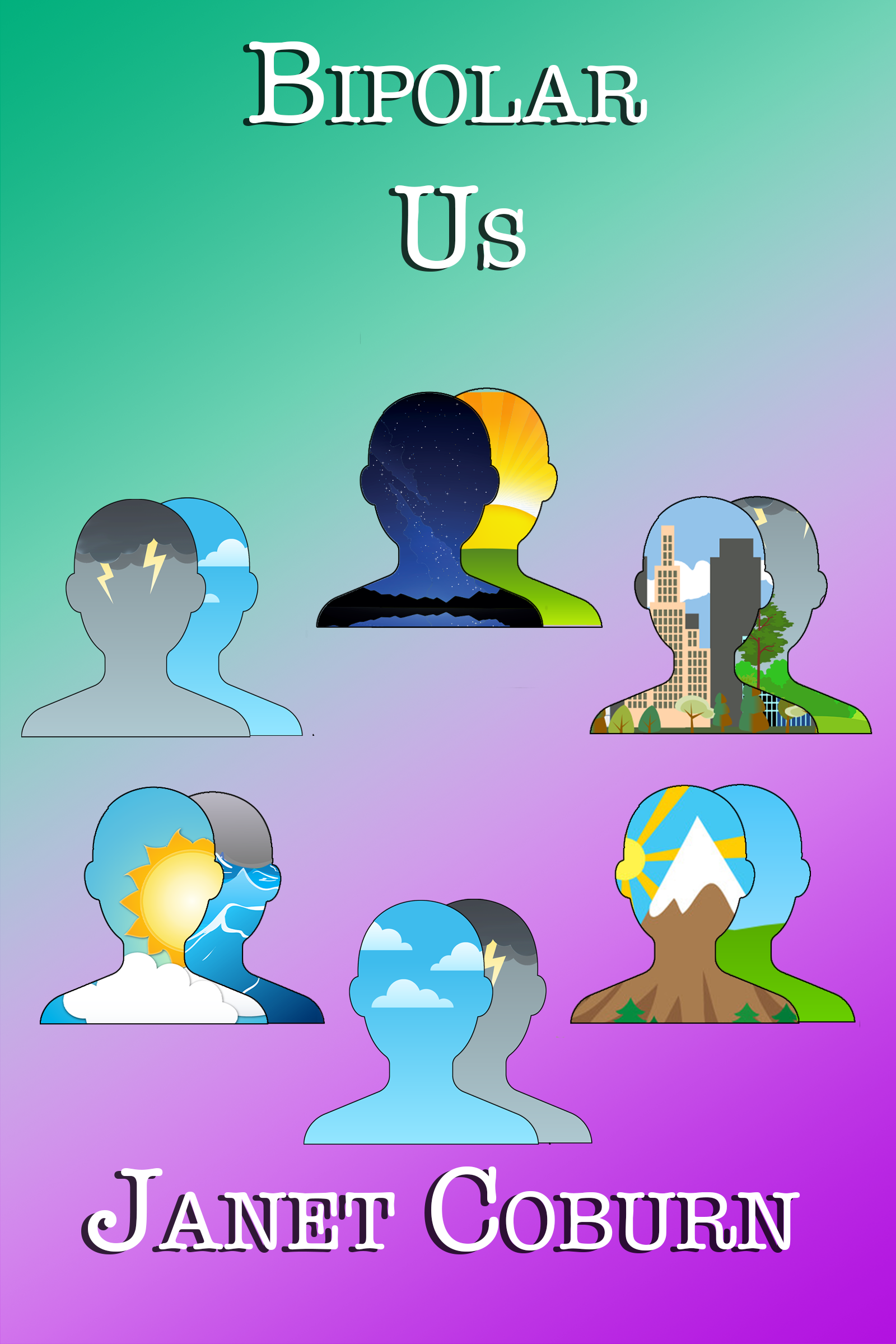
One of my decisions is to keep my first book, Bipolar Me, alive. It was went out of print this month, but I will be self-publishing it on Amazon. I won’t let the second book, Bipolar Us, die either. Right now I am exploring ways to make sure it will be published as a paperback as well as an ebook. It’s better than my first book, I think, and I want it to be available to people that might find help or hope in it.

To celebrate this decision, I have ordered a kintsugi-style bowl. (I can’t afford the real thing.) On the bottom will be written “My Story Isn’t Over,” which is also the motto that informs my semicolon tattoo. I will keep it near my desk, where I can see it often and let it remind me that beauty can come from the broken after all.

I also hope that the rebuild on our house, which was destroyed by a tornado, will make it more beautiful at the broken places. (The only thing that remained was the basement, so it’s really going to be all new.) At last I will have a home that I have had a hand in designing, choosing materials, and decorating. No more mismatched, hand-me-down furniture. No more rental-neutral walls and carpet. I can create my study as a place of comfort as well as work, one where my self-care items are readily available and the colors and decorations reflect a calm, steady mood. Again, it is a chance to rebuild something and make it better.

Most of all, though, I need to keep working on me. There are still cracks and breaks in my psyche that need to be repaired. It will take continued hard work and loving support rather than gold dust and resin, but I hope I can eventually convert my troubled life into a work of reclaimed art.


On Stigma Fighting and Political Advocacy

Lately, I’ve noticed a trend in mental health circles. It’s a question of philosophy on some levels. What should we, as people concerned about mental health, mental illness, and society, be doing with our time and energy?

The two choices boil down to fighting stigma and political advocacy. They each have their motivation and their adherents.

The stigma fighters (including the organization Stigma Fighters) maintain that the way to make things better for the mentally ill is to erase the stigma that surrounds mental illness (particularly serious mental illness, or SMI). And there’s no doubt that there is stigma. The mentally ill are feared and blamed for violence in society. They do not get jobs or lose jobs because of their conditions. They hesitate to enter treatment for fear that friends or family will find out.

While mental illness is no longer the “secret family shame” that led to family members being “put away quietly,” kept locked in the attic, and never mentioned, many families do still find that mental illness – in themselves or their loved ones – is something to hide. Something not to discuss in polite company. Something to ignore the existence of.

People who fight stigma usually do so with information and education. Celebrities – even the British royal family – speak openly about conditions such as bipolar disorder, depression, anxiety, eating disorders, OCD, and other of the more common diagnoses. You undoubtedly have heard the PSAs on television that explain that mental health is important and that seeking treatment is not something to be ashamed of.

Are the stigma fighters making a dent in the stigma? It’s hard to say. At least they seem to have opened a conversation about mental health, mental illness, treatments including medications, mental illness among men, suicide, and other problems we face.

Still, the political advocates say, all that stigma fighting has done nothing to increase the number of psychiatric beds available or the number of psychologists caring for rural populations, the homeless, or people with schizophrenia and other psychoses that are foreign to most people’s experience. What we need are people who will bring up these and other issues with legislators and influencers at the local, state, and national levels; who will present proposals that may do some good in increasing access and funding; and who will advocate for improvements such as training for first responders in how to address mental health concerns.

And it’s true. All these things – and more – are needed. We may debate the wisdom of involuntary commitment or compulsory medication, but they are certainly topics that need to be explored if a consensus is ever to be reached. Most people in the mental health community admit that the system is broken and needs to be fixed – or possibly re-thought from the ground up.

Where do I stand on this debate? I feel that one or the other is not enough. It’s not an either/or situation. It seems to me that unless there is some real progress made in fighting stigma, the voting public and the legislators will not understand the realities of mental illness, the need for change, and what needs to be done to fix the system. Unless we engage in spreading information and changing people’s minds about what being mentally ill means, support for policy changes will be thin on the ground. And unless we come up with some solutions that people understand and support, nothing will change.

Myself, I work mostly in the stigma fighting camp. I don’t have the political acumen, contacts, and energy that real activism takes. I know it is vitally important, but it is not something I can do very much or very well.

What I can do, through my blogs and my books, is help with the information and education, spreading the word about mental health and mental illness, and helping alleviate the stigma that accompanies them. I also intend to start looking for opportunities in my writing to comment on the larger societal issues and proposed solutions and help with education about them as well.

To solve the problems surrounding mental illness, we must all do what we can, and what we do best.

Asking for What You Need

I saw a post on a bipolar Facebook page that asked what coping mechanisms people used. There were the usual responses about self-care, which is certainly a fine coping mechanism. But it’s far from the only one.

I’ve learned any number of coping mechanisms over my years in psychotherapy. There’s “looking at how far I’ve come.” There’s “leaving the room when my anxiety gets too bad.” And there’s always one of my favorites: “petting the cat.”

But the answer I put down was “asking for what I need.”

It’s a good coping mechanism because no one can read minds. No one else knows what I need. And, short of them guessing and hoping to hit on the right thing, the only thing I can really do is ask.

I can ask my therapist whether we can work on my anxiety today. I can ask my friend to check in on me daily for a while. I can ask my husband for a hug, or alone time, or some distraction.

Of course, I don’t always know what it is that I need at any given time. At times like that, I can simply ask for things that might help or have helped in the past, like the aforementioned hug or alone time. My husband has been with me for so long and is so familiar with my bipolar disorder that he knows a number of things that are likely to help, and he can suggest them. If all else fails, he suggests I go to bed, or read, or listen to music, all things which can calm or center me. Sometimes he simply puts on my favorite movie, to help draw me out.

Closely tied to the mechanism of asking for what I need is the technique of negotiation. I may know what I want or need, but the other person may not be capable of providing it, or at least not right then. If a friend can’t take my phone call, I can suggest an alternative: Call me after 10:30 or sometime tomorrow. If I need distraction and my husband has to go to work, he can suggest that we go out to lunch the next day.

We’ve developed a shorthand for such situations. When the only thing I can do is say, “help,” he responds with, “help how?” If I can then come up with a suggestion, I do. A lot of the time he is able to provide what I need. But sometimes he just isn’t. Maybe he isn’t able to get me out of the house for lunch. So instead I say, “I need comfort food.” He usually says, “You can get that.” Or he may respond with what it is that he can do: “There’s cheese and crackers here. Will that do?”

Asking for help isn’t easy, and Lord knows negotiating for what you need isn’t either. Both take lots of practice. And there is always the possibility that another person simply cannot supply what you need. That’s where self-care comes in. I know down deep that a nap, or comfort food, or music may help me, and if no one else can provide them, I can usually do it myself.

Receiving help may not be easy, either. Asking for what you need can make you feel, well, needy. And receiving help from someone else may make you feel guilty or unworthy. But the fact is that you – all of us – need help at times and that learning how to ask for and accept help is a valuable skill. And a totally valid coping mechanism.

Does Immorality Cause Mental Illness?

Aaand…we have a new contender for what causes mental illness.  According to U.S. Attorney General William Barr, it’s a breakdown in Judeo-Christian morality. In fact, he blames a lot of woes on what he calls “secularism”:

Along with the wreckage of the family, we are seeing record levels of depression and mental illness, dispirited young people, soaring suicide rates, increasing numbers of angry and alienated young males, an increase in senseless violence and a deadly drug epidemic.”

Let’s look at that for a minute. Immorality causes wrecked families, depression and mental illness, suicide, violence, and drug epidemics. Lack of religion – or at least the proper Judeo-Christian one – brings on everything but the zombie apocalypse.

Steve Benen, writing for MSNBC, points out the flaws:

For one thing, it’s factually wrong. There are complex factors that contribute to problems such as drug abuse, gun violence, mental illness, and suicide, but to assume these issues would disappear in a more religious society is absurd. There are plenty of Western societies, for example, that are far more secular than the United States, and many of them are in better positions on these same social ills.

http://www.msnbc.com/rachel-maddow-show/ag-barr-blames-moral-upheaval-conspiring-us-secularists

Plus, Barr’s theory would have you believe that in the most religious places in the United States, such ills should not occur. Sadly, we have learned that no community is exempt from these tragedies. And it completely ignores the fact that many mass shooters and bombers cite the Bible as justification for their horrendous crimes.

Ah, but you say, those crimes are attributable to mental illness, which, as Barr tells us, is a product of the breakdown of moral values. It’s a simple equation to him: Immorality leads to mental illness leads to an increase in senseless violence. (As opposed to sensible violence, I suppose.)

And that’s where this slippery slope gets dangerous for those of us who have mental illnesses. Not only are we stigmatized by being blamed for mass violence, we are stigmatized by “ignoring” the cure for our disorders – adherence to the right religious values. (I think it’s fair to assume that Buddhist, Islamic, Baha’i, or Shinto religious values don’t count. In fact, to some religious people, such beliefs are tantamount to mental illness themselves.)

If mental illnesses can be cured by inculcating appropriate religious values, why are we spending so much money on psychologists and psychiatrists, medications, and hospital beds? According to Barr’s theory, that money would be better spent on religious indoctrination, especially for young people. There are many, especially in the halls of power, who agree with him.

You’d think that with the crumbling of the “pray away the gay” philosophy, these people would be hesitant to attempt changing someone’s internal constitution and thought processes simply through the exercise of religion.

Make no mistake, it’s an exercise that is doomed to failure. God does not miraculously grant the right balance of neurotransmitters to the faithful. He does not prevent or cure schizophrenia in those who pray to Him. He does not see to it that tendencies to mental disorders are not handed down through the generations in godly families. Mental illness can strike anyone and does afflict one in four people at some time in their lives. Surely that 25% of people are not all secularists. Just because people with mental disorders are sometimes shunned by faith communities (and that does happen) doesn’t mean that they aren’t religious enough.

Morality is not just for the mentally healthy and mental illness is not just for the immoral. If we let this absurd statement go unchallenged, we are setting ourselves up for more stigma, less funding, less freedom, less choice, and less dignity. If we make sure to oppose this dangerous notion whenever we encounter it, we are doing ourselves, our families and friends, and our nation a service. Educating people about mental illness may begin at home, but it needs to spread to society at large or we will be bombarded by more of these ridiculous, dangerous theories.

Black-and-White Thinking


My husband used to have only two categories when he reacted to something: It was fabulous or it was wrecked. There was nothing in between. If he cooked a dinner and I said it was “okay,” he heard “wrecked.” If I said “good,” he heard “wrecked.” Only the most superlative of adjectives would convince him that I appreciated his efforts.

Of course, this was a holdover from his childhood, one called “black-and-white thinking” or “all-or-nothing” thinking. And what that is, is a kind of cognitive distortion, a skewed way of thinking that does not represent reality,

Cogbtherapy.com has this to say about the subject:

A cognitive distortion is an automatic way of repeatedly interpreting a situation that causes us to not consider other ways of thinking about it. When we over-rely on cognitive distortions, we usually interpret events in such a way that fuels emotions such as anxiety, depression, or anger. All-or-nothing thinking is one such distortion.

All-or-nothing thinking refers to thinking in extremes. You are either a success or a failure. Your performance was totally good or totally bad. If you are not perfect, then you are a failure. This binary way of thinking does not account for shades of gray, and can be responsible for a great deal of negative evaluations of yourself and others.

http://cogbtherapy.com/cbt-blog/cognitive-distortions-all-or-nothing-thinking

Indeed, my husband was prone to depression and thinking poorly of himself. He would never be as good as his brother, as successful as his father and mother, as artistic or musical or smart as he wanted to be.

Fortunately, he eventually got over this. It’s really tiring to keep thinking of better and better ways to describe dinner. Now I can give accurate feedback, like “satisfying,” or “good enough.” Not everything has to be fantastic.

I must admit that I share in this kind of cognitive distortion. I think it may go with bipolar disorder, which, after all, includes swings from one end of the emotional spectrum to the other. But some people attribute it to my having been a Girl Scout or making straight As in school. What I remember is learning it from my parents. When a cousin, for example, screwed up, they would say with a tone of disgust, “Well, I guess some people have to learn from their mistakes.” What I heard was that some people, the good, smart people, didn’t have to learn from their mistakes because they didn’t make mistakes. It was a perfect set-up for making a little girl try to be perfect.

Later in life, I found some flaws in that line of thought. My first experience with a grade of D came in high school in Enriched Geometry. The “Enriched” part was having to do three-column proofs instead of two-column proofs, with the third column being the name or number of the theorem of corollary you were using. I thought that was stupid. You could always look up the theorem or corollary if you really needed to know it. As long as you knew how it worked, I thought, that should be enough. So I didn’t memorize them and I got a D. (Many years later, I was able to hang five pictures, four in a square and one in the middle, which proved to me that I did indeed know enough geometry to get by, theorems and corollaries or not).

I also learned that, according to my parents, perfection was only for me, not for other people. When some work friends of mine started living together, I expected my parents to freak at the sinfulness. They didn’t. But when I did the same thing, they refused even to enter the house.

I know that Cognitive Behavioral Therapy specializes in counteracting distorted ways of thinking, and maybe it would have helped me (or my husband) get over it more quickly or efficiently. But the lesson I eventually learned was that I could be not-perfect and it wouldn’t destroy me. I hung those pictures. I moved on from that relationship and my parents accepted me. I did end up in a job (editing) that requires one to be as nearly perfect as one can regarding as many details as possible, and I suppose that’s an example of turning a negative into a positive.

But if – that is, when – I make a mistake or miss perfection by however wide a margin, my thinking isn’t so disordered that I assume I’m a failure. Black-and-white has been replaced by all manner of shades of gray. That’s really where everyone lives.

Why People Don’t Believe in Mental Illness

Some people just don’t believe that mental illness exists. There are reasons for this. Not good reasons, but reasons.

I recently saw a meme that blamed mental illness on capitalism. There was no mental illness per se, only the toxic effects of a culture that compels us to put up with overwork and underpay, exploitation and inescapable drudgery. The stress of dealing with these conditions is what causes us – an increasing number of sufferers – to feel depression and anxiety.

There may be something to this, sort of. Environmental conditions that lead to stress and anxiety can certainly make mental illness worse, particularly those like bipolar disorder and other mood disorders. And, while capitalism may or may not be the cause, the majority of us are working harder with less to show for it than ever before. But the majority of us are not mentally ill.

My mother may have bought into this philosophy. She knew I had mental troubles, but she thought that if only I got a better job, I would be all better. Admittedly, finding a better-paying job that was less stressful would improve anyone’s mood, but it can do little or nothing for a clinical mood disorder.

Then there are people who seem to “believe” in mental illness, but really don’t. These are the people who acknowledge that mental illness exists, but think that it is a “choice” – that any person can choose happiness, health, or sanity merely by an effort of will. Those of us who can’t “pull ourselves up by our bootstraps” are simply not trying hard enough. The “choose happiness” people don’t seem to get that for most of us, our only choice is whether to get help from someone else – a doctor who prescribes a psychotropic, a therapist or counselor who listens or advises, or even a friend who reaches out.

And, of course, there are people who acknowledge mental illness, but think it is a good thing, the fount of creative brilliance. They point to Vincent van Gogh and his amazing art. They forget about the suffering, the self-harm, and the suicide.

But, romanticizing mental illness and even revering it do nothing to help people who actually have psychiatric conditions. It’s true that some people with mental disorders – Sylvia Plath and Dale Chihuly, to name two in addition to van Gogh – have created works of great art, beauty, and significance. But it’s certainly valid to wonder what they would have produced if they had not had the trials of mental illness to deal with. Would their work have been less inspired or more? It’s impossible to say. Personally, I believe that mental illness interferes with creativity more often than it enables it.

But the most common reason, I believe, that people don’t recognize the existence of mental illness is that it has never touched their lives, isn’t a part of their perceptions. A relative of mine once watched a talk show where women recounted dire experiences of having hysterectomies. “Those women are such liars,” my relative said. “I had a hysterectomy and it was nothing like that.” Her perception of reality – her personal experience – was extended to the whole world.

Similarly, when someone has no direct experience of mental illness, either by having a disorder themselves or by knowing someone very close to them with the disorder, the reality of mental illness itself comes into doubt. “No one I know has it, so no one does.”

Sometimes people who believe such things are capable of changing their minds, though. If a woman goes through a profound, long-lasting exogenous depression after the death of her husband, she may have more sympathy and understanding for people who have profound, long-lasting endogenous depression, or major depressive illness, as it’s more commonly known. Or a dear friend’s struggles to help a schizophrenic son may awaken her to what mental illness truly can be. Once it touches her life in some way, mental illness becomes real.

And since, according to statistics, one in four or five Americans will experience some type of mental or emotional disturbance in their lifetimes, the odds increase that people’s personal experience with mental illness will also increase accordingly.

In the meantime, those of us in the mental health community can help spread the word that mental illness does exist, that it affects the lives of millions of people, and that even people who are not directly affected need to understand how easily it can happen to someone they know.

Blaming mental illness on capitalism, overwork, or an insane world may be easy and may make us feel better by comparison, but it will do nothing to address the actual problem.

Permission to Be Depressed

Depression can be so riddled with guilt. Why am I not able to fake being okay? Why do I isolate when what I need is interaction?

Sometimes what I need is to give myself permission to be depressed. I have bipolar disorder 2, with a heavy depression component. It has overwhelmed me many times. I have fought against it, given in to it, tried to make compromises with it, tried to ignore it – almost any reaction you can imagine. Then I learned how to give myself permission to be depressed.

This is not quite the same as giving in to depression. It involves acknowledging that I am depressed and allowing myself to feel the feelings that I have. Of course, I don’t give myself permission to be permanently depressed. In a way, it’s more like giving myself permission to practice self-care and not to force myself to smile and bull my way past the depression. I recognize that I am depressed and do what I need to do to get through it. That may be staying in bed. It may be crying. It may be wallowing in sad music. These are things that I’m likely to do anyway when I’m depressed, but giving myself permission to do them is surprisingly freeing.

I used this technique probably for the first time when my husband and I went on a “barefoot” cruise vacation. It was something we both enjoyed and both want to do again someday.

But I knew from the beginning that depression might overtake me – probably would, at that time in my life – even while I was doing something enjoyable. Naturally, I didn’t want the depression to ruin the whole vacation, so I decided to give myself permission to do what I needed to do to cope with those feelings.

Most often, that involved retreating to my bunk for a nap. This enabled me to get away from other people when I was feeling overwhelmed and unable to socialize. Sure, I missed some of the onboard and shore activities, but I wouldn’t have enjoyed them anyway while in the metaphorical fog and darkness. I enjoyed what I could, then let myself not do what I didn’t feel up to doing. I didn’t try to make my husband stay with me and miss all the fun. There wasn’t anything he could do for me anyway. If the other passengers thought it was odd – and they did – they barely mentioned it to me. My husband told them I was tired. Seasickness was also a believable excuse.

In a way, having bipolar depression at that level is like having the flu. I feel bogged down and logy, inclined to cocoon, rest, and stay away from other people. I realize this is not always possible, but if it is, I can allow myself to do it. Fortunately, this spell of depression wasn’t so bad that it completely incapacitated me as it has at other times in my life. I was still able to feel enjoyment at some times, though not at others.

At other times, I’ve had to give myself permission to have anxiety. If a situation makes me anxious, I acknowledge that I am nervous, and do what I need to do. I can’t “think away” my anxiety, but sometimes I can get myself out of the situation at least temporarily. I do not have to sit and be anxious while people around me argue or shout at each other, one of my anxiety triggers. When I recognize how I’m feeling (which takes practice) and give myself permission to feel the way I feel, I’m better able to come up with coping mechanisms, such as leaving the room to get some fresh air or making myself a cup of tea.

You may notice that when I give myself permission to be depressed or anxious, part of my solution involves avoiding other people. That’s sometimes a hard thing to do. Isolation can certainly make depression worse, but it can sometimes also be necessary if pushing through, trying to smile, mingle, and socialize will make the depression worse in the end. And I have learned that if I try to do that, the depression comes along with me. Once a friend told me that it was like having a separate person with me, a person called Misery. Better to give myself permission to stay home and give myself some self-care.

What I can’t do is give myself permission to stay depressed or anxious. Giving myself permission is a very limited-time offer. It doesn’t work for those really lingering, midnight-dark depressions that last for weeks or months on end. Those, I have to fight. And while I’m depressed, I don’t give up on meds or therapy. Those are necessary to alleviate the depression instead of resigning myself to feeling it.

In Remission

My bipolar disorder is in remission. I know I’m not cured. There is currently no cure for bipolar. But I’ve reached a point where I’m stable enough that I don’t expect a crash or a buzz to descend on me at just any old time.

I still get moods, of course. They’re just not severe or long-lasting enough to be symptomatic. Yesterday, for example, I spent several hours wrestling with phone trees and people who wouldn’t switch me to a supervisor when all I was trying to do was straighten out a couple of bills that contained errors. Afterwards, I felt frustrated, cranky, and a bit sad. But those were normal emotions, based on what I had just gone through. After a nap I felt better, and dinner blew out the remaining cobwebs. Napping is definitely better than staying in bed the entire next day.

Of course, I didn’t achieve remission alone. It took years of doctor visits, therapy, and medications to reach this state. I am particularly grateful for mood levelers. For me, they actually do what they’re intended to do. They keep my moods within an acceptable range, or at least one that’s acceptable to me.

Too many people fear mood levelers, I think. Level moods sound boring – as though there are no variations, just a blank, straight line. That simply isn’t so. Mood levelers have pushed the spikes that used to go wild in either direction to a less extreme range. If you think of mood as an EEG, mood levelers prevent the lines from going off the charts, settling them to fluctuate within a middle range that most non-bipolar people have naturally.

I think the term “mood leveler” scares some people. They seem to think that such a drug would make them perfectly level, robotic, unchanging. They fear that any spark of personality or creativity would be lost.

That’s not the case. Instead, with level moods – and especially for depression-prone bipolars – a person has much more ability to explore his or her creative side.  I know that’s true for me. Now that my moods are stable and level, I’m able to get more writing done, but also to tell whether the work is good or needs serious revising before I post it.

My doctor recently increased the dosage of one of my medications, a mood leveler, because I was having trouble with hypomania that wouldn’t let me sleep. And it worked. I am now getting seven to eight hours of sleep each night and have enough energy to at least face the day, if not always to conquer it.

Don’t think mine has been a case of spontaneous remission. I’m not sure I believe that’s possible with bipolar disorder. It’s taken a lot of years and a lot of work to get to where I am today. For example, it took literally years for assorted doctors and me to find a combination of chemicals, a cocktail of psychotropics, that would work for me. And during all that time, it was as if I was not medicated at all. Only the right combo of drugs and dosages would unlock my brain and level my moods.

So, here I am, in remission – and I love it. My moods aren’t blunted, they’re leveled. I am not as fearful now that my extreme moods may return and wreak havoc on my life. Oh, I still have some symptoms and side effects that remind me I’m not cured. But now I know that remission is possible, with work, with luck, and with the right mood levelers.

Nothing to See Here

Many people with SMI are afraid that it shows, that other people can see automatically that there is something wrong with them. They feel as though they stand out in a crowd. Everyone notices them, and probably talks about them.

I have the opposite problem. My bipolar depression makes me feel invisible. It’s not just that SMI is often an invisible illness. It’s that I myself seem to become invisible. I think of myself as a particularly ineffectual ghost, frightening no one and unable to affect anything in my environment. Some people call this dissociation.

At first, I made the best of it. I’m especially invisible when I’m out in public and reading a book. So I found that if I was at a business convention and wanted to remain invisible, my best strategy was to sit alone at a table and read a book. Only once did a man approach me while I was so engaged. No one else ever did.

Apparently, though, I don’t need a book to disappear. Maybe it’s anxiety that makes me keep quiet when people around me are discussing something interesting. Maybe it’s my instinct not to be noticed so I won’t be subject to derision or worse. Either way, I can’t seem to catch anyone’s eye or add my bit to the conversation. I blend into the crowd, even if it’s only a crowd of three or four.

It’s almost like there’s some aura around me when I’m out in public that says, “Don’t notice me,” like Harry Potter’s cloak of invisibility. I do not use my invisibility for pranks or mischief, though. I don’t use it intentionally at all (except for using a book, as I mentioned).

Why do I think this invisibility is part and parcel of my bipolar disorder? It could be imposter syndrome at work. I feel so unworthy that I don’t want anyone to see me for what I am. Or it might be the anxiety component of my hypomania that keeps me from presenting myself more assertively. Or maybe people can see that I have a troubled mind and simply look away.

I am slowly learning to make myself seen and heard. I find that calling people by name makes it easier for them to see me. It seems to signal them that there’s another person in the vicinity. And once I even set up an occasion where I would be the center of attention, speaking about my bipolar disorder at a signing for my book.

I also use my writing to make myself “visible.” This blog (and my other one, http://butidigress.blog) and my books give me a presence, though not a physical one, even at a distance. When I see likes and follows and sales, I know that someone has noticed me, or at least discovered that I exist.

I sometimes think that going out in public more – practicing being visible – might help. But actually, that’s when I feel the most overlooked, the most unseen and unheard. The most lost.

Perhaps what I need is to go out and meet a specific person, someone who expects to see me. Then I could be guaranteed of one person who would see me.

But it has been suggested to me that I may not want to be seen at all – that I would prefer to fade into the background, not put myself forward and disappear from the stresses of being seen. Perhaps that is true, or at least once was.

Now I think I would prefer to be seen, flaws and all. If someone cannot tolerate the sight of me, a mentally disordered person, or glances over me as if I did not exist, I think I shall insist on being seen. I will use my voice, my (admittedly glitchy) brain, and my human physicality to assert that I exist, that I matter, that I have something to say.

And in social situations I will try to assert myself (if politely) to join the public discourse and add my two cents, whether the subject is mental illness or the latest bestseller.

I exist. I deserve to be seen. I will not remain invisible.