Bipolar 2 From Inside and Out

Posts tagged ‘depression’

Dear Bipolar Disorder

Dear Bipolar Disorder,

We’ve had a relationship for decades now, though it’s one I never chose. To tell the truth, I can’t even remember when we met. Gradually, you just moved in. So I guess we’re stuck as roommates for the rest of my life. You can’t break your lease and I can’t move out. That being said, there are some things I need to talk to you about. We’ve never been friends. We never will be. I have some issues with you; there are compromises we need to make.

I’ll take my meds faithfully if you back off when I do. By that I mean no major depressions of longer than a week and no panic attacks while I’m trying to sleep.

I’ll pay for those meds, as long as you settle down enough to let me keep working and earning money and paying for meds. Just leave me enough concentration to do that and to read, and I’ll be satisfied.

I won’t go to Chuck E. Cheese or Cici’s Pizza or shopping at a mall anytime after Thanksgiving if you will let me go out at other times to other places without getting your figurative undies in a bundle.

I will try to minimize the stress in my life (see above) if you will cut out the physical symptoms when there is stress anyway. You know the ones I’m talking about. Ick. Just ick. I hate cleaning up after you.

And can we talk about spoons? I know you only give me a limited number per day, but it would sure help if I knew what that number was. Is there any way you can be more consistent? If I have to borrow spoons from the next day or force myself to attend to some vital call or lengthy errand despite not having spoons, I promise to spend the next day in bed, just to satisfy you.

Please, if you can, give me some non-anxiety-laden hypomania so that I can go out and enjoy things with my husband and friends. If you agree to this, I will occasionally let you buy things off the Internet, for $20 or less.

And while we’re on the subject of enjoyment, I would appreciate it if you would give me back my libido. So would my husband. I know you don’t take orders from him, but it would be esteemed a favor.

Don’t even talk to me about hurting myself. I won’t listen. No matter how loud you get.

Don’t get between me and my friends. You’ve done that too often already and I just can’t put up with it anymore.

No more screwing with my memories. I’ve already lost enough. You can keep the ones of everything stupid I’ve ever done, but I will not watch when you push play on my internal video playback.

Now that I’ve finally got some self-esteem back, you just keep your claws off it. I need it and you don’t.

No dogs allowed. Especially large Black Dogs.

Oh, and tell your buddy Depression to leave my husband alone.

No love,

Me

The Fire and the Window

fire orange emergency burning

When Anthony Bourdain died by suicide and I told someone the news, he asked me, “Why?”

I was taken aback. “What do you mean, ‘why’?” I replied.

“You know,” he said. “Did he have money trouble? Break up with his girlfriend? Have some disease?”

That’s a common reaction to suicide and it’s uninformed. Real-life stressors can contribute to suicide, but they are almost never the whole story. People die by suicide when the pain of living seems greater than the pain of dying.

Gregory House, the misanthropic, genius title character of House, M.D., once said, “Living in misery sucks marginally less than dying in it.” People who kill themselves don’t believe that. They believe the opposite.

The best metaphor I ever heard for suicide was the plight of people in the World Trade Center’s upper floors on 9/11. There were the flames. There was the window. And that was the choice. Suicide happens when a person sees only two alternatives and both are equally horrible, or nearly so.

The bullied child does not take her own life because she was bullied. She was in pain, for a variety of reasons that included bullying. It was a factor, but it wasn’t the reason. She was hurt. She was isolated. She was depressed. She didn’t believe that things would improve. She wanted the pain to stop. She believed she faced the choice between the fire and the window.

The politician who dies by suicide in the face of a major scandal does not kill himself because of the potential scandal. He dies because he sees his choices limited to shame, humiliation, despair, and ridicule. He believes that what happens to him will be as bad as dying. He is caught between what he sees as the fire and the window.

Mental illness can make it difficult to see that there are other choices. The distortions of thinking associated with serious mental illness can make us see only the fire and the window.

The one time that suicidal ideation got the better of me and I was close to making the choice, my thinking was just that twisted. I was faced with a choice that seemed to me would ruin someone I loved. I thought that I could not live with either choice – to ignore the behavior or to turn him in. One was the fire and the other, the window.

My thinking, of course, was severely distorted by my mental disorder. The thing that I thought might rain destruction on the other person was much smaller than I believed. There were ways out of the dilemma other than dropping a dime or killing myself. If we continue the metaphor, the fire was not that big, or that implacable, or that inevitable, but I couldn’t see that. In the end, I hung on long enough for my thinking to clear and for me to see other options.

I don’t actually know what was going on in the minds of the souls who were trapped in the Twin Towers. I don’t mean to lessen the horror of their deaths or wound their families by speaking of suicide this way. The reality of their choice is so far distant from the choices that other people who consider suicide face.

But that’s kind of the point. People who die by suicide don’t see any other way out. If they seem to be responding to what most people see as survivable hurts or solvable problems, people say they can’t understand how someone that rich, that successful, that beloved, that full of potential could have not seen that help was only a reach away.

The person who dies by suicide doesn’t see the hand reaching out. Only the fire and the window.

If you are considering suicide, call the Suicide and Crisis Lifeline: 988.

Teens and Social Media: A Contrary Opinion

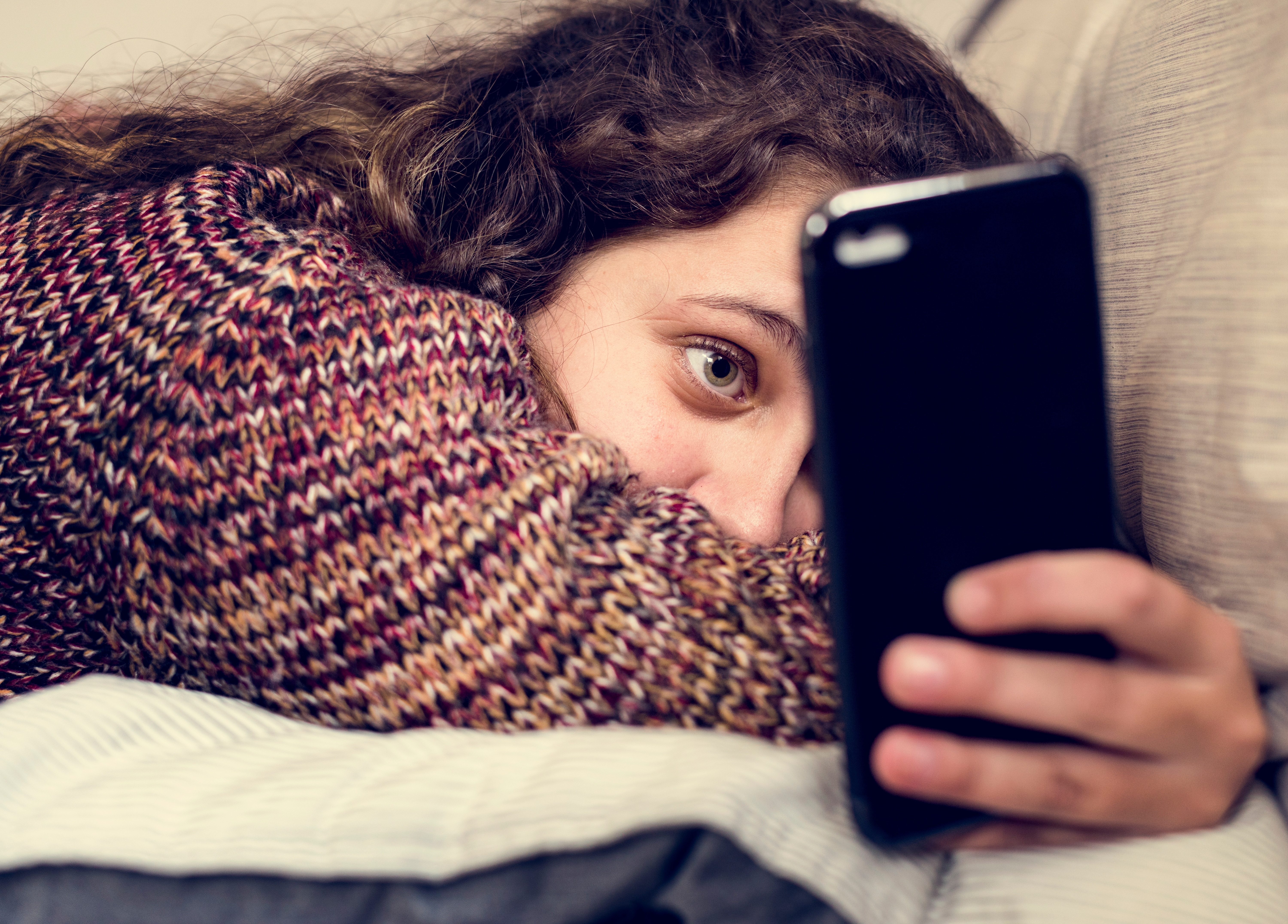
Vivek Murthy, the US Surgeon General, just released an advisory on the dangers to teen mental health that social media poses.

CNN reports, “While noting some benefits of the online platforms, the report warns of increasing concern and ‘ample indicators’ that social media can have ‘a profound risk of harm to the mental health and well-being of children and adolescents.’ The 19-page report acknowledges that further research is needed and that online youth well-being is shaped by many complex factors, including screen time, content, and countless strengths and vulnerabilities of individual users.'”

There have been warnings about this crisis for over a decade. According to NPR, psychologist Jean Twenge looked at mental health metrics around 2012 and was shocked: “Rates of depression, anxiety, and loneliness were rising. And [Twenge] had a hypothesis for the cause: smartphones and all the social media that comes along with them. ‘Smartphones were used by the majority of Americans around 2012, and that’s the same time loneliness increases. That’s very suspicious,’ she wrote in The Atlantic in 2017.”

Well, I’m not so sure. Twenge also said that “22% of 10th-grade girls spend seven or more hours a day on social media.” That does sound like an alarming statistic, but it also means that over three-quarters of 10th-grade girls didn’t.

Other stats are similarly suspect. For example, “Teen social media use has skyrocketed in recent years. The rise in tech use coincides with rising rates of anxiety, depression, and loneliness.” This may be true, but it’s a far cry from saying that the rise in social media use causes the rising rates of mental distress. Throughout the years, everything from comic books to rock and roll to video games has been said to cause ills from teen violence to drug use to sexual deviancy. But correlation – the fact that two things happened around the same time – does not equal causation – that the one circumstance causes the other.

Similarly, “A study — considered one of the best to date on the subject — found an uptick in mental health issues after Facebook arrived on college campuses.” Even though it was thought to be one of the best, there were flaws in it (only lasting four weeks, for example), and once again, it suffers from the correlation-causation problem.

Now, I’m not arguing that social media isn’t at all related to adverse psychological outcomes. I’m just saying that the talk about them may not be incontrovertible evidence.

Certainly, social media has bad effects on teens – in particular, in cases of cyberstalking and cyberbullying. Cyberbullying has even been blamed in cases of teen suicide, though it seems likely that mental issues of existing depression, isolation, and low self-esteem are involved as well. I’m not going to say there’s anything even remotely questionable there. A lonely, isolated, depressed teen can be preyed upon by a bully, either same-age or older, taking advantage of their insecurities and desire for connection. The fact that this can end in tragedy is no surprise.

The technology of social media makes it easier for bullies to spread their messages further and more quickly than was possible in previous days. The potentially worldwide audience for hate and degradation makes the behavior even more devastating. But, while the technology makes the problem worse, the underlying cause is still bullying. Current efforts at reducing bullying have been largely ineffective. I don’t see how reducing cyberbullying will be any more successful.

Still, most of the objections to social media seem to focus on time spent and “inappropriate content.” And when they say “time spent,” they aren’t talking about the positive aspect of social media on education and homework. We learned during the COVID-19 pandemic about how social media can be used to further education. Zoom meetings for project work, Google searches for research topics, YouTube for instructional videos, and more are appropriate uses of social media.

As to “inappropriate content,” that’s always been available, from magazines to movies. True, there is a greater variety of content with greater disgustingness available. But just as it was never possible to shelter teens from magazines and movies, shutting off inappropriate content is not feasible. Nor can parents reliably monitor their teens’ social media use and the content they interact with. Adults are attached to their own screens, whether for business, shopping, entertainment, or accessing adult content themselves – not to mention all the other tasks they perform. They can’t be looking over teens’ shoulders all the time. Maybe it’s possible to take away a younger child’s smartphone at bedtime, but not teens’.

Some of the objectionable content doesn’t relate to sex, either – or at least not directly. Teen girls are hammered with content that encourages them to be thinner, more compliant with unrealistic adult standards of beauty, and ways of molding themselves into those images. This does promote negative self-images of teen girls’ reality and expectations, leading to lower self-esteem and, potentially, depression. Again, though, short of parents monitoring teen social media use, there’s virtually no way to stop this. Parents have no control over the messages that are coming in and little over how much gets through to teens.

And while the Surgeon General’s report makes some mention of the good aspects of social media, the potential for social media to foster beneficial connections is undeniable – another lesson we should have learned from the pandemic. Teens can keep in touch with friends from around the world, interact with relatives in other states, and attend virtual meetings and events. And if they use that personal connection time to engage in teen talk and trivia with their friends, that’s been true of teens since time immemorial. Think back on how many current adults spent hours talking on their low-tech phones after school with their friends.

So what are the solutions? There aren’t very many, and they aren’t very likely. Some potential (partial) remedies can be tried in schools – more anti-bullying education, and more tech education that focuses on ethics and responsibility. But, of course, those would take time away from the many other educational imperatives that schools have been made responsible for.

The other potential solutions are even less likely. There’s no way to stop content producers from producing objectionable content – not just porn and shady dating sites, but the many messages that teens get about their appearance, dangerous behavior, and other matters of questionable good and benefit.

So, are the warnings justified? Probably, yes. Teens are not just impressionable. Their brains are still pliable and forming. The content they see and hear through the internet does not take that into account. Parents can’t effectively monitor teens’ online behavior, and content producers won’t change what they put out – it’s too profitable.

Alerting parents to the dangers is all well and wonderful, but pointing out a problem with no solutions isn’t all that helpful, really. Here’s one story for parents about what might help: https://www.npr.org/sections/health-shots/2023/05/17/1176452284/teens-social-media-phone-habit?utm_source=npr_newsletter&utm_medium=email&utm_content=20230528&utm_term=8496137&utm_campaign=news&utm_id=57068906&orgid=726&utm_att1=

Emotional Numbers

What’s the relationship between mood and emotions? How is the mind involved? Is it even possible to sort them out?

These days, people talk a lot about one’s Emotional Quotient, or EQ, also known as emotional intelligence, or EI. EQ is defined as “the capacity to be aware of, control, and express one’s emotions, and to handle interpersonal relationships judiciously and empathetically.” Emotions are “a natural instinctive state of mind deriving from one’s circumstances, mood, or relationships with others.” Mood is “a temporary state of mind or feeling.” Obviously, the definitions overlap somewhat.

All of these terms are used by the general public. EQ is the currently popular term. You can find any number of “tests” online that claim to determine your EQ. Often these are phrased in terms of your “personality” and may refer to enneagrams or other psychological theories. Other searches revert back to showing you your IQ, even if you were looking for EQ tests. Many of them charge money to show you the results. I’m not interested enough in my EQ to spend the money, though I took one of the tests. I might ask my therapist if she has a handle on what my EQ might be. I’d be happy with a subjective evaluation such as Excellent, Good, Average, Poor, or Terrible. Anything more, like a circular chart with bright-colored segments, I believe I’ll pass.

How do EQ and IQ tests compare? Healthline says, “IQ tests measure your ability to solve problems, use logic, and grasp or communicate complex ideas. EQ tests measure your ability to recognize emotion in yourself and others, and to use that awareness to guide your decisions.” So, completely different things. A person with a high IQ could have a low EQ and vice versa.

So, what else do the experts say about the difference between moods and emotions? “Moods can last for hours while emotions last anywhere from seconds to minutes, at most.”

There I would disagree.

At least, I have an opinion. An emotion is something I feel for a defined amount of time, usually a short one. My husband and I disagree and I feel an emotion of annoyance. But it seldom lasts for mere seconds. It can dissipate within a minute or last for several hours, depending on when we talk it out.

A mood lasts longer than that. Now that I’m relatively stable, my moods may last longer than a week, but less than years. Right now, I’m having a mood of anxiety, which has lasted for nearly a month, which doesn’t show much sign of pulling back, and which I’ve had to discuss with my therapist and my psychiatrist.

Moods certainly can last for more than seconds or minutes – hours, days, weeks, or longer – but emotions can last a long time too. Have you ever held a grudge? It’s not a fleeting emotion. It’s not a mood, but it can last for potentially years – even the rest of your life. What’s left? A state of mind? A personality trait? A decision?

In my research, I did come across a piece about EQ and various disorders. It was on a site that promotes a treatment center for drug abuse, so I don’t know how accurate it is. But it said that empathy, being a major component of EQ, will change in a person with depression. They may feel more empathy for a person who is also suffering, but less for a person who isn’t. This leads to numbness, they say, which may further impair one’s mental health.

In cases of ADHD, the center says, people may have trouble reacting to emotional stimuli and engage in “inappropriate behavior” for a situation. Without treatment and EQ, they may still feel internal restlessness.

Anxiety and EQ, they say, are complicated. Low EQ may mean detachment from things that threaten safety and self-esteem. On the other hand, people with anxiety and high EQ may have a tendency to be so empathetic that they overthink and lack the ability to self-regulate.

The treatment center says it can improve EQ and thereby improve self-awareness, self-regulation, motivation, empathy, and social skills, all in the context of addiction recovery. Whether this is true – whether raising EQ is possible and promotes benefits in understanding and behavior – is, as far as I can see, far from settled. It’s also unclear to me in which order this would happen. Would treating the mental condition raise the EQ, or would raising the EQ help treat the mental condition?

I also encountered a study that said high EQ is positively associated with good general physical health. Yet another investigated the correlation among EQ, a sense of belonging, and mental health among college students. Rejection in particular was associated with poor mental health outcomes.

I’d like to see more on the subject.

Keep This Blog Alive!

Choose an amount

¤2.50
¤5.00
¤10.00

Or enter a custom amount

¤

Your contribution is appreciated.

Donate

How I’ve Experienced Group Therapy

I’m not great at group therapy. I’ve tried, but I never managed to get anything from it.

It may be familial. My father had a particularly vicious cancer, multiple myeloma, which he survived for a dozen years, a lot longer than the doctors thought he would back then.

The hospital where he was diagnosed and treated offered support groups for cancer patients. I remember one called “Make Today Count” (which I think implies a certain recognition of mortality that’s not really encouraging – but I’ve never faced it myself).

My father refused to go. Adamantly. Of course, the choice was up to him, but he chose not to get involved and made no apology for it. It wasn’t that he couldn’t accept help. He just relied on family and friends for it – people he knew and had a connection with. I’m sure that support helped him to survive as long as he did, and I can see how a group of strangers, even if they had the same or similar conditions, wouldn’t appeal to his independent streak. It wasn’t that he didn’t have a positive mental attitude, either. No one could have been more determined that he was going to persevere for as long as possible. No one could have been more confident that he would prevail. And no one could have kept doing the things he loved for as long as possible.

I have had experiences with group therapy, but they have not been successful. When I was in college and experiencing a depressive phase, I went to a group offered by the university’s health services. I was skeptical at first. One woman’s problem was that she didn’t know whether she should marry a rich guy or a poor guy who had both proposed to her. (I’m not denying that she was conflicted, but I wondered how much a mental health group could help. Maybe individual therapy could have helped her clarify her thinking, but then again, I just don’t know.)

The other thing I remember was that once the group facilitator issued us a challenge – which of us could role-play meeting another person and holding a conversation with them. My hand went up, and I performed the task easily. I had reached the point where I could fake my way through simple social encounters, so it wasn’t all that difficult. The facilitator looked impressed and slightly disbelieving. It was something I already knew how to do, so it didn’t actually help me with my problems. I don’t know if it helped anyone else either.

Another time, when I was out of college and in private therapy, my therapist was going on vacation and recommended a group I could go to while she was away. They took us through a relatively simple exercise – making a drawing of our life journey. As I recall, we used only symbols, no words.

When I finished, I burst out crying uncontrollably and didn’t know why. I don’t remember anyone there helping me process what I was feeling. Maybe I expected too much from a therapy group. Maybe they weren’t equipped to handle a meltdown. But it was a thoroughly upsetting and unhelpful experience, and I didn’t go back.

Another group I attended a few times struck me as a bit peculiar. The participants each related a difficult situation they had been in and the symptoms they experienced, then told how they would have handled it previously and how they handled it now. There were lots of quotes from a book they all carried like a bible. There was no discussion – just the facts and the quotes. (Once I offered someone a piece of gum or a mint and they pointed to me, chuckled, and said, “Dry mouth!”) Again, I didn’t find it really helpful.

At this point, I’ve pretty much given up on therapy groups. Perhaps, like my father, I am simply not a group person. I know there are those who will say that I simply haven’t found the right group. They may be right, but I have stopped looking.

There are lots of mental health groups – not therapy groups, of course – on Facebook and elsewhere on the internet. I’ve become the moderator of one (https://www.facebook.com/groups/HopeforTroubledMinds – come check it out if you want to). What founder Tony Roberts and I try to do is offer a place for people with brain illnesses to learn from and share their experiences, with a faith component. Tony, who is much more in touch with the faith-based communities than I am, provides most of that part of the content. I facilitate by curating articles from around the internet on anxiety, depression, PTSD, bipolar disorder, psychosis, and general mental health. I post memes that relate to mental health or offer encouragement – or sometimes ones designed to bring humor to the subject. And I ask questions intended to spark discussion. I hope it helps.

And I also hope that other people have had better experiences than mine. I’d love to hear about them.

Keep This Blog Alive!

Choose an amount

¤2.50
¤5.00
¤10.00

Or enter a custom amount

¤

Your contribution is appreciated.

Donate

What Is Resting Sad Face?

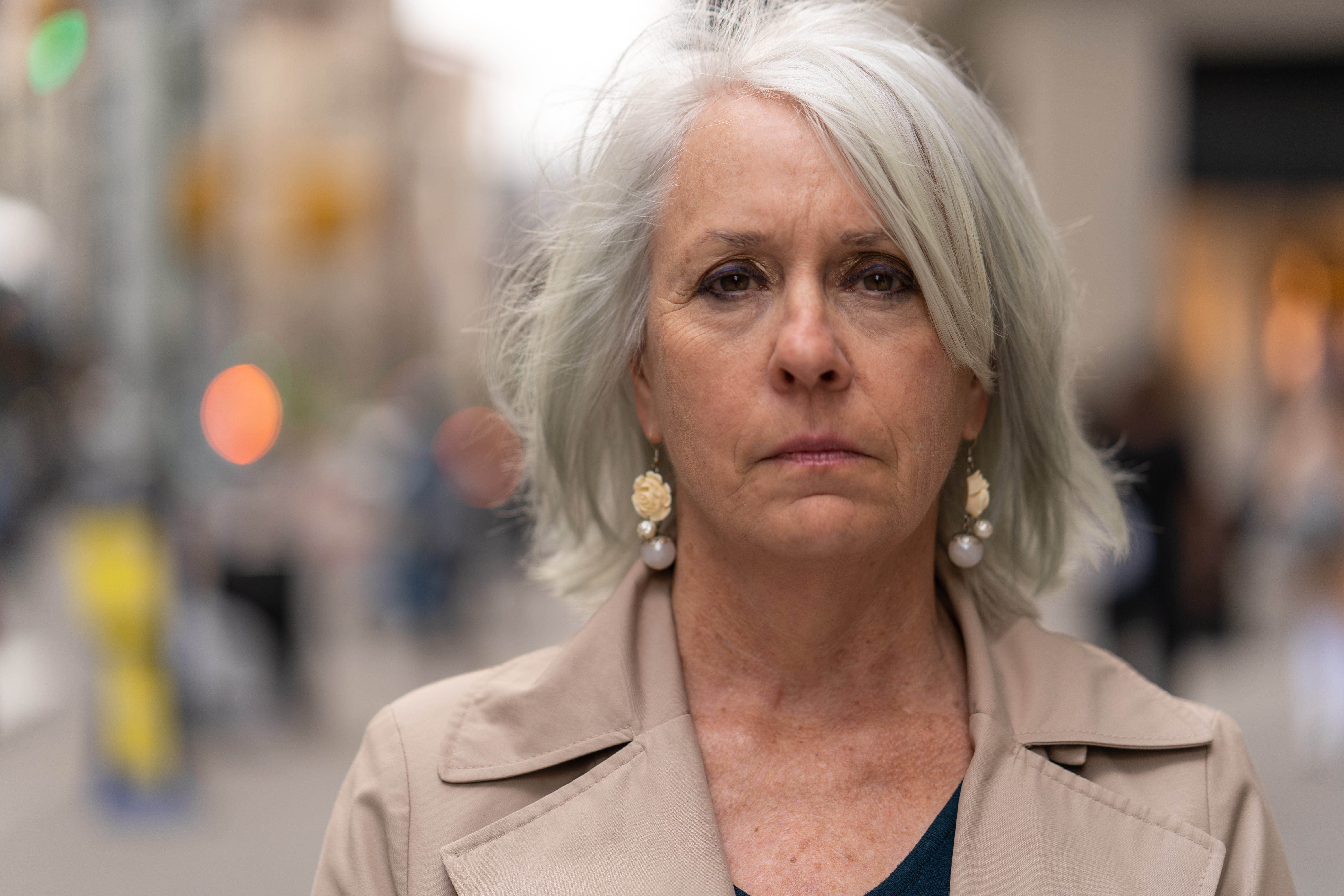
Resting bitch face is a thing, you’ve probably heard. Some people – usually women, though I suppose some men have it too – look mean when their face is still and their muscles are slack. People who see them assume that they are grumpy at the least or maybe sulky or angry – hence the name resting bitch face.

I have resting sad face. Once when I was working at a restaurant, the manager saw me sitting while on my break and told me that I should smile. I replied that I was paid to smile at the customers, not on my break. Of course, that was a bad response, though I know that women are often told to smile more (men, not so much). I probably would have gotten along better with my coworkers if I had smiled more.

But I was suffering from depression at the time, or at least the depressive phase of bipolar disorder, and was untreated. Smiling was something I had neither the inclination nor the energy to do. Sad was my natural expression.

When I didn’t have resting sad face, I had resting worried face. (A different manager asked me, “What does a girl your age have to worry about except ‘Am I pregnant?'” As it happened, that was the one thing I knew I didn’t have to worry about.) I was also suffering – again, untreated – from an anxiety disorder.

What I haven’t had is the mask of “smiling depression.” Many people with depression pretend to be happy most of the time, at least in public. You can see it dramatized in depression medication commercials when someone holds a happy face symbol in front of their face. (In real life, I’ve noted that the depression or sorrow sometimes leaks out around the eyes, though, even past the mask.)

There are two different kinds of smile – the “Duchenne” smile (named after a 19th-century scientist whose major contributions centered on mapping the muscles that control facial expression) and the “Pan Am” smile. The Duchenne smile is the sincere smile of a truly happy person. It’s easy enough to tell when someone is giving you a Duchenne smile. The muscles at the corner of their eyes crinkle, making little crows’ feet. It happens automatically when you think of a happy memory or greet a person you like a lot.

The Pan Am smile is the one where the smile does not reach the corners of the eyes. (It got its name from airline attendants who were required by their job to smile at all times, whether they were at rest or not, happy or not.) No one has resting Pan Am smile face. It’s impossible. It takes a number of facial muscles to smile and when you’re resting, you don’t use those muscles. No, the Pan Am smile takes intention.

The Pan Am smile, however, is the one a person uses when they do have smiling depression. (I used it once when, at a different job, we were all posing for individual portraits. My results were so fake-looking that the photo was never used. They didn’t even let me see it, much less anyone else.)

I’m kind of hoping that these days, I have at least resting neutral face. That sounds like the right expression for a stable person.

Keep This Blog Alive!

Choose an amount

¤2.50
¤5.00
¤10.00

Or enter a custom amount

¤

Your contribution is appreciated.

Donate

Can I Choose My Emotional Reactions?

Back before he started on his path to learning how to live with me, my husband used to refuse to say he was sorry if he hurt my feelings. “I didn’t mean to,” he would say.

“If you stepped on my toe without meaning to, you’d say you were sorry,” I replied.

“Yes, but if I stepped on your toe, I’d know I hurt you.”

“I tell you that you hurt my feelings. That’s how you know you did.”

“I can’t control your reactions. I say something and you react with hurt.”

“I can’t choose my reactions when you step on my toe. It hurts and I say ouch. It’s the same when you hurt my feelings.”

We’d go around like this for a while.

Later, he came around to the idea that I couldn’t control my reactions. There were things that he couldn’t see inside me, from my emotional triggers to my bipolar disorder. At last, he admitted that I couldn’t control my reactions and learned to apologize even for things he didn’t mean to do.

Later still, he claimed that maybe I couldn’t control my emotional reactions, but that I had control over what I did about them. I maintained that I couldn’t necessarily do that. My feelings were hurt and I cried. I could choose whether or not to leave the room or stop speaking to him, but the tears were not optional. They were not something I could choose or control. Believe me, I’ve tried.

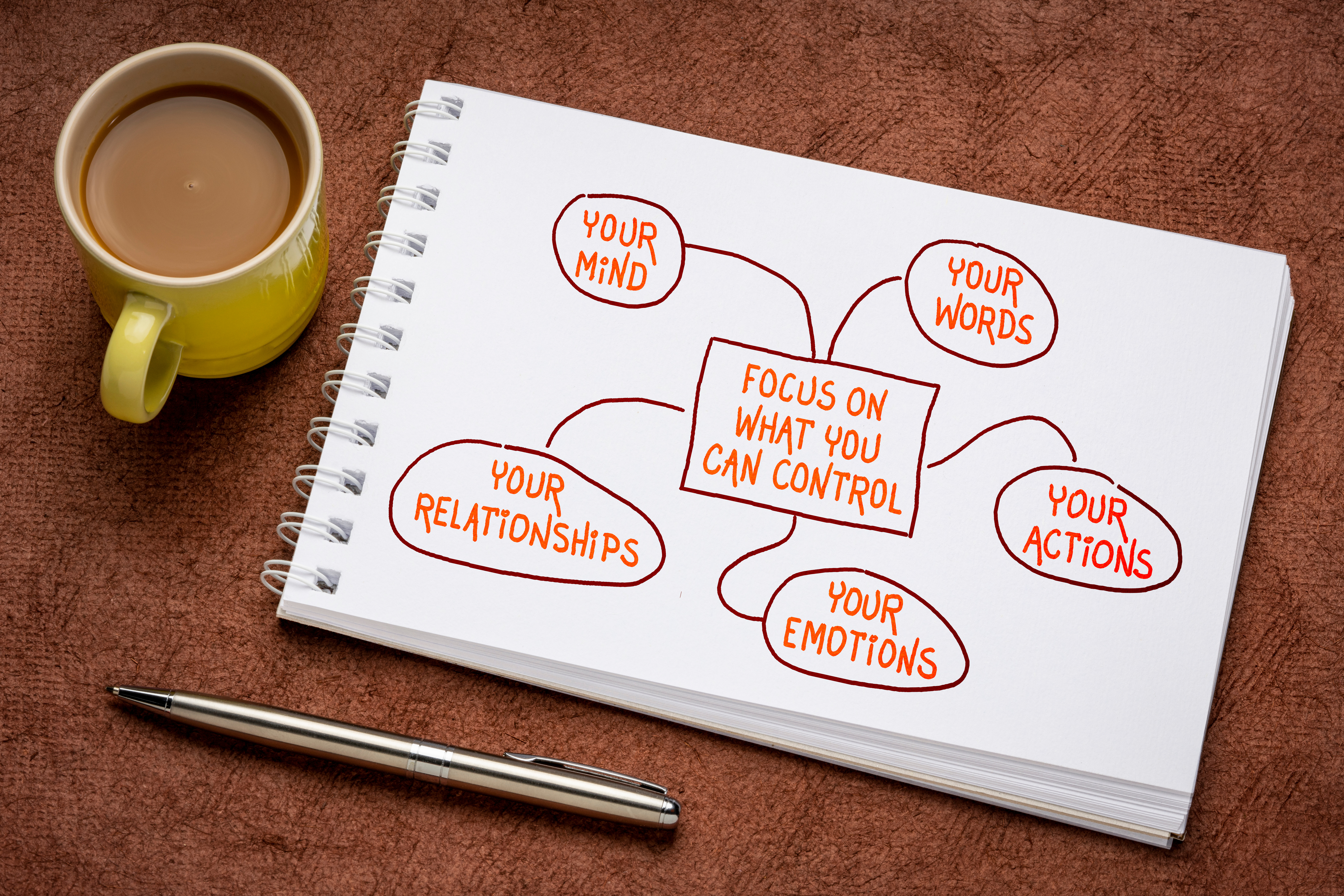
Our admittedly small example has larger implications. There seems to be a lot of things we’re supposed to be able to control. In the illustration above, your mind, your relationships, your emotions, your actions, and your words are said to be things you can control.

I would disagree with some of that. As my experience with my husband showed, I couldn’t control my emotions – I didn’t choose them. I can’t control my relationships. There’s another person involved, with a lack of control over their emotions as well.

And my mind. When you live with serious mental illness (SMI), you’re acutely aware that, a lot of the time, you can’t control your mind. From overthinking at one end of the continuum to psychosis at the other, the mentally ill mind does what it will. Personal choice can’t control it. We’re not able to reach inside and change our brain chemicals or the past traumas that influence our minds and our choices. Sometimes medication and therapy can’t control the mind either.

There are also a lot of memes – and people’s opinions and statements – saying that we can control whether we are happy or not. “Choose happiness.” “The only difference between a good day and a bad day is your attitude.”

I’m not even sure that’s true for people who don’t have SMI. Emotions aren’t something that can easily be switched on and switched off. Before I was correctly diagnosed and properly treated, I simply had to go through a spell of depression and wait for it to pass. It’s still largely true for me, except that now I know that the depression will pass, and a lot sooner than it used to.

I don’t think that it’s a good idea to deny your emotions, either. If you feel hurt or sad, let yourself feel that feeling and work through it. It may be trying to tell you something – that you’re angry for a reason, for example, and need to address that reason. Or if you’re sad, recognize that there’s something making you sad and stay with that sadness for a while. Forcing yourself to behave cheerfully denies the reality of your emotions and merely puts a mask on them. And that’s not healthy. Sooner or later, those feelings will leak out from behind the mask or shatter it.

I’ve always been a great believer in choice. But there are things I don’t think a person can or should have to choose. Emotions and our reactions to them are not within our control. Our actions are – leave an abusive relationship, seek help for mental illness, take medication every day, and so much more.

But not everything about us is subject to choice, and I think it’s better to recognize that than to deny it.

(And for those of you who are curious about it, my husband and I have chosen to work on our individual and mutual problems and have accomplished 40 years of struggle and working together to control what we can accept and what we can’t. We choose that struggle and that work every day.)

Keep This Blog Alive!

Choose an amount

¤2.50
¤5.00
¤10.00

Or enter a custom amount

¤

Your contribution is appreciated.

Donate

Feeling Better Than Average

I was chatting online with a friend the other day and asked how she was doing. Knowing that we both suffered from depression and complicated lives, I didn’t expect a throwaway answer like “fine.”

What she said was, “better than average.” She didn’t have time to say more because she was in the waiting room for her therapy appointment. I would say that I have been better than average lately, too.

But it all depends on what “average” means, doesn’t it? For me, an average day (or week or perhaps even month) means I don’t have extreme depression or hypomania, don’t leave my house but can if I have to, and am able to work on my writing. To an “average” person – if there is such a thing – it may not sound like much, but it is my baseline, my average. Better than average means that I have intentionally gotten dressed in something other than pajamas and gone somewhere, have a handle on our finances, and made a lot of progress on my writing. Today, I would say, is an average day. Not great, not awful, but average.

Average is a good place for me to be. It means I’m fairly stable, not troubled overly by symptoms of my bipolar disorder. Better than average is okay, too, though it makes me more wary of whether I may be going over the edge into hypomania. Any better than “better than average” and I know I’m in its grip. “Below average” translates to “low” for me, and means that I’m on the lookout for depression to descend.

My friend, though, has been having an average year that would not be average for me. Her baseline is a lot lower than mine, with several years of family and financial crises, career reverses, and severe depression. Occasionally, she has been even lower than just below average. So, to hear her say that life has been above average of late is encouraging but not necessarily terrific. I hear her “better than average” as saying, “not as bad as usual” – though still not good.

She doesn’t have bipolar disorder, but I can’t remember a time when she was truly better than average by any reasonable definition, at least not in the last ten years or maybe longer. It’s one of those situations in which all I can do for her is listen if she wants to talk. So to hear her admit that she feels better than average seems like something to be celebrated, even though I fear that it is illusory and bound not to last.

I’ll be interested to hear the next time we talk what made her feel above average and whether it has lasted. Was it a momentary improvement in one of her many difficulties? Was it something her therapist can help her maintain? Has her dopamine or serotonin or whatever kicked in? Has her baseline truly gotten better? Or will I see a retreat to her normal below-average (or worse) baseline?

I can’t help feeling that it’s too soon to celebrate. But I do so want it to be real and to celebrate with her. Even if the improvement is only temporary, I know how good that feels and the hope it gives. And I wish that for her. I hope the next time she’s in touch with me, she still feels at least better than average.

Keep This Blog Alive!

Choose an amount

¤2.50
¤5.00
¤10.00

Or enter a custom amount

¤

Your contribution is appreciated.

Donate

Do My Friends Really Like Me?

There have been times in my life when I thought I didn’t have a friend in the world, and my disorder was the cause of it. I was just too weird, too odd – unlovable. I didn’t fit in anywhere, with anyone.

Actually, it started in my childhood. I had the idea that my parents only loved me because they had to – because I was their child. Ergo, if I weren’t their child, they would never love me. This was very untrue and unfair, I now realize, but I lived the early part of my life believing it.

I had very little evidence that I could make friends. I just never seemed to get the hang of it. There were kids in the suburban neighborhood where I lived, but we didn’t form what you would call lasting friendships. As I recall, there were two sisters who tried to humiliate me with a cruel prank involving a Ouija board and tape-recorded “messages” from the beyond.

In third grade, children threw stones at me. I had to have three stitches in my forehead. Another kid chased me around the schoolyard with a hypodermic needle that I hope was imaginary. My “best” friend in junior high school literally kicked me in the ass in front of a group of younger kids, which led to the first major meltdown that I can remember.

Though now, looking back, high school was the time when I began to embrace my oddity. I wasn’t diagnosed yet, so I didn’t know that the depressive and manic episodes were responsible, but I was learning that there were people who would accept me regardless. I had a tight little group of three or four friends, most of whom are still my friends to this day. They taught me that lasting friendship was possible. In college, I acquired another tight little circle of friends – and one disastrous train wreck of a relationship that left me with defective coping mechanisms such as self-harm.

Since my diagnosis, I’ve found more friends. Several have not been able to adjust to my mood disorder and have broken off contact. It hurt badly, of course, but I could see their point. When I was at my lowest point, I was not able to be a good friend to them either.

So, how has bipolar disorder been involved in my friendships (or lack thereof)? First, with all the chaos inside my head and my constant need to deal with it, I didn’t have much energy left to find friends. When I did get close to people, I ended up pushing them away with my erratic behavior. Only a few kindred souls stuck with me.

I suffered from imposter syndrome too. I thought that it might look like I had friends, but they would soon realize how damaged I was and leave. Or I believed that I was faking being a friend and really had no idea how to go about it.

I ghosted people without intending to when I went into a depressive episode. If I met them when I was manicky, I might be the proverbial life of the party, entertaining with my peculiar sense of humor. The next time they saw me, though, I might be an uncommunicative, weepy lump.

Still, there are people who have known me through the whole range of my moods and my disorder, and I am confident that they are my true friends. They really like me (shades of Sally Field!) and some even love me. I have Facebook friends that I keep in touch with regularly. They provide me a link to the outside world. I have IRL friends whom I see occasionally (we tend to live in different states). I even have a few friends nearby.

I love my friends. Because of how hard they’ve been to come by, I value them greatly. They have stood by me. They have invited me to dinner, to their parties, and on their vacations. They have comforted me when I was down, distracted me when I was anxious, and enjoyed my company when I’ve been stable. They’ve cried on my shoulder and I have cried on theirs. They’ve bought my books. Some have even lent me money when I really, really needed it. They have become my family of choice.

I treasure every one of my friends – especially my husband, who is my best friend. I wouldn’t be where I am today without them.

Keep This Blog Alive!

Choose an amount

¤2.50
¤5.00
¤10.00

Or enter a custom amount

¤

Your contribution is appreciated.

Donate

What’s Really Scary

It’s very nearly Halloween and there are lots of scary things out there, from costumes to movies. But here’s what I find scary.

My number one fear is the return of my bipolar symptoms, especially the depression. I’ve been mostly stable for years now, with only occasional and relatively mild symptoms when I relapse. But I still remember what it was like and I don’t want to go back there. The misery and the hopelessness. The numbness and the pain. The lack of joy, or contentment or, for that matter, even blankness.

Hypomania isn’t as scary, though I know it can and does recur from time to time. I don’t have a history of extreme symptoms and, with my husband’s help, I’m able to navigate the ones that do occur.

I can handle it if I get mild “breakthrough” symptoms when I encounter triggers. I have coping mechanisms in place, including simply waiting for them to pass, because I know they will. That trust in my resiliency – and my medications – has grown over the years.

Still, there’s always the thought in the back of my mind that the efficacy of my meds could wane. I could crash again. There’s no guarantee.

Then there’s the fear that I could develop a batch of new symptoms, triggered by God only knows what. I know that some people with bipolar disorder have hallucinations, hearing or seeing things that aren’t there. One friend of mine has heard voices for years, and another one is visited at times by an imaginary animal. (He doesn’t mind it; he says it’s always been pleasant.) Again, not likely, but then again, my brain has already been proven to be glitchy.

Of course, I do find other things scary. I am terrified of bees, wasps, ticks – anything that impinges on my dermal boundaries. I’ve been stung once and suffered no symptoms beyond the usual, but it did nothing to allay my fears. In fact, I took beekeeping in college, hoping that I would get over the fear. That didn’t work either. I still freeze, shake, scream, cover my head, or run. It’s a phobia, though not a crippling one. It doesn’t bother me enough to try eradicating it via therapy. Besides, if the beekeeping class didn’t help with desensitization, I’m not sure what would.

But there are less personal fears that I have too.

Some are societal problems. Stigma regarding serious mental illness still exists. And although people increasingly seem to be concerned about “mental health,” it turns out what they really mean is usually substance abuse or crime. Initiatives and funding tend to focus on those problems, sometimes to the exclusion of actual brain illnesses – except maybe schizophrenia, and then only as it relates to violence or homelessness. Of course, those are real problems, but there are a lot more people who need to be helped that aren’t getting attention, funding, or treatment.

Speaking of treatment, that’s another subject that’s frightening. It just isn’t available in many locations. I don’t know what the situation is regarding available beds in my geographic area, but I doubt there are many, given national trends and the complete lack of an inpatient ward at the hospital nearest me. If I did experience more extreme symptoms, I’m not altogether sure I could get good, prompt treatment.

Finding a psychiatrist or a therapist can also be difficult, bordering on impossible. When Dr. R., my longtime psychiatrist, retired, I tried to find a new one. I called the doctors he recommended, but none had openings. I turned to my primary care physician, who at least agreed to continue my psychotropics until I could find a psychiatrist. Six months later, I got in to see someone. And that was only for med checks. I had slightly better luck finding a therapist, but it was by no stretch of the imagination a breeze. Fortunately, both have managed to avoid retiring.

Call me a pessimist (okay, I’m a pessimist), but I also fear that things aren’t going to get much better anytime soon.

Keep This Blog Alive!

Choose an amount

¤2.50
¤5.00
¤10.00

Or enter a custom amount

¤

Your contribution is appreciated.

Donate