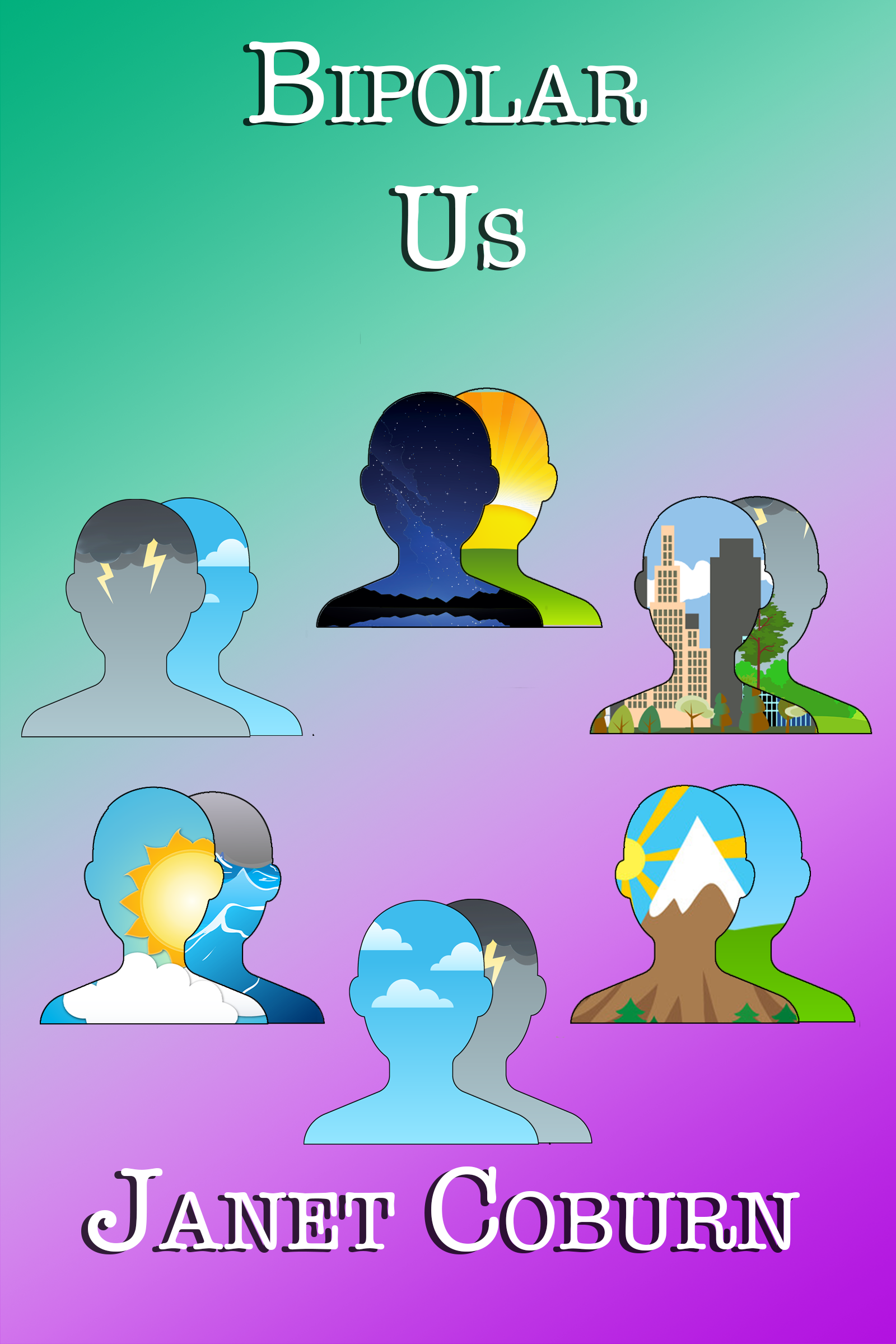
Bipolar 2 From Inside and Out

Posts tagged ‘depression’

The Overwhelming Problem

screaming (Uma painting)It’s been said that time is nature’s way of keeping one damn thing after another from being every damn thing all at once. I know that taking things one at a time—eating the elephant one bite at a time—is a sound idea.

However, every now and then the damn things gang up on you. The elephant is starting to go bad and you have to eat all you can right away – to use a disgusting metaphor that I will not take any further. (You’re welcome.)

Last month was one of those months. They happen every so often. But if they happen very often, I tend to get overwhelmed. And when I get overwhelmed for too long, my brain breaks. I have a meltdown, or I decompensate, or whatever the proper psychiatric term is. In practical terms, it means that I’m severely depressed and non-functional, for longer than usual. Days. Weeks. Months. Even years.

The things that overwhelm me are quite predictable – financial difficulties, health problems, relationship glitches, and free-floating anxiety of all sorts, either my own or my loved one’s. I know that these are situations that cause difficulty for everyone, but to a person with bipolar disorder, they can seemor even be—insurmountable. Especially when they cluster and refuse to go away.

Over the years I have become good (or at least better) at recognizing when I am about to be overwhelmed. I know the symptoms—the whirling thoughts, the jumping-out-of-my-skin feeling, the insomnia, the inability to concentrate, and the feeling that doom or disaster is impending.

There is little I can do to stave off these feelings. But I know I have to. I have to keep functioning at some level, higher or lower, to maintain the things that I want to have – productive work, a loving relationship, a nice house, caring friends, and so forth. At the time of my last major breakdown, I came uncomfortably close to losing much of that.

I try my usual remedies for anxiety, of course. I distract myself. I color. I watch mindless TV. I play stupid clicky games on the computer. I turn off my phone. But if the anxiety builds up too much, if the feared disaster is real and really is impending, none of these works. The anxiety shreds my last nerve, and the depression starts to settle in. I isolate. I stay in bed. One task at a time, I stop being able to function.

I have taken one step that has helped, however. An anti-anxiety pill is one of my daily medications—one in the morning and one at night. A few years ago, as the stress was building and approaching overwhelming, I asked my psychiatrist if I could have permission to take one more a day if I needed it.

He agreed.

I have not needed to take the extra pill every day. Sometimes I take one in the mid-afternoon if I start feeling jumpy, twitchy, or panicky. Sometimes I take one at night if I haven’t gotten to sleep within 2 – 3 hours after taking my regular nighttime pills. I know it sounds strange that a depressant helps me stave off depression, but my diagnosis is actually bipolar disorder and anxiety disorder. The med catches me at the point where the one starts to turn into the other.

I’m glad my psychiatrist trusted me not to abuse what I consider a privilege as well as a necessity. By the time I made this request, of course, we had been working together for a number of years and had built up a certain trust. I think there have been only a couple of times when I have had to take two extra pills in a day—one in the afternoon and an additional one at night. And both times, I felt guilty about it and made sure I didn’t make it a habit.

I don’t want to start gobbling pills at the least sign of difficulty. All I want is to be able to eat my elephant in peace and in pieces.

You May Be Bipolar

If you take three different meds at night and two more in the morning…you may be bipolar.

If your therapist is on your speed dial…you may be bipolar.

If you know the difference between rapid cycling and ultra-rapid cycling…you may be bipolar.

If you have depression clothes and mania clothes…you may be bipolar.

If you’ve stayed in bed for three days and not gone to bed for three days…you may be bipolar.

If your significant other is also your emotional support animal…you may be bipolar.

If all your Facebook friends have psych diagnoses…you may be bipolar.

If your refrigerator door has 40 affirmations on it…you may be bipolar.

If you know who Gabe Howard is…you may be bipolar.

If you have a semicolon tattoo…you may be bipolar.

If you’ve ever watched a show with a bipolar character and said to yourself, “No, that’s not it”…you may be bipolar.

If Carrie Fisher is one of your heroes and you call her “Space Mom”…you may be bipolar.

If you’ve gone through a dozen medications trying to find one that works…you may be bipolar.

If you’ve ever felt depressed and jazzed at the same time…you may be bipolar.

If taking a shower is a major event…you may be bipolar.

If you keep a box of Cocoa Puffs beside your bed…you may be bipolar.

If you’ve had a yearly raise and spent it in a month…you may be bipolar.

If all these statements apply to you…you’re DEFINITELY bipolar.

Structure in My Bipolar Days

I used to be a fly-by-the-seat-of-my-pants kind of gal. Work provided the only structure to my days, back when I was able to work in an office. It wasn’t always the same structure, depending on the job, of course. I have worked various shifts over the course of my checkered career—first, second, and third. I adjusted to them fairly well (except when I was working third shift and going to grad school in the mornings).

That all changed when I quit my last office job. I remember feeling so free. I basked in the ability to do freelance work whenever, run errands whenever, go to sleep and wake up whenever. Of course, I was hypomanic at the time, which I should have recognized because of the golden glow that seemed to envelop my days. Naturally, the crash came, along with the absence of freelance work to do. Then, when I fell into a deep depression, anything resembling a schedule fell apart. I didn’t have a specific time for going to bed or waking up, for eating, reading, errands including bill paying, and even showering. Without that structure, I had trouble finding a reason to get out of bed.

Now I’m stable on medication and therapy, and my days have fallen into more of a pattern. I still work at home, but for a company that gives me ghostwriting work. It has a built-in rhythm to it. Most of my assignments are 30,000 words long and due in 21 days. They want us writers to average 1,500 words a day. I divide that up into 750 words in the morning and 750 in the afternoon. I work weekends at this pace, too.

Fortunately, I find 1,500 words a day eminently doable. My daily schedule consists of mornings spent breakfasting, paying bills, keeping track of appointments, or making necessary phone calls (which is my usual role in running the household).

Then, mid-morning, my husband calls on his break from work. Part of the reason is to make sure I’m okay, but most of the time I’m fine and we simply talk, often about what I’ve scheduled for the rest of the week. (I keep track of his appointments and phone calls too. Sometimes I feel like I have a second job as Dan’s secretary.) After we talk, I begin my first stint of writing for the day, my first 750. I’m generally done in time to have lunch around 12:00. Dan calls again in the early afternoon, and I begin my second 750 afterward. When he gets home, we spend time together and have dinner around 7:00.

Those are my daily schedules, which I don’t really need a planner for. When it comes to weekly schedules, I do use a computer app. Our “weekend” is Sunday and Monday because of Dan’s work, but I work on my writing anyway. My calendar is filled with bills to pay by a certain date, appointments we each have to go to (which I remind Dan about), and notes indicating when my 30,000 words are due. I also make note of which weeks are for recycling. (The day before trash day, there’s frantic cleaning.) I have this and another blog that I post in on Sundays. I have a weekly internal schedule for that, too. I start writing them on Tuesdays, have them at least mostly finished on Fridays, tweak and tag them on Saturdays, and publish on Sunday mornings at 10:00.

Having these systems in place keeps me on an even keel which, after all, is my goal as a person with bipolar disorder. My days are predictable, but not boring because I don’t find writing boring, even if it’s on someone else’s topic. Does it seem too regimented? All I know is, it works for me.

This past week, I went on vacation, so for one week, my schedule was largely out the window. I looked forward to staying up late, sleeping late, having meals whenever we felt like it, spending time reading or shopping or sightseeing or watching movies whenever we wanted. Because, as much as I like my structure, I need a break from it at times. Sometimes I take a few days off between book assignments to work on other projects like organizing my jewelry armoire or my desk.

It’s a balancing act, really. Enough structure to keep me focused, but not so much that it becomes a rut. Dan’s phone calls help. Having time in the mornings and evenings before and after I write helps. And my most important routine, of course—taking my meds in the morning and at night. That’s a part of my day’s structure I never want to neglect.

What Does Body Temp Tell You?

My husband and I have a dynamic that’s common to many couples. I’m always too cold and he’s always too warm. This becomes apparent at bedtime, when he has the window open and a fan on, and I’m wrapped up like a burrito in assorted quilts. When I ask how the weather is and he says it’s comfortable, I know I need to put on at least a sweater before we go out.

What does this have to do with mental health? Well, the stats on major depressive disorder are alarming, especially among teens and young adults. “This is particularly concerning as the disease course is most likely to be malignant, and the costs of depression in terms of lost opportunities across a lifetime are likely to be highest in youth and young adulthood,” note the authors of a recent study. They also suggest that current pharmacological treatments show “significant limitations in efficacy.” So the quest for better treatments is pressing.

That “TemPredict” study found that body temperature correlates with depression. The study involved more than 20,000 people from around the globe, so from that standpoint, it’s likely to be valid. Over approximately seven months, the participants wore a device that recorded their body temperature (an off-the-shelf Oura ring) once per minute via a smartphone app. They also kept daily subjective records of their body temperature and level of depression, so the data collected included that from the wearable sensors as well as self-reports.

“People with depression have higher body temperatures, suggesting there could be a mental health benefit to lowering the temperatures of those with the disorder, a new UC San Francisco-led study found,” according to UCSF. The study was reported in the journal Scientific Reports.

The results? People with depression have higher body temperatures than those without, particularly at night. This had been suggested by smaller studies, but the new one is much more comprehensive. Of course, the study couldn’t really say whether depression causes higher body temperatures or whether higher body temperatures cause depression. The authors caution that “although no single biological or behavioral abnormality will characterize all individuals with MDD [major depressive disorder], the identification of an abnormality associated with MDD may open the door” to new treatments.

The study’s authors also indicated that “it is uncertain whether the elevated body temperature observed in depression reflects increased metabolic heat production, decreased ability to induce thermoregulatory cooling, or a combination of both.” In other words, “depression [may be] tied to metabolic processes that generate extra heat perhaps, or tied to cooling biological functions that aren’t operating properly. Or there might be a common shared cause, such as mental stress or inflammation that impacts both body temperature and depressive symptoms separately.” So there are still aspects that need to be studied further.

What’s also interesting is that the study suggested that warming people up has a more cooling effect than directly cooling them with ice water, perhaps because of sweat’s cooling effect. At any rate, people who soak in hot tubs have a rebound factor that actually cools them off. (Personally, I wouldn’t mind if someone prescribed me a hot tub.)

The hope is that the results of the study will lead to new treatments for depression.

I don’t doubt the study’s findings. But anecdotally, my spells of depression tend to be deeper and longer than my husband’s, but my body temperature runs lower. Am I an outlier, a data point that falls outside the trend of the study? Oh, probably. I’ve never been much for fitting in with norms.

Running Out of Meds

Isolated Empty Pill BottlesRunning out of your medications is scary.

I know. It’s happened to me several times.

Sometimes it was a matter of supply. My usual pharmacy ran out of a sleep aid and wasn’t going to get any more until after the weekend. Fortunately, they recommended a mom-and-pop pharmacy (yes, such things do still exist) just down the street and helped me transfer my prescription there.

Another time the problem was the prescription. I ran out of an anti-anxiety med, but when I called in for a refill, I was told that it wasn’t time for one. When I looked at the bottle more closely, I discovered that they had given me 60 pills, as if I were taking two a day, instead of the three a day actually prescribed. (I was changing doctors about that time and there was miscommunication.)

Yet another time, it was money. I ran out of an antipsychotic and was told that even with insurance, it would cost me $800 for a month’s supply because of the out-of-pocket required minimum. I spent a couple of days arguing with the insurance company, researching solutions online, and making sure a local pharmacy would take the coupon I found, which lowered the price to under $200. That was still a hefty chunk of our budget, but we managed to scrape it together until the drug went generic a couple of months later. (I also had to stand in line while the pharmacy called the coupon people and the insurance company to see how to enter it all in their system.)

And of course there are the everyday screw-ups. My husband forgot to pick up my scrips (one time he remembered to pick them up but left the bag in the car and drove 500 miles away), or he forgot which pharmacy they were at, or he didn’t hear me say that I was completely out, or the pharmacy didn’t open until 10:00, or they had my pills in two different bags and only gave us one. There are lots of ways it can happen.

Once I even took my entire supply on a weekend getaway and left them in a drawer at the bed-and-breakfast. I know. Stupid.

Most of the time running out of drugs isn’t a crisis. It just feels like one.

Of course, there are exceptions. It is a crisis if you run out of certain anti-anxiety drugs and you don’t get any for several days. You can have withdrawal – actual, physical as well as psychological withdrawal. I’ve heard that benzo withdrawal can be as bad as opiates. That’s one reason it’s important to replace your meds as soon as possible.

A lot of psychotropic medications build up to a therapeutic level in your bloodstream, so a day or two without them probably won’t even be noticeable. When you start taking them again, your levels will even out.

But even if the med you run out of is one that you can easily tolerate a day or two without, you may have some psychological effects. When I run out of a prescription, even for a short time, I become twitchy and agitated – my hypomania kicks in and comes out as anxiety, the way it usually does for me. I fear crashing back into that deadly unmedicated space where all is misery and despair. Intellectually, I know that likely won’t happen. But it sure feels like it will. This is one way my none-too-stable mind plays tricks on me.

It’s like the opposite of the placebo effect – believing that a sugar pill will help you and experiencing gains until you learn that the pill is fake. In my version, I believe that not taking the pill will cause relapse, even though it actually won’t.

Whatever else you feel or do, DO NOT use missing a couple of pills as an opportunity to go off your meds entirely. This is another lie your brain can tell you: “You’re doing fine without it. Why keep taking it?” It may not in the short term, but you will feel the effects of not taking your meds, and then there you are, back in the Pit of Despair or rocketing to the skies. It won’t be pretty.

For me and a lot of others like me, the key to effective medication is consistency. Once you find the right “cocktail,” stick with it. But if you run out, don’t panic. Keep Calm & Get a Refill.

Christmas, Bipolar Style

This post will go live on Christmas Eve, and the holiday has been much on my mind of late. My reactions to the holiday aren’t necessarily what you will experience, but as a bipolar person, I wanted to share what depression and hypomania do to me during the holiday season.

Hypomania

I’ve tried the traditional giving of gifts on Christmas Day, but this year our gifts are all either pre- or post-holiday. Last year, I was hypomanic and overspent. I was disappointed, though, when my selections for my husband didn’t garner the response I thought they would. He still hasn’t used the camera I got him last year on the grounds that he didn’t have the time to figure it how to use it. (I’m going to suggest that one of his gifts to me will be to learn its workings.)

This year, I’m slightly less hypomanic. We got a present for both of us, a little early. We got matching heart, lock, and key tattoos. Since the tattoo shop is closed on Christmas and the tattoo artist is much in demand, we booked the appointment early and have already had these done. I’ve bought Dan another item or two on sale—oven mitts and a bathrobe—that I’m telling myself aren’t really presents, just things he needs, so he doesn’t have to get more presents for me. I honestly don’t mind if he doesn’t get me anything else. He gives me little gifts all year long—just things he finds at the store he works at that he thinks I’ll like.

This year I’m working at home, and I plan to work on Christmas Day, at least for a few hours. Realistically, I could take the day off and not risk missing my deadline, but the routine of working helps keep me centered. I have been exploring what local restaurants are open on Christmas Day so we don’t have to cook. For New Year’s Eve and Day, we actually have a tradition—champagne and appetizers on the Eve and Chinese Buffet on the Day. We often ask friends to join us for that.

Depression

I don’t think I’ll be too depressed to go out New Year’s Day, but then again, who knows? Dan has invited friends from work, so there will be people there I don’t know, as well as two that I do. I don’t really feel up to small talk these days, so Dan can handle that with his work friends.

I’ve given up trying to get into the “Christmas spirit” by dressing for the occasion. It never works for me. I’ve had Christmas earrings. One year I had a Grinch t-shirt. I once worked at a place where everyone wore holiday sweaters and sweatshirts. I didn’t have any and felt left out, but I didn’t want to pay the prices for the sweaters. After the holiday, I bought a couple on sale for the next year’s festivities, but I lost the job before I had an opportunity to use them. Oh, well.

My Lack of Advice

I know there are a lot of articles this time of year giving advice on how to deal with the holidays while in a shaky mental state. I’m not going to do that, because you already know all the standard advice—self-care—and I have nothing really insightful to add to it.

Except that it’s okay to have your own traditions or to ignore the holidays altogether if they’re just too much for you. If you’re alone, you could be subject to depression or just feeling numb, but that’s a natural reaction if you’re like me. Scale down your celebrations to suit yourself. If you’re experiencing anxiety, you can skip big celebrations and have your own small—or private—one. If you’re hypomanic, you may be up to some festivities, but you don’t have to be the life of the party at every one. And keep track of your spending. Most people prefer to get only one or two thoughtful presents rather than a flood of random ones.

I don’t wish you Happy Holidays, just survivable ones.

Mental Illness: Poverty and Privilege

Mental illness is not just an American problem. In fact, it’s a problem around the world, and perhaps much more acute in other nations, especially those plagued by poverty.

There’s no way to know for sure, but many – perhaps most – of the world’s mentally ill are undiagnosed, untreated, ignored. Because what do you do when you live where there’s no psychiatrist? No therapist. No medication. No help.

Your family may support you, shelter you, or shun you, depending on their financial and emotional resources and those of the community. But for many people, there is simply nothing.

Psychiatrist Vikram Patel, one of Time magazine’s 100 Most Influential People for 2015, is working to change that.

As a recent profile in Discover magazine put it, Patel and others like him have set out to prove “that mental illnesses, like bipolar disease, schizophrenia, and depression are medical issues, not character weaknesses. They take a major toll on the world’s health, and addressing them is a necessity, not a luxury.”

In 2003, Patel wrote a handbook, Where There Is No Psychiatrist: A Mental Health Care Manual, to be used by health workers and volunteers in poverty-stricken communities in Africa and Asia. A new edition, co-written with Charlotte Hanlon, is due out at the end of this month.

Patel, in his first job out of med school, in Harare, Zimbabwe, says he learned that there wasn’t even a word for “depression” in the local language, though it afflicted 25% of people at a local primary care clinic. There was little study of diagnosis and treatment in “underserved areas.”

Later epidemiologists learned to their surprise that mental illnesses were among the top ten causes of disability around the world – more than heart disease, cancer, malaria, and lung disease. Their report was not enough to spur investment in worldwide mental health.

Patel developed the model of lay counselors – local people who know the local culture – guiding people with depression, schizophrenia, and other illnesses through interventions including talk therapy and group counseling. By 2016, the World Health Organization (WHO) admitted that every dollar invested in psychological treatment in developing countries paid off fourfold in productivity because of the number of people able to return to work.

One objection voiced about Patel’s model is that the real problem is poverty, not depression or other mental illness. The argument goes that the misery of being poor, not a psychiatric illness, leads to symptoms and that Westerners are exporting their notions of mental health to the rest of the world, backed up by Big Pharma. Patel responds, “Telling people that they’re not depressed, they’re just poor, is saying you can only be depressed if you’re rich … I certainly think there’s been a transformation in the awareness of mental illnesses as genuine causes of human suffering for rich and poor alike.”

Of course the problem of underserved mentally ill people is not exclusive to impoverished nations. There are pockets in American society where the mentally ill live in the midst of privilege, but with the resources of the Third World – the homeless mentally ill, institutionalized elders, the incarcerated, the misdiagnosed, those in rural areas far from mental health resources, the underaged, the people whose families don’t understand, or don’t care, or can’t help, or won’t.

I don’t know whether Patel’s model of community self-help can work for those populations as well as they do internationally. This is not the self-help of the 1970s and 80s, when shelves in bookstores overflowed with volumes promising to cure anything from depression to toxic relationships. It would be shameful if the rich received one standard of care for mental health problems, while the poor had to make do with DIY solutions, or none.

But, really, isn’t that what we’ve got now?

Pill-Shaming

When I first started taking Prozac, when it was just becoming ubiquitous, my mother said, “I hear it’s a ticking time bomb!”

“Oh, dear!” I thought. “Mom’s been listening to Phil Donahue again.” (She had been, but that’s not the point.)

Back in the day, Prozac was hailed as a miracle drug and condemned as a killer drug. On the one hand, it was said to be a “magic bullet” for depression. On the other, it was supposed to result in addiction and suicide.

It’s probably true that it was prescribed too often to too many people who may not really have needed it. And it may have led to suicides—not because Prozac prompted such an action, but either because it was improperly prescribed or because it activated people who were already passively suicidal and pushed them into action.

At any rate, Prozac was not an unmixed blessing.

For me, it was closer to a miracle drug. It was the first medication that had any significant effect on my depression. I noticed no side effects.

But Prozac is no longer the psychiatric drug of choice. Since that time, hundreds—maybe thousands—of psychotropic drugs have been introduced and widely prescribed. Many have proved just as controversial as Prozac. Indeed, the whole concept of psychiatric drugs is now controversial.

I belong to a lot of Facebook groups that encourage discussion on psychological matters and have a lot of Facebook friends with opinions on them, sometimes very strong ones. Some of the people with the strongest opinions are those who condemn certain classes of psychiatric drugs or that category of drugs altogether. They share horror stories of addiction, atrocious side effects, zombie-like behavior, and even death from the use of these drugs.

Benzos are the drugs that are most often condemned. And it’s true that they can be addictive if they’re misused. Whether that’s because a doctor overprescribes them or a patient takes more than prescribed I couldn’t say. But I maintain that benzos aren’t inherently harmful when prescribed appropriately and supervised professionally.

I have personal experience with benzos. They were the first psychiatric drug I ever took, meant to relieve a rather severe nervous tic that affected my neck and head during junior high school. I do remember walking off a short stepstool while shelving books in the library, but I was not injured and the misstep could be attributable to ordinary clumsiness, which was something I was known for (and still am). The benzos were discontinued when I got better. I also took benzos in college because of pain due to temporomandibular joint problems.

Now I have benzos that my psychiatrist prescribed “as needed” for anxiety and sleep disturbances. After all the years I’ve seen him and my history of compliance with prescribed medication, plus the very low doses, he had no hesitation prescribing, and I have no objection to taking them.

But some of the people I see online object to any psychiatric drugs whatsoever. Again, the most common complaints are addiction, side effects, and zombie-like behavior. Of course, I can’t—won’t—deny that they have suffered these effects. Psychotropics are known to affect different people differently. I’ve had side effects from many of the ones I’ve taken that were too unpleasant for me to continue taking the drugs. But after all the different meds I’ve tried during my journey to a combination of drugs that work for me, it would be a surprise if I objected to them altogether.

But I don’t. I’ve had cautious, responsible psychiatrists who’ve prescribed cautiously and monitored rigorously, listening to me when I reported side effects.

So, my personal experiences have been good. I know not everyone’s experiences have been, for a variety of reasons.

What I object to is the drumbeat of “all psychotropic medications are bad and ruin lives.” And the memes that show pictures of forests and puppies that say “These are antidepressants” and pictures of pills with the caption “These are shit.”

I hope those messages don’t steer people who need them away from psychotropic medications. And I hope that people who do need them find prescribers who are conscientious, cautious, and responsible in prescribing them. On balance, I think they’re a good thing.

Time Out From Life

I was stuck during my first year in college. I was a linguistics major and couldn’t see my way clear to a career in the field. I thought about changing my major to random ones like landscape architecture and hotel management. I had no passion for either one, but I figured at least I could get a job.

I was also suffering from a major depressive swing. I missed classes, though I managed to pass them. I couldn’t sleep. I spent hours in the middle of the night sitting in the hallway, staring at an ornate coloring poster on the opposite wall, hypnotized by its intricate black outlines.

I decided to take a year off. I was incapacitated and couldn’t go on at that time. I figured I could reassess my choice of majors while I pulled my head together. I always had the intention of going back at the end of that time out.

I also needed money for that next year of college, so I got a job as a cashier and waitress on the second shift at a local Frisch’s restaurant. I was a good cashier and a lousy waitress, and I spent quite a bit of time in the bathroom, crying into the roller towel. I learned how to swear. My coworkers noticed that I was either worried and anxious or numb and sad. (One manager asked me, “What does a girl your age have to worry about except am I pregnant?” The other told me to smile more. Needless to say, this was not helpful.)

That time out from college was important to me psychologically. It didn’t solve my problems, and I was still undiagnosed and unmedicated. I began to realize that my problems went further than what my major was. And I made friends at work and learned a lot about self-reliance. I had time and space to think. My parents and my high school friends formed my support system.

I did go back to college the next year. I changed my major to English, which was more satisfying and more in line with my interests (though not really better on career possibilities). I continued through the next three years without taking more time off. As you may have guessed, the anxiety and depression didn’t leave. I had a fling with a musician – my first – and when it ended, I didn’t know how to handle it. Then I had a totally disastrous relationship, fraught with gaslighting. Again, I had trouble sleeping. I lost weight. I drank too much. The swings between hypomania and depression were noticeable.

When I graduated, I went back to working at the restaurant, then got a job at an advertising agency as an assistant to the treasurer. I moved into my own apartment and began a long-distance relationship with my eventual husband. I considered going back to school for an M.A., again in English, which I eventually did. I was still untethered, but I went into treatment for depression. (It wasn’t until many years later that I learned that my diagnosis was really bipolar.)

A depressive swing also caused me to take a time out from work later in life. This was the one that lasted two years and had me applying for disability. (I didn’t get it.) It was only psychologically important in that it graphically demonstrated how badly I needed help. At least the time I missed from college was something I chose to do rather than something that blindsided me.

The takeaway from all this, I think, is that the ups and downs of bipolar disorder mean that my life was destined not to go smoothly. While I am pretty high-functioning – I was able to earn college degrees and hold various jobs, at least for a while – there have been times when my illness has overwhelmed me and I need time out from my “normal life.” And those occasions come on me unpredictably, as is the way of bipolar mood swings. While I haven’t needed to, or been forced to, take a time out lately, I know it could still happen. That’s just the nature of the disorder. I hope my medication and therapy will make the possibility less likely, though.

If you’ve taken a time out too, I’d encourage you not to think of it as a permanent thing. It could be something that you needed to do, and something that may have relevant significance for you as you look back on it, as was true for me. Most of all, I hope you get help and support to get through it.

What Is It With Showers Anyway?

Girl is choosing cosmetics in bathroomIt is fairly widely known that people with bipolar disorder and/or depression have trouble taking a daily shower. It’s not that we don’t know what’s involved in taking a shower, or why it would be good for us to do so, it’s simply that showering uses up a tremendous number of spoons.

Here’s what showering looks like according to Andrew Solomon, author of the now-classic The Noonday Demon:

I ran through the individual steps in my mind: You sit up, turn and put your feet on the floor, stand, walk to the bathroom, open the bathroom door, go to the edge of the tub…I divided it into fourteen steps as onerous as the Stations of the Cross.

I performed a similar exercise in one of my blog posts and here’s my version:

First I have to find a clean towel and a bar of soap, get undressed without seeing myself in the mirror, fiddle with the water temperature, wash and shampoo, dry off, find clean underwear, and that’s not even thinking about drying my hair and figuring out what I can wear! Oh, my God, I’ve used up all my spoons just thinking about it! I should just eat Cocoa Puffs and go back to bed.

Now let me say, first of all, that I don’t really like showers. I grew up taking baths and have never enjoyed the sensation of water spraying in my face. But with my bad back and bad knees, getting up from sitting in a bathtub is nearly impossible these days. (Please don’t ask me why anyone would want to sit in dirty water. Everyone says that when I say I prefer baths. I have a nice long soak, steeping in the clean water like a big teabag, and only then wash up and get right out. Used to, I mean.)

To most people, showering is a single act that requires the expenditure of a single spoon. Take a shower; that’s it. But for those of us with invisible illnesses, each separate step may require its own spoon. Take something as simple as finding a towel, for instance. Go to the linen closet, grab a towel and voilà! Only a fraction of a spoon, if that.

But surely you don’t think I have had the spoons to fold and put away my laundry. It is all there in a jumble on top of the dryer. (Who needs a wrinkle-free towel anyway?) I have to root around to find one, and maybe twice if a cat has thrown up on the first one I pick. (They love sitting on clean laundry.)

If I have to go to a business meeting I force myself to use some of those spoons showering and getting dressed and acting respectable. But I will pay for it later, collapsing after the meeting in need of a mega-nap.

Now here’s a little secret I’ll tell you. Most people believe you gain spoons by going out of the house – walking in the fresh air, meeting friends for lunch, shopping, going for a drive (does anyone do that anymore?). But the fact is that, according to Spoon Theory, you get a certain number of spoons every day when you wake up. You cannot gain, buy, beg, borrow, or steal any more spoons, not even by breathing fresh air. You can only spend them.

Given the mathematics of spoons, I don’t spend a single one that I don’t absolutely have to. Not going out? No shower. Have to go out for a loaf of bread or a drive-through meal? Wash up in the sink. If I need a shower between outings, my husband reminds me and facilitates by, for example, rummaging on the dryer for a clean towel and clean clothes or a clean nightshirt.

I need those spoons for doing my work at home in my smelly pajamas more than I do for the ordeal of showering.