Bipolar 2 From Inside and Out

Sensory Overload

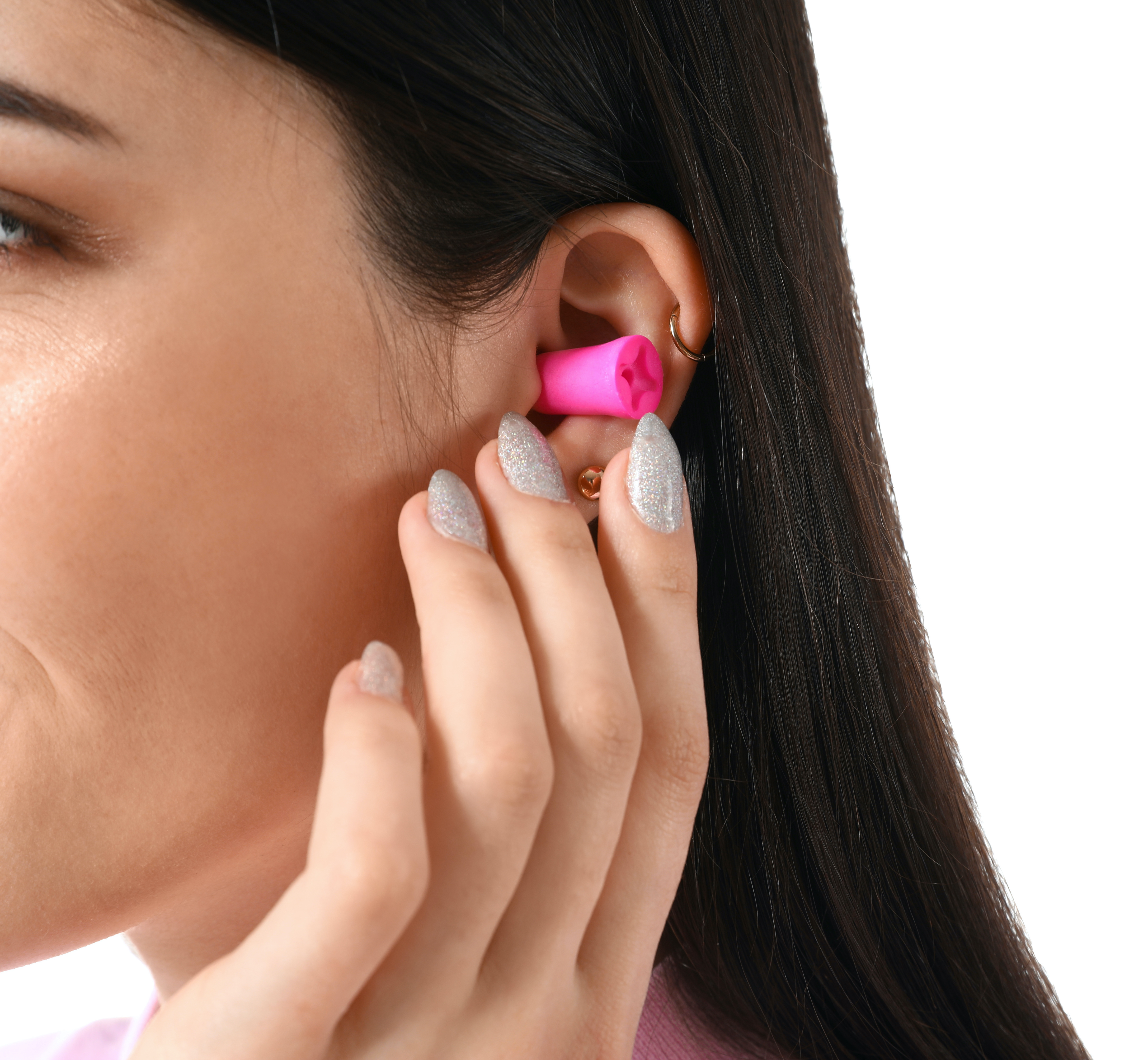
I know that sensory overload can be a problem for people on the autism spectrum. Too much noise, uncomfortable touch, and assaults on the other senses can affect them negatively.

I discovered this firsthand when my best friend, Robbin, and her ten-year-old daughter, Kelly, visited my house. My husband collects clocks, and the sound of all the ticking bothered the young lady. Then the clocks started to chime. They were not synchronized, and they sounded off one after the other, sometimes overlapping. It was noon. Kelly was visibly distressed by the sound, and they left soon after.

I’ve had some indication that, though I’m not on the spectrum, I’m sensitive to noise as well. When Kelly was six, I brought Robbin a fluffy black-and-white kitten that she had admired. The squealing noises the little girl made cut right through me. I looked over at Robbin, who just shrugged.

It turned out that I’m particularly sensitive to the high-pitched sounds of children laughing and shouting. I learned to avoid Chuck-E-Cheese and Cici’s pizza—basically, any place with a ball pit. High-pitched women’s voices like Judy Holliday’s in Born Innocent bother me. It’s one of my husband’s favorite movies, but I can’t stand to watch it with him. Loud voices are a problem, too. If I’m in a room where people are shouting at each other, I make an excuse to leave until they settle down.

Much more typical is my aversion to two or more sounds. TV and talking, for example. If my husband talks to me while the TV is on, I can’t make out either one, which is particularly difficult when what he’s saying is, “What did that guy say?” And if I’m doing something on the computer, I’m completely lost. I’d be lost at a cocktail party, too, so it’s lucky we’re never invited to them.

WebMD has this to say about sensory overload: “Sensory overload and anxiety are mental health conditions that are deeply related to one another. When a person feels anxious or already overwhelmed, they may be more prone to experiencing sensory overload in certain situations. Likewise, experiencing sensory overload can make you feel a sense of anxiety.” They also say, in addition to autism, that PTSD, ADHD, PTSD, Generalized Anxiety Disorder, and Tourette Syndrome are mental conditions associated with sensory overload. They recommend anti-anxiety or antidepressant meds, self-care, therapy, mindfulness, and meditation as ways to address the problem. Avoiding triggers is another recommendation, and that’s the one I use (see not going to Chuck-E-Cheese, above). That’s the one that seems to have the most beneficial effects.

PsychCentral lists the stimuli that can lead to sensory overload:

  • bright lights, chaotic movement, or a cluttered environment
  • rough, tight, or itchy clothes
  • loud noises, voices, or music
  • scents including chemicals and perfumes
  • foods with strong flavors
  • hot or cold temperatures

And they list the possible effects:

  • overwhelm that makes you want to either shut down or have a meltdown
  • irritation or rage
  • tension in your face, neck, shoulders, or back
  • having either too many thoughts in your mind, or none at all
  • exhaustion
  • dissociation, or being separated from yourself and your surroundings

They add: “It’s possible for sensory overload to cause a panic attack. This could be because much overlap exists between parts of the brain involved with the panic response and those responsible for sensory processing.”

Not being a neuroscientist of any stripe, I can’t speak to the truth of that, but it also seems to me that a panic attack can lead to sensory overload. My other notable experience with sensory overload was having an anxiety attack in the grocery store, where I was overwhelmed by the visual noise of the bright colors on the cereal boxes. As I recall, I took an anti-anxiety pill, went home, and lay down. I don’t remember if I bought the cereal or not.

What Does Body Temp Tell You?

My husband and I have a dynamic that’s common to many couples. I’m always too cold and he’s always too warm. This becomes apparent at bedtime, when he has the window open and a fan on, and I’m wrapped up like a burrito in assorted quilts. When I ask how the weather is and he says it’s comfortable, I know I need to put on at least a sweater before we go out.

What does this have to do with mental health? Well, the stats on major depressive disorder are alarming, especially among teens and young adults. “This is particularly concerning as the disease course is most likely to be malignant, and the costs of depression in terms of lost opportunities across a lifetime are likely to be highest in youth and young adulthood,” note the authors of a recent study. They also suggest that current pharmacological treatments show “significant limitations in efficacy.” So the quest for better treatments is pressing.

That “TemPredict” study found that body temperature correlates with depression. The study involved more than 20,000 people from around the globe, so from that standpoint, it’s likely to be valid. Over approximately seven months, the participants wore a device that recorded their body temperature (an off-the-shelf Oura ring) once per minute via a smartphone app. They also kept daily subjective records of their body temperature and level of depression, so the data collected included that from the wearable sensors as well as self-reports.

“People with depression have higher body temperatures, suggesting there could be a mental health benefit to lowering the temperatures of those with the disorder, a new UC San Francisco-led study found,” according to UCSF. The study was reported in the journal Scientific Reports.

The results? People with depression have higher body temperatures than those without, particularly at night. This had been suggested by smaller studies, but the new one is much more comprehensive. Of course, the study couldn’t really say whether depression causes higher body temperatures or whether higher body temperatures cause depression. The authors caution that “although no single biological or behavioral abnormality will characterize all individuals with MDD [major depressive disorder], the identification of an abnormality associated with MDD may open the door” to new treatments.

The study’s authors also indicated that “it is uncertain whether the elevated body temperature observed in depression reflects increased metabolic heat production, decreased ability to induce thermoregulatory cooling, or a combination of both.” In other words, “depression [may be] tied to metabolic processes that generate extra heat perhaps, or tied to cooling biological functions that aren’t operating properly. Or there might be a common shared cause, such as mental stress or inflammation that impacts both body temperature and depressive symptoms separately.” So there are still aspects that need to be studied further.

What’s also interesting is that the study suggested that warming people up has a more cooling effect than directly cooling them with ice water, perhaps because of sweat’s cooling effect. At any rate, people who soak in hot tubs have a rebound factor that actually cools them off. (Personally, I wouldn’t mind if someone prescribed me a hot tub.)

The hope is that the results of the study will lead to new treatments for depression.

I don’t doubt the study’s findings. But anecdotally, my spells of depression tend to be deeper and longer than my husband’s, but my body temperature runs lower. Am I an outlier, a data point that falls outside the trend of the study? Oh, probably. I’ve never been much for fitting in with norms.

Everything in Moderation

Support systems are important for good mental health. There’s just something about sharing difficulties and successes with people who truly understand because they’re in the same place, facing the same issues. You get to say how you’re doing and what has helped you. You get to listen to what has helped others and incorporate their insights into your own journey. You get a chance to bitch and moan if that’s what you need to do. And after you’ve vented to people who share your pain, you feel better.

During the pandemic, we learned the value of connecting without physical presence. In many ways, it was ideal. We didn’t have to get dressed and venture out into the people-y world. We didn’t have to risk getting or spreading illness. Most of our therapy sessions went virtual. Mine did—and stayed that way even after pandemic restrictions were lifted.

Social media has also provided many virtual gathering spaces for people with brain illnesses. For example, there are many Facebook groups that create communities of mental health advocates and sufferers alike. These groups vary in what they offer. Some are chat groups. Others specialize in various diagnoses. Still others provide access to resources so people who need them can find them in one place.

I moderate one of these Facebook groups. It’s called Hope for Troubled Minds, and it addresses people with brain illnesses and their families and caregivers, with an underlying focus on faith. (You can find it at https://www.facebook.com/groups/654965125046006.)

I don’t have an awful lot to moderate, so I curate, instead. Every day, except when I’m out of town, I hunt for articles of interest to our group members. I get them from The Mighty, The New York Times, The Washington Post, CNN Science, blogs, and other Facebook groups. (I subscribed to NYT and WaPo mainly to be able to share articles they print without having members run into a paywall.)

My goal is to post four to six articles or connections a day, and most days I make my quota. The stories I find include first-person articles written by those with psychiatric conditions and their relatives, scientific articles such as those on brain science, and news stories about political and legal aspects of the topic. I also cross-post my own blog posts to the group. I try to keep a balance of different diagnoses so that it doesn’t run too much to bipolar, which is my own disorder and primary interest.

I comment on most of the posts I make to point out interesting quotes or opinions on the issues presented. The group members also make comments and start discussions, though not as many as I would like. Sometimes I post questions that I hope will prompt those discussions.

Recently, I’ve posted links to articles on hospitalization, “high functioning” anxiety, depression and creativity, the difficulty of reaching out, working, eating disorders, ruminating, OCD, DBT, schizophrenia, medication, self-care, co-occurring conditions, suicide, and more.

My goals for the group (and my moderating of it) are to improve member engagement, to seek out some guest bloggers, and to continue to share a diversity of articles.

I’d like to invite you to go with me on that journey. Join our group or tell me what would make it better. Put me in touch with other groups so we can cross-post information. Point me toward blogs I need to be reading and posts I need to be sharing. Volunteer to write for the group and its members.

Help me make Hope for Troubled Minds the best resource it can be.

There are many treatments for bipolar disorder, from SSRIs to EMDR and more. I must admit that I haven’t tried all of them, but I have encountered a few over the years. Some worked well, others not so much. But I’m doing well now, so I thought I’d share what works for me—my roadmap to stability.

Note that I said, “How I Treat My Bipolar Disorder.” That’s because my treatment is up to me. My psychiatrist or therapist can recommend a certain treatment, but whether I take that drug, undergo that procedure, or engage in therapy is ultimately my choice. I look at my providers as people who recommend treatments and help me implement them. But they don’t make the decisions. I do. Most of the time, I take their suggestions—they know more than I do about medications, for example. But I feel free to make suggestions, too, if the medication isn’t working like it’s supposed to or is having side effects I can’t deal with.

Meds

My med journey started (approximately 30 years ago) with the then-ubiquitous SSRI, Prozac. It worked well for me, relieving my depressive tendencies (I hadn’t been diagnosed with bipolar yet). Until it didn’t. That’s when my doctors started throwing drugs against the wall, hoping they would stick. Over the years, I’ve been on at least three different SSRIs, two NDRIs, two SNRIs, and a sedative-hypnotic. Probably other ones, too, that I don’t remember. (One of the side effects for one of them was memory loss.)

My previous psychiatrist experimented with a variety of meds until we hit on a cocktail that worked: an SSRI, a broad-spectrum anti-seizure drug, an atypical antipsychotic, and a benzo. My current psychiatrist mostly tweaks the dosages up or down when I need it. I’ve quit the sedative-hypnotic altogether and only take the benzo as needed. Recently, when I told him that I thought I was having mixed states, he upped the dosage of the atypical antipsychotic. (I don’t like to give the names of the drugs I’m taking because what works for me doesn’t necessarily work for others.)

I see the psychiatrist four times a year for med checks, though I can call if I have any adverse reactions or increased symptoms.

(When I was looking for illustrations to go with this post, I was astounded at the number of images of mushrooms that I saw. I guess it’s trendy now, but I’ve never tried them. There were also pictures of marijuana plants. There’s a medical dispensary in my area, but I’ve never pursued getting a prescription. I have taken CBD gummies, but the only effect they had was to make me foggy and dizzy, which I didn’t like. They did nothing for my moods. They didn’t even relax me; I was too nervous about my balance and the potential of falling.)

Therapy

Individual talk therapy is my go-to form of therapy, though I recently felt I could stop. (I keep the number handy in case I ever need it again.) I guess you could say I weaned myself off therapy. When I started I was going once a week; later, once every other week. When it got to three or four weeks between appointments, I decided it was time to fly on my own. I don’t know what particular kind of therapy I had—CBT or DBT, for example. She never said and I never asked.

I went to group therapy when I was still undiagnosed, but it wasn’t helpful. Once, when my therapist was out of town, I went to a therapy group she recommended but had an adverse reaction to it. Another group just seemed to have a weird format and a book they used like a “bible,” and I didn’t get anything out of that, either. A few times, my husband and I went to couples therapy, and it seemed to help. Another time, we went to a few sessions with a different therapist and I felt shredded. She seemed to think that I was the “sick one” and my husband was the “normal one.”

Treatments

Most of the modern treatments I haven’t tried because medication and talk therapy work so well for me. I had a close brush with ECT, which frankly frightened me, when I went through multiple drugs for several years and nothing seemed to work. My psychiatrist gave me the information and gave me time to think it over and make my own decision. I was almost ready to try it when, miraculously, a different drug brought my mental function under control. But when it comes to TMS, ketamine, EMDR, et cet., I have no experience with them. I don’t believe in reflexology and won’t try herbal remedies because they might interact badly with my meds. Basically, because what I’m already doing works for me, I see no need to explore alternatives.

Self-Care

It’s hard for me to keep up with self-care. I do stick to a sleep schedule and get 8-9 hours a night, with occasional daytime naps. I don’t exercise. It’s hard enough just to walk with my arthritic knees and bad back.

My husband helps me enormously with self-care. He works at a store with a grocery section, and he makes sure I have a variety of food and beverages on hand—fruits and juices, fizzy water, bread, and cheeses, for example—and fixes meals with protein, starch, and vegetables. Left to myself, I would probably subsist mostly on peanut butter sandwiches and breakfast cereal. Back in the day, he used to drive me to my therapy appointments when I was too nervous or depressed to drive myself. Now he picks up my scripts at the pharmacy department in his store.

What’s the takeaway here? I’m not telling you that I have the answer for how you should treat your bipolar disorder. I know what’s worked for me, but you have to find a path that’s right for you. I merely offer my experiences for what they are—mine. You can create your own roadmap, too.

We know that narcissism and gaslighting both lend themselves to abusive treatment, but they are actually two different things. They’re both extremely destructive. They both have serious negative effects on the people around them. And people who are victims of narcissistic abuse or gaslighting face similar problems in determining what to do about it. Let’s take a deeper dive.

Narcissism is a psychiatric condition—a personality disorder—that’s included in the DSM and has been recognized for years. The DSM says that NPD involves “a pervasive pattern of grandiosity (in fantasy or behavior), a constant need for admiration, and a lack of empathy, beginning by early adulthood and present in a variety of contexts.” Diagnostic criteria include a need for excessive admiration, a sense of entitlement, interpersonally exploitive behavior, a lack of empathy, a belief that others are envious of them, and arrogant and haughty behaviors or attitudes. Narcissism is a personality trait, while clinically, Narcissistic Personality Disorder is a psychiatric condition.

(I will not now be discussing politics. Diagnosis-at-a-distance is not valid or desirable. Diagnosis can only be made by a mental health professional who has actually spoken to the person in question.)

Gaslighting, on the other hand, is a form of psychological manipulation that narcissistic abusers sometimes use to control another person by making them doubt their own reality and sanity. But people other than narcissists use gaslighting as well. They could simply have narcissistic tendencies but not be diagnosable or diagnosed with NPD.

In other words, narcissism focuses on a sense of grandiosity and superiority, while gaslighting focuses on the way one person manipulates another in an abusive manner.

Gaslighting gets its name from a movie that showed a husband who tried to convince his wife that she was insane, for personal gain. The term has entered the non-psychiatric discourse and is used very loosely to mean any kind of abusive tactics rather than the specific one of causing another person to doubt their own reality.

Gaslighting can be one tactic that people with NPD use when they do abuse others, but there are a number of other toxic behaviors they demonstrate as well. Someone engaging in narcissistic abuse can use a variety of techniques to emotionally manipulate another person. They may belittle and demean their victim, isolate them from friends and family, and use intermittent reinforcement (in which they sometimes praise and show love for the victim, then take any opportunity to insult and blame them).

A gaslighter denies the victim’s perception of reality. They may explain their abusive behavior as “just a joke.” They may deny that their victim’s memory of an incident is true. They create a sense of cognitive dissonance in which the victim’s lived experience is at odds with what the abuser says really happened. There is obviously a great deal of overlap between gaslighting and narcissistic abuse.

The effects of narcissistic abuse or gaslighting can be severe. Victims can feel low self-esteem, internalize the abuse and believe they are to blame for it or brought it on themselves, feel alienation from friends and family, have difficulty trusting others, be unable to make decisions, and not feel able to maintain a sense of self. They frequently stay with the abuser, unable to recognize what is happening. They may feel they can change the abuser. They can’t.

The best way to counteract the harmful effects of narcissistic abuse or gaslighting is to get away from it. Admittedly, this is difficult to do. The victim may have been conditioned to believe that the abuser loves them and not want to give up on the relationship. Even if the victim does leave, it may take a long time and most likely therapy for them to realize what actually happened and define it as abuse.

Setting boundaries can help, though an abuser is not likely to respect them. Seeking support from friends, family, a psychologist, or group therapy may well be necessary. Couples counseling is not likely to help. The abuser may not admit that they need help. Education can be empowering. Once you learn about the dynamics and techniques of abuse or gaslighting, you’re less likely to be susceptible to them.

But the best thing to do is not to get involved with a narcissist or a gaslighter in the first place. It’s a situation that’s a lot easier to get into than to get out of. Watch for red flags, then keep your distance. They may seem attractive at first, but they’re trouble waiting to happen.

People-Pleasing as Pathology

There are two schools of thought about people-pleasing. One is that it’s a good thing, that we should try to please other people. The other is that it’s a bad thing, a symptom of some psychological difficulty. Both theories have something to support them.

There’s an innate desire in most of us to be pleasant to the people we interact with. It reduces social friction and generally makes the world a more pleasant place. Pleasing people we have a close connection to is a way of expressing friendship and love. From that point of view, it’s hard to see how pleasing people could be a bad thing.

When people-pleasing goes bad, however, is when the desire to please others is not done from harmless or beneficial motives, but from pathology. The motives make a difference. And people who suffer from bipolar disorder often have tendencies that can result in unhealthy people-pleasing.

The first hazardous motivation is the desire for outside validation. It’s true that everyone needs validation from someone else at times. When my mother was taking care of my father during his final illness, she knew she was doing a good job. But she needed to hear it from someone else—me. I don’t think that was pathological at all. She was doing something very difficult and emotionally draining. It was just the two of them most days, and my dad, while appreciative, was part of their two-person system. Mom needed to hear someone outside say it.

But when you are empty inside and have no inner validation, you can need external validation all the time. And one of the ways you can get that is to always be accommodating. You provide for someone else’s needs to the exclusion of your own. While you’re filling up someone else’s reservoirs, you’re letting your own go dry. And that’s detrimental to your mental health.

Another motivation for people-pleasing is to avoid conflict and stress. Catering to someone else’s needs to keep things on an even keel is dangerous. A healthy relationship goes both ways, with both people trying to please the other. If you’re afraid that a dire situation will arise if you’re not perpetually accommodating, there’s a good chance that the relationship is abusive. People-pleasing in order to avoid physical or psychological damage to yourself is a big problem.

Low self-esteem can also cause a person to fall into excessive people-pleasing. You think that your only value lies in making other people happy. Of course, low self-esteem is not exclusively a bipolar trait. Depression, adverse childhood experiences, trauma, perfectionism, and cultural or societal expectations can also result in low self-esteem. But trying to build yourself up by being subservient is not the way to go.

Potential rejection can lead to a fear of not fitting in. People-pleasing in these cases is meant to ingratiate oneself with the in-group. The stereotypical new employee can “suck up” to people in higher positions or existing cliques to make others more likely to let them into important business or social circles. Bringing donuts, taking on extra assignments, and picking up the check at lunch are not in and of themselves bad things. But establishing a pattern of this kind of behavior is overkill—excessive people-pleasing in hopes of getting a reward.

One significant danger of people-pleasing is disappearing in a relationship. One person becomes the dominant partner and the other one is in the position of serving that person. Even people outside the relationship may notice the unhealthy dynamic. They may view the people-pleaser as an appendage and the dominant person as the center of the relationship.

Although the stereotype is that women are people-pleasers, either gender can have that role. Intimate relationships of any kind can be plagued with the problem, and other groups of people such as coworkers can contain one or more people-pleasers as well.

What’s the opposite of people-pleasing? People-helping that goes both ways. Reciprocal interactions that benefit both people are to be preferred. They keep a relationship in balance and lessen the possibility of one person, whether bipolar or neurotypical, disappearing.

Running Out of Meds

Isolated Empty Pill BottlesRunning out of your medications is scary.

I know. It’s happened to me several times.

Sometimes it was a matter of supply. My usual pharmacy ran out of a sleep aid and wasn’t going to get any more until after the weekend. Fortunately, they recommended a mom-and-pop pharmacy (yes, such things do still exist) just down the street and helped me transfer my prescription there.

Another time the problem was the prescription. I ran out of an anti-anxiety med, but when I called in for a refill, I was told that it wasn’t time for one. When I looked at the bottle more closely, I discovered that they had given me 60 pills, as if I were taking two a day, instead of the three a day actually prescribed. (I was changing doctors about that time and there was miscommunication.)

Yet another time, it was money. I ran out of an antipsychotic and was told that even with insurance, it would cost me $800 for a month’s supply because of the out-of-pocket required minimum. I spent a couple of days arguing with the insurance company, researching solutions online, and making sure a local pharmacy would take the coupon I found, which lowered the price to under $200. That was still a hefty chunk of our budget, but we managed to scrape it together until the drug went generic a couple of months later. (I also had to stand in line while the pharmacy called the coupon people and the insurance company to see how to enter it all in their system.)

And of course there are the everyday screw-ups. My husband forgot to pick up my scrips (one time he remembered to pick them up but left the bag in the car and drove 500 miles away), or he forgot which pharmacy they were at, or he didn’t hear me say that I was completely out, or the pharmacy didn’t open until 10:00, or they had my pills in two different bags and only gave us one. There are lots of ways it can happen.

Once I even took my entire supply on a weekend getaway and left them in a drawer at the bed-and-breakfast. I know. Stupid.

Most of the time running out of drugs isn’t a crisis. It just feels like one.

Of course, there are exceptions. It is a crisis if you run out of certain anti-anxiety drugs and you don’t get any for several days. You can have withdrawal – actual, physical as well as psychological withdrawal. I’ve heard that benzo withdrawal can be as bad as opiates. That’s one reason it’s important to replace your meds as soon as possible.

A lot of psychotropic medications build up to a therapeutic level in your bloodstream, so a day or two without them probably won’t even be noticeable. When you start taking them again, your levels will even out.

But even if the med you run out of is one that you can easily tolerate a day or two without, you may have some psychological effects. When I run out of a prescription, even for a short time, I become twitchy and agitated – my hypomania kicks in and comes out as anxiety, the way it usually does for me. I fear crashing back into that deadly unmedicated space where all is misery and despair. Intellectually, I know that likely won’t happen. But it sure feels like it will. This is one way my none-too-stable mind plays tricks on me.

It’s like the opposite of the placebo effect – believing that a sugar pill will help you and experiencing gains until you learn that the pill is fake. In my version, I believe that not taking the pill will cause relapse, even though it actually won’t.

Whatever else you feel or do, DO NOT use missing a couple of pills as an opportunity to go off your meds entirely. This is another lie your brain can tell you: “You’re doing fine without it. Why keep taking it?” It may not in the short term, but you will feel the effects of not taking your meds, and then there you are, back in the Pit of Despair or rocketing to the skies. It won’t be pretty.

For me and a lot of others like me, the key to effective medication is consistency. Once you find the right “cocktail,” stick with it. But if you run out, don’t panic. Keep Calm & Get a Refill.

I’m not denying that it’s good advice. It surely is. But no matter your problem, the recommendations are almost always the same.

I recently saw an article in Psychology Today titled “7 Habits That Could Cut the Risk of Depression in Half.” It recommended “lifestyle medicine,” which the article said could be as effective as medication. Here are their recommendations.

  1. Prioritize sleep.
  2. Cultivate connections (as in go out among people).
  3. Drink less.
  4. Eat well.
  5. Move regularly (as in exercise).
  6. Don’t smoke.
  7. Get up (as in standing up when you’ve been sitting for too long).

The article said, “People who maintained most of these seven healthy habits—five or more—had a 57% lower risk of depression. We all know that a healthy lifestyle is important for our physical health. It’s just as important for our mental health.”

Well, okay. But those recommendations are the same ones said to relieve every condition from heart disease to grief. They’re hardly specific to mental health.

When it comes to recommendations specifically for mental health, “self-care” is what’s recommended. Here’s a typical list of what mental health self-care entails.

  1. Get regular exercise.
  2. Eat healthy, regular meals, and stay hydrated.
  3. Make sleep a priority.
  4. Try a relaxing activity.
  5. Set goals and priorities.
  6. Practice gratitude.
  7. Focus on positivity.
  8. Stay connected.

In other words, they’re about as connected to mental health as the other self-care lists. Again, they’re general suggestions for physical and (maybe) emotional health. They could just as well be recommendations on how to succeed in business. In fact, I looked up self-care for businesspeople, and the only things that really seemed different from the above list were to set boundaries and, ironically, if you’re struggling with stress, see a professional therapist.

Another article about general (not mental-health specific) listed three kinds of self-care: emotional, physical, and spiritual, as well as “enduring” and “temporary.” Here we find recommendations for emotional self-care:

  1. Self-talk.
  2. Weekly bubble baths.
  3. Saying “no” to unnecessary stress.
  4. Giving yourself permission to take a pause.
  5. A weekly coffee date with a friend.

The article adds, “The underlying rule is that it’s something that brings you sustained joy in the long run… And though there are plenty of examples of self-care that seem to tread a fine line between a health-enhancing behavior and self-indulgence, self-care doesn’t have to be about padding your calendar with luxurious experiences or activities that cost money (though it certainly can).”

That’s a good thing. Spa treatments, indulgent desserts, and shopping expeditions do seem to appear on lots of self-care lists. Other self-care recommendations in assorted articles include detoxing from social media, reading a self-help book, going to the symphony or ballet, laughing, getting a hobby, crying, cuddling a pet, flirting, watching sunsets, learning to play guitar, getting out of debt, relaxing, knitting a blanket, cooking out, zoning out with TV or movies, clearing clutter, long brunches, cold or hot showers, drinking tea, doing your own manicure, moisturizing, having a getaway, using essential oils, ordering desserts, doing nothing, and networking.

I’m not saying that those are bad things, necessarily. I just think that a mental health self-care checklist ought to include some things like this:

  1. Take any medications faithfully, as prescribed.
  2. Go to therapy appointments and do the work.
  3. Learn more about your particular condition or disorder.

Too obvious? Maybe. But I think they’re the most important things you can do to care for your mental health. There are lots of other things that may help, including looking after your physical health, keeping a mood journal, trying mindfulness or meditation, and finding ways to relax and renew your spirit. But, to me, these three are the essentials. I think they’re all better examples of mental health self-care than what you find in the popular media. IMHO, of course.

Christmas, Bipolar Style

This post will go live on Christmas Eve, and the holiday has been much on my mind of late. My reactions to the holiday aren’t necessarily what you will experience, but as a bipolar person, I wanted to share what depression and hypomania do to me during the holiday season.

Hypomania

I’ve tried the traditional giving of gifts on Christmas Day, but this year our gifts are all either pre- or post-holiday. Last year, I was hypomanic and overspent. I was disappointed, though, when my selections for my husband didn’t garner the response I thought they would. He still hasn’t used the camera I got him last year on the grounds that he didn’t have the time to figure it how to use it. (I’m going to suggest that one of his gifts to me will be to learn its workings.)

This year, I’m slightly less hypomanic. We got a present for both of us, a little early. We got matching heart, lock, and key tattoos. Since the tattoo shop is closed on Christmas and the tattoo artist is much in demand, we booked the appointment early and have already had these done. I’ve bought Dan another item or two on sale—oven mitts and a bathrobe—that I’m telling myself aren’t really presents, just things he needs, so he doesn’t have to get more presents for me. I honestly don’t mind if he doesn’t get me anything else. He gives me little gifts all year long—just things he finds at the store he works at that he thinks I’ll like.

This year I’m working at home, and I plan to work on Christmas Day, at least for a few hours. Realistically, I could take the day off and not risk missing my deadline, but the routine of working helps keep me centered. I have been exploring what local restaurants are open on Christmas Day so we don’t have to cook. For New Year’s Eve and Day, we actually have a tradition—champagne and appetizers on the Eve and Chinese Buffet on the Day. We often ask friends to join us for that.

Depression

I don’t think I’ll be too depressed to go out New Year’s Day, but then again, who knows? Dan has invited friends from work, so there will be people there I don’t know, as well as two that I do. I don’t really feel up to small talk these days, so Dan can handle that with his work friends.

I’ve given up trying to get into the “Christmas spirit” by dressing for the occasion. It never works for me. I’ve had Christmas earrings. One year I had a Grinch t-shirt. I once worked at a place where everyone wore holiday sweaters and sweatshirts. I didn’t have any and felt left out, but I didn’t want to pay the prices for the sweaters. After the holiday, I bought a couple on sale for the next year’s festivities, but I lost the job before I had an opportunity to use them. Oh, well.

My Lack of Advice

I know there are a lot of articles this time of year giving advice on how to deal with the holidays while in a shaky mental state. I’m not going to do that, because you already know all the standard advice—self-care—and I have nothing really insightful to add to it.

Except that it’s okay to have your own traditions or to ignore the holidays altogether if they’re just too much for you. If you’re alone, you could be subject to depression or just feeling numb, but that’s a natural reaction if you’re like me. Scale down your celebrations to suit yourself. If you’re experiencing anxiety, you can skip big celebrations and have your own small—or private—one. If you’re hypomanic, you may be up to some festivities, but you don’t have to be the life of the party at every one. And keep track of your spending. Most people prefer to get only one or two thoughtful presents rather than a flood of random ones.

I don’t wish you Happy Holidays, just survivable ones.

Saved From My Manicky Self

My usual mania symptom is overspending. This time, it was overextending.

It went down like this.

My side gig is as a ghostwriter. It doesn’t pay a lot, but it supplements my Social Security and, as my friend Robbin and I used to say, keeps me from stealing hubcaps.

Usually, I write self-help books. Ways to declutter your house. How to write in plain English (that one was fun). Advice for older teens nearing adulthood. How to end burnout. Grieving the death of a pet. They’re popular topics, but not very interesting to write about. (Occasionally, I get a more challenging and interesting topic, like pandemic preparedness or flesh-eating diseases.)

But, even though I took the fiction writer’s test and passed, I’ve only written one fiction book. It was pure smut. I have no moral or philosophical objection to pornography (or erotica, or whatever you wish to call it). I did the assignment and the customer was happy with it.

But I’ve been so booked up with self-help that I haven’t had the opportunity or the time to seek out a fiction assignment.

Until recently. I was contacted about writing a plot outline for a piece of fiction with the likelihood of getting to write the book after the customer approved the outline. It would be a 100,000-word paranormal fantasy romance, which sounded like a treat after self-help and smut. I was on the shortlist for the assignment.

And I really wanted it. I heard about the prospect just before the weekend and figured I wouldn’t hear a decision about it until Monday at least. I spent the weekend rolling it over and over in my mind—developing lead character, love interest, and villains; thinking up places in the multiverse where scenes could take place.

In other words, I got manicky. Realistically, I should have simply turned down the project. I’m already working on a project that will keep me busy through the end of January, and I write 1,500 words a day on it. If I took on the fantasy book, that expected word count would double. At least until February, I would be writing 3,000 words a day.

Theoretically, that’s not impossible. But I have a writing routine that allows me to get my 1,500 words done every day and leave time for self-care, interaction with my husband, meals, etc. It fits in well with how I work around my bipolar disorder and my strategies for coping with the symptoms.

And if I had made it from the shortlist to the one-list, I would have tried to do it. That was the manicky part of myself talking. It said I could do it, and do it well.

But I didn’t get the assignment. My disappointment was mingled with relief. Realistically, it was doubtful that I could have done it. The chance that I would do poorly on one assignment or the other, or both, was high. The possibility of working myself to frustration or exhaustion was real. It really would have been a bad idea.

So I dodged a proverbial bullet. My manic tendencies were short-circuited, and I was saved from acting on the feeling that I could do it all.

I’ll try to remember that, the next time I’m tempted to overextend myself. I’ll still be on the lookout for fiction assignments, but I won’t take one unless my schedule is clear.

The bad news is that I’m still manicky and back to overspending.