Bipolar 2 From Inside and Out

Before I was diagnosed with bipolar 2 and anxiety, I thought I was just a wimp.

Anger – anyone’s anger – frightened me, even if it was not directed at me. I spent a lot of time cringing, until it became an automatic reaction.

This was not because I was raised in an abusive home. I wasn’t. My parents expressed anger appropriately when they were angry, which wasn’t very often, and didn’t take it out on us kids. Once, my father, in a fit of frustration, kicked the locked door to a room my sister and I were squabbling in, and it shocked me. But compared to what some unfortunate kids go through, it was nothing. Once my fifth-grade teacher slapped my hand when I was holding hands with a boy, but again, my main reaction was shock.

But by the time I reached my late teens and early 20s, strong negative emotions overwhelmed me. And not just my own emotions, but other people’s. I was seldom touched by their joy or relief, but their anxiety or anger really got to me. That’s when I started cringing, literally drawing back in fear and trepidation when voices were raised. At its worst, I cringed even when the voices were in another room.

Along with this, my startle reflex was in overdrive. A sudden noise from another room caused me to jump and gasp. The sound of someone dropping a kitchen utensil was enough to set me off.

I believe that these reactions were a result of the anxiety disorder that my psychiatrist eventually diagnosed me with. I always felt that the negative emotions, the anger, and the attacks would be coming at me. I was always on edge, anticipating the raised voice, the accusation, the threatening sound. And it was exhausting. There’s a certain amount of adrenaline that goes with fear and anxiety, and it can leave you shaking.

Oddly enough, I didn’t really start to get over my fear of anger until I began to get in touch with my own anger. For years, I thought that my only feeling was anxiety, but hiding behind the fear was anger. Even in situations that should have made me angry, when I had a legitimate reason to be angry, I never felt that feeling. That part of building a wall against my feelings worked, even if anxiety and depression were walled in, not out.

Gradually, I began to see that there were times when I should have been angry about something that had happened – that I had a right to feel angry. Later, I learned that I also had a right to express my anger. And I learned that neither feeling anger nor expressing it would destroy me. At that point, other people’s anger began to have much less of an effect.

I’m not completely over it. When someone expresses not simple anger, but rage, near me, I again feel the need to rebuild the walls. But I am learning to deal with it. Sometimes I am able to help the person examine their rage and explore what to do with it. Other times I can simply remove myself physically from the situation, so the rage doesn’t come pounding in on me. I learned to do that when I was dealing with simple anger and the anxiety surrounding it. But I’ve found that it works for rage, too. If I don’t have to be around it, I don’t stay within range.

Fortunately, rage is rare in the people I choose to have around me. Anger still happens, both for me and others around me, but I have learned coping mechanisms and built up the strength to withstand it.

I no longer cringe.


No Apologies

I’m not saying I’ll never apologize. Indeed, it seems like I’ve spent half my life apologizing, sometimes just for existing. Even apologizing for apologizing, which I now realize must have been incredibly annoying. My self-esteem was hovering near zero, and I felt that anything I did or said was somehow faulty and needed apologizing for.

What I am saying is that it does no good to expect apologies from someone who hurt you in fundamental, serious, and even soul-destroying ways. Abusers. Gaslighters. Narcissists. All manner of people, including friends and family, perhaps even the well-meaning ones.

Those of us with mental disorders such as bipolar, major depression, and anxiety are particularly susceptible to sustaining those kinds of hurts. Years of self-doubt, bullying, and out-of-kilter emotions had left me with no defenses against being hurt. Much as I had tried to put up walls, they were ineffective. I never learned to “just ignore it” when someone did or said something hurtful. And when it inevitably happened, no one – no one – ever apologized.

One reason for that is the essence of apologizing is taking responsibility for something – in these cases, the harm that was done. It happens in everyday life, never mind special situations with abusive people. Here’s how it happens: Someone says something hurtful. You, being hurt, react, visually or verbally. The other person pooh-poohs it: “I didn’t mean it. It was just a joke.” In other words, there’s something wrong with you for feeling hurt.

I’ve tried to explain this to people. When you step on a person’s toe and cause physical pain, you apologize, even if you didn’t “mean to” do it. Ah, but the person replies, when I step on your toe I know I’ve caused you pain. (As if only physical pain is real pain.)

Then there’s the old, “I just made a statement. You chose to react by being hurt.” (As if we could choose our reactions and our feelings.) Next comes a theoretical discussion of whether it is indeed possible to choose our reactions. I don’t know much about neurotypical people, but those of us with glitchy brains use all our mental wherewithal just getting through the day. A hurtful remark can throw us seriously off-balance. It’s like being slapped in the face. You don’t “choose” to be hurt or offended by that. You just are. Maybe – just maybe – you can choose what you do about it, but even that is iffy. The immediate reaction, whether it be crying, anger, or retreat, is just that, immediate. There’s no time to choose it.

Telling a person who’s been emotionally or psychologically hurt to “just brush it off” because the person “didn’t mean anything by it” is like telling a bullied child to “just ignore it.” It can’t be done. The thing, whatever it was, was said or done and caused pain.

Some people even attribute their insensitivity to childhood situations – “My mother made me say I was sorry for walking through the neighbor’s flower bed, and I resented it because I wasn’t sorry.” I say, if you react to hurting someone like a petulant child, the fault is not in the person who is hurt.

However a person avoids taking responsibility for hurting you, the fact is that he feels no need to apologize because, in his mind, he has done nothing wrong, nothing to apologize for. You can wait forever for that apology. It will never come. Even if you need that apology to begin healing the hurt, you may never get it.

Does this lead to lingering resentment? Of course, it does. Does it keep gnawing at you? Yes. Is there anything you can do to make your sister or your lover or whoever apologize? Definitely not. Is forgiveness the only path to healing? Well, that depends.

Sometimes the best you can do is not give the person another chance to hurt you – to break off your relationship with her. Not exposing yourself to that kind of pain is a valid choice. You can put the situation and the person behind you and try to move on. If you can forgive, great. If not, perhaps that’s not a choice you are able to make or to consider. Perhaps it’s part of protecting yourself or rebuilding yourself.

Realize that apology will never come, even if you deserve one. Some people are not capable of realizing the hurt they cause, owning it, and making amends. Getting away from such a person in your life is sometimes the best, or the only, thing you can do.


Broken

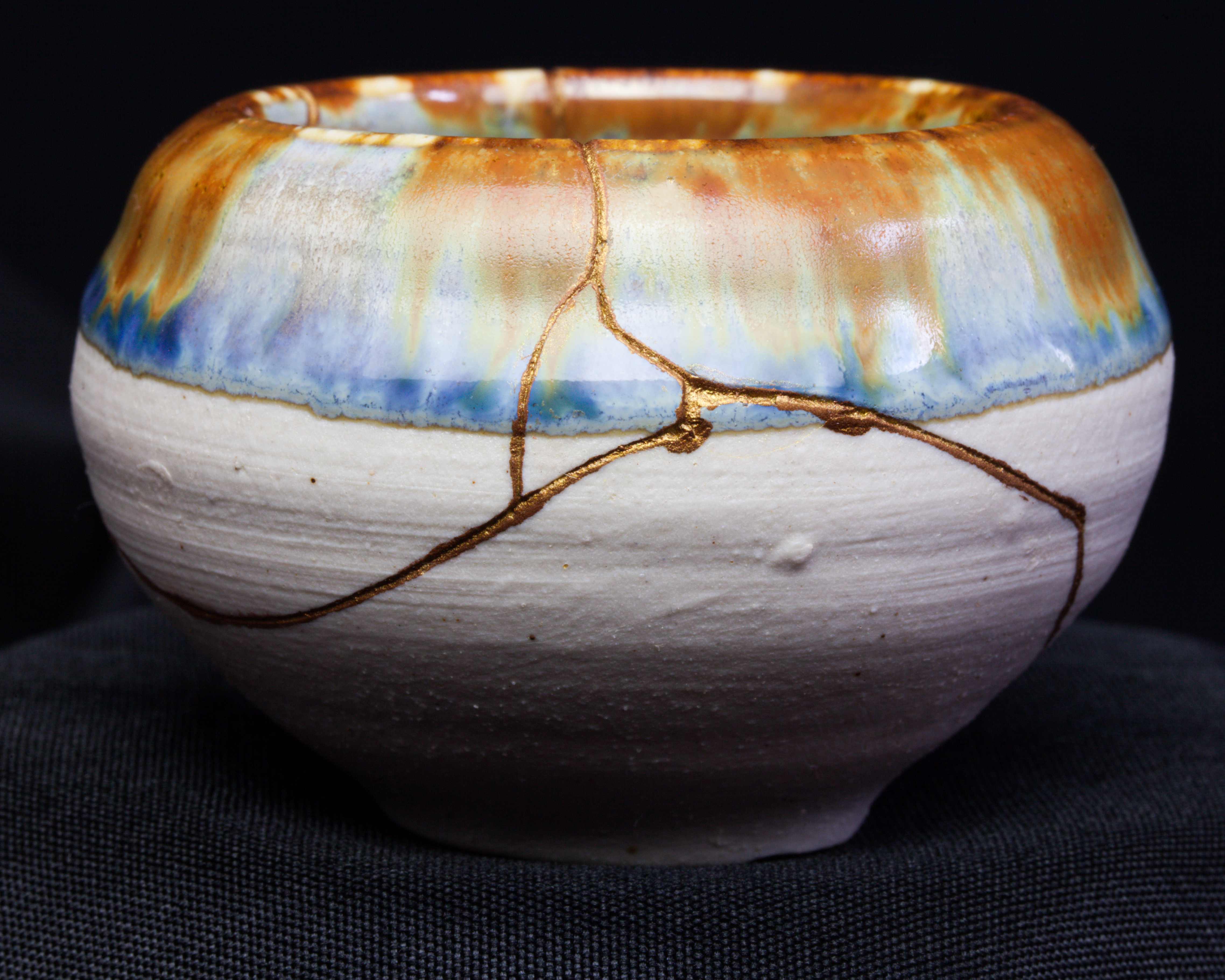
My brain broke a number of years back. Colloquially, it was what’s known as a “nervous breakdown.” In terms of bipolar disorder, it was a “major depressive episode.” Whatever you call it, it meant that for a couple of years, I was immobilized, irrational, and unresponsive. Unable to work, to take care of myself, to enjoy anything. I had it all – the tears, the fears, the despair, the loneliness. You name a symptom and I had it.

Gradually, with psychotherapy and psychotropics, I got better. In fact, I’ve been so much better that I felt my disorder was in remission. I wrote about that.

My strength, my renewed sense of self, my ability to cope was so strong that not even a tornado shook it. A literal tornado, one that ripped the roof of the house while I was in the second-floor bedroom. I went into taking-care-of-business mode, finding us a place to stay those first few nights, then diving into the morass of insurance, money, salvage, bureaucracy, government agencies, phone trees. Things as complicated as moving into a rental house and as mundane as doing the laundry. There were times when I was exhausted, when I’d had all I could handle for that day or that week, but after a night’s or a weekend’s rest, I pulled myself back together and dug back in.

This week, however, I have broken again. I sustained a psychological blow that threw me so off-balance that I can’t cope. I am back to immobility, depression, floods of tears, despair, misery. It was unexpected.  And it happened during the holiday week, a few days before Christmas.

My publisher closed its doors. And just when my second book was on the point of completion. My first book brought me a sense of pride and fulfillment, though it was hardly a best seller. I signed copies for my friends and family. I did a reading at a bookstore. I had t-shirts printed for me and my husband.

Those t-shirts are now gone, victims of the aforementioned tornado. And I have no copies of the book left, not even the copy I inscribed to my husband. It is like the book never existed. The second may never exist either. I am bereft.

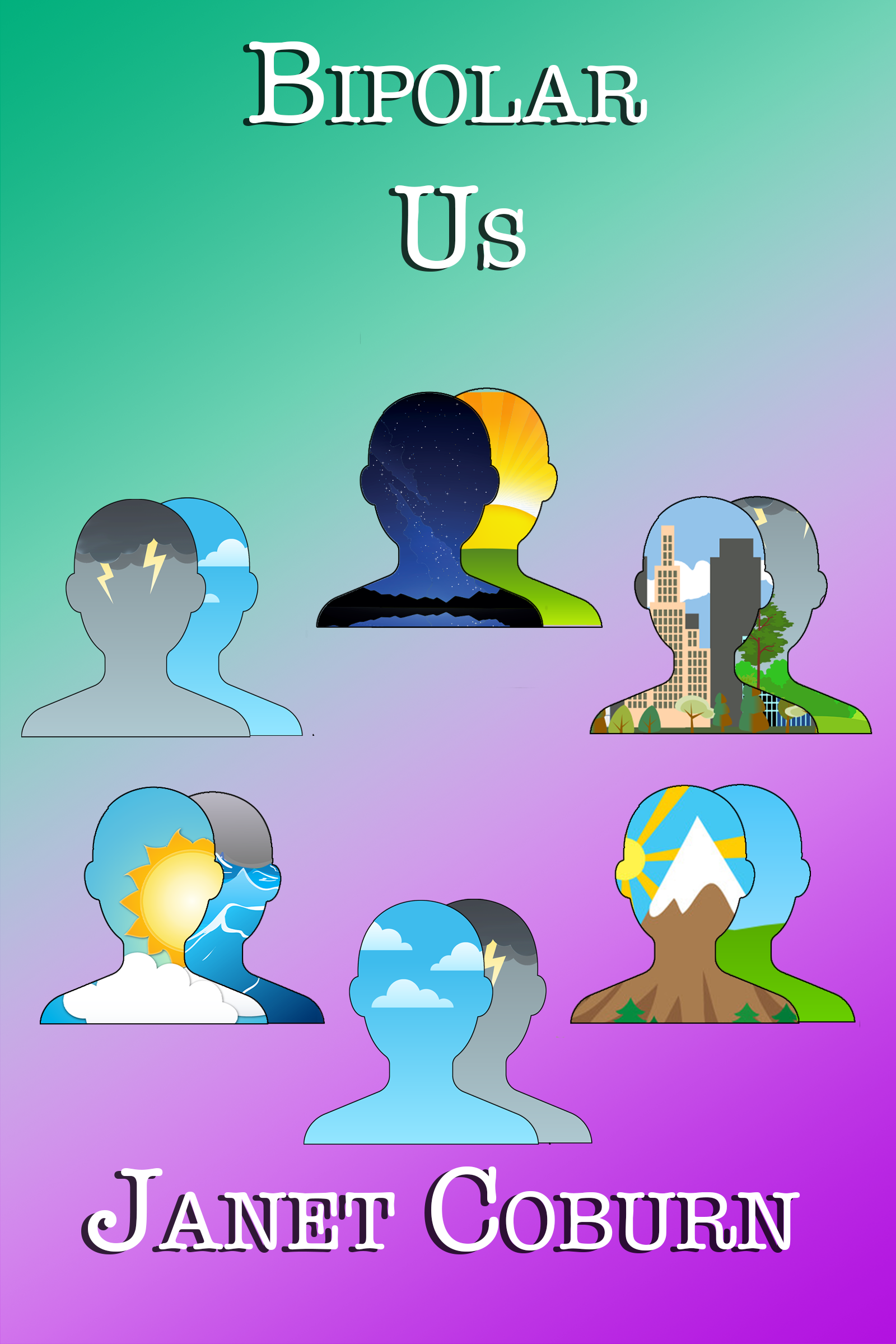
I know it was a mistake to put so much of my pride, my self-esteem, my psychological wellbeing into a thing, something outside myself. But I thought that the book was a part of me that would live on. That it might help other people who struggle with bipolar disorder, and maybe even their friends and families. And the second book would be even better, going more deeply into my experiences and bipolar out in the world – both an inside and outside look at the subject. Bipolar Us, instead of just Bipolar Me.

I don’t how this story ends. At the moment it feels like it has already ended. What do I have left but some electronic files and a half-finished cover? The remembrance that once I wrote a book – two books, in fact. At the moment I am not strong enough to look for another publisher and have no desire to go the self-publishing route. That would feel like another failure, at least for me.

I am crying while I’m writing this. I have been crying a lot over the holidays and staying in bed a lot, too. I made a brief post on Facebook so my friends would know what was happening, but now I have largely retreated. I’ve thrown away at least three blog posts I’ve started. I’m more than a little surprised that I have managed to make it so far with this one. It’s stream-of-consciousness and not likely to get the usual editing before I post it, but I honestly thought I’d have nothing.

I know this is not my failure. I know this is not my fault. That’s how it feels, anyway.

From the ads, you’d think depression was no worse than the flu or a hangover. You can’t concentrate at your job or just don’t want to be there. You live in your sweatpants. You don’t feel like doing the laundry or you can’t remember how to program your high-tech washer. You don’t want to frolic with your husband and kids or go out with your friends. You have resting sad face.

And the cure for all those is a pill! You’ll remember how the washer works. You’ll spend time with friends and family. You won’t wear sweatpants. You’ll have resting happy face.

Well, sorry, that’s not how it works, or at least not how it works for most people.

You see, those commercials don’t show the reality of what depression can be. They acknowledge that depression is not “just being sad,” that it is “a range of symptoms,” but what they show is mostly people just being sad and distracted. And depression – clinical, endogenous, major depression – the kind these powerful medications are intended for – is far worse than sadness and distraction.

Yes, many people get a kind of low-grade depression that is no worse than what the commercials show. But major depression and bipolar depression are serious mental illnesses (SMI). They’re not inconveniences. They’re not something you get over with a single pill.

They can be lifelong. They can be life-altering. And they can be life-threatening.

What the commercials don’t show is anyone suffering, really suffering, from depression. They don’t show the depths of sorrow, fear, and hopelessness, the nights awake and crying, the days unable to get out of bed, the absolute misery.

Of course, those are difficult things to portray in 30 or 60 seconds, even by talented actors and skilled directors. But not even to try is to lie about what depression is and can do.

Depression can immobilize you, make it impossible to hold a job or care for yourself, much less a family. It can make you feel hopeless, as if nothing matters, not even yourself. It can make you feel worthless, unloved, unworthy of love. It can make you question every thought and feeling you have. It can erupt at any moment, day or night, without warning. It can last for weeks, months, even years, relentlessly, without letup. It can tear you apart or leave you feeling like an empty shell.

It can make you believe that life isn’t worth living anymore. It can lead to death.

And what about the medications the commercials are trying to sell? What aren’t they telling you about those?

First of all, they present the pills as a rapid cure. Just ask your doctor if X drug is right for you. Well, your doctor may not know if it is the right one. A lot of medicating depression is trial and error. What is right for another person, what alleviates their symptoms and lessens their misery, may do nothing for you. Then it’s time to try another med. And maybe another and another. Maybe a combination of medications. There are lots of different combinations to go through. And lots of side effects, which you may or may not be able to tolerate, some of them much worse than weight gain. All that takes time, and may not get you back to functioning fully and joyously. If you’re lucky enough to find a med or meds that work for you, you could be taking them for the rest of your life.

Then there are the kinds of depression that medication may not solve or resolve at all – treatment-resistant depression. There are different kinds of treatments for those, ones that never get mentioned on television because they don’t come in a convenient, sell-able pill that makes money for a pharmaceutical company. You won’t see ads for electroconvulsive therapy or transcranial magnetic stimulation, even though these therapies can restore some people with depression to better function.

Another thing the drug commercials don’t show is that treatment with psychotropics requires careful monitoring by a doctor. You don’t just get your prescription and go home to your loving family. A psychiatrist will know to look for signs that the drug isn’t working or that it is “activating” a depressed person just enough to allow her or him to act on suicidal thoughts. Will your family doctor know to do that? You might also need time with a therapist or counselor to discuss, for example, what can trigger your depression, coping mechanisms you can try, and ways to repair relationships that have been affected by your symptoms.

If it sounds like I’m angry, I am. These commercials, though they seem to offer hope and healing, really spread false impressions of what depression is, how it affects people, and what treatment for depression is actually like. I’m not denying that the “soft-sell” approach has helped people, especially those with mild or high-functioning depression. But I know too many men and women whose experience is not conveyed in those ads and who desperately need the kind of help that may or may not be available in pill form. Until they can see themselves in the ads and say, “That’s me. That’s what my life is like,” they may not realize that they, too, can be helped and that they desperately need to and deserve to be.

It’s not about the sweatpants. It’s never about the sweatpants.

I had friends who lived so far out in the sticks that the nearest Walmart was a 20-mile drive away and was the only shopping choice other than the feed and grain store.

One of these friends had Dissociative Identity Disorder. To reach a psychiatrist or hospital, he had to drive for an hour to another state.

Not everyone is lucky enough to have psychiatric healthcare that’s even that accessible. A study in the American Journal of Preventive Medicine finds that 65 percent of non-metropolitan counties do not have a psychiatrist and 47 percent of non-metropolitan counties do not have a psychologist.

That mental health services are hard to come by in rural areas is stunning because although “the prevalence of mental illness is similar between rural and urban residents, the services available are very different. Mental healthcare needs are not met in many rural communities across the country because adequate services are not present.”

Western Interstate Commission for Higher Education, in their publication, “Rural Mental Health: Challenges and Opportunities Caring for the Country,” cites accessibility and availability as two difficulties that face people in rural communities who seek treatment for mental illness.

But they also name another one: acceptability. Stigma surrounding seeking mental healthcare is perhaps stronger in rural communities and small towns than in other settings. Even if they could access good mental health care, many sufferers would choose not to go.

Self-reliance is an important facet of rural character. Dealing with their own problems without outside help is deeply ingrained in family farmers and other small-town or rural residents. This may simply be caused by the fact that the rural population, being so distant from resources common in the suburbs and cities, have had to cope with problems without outside help.

Then, too, small-town life means that everyone knows everyone else. The news that a person is seeking help for a mental difficulty could easily get around. There are still fears that such a person might be viewed weak, needy, not committed to Jesus Christ (rates of Christianity tend to be higher outside of large urban areas), or just generally “crazy” in a sector where everyone minds others’ business.

The need for treatment is there, as “the Centers for Disease Control and Prevention found that from 2001 to 2015, Americans in rural counties had higher rates of suicide than those in urban counties.” Isolation and the difficulty of maintaining a small farm or business are among the reasons that depression and anxiety haunt the rural areas. And of course, no one is immune from illnesses that are typically more debilitating, such as bipolar disorder, schizoaffective disorder, and schizophrenia. More than half of people with these illnesses, originating in the physical brain, lack awareness of being ill. Among this subset of the population with mental illness, anosognosia compounds the barriers to people getting the treatment they need in rural areas.

In a report called “The Stigma of Mental Illness in Small Towns,” Emily Gurdon reports on the effects of mental illness of the older rural population in particular and their reluctance to seek treatment. “Researchers at Wake Forest School of Medicine wanted to know why,” she says, “so they questioned 478 adults aged sixty and older in rural North Carolina. The most common barrier to treatment, according to their study? The belief that “I should not need help.” Other commonly cited barriers: not knowing where to go, distance, mistrust of counselors or therapists, [and] ‘not wanting to talk with a stranger about private matters.’”

Viable solutions to the problem do not seem to exist. Telemedicine has been suggested as one, though that alone would not overcome the sense that seeking help is shameful or weak. But psychiatric or psychological help via technology is still in its infancy, and many practitioners have no more slots available.

Only that old standby – education about mental illness – seems likely to reduce stigma and increase the use of what services exist. It seems that until attitudes change, availability of and access to services increases, and anosognosia is addressed, barriers to treatment in rural and small-town populations will not go away, and indeed, may only get worse.

This post first appeared on Lynn Nanos’s blog (https://lynnnanos.com/). Lynn is the author of Breakdown: A Clinician’s Experience in a Broken System of Emergency Psychiatry, available on Amazon (https://amzn.to/2scZ2Z2).

Many of you know about Spoon Theory. (If you don’t, here’s the original story – https://butyoudontlooksick.com/articles/written-by-christine/the-spoon-theory/).

Basically, it says that every person with a chronic illness receives a certain number of spoons per day, representing energy that they can spend doing various tasks. The trouble is, you never know how many spoons you will get. Some days, maybe only enough to get out of bed. Other days, enough to get dressed and go out. But when you’ve used up all your spoons, you’re done for the day, whenever that may be. Lots of people us “Spoonie” language simply to indicate that they’re tired. But for those of us with chronic illness – and some people, including me, count mental illness as one (see https://wp.me/p4e9Hv-h6) – use Spoon Theory often. It’s a way of explaining to the neurotypical why we may have the energy one day to do things, but not the next. Out of spoons, and that’s it. My husband now speaks fluent Spoon.

In 2018, a new theory appeared, first on Tumblr and then on Facebook, where it went viral: Fork Theory. You can find the whole story here: http://jenrose.com/fork-theory/.

Fork theory came about as an elaboration of the phrase, “Stick a fork in me; I’m done.” Unlike Spoon Theory, which posits something you have at the beginning of the day that gets taken away, Fork Theory says that everyone is stuck with forks, large and small, all day, and that eventually they reach their limit.

Everyone has a Fork Limit. When that limit is reached, the person either falls apart or retreats from the fray and the day.

The thing is, the forks can be minor annoyances, like misplacing your car keys, or large incidents, such as encountering one of your triggers. This is often confusing to bystanders when they don’t know how many forks you’ve already been stuck by earlier. Your reaction to that tiny final fork may seem out of proportion. But forks are cumulative. It may be the smallest fork of the day that sets you off, if you have had your quota of forks for the day already.

Some days, dealing with forks is like being nibbled to death by mice (or ducks or cats, if you’re a Babylon 5 fan). In fact, most days are like that. Nothing really terrible happens, but you go off on someone anyway when you reach your final fork. And as in Spoon Theory, you never really know what your Fork Limit for any given day will be.

Once I reached my Fork Limit on a day when there was a small hole in our roof, directly over the ceiling fan. Water was flung around the room by the still-functioning fan. It was actually a very small hole and just a sprinkling of water, but I broke down sobbing. It was the Final Fork.

Another day, the Final Fork came when a co-worker at the magazine company I worked for created his table of contents in alphabetical order instead of numerical. I went home ranting and raving. My husband, having no idea about Fork Theory at the time (neither did I) pointed out the much larger fork he’d been stuck with that day and teased me for being upset by such a minor thing. At other times, he’s been able to see the virtual forks sticking out of me and help me to calm down, usually by leaving me alone.

I suppose you can build up an immunity to forks, or perhaps your Fork Limit varies from day to day. I once survived a tornado, but nearly lost it when I couldn’t get a shower to get the gunk out of my hair or a clean pair of underpants.

This week I have managed not to hit my Fork Limit on any given day, though I have come close. But there is a huge fork waiting for me today, plus who knows how many smaller ones. This may indeed be the day when I am done.

My wish for you is for a day filled with all spoons and no forks. Those days have to happen sometimes, don’t they?

Do It for Yourself

The commercials advise you to do it for them. The family. The children. The laughing, smiling friends who have great social lives and adventurous spirits. You want to join them, don’t you? You have only to take these drugs to alleviate your depression, keep your bipolar disorder at bay, tamp down your manic highs.

Do it for the ones you love, and the ones who love you.

Well, that’s all well and wonderful, but what about you? Maybe you have a family that doesn’t understand mental illness. Maybe you don’t have a loving bunch of children and a husband or wife ready to embrace you if only you’d get cured and be able to do the laundry. Maybe you’re alone with your disorder and your own self.

Do you still have a reason to seek treatment and get relief from your disorder and your symptoms?

Of course you do! Whether or not you have that picture-book family waiting for you to shape up and smile, you are worthy of a better life, one free from the seemingly non-ending drag or jags of mental illness.

It’s just that our society says that one person’s not enough. We must live for others. We must thrive to spread pleasure to and with them. Only in a family, only when we fit in, only when we are properly medicated or counseled, are we whole.

I’m here to call B.S. on that. Many of us live our lives alone, without family who understand us and friends who support us. If you have those resources, great! No one is saying that you would be better off without them. But many of the mentally ill have to make do with no such support system, no back-up for when our brains go wonky, no squad to cheerlead when, at last, things go right.

And I say that’s okay. You are enough. You deserve to have mental health and stability whether or not you are part of a couple or have children. Your family may be estranged from you. You are still worthy of healing and stability. You deserve it because you, by yourself, are a human being who needs that.

Society calls us to sacrifice for our spouses, parents, and children. We are to think of ourselves last, give our all to the ones we love. They deserve our support, attention, and caring. Mothers especially are exhorted to give all for their offspring. But is our mental health truly something that we should sacrifice in the name of others?

Should we not go to counseling because our schedules are full with family activities? Should we not pay for our medication because there are other household bills? Should we not take those medications because they might affect our moods and thoughts?

We are all worth it. We all deserve mental health – the poor, the lonely, the abandoned, the difficult, the single, the friendless. We have value whether or not we are connected to the vision of society we see on our televisions and especially on commercials for psychotropic medications.

I say, do it for yourself. Seek treatment if you need it. You are enough, just the way you are. Don’t let social programming convince you that you are lesser, unworthy, just because you don’t fit into the roles that are deemed suitable for everyone.

If you need help with your mental health, seek solutions. Don’t worry that others have needs. Your need is just as valid. If you need help, go out and find it.

You are enough. Do it for yourself.

Future Obsession

I used to obsess about the past. Now I obsess about the future. This is progress, I think.

A little while ago, I wrote about how our recent disaster (a tornado) had affected my obsessive thoughts and interrupted my sleep (https://wp.me/p4e9Hv-TO). At the time, my thoughts were focused backward on all the belongings we’d lost that needed to be replaced. I was losing sleep with obsessive thoughts and spending the daytime cruising the web for potential purchases. I discussed this with my psychiatrist and he prescribed an increase in one of my medications, a mood leveler, that he thought might help me turn off the insistent thoughts and allow me to get to sleep more easily. He was right. It did help.

Now, however, I am obsessing over thoughts of what will happen months from now, next spring or summer. I am anticipating the rebuilding of our house and the house-warming party that we should have. Yes, I am obsessing over what to serve at a party that is at least six months away, or perhaps even more. Two kinds of punch, obviously. Beer and wine? Cucumber sandwiches and melon with prosciutto? Cheeseboard with figs and nuts? All desserts? I’ve already changed the menu four times. I am already deciding what to wear. The red silk shirt that a friend gave me? Jeans? Message t-shirt? Butterfly dress? Something I buy specially for the occasion? And, OMG, am I channeling Martha Stewart?

This is an odd feeling. For most of my life, I have obsessed about things that had already happened. I’ve spent literally dozens of years analyzing a failed relationship and how it has affected my mental health and emotional stability. To be contemplating and obsessing about the future is unfamiliar territory.

Obsessive thoughts are one of the hazards of bipolar disorder as well as depression. I can well remember having a mental recording device that played back for me every stupid thing I ever did or social faux pas I made. I still remember when one cute guy asked me for a glass of water and I gave it to the wrong cute guy. I still remember being mortified. I know this is not just a thing that I experience because I have compared notes with others. It seems to be A Thing amongst many fellow sufferers.

This time around, I worked out the thoughts of the past with choosing what things to replace now and what to postpone to a more appropriate time, like closer to when the house is rebuilt. I know I don’t need a new desk yet (though I have bookmarked several online). Ruined books I allow myself to replace, along with my husband’s wedding ring.

I do not know how to work out the thoughts of the future. The future is strange to me. I have so much trouble living in the present instead of the past that the future rarely occurs to me. If my husband asks me to make a decision about an event that’s one week off, I reply, “I can’t think about that yet.” My husband actually lives in the future a lot and asks me to make choices that are years or even decades hence. It’s tiring on some existential level. I don’t know what to do for dinner and he wants me to discuss how we’ll spend our Golden Years.

Given what I know about myself and my disorder, it’s likely that the closer the time comes to moving into the rebuilt house, the greater my anxiety will become. You’d think it would be a time of great joy, but I am already feeling pre-overwhelmed at the thought.

Even so, I think it is perhaps a touch healthier to be obsessing forward instead of backward. It acknowledges that I do believe I have a future, that I can plan for it, and that I can take some pleasure along with the obsessions. I can learn to appease my obsessive thoughts by giving them the more sensible parts of what they seem to demand. I can, to some extent, live in my present with work to do and deadlines to meet that keep me anchored in the now.

What will happen in the future, of course, I can’t predict or control. But perhaps I can train my brain to experience anticipatory enjoyment instead of anticipatory anxiety. That’s my goal, anyway.


I’m Not Giving Up on You

Not you, Rachel, and not you, Paul.

Rachel, I know that your life has been shitty lately. I know that your health problems are overwhelming you and your depression is dragging you down to the deepest levels. I know your brother’s death by suicide still resonates with you and makes you think that there is an easy way to end your pain.

Paul, I know that your life has been full of drama and trauma lately. I know that the tasks of daily living get the better of you and the future keeps retreating further and further away. I know that you have barely any spoons each day and feel compelled to spend them on others instead of on yourself.

But I won’t give up on either one of you.

Rachel, I will take your calls even when I’m exhausted and listen while you vent. I will support you in every way I know how. I will honor and thank you for your generosity when I know that you could easily focus only on your troubles. I will maintain contact even when I am low on spoons.

Paul, I will keep sending you reminders that I am thinking of you and offering you solace and support. I will willingly accept that you are not able to reply just now. I will not take that as a reason to make a break with you. I will keep trying.

Rachel, you know you can say anything to me, for I have surely been there. You know that your suicidal ideation makes me uncomfortable, but I won’t ask you never to speak of it. I have had those thoughts myself and gotten through them. I know you can too. I see all the things that you do to reach out to others and extend your goodness to them. I empathize with your difficult family situation. I don’t know what to do about it, but I will acknowledge the pain that it gives you.

Paul, you know that I have listened to you in the past and will continue to do so, no matter what it is you have to say. I will not let my own anxiety and depression stand in the way of listening to yours. Please know that I understand what you’re going through more than I can say or have ever said.

Rachel, please know that I celebrate with you even the smallest achievements you make. When you are able to stand up for yourself against City Hall, I applaud you. When you investigate ways to make your living situation better, I will not judge you, though they may seem harsh or unacceptable to others.

Paul, please know that I wish only the best for you, even if I don’t always understand what it is that you need. I admire your continuing strength, even when I feel that it would be good if you could lay your burdens down for just a while. I acknowledge that I am not the person that can help you do this, much as I would like to.

The reason that I say these things is that I want you to know that there is someone who does truly understand and truly care. I have been where you are and have found my way out, at least a little. I remember the people – including you two – who have reached out to me even when I was not able to reach back. The very least I can do is to do the same for you.

When you are relieved of your burdens and can again see the light of day, I will be there to celebrate with you. I will not despair or think that you can never see that light.

I will not give up on you. I will not give up on any of my friends who are burdened with depression, anxiety, or some other difficulty. I will do what I can, because I must. There are people who have never given up on me. I know what that feels like, and I wish that same healing and help and health for you.

Aaand…we have a new contender for what causes mental illness.  According to U.S. Attorney General William Barr, it’s a breakdown in Judeo-Christian morality. In fact, he blames a lot of woes on what he calls “secularism”:

Along with the wreckage of the family, we are seeing record levels of depression and mental illness, dispirited young people, soaring suicide rates, increasing numbers of angry and alienated young males, an increase in senseless violence and a deadly drug epidemic.”

Let’s look at that for a minute. Immorality causes wrecked families, depression and mental illness, suicide, violence, and drug epidemics. Lack of religion – or at least the proper Judeo-Christian one – brings on everything but the zombie apocalypse.

Steve Benen, writing for MSNBC, points out the flaws:

For one thing, it’s factually wrong. There are complex factors that contribute to problems such as drug abuse, gun violence, mental illness, and suicide, but to assume these issues would disappear in a more religious society is absurd. There are plenty of Western societies, for example, that are far more secular than the United States, and many of them are in better positions on these same social ills.

http://www.msnbc.com/rachel-maddow-show/ag-barr-blames-moral-upheaval-conspiring-us-secularists

Plus, Barr’s theory would have you believe that in the most religious places in the United States, such ills should not occur. Sadly, we have learned that no community is exempt from these tragedies. And it completely ignores the fact that many mass shooters and bombers cite the Bible as justification for their horrendous crimes.

Ah, but you say, those crimes are attributable to mental illness, which, as Barr tells us, is a product of the breakdown of moral values. It’s a simple equation to him: Immorality leads to mental illness leads to an increase in senseless violence. (As opposed to sensible violence, I suppose.)

And that’s where this slippery slope gets dangerous for those of us who have mental illnesses. Not only are we stigmatized by being blamed for mass violence, we are stigmatized by “ignoring” the cure for our disorders – adherence to the right religious values. (I think it’s fair to assume that Buddhist, Islamic, Baha’i, or Shinto religious values don’t count. In fact, to some religious people, such beliefs are tantamount to mental illness themselves.)

If mental illnesses can be cured by inculcating appropriate religious values, why are we spending so much money on psychologists and psychiatrists, medications, and hospital beds? According to Barr’s theory, that money would be better spent on religious indoctrination, especially for young people. There are many, especially in the halls of power, who agree with him.

You’d think that with the crumbling of the “pray away the gay” philosophy, these people would be hesitant to attempt changing someone’s internal constitution and thought processes simply through the exercise of religion.

Make no mistake, it’s an exercise that is doomed to failure. God does not miraculously grant the right balance of neurotransmitters to the faithful. He does not prevent or cure schizophrenia in those who pray to Him. He does not see to it that tendencies to mental disorders are not handed down through the generations in godly families. Mental illness can strike anyone and does afflict one in four people at some time in their lives. Surely that 25% of people are not all secularists. Just because people with mental disorders are sometimes shunned by faith communities (and that does happen) doesn’t mean that they aren’t religious enough.

Morality is not just for the mentally healthy and mental illness is not just for the immoral. If we let this absurd statement go unchallenged, we are setting ourselves up for more stigma, less funding, less freedom, less choice, and less dignity. If we make sure to oppose this dangerous notion whenever we encounter it, we are doing ourselves, our families and friends, and our nation a service. Educating people about mental illness may begin at home, but it needs to spread to society at large or we will be bombarded by more of these ridiculous, dangerous theories.