May I recommend that you make sure you have a good supply of reading matter on hand? May I suggest the books Bipolar Us or Bipolar Me?

May I recommend that you make sure you have a good supply of reading matter on hand? May I suggest the books Bipolar Us or Bipolar Me?

I don’t often review books in this blog, but Lynn Nanos has written one that has caused me to think long and deeply about an important topic, so I felt compelled to share my take on it.
The book, Breakdown: A Clinician’s Experience in a Broken System of Emergency Psychiatry, deals with the involuntary commitment of people who experience schizophrenia, psychosis, some mood disorders, and anosognosia (lack of understanding or awareness of one’s own mental condition). Nanos lays out her thesis logically yet compassionately, with lots of references to back up her opinions.
What Nanos says is that involuntary commitment should be more widely available and easier to accomplish. Her experience as a clinician in Massachusetts involved many instances when she was involved with administering “Section 12” orders for involuntary commitment.
I’ll confess my bias up front. I’ve always been leery of involuntary commitment. As a person with bipolar disorder which was long untreated and un- or misdiagnosed, I have suffered with the fear that I might be committed at some point in my life. I’m a great believer in civil rights and believe that patients should have the right to refuse treatment.
Nanos is changing my mind, at least in the case of psychiatric disorders which prevent victims from knowing their own needs and taking care of themselves. She makes an excellent case that schizophrenic and psychotic patients, especially those with anosognosia, are the most likely of all psychiatric patients to commit violence and be victims of violence. This she refers to as “dying with their rights on,” a powerful phrase.
As it currently works – or doesn’t – forced commitment often leads to a revolving door of hospital emergency department stays, early release from psychiatric units, and the patients who most need help being discriminated against by psych units that turn them away because of their potential for violence and the difficulty in treating them. This results in homelessness, overuse of emergency services, release to relatives ill-equipped to handle a schizophrenic or psychotic person, and other potential dangers.
Nanos thoroughly discusses Assisted Outpatient Treatment (AOT) and other versions of court-ordered therapy and medication. Though these strategies are not without their flaws, Nanos indicates that her experience with them is that they are substantially beneficial and reduce violent behavior significantly.
Breakdown does not imply that there are simple or one-size-fits-all solutions to the serious problems with emergency psychiatry. The part insurance companies and hospitals play in not supplying adequate treatment is not ignored.
Lest one think that this is a dry, academic tome, though, Nanos fills the book with empathetic and sometimes searing stories of people that the system has failed – both patients themselves and the victims of their sometimes violent behavior.
How has Nanos’s book affected my opinions on involuntary commitment and related areas? The criteria she recommends for the procedure are far from superficial: She posits that involuntary commitment should be used only for those who are actively schizophrenic or psychotic and are unable to recognize the nature of their disorder and are unable to care for themselves – especially if they have shown signs of violent behavior or serious threats. (“Unable to care for self” takes the place of the older “danger to self” and includes conditions like homelessness, malnutrition, etc., not just being suicidal.)
Do I now think that involuntary commitment and/or AOT should be easier to accomplish? Yes, with the understanding that easier does not mean easy. We’re still talking about people’s civil rights, and those should not be broached with serious thought and safeguards in place. But my own fears of being involuntarily committed are revealed to have been irrational, a product of my bipolar disorder.
Has the psychiatric “system” broken down to the point where involuntary commitment is a necessary and even a beneficial thing? The answer, sadly, is yes. Lynn Nanos’s Breakdown has convinced me of that.
Back in September, I wrote about my bipolar disorder being in remission and how much I loved that feeling. Now I’m not so sure. Maybe I’m not in remission. I’ve had significant setbacks, though not long-term ones. At one point I felt broken, but when that lifted I felt jazzed. Maybe I’m on a baseline and never wander too far off it. Maybe I’m stuck on a plateau, halfway between mental illness and mental health.
I ask myself, will I get any better?
It’s like when I had my second back operation (micro-laminectomy). When I went for a follow-up visit to the surgeon, I was no longer in pain. But I was slow and uncertain when walking and felt keenly that my physical capacities were diminished. “Will I get any better, or is this it?” I asked.
“You’ll improve,” said Dr. West. “It will take a while, but you’ll feel better.” And he was right. I did. But I still have some pain at times and sometimes I walk with a cane. I may be better, but I’m clearly not totally well. I’m not bitching (much). I know that once your back goes out, it never gets back to 100%. And I am truly grateful every day that I don’t suffer the excruciating pain of a bulging disk and a pinched nerve.
My bipolar disorder is like that. I am no longer suffering on a daily basis. My meds are working and haven’t changed much in years. My mood levelers are doing their job. But I still have symptoms. There are still things I can’t do, or do only with great mental effort. I’ve never been at 100% and don’t ever expect to be. And I am truly grateful every day that I don’t have the in-the-depths lows, the ever-edgy anxiety, for more than a few days at a time.
But I wonder, am I stuck on this plateau forever? Is this as close as I’ll ever come to mental wellness? Or maybe, I think, mental health is an illusion. I can’t remember a time when I was unaffected by my disorder. The plateau itself may be an illusion. Maybe I am still improving, in such tiny steps that I can’t see the change. Maybe a new medication or treatment will come along and remove more of my remaining symptoms. (I’m not counting on that, though.)
My bipolar disorder feels like it’s running a low-grade fever. I can get done my work and my blogs, but little more. I don’t feel in the least joyful. It may be that this is just real life getting me down – the weather, politics, the endless details and frustrations I have to deal with while we’re rebuilding our house. Perhaps this is just a normal mood swing like everyone gets or a reactive depression to the aforementioned stressors.
That’s one of the constant worries once you have bipolar disorder – not trusting your feelings or your feelings about your feelings. Every setback scares me that I’m teetering on the edge, ready to plunge off that plateau. Realistically, I know that I am as stable as I’m likely ever to be.
My superpower seems to be overanalyzing. I may really be in remission.
Depression lies. Anxiety lies. So, perhaps, does the plateau.
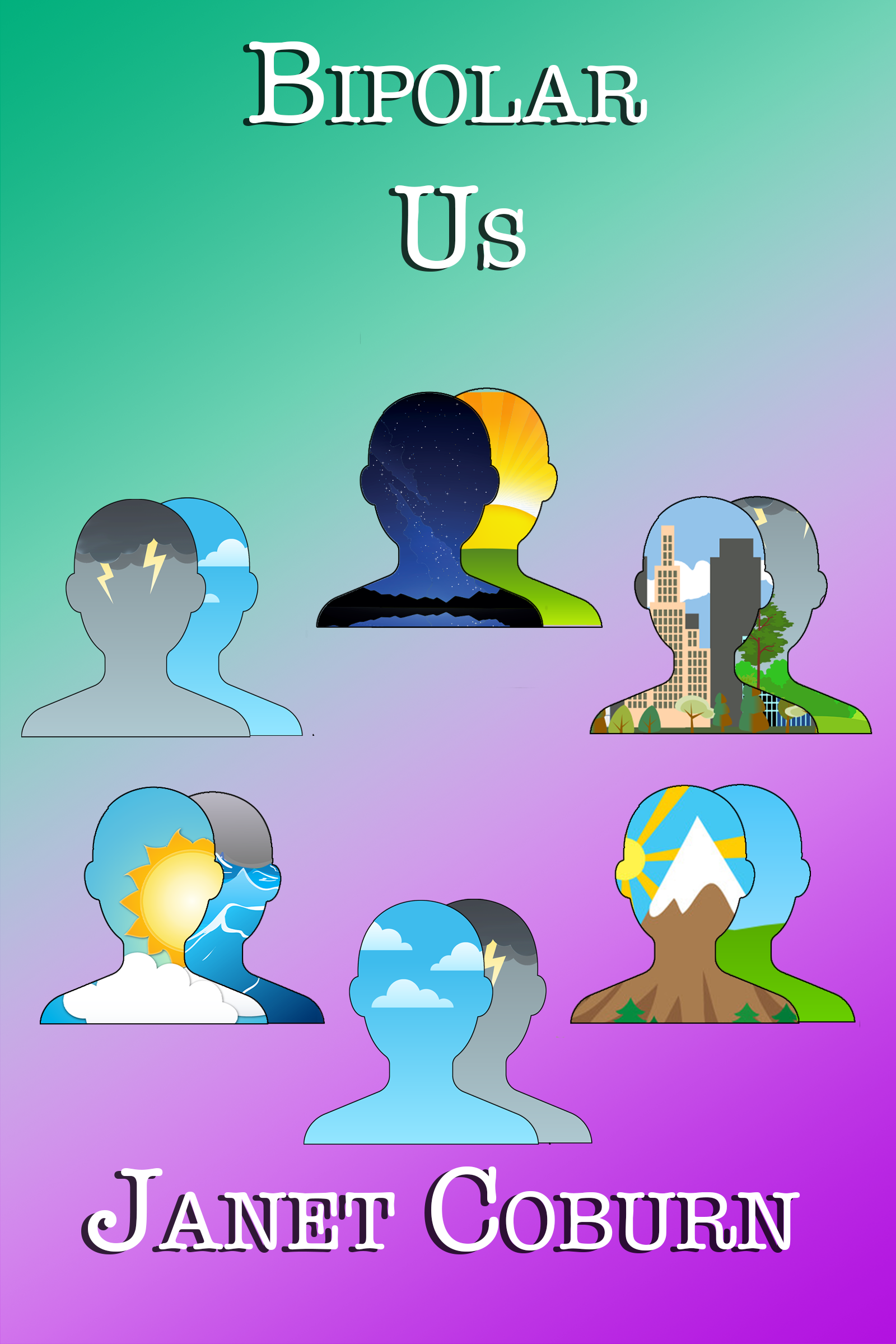
At last, two years after Bipolar Me was published, the sequel, Bipolar Us, has come out!
Again, its content is drawn from my posts on this blog. But this time the focus is widened to include not just my own experiences, but those of us bipolar people interacting in society. Included in it are topics of interest to a general audience as well as persons with bipolar disorder – among them stigma, gaslighting, and suicidal thoughts.
If you notice, there’s a copy of the book cover in the right column of this blog. Clicking on it will take you to Amazon, where you can order the paperback. (I’m still working on making an ebook available and will let you know when it’s ready.) The book is also available through Barnes & Noble and other outlets.
As regular readers of this blog will know, it’s been a real struggle getting this book to come to fruition. I feel great satisfaction in knowing that I’ve accomplished this. But I will feel even greater satisfaction if my book can help someone living with bipolar disorder cope with it a little better – or help a friend, family member, or loved one understand what living with bipolar means.
So – shameless plug! – buy a copy for yourself. Buy one for a friend or family member! And if you don’t want to or can’t buy a copy, ask your local library if they will offer Bipolar Us in their stacks.
There’s also news about my first book, Bipolar Me. It’s about to go into its second edition and will be available soon! I’ll keep you posted on that, too.
Thank you to everyone who has helped make these books possible, and to everyone who has shown an interest in them.
Sometimes it seems like my life has been one long string of misery, despair, and disappointment. But that’s not true, really. Though I was likely bipolar even as a child and have suffered from depression and anxiety ever since, I still have some good memories of even the most difficult times.
Take childhood, for example. Yes, I was moody and difficult, and I missed out on a lot of opportunities, but good things still happened to me. My parents didn’t understand my condition, but they provided a stable, loving home. We had relatives in the country that we visited often, and I had the opportunity to fish, ride horses, and play in haylofts. My parents encouraged my love of reading and regularly took me to the library to get a “fix.”
Yes, I cried at songs on the radio that weren’t even sad. Yes, I went into complete withdrawal after a humiliating incident at a birthday party. And yes, I walked alone in the rain so no one would see me cry. But I also have memories of camping and hiking and baking cookies, going to concerts and discovering the Lord of the Rings.
When I went to college, my condition was even worse. My moods were even more unstable and I began to self-harm. I went to the college infirmary when I expressed suicidal thoughts and stayed there overnight. Twice. (The only times I’ve been hospitalized, sort of.) I sat awake in the hallway at night, staring at a poster on the wall. I took a year off to try to decide what direction my life would take and returned with nothing changed.
On the other hand, I made some really good friends who stood by me. I had some amazing professors (including Carl Sagan) and developed my writing skills. I finally had my first date, my first kiss, and a few other firsts.
During that time, I also entered into a disastrous relationship that lasted just over a year and did major damage to my self-esteem and my moods. It shredded my ability to cope and led to more self-harm and self-medicating.
But again, there were bright spots. I made some more friends, whom I cherish to this day. I met my husband. I heard some wonderful live music and met many of the performers. I made it through the four years and won my diploma (and it did feel like a real win).
While I was healing from the traumas I’d already experienced, I had a lot of problems with depression and anxiety (which were not yet diagnosed as bipolar 2). But I also held down responsible nine-to-five jobs and began to have my writing published in magazines. I traveled domestically and abroad, both alone and with others.
For a while, it seemed like my disorder was on hold. I thought I had escaped the traumas of the past and made a new life for myself, one that included a few close friends, a lasting love, some new experiences, hobbies, beloved pets, and more music, both live and recorded.
Then I experienced a major crash, one that left me unable to work, to write, or to do much of anything for over a year and a half. It was unrelenting. I enjoyed nothing. I had distressing physical symptoms that left me incapacitated for days. I wouldn’t have gotten through it all without my husband.
Then came my proper diagnosis and medication. Things didn’t change for the better instantly. I still suffered profoundly while my doctor and I tried med after med, seemingly to no avail. At last, we came upon a cocktail of drugs that made it possible for me to live and work again, to enjoy day trips and weekend travel, to write and love and live. Since that time, I have learned to live with the limitations I still have and to treasure the good things that do happen.
My bipolar disorder has been like that, with a series of relapses and relatively stable periods strewn among the bad times. And, though at times my disorder has felt all-pervasive and unrelenting, if I think about it honestly, even the bad times were dotted with little islands of good things.
Bipolar may have been a large part of my life, but it hasn’t been my whole life.
The Japanese have an art form or maybe a philosophy called kintsugi, which involves embracing the flawed or imperfect. Cracks or breaks in a pottery or ceramic vessel are repaired using gold dust and resin.
According to Wikipedia, “Japanese aesthetics values marks of wear by the use of an object. This can be seen as a rationale for keeping an object around even after it has broken and as a justification of kintsugi itself, highlighting the cracks and repairs as simply an event in the life of an object rather than allowing its service to end at the time of its damage or breakage.”
On December 29, I posted an essay titled “Broken” (https://wp.me/s4e9Hv-broken). In it, I described the despair and depression that finally hit me after a stressful year, one that ended with the news that my second book was not going to be published. It was an awful trigger for me, considering the amount of work and hope and myself I had already invested in the book, and how near it was to completion.
Instead, I have decided to embrace the philosophy of kintsugi. I may have been broken, but nothing says I can’t put myself back together and consider my mending an improvement. In fact, my therapist said something similar after I suffered an earlier breakdown: essentially, that I could choose what parts of myself I would restore and which I could cast aside. Recently I came across an old diary from that time. I have not yet decided whether to read it, keep it unread, or get rid of it. At any rate, I don’t think I’m strong enough to decide that now, given everything else that’s been going on. But there are other things I have decided to keep.
One of my decisions is to keep my first book, Bipolar Me, alive. It was went out of print this month, but I will be self-publishing it on Amazon. I won’t let the second book, Bipolar Us, die either. Right now I am exploring ways to make sure it will be published as a paperback as well as an ebook. It’s better than my first book, I think, and I want it to be available to people that might find help or hope in it.
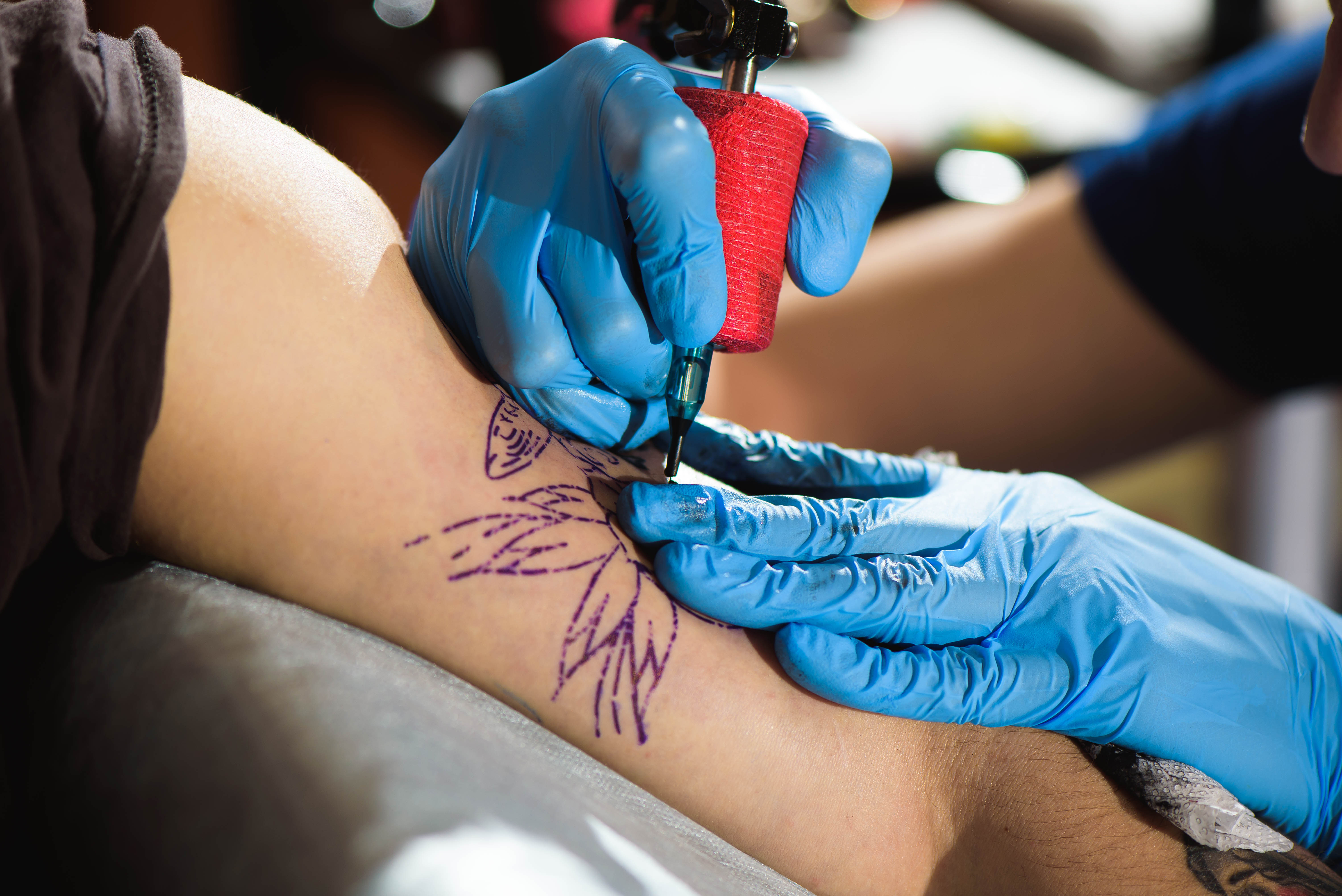
To celebrate this decision, I have ordered a kintsugi-style bowl. (I can’t afford the real thing.) On the bottom will be written “My Story Isn’t Over,” which is also the motto that informs my semicolon tattoo. I will keep it near my desk, where I can see it often and let it remind me that beauty can come from the broken after all.
I also hope that the rebuild on our house, which was destroyed by a tornado, will make it more beautiful at the broken places. (The only thing that remained was the basement, so it’s really going to be all new.) At last I will have a home that I have had a hand in designing, choosing materials, and decorating. No more mismatched, hand-me-down furniture. No more rental-neutral walls and carpet. I can create my study as a place of comfort as well as work, one where my self-care items are readily available and the colors and decorations reflect a calm, steady mood. Again, it is a chance to rebuild something and make it better.
Most of all, though, I need to keep working on me. There are still cracks and breaks in my psyche that need to be repaired. It will take continued hard work and loving support rather than gold dust and resin, but I hope I can eventually convert my troubled life into a work of reclaimed art.
Lately, I’ve noticed a trend in mental health circles. It’s a question of philosophy on some levels. What should we, as people concerned about mental health, mental illness, and society, be doing with our time and energy?
The two choices boil down to fighting stigma and political advocacy. They each have their motivation and their adherents.
The stigma fighters (including the organization Stigma Fighters) maintain that the way to make things better for the mentally ill is to erase the stigma that surrounds mental illness (particularly serious mental illness, or SMI). And there’s no doubt that there is stigma. The mentally ill are feared and blamed for violence in society. They do not get jobs or lose jobs because of their conditions. They hesitate to enter treatment for fear that friends or family will find out.
While mental illness is no longer the “secret family shame” that led to family members being “put away quietly,” kept locked in the attic, and never mentioned, many families do still find that mental illness – in themselves or their loved ones – is something to hide. Something not to discuss in polite company. Something to ignore the existence of.
People who fight stigma usually do so with information and education. Celebrities – even the British royal family – speak openly about conditions such as bipolar disorder, depression, anxiety, eating disorders, OCD, and other of the more common diagnoses. You undoubtedly have heard the PSAs on television that explain that mental health is important and that seeking treatment is not something to be ashamed of.
Are the stigma fighters making a dent in the stigma? It’s hard to say. At least they seem to have opened a conversation about mental health, mental illness, treatments including medications, mental illness among men, suicide, and other problems we face.
Still, the political advocates say, all that stigma fighting has done nothing to increase the number of psychiatric beds available or the number of psychologists caring for rural populations, the homeless, or people with schizophrenia and other psychoses that are foreign to most people’s experience. What we need are people who will bring up these and other issues with legislators and influencers at the local, state, and national levels; who will present proposals that may do some good in increasing access and funding; and who will advocate for improvements such as training for first responders in how to address mental health concerns.
And it’s true. All these things – and more – are needed. We may debate the wisdom of involuntary commitment or compulsory medication, but they are certainly topics that need to be explored if a consensus is ever to be reached. Most people in the mental health community admit that the system is broken and needs to be fixed – or possibly re-thought from the ground up.
Where do I stand on this debate? I feel that one or the other is not enough. It’s not an either/or situation. It seems to me that unless there is some real progress made in fighting stigma, the voting public and the legislators will not understand the realities of mental illness, the need for change, and what needs to be done to fix the system. Unless we engage in spreading information and changing people’s minds about what being mentally ill means, support for policy changes will be thin on the ground. And unless we come up with some solutions that people understand and support, nothing will change.
Myself, I work mostly in the stigma fighting camp. I don’t have the political acumen, contacts, and energy that real activism takes. I know it is vitally important, but it is not something I can do very much or very well.
What I can do, through my blogs and my books, is help with the information and education, spreading the word about mental health and mental illness, and helping alleviate the stigma that accompanies them. I also intend to start looking for opportunities in my writing to comment on the larger societal issues and proposed solutions and help with education about them as well.
To solve the problems surrounding mental illness, we must all do what we can, and what we do best.
I saw a post on a bipolar Facebook page that asked what coping mechanisms people used. There were the usual responses about self-care, which is certainly a fine coping mechanism. But it’s far from the only one.
I’ve learned any number of coping mechanisms over my years in psychotherapy. There’s “looking at how far I’ve come.” There’s “leaving the room when my anxiety gets too bad.” And there’s always one of my favorites: “petting the cat.”
But the answer I put down was “asking for what I need.”
It’s a good coping mechanism because no one can read minds. No one else knows what I need. And, short of them guessing and hoping to hit on the right thing, the only thing I can really do is ask.
I can ask my therapist whether we can work on my anxiety today. I can ask my friend to check in on me daily for a while. I can ask my husband for a hug, or alone time, or some distraction.
Of course, I don’t always know what it is that I need at any given time. At times like that, I can simply ask for things that might help or have helped in the past, like the aforementioned hug or alone time. My husband has been with me for so long and is so familiar with my bipolar disorder that he knows a number of things that are likely to help, and he can suggest them. If all else fails, he suggests I go to bed, or read, or listen to music, all things which can calm or center me. Sometimes he simply puts on my favorite movie, to help draw me out.
Closely tied to the mechanism of asking for what I need is the technique of negotiation. I may know what I want or need, but the other person may not be capable of providing it, or at least not right then. If a friend can’t take my phone call, I can suggest an alternative: Call me after 10:30 or sometime tomorrow. If I need distraction and my husband has to go to work, he can suggest that we go out to lunch the next day.
We’ve developed a shorthand for such situations. When the only thing I can do is say, “help,” he responds with, “help how?” If I can then come up with a suggestion, I do. A lot of the time he is able to provide what I need. But sometimes he just isn’t. Maybe he isn’t able to get me out of the house for lunch. So instead I say, “I need comfort food.” He usually says, “You can get that.” Or he may respond with what it is that he can do: “There’s cheese and crackers here. Will that do?”
Asking for help isn’t easy, and Lord knows negotiating for what you need isn’t either. Both take lots of practice. And there is always the possibility that another person simply cannot supply what you need. That’s where self-care comes in. I know down deep that a nap, or comfort food, or music may help me, and if no one else can provide them, I can usually do it myself.
Receiving help may not be easy, either. Asking for what you need can make you feel, well, needy. And receiving help from someone else may make you feel guilty or unworthy. But the fact is that you – all of us – need help at times and that learning how to ask for and accept help is a valuable skill. And a totally valid coping mechanism.
Recent Comments