Bipolar 2 From Inside and Out

Photo Sesaon/adobestock.com

While never leaving the category of persons with a serious mental illness, I seem to have also become a person with an autoimmune condition. Here’s what happened.

About two months ago, I noticed a hard lump growing on my forehead and another developing underneath my eye. Then one night, I rolled over in bed to feel a strange sensation in my right forearm – an area of thickened, hardening flesh under the skin about the size and shape of a cuttlefish bone. This seemed sudden and alarming compared to the forehead lump, so off I went to the emergency room. They diagnosed cellulitis and gave me a scrip for antibiotics.

A follow-up visit to my PCP revealed no change in my arm, but again a provisional diagnosis of cellulitis and another course of antibiotics.

When that failed to clear matters up, the doctor decided to biopsy the lump on my forehead and send me for an ultrasound and MRI on the arm. The biopsy revealed the lump to be a sarcoid, which immediately changed the thinking about my arm and cellulitis. It now seemed likely that that was sarcoidosis too.

Sarcoidosis is, according to the Mayo Clinic, “a disease characterized by the growth of tiny collections of inflammatory cells (granulomas) in any part of your body — most commonly the lungs and lymph nodes. But it can also affect the eyes, skin, heart and other organs.” I’m lucky that in my case, only the skin appears to be affected. Having my lungs affected would be pretty scary right about now. (The Mayo Clinic adds, “The cause of sarcoidosis is unknown, but experts think it results from the body’s immune system responding to an unknown substance.”)

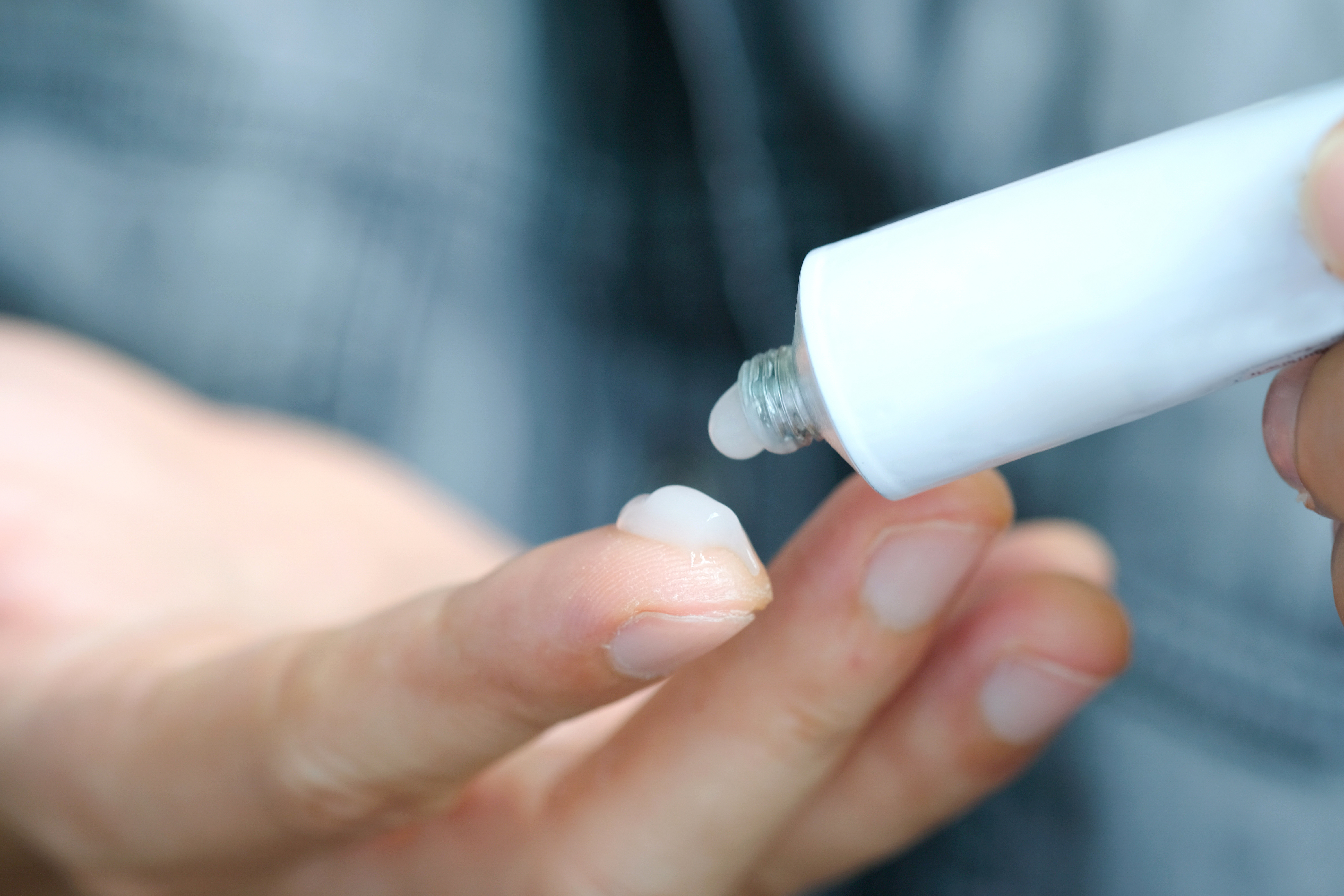
Then the real fun began. The treatment my doctor prescribed was steroids (cream for the forehead, pills for the arm), which makes sense, but didn’t play well with my bipolar condition or meds. “Mood changes” appears on the Mayo Clinic’s list of potential side effects, along with agitation, irritability, and a host of other physical and psychological difficulties.

After a few days on the steroids, I began experiencing chills, raging headaches, insomnia, and the dry heaves. A tele-consultation with my doctor later and my dosage was reduced, which seems to have helped (and the steroids seem to be helping reduce my mysterious cuttlefish).

“Steroids are a bipolar sort of medication,” my doctor told me.

“Appropriate,” I said. (My PCP knows about my bipolar disorder. He’s read my books.)

Dr. S. continued, “One time steroids can make you feel terrific and another time they can make you feel miserable.”

“I’m gonna say miserable,” I replied. “I haven’t slept or eaten in three days.”

“Well, they can get you so revved up that you can’t sleep.”

“Actually, it was the dry heaves that kept me up,” I explained.

A mutually agreeable course of action was decided on. I would lay off the steroids for a day, then resume with a lower dose. That’s just what I have done, and my symptoms are better. At least I’m no longer retching.

What does the future hold for me? It’s hard to tell. Potentially steroid injections in my arm, and having the lump on my forehead removed if the steroids don’t resolve them. Potentially mood swings that I won’t know whether to attribute to my bipolar condition or to the steroids.

I hate the thought that this is an autoimmune disorder – that my body is attacking itself. Of course, my brain has been attacking me for so long, I really ought to be used to it by now.


Minerva Studios/adobestock.com

The experiment was famous in the annals of psychiatric history. As I put it in a post in 2016:

A professor at Stanford University devised a simple experiment. He sent eight volunteers, including both women and men, to psychiatric hospitals. Each person complained of hearing a voice saying three words – and no other symptoms.

All – all – were admitted and diagnosed, most of them as schizophrenic. Afterward, the “pseudopatients”  reported to their doctors and nurses that they no longer heard the voices and were sane. They remained in the psychiatric wards for an average of 19 days. They were required to take antipsychotic drugs as a condition of their release.

Rosenhan’s report, “On being sane in insane places,” created quite a stir. Indignant hospital administrators claimed that their staff were actually quite adept at identifying fakes and challenged Rosenhan to repeat the experiment.

This time hospital personnel were on their guard. They identified over 40 people as being “pseudopatients” who were faking mental illness. Rosenhan, however, had sent no volunteer pseudopatients this time. It was a dismal showing for the psychiatric community.

Except now the wind seems to be shifting. Many psychological experiments from those long-gone days have been called into serious question, some because of reports from participants and others because of unreproducibility. The Rosenhan study, which is widely featured in psychology textbooks, is no exception.

I picked up Susannah Cahalan’s book The Great Pretender: The Undercover Mission That Changed Our Understanding of Madness, expecting to find more details of the experiment – maybe the reports written by the test subjects. Instead, I found a piece of journalistic research that attempted to track down the pseudopatients, and used Rosenhan’s notes for his unpublished, half-finished book extensively.

The author’s conclusion? That the experiment, though published in the prestigious journal Science, was at best dubious and at worse fraudulent. Rosenhan, the author says did not get volunteers from among his grad students, teach them to “cheek” pills so they wouldn’t actually be taking psychotropic meds, and turn them loose on several unsuspecting mental institutions.

Instead, the author says, Rosenhan himself was one of the pseudopatients and so were two friends of his. A sample size of eight or nine is small, but one of three is anecdotal in the extreme. Rosenhan’s write-up of the experiment used an even smaller sample – two, himself and one other. The third was relegated to a footnote as an outlier, one who found his assigned mental hospital to be a kind, helpful, and nurturing place. The sample of two related that the biggest problem on the wards was boredom, barely relieved by the occasional group session, and brief, infrequent drop-ins by a psychiatrist. Nurses remained in “cages” where they could view the floor of the dayroom and hand out meds at the assigned time.

There is doubt, too about how the three pseudopatients got out of their situations. They were all voluntarily committed, so could walk out any time they wanted, but Rosenhan’s notes say that the were released AMA (against medical advice), but with a diagnosis of “schizophrenia, in remission.” (Only one of the alleged pseudopatients had a different diagnosis of bipolar disorder.) Apparently, Rosenhan claimed to have had a lawyer draw up writs of habeus corpus, should the pseudopatients need to be “sprung,” but according to the lawyer involved, this did not happen, but was only briefly discussed.

So, after all this time, what difference does it make whether there were nine pseudopatients or only two or three; whether Science was hoodwinked into publishing a paper the author knew to be deeply flawed (to put it kindly)? We all know that such a situation could not happen today. It takes much more than a self-report of brief auditory hallucinations to get into a psych ward these days. There are extensive interviews, the MMPI test, various screeners to go through. Many of these procedures may have been put in place because of the influence of Rosenhan’s experiment.

But Calahan says that the most far-reaching effect of the experiment was that, not only did it put the entire field of psychiatry in doubt, it was cited again and again in other papers. Those papers – and thus the experiment – were influential in the massive closing of psychiatric hospitals, leading to the current situation of actual people with serious mental illness (SMI) with no place to go, a lack of psychiatric beds in hospitals, sufferers forced to live with untrained relatives, no supervision of medication, and various other breakdowns in the system.

It would be unfair to say that Rosenhan caused all that, but according to Cahalan’s reporting, his paper contributed significantly to exacerbating the problem.


Of course, blogging didn’t exist when I started writing. It was quite a journey ending up where I am today. Even mental health services were a big blank to me when I was young, something that no one I knew experienced or even talked about, except to make jokes about going to “Wayne Avenue,” the location of the nearest insane asylum (as we called it then).

But it’s hard to remember a time when I didn’t write. Childish poems fueled by voracious reading. Hideously depressive poems fueled by burgeoning bipolar disorder. (I still commit poetry from time to time, writing sonnets and villanelles about bipolar disorder.)

But before I returned to poetry with more structure, I indulged in free verse – unrhymed, unmetered verse that relied on the juxtaposition of images rather than formal style. I studied creative writing in high school and college. But the bipolar disorder was undeniably with me, influencing the topics I wrote about: “Two Ways of Looking at the Same Pain” and “Whiskey on the Knife,” a poem about self-harm, are two examples.

As my poetry developed, it started reading more and more like prose, strung out in sentences that relied on line breaks with twists and jarring pauses to create poetic effects. Eventually, I gave up on poetry and simply gave in to prose. I made my living doing prose, and nonfiction at that, writing for magazines about education, technology, child care, and even martial arts.

Bipolar disorder took that away from me. After being diagnosed with clinical depression for years, I finally was identified as having bipolar 2. It was treatment-resistant for many years and during that time I was often unable to write.

My mental health blog, which you’re reading now, grew out of a journaling exercise. I began by listing what I did each day – not much, as I was stuck in a major depressive episode and not able to do much. But once again, what started as something else turned into prose. And by that time blogging was a thing.

I started blogging largely as an exercise for myself, to explore bipolar disorder, its symptoms and treatments, and my particular version of it. I set myself the task of posting once a week, a schedule that I still keep. I wrote short essays and longer pieces, whatever I was thinking about at the time. Hardly anyone read the blog. I sometimes wonder if the title “Bipolar Me” was a turn-off, but really that summed up my knowledge about bipolar – my own experiences.

Slowly, I started finding my voice. and finding things to say with it. Things other than what was inside my own head. Oh, I still wrote about my symptoms and my meds and my coping mechanisms, major depression and hypomania, mood swings and roller coasters. But I also started approaching the wider world of bipolar. Bipolar in the news. Bad science reporting about bipolar. TV commercials about bipolar meds. Bipolar disorder and gun violence. All of this was still through the lens of my own experience, as I have no degree in psychology, counseling, or biochemistry, for that matter.

And I started reaching a wider audience. My writing appeared in The Mighty, Invisible Illness, IBPF, Thought Catalog, Medium, and as guest posts on other bloggers’ sites. Eventually, I had enough material to make Bipolar Me into a book of the same name. And then a sequel, Bipolar Us. Both are still available on Amazon and through other outlets.

I know I’m not in the same league with mental health bloggers like Pete Earley and Gabe Howard. They are true activists and influencers, as well as terrific writers. Their work reaches thousands of people with information, analysis, inspiration, and more impact than I will likely ever have.

But I won’t give up blogging just because I’m not the best. I’ll be here every Sunday, posting my bipolar thoughts and opinions, sharing my bipolar experience, and chronicling my bipolar life.

COK House / adobestock.com

Sometimes we need advice. But sometimes we just need to vent. This is true of all people but especially true of people with mental illness.

Venting is the act of getting something off your chest. It may come explosively if it has built up for a while. There may be one final incident, however tiny, that sets you off. All you really want is to feel heard, that someone acknowledges your distress and understands it. All you really need is a sympathetic ear and maybe a pat on the shoulder.

Venting acts as a safety valve. It allows you to “let off steam” that might otherwise build up pressure until it comes out violently, or at least excessively.

Why do I say this is particularly true of people with mental illness? So often we have feelings we can’t articulate, thoughts we don’t understand, or events that trigger us in both large and small ways. It’s natural to want to keep all these things inside. We’re taught to do that – not to “let the crazy show,” to keep all those messy thoughts and feelings to ourselves. Eventually, we get to the point where we think that no one will understand anyway, so there’s no point in giving voice to these feelings.

Then, when we do finally vent, inevitably someone says we’re overreacting. Because, you know, crazy.

If I’m venting, the wrong thing to do is to give me advice. Unless I specifically ask for advice, that is. But even well-meaning advice can easily go wrong. People who do not suffer from psychiatric conditions often offer advice regarding what works for them when they feel a certain way. And yes, a walk in the fresh air and sunshine can certainly be uplifting. But when I’m too depressed to get out of bed, it can be an impossibility. It can even make me feel worse about myself.

To me, suggestions for possible remedies for my disorder are even worse. It’s taken me and my assorted doctors years to assemble the right medications at the right dosages to tame my bipolar disorder down to something livable. When someone tries to tout the latest remedy they heard about – Pilates, elderberries, juice cleanse, probiotics, or whatever – it feels to me like “pill-shaming,” like I’m being blamed because none of my meds will “fix” me thoroughly enough. Add the fact that these suggestions come from questionable sources – laypersons or bogus “studies” – and I’m likely to dig in my heels and feel offended.

At times, though, I do need advice. When I do, I usually get it from my therapist, someone else who shares my disorder, or an old friend who has been there for me on my journey. Sometimes I need a reality check – am I just catastrophizing or is it really true that something bad might be happening? Sometimes I need help dealing with a specific person – what can I say to my sister to help her understand my condition? Sometimes I need a reminder that I really ought to make an appointment with my therapist and get a “check-up from the neck up.”

And it should be understood that advice is just that – a suggestion that I am free to take or leave. Even my therapist, who usually gives very good advice when I ask her, sometimes suggests techniques or approaches that just don’t work for me. And even she knows that sometimes I just need to vent, to feel the feelings of sorrow or hurt or rage and let them out in a safe place. To quote Jimmy Buffet, “It cleans me out and then I can go on.”

imageBroker – stock.adobe.com

Mood swings are universal. Everybody has them at one time or another.

Bipolar disorder is not just mood swings. Not everyone has moods that can last for months or years at a time or moods that are so extreme that they interfere with one’s daily life. The depths of despair and the rocketing highs are not what most people experience – and they should be glad they don’t. Bipolar disorder is a serious mental illness (SMI). It can be more or less severe, and it can be well or poorly controlled with medication and therapy, but the reality is that bipolar is a mood disorder, an illness, and a curse. 

Of course, the mood swings of bipolar disorder don’t always last for months or years. Sometimes you go spinning out of control every few weeks. This is called “rapid cycling.”

But even rapid cycling doesn’t describe the lightning-quick mood changes that can happen within a day or two. That’s called “ultra-rapid cycling,” and it’s like being whip-sawed by your brain. Those valleys and peaks come so closely together that you don’t even have time to catch your breath between them.

I think that the official criteria miss the mark on this. Many of them define rapid cycling as experiencing four mood swings within a year. Ultra-rapid cycling seems not to have a specific definition, but I and a lot of other people with bipolar disorder experience moods that swing not over the course of months, but over the course of weeks, or even days.

Ultra-rapid cycling blurs the lines into mixed episodes. Those are occasions when high and low moods occur at the same time. For many bipolar sufferers, this means simultaneous exaltation and despair, which is a terrible combination and a bitch to experience. For me, a person with bipolar type 2 whose hypomania expresses most of the time as anxiety, a mixed episode is a frightening blur of defeat and nervousness, a simultaneous feeling that the worst has already come and that it is about to descend to even lower levels. It’s like ricocheting off the insides of your own skull.

What to do at a time like this is a puzzle. Do I try the things that soothe me when anxiety strikes? Do I try self-care for depressed moods? Do the two strategies cancel each other out, leaving me swinging helplessly? Do I try to suppress both moods, knowing that the consequent numbness will make it all the more difficult for me to feel “normal” moods again? Once those walls are built, they are hard to tear down.

Ultra-rapid cycling and mixed episodes may be handy jargon to describe mood swings that don’t fit the common mode of bipolar disorder.  But they’re hell to live through. And since mood levelers, antidepressants, and anti-anxiety meds generally take a while to build up in the bloodstream enough to have an effect, there is little in the way of pharmaceutical help. An anti-anxiety pill may relieve the jitters and racing thoughts, but may also leave you more susceptible to the inevitable lows.

I don’t know if there’s much research going on regarding rapid cycling and mixed episodes. It seems like they’ve barely been named, much less defined or studied. And it’s true that there is a lot about plain old garden-variety bipolar disorder that remains to be understood and treated.

But for those of us who don’t fit the mold of months-long or years-long mood states, rapid cycling can be an uncomfortable way of life. When I was undiagnosed and unmedicated, I experienced those long, interminable lows. They did last months, years, until the depths of hell were all that I could see. The jags of ambition seldom visited me, but the creeping, lingering anxiety could easily take over. Now that I’m no longer subject to those excruciating extremes, I still am subject to the quick-change, rapid-fire series of moods. My mood levelers do work, in the sense that they reduce the peaks and valleys, but they never seem to put me on a totally even keel.

Perhaps that’s too much to expect. I’ll have to admit that I prefer a life of rapid- or ultra-rapid-cycling bipolar to the monotonous despair of long depressive cycles. At least now I have a firm conviction that the moods will end, or at least shift, to something more tolerable, and that that will happen sooner rather than later.

Given the choice between the lingering depths and the more rapid changes, I’ll take the one that doesn’t leave me in misery for years at a time.


Alone time is a precious thing. But right now, with the self-isolation that accompanies the pandemic, many of us are experiencing too much “alone time.” But many of us need more.

Alone time has been important to me as I have struggled with bipolar disorder. I have a loving, supportive husband who is there when I need him to be. But even he knows that sometimes what I need is to be left alone.

Sometimes the world is too much with us, and we long to escape – read a book, hide under the blankets, just sit in the corner and think. At times like that, interacting with another person can feel like an intrusion, an annoyance, unwelcome. Alone time can allow you to catch your breath, calm yourself, practice mindfulness, or simply be alone with your feelings.

Of course, getting alone time is not always easy, especially now when we may be cooped up with our nearest and dearest, with no respite in sight. In my opinion, these are the times when a bit of alone time is even more necessary. Even with people you love, being with them 24 hours a day, every day, will begin to wear on you all. Stress builds and you may be triggered by noise, conflict, or other stimuli.

I’m lucky. That supportive husband knows, if his other efforts at drawing me out (offering me food, or a movie, or music) have failed, the greatest gift he can give me is alone time. He’ll even ask me if I need alone time, in case I don’t realize that is exactly what I do need.

I’m also lucky that there is a dedicated space in my house that is perfect for alone time – my study. It has a computer, music, comfort objects, games, favorite pictures, and more. It even has a comfy chair so that I can just sit and think if that is what I need to do. I know that I come at this topic from a place of privilege.

Making mental and physical space for alone time is harder when you have a roommate or a family that doesn’t understand the concept of alone time. The TV may be blaring, the washer clanking, the kids yelling, the spouse being needy. There may be someone in every room of the house, making noise or demanding your attention. Sometimes you can’t even be alone in the bathroom. You want everything to stop, just for a while.

In situations like that, you may have to ask for alone time. First, realize that it’s a reasonable request. Suggest ways to make it happen – I need to be alone in the basement (garage, kitchen, yard, whatever) for a while. Don’t disturb me unless someone’s bleeding or something’s on fire. Offer to return the favor. If you’re feeling pent up, chances are someone else in the house is too.

Of course, too much of a good thing is not necessarily a good thing. Even though I need a fair amount of alone time, too much can leave me stuck inside my own head, not always a comfortable place to be. I can brood, catastrophize, feel lonely or bored, give in to depression. It helps if I can recognize when alone time is turning toxic like that. When I’ve had enough alone time, I can choose to leave that behind and rejoin the world in a better frame of mind.

As far as I can see, alone time is vital for every person, even the very gregarious. It allows us to let go and drop our metaphoric masks. But alone time is particularly necessary for those with mental illness. The ability to be alone with oneself can be a powerful step in understanding and healing. And whether time alone is the norm or the exception now, people’s mental health suffers. Connection is what we hear most about – virtual meetings, video chats, texts, and calls – but alone time is vital too. Treasure it when you get some. 

Persistence of Memory

It is spring, sunny and pleasant, but the wind is blowing at 20 miles per hour. The boughs of the fir trees sway dramatically. The bird feeder glints in the sun as the light catches its swinging arc.

I am anxious.

There is a thunderstorm. Those same trees are tormented by strong winds. The hard rain doesn’t fall but blows sideways. Golfball-sized hail pelts the ground. I swear I can see lightning flash close to our house.

I am panicking.

About ten months ago, my life was changed when I lived through a tornado. Everyone says it was a miracle I survived. I was on the second floor of my house, with no time to get to the basement, when the roof came off. Assaulted by a maelstrom of flying dirt, insulation, and debris, I put a pillow over my head and hoped for the best. And I came through it without a scratch, although the house was damaged so badly that it had to be torn down. It’s being rebuilt right now and we hope to move in in a couple of months.

After the tornado passed, I was calm. I even slept with that filthy pillow as I waited for my husband and the rescue squad to come and extricate me from the bedroom. As the days passed, I had to deal with a lot of things that reminded me of the tornado – staying in a Red Cross shelter, dealing with the insurance company, going back to the house to rescue our pets and salvage a few belongings that had been in the least-damaged part of the house.

As time went by, I told my story again and again to friends and acquaintances who asked about it. Without exception, they were amazed not just at my survival, but at how incredibly calmly I talked about it and how I didn’t seem to be suffering from any post-traumatic effects.

Then why is it that, ten months later, I seem to be experiencing the anxiety and panic that should have struck me then? Heavy rain makes me nervous. Strong winds disturb me. Lightning makes me jump.

My husband thinks that it is because we are getting closer to the anniversary of when it all happened. And it is again tornado season in Ohio. I think it was not completely irrational of me to be afraid of the storm last week. I just wonder why it happened after all this time. Have I been in denial for ten months? Does it sometimes take that long for post-traumatic stress to manifest?

A friend of mine had a similar experience when her car was nearly hit by lightning. At first, she said, she was still able to drive to work. But as time went on, she became more and more frightened of driving through rain. As she put it, “Over time, my anxiety ramped up rather than down.” She had to have de-sensitization treatment.

Her explanation for the delayed reaction was that “the long-term memory encoded it.” Perhaps it’s possible that the lightning for her and the tornado for me lingered in short term memory and did not become troublesome until they were fully stored in our long-term memory banks. That sounds counterintuitive, but it may be right.

Will I be comfortable on the second floor of the house when we finally occupy it? Will I be able to sleep in the bedroom? Will every thunderstorm send me racing to the basement?

I just don’t know.

Flap My Arms and Fly

Those of you who read my blog regularly know that I’m not a big fan of positive thinking memes. In fact, they have the opposite effect on me. Someone who claims that a positive attitude is all that I need to change my life is likely to get only a “pfui” from me. As a person with bipolar disorder, I sometimes have major depression, and no amount of thinking is going to pull me out of it. In fact, the only thinking I can do at times like that is likely only to pull me farther into the depths.

If affirmations and positive thoughts work for you, I say, good. If mindfulness and meditation are your jam, then I say, whatever works. But please don’t try to deny my perception of reality.

That perception is that there are some things that positive thinking can’t do. That there are some situations that are immune to positive thinking. That positive thinking can’t change the outcome of everything.

Admittedly, positive thinking can change one’s attitude toward one’s circumstances. One can choose, as my father did, to be determined, stubborn, and positive in the face of his diagnosis with multiple myeloma. It likely helped him live long past what his doctors expected.

But not everyone can do that, and maybe not everyone should. Elizabeth Kubler-Ross said that acceptance was the final stage of the process of dying, not the first. The same, I think, is true of grieving. Anger, denial, bargaining, and depression are natural responses to cataclysmic events, including diagnoses, and in this case, particularly diagnoses of serious mental illness.

Although my father was well-known for his “positive mental attitude” about his cancer diagnosis, I remember a time when he could not even say the word.  He swallowed it, leaving out the vowels: cncr. And I remember that at times he was in denial about his illness and tried to do things he was physically not capable of doing – even, at one point, walking down the short hall to the bathroom. Even positivity could not help him there.

I watch a lot of competition shows on TV – Chopped, Forged in Fire, etc. – and I often hear the contestants say that they are doing it to prove to their children that they can do anything they set their minds to.

A part of me always says, “Okay, then. Flap your arms and fly.”

I know that sounds cynical and bitter, but it’s also the truth. The contestant who was cut in the first round has not done what he or she intended to or believed he or she could do. After that, they espouse the more reasonable and attainable lesson that their children, or others, should try to follow their dreams and take that trial as a noble effort, even if it doesn’t end in victory.

I have bipolar disorder. There are some heights I can never fly to, no matter how hard I flap my arms. I know I will have to take medication for the rest of my life. I know that, even with medication, I will still experience mood swings. I know that I will never be able to really trust my moods – that a setback might send me teetering over the edge or a triumph might make me imagine that I can indeed fly.

And, you know what? I’m okay with that. What I’ve accomplished with the help of medication, therapy, and the support of my family and friends, is good and is good enough. My dreams are down-to-earth, not grandiose. I do not dream of flying, but of remaining as stable as I can, right here and now. I choose not to delude myself with unattainable goals.

My father didn’t think he was going to live forever, but he was determined to live as long as he could, and to enjoy what he could in spite of the pain. I think that’s as ambitious as someone with a catastrophic illness can get. I admire him for his sustained effort and his stubborn resistance to despair. I admire those of my friends – and there are some – who can choose not to be dragged down by the circumstances of life.

Maybe it’s different for me because my disorder by its nature involves a component of lowered mood. But my expectations are not to flap my arms and fly, but just to keep on keeping on.

Scars from self-harm are reminders of dark periods in our lives, times when we felt too little or too much. Times when we thought that feeling physical pain could distract us from emotional pain. Times when we felt so numb that we self-harmed to reassure ourselves that we were still alive.

Tattoos can be a lot of things. They can indicate membership in a tribe, be a reminder of a happy occasion, commemorate the passing of a loved one, be a work of art, be a relict of a drunken night, espouse a cause, or have a personal meaning that no one else is party to.

Self-harm is something a lot of us have tried, in one form or another. And the scars produced by it have many meanings. They can be reminders that we lived through a really bad time or reminders that we chose a really bad coping mechanism. Some people look at their own scars and feel lucky to have survived. Some look and feel shame.

Now, a Philadephia tattoo studio, Crown and Feather Tattoo Co., is offering to cover up people’s self-harm scars with free tattoos. The service is so popular that the studio has had to hire more tattoo artists to keep up with the demand.

They call this effort “Project Tsukurou,” a word derived from Kintsugi, a Japanese art form that involves repairing broken pottery with resin and gold dust. I wrote about Kintsugi recently (Beautiful at the Broken Places, https://wp.me/p4e9Hv-Yj). Rebuilding oneself after a breakdown and thinking about making it a work of art was very empowering to me. Apparently, the tattoo artists and their patrons felt the same way.

I have scars from self-harm and I have tattoos. The tattoos don’t cover the scars but are located in close proximity. The scars have faded, nearly invisible now since the dozens of years since they were created. I am over that, healthier than that now. (Once someone asked me how I quit self-harm. I replied, “I didn’t need to anymore.”)

At first, I was ashamed of those scars. I tried to hide them with wide bracelets and watchbands. Later, I made my peace with them. They were now a part of me, a reminder of a time of despair and despondency. They were a reminder never to let things get that bad again. That there are things I can now do to alleviate the pain or the numbness, should it ever get that bad again anyway.

Mostly, I don’t look at the scars anymore. But my tattoos are right there next to them. One is a semicolon, a symbol and reminder of suicide prevention. (See projectsemicolon.com for more information.) The other is the :): symbol for bipolar disorder. When I look at these tattoos, I think of the reality of both my disorder and my new, better, life-saving coping mechanisms.

Of course, tattoos are not a choice that everyone is prepared to make. Some people feel that they shouldn’t modify their body in that way. But for someone who has already modified their body with scars of self-harm, tattoos can possibly give them back a measure of dignity and pride that their self-harming days are over. They can look at their bodies and see, not mutilations, but life-affirming works of art.

So far, the only tattoo studio that I know of performing this service for free is the one in Philly. But most tattoo studios are used to covering over regretted tattoos with new ones. They should be able to cover the scars of self-harm as well. And if they don’t do it for free, well, one could think of the money as an investment in healing or moving forward or creating a work of art where once there was only a reminder of pain.


Reference:

https://scoop.upworthy.com/tattoo-studio-covers-up-self-harm-scars-for-free-it-totally-changes-your-outlook?fbclid=IwAR0sjb_G3sS_P3FsXmImsBtRaIrFkak_8OHjcNJJjocnnSrrL1X-bBqgSlc

I’ll admit that I’ve had a lot of side effects from the various psych meds I’ve taken over the years, and some of them were bad enough to make me ask for something different. There’s been insomnia, sleeping too much, twitchiness, vivid nightmares, and others. But as far as I can see, there are only two side effects that would make me completely quit taking a prescribed medication, even before I could ask my doctor about it.

The first is Stevens-Johnson Syndrome. It’s what they mean when they say on TV commercials, “a fatal rash may occur” (I didn’t even know rashes could be fatal). Indeed, your skin starts to come off. I think it’s always a bad sign when your insides suddenly become your outsides, like in that Simpsons episode where everyone turned inside out. Among the medications that can cause SJS are anticonvulsants, antipsychotics, and other psychotropic drugs, at least two of which I take daily. When he prescribed them, my psychiatrist told me to stop taking the meds instantly if I got a rash around my mouth and nose, and go to the emergency room. It’s that serious.

Apparently, the anti-smoking drug Chantix and maybe some others can also cause SJS, which I guessed from the “fatal rash” warnings on the commercials and later confirmed. I idly wonder if the rate of Stevens-Johnson has increased now that more of these drugs are being used.

The other side effect that I truly fear is tardive dyskinesia. Tardive dyskinesia means involuntary, repeated muscle movements, which can affect the face (tics, twitches, grimaces) and other parts of the body (legs, arms, torso, and fingers). Think John Nash in A Beautiful Mind. These movements appear after taking medications such as antipsychotics. Worst of all, the movements may become permanent and a number of people are disabled because of them. There are now medications that treat tardive dyskinesia, but I still wouldn’t want to have it.

Yet, what is the most feared, the most despised side effect of psychotropic medications?

Weight gain.

I see countless comments in online support groups asking about weight gain on particular medications and posts that say such-and-such a drug caused weight gain. A number of people post that they will not take these medications, or will stop taking them, because they can cause weight gain.

Admittedly, weight gain is not often a good thing. It can certainly lead to other health problems. But my point is that many people are more concerned about their appearance than their mental health. 

I’ve struggled with my weight too over the years, and I have written about it (https://wp.me/p4e9Hv-7o). But I’ve struggled more with my mental health, which could kill me just as surely as obesity.

There is vast stigma in our society surrounding fat people. That’s undeniable. Fat people are stereotyped as lazy, sloppy, unattractive, unhealthy, and more. Despite recent body-positivity messages and a few clothing commercials that now feature more plus-size women (I haven’t seen plus-size men), this stigma continues virtually unabated.

Of course, there is stigma around mental illness, too. Those with mental disorders are stereotyped as out of control, violent, dangerous, suicidal, and a burden on society. I can see that people are reluctant to add the two stigmas together.

But honestly, is weight gain so very bad compared with the chance to alleviate the misery and suffering that accompany serious mental illness (SMI)? Personally, I prefer to weigh more and not live my life in despair and hopelessness.

Some of the medications I’m on can cause weight gain. Some of them can cause Stevens-Johnson Syndrome or tardive dyskinesia. Fortunately, weight gain is the only side effect I’ve had, and I can live with that. Stevens-Johnson is potentially deadly and tardive dyskinesia is potentially permanent. There are things I can do about my weight if it really concerns me, or I can chalk it up to a side effect of being content, stable, and productive.

Frankly, of the possible side effects, I fear weight gain the least.