Bipolar 2 From Inside and Out

I’m not great at group therapy. I’ve tried, but I never managed to get anything from it.

It may be familial. My father had a particularly vicious cancer, multiple myeloma, which he survived for a dozen years, a lot longer than the doctors thought he would back then.

The hospital where he was diagnosed and treated offered support groups for cancer patients. I remember one called “Make Today Count” (which I think implies a certain recognition of mortality that’s not really encouraging – but I’ve never faced it myself).

My father refused to go. Adamantly. Of course, the choice was up to him, but he chose not to get involved and made no apology for it. It wasn’t that he couldn’t accept help. He just relied on family and friends for it – people he knew and had a connection with. I’m sure that support helped him to survive as long as he did, and I can see how a group of strangers, even if they had the same or similar conditions, wouldn’t appeal to his independent streak. It wasn’t that he didn’t have a positive mental attitude, either. No one could have been more determined that he was going to persevere for as long as possible. No one could have been more confident that he would prevail. And no one could have kept doing the things he loved for as long as possible.

I have had experiences with group therapy, but they have not been successful. When I was in college and experiencing a depressive phase, I went to a group offered by the university’s health services. I was skeptical at first. One woman’s problem was that she didn’t know whether she should marry a rich guy or a poor guy who had both proposed to her. (I’m not denying that she was conflicted, but I wondered how much a mental health group could help. Maybe individual therapy could have helped her clarify her thinking, but then again, I just don’t know.)

The other thing I remember was that once the group facilitator issued us a challenge – which of us could role-play meeting another person and holding a conversation with them. My hand went up, and I performed the task easily. I had reached the point where I could fake my way through simple social encounters, so it wasn’t all that difficult. The facilitator looked impressed and slightly disbelieving. It was something I already knew how to do, so it didn’t actually help me with my problems. I don’t know if it helped anyone else either.

Another time, when I was out of college and in private therapy, my therapist was going on vacation and recommended a group I could go to while she was away. They took us through a relatively simple exercise – making a drawing of our life journey. As I recall, we used only symbols, no words.

When I finished, I burst out crying uncontrollably and didn’t know why. I don’t remember anyone there helping me process what I was feeling. Maybe I expected too much from a therapy group. Maybe they weren’t equipped to handle a meltdown. But it was a thoroughly upsetting and unhelpful experience, and I didn’t go back.

Another group I attended a few times struck me as a bit peculiar. The participants each related a difficult situation they had been in and the symptoms they experienced, then told how they would have handled it previously and how they handled it now. There were lots of quotes from a book they all carried like a bible. There was no discussion – just the facts and the quotes. (Once I offered someone a piece of gum or a mint and they pointed to me, chuckled, and said, “Dry mouth!”) Again, I didn’t find it really helpful.

At this point, I’ve pretty much given up on therapy groups. Perhaps, like my father, I am simply not a group person. I know there are those who will say that I simply haven’t found the right group. They may be right, but I have stopped looking.

There are lots of mental health groups – not therapy groups, of course – on Facebook and elsewhere on the internet. I’ve become the moderator of one (https://www.facebook.com/groups/HopeforTroubledMinds – come check it out if you want to). What founder Tony Roberts and I try to do is offer a place for people with brain illnesses to learn from and share their experiences, with a faith component. Tony, who is much more in touch with the faith-based communities than I am, provides most of that part of the content. I facilitate by curating articles from around the internet on anxiety, depression, PTSD, bipolar disorder, psychosis, and general mental health. I post memes that relate to mental health or offer encouragement – or sometimes ones designed to bring humor to the subject. And I ask questions intended to spark discussion. I hope it helps.

And I also hope that other people have had better experiences than mine. I’d love to hear about them.

Keep This Blog Alive!

Choose an amount

¤2.50
¤5.00
¤10.00

Or enter a custom amount

¤

Your contribution is appreciated.

Donate

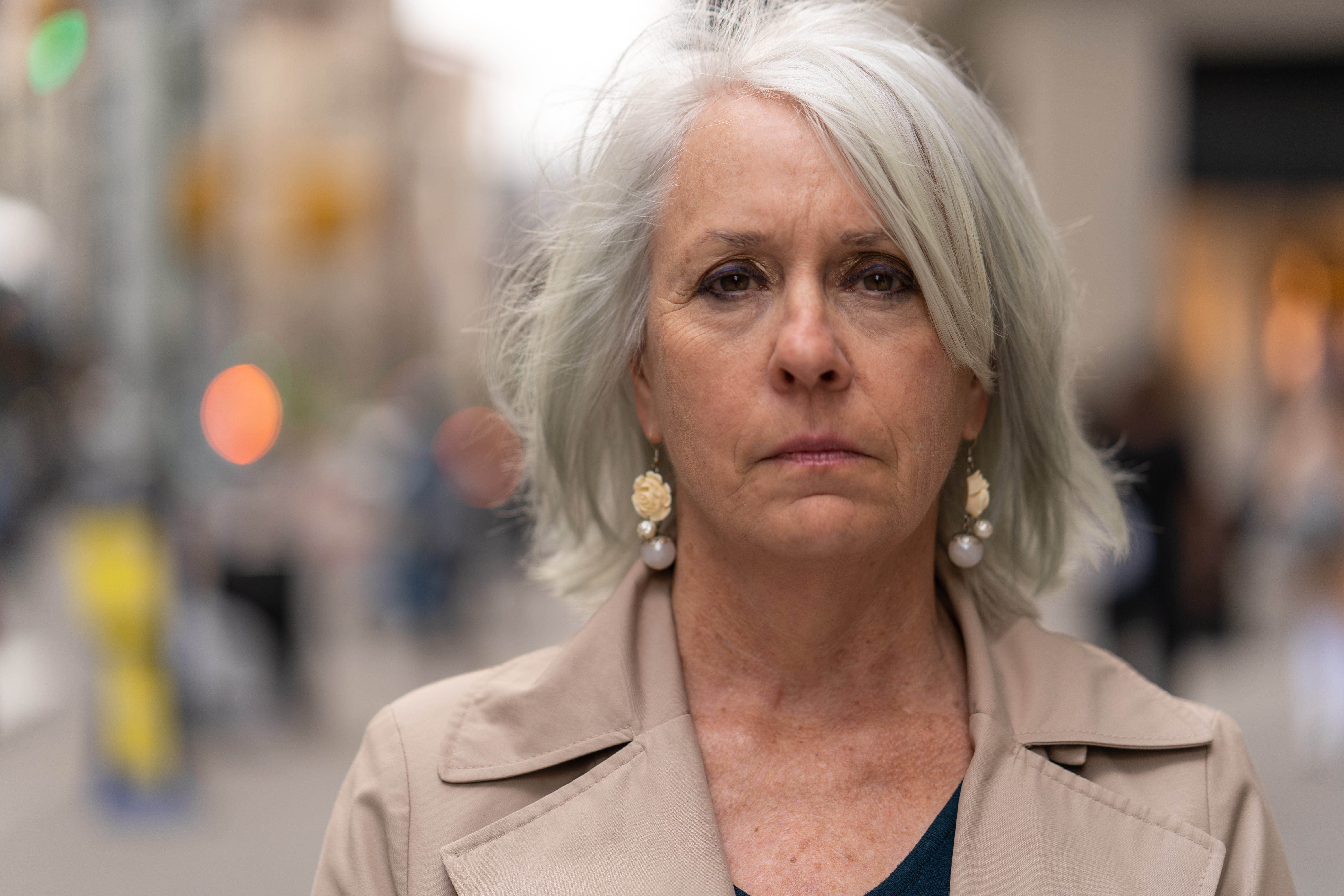
Resting bitch face is a thing, you’ve probably heard. Some people – usually women, though I suppose some men have it too – look mean when their face is still and their muscles are slack. People who see them assume that they are grumpy at the least or maybe sulky or angry – hence the name resting bitch face.

I have resting sad face. Once when I was working at a restaurant, the manager saw me sitting while on my break and told me that I should smile. I replied that I was paid to smile at the customers, not on my break. Of course, that was a bad response, though I know that women are often told to smile more (men, not so much). I probably would have gotten along better with my coworkers if I had smiled more.

But I was suffering from depression at the time, or at least the depressive phase of bipolar disorder, and was untreated. Smiling was something I had neither the inclination nor the energy to do. Sad was my natural expression.

When I didn’t have resting sad face, I had resting worried face. (A different manager asked me, “What does a girl your age have to worry about except ‘Am I pregnant?'” As it happened, that was the one thing I knew I didn’t have to worry about.) I was also suffering – again, untreated – from an anxiety disorder.

What I haven’t had is the mask of “smiling depression.” Many people with depression pretend to be happy most of the time, at least in public. You can see it dramatized in depression medication commercials when someone holds a happy face symbol in front of their face. (In real life, I’ve noted that the depression or sorrow sometimes leaks out around the eyes, though, even past the mask.)

There are two different kinds of smile – the “Duchenne” smile (named after a 19th-century scientist whose major contributions centered on mapping the muscles that control facial expression) and the “Pan Am” smile. The Duchenne smile is the sincere smile of a truly happy person. It’s easy enough to tell when someone is giving you a Duchenne smile. The muscles at the corner of their eyes crinkle, making little crows’ feet. It happens automatically when you think of a happy memory or greet a person you like a lot.

The Pan Am smile is the one where the smile does not reach the corners of the eyes. (It got its name from airline attendants who were required by their job to smile at all times, whether they were at rest or not, happy or not.) No one has resting Pan Am smile face. It’s impossible. It takes a number of facial muscles to smile and when you’re resting, you don’t use those muscles. No, the Pan Am smile takes intention.

The Pan Am smile, however, is the one a person uses when they do have smiling depression. (I used it once when, at a different job, we were all posing for individual portraits. My results were so fake-looking that the photo was never used. They didn’t even let me see it, much less anyone else.)

I’m kind of hoping that these days, I have at least resting neutral face. That sounds like the right expression for a stable person.

Keep This Blog Alive!

Choose an amount

¤2.50
¤5.00
¤10.00

Or enter a custom amount

¤

Your contribution is appreciated.

Donate

I Love/Hate My Brain

My brain is special and magical. It makes me who I am and has often seemed to me to be the best part of who I am. I have always been intelligent and a quick learner. And I thank my brain for that.

On the other hand, my brain is deficient in some ways. It doesn’t have the correct balance of neurotransmitters (or has been adversely affected by trauma as I’ve lived my life or inherited from my parents). When it comes to bipolar disorder, I blame my brain. It’s glitchy, unpredictable, and guilty of making my life miserable at times.

So, I have cause to both love and hate my brain.

The thing is, I have no control over either of those perspectives. I didn’t make my brain smart and adaptable. I can’t take credit for that. I also didn’t make my brain misfire and become my biggest enemy. I can’t take the blame for that.

Much of what I am, my brain is responsible for. I am a moderately successful writer. That can be attributed to my brain as well. I’m creative, too, another quality that resides in my brain. But when I’m depressed, I lose the ability to write, and when I’m hypomanic, I lose the coherence I need to write well. It would be easy enough to say that I love my brain when it’s functioning well and hate it when it’s not. That’s not completely true, though. I’d have to say that my brain is my frenemy.

I am notoriously moody and difficult – hardly surprising since I have bipolar disorder. My intellect doesn’t go away when I’m depressed or hypomanic, but sometimes it goes into hibernation. It makes poorer decisions, it’s true. It’s led me astray many times, even to the edge of death. And I can’t always recognize when it does that. My brain is not the best gatekeeper of my behavior. But my brain does help me clean up the consequences when it does occur.

There is currently a great debate on whether bipolar disorder even comes from the brain. It may not be because of my neurotransmitters, though I still consider them complicit. It may be because of my childhood trauma (at the hands of children my age, not my parents). But again, trauma is said to make physical changes in the brain, so perhaps it is a brain-related reason as well. The other prevailing theory is that bipolar disorder has a genetic component. I don’t know if that means that my genetic heritage affected my brain development, though I suppose it could have. I just don’t know.

I do know that it feels like my brain is at fault. Bipolar is, after all, a mood disorder, and I don’t know where my moods reside, if not in the brain.

So, what can I do with my brain to increase the love and lessen the hate? First, I try to keep my brain fed. I read every day and play jigsaw sudoku to keep it lively and stave off dementia – and to stretch my brain because so much of what I do is word-related, not mathematical. My reading is varied, from novels to nonfiction. I revisit beloved novels from my past, which keeps me grounded in who I am, and explore new books and authors I find, which keeps me excited and open to the new. I try to lessen the opportunities for hate by keeping my brain stable with medication, therapy, and listening to my husband and my friends when they tell me I am loved.

On balance, I love my brain more than I hate it. But I have to keep an eye on it (as it were) to make sure that the hated half doesn’t take over.

Keep This Blog Alive!

Choose an amount

¤2.50
¤5.00
¤10.00

Or enter a custom amount

¤

Your contribution is appreciated.

Donate

I have what I refer to as emotional support animals – principally my husband. He goes with me to places and into situations that upset me, like a dentist appointment or a class reunion. He puts a comforting hand on my shoulder and encourages me.

My cats provide emotional support as well. They ground me when I’m upset and help me calm down. They give me something to focus my attention on instead of the turmoil in my head. They soothe me with their purring and distract me with their antics.

You would think that the animals I identify with most would be cats. I do believe that if I could be any animal, I would choose to be a cat – as long as I could be one of my own cats and not an unwanted, feral stray.

But the animals I identify most with are bunnies and armadillos. Here’s why.

There’s an expression among chefs – when they’re absolutely slammed with work, falling further behind with each passing minute, they describe the situation as being “in the weeds.” I use the phrase a little differently. I was experiencing a mixture of anxiety and depression, totally overwhelmed, though not necessarily with work. Every day brought new challenges that terrified me. Every day I found myself immobilized. And every day I found myself retreating. I felt like a little bunny hiding in the weeds.

That became the shorthand my husband and I used to describe the feelings. He would ask me how I was feeling, and I would reply, “I’m hiding in the weeds.” When I couldn’t express what I was feeling, he would say, “Are you hiding in the weeds?” and I would nod. That’s how I felt – like I had to hide from the flood of feelings and problems that beset me. Like I needed a screen of weeds to offer me what little protection they could. Like I had to be ready to jump at any minute the next time I sensed a threat.

I moved past this phase. After years of therapy and medication, I no longer need the weeds. I have stronger forms of protection that come from inside now. (My husband does calls me “Bunny” as a term of endearment, though.)

Armadillos are another story. Again, though, my fascination with them was in relation to another form of protection, seemingly more solid than weeds.

Armadillos are covered, of course, with bands of scales that protect them from most dangers. They can also roll up in a ball to protect their soft underbellies. I tried to develop hard scales that would prevent trauma from invading my fragile emotional makeup. At times I even rolled up into a ball (or at least a fetal position) when I had a meltdown.

Eventually, I did learn that if you wall off your feelings, it’s hard to get back in touch with them. And the good emotions get blocked off as well as the bad ones. The armadillo armor was not a viable solution for the long term.

I also learned that the armadillo has another defense mechanism. It jumps straight up about two feet into the air, presumably to escape from or startle any predators. Unfortunately for the armadillo, their main predator is the automobile. The little critter’s jump puts it at just the right height to be smashed by the car’s bumper. As a defense mechanism goes, it’s not really what you’d call successful.

That’s when I realized that neither were mine. When I got jumpy – when my anxiety was out of control – I was often smashed by onrushing difficulties, the very ones I was trying to escape.

So, bunnies are out. Armadillos are out. Where can I find an animal to identify with in terms of protection? We’re back to cats, I guess. They at least have claws that they can choose to extend or sheathe. I like the idea of bringing out a defense mechanism only when I really need it.

Keep This Blog Alive!

Choose an amount

¤2.50
¤5.00
¤10.00

Or enter a custom amount

¤

Your contribution is appreciated.

Donate

A lot of the time, I live with sort of a low-grade dread, kind of like coming down with a fever. I’m well-known for overthinking and catastrophizing. The combination is exhausting.

When anything alarming happens, I ratchet up into an agitated state. It could be anything – a relationship problem, a looming financial disaster, a health scare. I respond with racing thoughts, trembling hands, and sleep disturbances. I find myself at 2:00 a.m., wide awake though a little bit foggy, with no real idea what I should do. Most of the time, there isn’t really anything I can do.

This happened a lot when I was in college. My life was complicated then – well, it always has been and still is. I wasn’t particularly worried about my grades or about graduating. No, it was other things that occupied my troubled mind. A difficult relationship was ending in great turmoil. I had lost a lot of weight and didn’t look or feel healthy. I had to pack, move, and find a job. My parents were coming for the graduation ceremony and I didn’t want them to see me in such distress. It was all overwhelming.

I had insomnia that summer. I would find myself lying on the sofa, wide awake, my brain on overdrive, with only a large black cat to keep me company while everyone else in the house slept. That cat kept me anchored in a way. He distracted me with his solidity and his insistent purring. He was a soothing presence that helped me not feel totally alone, without putting any demands on me.

It was that summer when I learned a technique I could use when everything seemed to be spinning out of control. I found that I could ground myself and stop all the whirling thoughts, at least for a while, by doing something small and totally normal. Making myself a cup of tea was my go-to. The familiar actions of finding a mug and a teabag, heating the water, and steeping the tea gave me something physical to do that would get me out of my head and back into my body. No matter how distraught I was, I could always manage to make a cup of tea. It’s not a demanding task. I could do it practically by rote. But it was so familiar – so completely normal – that it was a form of reassurance.

It turns out that the feeling of normalcy can soothe other people too. Once that summer, my uncle Phil was also having a hard time sleeping. Like me, he was afflicted by personal problems and feeling out of touch with his body and tangled up in his head. I busied myself making him a can of soup. It kept me from getting swept up in his turmoil, and it helped him become calmer as he watched me puttering around the kitchen. Again, it was all so normal that it soothed us both.

Now, when I have racing thoughts and distress, I try to find something manageable and entirely normal to do – something I can do automatically, without expending any thought. Putting out fresh food for the cats. Making lists. Watering a plant. Anything that I can do with little expense of energy or thought. In a way, it’s kind of a mindfulness exercise, paying attention to the steps involved and experiencing every movement as I go about accomplishing my normal little task.

This technique doesn’t work for me if I’m having a full-blown panic attack, but maybe it at least helps me stave one off if I catch it creeping up on me. It’s one of my more effective – and non-counterproductive – coping mechanisms.

Keep This Blog Alive!

Choose an amount

¤2.50
¤5.00
¤10.00

Or enter a custom amount

¤

Your contribution is appreciated.

Donate

What Does PMHNP Mean?

What the initials mean is Psychiatric-Mental Health Nurse Practitioner (also known as Psychiatric Nurse Practioner or PNP). What that may mean for mental healthcare is the potential for more treatment and access to therapy. Increasingly, nurse practitioners are taking over some of the duties of psychiatrists and providing services to people who have mental disorders, or even serious mental illness (SMI).

What qualifications do nurse practitioners have? They must have a master’s or doctorate in nursing with a psychiatric nurse practitioner concentration, plus two years of work experience. Unlike psychiatrists, they aren’t MDs.

Psychiatric nurse practitioners perform many of the same functions that psychiatrists do. They work in hospitals, rehab facilities, outpatient mental health centers, and even in private practice in many states. (Other states require that they work under the supervision of a physician.) In addition to providing psychotherapy, PNPs can write prescriptions – including for controlled substances – regulated by state boards of nursing. They work with other professionals and with families to meet patients’ needs and create a holistic care plan that typically includes therapy, counseling, and medication.

There’s a crying need for PNPs. It’s no secret that it’s difficult to find psychiatrists and psychotherapists and that the waiting list is long for a new patient seeking treatment. Last year, 151 million Americans lived in mental health professional shortage areas, according to the U.S. Health Resources and Services Administration (HRSA). They reported that those areas need 7,584 mental health care practitioners to fill the gap.

It’s a good field to go into, too. Salaries are reported as ranging from $81,000 up to $140,000 per year. And in 2021, the unemployment rate was less than 1%. Currently, there are over 10,000 PNPs in the US, of which 80% are women. The U.S. Bureau of Labor Statistics (BLS) projects that the employment of all nurse practitioners will grow by 52% between 2020 and 2030! They anticipate 29,400 new job openings across the U.S. every year between 2020 and 2030. 

Minority Nurse magazine reported in 2020 on why there’s such a strong demand and positive job outlook for PNPs. They cited expanded insurance coverage for mental healthcare under the ACA, increased awareness of the importance of mental health, and the mental healthcare needs of veterans who served in Iraq and Afghanistan. The aging population of Americans may be another factor, as more and more people require services for disorders such as Alzheimer’s and dementia.

How good are PNPs? Psychiatric Times says that “patients report favorable experiences working with nurse practitioners.” Findings from one study determined that patients had “greater satisfaction with their care provided by nurse practitioners when compared with their MD colleagues….Investigators found that patient outcomes from nurse practitioners working independently or with MD collaboration had similar outcomes, when compared with the patients working with MDs alone.”

Although it seems that psychiatrists and PNPs ought to be natural allies, Psychiatric Times also notes that “national initiatives and some agencies have encouraged an us vs. them mentality, pitting psychiatrists against nurse practitioners and other advanced care providers.” That’s unfortunate for so many reasons.

I’ve never used the services of a psychiatric nurse practitioner, though there are several near me. If I had known about them when I was between psychiatrists, I certainly would have investigated the option. There’s something appealing about getting my therapy and my meds all from one person, a situation that hasn’t occurred since my previous psychiatrist retired. (I had to spend six months on a waiting list before I found another.)

For anyone in the same situation, I would suggest looking into it. I am convinced that PNPs have an important role to play in mental healthcare. If their presence reduces the problem of scarcity of mental health professionals, they should be welcomed, and awareness of their availability should be publicized. If more people knew about PMHNPs, it would expand the choices that mentally ill persons have. It would also benefit organizations, inpatient and outpatient facilities, and community-based care.

Is there a downside? I don’t see one.

Keep This Blog Alive!

Choose an amount

¤2.50
¤5.00
¤10.00

Or enter a custom amount

¤

Your contribution is appreciated.

Donate

It’s been reported lately that there is a mental health crisis among young people in the US. Depression and anxiety are on the rise. Some claim they know what causes it, and some don’t. The usual suspects include social media, bullying (especially bullying on social media), academic pressure, the COVID-19 pandemic, isolation, and uncertainty about the future. Fear of and reactions to school shootings are in the mix, too. The problem has garnered interest among the people who have the capacity to address, if not actually solve, the problems.

President Joe Biden announced in his 2023 State of the Union address that the Department of Education will divvy up $240 million in grants to help schools tackle the crisis. If you average that by 50 states, it comes to around $50 million per state. A more accurate estimation considers that, since there are 16,800 school districts in the US, that, on average, each district would get roughly $141,000 for youth mental health to be spread around all the schools in each district – not really very much. That money, plus the billion dollars invested last year, is earmarked for more mental health counselors and mental health professionals in the schools.

All that is well and wonderful, but what are the problems that lawmakers want those funds to solve? Apparently, many lawmakers and public policy boffins think that preventing school shooters should be the primary goal. Identifying the kids that are likely to resort to weapons to settle their differences with schoolmates and teachers seems to them to be the most effective use of the funds. The basic debate is whether those funds should be used to identify and treat potential school shooters or help the students who are traumatized by the incidents and by the looming threat of more – prevention of violence versus reaction to the threat itself. In general, Republicans want to address finding and preventing the shooters, while Democrats seem to prefer ministering to those affected by the shootings – and enacting gun control. (I’m not getting into the gun control debate right now.)

Democratic senator Chris Murphy raised the issue in the wake of the school shooting deaths in Uvalde, Texas. “Spare me the bullshit about mental illness,” Murphy said. “We don’t have any more mental illness than any other country in the world. You cannot explain this through a prism of mental illness because we’re not an outlier on mental illness.” Biden also played up the necessity of dealing with the repercussions of the school shootings: “Address the mental health crisis deepening the trauma of gun violence and as a consequence of that violence.”

When it comes to getting shooters into treatment, though, there are problems. Differences in opinion are rampant on whether psychological treatment can prevent school shootings. Partly, it’s a problem of anosognosia. The potential and actual school shooters do not think they have a problem – and the same can be said for many of their parents – so they’re not very likely to make it into the mental healthcare system or gain any benefit from it if they do.

Another reason is that CBT, the currently favored treatment option, really doesn’t have anything that would address the incipient violence of students who are so troubled that they think it would solve their problems of anger, isolation, revenge, desire for fame, bullying, or whatever other factors may be implicated. It’s also worth noting that many, many students are bullied, mocked, ostracized, or otherwise demeaned. The vast majority of them do not go on to become school shooters, or the problem would be worse than it already is. (Personally, I was subject to some extreme bullying in school – and had access to guns and no access to mental healthcare at the time. I never shot anyone or ever thought about it.)

Perhaps the best that can be expected of mental healthcare right now is ministering to the bereaved and the traumatized. Until or unless we come up with some way of more reliably identifying and treating potential shooters before they become actual shooters – something that has yet to be accomplished – we’ll be more adept at cleaning up the aftermath.

Keep This Blog Alive!

Choose an amount

¤2.50
¤5.00
¤10.00

Or enter a custom amount

¤

Your contribution is appreciated.

Donate

Live for Today

I see a lot of memes exhorting us to “live for today.” Sometimes these are in the context of life being uncertain and needing to live each day as if we’re going to die tomorrow. And it’s true that the future isn’t guaranteed to any of us.

This has evolved into the “YOLO” (or “You Only Live Once”) philosophy. It’s not clear what YOLO really means. To some, it’s a challenge and defiance – the idea that you should try something even if it’s dangerous because you may never again get the opportunity to do it. If you look at it this way, it’s the opposite of the previous understanding of “live for today,” in that one can actually hasten the absence of tomorrows based on what potentially terminally stupid thing one decides to try or is goaded or shamed into trying. I followed this philosophy one time when I decided to go for a ride on a zipline. Stepping off the platform frightened me, but I did it. Now I’m too old and decrepit to do it again, so I’m glad I did it then.

On the other hand, “You only live once” could also mean that you should take care of yourself. You only live once, after all, so why not live as long as possible? Nutrition; sleep; exercise; avoiding drugs, smoking, alcohol, and unhealthy foods; and relaxation techniques are all considered factors that will lead to long life – as long as you don’t consider factors such as genetic disorders, cancer, and tragic accidents you can’t control.

If those behaviors sound an awful lot like self-care, well, they are. And for those of us with brain disorders, self-care is perhaps the most often recommended thing we can do to keep ourselves functioning as well as possible. Of course, if I were a cynic, I would say that self-care might be recommended so often because it’s an easy thing for businesses and insurance companies to recommend rather than actually helpful, but more extensive or expensive, interventions.

Living with a brain disorder is in many ways a day-by-day challenge. Every day, we must do the things that will lead to stability (we hope), including taking our meds if they’re prescribed, going to therapy, building a support system, and performing self-care. It’s true that we only live once, but that once proves to have its own unique challenges.

At times, it feels like we have been cheated by life by having our once around be so difficult. And I’m not going to say that isn’t true. I don’t think that having a brain illness makes us more sensitive or understanding or creative – except that we may be more sensitive to the needs of others who also have brain disorders. Mostly, it just makes life more – challenging is about the best spin I can put on it. And everyone in this life has their own challenges. There’s no use comparing whose life is worse.

Still, it’s a worthy goal to try to live the best life we possibly can within the limitations that our disorders impose on us. The fact that we only live once – and that our lifespan may be reduced by our illnesses – makes it all the more important that we make the most of what we are given.

Keep This Blog Alive!

Choose an amount

¤2.50
¤5.00
¤10.00

Or enter a custom amount

¤

Your contribution is appreciated.

Donate

Back before he started on his path to learning how to live with me, my husband used to refuse to say he was sorry if he hurt my feelings. “I didn’t mean to,” he would say.

“If you stepped on my toe without meaning to, you’d say you were sorry,” I replied.

“Yes, but if I stepped on your toe, I’d know I hurt you.”

“I tell you that you hurt my feelings. That’s how you know you did.”

“I can’t control your reactions. I say something and you react with hurt.”

“I can’t choose my reactions when you step on my toe. It hurts and I say ouch. It’s the same when you hurt my feelings.”

We’d go around like this for a while.

Later, he came around to the idea that I couldn’t control my reactions. There were things that he couldn’t see inside me, from my emotional triggers to my bipolar disorder. At last, he admitted that I couldn’t control my reactions and learned to apologize even for things he didn’t mean to do.

Later still, he claimed that maybe I couldn’t control my emotional reactions, but that I had control over what I did about them. I maintained that I couldn’t necessarily do that. My feelings were hurt and I cried. I could choose whether or not to leave the room or stop speaking to him, but the tears were not optional. They were not something I could choose or control. Believe me, I’ve tried.

Our admittedly small example has larger implications. There seems to be a lot of things we’re supposed to be able to control. In the illustration above, your mind, your relationships, your emotions, your actions, and your words are said to be things you can control.

I would disagree with some of that. As my experience with my husband showed, I couldn’t control my emotions – I didn’t choose them. I can’t control my relationships. There’s another person involved, with a lack of control over their emotions as well.

And my mind. When you live with serious mental illness (SMI), you’re acutely aware that, a lot of the time, you can’t control your mind. From overthinking at one end of the continuum to psychosis at the other, the mentally ill mind does what it will. Personal choice can’t control it. We’re not able to reach inside and change our brain chemicals or the past traumas that influence our minds and our choices. Sometimes medication and therapy can’t control the mind either.

There are also a lot of memes – and people’s opinions and statements – saying that we can control whether we are happy or not. “Choose happiness.” “The only difference between a good day and a bad day is your attitude.”

I’m not even sure that’s true for people who don’t have SMI. Emotions aren’t something that can easily be switched on and switched off. Before I was correctly diagnosed and properly treated, I simply had to go through a spell of depression and wait for it to pass. It’s still largely true for me, except that now I know that the depression will pass, and a lot sooner than it used to.

I don’t think that it’s a good idea to deny your emotions, either. If you feel hurt or sad, let yourself feel that feeling and work through it. It may be trying to tell you something – that you’re angry for a reason, for example, and need to address that reason. Or if you’re sad, recognize that there’s something making you sad and stay with that sadness for a while. Forcing yourself to behave cheerfully denies the reality of your emotions and merely puts a mask on them. And that’s not healthy. Sooner or later, those feelings will leak out from behind the mask or shatter it.

I’ve always been a great believer in choice. But there are things I don’t think a person can or should have to choose. Emotions and our reactions to them are not within our control. Our actions are – leave an abusive relationship, seek help for mental illness, take medication every day, and so much more.

But not everything about us is subject to choice, and I think it’s better to recognize that than to deny it.

(And for those of you who are curious about it, my husband and I have chosen to work on our individual and mutual problems and have accomplished 40 years of struggle and working together to control what we can accept and what we can’t. We choose that struggle and that work every day.)

Keep This Blog Alive!

Choose an amount

¤2.50
¤5.00
¤10.00

Or enter a custom amount

¤

Your contribution is appreciated.

Donate

Adjusting the Dosage

I go to a psychiatrist four times a year for med checks and a psychotherapist every month to six weeks or so for my ongoing mental health care. When I think a change in medication dosage might help, I always ask my therapist if she thinks I need to consult the psychiatrist and ask the psychiatrist if he thinks my medication should be adjusted.

Recently, I noticed that I had been in a hypomanic phase for a period of several months, something that doesn’t usually happen to me. At first, I thought it was the winter holiday shopping season that was the cause of my overspending. But as January rolled through and I was still running up the credit cards with online purchases, I had to admit that I was definitely in the clutches of full-blown hypomania.

I discussed this with my therapist, who approved my plan of telling my psychiatrist about it and asking if adjusting my medication was appropriate.

So I did. While we were discussing the problem, I asked whether upping my anti-anxiety med might help.

After considering it, Dr. G. said he didn’t think that would help, but that increasing the dosage of my atypical antipsychotic might. He wrote me a new prescription and instructed me to call him right away if it had unexpected side effects.

In one of the Facebook mental health groups I belong to, another member said that he thought titration (trying to find the right dosage by adding and subtracting) led to overmedication. That hasn’t been my experience.

My first experience with psychotropics was with Prozac, back in the day when that was the new wonder drug. It worked great for me – until it didn’t anymore. (This was, no doubt, partly due to the fact that it treated only my depression but not the other symptoms of bipolar disorder.) After that, a succession of drugs came along, until I started going to Dr. R.

My second psychiatrist, Dr. R., titrated my medication for literally years before we found a level and a combination that worked for me. He would start me on a new medication and then slowly and carefully increase the dosage until either it helped or didn’t help, or the side effects became intolerable. Then he would titrate the medication downward, again gradually, to prevent withdrawal symptoms. This made the process long and slow, but ultimately safer. Eventually, we found a “cocktail” that worked for me.

If titration means only upping the dosage of a medication rather than adjusting it both up and down or discontinuing it entirely, then I admit that the process can lead to overmedication. But I think that’s bad psychiatric practice. (The group member commented that I had had a good psychiatrist once I explained his process.)

My current psychiatrist has adjusted my dosages several times in conjunction with my changing needs. Over the years, my sleep aid has been entirely discontinued and my anti-anxiety med reduced from twice a day to as needed. The most recent change has been only a slight bump in dosage, carefully monitored, with a promise of attention in between my regular sessions if I experience problems.

That’s my idea of a good relationship between practitioner and patient and a sensible approach to changing medication. I do admit that it has been luck that put me in touch with psychiatrists who had the wisdom and regard for safety to change my meds only when necessary and only gradually. Now that I know what to look for, I feel better about changing psychiatrists should Dr. G. retire (which is why I needed a change after Dr. R.).

Will the change in my current meds help in curbing my hypomania? That’s still up in the air. It may be that the hypomania will subside on its own and the meds will have nothing to do with it. Or it may be that the higher dosage will prove ineffective and I’ll have to ask Dr. G. if starting a higher dosage or a different medication would be sensible. Either way, I have learned to trust the process.

Keep This Blog Alive!

Choose an amount

¤2.50
¤5.00
¤10.00

Or enter a custom amount

¤

Your contribution is appreciated.

Donate

Bipolar Me

Bipolar 2 From Inside and Out

Skip to content ↓