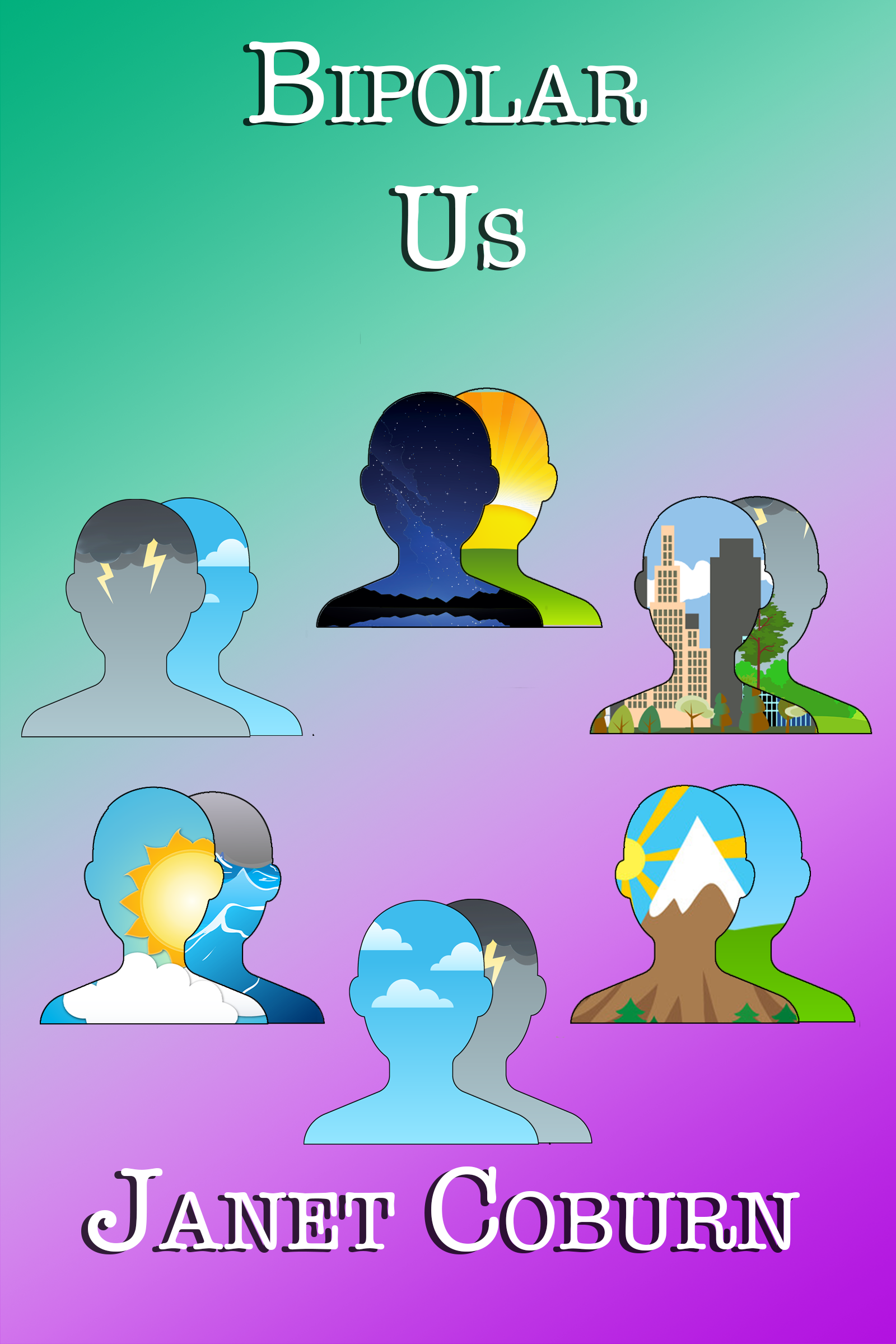
Bipolar 2 From Inside and Out

It’s Me This Time

I was talking to my mother, and I became very upset. I don’t remember now what we were talking about or what specifically I felt. It could have been disappointment because my parents could only afford a community college rather than a four-year university. It could have been sorrow caused by the breakup of a friendship. It could have been distress because someone made fun of me.

Whatever it was, I began crying. And as was common back then, once I started crying I couldn’t stop. My out-of-control emotions led to an out-of-control reaction.

And then my mother said, “Everyone goes through this at times.”

My instant thought was “But this time it’s me.”

I know I don’t have a monopoly on suffering. Looking back, the things that aroused an emotional storm in me were nothing much, things that could be remedied. I applied to four-year universities anyway and got a scholarship deal that allowed me to enjoy a first-rate education. I somehow managed to make new friends. I learned to cope with other people’s reactions to me, eventually.

Still, my emotions remained stormy. I would cry over anything or nothing. I would feel hurts intensely and break down frequently.

But I maintain that my reaction to my mother’s undoubted truth had some validity. When difficulties hit, knowing that others had experienced the same hurts and disappointments did not help me. I was experiencing these events through a lens of intense mood swings – bipolar disorder. And that’s not something that “everyone” goes through.

It’s true that I overdramatized just like any teen to a certain extent. But there was an added edge, a force driving my emotions past the normal. I couldn’t control what I was feeling or how extremely I expressed it. My disappointment was devastating. My sorrow was cataclysmic. My distress was hysterical. It’s no wonder my mother had no idea what I was feeling or how to deal with it. I didn’t know myself.

When people talk about bipolar, we usually talk about the back-and-forth, the rollercoaster. The intensity of the feelings gets less attention. It’s not just that we have mood swings. It’s that those moods are often out of control.

Seeing that from the outside, as my mother and my friends did, was no doubt beyond confusing. We may all go through these moods, but not everyone has the added emotional kick of bipolar pushing them past the normal into a realm that we ourselves don’t understand. If it was confusing for my loved ones, it was equally or more confusing for me.

I was like that for a long time. My experiences at college and after were colored by the fact that I didn’t know why I was the way I was. I went many years being beaten up by my own mind, my own emotions, my own brain. I despaired of ever finding a way out, and my despair was extreme, too.

Now, I’m diagnosed and medicated appropriately. I still have times when my emotions go a bit beyond the “norm.” I still have breakdowns occasionally. My startle reflex is exaggerated, and my anxiety still overwhelms me sometimes.

But at least now I understand what’s happening and why. Now, I seldom have to envy the “everyone” who experiences everyday life with less intense emotions. I may still have mood swings, but they no longer dominate my life. They’re more in line with what the general population would consider average.

I’ve finally achieved the stability that my mother knew deep down I didn’t have, even if she didn’t understand why not. I’m not knocking her; I didn’t understand it either. But I’m not that different anymore. And while I used to have a love-hate relationship with the concept of “normal,” I don’t hate it the way I did. Now, I’m more a part of “everyone.”

Time Out From Life

I was stuck during my first year in college. I was a linguistics major and couldn’t see my way clear to a career in the field. I thought about changing my major to random ones like landscape architecture and hotel management. I had no passion for either one, but I figured at least I could get a job.

I was also suffering from a major depressive swing. I missed classes, though I managed to pass them. I couldn’t sleep. I spent hours in the middle of the night sitting in the hallway, staring at an ornate coloring poster on the opposite wall, hypnotized by its intricate black outlines.

I decided to take a year off. I was incapacitated and couldn’t go on at that time. I figured I could reassess my choice of majors while I pulled my head together. I always had the intention of going back at the end of that time out.

I also needed money for that next year of college, so I got a job as a cashier and waitress on the second shift at a local Frisch’s restaurant. I was a good cashier and a lousy waitress, and I spent quite a bit of time in the bathroom, crying into the roller towel. I learned how to swear. My coworkers noticed that I was either worried and anxious or numb and sad. (One manager asked me, “What does a girl your age have to worry about except am I pregnant?” The other told me to smile more. Needless to say, this was not helpful.)

That time out from college was important to me psychologically. It didn’t solve my problems, and I was still undiagnosed and unmedicated. I began to realize that my problems went further than what my major was. And I made friends at work and learned a lot about self-reliance. I had time and space to think. My parents and my high school friends formed my support system.

I did go back to college the next year. I changed my major to English, which was more satisfying and more in line with my interests (though not really better on career possibilities). I continued through the next three years without taking more time off. As you may have guessed, the anxiety and depression didn’t leave. I had a fling with a musician – my first – and when it ended, I didn’t know how to handle it. Then I had a totally disastrous relationship, fraught with gaslighting. Again, I had trouble sleeping. I lost weight. I drank too much. The swings between hypomania and depression were noticeable.

When I graduated, I went back to working at the restaurant, then got a job at an advertising agency as an assistant to the treasurer. I moved into my own apartment and began a long-distance relationship with my eventual husband. I considered going back to school for an M.A., again in English, which I eventually did. I was still untethered, but I went into treatment for depression. (It wasn’t until many years later that I learned that my diagnosis was really bipolar.)

A depressive swing also caused me to take a time out from work later in life. This was the one that lasted two years and had me applying for disability. (I didn’t get it.) It was only psychologically important in that it graphically demonstrated how badly I needed help. At least the time I missed from college was something I chose to do rather than something that blindsided me.

The takeaway from all this, I think, is that the ups and downs of bipolar disorder mean that my life was destined not to go smoothly. While I am pretty high-functioning – I was able to earn college degrees and hold various jobs, at least for a while – there have been times when my illness has overwhelmed me and I need time out from my “normal life.” And those occasions come on me unpredictably, as is the way of bipolar mood swings. While I haven’t needed to, or been forced to, take a time out lately, I know it could still happen. That’s just the nature of the disorder. I hope my medication and therapy will make the possibility less likely, though.

If you’ve taken a time out too, I’d encourage you not to think of it as a permanent thing. It could be something that you needed to do, and something that may have relevant significance for you as you look back on it, as was true for me. Most of all, I hope you get help and support to get through it.

Girl is choosing cosmetics in bathroomIt is fairly widely known that people with bipolar disorder and/or depression have trouble taking a daily shower. It’s not that we don’t know what’s involved in taking a shower, or why it would be good for us to do so, it’s simply that showering uses up a tremendous number of spoons.

Here’s what showering looks like according to Andrew Solomon, author of the now-classic The Noonday Demon:

I ran through the individual steps in my mind: You sit up, turn and put your feet on the floor, stand, walk to the bathroom, open the bathroom door, go to the edge of the tub…I divided it into fourteen steps as onerous as the Stations of the Cross.

I performed a similar exercise in one of my blog posts and here’s my version:

First I have to find a clean towel and a bar of soap, get undressed without seeing myself in the mirror, fiddle with the water temperature, wash and shampoo, dry off, find clean underwear, and that’s not even thinking about drying my hair and figuring out what I can wear! Oh, my God, I’ve used up all my spoons just thinking about it! I should just eat Cocoa Puffs and go back to bed.

Now let me say, first of all, that I don’t really like showers. I grew up taking baths and have never enjoyed the sensation of water spraying in my face. But with my bad back and bad knees, getting up from sitting in a bathtub is nearly impossible these days. (Please don’t ask me why anyone would want to sit in dirty water. Everyone says that when I say I prefer baths. I have a nice long soak, steeping in the clean water like a big teabag, and only then wash up and get right out. Used to, I mean.)

To most people, showering is a single act that requires the expenditure of a single spoon. Take a shower; that’s it. But for those of us with invisible illnesses, each separate step may require its own spoon. Take something as simple as finding a towel, for instance. Go to the linen closet, grab a towel and voilà! Only a fraction of a spoon, if that.

But surely you don’t think I have had the spoons to fold and put away my laundry. It is all there in a jumble on top of the dryer. (Who needs a wrinkle-free towel anyway?) I have to root around to find one, and maybe twice if a cat has thrown up on the first one I pick. (They love sitting on clean laundry.)

If I have to go to a business meeting I force myself to use some of those spoons showering and getting dressed and acting respectable. But I will pay for it later, collapsing after the meeting in need of a mega-nap.

Now here’s a little secret I’ll tell you. Most people believe you gain spoons by going out of the house – walking in the fresh air, meeting friends for lunch, shopping, going for a drive (does anyone do that anymore?). But the fact is that, according to Spoon Theory, you get a certain number of spoons every day when you wake up. You cannot gain, buy, beg, borrow, or steal any more spoons, not even by breathing fresh air. You can only spend them.

Given the mathematics of spoons, I don’t spend a single one that I don’t absolutely have to. Not going out? No shower. Have to go out for a loaf of bread or a drive-through meal? Wash up in the sink. If I need a shower between outings, my husband reminds me and facilitates by, for example, rummaging on the dryer for a clean towel and clean clothes or a clean nightshirt.

I need those spoons for doing my work at home in my smelly pajamas more than I do for the ordeal of showering.

abigailpadgettcIn 1994, writer Abigail Padgett published Child of Silence, the first in a series of mysteries featuring Bo Bradley, a child protection advocacy investigator – who just happens to have bipolar disorder (or manic depression, as it was more commonly called back then). The series continued through four more books – Strawgirl, Turtle Baby, Moonbird Boy, and The Dollmaker’s Daughter. (All are still available as ebooks.)

Recently, I had the opportunity to ask Padgett some questions about her books, her protagonist, and the state of mental healthcare today.

Is there anything you would change about Bo Bradley, given the advances made in understanding bipolar disorder and medication for it?

Not really. There are some new meds and public understanding is better, but the experience of people who live with real, clinical mood disorders is still fraught, dangerous, and revelatory.

Bipolar disorder is better understood by the general public now than it was 20 years ago – to an extent. But the general public, including me, cannot ever actually “get” what a manic or depressive or psychotic episode feels like. The best that can be hoped for is an acute public interest and support. Movies, especially like Touched With Fire, are enormously helpful.

What do you think of Stigma Fighters, the Semicolon Project, and celebrity awareness campaigns? Are they having much effect?

Hard to say anything about effects without any data, but . . .  I think focusing on the big corporate/cultural atrocities is really important. Examples are a two-page NYC menswear ad in which the front page said, “If you’re paying $50 for this shirt . . .,” turn to reverse of page, “then you should be wearing this one”  (photo of a straitjacket).  The store, Daffy’s, actually got an award for that ad! Then there was John Deere’s “schizophrenic tractor” and a tire company here in CA that did a horrible TV ad showing a man in a straitjacket in a padded cell trying to eat a cake with no hands. years ago I worked with Jean Arnold and Nora Weinerth for the National Stigma Clearinghouse. The idea was to go after major companies that ridiculed psychiatric illnesses, diagnoses, doctors, or anything associated with mental illness.

Stigma Fighters seems to be a venue for supportive communication and that’s good, but it doesn’t have much effect outside itself.  And I love the Semicolon Project idea!  A good image is worth a million words in terms of broad impact, and I hope that one can organize and grow into a significant movement.

Celebrities? Any day that a celeb states publicly that s/he is living with a psychiatric disorder is a good day. Americans adore and identify with celebs. (Not good for either Americans or the celebs, but nonetheless the way it is.)

What one change would you most like to see in the mental health care system?

One?  Have to go with funding. Funding for psych research; for psych hospital care for as long as it takes, not just a week or two; for clean, professionally staffed respite centers in every town; for attractive, professionally staffed halfway houses; for arts programs, job training, theater tickets – you know, the world?

Beating Bad Thoughts

I saw a meme today. It said:

“Just do what you can today, okay? It will be enough.”

Instantly my brain said, “No, it won’t.”

My brain, uncooperative at all but the very best times, has a habit of telling me bad things when I’m in a depressive episode: “You’re useless.” “You’re pathetic.” “Everything you do fails.”

For some reason, positive thinking memes and slogans bring out the worst in my brain. If a pass-along or a bumper sticker tells me that tomorrow will be brighter, my brain says, “No, it won’t.” If a meme says, ” I hope the situation you worry about favors you in the end,” it says, “Yeah, like that’s gonna happen.”

Is my brain simply cranky and uncooperative? Well, yes. But these intrusive thoughts reinforce and deepen my depression, chip away at what self-esteem I still have, deny my progress in healing, and make me resent the whole happy, smiley world that apparently everyone but me can see.

Is there anything I can do to make my brain shut up, or at least pipe down with all the negativity?

I’ll tell you what doesn’t work for me: daily affirmations. My brain tells me these are lies and that I shouldn’t believe them. I can’t look into a mirror and repeat five times, “I am a good, worthwhile person” or “I deserve happiness” or “I will overcome my problems.” It’s like the problem of seeing cheery, encouraging memes on the internet, only having to inflict them on myself. If anything, they make me feel worse.

If these sorts of things work for you, fine. I’ve no objection. I won’t make fun of you. I’m truly glad you’ve found something that helps you.

They just don’t work for me.

So what can I do?

I have gleaned two helpful hints from my therapist. Both are visualizations, and both are metaphors. And both involve animals. (They are variations on a technique called “thought stopping,” which is simpler and more direct. But I find visualizations easier to remember and do. I love metaphors.)

The first comes from a mindfulness meditation that Dr. B. asked me to try. I’m not much good at meditation, because of both my intrusive thoughts and my anxiety. Sitting still for that long is difficult, and so is emptying my mind of thoughts to concentrate on my breathing, for example.

The narration that guided the meditation had a solution for this. When your mind wanders and your thoughts drift off to somewhere else, think of them as puppies that wander away when you’re trying to teach them something. Gently corral them and nudge them back in the right direction. You don’t have to panic and shout, “There they go!” and run off after them. You just give them a little push toward where you want them to go. If they wander again, do the same thing. “What about the mortgage payment? Come back, little puppy. Over here.”

The other technique is for the kind of bad thoughts that I often get: anti-affirmations or negatives that deny any suggestion of peace or happiness or accomplishment. For these, Dr. B passed along an idea that another client had given her. Imagine that your bad thoughts are naughty cats, who jump on the kitchen table or try to go fishing in your aquarium. Then imagine spraying the bad thought (cat) with a bottle of water to make it stop what it’s doing and scram. “I never do anything right. Psssst! Psssst!”

When I’m profoundly depressed, I doubt even these clever dodges will work, though I’m certainly going to try them. But when I’m just starting on the slide down, I predict they’ll be just the thing to trick my brain into submission.

Take that, brain! Psssst! Psssst!

The Therapeutic Hug

The common wisdom is that a person needs four hugs a day for survival, eight for maintenance, and twelve for growth. I doubt that this is confirmed by any scientific studies and I doubt that it is true. If it were, there would be millions of people on Earth who would not survive. I would be one of them. Despite being married to one of the two truly world-class huggers I’ve met in my life, I do not get my four-a-day. And certainly not twelve. Assuming eight hours a day for sleep and eight hours a day for work, that would leave eight hours to work in twelve hugs. That’s one and a half hugs per hour, and I suspect half a hug just won’t do. In fact, I know it won’t. Scientific research has been done on the 20-second hug. It releases oxytocin, a pleasure and bonding chemical in the brain. Half a hug would need to be 40 seconds long to do the proper amount of good, and young lovers and newlyweds tend to be the only people who give hugs of that duration. Then there’s the question of what constitutes a hug. For greatest oxytocin effect, I would recommend the full body hug – toe to toe, torso to torso, heads on shoulders, arms tightly squeezing. But you probably can’t give that particular hug when you run into an acquaintance in the supermarket, especially not 20 seconds worth, without blocking the aisles. Other variations of hugs that may be less effective are the side-by-side one-shoulder squeeze (and the multi-person variant, the Big Group Hug), the manly back-thumping, and the A-frame hug (standing a distance apart and leaning in for a hug from the shoulders up). Then there are the virtual hug, often written ((hug)), with the number of parens indicating the length/intensity of the hug, and the proxy hug, in which you delegate a person to pass along a hug when you’re not able to be there. None of these seem really conducive to the 20-second, made-for-thriving hug. But, on some level, we know that hugs are therapeutic. Oxytocin or whatever, they make us feel better. Lots of hugging goes on at support and 12-step groups, and people who go to those daily might indeed make their recommended quota. I go to private psychotherapy, however. I’ve never hugged my therapist, and am not even sure whether it’s appropriate for therapist and client to hug. It would be awkward to ask, “Can I have a hug?” only to hear, “No. That’s unethical.” But I suppose it depends on the therapist and the client and how each feels about the subject. I know sex between therapists and clients is unethical, but hugs may be a gray area. Perhaps someone can enlighten me. Of course, there are people who do not like to – or are afraid to – touch other people. People who are aware of and skilled in responding to others’ body language may be able to see the little (or, let’s face it, large) cringe when one person sees another moving forward with open arms. If the non-hugger is quick enough, he or she can quickly stick out a hand for a hearty handshake, or the potential hugger will abort the hug and retreat to a friendly tap on the shoulder. But there are people who will swoop in and envelop you in an unwanted embrace and maybe even air kisses with smacking noises. I suspect these would be more likely to shut down oxytocin entirely, and possibly release adrenaline instead in a fight-or-flight response. As with sex, the safest route is to ask for consent – “Can I have a hug?” – and take no – “I’d rather not” – for an answer, without taking offense or pressuring – “Aw, c’mon” – and making things even more awkward. Still, the best advice I can give is to be proactive about hugging. Say, “I need a hug” when you do. Ask “Do you need/want a hug?” when a person you know seems to be in distress. Avoid hugging strangers, though. That hardly ever helps. At least wait until you’ve been properly introduced.

I don’t remember a time when I couldn’t read.

Except when bipolar disorder took it away from me.

I was what they call a “natural reader” – someone who learns to read without being taught. Someone who just picks it up out of the air. And for me, reading was like breathing. It kept me going, kept me alive. Reading was part and parcel of my identity. I was never without a book within reach. I read while eating, walking down the hall, going to sleep, riding in a car. (Fortunately, I didn’t get carsick.)

Throughout my undiagnosed childhood years, reading was a way for me and my brain to play nicely together. If I was depressed, I could lose myself in escapist fantasy. If I was hypomanic, I could soar on adventures. And during the in-between times, I had access to unlimited worlds – places, people, situations, ideas, conversations – both familiar and strangely new. Reading was my joy and my solace.

For many years, reading was therapeutic. I could not only lose myself and escape the unpleasantness of my disorder for a time, I could learn more about depression and bipolar disorder, compare my experiences with those of others who struggled with mental illness, discover how medicine and law and psychology and sociology could shine a light on my experiences. I could even (God help me!) read self-help books, which were popular at the time, and learn all sorts of theories and techniques that didn’t improve what was wrong with me.

Books and words were my life. I got degrees in English language and literature. I read for work and for fun. I edited magazines, wrote articles and (occasionally) children’s stories, and worked on textbooks.

Then my brain broke and reading went away.

I had a major depressive episode, which lasted literally years, and during that time I found it nearly impossible to read.

Why? My old companions, depression and hypomania.

Depression made me dull. I didn’t care about anything and found no happiness even in the books that had always been my refuge. I remember picking up a book that I more than loved and had returned to dozens of times, that had shaped my life in many ways, thinking that the familiar words would touch something still buried inside me. But this time there was no magic. Not even interest. The words were flat and dull, mere ink on the page or pixels on the screen. Reading – engaging with an author’s ideas, imagining characters, following plots and dialogue, discovering facts – was beyond me.

And hypomania? My version, instead of bringing euphoria, brought anxiety – an overwhelming twitchiness and fear of the unknown, jumping not just at shadows, but at the idea of shadows, things that had never happened. My attention span shrank to nearly nothing. I could barely read a few pages, not even a chapter, and when I was finally able to get back to a book, I was lost, disconnected.

Now that I have recovered from that episode, I am glad to say, I can read again. I read myself to sleep at night once again instead of crying myself to sleep. I devour entire chapters, keep at least two books going at once (one fiction, one nonfiction), delight in revisiting old favorites and seeking out new authors and genres (YA fiction and steampunk, recently) and topics. I’ve even picked up that beloved fantasy trilogy again and been swept away once more.

Not everything I read is uplifting. At the moment I’m deep into Cult Trip, a horrendous true account of an abusive sex cult in New Zealand. But I can tell when it’s getting too deep and frightening and switch over to Jasper Fforde’s Thursday Next literary fantasy Lost in a Good Book before the awful realities can drag me down.

And I can tell you this: It’s better to be lost in a good book than lost in your own broken brain.

Burnout Ahead

This was first published seven years ago. I’m glad to say that things are better now.

What do you get when you take two people, three doctors, eleven prescriptions, two pharmacies, and an insurance company?

No, wait – I’m not finished.

THEN add another person, two banks, a credit card company, a missing check, and a disputed charge.

Mix in bipolar disorder, clinical depression, and several months of previous stress.

What you get, first of all, is something that rhymes with fuster-cluck, and then a dangerous situation: Two people under pressure, neither of whom can function well enough to find any solutions, running out of psychotropics.

There is enormous inertia. You make a few calls, get a few responses. Fine, you think. That’s taken care of. Except that days later, it isn’t. There are overdraft notices, nearly exhausted supplies of psychotropics, and occasional fits of tears.

So you take another swing at it. More phone calls. More revolving phone trees. More dropped calls. More suggestions that you really need to get someone else to call someone other else to resolve it and here’s a handy 1-800 number that takes you to a department that never heard of you, your problem, or the companies you’re dealing with.

Yes, they all agree. It’s important that you don’t run out of your psychotropics. It would sure be nice if there were enough money in the account to pay the premium for the crappy insurance. It’s a mystery why no one has any record of the complaint you asked them to file.

Another day. Another no check. Another no drug delivery. By now we’re getting into mixed states: immobilizing depression and nail-biting, catastrophizing anxiety.

You look for possible work-arounds. Maybe the local pharmacy can sell you enough pills to tide you over. But, oopsie! Your bank balance just went from -$53 to -$82. And the insurance won’t pay for drugs at the local pharmacy anymore – only through mail order. Which brings us back to D’oh!

This is not hypothetical. This is happening.

What do we do now?

Well, we split up the tasks. I work on the drugs and insurance end, while my husband works on the banking problem. We both hover over the mailbox, waiting for the check.

We take turns with symptoms. Both of us having a meltdown at the same time is not pretty. I’ve seen it. Trust me on this.

We do all we can do and then stop. For the moment anyway. When the pitch of my voice starts rising to dog whistle range and I start sniffling and tearing up, I know I’m just moments away from becoming incoherent, which may demonstrate the need for the psychotropics, but is not actually any help in getting them.

We try to take care of ourselves. Dan can sleep (I can’t), so he does. He buys me comfort foods (fried rice, mashed potatoes). I decide that this may not be the best time to be reading a new, fast-paced zombie apocalypse thriller and switch to a familiar old standby character study.

There’s never a good time for these cosmic pile-ups to happen, but now is unusually bad. The last few months have brought assorted financial and medical troubles (the two being related, of course), plus the death of three elderly pets within a couple of weeks of each other. Dan is dealing with the fact that the house he grew up in is up for sale. I haven’t been getting as much work as usual. Soon, I will have to look into expanding my client base or finding another line of work.

After I get the drugs. And after they start to work. Whenever that is.

Sorry I don’t have anything encouraging or amusing or informative to share this week. That’s just the way it is sometimes. And now is one of those times.

Kittens. Jumping. I want to go home to bed with my kitties. These are my mantras. Or something. I repeat these phrases, under my breath if anyone is around who doesn’t know I do this. At least I think it’s under my breath. I have at times walked out of a restroom stall to see people looking at me strangely. My husband says they are “grounding statements,” though I understand proper grounding statements are usually more like affirmations – “I am safe.” “I can handle this.” “I am a good person.” How I ended up with mine I don’t quite know. I do know that I mutter or say them when I am anxious. “Kittens” indicates a general level of anxiety, while “jumping” is reserved for increased levels. “I want to go home to bed with my kitties” is an all-encompassing statement of stress or dissatisfaction and the only one that I can say nearly out loud around people with only mild looks of incomprehension. A very few people who know me well are used to this phenomenon and even have responses. When I say, “kittens,” my friend Leslie says, “puppies,” and my husband says, “Do you like them?” When I say, “jumping,” he says, “up and down?” and my friend Robbin said, “You must really be nervous.” My husband occasionally joins me in a chorus of “I want to go home to bed with my kitties.” (The extended version is “I want to go home. I want to go to bed. I want my kitties.” The short form is “Home. Bed. Kitties.”) I know that I use these vocalizations a lot when I have anticipatory anxiety or after a protracted spell of having to be competent, social, and appropriate. I say them a lot in my car or after coming home from braving the outside world. In a crowded, noisy space like a restaurant, I say them in a very matter-of-fact manner, as if I’m having a conversation with my husband. I assume the background noise covers them up. The National Mental Health Association says, “People with obsessive-compulsive disorder try to cope with anxiety by repeating words or phrases.” Fair enough. I do have a few OCD-like traits, though no diagnosis. (That’s all I need – another diagnosis!) But to me, the grounding statements explanation makes the most sense. I would argue that for me, home, bed, and kitties are all things that remind me of safety and bring me comfort. How jumping fits in, I’m not sure, except that I have hyperactive nerves and do a fair amount of it. But it certainly isn’t associated with safety or comfort. Quite the opposite, in fact. The New York Times called it “kitten therapy” in a personal story of how a kitten helped lessen a man’s depression. I can testify to that effect. Cats or kittens have stayed up with me through bouts of insomnia, snuggled when I needed touch, purred gently when I needed quiet, demanded attention when I needed distraction, and yes, even jumped on me when I needed amusement. Home is a touchstone for me. My parents’ house was home to me, but after I moved out, nothing ever seemed like home again. Not the dorm, of course. Not the sorority house. Not the basement apartment. Not the house I shared. Not the apartment. Not the second floor. Not the half-double. Not even the rent-to-own house. (That one came close.) But the house that I found, looking like it grew up out of the ground, has felt like home, has been home. Even when it was destroyed by a tornado and had to be rebuilt, it was home. While we moved among motel, hotel, rented home, and crummy apartment, home was just waiting around the temporal corner for us to come back to. Bed is wonderful. I can stay in it all day – and have, when depression hits hard. It’s sturdy Amish furniture that made it through the tornado. In fact, I was lying on it when the tornado took the roof off and all I could do was put a pillow over my head and hope for the best. I love its solidity. I love the cozy quilts that I can wrap myself up in like a burrito. And yes, I love it especially when the kitties come and join me. Is it any wonder that “home, bed, kitties” is my mantra?

black backgroundWe lose a lot when we live with bipolar disorder – function, memory, friends, and even family.

But we also lose something more tangible – money. Or at least I did, and I know that a number of others have experienced this as well. Here’s how it went for me.

Work. I quit my full-time office job (possibly in a fit of hypomania). I had a new boss and had told her about my disorder. Her only question was, “What will that mean?” My answer was, “Sometimes I’ll have good days and sometimes I’ll have bad days.” (It caught me by surprise, so I didn’t have a more coherent or accurate answer.) Immediately after that, I began receiving bad evaluations, which I never had before. Was my performance really declining? It probably was, as I was heading into a major depressive episode.

But I wasn’t out of work quite yet. For a while I worked freelance, and pretty successfully. Then my brain broke, and there I was – unemployed. I had savings in a 401K, and we ran through all of that. Then my husband had a depressive episode and we ran through his 401K as well. And the money we got from refinancing our house.

Disability. Sometime in that stretch of time, my husband realized that our money was going to run out. He asked me to file for disability. Many of you know that story. I was denied. I got a disability lawyer. By this time – years later – I was able to work freelance again a bit, and my lawyer told me shortly before my appeal hearing was scheduled that the hearing officer’s head would explode when he learned what my hourly rate was.

Never mind that I could work only a few hours a week – maybe five, in a good week.

Insurance. Then there was insurance. As a freelancer, of course, I didn’t have any. My husband’s good county job had covered us, until he became unemployed too. I’m sure a lot of you know that story as well. No insurance. Huge pharmacy bills, and psychiatrist and psychotherapist, and doctor visits and the odd trip to Urgent Care.

Meds. Then my doctor put me on a new drug which cost $800 a month. I got a couple of months free from the drug company – just enough to discover that it really worked for me and I didn’t want to give it up.

Then, with remarkable timing, the Affordable Care Act (aka Obamacare) came along and we were able to get insurance again. It wasn’t really affordable, though, costing only slightly less per month than the new drug. But it covered all our other prescriptions, too, so we came out a little ahead.

Budget. Since then, that’s the way it’s been going – month to month and disaster to disaster. My work is irregular and I never know how much I’ll get in any given month. My husband’s pay is steady, but meager – a little above minimum wage. We have managed to make our mortgage payments and keep the house, which my husband doubted we’d be able to do when I couldn’t work. I know in that respect, we’re way luckier than many families struggling with bipolar disorder.

Our latest disaster came this week, when our only remaining partially working vehicle (no reverse gear) blew out second gear as well. The money we had borrowed and put aside for major dental work that the insurance wouldn’t cover disappeared with a poof – and still wasn’t enough. We had to borrow more from an already fed-up relative. I don’t blame her. She never expected to have to keep bailing out her grown son and his wife when she herself was past retirement age.

Our Future. I don’t see anything changing. My mental disorder is under much better control, but I know I’ll never be able to work in a full-time 9–5 job again. Job opportunities are few for people our age anyway, despite anti-age-discrimination laws. And I’ve never tried applying for a job where I must ask for accommodations to offset my illness, but I’m sure employers find lots of reasons not to hire people who need those. Again, despite the laws.

So why am I telling you all this? Am I just whining and feeling sorry for myself? Well, yes, I am, but that’s not the point, really. Bipolar disorder takes a brutal toll on our emotional lives, our families, our relationships, and more. It can also put us on the brink of poverty, or in our case, one paycheck and one more disaster away from desperate straits. I know that there are bipolar sufferers, including some of my friends, in much worse straits.

It’s stressful.

And we all know how stress affects a person with bipolar disorder.

Badly.