Bipolar 2 From Inside and Out

Archive for February, 2019

The Languages of Love and Bipolar Disorder
In 1995, Dr. Gary Chapman published his popular relationship book, The Five Love Languages. In it he proposed that there are different ways – or “languages”  – that people use to communicate their love. Problems happen when one partner doesn’t speak the same language as the other; for example, when one gives the other literal gifts while the other yearns for time together.

I’ve been thinking quite a bit about love and bipolar disorder lately and it occurred to me that the five love languages could be a helpful lens for looking at relationships. In particular, they might help a person realize what the other one needs when experiencing symptoms of the disorder.

Here are the five love languages and how they might be helpful if you are in a relationship with someone who has bipolar disorder.

Words of affirmation. I’m not talking here about the kinds of affirmation we are supposed to look in the mirror and give ourselves. I mean words of affirmation that come from outside, from another person, and are gifts of love. Everyone needs affirmations at times, but for people whose love language is words of affirmation, they can be positively soul-feeding.

For the bipolar person, these affirmations can be as simple as, “Thank you for coming out with me,” or “Congratulations on getting the bills paid,” or even, “I know you can do it,” or “I knew you could do it!” And for the bipolar person who struggles with self-esteem, imposter syndrome, or lack of motivation, these can be the words that keep us going.

Quality time. Quality time doesn’t have to mean an elaborate outing or a two-week vacation. It can be as simple as sitting on the sofa with your partner watching a movie, or cooking together. Especially when there’s something else you could be doing. Giving up that other activity to spend time with your loved one is another kind of love-gift.

Quality time – extended periods of togetherness – can be extra special to someone with bipolar who feels lonely, isolated, or unlovable. Just the idea that someone wants to spend time with you, even though you can barely stand to be with yourself, sends a powerful message.

Receiving gifts. There are people who value physical gifts and see in them the care and attention that another person spends selecting just the right thing. Diamond rings are unnecessary. In this language of love, a simple houseplant can even be preferable.

You probably shouldn’t expect a physical gift to “cheer up” a person with bipolar depression. As with any gift, the important thing is knowing what the person values and providing it to them. Comfort objects such as plush animals, mp3s of calming or favorite music, or a weighted blanket to ward off panic may be just the thing. Even a silly coffee mug with an appropriate saying can become a treasured item.

Acts of service. If the person you love values acts of service, then your way of speaking that love is accomplished when you do something for her or him. Doing the dishes or some other chore that usually falls to the loved one is one example.

For the bipolar person, acts of service that speak of love may be as simple as handling phone calls and visitors, or doing the shopping when he or she just can’t face the grocery store. “I’ll do it for you” is a powerful message that says, “I care about you and want to help ease your burdens.”

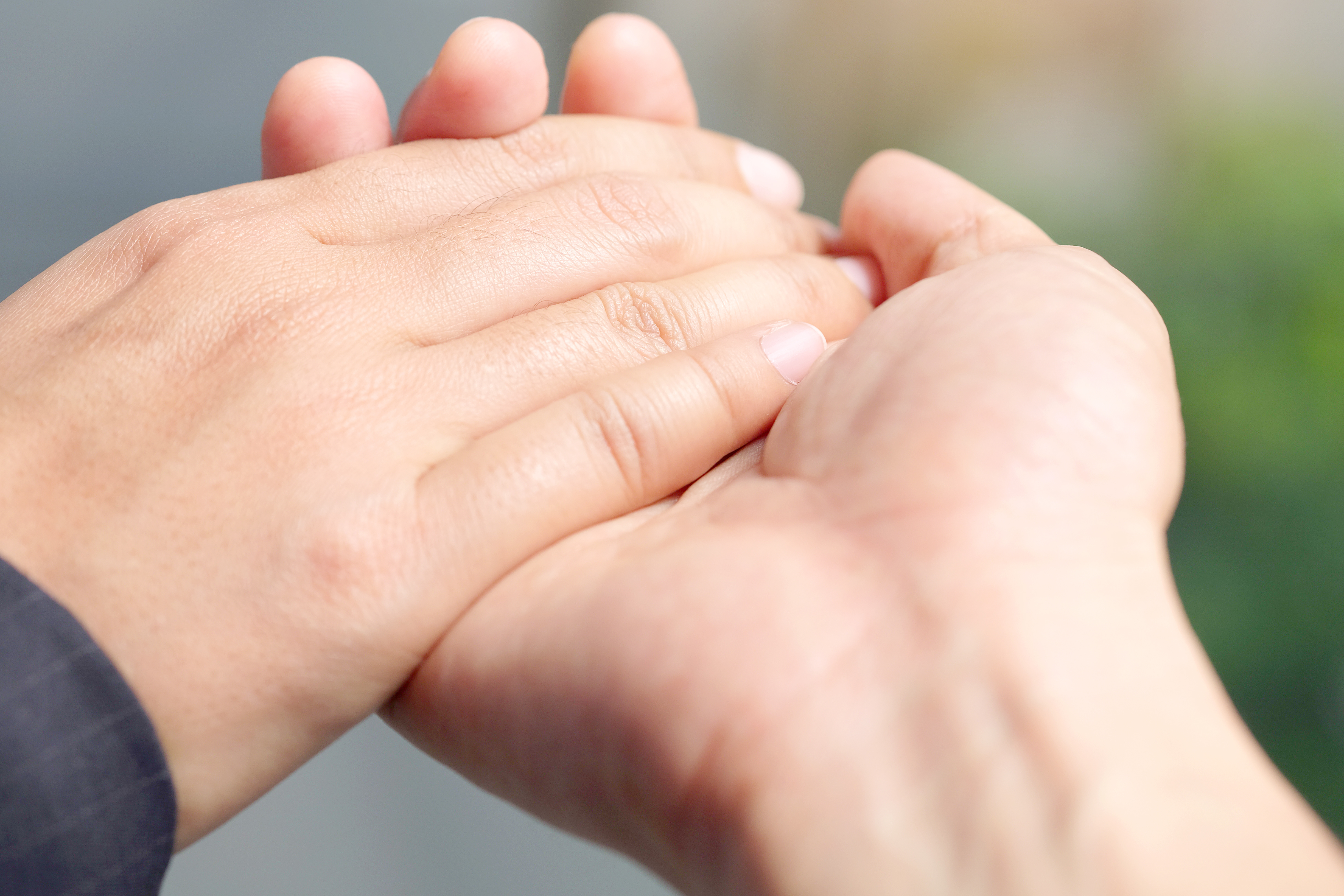
Physical touch. Strange as it may seem, some people never think of physical touch as a language of love unless they’re talking about sex. Of course, the physical and emotional intimacy of sex can speak love, but other kinds of touch do just as well for some people.

Bipolar people in the manic phase can have a high sex drive and appreciate some sexual attention even if you wouldn’t ordinarily want it at that time of day, for example.  But the bipolar person can crave touch without sex as well. Hugging and cuddling, sitting close with an arm around the shoulders, and even a touch on the shoulder as you leave a room can speak volumes.

The important part of this is to learn and know what your partner values – what language of love she or he speaks – and to give it to them. Mixed signals, speaking the language that you would want instead of the one that your partner does, will not be processed as love. Physical gifts to one who hears love in affirmations will miss the mark.

Obviously, the best thing to do is to ask your partner which “language” they speak. But she or he may not even realize that there are different languages or which one is theirs. Observation, attention, and even trial and error may be necessary to get the communication going. But if you want to speak love to a person with bipolar disorder, these are communication skills that can be vital.


Good Enough

I know a man who used to be caught in all-or-nothing thinking. Anything at all – a dinner, a gift – had to be “fantastic” or it was “wrecked.” “Okay” wasn’t good enough. “Fine” wasn’t good enough. “Nice” wasn’t good enough. “Good enough” wasn’t good enough. He heard them all as “wrecked.”

Fortunately, over the years, he learned to accept compliments that were lesser than “fantastic.” He could even understand “needs work” or “meh” without feeling that those meant “wrecked.”

There was I time when I thought my life was wrecked. Irretrievably, permanently wrecked. All I had to look forward to was someone recognizing my wretched wreckedness and having me committed. Fantastic was never even an option.

Later I learned that my life wasn’t wrecked, though it surely hit some rough patches and there were a few things that were wrecked along the way – friendships, my self-esteem. But gradually I learned that the problem was not wreckage, it was bipolar disorder.

And now my life is not wretched and wrecked. Bipolar disorder has backed off.

I don’t think I’ve been cured of bipolar disorder, because I don’t think that’s possible. I think that the most that you can say is that I’m in remission.

And that’s okay.

I’m content with the idea that I’ll have to take medications for the rest of my life. They’re what got me here and they’re what keep me here, in the land of Good Enough.

I don’t ever expect to be normal – whatever that means – but I do expect to remain reasonably functional. I have a good marriage. I can do paying work. I have a comfortable home. I’m stable most of the time. I go to a psychiatrist only for med checks.

I have just enough symptoms to remind me how I used to be (that is, dreadful, miserable, and sometimes numb). I still don’t like to go out of the house, but I can if I need to. I still have to lean on my husband for support. I still get free-floating anxiety at times. But those are symptoms I can live with.

Of course, the road to remission has been very (very) long. I’ve fought my way through meltdowns. I’ve had to learn coping skills and some degree of self-care. I’ve tried nearly every combination of medications on the market, except for the newest ones – I’m not switching from what works now in hopes of getting a little bit better. Because that might not happen.

And because I’m good enough.

I’m good enough to write blogs. I’m good enough to write a book (I wrote a book!). I’m good enough to have lots of friends, both online and off. I’m good enough to help other people who are going through the same things I did.

I’ll never be perfect, but let’s be honest, that was never a goal of mine or even a possibility, really.

But I feel I have beaten this bipolar disorder; it hasn’t beaten me.

And that’s good enough for me.

Children’s Bodies, Children’s Minds

I read recently that the Duchess of Cambridge was visiting a series of schools to mark Children’s Mental Health Week. The duchess is the royal patron of Place2Be, a children’s mental health charity. The article said that this year’s theme for Mental Health Week would be “Healthy: Inside and Out, focusing on the connection between physical and mental health.”

The article explained, “The charity works with more than 280 primary and secondary schools across England, Scotland and Wales, providing support and expert training to improve the emotional wellbeing of pupils, families, teachers and school staff.” 

The duchess, it says, would be meeting with members of the school community to discuss students’ school readiness, teacher welfare, the wellbeing of the school community, and the importance of being active; and also talk with parents about good routines and habits around sleep, screen time, healthy eating, and exercise.

All of which sounds fine and worthy. But does anyone else see something missing from this public relations tour? Maybe it’s just me, but there doesn’t seem to be much actual emphasis on children’s mental health.

Yes, we know that the body and the mind are intimately connected. Yes, we know that children need a sense of wellbeing. Yes, we know that being active and eating healthy are important for kids. And we know that parents, teachers, and school communities have important roles to play in students’ healthy development. We also know that sleep, healthy eating, and exercise are good for people with mental illnesses. Hell, they’re good for everyone.

But there’s a lot more to mental health than physical fitness and a sense of wellbeing. If that was all it took, we could just eat kale and kiwis, meditate, and send the therapists home.

Of course, the article was short and seemed to focus on the duchess’s meetings with the youngest kids, who after all the most photogenic. Maybe the charity and the duchess also educate about the thornier aspects of mental health. Maybe they promote dialogue about self-harm, suicide prevention, childhood depression, and other conditions. I would like to think that they do.

But the article and many others like it focus on the physical and feel-good aspects of mental health and not the mental and emotional. Bubble baths for self-care! Pets as the best therapists! Super foods for regulating moods!

Memes are not the answer. And the physical aspects of mental health are certainly important. But we’re talking about mental illness and mood disorders here. Can’t we at least spend time talking about the mind and the emotions?  Maybe even have a dialogue about what happens when something goes wrong with them? Stress the importance of seeking help when one is confused, overwhelmed, and despairing?

I think society at large is still uncomfortable talking about mental illness and twice as uncomfortable talking about mental illness in children. Many of us are still laboring under the illusion that childhood is a uniformly happy time. In fact, many kids suffer from serious mental illnesses. If the statistics give any indication, 20% to 25% of them will experience a mental health problem at some time in their lives.

We should talk about this and ultimately do something about it. Something more than emphasizing good physical health and getting celebrities to do 30-second spots about how they too experience depression, though these are indeed good things.

I’ve written before about what I think a mental health curriculum in schools should look like (https://wp.me/p4e9Hv-Jw, https://wp.me/p4e9Hv-Hl). I suppose that first we need to be aware that children can and do have mental health problems – that it may not be “just a phase they’re going through” or something they’ll “just get over.” It’s a serious problem and requires serious attention, not to mention serious actions.

Whatever else we do, let’s put the mental back into mental health.


What My Husband Has Learned From My Bipolar Disorder

First, let me say I’ve learned a lot from my husband and from my bipolar disorder. The two of us have been married for more than 35 years and I’ve been bipolar all that time. I’ve learned a lot from him about caregiving, steadfast love, and coping, among many other things.

But he’s also learned a few things from living with me and my disorder. I asked him to tell me about it, and here’s what he said he learned.

He can’t fix me or control my emotions. (Of course, the corollary to this is neither can I.) “It’s not necessarily my fault when she feels bad and it’s not my responsibility to make her feel better,” he says. This particular lesson caused both of us a lot of trouble early in our marriage. Dan would blame himself for my moods and become angry when he couldn’t do anything to make me feel better or even respond to his attempts. He was in there trying, but he had to learn to let go and help me find ways to work toward my own healing.

He knows my comfort items and my triggers. Over the years, Dan has learned that while he can’t make me better by himself, he can help me get the things that bring me comfort and avoid the things that trigger me. For example, he knows I find watching cooking shows calming. Him, not so much. But often he joins me on the sofa while I indulge. “Sometimes I’ll sit and be with her even if I’m not really interested in the cooking shows,” he says. “Just to be with her. I do it because I want to be with her.” Sometimes I do that with him too, when he watches shows about treasure hunting or weird science. Sometimes we even sit together and watch shows we both like, such as Forged in Fire.

He has also learned about things that trigger my anxiety, such as loud noises. “I have to be mindful if she’s in a place where loud noises affect her,” he says.  “If I do have to hammer or pound on something, I give a warning so that she’s not blindsided or startled by it.” “There’s going to be a crashing noise,” he says, or “Everything’s okay. I just dropped a pan.” He also lets me know where he’s going to be and how to get hold of him in case I panic badly.

He knows to ask, offer, or get out of the way. I can be needy at times, but don’t always know what it is I need. At times like that he’ll ask, “Do you need a hug? Do you need to eat?” Other times he’ll simply give me that hug or put on one of my comfort movies (The Mikado or The Pirates of Penzance usually draws me out of bed). If neither one of us can figure out what might help, he’ll simply let me alone until I feel better or until I think of something.

If I do ask for something I need he’ll say, “You can get that.” If he can’t do what I need, we’ll sometimes negotiate a partial solution. Or he’ll give me the tools to do it myself.

He knows how to help with self-care. Like so many people with bipolar disorder, I find that taking a shower, getting dressed, and going out requires quite a number of spoons, sometimes more than I have. Dan helps with that. For example, he’ll give me a clean towel and clean clothes, and remind me that I need that shower. Or he’ll encourage me to get out of the house by negotiating how many errands we’ll do on a given day or by including a stop at a bookstore or a favorite restaurant among them.

He knows that self-care is important for him too. Sometimes he’s the one who needs that hug or that alone time, and he asks for it. He knows that I have learned that he needs these things too and that I will ask him what he needs, or offer it, or say, “You can get that” to him. As the saying goes, you can’t pour from an empty vessel.

A lot of what we’ve both learned from my bipolar disorder are just the things that any partners need to learn: Tolerance. Give-and-take. Negotiation. Touching. Sharing. Civility. Support. We’ve both grown from the experience and that to me is very important. This marriage would never have worked if either one of us had stayed stuck in the way we were in the early days.