Bipolar 2 From Inside and Out

Archive for August, 2017

The Fragility of Hypomania: A Reminder

Note: I was away for part of this week and dealing with a personal/financial disaster since I returned, so here is a post – as relevant to my current situation as it was two years ago.

I was in Ireland, on a bus full of journalists and two monsignors. The sun was shining, though the day was cool. We were on our way to some scenic inn where there would be a fragrant peat fire and servings of Irish coffee.

The guide was playing a mixtape through the bus’s sound system. The song playing was “All God’s Critters,” by Bill Staines, a folk song I knew quite well. Here’s the chorus:

All God’s critters got a place in the choir
Some sing low, some sing higher
Some sing out loud on the telephone wires
And some just clap their hands, or paws, or anything they got now

I was happy, with that golden glow of joy I had felt so seldom in my life. I was peaceful, with a sense of everything being put in place especially, just for me. I was contented, beyond glad to be where I was and doing what I was doing.

Then one of the other people on the bus asked the guide to turn off the tape. It was weird, she said, and didn’t make sense.

I don’t know whether she didn’t like folk music, or Bill Staines, or that song in particular. Perhaps she thought it was a children’s song. Perhaps she thought we should be listening to something authentic and Irish.

But the guide turned off the tape. And my golden glow was gone. I was still on a bus in Ireland, traveling through sunshine toward a scenic little inn somewhere.

But my feeling of well-being was gone. It was like the breeze had blown it out through the windows of the bus. Everything became plain.

I didn’t do anything about it at the time – ask to wait till the song was over or say it was one of my favorite songs – though now I like to think I would.

Was it hypomania that settled briefly on me like an aura? I hadn’t been introduced to the concept then, but I think that’s what it was. Peace, joy, well-being, a sense of being right where I fit. That could have been just regular happiness, I suppose. But it felt different, and special, and exhilarating.

And it was so fleeting. Once it was gone, it wouldn’t come back. I enjoyed other parts of the trip, but never recaptured that singular moment, that uplifting rush. Once it was gone, it was gone.

Even a regular good mood is hard for me to hang onto. If someone around me is grumpy or cranky, I find it hard not to get sucked into the downward spiral. If they’re angry, forget it. There’s no holding on to any good feeling then. My natural instinct is to cringe, and to apologize.

Or at least it was. As I have slowly gotten stronger and more stable, I do not cower the way I used to. I remove myself from the sucking drain of a person or situation if I can.

Going into the kitchen to make tea is a strategy I have often used. It’s also a grounding method I can use when things are spinning out of control. When everything around me is chaos, the simple, familiar, soothing action of heating a pan of soup can bring me closer to stability. Whether I really want tea or soup is not the question. Making it for someone else may even be more calming.

Right now I am pretty far from hypomania. My husband and I are without transportation and without funds to acquire some. We came close to being stranded in another state, but thanks to the good graces of AAA made it home safely. But before that, we were sitting on wicker rockers on a porch, watching cats and chickens and goats, enjoying smooth jazz, and drinking iced tea. At least now I know what hypomania feels like when it hits, and maybe I can hang onto it for just a little bit longer the next time.

Does Emotional Abuse Cause Bipolar Disorder?

I belong to a fair number of bipolar support groups on Facebook and I often read posts or comments from people who attribute the cause or the severity of their bipolar disorder and/or PTSD to emotional abuse, particularly in childhood and particularly from family members.

I can’t really comment on PTSD since I don’t have it (though one therapist mistakenly diagnosed me with it), but I do have some experience with emotional abuse.

First, let me say that what I experienced was never physical abuse, unless you count deserved childhood spankings, which I know some people do. No sexual abuse, either – no “funny uncles” or neighborhood predators. (There was one older man that all the kids warned one another to stay away from, but I did, so I don’t know if the rumors were true.)

My childhood was pretty idyllic, if you get right down to it. My parents never divorced. We lived in a neat suburb of starter homes with excellent schools, where I got good grades and praise. We frequently visited our extended family in the next state, with plenty of aunts and uncles and cousins, farms and chickens and horses, along with occasional trips to local state and national parks. We went to the nearest local church, which did not emphasize hellfire and brimstone. If there was any mental illness in my family, I never knew about it.

And yet, sometime during that childhood, bipolar disorder began to manifest.

My life, of course, was not perfect. I was smart and loved school, and was very different from my parents, who weren’t big readers and didn’t know what to do with me, especially in the area of developing social skills and guiding my education. I fought with my sister, but not any more than other siblings I knew.

But then there was the bullying at school – the first emotional abuse I can remember. I’ve written about that before. At one point I noted:

There was the boy who chased me around the playground, threatening me with what he claimed was a hypodermic needle.

There were the kids at the bus stop who threw rocks at me while I tried to pretend it was a game of dodge-rock. Never being good at sports, I came out of that episode with three stitches in my forehead. I don’t know which upset me more, but by the end of it all, I was hysterical. And not the good, funny kind.

And there was my best friend and the birthday party. The party was for her younger sister and all the attendees were about that same age. My BFF and I were supposed to be supervising, I guess. But while I was blindfolded, demonstrating Pin the Tail on the Donkey, she kicked me in the ass. Literally. In front of all those younger kids.

It seemed a bit extreme.

I have also read about bullying and its relation to emotional abuse, and written about that:

“Our results showed those who were bullied were more likely to suffer from mental health problems than those who were maltreated,” says Professor Dieter Wolke of the University of Warwick in the article. “Being both bullied and maltreated also increased the risk of overall mental health problems, anxiety and depression.”

He adds, “It is important for schools, health services and other agencies to work together to reduce bullying and the adverse effects related to it.”

So. Emotional abuse in my childhood, in the form of bullying. Did it cause my bipolar disorder?

Probably not. But it sure didn’t help.

I was already at the least depressed and most likely bipolar by the time all that happened, and was certainly bipolar by the time I encountered undeniable emotional abuse in young adulthood.

But I firmly believe that the roots of my bipolar disorder were located squarely in my brain, between the synapses, due to the lack or overabundance of neurotransmitters or other brain chemicals. That’s the current thinking, and it makes sense to me. (Of course there’s the possibility that in the next decades genes or gut bacteria or some other factor will prove to be involved, but given present science, I’ll stick with the brain chemistry theory.)

I don’t think that the emotional abuse caused my bipolar disorder. But I sure as hell know that it exacerbated the illness, which has made it all the harder for me to make progress in finding peace and healing over the decades.

But I can only speak for myself. Your mileage may vary.

From Panic to Manic to Proactive

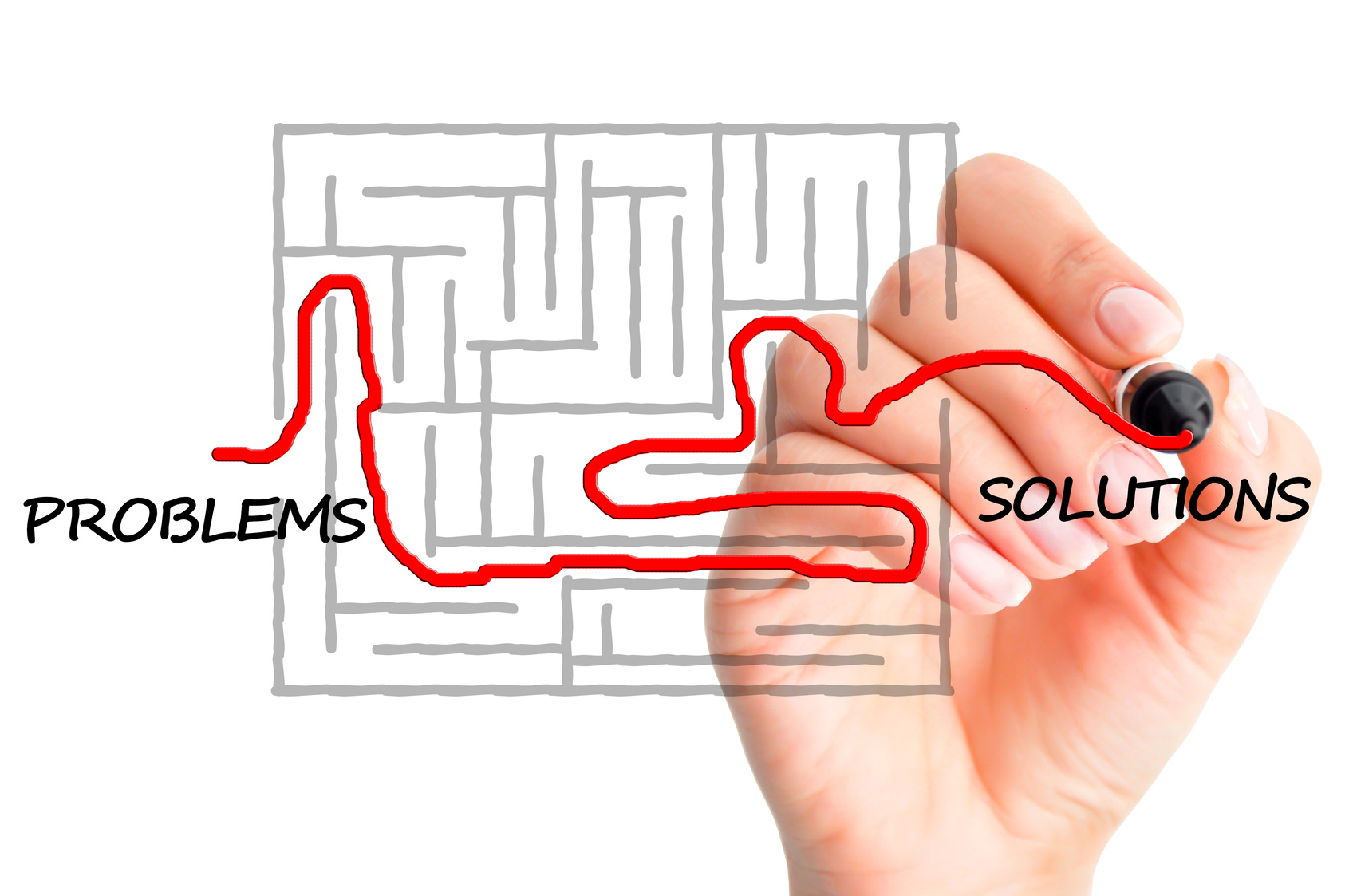
Hypomania isn’t all bad. Right now I’m facing one of my worst triggers, and instead of retreating into depression, I kicked into hypomania. Then I harnessed as much of it as I could and channeled it to work for me.

Here’s the sitch. My longest and most vicious major depressive episode (which lasted literally several years, even when I was under treatment and on medication) was triggered by, among other things, massive financial problems. (There were other factors involved: health problems, family health problems, family problems, irrational thinking, strained relationships, and bad ol’ neurotransmitters.) I was unable to work. There was plenty of anxiety along with the depression, you can be sure.

So here I am again, almost a decade later, once again in dire financial straits. I’m able to work, but only part-time and telecommuting. Then one of my biggest, most reliable clients cut way, way back. I made the mortgage this month, but next month looks iffy at best.

In the past, this would have resulted in major mental symptoms, and physical ones as well. (Better you shouldn’t ask, but my digestive tract responds to stress in an overwhelming manner. I know, TMI.) I would be immobilized, unresponsive, and spend most of my days on the sofa when I wasn’t in the bathroom. I would abandon the financial problems – and myself – to my husband’s care, for as long as he could keep everything together. Until he burned out too.

During this new version of assorted crises, I seem to have a better handle on things, and I credit hypomania. I am trying to better the situation, though not yet particularly effectively, but steadily.

I am looking for new clients and more work from my old ones. I am looking for other sorts of telecommuting jobs, and even part-time outside work that seems to be within my modest-at-this-point capabilities.

(This process is hindered by the fact that all the job search engines are lousy. When I say I am a writer, I get leads for technical aerospace writing and service writers for car repair shops. When I say I’m an editor, I get invitations to become a driver for Uber. True story.)

I pursue these avenues every day. Soon after this post goes up, I have a networking “date” with a former client and a former co-worker.

And in the meantime? When the days stretch out with nothing happening and the sofa calling my name?

I blog. I work on my novel. And I take surveys.

Admittedly, none of these pursuits brings in mortgage-payment-sized money. But the surveys bring in a couple of dollars a day, which is pitiful, but helping with a getaway my husband and I planned before the finances went belly-up. (My husband is still working, but his wages alone aren’t enough to pay all the bills. We need both of us, a situation familiar to millions of people in the U.S., with or without mental illness.)

And, aside from the getaway, which it’s too late to cancel, we’ve instituted cutbacks. We typically spend way too much on food and now must revisit our newly married days, when we subsisted on mac-n-cheese and tomato sandwiches. It’ll be good for us, I tell myself. We could both stand to lose some weight.

I don’t know how long my “proactive hypomania” will last, when our financial situation will improve, or whether my energy level will survive after it does. Or, for that matter, whether we’ll end up eating cat food under the Third Street Bridge and fighting stray dogs for cold french fries.

But right now, for now, I’m dealing. And that’s something I couldn’t do before.

Cheerleading or Celebrating?

I was prejudiced. I admit it. When I was in high school, I believed that all cheerleaders fit the stereotype – “buoyant and busty and just plain dumb,” as the singing group Uncle Bonsai put it in “Cheerleaders on Drugs.”

I still don’t really understand cheerleading, especially on the scale of professional sports. But I know some good people who have participated in cheerleading and cheer coaching, so I’m willing to give them the benefit of the doubt.

But that’s not what I wanted to write about today. I want to discuss the kind of cheerleaders that offer support to those of us with bipolar disorder.

I suppose traditional-style cheerleaders are supposed to give encouragement before a thing is done. But I prefer ones who cheer after something, no matter how small, is accomplished.

That is to say, I prefer cheerleaders who say, “You did it!” to those who say, “You can do it!” (This is another YMMV post. This is just my own experience. Your mileage may vary.)

Cheerleaders-before-the-event are common in mental health circles. “Smile! You can do it!” “Do volunteer work! Give it a try!” “Get out there and meet new people! You’ll feel better!” “Get some fresh air and exercise! It’s easy!” But the fact is, no, I can’t always do it or give it a try. No, it’s not easy, and I don’t feel better.

It’s good to know that someone believes in you, but to me, cheerleaders set me up for failure. If I can’t manage to smile or exercise or whatever, I have disappointed not just myself, but the person who thought that I could do it, whatever “it” is. Remember the Little Engine That Could? It was thinking, “I think I can,” not “Someone else thinks I can.” What does that someone else really know about how severe my symptoms are today or whether my meds are having their desired effect or how many spoons I have?

I prefer cheerleaders-after-the-fact – those who join me in celebrating victories, no matter how small or insignificant they may seem to others. “Hurray! You paid a bill today!” “Congratulations! You phoned your mother!” “Good job! You took a shower!” “Go you! You put on pants three days this week!”

These are accomplishments – things you actually did, not things that you might or might not do. They’re tiny victories, maybe, and you don’t see memes that encourage you to do them. To neurotypical people, they wouldn’t be accomplishments at all, just normal functions of everyday living. It’s too easy to picture cheerleaders-before-the-fact saying these things half-heartedly or sarcastically. “Oh, great. You fed the dog. Woo-hoo.”

I don’t want cheerleaders so much as celebrators, people who can join me in acknowledging that it is a victory to write my blog post, or even to make notes for it. Or even, some days, to get out of bed.

I don’t expect someone to follow me around all day applauding every little thing I do. But on days when I feel useless and unproductive, like a failure or a slug, I do like having someone remind me that I do make progress, that my struggles have value, that – as a friend of mine said – not fucking things up worse is at least half a win.

I’ll take half a win when I can get it. And a pat on the back whether I smile and get out and make new friends, or simply make it to my doctor’s appointment.

That doesn’t make me a glass-half-full person. It just means I’m grateful that the glass isn’t completely empty.