Bipolar 2 From Inside and Out

Posts tagged ‘support systems’

The Languages of Love and Bipolar Disorder

In 1995, Dr. Gary Chapman published his popular relationship book, The Five Love Languages. In it he proposed that there are different ways – or “languages”  – that people use to communicate their love. Problems happen when one partner doesn’t speak the same language as the other; for example, when one gives the other literal gifts while the other yearns for time together.

I’ve been thinking quite a bit about love and bipolar disorder lately and it occurred to me that the five love languages could be a helpful lens for looking at relationships. In particular, they might help a person realize what the other one needs when experiencing symptoms of the disorder.

Here are the five love languages and how they might be helpful if you are in a relationship with someone who has bipolar disorder.

Words of affirmation. I’m not talking here about the kinds of affirmation we are supposed to look in the mirror and give ourselves. I mean words of affirmation that come from outside, from another person, and are gifts of love. Everyone needs affirmations at times, but for people whose love language is words of affirmation, they can be positively soul-feeding.

For the bipolar person, these affirmations can be as simple as, “Thank you for coming out with me,” or “Congratulations on getting the bills paid,” or even, “I know you can do it,” or “I knew you could do it!” And for the bipolar person who struggles with self-esteem, imposter syndrome, or lack of motivation, these can be the words that keep us going.

Quality time. Quality time doesn’t have to mean an elaborate outing or a two-week vacation. It can be as simple as sitting on the sofa with your partner watching a movie, or cooking together. Especially when there’s something else you could be doing. Giving up that other activity to spend time with your loved one is another kind of love-gift.

Quality time – extended periods of togetherness – can be extra special to someone with bipolar who feels lonely, isolated, or unlovable. Just the idea that someone wants to spend time with you, even though you can barely stand to be with yourself, sends a powerful message.

Receiving gifts. There are people who value physical gifts and see in them the care and attention that another person spends selecting just the right thing. Diamond rings are unnecessary. In this language of love, a simple houseplant can even be preferable.

You probably shouldn’t expect a physical gift to “cheer up” a person with bipolar depression. As with any gift, the important thing is knowing what the person values and providing it to them. Comfort objects such as plush animals, mp3s of calming or favorite music, or a weighted blanket to ward off panic may be just the thing. Even a silly coffee mug with an appropriate saying can become a treasured item.

Acts of service. If the person you love values acts of service, then your way of speaking that love is accomplished when you do something for her or him. Doing the dishes or some other chore that usually falls to the loved one is one example.

For the bipolar person, acts of service that speak of love may be as simple as handling phone calls and visitors, or doing the shopping when he or she just can’t face the grocery store. “I’ll do it for you” is a powerful message that says, “I care about you and want to help ease your burdens.”

Physical touch. Strange as it may seem, some people never think of physical touch as a language of love unless they’re talking about sex. Of course, the physical and emotional intimacy of sex can speak love, but other kinds of touch do just as well for some people.

Bipolar people in the manic phase can have a high sex drive and appreciate some sexual attention even if you wouldn’t ordinarily want it at that time of day, for example.  But the bipolar person can crave touch without sex as well. Hugging and cuddling, sitting close with an arm around the shoulders, and even a touch on the shoulder as you leave a room can speak volumes.

The important part of this is to learn and know what your partner values – what language of love she or he speaks – and to give it to them. Mixed signals, speaking the language that you would want instead of the one that your partner does, will not be processed as love. Physical gifts to one who hears love in affirmations will miss the mark.

Obviously, the best thing to do is to ask your partner which “language” they speak. But she or he may not even realize that there are different languages or which one is theirs. Observation, attention, and even trial and error may be necessary to get the communication going. But if you want to speak love to a person with bipolar disorder, these are communication skills that can be vital.

Big Box Mental Health

photo by rawpixel.com from Pexels

According to an article published on the blogsite She Knows, “a Boston-based company that manages mental health care for 40 million people, has opened a small clinic in a Walmart location in Carrollton, Texas, and has plans to expand the program in other retail locations throughout the country.”

And I don’t know whether to vomit or applaud.

Walmart’s ubiquity is one point in its favor. They’re everywhere. And for some people, whether they love or despise Walmart, it’s the only choice they have for groceries, household goods, or much of anything else. Those areas are also likely to be underserved by the mental health system, such as it is.

And sparse as the options offered by the Walmart walk-in clinics is – treatment for anxiety, depression, grief, relationship issues, and stress management – it’s more than a lot of people have access to now. The trial site is said to be staffed with one licensed clinical social worker, has a sliding fee scale for those with no insurance, and will soon be approved for Medicaid reimbursement (it is hoped). There will even be remote Skype therapy services if necessary.

All that is good, as far as it goes. But does it go far enough? Will people be able to get more than a pat on the head and a pep talk as they do their weekly or monthly shopping? How will the walk-in clinic handle referrals for people with serious mental illness or a need for psychotropic medication, something that clinical social workers can’t provide? How many people can get help from a single professional? How good is internet therapy? And what percentage of Walmart shoppers have access to the internet?

The walk-in clinics are touted as reducing stigma around mental health issues. After all, the thought is, getting your mental health services at Walmart will become as natural as getting a haircut or an eye exam there. Well, maybe. On the other hand, how many people are willing to have their friends and neighbors see them publically, sitting in the waiting room or ducking surreptitiously through the door? It seems to me it might perpetuate stigma, rather than lessening it.

Besides, Walmart is hardly a bastion of high-quality goods and services. Will the mental health services be second-rate as well? It could be that even second-rate care is better than no care at all. But it’s surely not enough to deal with issues that require long-term therapy with actual treatment plans; scheduled repeat visits; building a relationship with a particular therapist; access to medications; and all the other aspects of more effective treatment, especially considering complicated disorders like bipolar, OCD, or anorexia.

I fully admit that I hate Walmart – the way they have driven out local Mom and Pop stores, for example, and the way they treat their employees. But I have many choices of where to shop near where I live, and access to both therapists and psychiatrists, and insurance that covers my appointments and medications. If I weren’t looking through the lens of privilege, I might see things a lot differently.

So for now, I guess my attitude is to wait and see. One test location does not a Walmart Psych Empire make. Perhaps it will succeed; perhaps not. Perhaps it will become the Great Clips of the psychotherapy world.

But while I’m waiting, I’m hot holding my breath.


My Turn to Care

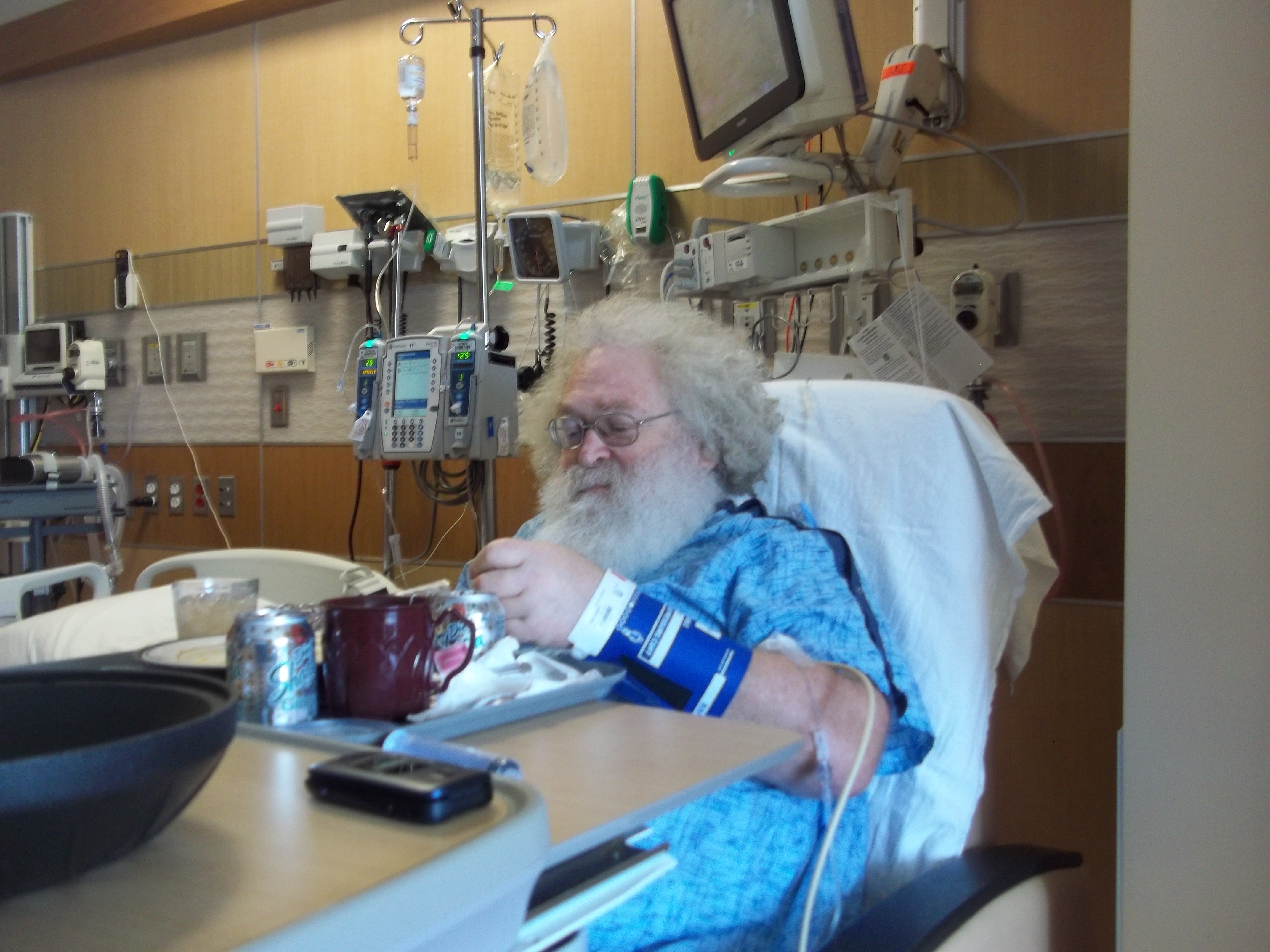
My husband had a heart attack this fall. He got a total of five stents, avoided open heart surgery, and is now in cardiac rehab. And I am helping take care of him.

Dan has been my caregiver as long as I’ve known him. He has stuck with me through the various ups and downs of bipolar disorder – when I was untreated, when I was struggling with finding the proper medication, when I shouted at him, when I was immobilized – whatever. I couldn’t have got through what I’ve been through without him.

Now I get to pay him back, at least a little, for all he has done for me. I have no training and little experience as a caregiver. But there a few things I can do for him, in addition to loving and supporting him as he has loved and supported me.

I can facilitate his appointments, meds, and procedures. Dan has a tendency to forget when is next appointment is, and with which of his many doctors. I have a perfectly good whiteboard in my study on which I note my own appointments as well as keep track of my work. It’s no trouble at all to add his and remind him.

Getting to his appointments is another area where I can help, especially since his cardiologist has a number of offices in various parts of town and in nearby suburbs where he practices on different days of the week. Since I’ve lived here most of my life, I know the area better than he does and I go with him to navigate. (He’s never gotten used to GPS.) I suggest routes that are easy to retrace and figure out when to leave to get there on time.

Dan has in the past had a habit of forgetting to take his various medications.  When that involved sertraline, I didn’t worry much since I know that once a certain level has built up in the body, missing a dose is not such a big deal. But with his blood thinner, a missed dose could lead to a clogged stent and another heart attack. So I proactively encourage him (as my therapist suggests I call nagging) to take them daily and on time.

I can handle financial stuff. With Dan being off work for so long and hospital and doctor bills adding up, our finances are getting pretty tricky. I can make sure I have steady work and even take on extra sometimes. I can fill out the forms for short-term leave, financial assistance, insurance, and other necessities.

I’ve even been able to set up PayPal and Facebook funding pleas to help us get a little extra cash to pay the utilities and other bills. (GoFundMe may be next once all the medical bills are in.)

I can handle computer stuff. Finding locations of offices and hospitals and the cardiac rehab place, phone numbers of financial aid programs, and names and side effects of medication are easier and quicker for me to do on my Mac than for him to do on his ancient PC. I can find things he needs on ebay for the lowest price. I can find and email various forms and records of expenses to wherever they need to go. This may sound minor, but believe me, it can take up a lot of time and frustration. I think of it under the heading of relieving his stress.

I also know how to network. A Facebook friend of mine teaches Tai Chi at a local Y. Through him I found out that the Y does not charge for his classes. And through Google I found that this month the Y waives membership fees if you donate canned goods to a local food pantry. The Y’s amenities include exercise classes and water aerobics, which I also could use. I also found a local Senior Center that has yoga and free weights (and community theater) as well.

I can understand his depression. Being faced with intimations of one’s mortality, combined with money problems and not being able to work can make anyone depressed. And Dan was already taking meds for depression before this current crisis even started. I am, of course, a third-degree black belt when it comes to depression. I know how he feels, why he’s feeling it, and what will and won’t work in helping him through it. I can be patient, supportive, and there to communicate or simply hug when he needs to, as he has so often done for me.

There’s not much care that my husband needs in the way of actual physical care. He is not so incapacitated that he needs help with feeding, dressing, bathing, or other tasks of daily living (other than changing his bandages when he cut his finger open and required eight stitches).

But I like to think that the support I can give him helps in his recovery by taking some of the stress off him, which his doctor recommends and which he has done for me innumerable times. We’re a team and this time it’s my turn to take some of the weight.

Mental Illness and Voting

people standing with signage on street

Photo by Rosemary Ketchum on Pexels.com

No, I’m not going to tell you how to vote. And I’m not going to say the country is bipolar just because we’re so divided. What I am going to do is talk about the issues you should be concerned with during these mid-term elections and what you need to do in order to make your vote count.

Despite the fact that mid-term elections are usually boring, plagued by low turn-outs and minor local issues, this time they are likely to have national significance. This time we are voting on people – representatives, senators, and governors – who will make the policy for our states and our nation, including policies that affect the mentally ill.

Health policy. We’re not voting directly on national health policy, but we are voting for or against the people who make those policies. Those policies include support for the ACA (Obamacare), especially its protections for those with pre-existing conditions.

This has become a hot-button issue this year and you will likely hear and see ads that tout the various candidates’ support for insurance that covers pre-existing conditions. The key here is to do a tiny bit of research. Whatever a candidate says now, has he or she always supported coverage for pre-existing conditions? Or does the candidate have a history of trying to do away with such insurance coverage? Promises are not the point here. Past actions are. Given the choice between an incumbent and a newcomer, I personally will go for the newcomer if the incumbent has a track record of trying to dismantle coverage for pre-existing conditions.

Another important issue for the mentally ill is safety net programs, particularly Social Security, Medicare, and Medicaid. Many people with mental illness depend on these programs to cover their basic living and medical expenses. Believe a candidate who wants to gut these programs. Many of them see the people who benefit from these programs, particularly SSDI, as “moochers,” “freeloaders,” and drags on society. If you or a loved one needs this kind of assistance, vote accordingly.

There may also be local issues regarding police training, housing, and the homeless that are relevant to persons with mental illness. Spend a few minutes researching before you vote. Some Internet sites such as BallotReady.org and Vote411.org can help.

Your vote. Your vote only counts if you actually cast it and that can be a problem for those with mental or emotional disorders. Going to the polls can seem an impossible feat. But given the significance of the coming elections, spending some spoons to do so can have long-term repercussions.

If you have trouble getting to the polls, first make sure you know where your polling place is this year. It may have changed since the last time you voted. Then ask around. Some cities, like mine, are offering free bus rides to polling places and some services like Uber are offering discounted fees. Neighbors who go to the same polling place or members of support groups you belong to can potentially provide transport. Don’t forget to ask friends and family, if you can. They may not realize how important voting is to you or the difficulty you have getting to the polls.

If your difficulty is not getting to the polling places, but being at them, plan ahead. There are likely to be crowds this year and you may want to have a support person with you, especially one who also plans to vote. You may even be able to call the polling place ahead of time and find out when their peak voting times are so you can avoid them. If possible, avoid the noon rush, when many people take a voting break from work, and just after local businesses close for the day.

You may have heard rumors of intimidation at the polls this year. These are likely exaggerated, as are predictions of civil unrest after the results are known.  If anyone tries to interfere with or influence your voting, find an official poll worker or ask for a provisional ballot, which is your legal right. Call the police if you have to. Rely on a support person to help you get through the process.

Remember that this year’s elections are important. If at all possible, VOTE.


When Your Therapist Tells You What to Do

The classic examples of non-directive therapists are Sigmund Freud and his disciples, who legendarily sat at the head of their couches and made comments like, “Hmm,” “Tell me about your dreams,” and “How do you feel about your mother?”

Freudian psychiatry is, thankfully, now out of vogue. But there are still therapists who believe that their job is to listen, not to instruct.

On the other hand, there are more directive therapists who assign homework. This can be anything from “Listen to this podcast on mindfulness” to “Write a letter to your ex telling him/her what you truly feel.” They probably won’t tell you to kick the bum to the curb, but if you decide to do so they’ll help you prepare for it.

But, although I am far from a Freudian and shy away from those who are (not many these days), I prefer non-directive therapists. I am not averse to doing a little homework or having a therapist ask me in a session to vocalize what I would like to tell a person or even to write a list of the coping mechanisms I’ve developed. My preferred dynamic, however, is to give-and-take with the therapist and then go home to contemplate what was said and how I feel about it.

I have had therapists who have given me homework and I can’t say they were wrong to do so. Sometimes writing something down or throwing teacups against the basement wall (or whatever helps you get your anger out) is a good thing.

My most recent therapist was a combination of the two. She mostly listened while I rambled on about what was happening in my life or what had happened in my past. Then she suggested ways that I could think about the events or pointed out coping mechanisms that I had developed or suggested ways I could put those coping mechanisms to use.

All in all, I felt that our sessions were mostly non-directive. She did suggest that I listen to a podcast on mindfulness, but she never quizzed me on whether I did and only listened when I told her what I got from it. She never told me that I should delve deeper into mindfulness or listen to more podcasts. She left that up to me, if I thought it might be helpful.

I understand that some therapists, particularly those that work in community mental health facilities, are required to file treatment plans and I can see where giving homework can flesh one out more than “talk about feelings.”

Perhaps there is something I’m missing. Perhaps at different stages of therapy, directive psychological interaction is more beneficial. Perhaps my particular problems lend themselves more to non-directive therapy. Perhaps I just have an aversion to being told what to do, especially where it concerns my memories and my feelings.

Of course, everyone has the option not to do the homework. This can be seen as resisting treatment, or disagreeing with the treatment approach, or simply lacking the wherewithal to carry it out. Sometimes it may be more helpful when the therapist sacrifices part of the session to doing the assignment there instead of leaving it to be done at home. In this case, the therapist is being really directive, though of course the client always has the choice not to do the assignment. It’s much harder, though, when the therapist is sitting there waiting for you to make a list of your dreams, your feelings, or your interactions with your mother, or to bash an empty chair with a pool noodle.

What it comes down to, basically, is therapeutic philosophy and therapeutic style. And a client is not bound to pursue whatever style of therapy that is favored. Although it is sometimes difficult to realize, a client has the option to request or to seek a therapist whose therapeutic style matches what the client feels is most helpful.

Remember, your therapist works for you, not the other way around. If you need a more or less directive therapist, it is your right to seek one out. Therapy has been known to stall and a different approach or philosophy may be just what you need.


Healing From Gaslighting

Apparently, gaslighting has become the new “thing” in pop psych circles. We see article after article warning of the dangers of gaslighting and how to spot a gaslighter. I have written a few such articles myself:

Who’s Crazy Now? A Guide to Gaslighting (https://wp.me/p4e9Hv-pm)

Gaslighting and Bipolar Disorder (https://wp.me/p4e9Hv-C2)

When Men Aren’t the Gaslighters (https://wp.me/p4e9Hv-Cu)

Is it time for another? I think so. Now that more people know about gaslighting, they need to know how to heal after the experience, as they would after any kind of emotional abuse.

Because that’s what gaslighting is – emotional abuse. But it’s a specific kind of emotional abuse. In gaslighting, one person in a relationship (romantic or familial) denies the other’s perception of reality and works to convince the gaslightee that he or she is the crazy one in the relationship. As in other forms of emotional abuse, the gaslighter may try to isolate the victim from friends and relatives, give intermittent reinforcement (insincere apologies) that draw the victim back into the relationship, or denigrate the person with insults.

But the heart of gaslighting is that denial of the other person’s reality. The abuser says, in effect: You can’t trust your own feelings. My view of the world is accurate and yours isn’t. You’re crazy. (Of course, the gaslighter may also use the familiar techniques of emotional abuse as well: isolation, insults, projection, and belittling.) But gaslighting is unique because the perpetrator distorts a person’s world view, sense of self-worth, and belief in him- or herself.

Healing from gaslighting is not easy, but it can be done. Here is some advice from me, a person who was a victim of gaslighting but is now healing.

Get as far away from the gaslighter as you can. Yes, this may mean cutting off contact with a family member, if that’s who is doing the gaslighting. It may mean leaving town. It does mean making a sincere and lasting emotional break.

Do not maintain contact with the gaslighter. You may think that once you have broken free from the gaslighter, he or she can do no further harm. This is just an invitation to more emotional battering.

Name the abuse. Say to yourself – and possibly to a trusted person – this was gaslighting. I was emotionally abused and tricked into thinking I was crazy. My worldview was denied and my thoughts and emotions were said to be invalid.

Feel the feelings. It may be some time before you can admit to or even experience the emotions that gaslighting brings. Your first reaction may be relief (at least I’m out of that!), but there may be years of anger, frustration, fear, and rage lurking behind that. It may take work to surface those feelings and feel them and recognize that they are valid.

Get some help. This can be a therapist who specializes in treating victims of emotional abuse or it can be a supportive friend, family member, or religious counselor. It should be someone who can listen nonjudgmentally, validate your perceptions of reality, and sympathize with your situation.

Do not try to get revenge. This is just another way of reconnecting with your gaslighter. It gives the person another opportunity to “prove” that you are crazy.

Develop new relationships. It may seem like there is no one in your world who will understand and be supportive. For a while, you may not be able to trust enough to have another close friend or lover. You may have a lot of healing to do first. But remember that gaslighters are in the minority; most people don’t do that to people they profess to care about.

Give it time. It may take years to fully get over the experience. (I know it did for me.) Maybe don’t go directly into a rebound relationship. You need time and space to work through your feelings and rebuild your perception of reality.

Just know that gaslighting doesn’t have to be a way of life. It can end when you gather the strength to break away from it. You can heal and take back what you know to be true – that you are a person who is worthy of love. That your perceptions and feelings are valid. That you don’t have to live by someone else’s view of what is real. That you are not crazy.


Reaching Out and Reaching In

A lot has been said in recent days about reaching out when you’re in trouble psychologically. And that’s always a good idea. Reach out to your friends, your family, your therapist, your psychiatrist, your church or synagogue or temple.

hands people friends communication

Photo by Pixabay on Pexels.com  

Unfortunately, not everyone has those resources. And sometimes when you reach out to them, they do not reach back to you or even respond in hurtful ways.

Sometimes – many times – you’re just not able to reach out. That’s true of me, anyway. When major depression hits me like a truck, I get immobilized. Uncommunicative. Isolated. I usually have the wherewithal to get to my therapist, if my husband drives me, but not much more.

My family and friends can tell when I’m in trouble. And they do reach out, even when I don’t reach back.

My mother always knew when I hit a particularly bad spot because she could recognize it in my voice – it lacked animation, even if I was talking about something I loved. Not that I talked much or felt much. Depression can damp down all your feelings sometimes. You don’t cry, you don’t feel sad. You feel nothing. And it shows to someone who knows how to look and listen.

This is called “flat affect” by psychiatrists. The person’s face, voice, mannerisms do not reflect emotions, sometimes not even anxiety or despair. And sometimes people adopt a flat affect so as not to betray their inner turmoil. (It can still leak out around the eyes, even to relative strangers. And I don’t mean crying.)

My husband knows I’m depressed when I turn monosyllabic. Ordinarily, I enjoy talking to my husband about anything and nothing – things we’ve read or heard, what’s happening at work (his, mostly), funny things the cats did, and so forth. But when I stop responding and communicating, or respond only with “yeah,” “nah,” and “meh” sorts of answers, or don’t laugh or at least groan at his jokes, he knows I’m headed downward.

I stop communicating other ways, too. I don’t post on Facebook or only pass along the occasional pass-along. I skip commenting on posts regarding things I usually care about. I spend hours alone reading, if my sometimes-dubious powers of concentration let me. Or I sleep, and nap, then sleep some more. I certainly don’t leave the house or even make plans to go out. I don’t call friends. I isolate. I don’t reach out, like the memes say I’m supposed to.

I am fortunate to have friends that do reach out to me. John would lend me books, talk about them with me, and listen if I needed to vent. Peggy would call and invite me to visit, even when she knew I wasn’t leaving the house. Pete sometimes IM’s every day just to check in and JB assures me that when he IM’s and I don’t feel like chatting that’s still okay. Robbin calls me and tells me all about her life even when I can’t talk about mine, then says, “Let me know when you surface.” If she doesn’t hear from me for awhile, she calls again and reminds me that I can call her too. (She can also “read” my voice and knows when there’s some topic I’m avoiding.) My husband offers a hug or kisses me on the head. My mother prayed for me. I am fortunate indeed to have had people like these around me when I really need them.

Reaching out to others is good. So is reaching in to the suffering. Best is a combination of both. But that takes work and not everyone is able to do it.

If you can reach out, reach out.

If you can reach in, reach in.

If you’re lucky, you’ll meet in the middle, where hope lives.


Where Churches and Mental Illness Meet

bible black background book chapter

Photo by Pixabay on Pexels.com

Lately, I’ve been thinking – and writing – about the place where faith and mental illness intersect. (See Mental Illness, Faith and Sin – https://wp.me/p4e9Hv-DB; Prayer and Bipolar Disorder – https://wp.me/p4e9Hv-B6.) I’m still thinking about it, so I’m still writing.

Churches, among other groups, have outreach ministries to the homeless mentally ill, providing sandwiches, socks, and hope of salvation. And the stereotype of the soup kitchen is that patrons “pay” by listening to a hymn or a sermon.

But what about the rest of the mentally ill community – those like me who have homes and families and a certain degree of function? What are churches doing about us?

The answer is: They struggle, but at least some of them are doing something.

Of course, some of them are doing the wrong thing. Andrea Jongbloed reported in Relevant magazine:

I sat in the chair in my pastor’s office, listening to him list off strange things I had done recently. My pastor informed me, “the church leadership is not convinced you are mentally stable enough to continue leading your bible study.”

It wasn’t supposed to happen this way. I had come here to talk about the book I was writing, on mental health and spirituality. Instead, I felt bombarded with accusations…. I left feeling judged and misunderstood.

An article in Christianity Today notes, “In many ways, the church, the supposed haven for sufferers, is not a safe place for those who struggle with mental illness.” The author adds:

The more Christians struggle with how to deal with mental illness, the more we fail to create a safe and healthy environment in which to discuss and deal with these issues. As a result, many of our Christian churches, homes, and institutions promulgate an aura of mistrust, guilt, and shame.

Amy Simpson, writing at qideas.org, outlines what is wrong with churches’ relationship with the mentally ill:

In general, the church tends to handle mental illness in one of three ways: ignore it, treat it exclusively as a spiritual problem, or refer people to professionals and wash our hands of their trouble.

Like it or not, the church is the first place many turn in crisis. And fair or not, the church’s silence or rejection feels like rejection from God. We cannot keep turning away from the most vulnerable among us.

According to Lifeway Research, however, 66% of pastors speak to the church about mental illness in sermons or large group messages “once a year, rarely, or never.” And 74% of pastors say that they are “reluctant to get involved with those with acute mental illness because it takes too much time and resources.”

But some churches are taking on the challenges, or at least trying to.

In a PBS interview, Deborah Potter, a correspondent from Religion and Ethics Newsweekly, explores how Holy Comforter Episcopal Church in Atlanta and St. Catherine-St. Lucy Roman Catholic Church in suburban Chicago are providing not just outreach, but community to the mentally ill.

According to Potter,

Holy Comforter responded … when a group home opened nearby and the priest at the time invited the residents to church. Today, almost two-thirds of the congregation is made up of people with mental illness—including bipolar disorder, clinical depression, and schizophrenia—who worship together and pray together.

The video also features Connie Rakitan, who founded the program at St. Catherine-St. Lucy, “helping to design worship that’s welcoming to all.”

Rakitan explains:

Walking into a church with a long service and a long sermon and lots of music and lots of people could just be so overwhelming that it’s just not doable….We would never, ever use a healing passage, because we would not want to set somebody up for an unrealistic disappointment, because the fact is not everybody gets cured.

Rakitan also points out that the church community offers something that the mentally ill may not find elsewhere: “Their families might be alienated from them or estranged or whatever. They might not have work communities. What do they have left but their faith in God?”

Lorrie Lattimore, of the Baptist Press, tells about a weekly “combined Sunday school and worship time” at First Baptist Church, Tuscaloosa, Ala.

It’s not an ordinary class. Some get up and pace during the Bible lesson. Some rock steady in their chairs. Some mumble to themselves. But all love God and know God loves them in spite of being consumers [sic] of a mental illness, those who have schizophrenia, for example, or depression or bi-polar disorder. Jimmy Tilley, the leader of the class, who also suffers from depression, chronic anxiety and obsessive-compulsive disorder, wouldn’t want the group to act any other way.

She adds:

Few Baptist churches offer some kind of outreach for mental illness consumers. Jim Hightower, minister of pastoral care at First Baptist Church…. noted more churches should have education programs and even ministries because “every church has members who have a mental illness.”

The best advice for churches? Amy Jongbloed sums it up nicely:

Be open to learning about mental illness. Have potentially awkward conversations with newcomers who struggle with their mental health. You won’t regret stepping outside your comfort zone. You will be blessed with stories of struggle, resilience and redemption. If you’re lucky, maybe you’ll even become part of someone’s story of recovery and reconciliation with the Church.

References

http://www.pbs.org/wnet/religionandethics/2012/06/22/june-22-2012-churches-and-the-mentally-ill/11386/

http://qideas.org/articles/mental-illness-what-is-the-churchs-role/

http://www.villagelife.org/church/archives/baptist_mentalhealth.html

https://www.christianitytoday.com/edstetzer/2016/may/christian-struggle-with-mental-illness.html

https://relevantmagazine.com/god/church/4-misconceptions-about-mental-illness-and-faith

Bipolar Travel Tips

photo by Dan Reily

Last week I blogged about “Running Away From Home” (aka the geographical cure) https://wp.me/p4e9Hv-F9. This week I want to talk about actual travel – for business or pleasure. Travel was one of my greatest joys and one of the things I’ve missed most since bipolar stole so many parts of my life. I am delighted to be able to say that I am beginning to reclaim it.

I know that many people aren’t able to travel at all because of their bipolar disorder, but for those who can, here are some tips to make it easier.

The basic thing to remember while traveling is this: self-care. You may find it hard to do while on the road, but it is essential to keeping yourself functional. Just give yourself permission to do the things you have to do. And find ways to avoid the things that trigger you.

Business Travel

Business travel is the most difficult, and something I’m no longer able to do at all. Oh, I can drive an hour for a half-day training session, but I want to be back in my own house and bed when it’s over with. But the kind I used to do – four to seven days, with coworkers (sometimes in shared hotel rooms), and especially with booth duty – are simply beyond me. There’s no time or space for self-care.

If you must travel on business, however, I recommend bringing along a comfort object (https://wp.me/p4e9wS-k9) such as a small plush animal, a favorite pillow, or toiletries that have a soothing scent like lavender. Fuzzy slippers may have to do as a comfort object if you have to share a room. It’s also a good idea to bring along portable snacks such as nuts or raisins in your purse or briefcase, as regular meal schedules are often thrown off by meetings and other events.

“Me” time is hard to arrange, but do try. One trick that works for me is to find an unused function space and sit there with a pad of notepaper. Zone out. Then if anyone comes looking for you, claim you were just consolidating your notes.

Visiting Relatives

Avoiding arguments is one of the particular challenges of visiting relatives – particularly in-laws.

On one of the first visits I made to my in-laws’ house, I noticed that they shouted a lot. When that happened, I would go into the kitchen and make myself a cup of tea. That’s a strategy I have often used. It’s also a grounding method I can use when things are spinning out of control. When everything around me is chaos, the simple, familiar, soothing action of heating a pan of soup or a teakettle can bring me closer to stability. Whether I really want soup or tea is not the question.

My husband noticed that I kept skipping out to the kitchen and asked why I kept making tea. “Because you’re all shouting at each other,” I replied.

“No, we’re not,” he said.

“Listen to yourselves.”

Just then an argument broke out over where to go to get some sandwiches. “You take the 422 to Souderton, then turn…” “Nah, you follow Cowpath Road then cut over to the 309. That’s shorter.” “But there’s more stoplights!” With each comment, the volume grew. Dan and I went out and got the sandwiches and when we got back, the family members were still arguing about the best way to go. Dan had to admit that I had a point. He just couldn’t hear it until I shifted his perspective.

Another technique you may find helpful when hit with nosy questions from relatives is the “Boring Baroque Response,” described here – https://wp.me/p4e9wS-cY.

Leisure Travel

My friend Robbin says that when you travel, the only things you really need to have in your carry-on are your meds and some clean underwear. Anything else you can buy when you get there if your luggage doesn’t manage to arrive when you do. It’s also good to talk to your pharmacist beforehand and make sure you have enough meds for the scheduled length of the trip. (Do not do what I did and take your entire supply of meds and then leave them at the bed-and-breakfast.)

Once I went to DisneyWorld https://wp.me/p4e9Hv-2K. (Okay, twice, but the first time was epic.) Surviving it was an exercise in self-care. The things I learned there are applicable to almost any travel situation.

It helps if you go with a person or people who understand your disorder and your needs. When you’ve exhausted yourself, it’s good to have someone who can think of options – “Of course, we can go back to the hotel now, if you want, or we could sit in this café and have a cold beverage while you rest your feet for a while.”

The point is, you don’t have to go on what a friend calls the Bataan Fun March – you don’t have to ride every ride, see every scenic overlook, visit every church or castle. Give yourself permission to take a nap or read a book or lounge around the pool, if that’s what you need to do. (If you’re on a guided tour and want to skip an event, let the tour guide know, so the head count doesn’t come out wrong after an event or stop.)

Finances tend to prevent the kind of leisure travel I used to do, but at least now if I can ever afford it, I can also survive it.


Running Away From Home

photo by Karen Cox

When I was a teenager, I lived in Ohio, and all I wanted to do was leave. The suburb I lived in was homogenous and boring. The surrounding area had little to interest me. I was miserable. When it came time to select a college, the first thing I ruled out was anything in the state of Ohio.

It did not occur to me then that the reason I was miserable was not the state of Ohio, but bipolar disorder. And of course I took that with me to college.

When I returned to Ohio and began living in a suburb very near the one I grew up in, my friends were astonished. “I thought you hated Ohio,” they said. “I never expected you’d come back here to live.”

What I had been seeking was a “geographical cure” for a problem I didn’t know I had. I thought could outdistance it, outrun it, make a new life for myself somewhere better.

Believe me, it’s not possible; unless you are trying to leave an abusive relationship, moving somewhere else will do nothing for your underlying problem. Probably not even then.

The next time I had a chance to take the geographical cure – to move to Pennsylvania – I turned it down. I had by that time built up a support system in Ohio of family, friends, and doctors, and I couldn’t bear the thought of leaving them and trying to build a new support system in an unfamiliar place. (Eventually, my husband-to-be moved from Pennsylvania to Ohio, where we’ve lived ever since.)

But there are still times when I think about running away from this life. Often, I wish the Mothership would arrive and take me away to some interesting planet or galaxy.

But sometimes, when life just seems to be too much for me, I think of simplifying my life by starting over somewhere. It would be like being in the Witness Protection Plan, I always imagine. I’d live in a small, unimposing town somewhere. I would have a bookstore (maybe used books). I would live in a small apartment over the shop with one or two cats.

But alas, that wouldn’t work. Aside from the difficulties of moving, which I loathe, I would find myself in another place where I had no support system – no doctor to prescribe meds, no therapist to continue my progress with (I hate breaking in new doctors), no family or friends or husband. (I usually picture myself on my own, except for the cats.)

And life would be just as difficult, if on a smaller scale. I would still have days when I couldn’t get out of bed and open the store; weeks when I couldn’t bring myself to shower, driving away customers; times when the loneliness would become overwhelming. I would still have trouble with finances, health, isolation, shopping, business, et endless cetera. At least I would have a lot of books to read.

I would still have bipolar disorder. I might be able to replace some of what I would have to give up; it wouldn’t be easy or freeing. But sometimes I still like to imagine that it would be.

If my husband dies before I do, I may find myself in some form of such a solitary life and have to adjust to it, though I would most likely remain in my comfortable suburb, where I know a few people and have some great friends, and a psychiatrist and a therapist. I doubt I would again attempt a geographical cure unless forced by circumstances to relocate.

But I wouldn’t enjoy it, just as I wouldn’t really if I ran away from home now. The bipolar would just come with me, hopping into my suitcase before I even packed my underwear.