Bipolar 2 From Inside and Out

Posts tagged ‘mental illness’

Mental Health and Awareness Campaigns

There certainly are a lot of mental health campaigns going on. There’s one or more in every month. Most of these are “awareness” days, which is a little bit confusing. People who already have the assorted disorders are already aware of them, as are probably their families and perhaps their friends.

When it comes to awareness, though, most non-affected people (or people who don’t realize they are affected) find out about them through TV commercials – during Men’s Health Month, in ads for medications, or from organizations like the Wounded Warriors Project. There may be local events, too, but I haven’t seen any in my area. I don’t even see much of anything on my Facebook timeline, even though my friends list contains a lot of people with mental health concerns. I note that there isn’t a Women’s Mental Health Month, even though most people who receive treatment for mental illnesses are women. (There are many, many special days not related to mental health that I knew nothing of until I started to research this post, such as World Animal Road Accident Awareness Day (though I have some experience with this phenomenon), Insect Repellent Awareness Day, and even Spider-Man Day.)

Here’s what I did find.

January

Mental Wellness Month

February

Children’s Mental Health Week

International Boost Self-Esteem Month

National School Counseling Week

National Eating Disorders Week

March

Self-Harm Awareness Month

Brain Injury Awareness Month

World Bipolar Day (which I had never heard of, despite being bipolar myself)

April

National Stress Awareness Month

National Counseling Awareness Month

May

Mental Health Awareness Month

National Maternal Depression Month

National Borderline Personality Disorder Awareness Month

Tourette Awareness Month (May into June)

Children’s Mental Health Awareness Week

June

PTSD Awareness Month

Men’s Mental Health Month

July

International Self-Care Day

BIPOC (or Minority) Mental Health Month

August

National Grief Awareness Day

September

World Suicide Prevention Day (and National Week and Month)

October

World Mental Health Day

National Depression and Mental Health Screening Month

ADHD Awareness Week

OCD Awareness Week

November

National Family Caregivers Month

International Stress Awareness Week

International Survivors of Suicide Day

December

International Day of Persons With Disabilities

National Stress-Free Family Holidays Month

So, how are people made aware of most of these various disorders? By people wearing different colors of ribbons that correspond to them. The idea, I guess, is to prompt people to ask, “What is that silver ribbon for?” and to be told, “It’s for Borderline Personality Disorder Awareness.” If the person inquires further, it’s a chance to educate them, but most people don’t ask at all or ask only what the color means.

There are only a couple of colored ribbons that everyone knows the meaning of – yellow and pink. The yellow ribbon campaign was started in 1979 to show support for persons held hostage in Iran, but now means support for the Armed Forces. The pink ribbon for the Breast Cancer Awareness campaign started in 1991 and is probably the most successful ribbon awareness symbol there is.

Here are the colors of various ribbons and what mental health concerns they are intended to promote awareness of.

Peach – Invisible Illness

Yellow – Suicide Prevention

Periwinkle blue – Anorexia Nervosa

Teal – Agoraphobia, Anxiety Disorders, Dissociative Identity Disorder, OCD, Tourette Syndrome, Stress Disorders, Social Anxiety Disorder, PTSD, Panic Disorder

Green – Mental Health, Bipolar Disorder, Major Depressive Disorder

Lime green – Mood Disorders, Psychosis, Depression, Mental Illness, Postpartum Depression, Childhood Depression, Maternal Mental Health

Purple – Binge Eating Disorder, Bulimia Nervosa, Eating Disorders, Caregiver Appreciation

Purple and Teal – Suicide, Survivors of Suicide, Family Members of Suicide

Gray – Personality Disorders

Orange – ADHD, ADD, Self-Harm

Silver – Borderline Personality Disorder

So now you know what color ribbon to wear and what month to wear it in. I hope that if you do, people will ask about it and allow you to expand on what it means. I don’t expect that, however. Almost no one has ever asked me about my semicolon tattoo for Suicide Prevention and Awareness. (I occasionally get to explain it if I point it out to them.) Probably the most effective reminders are t-shirts that identify the condition and maybe the awareness month date, but those are harder to come by, except for Break the Stigma and Mental Health Matters ones. (I do have a t-shirt and a hoodie for The Mighty, a website for mental illness and other chronic illnesses.)

Whatever you do to promote mental health and awareness of mental illnesses, though, keep trying. We need to get the word out!

Keep This Blog Alive!

Choose an amount

¤2.50
¤5.00
¤10.00

Or enter a custom amount

¤

Your contribution is appreciated.

Donate
Dissociative Identity Disorder: The Basics

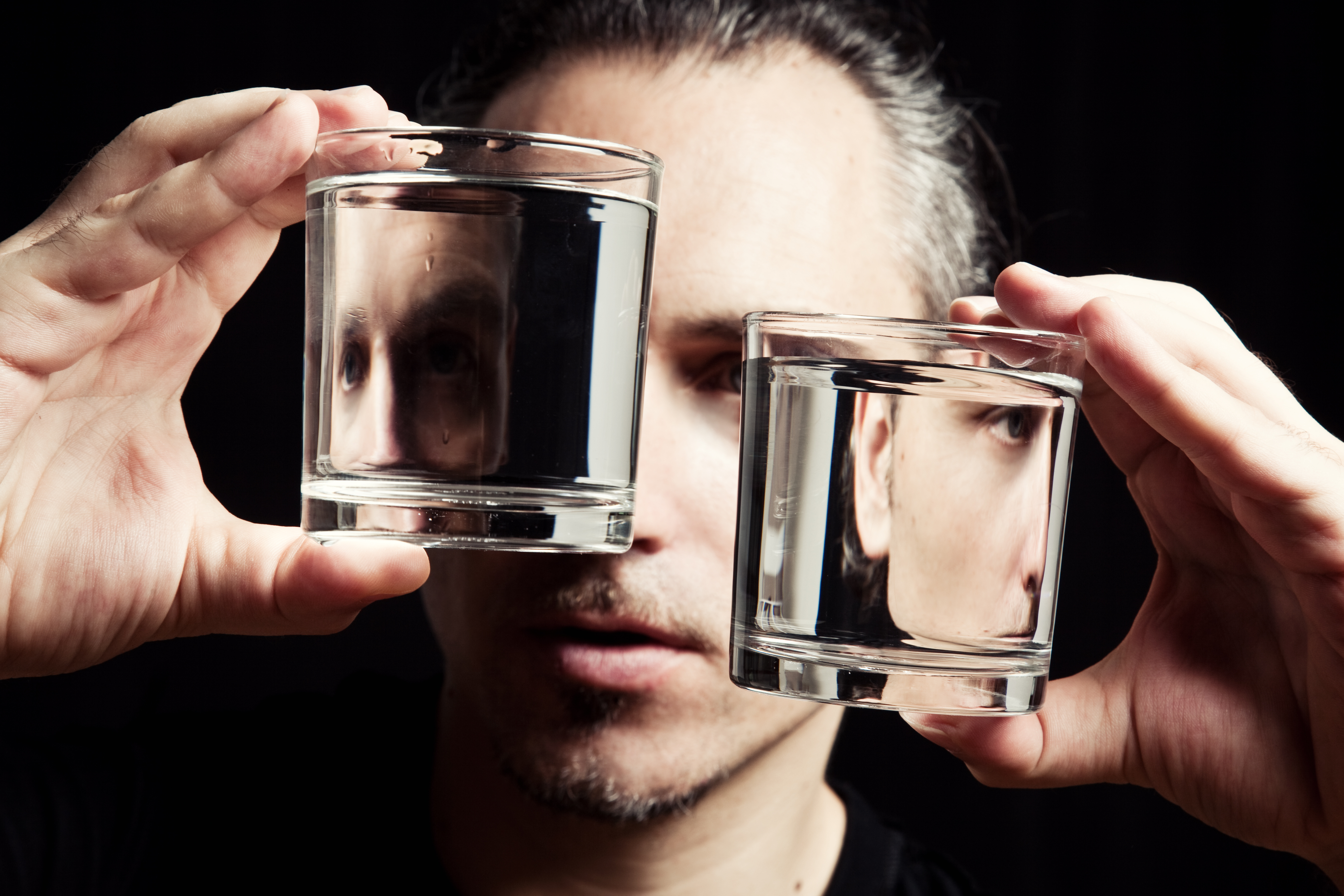
I had a friend, Hal, who had Dissociative Identity Disorder (DID). I never met any of his alters until once we went to the corner store. He giggled. He grabbed numerous bags of chips and other snacks. When we got home, I mentioned this to him, and he said, “You just met Julie. She’s a teenage girl.” Later, I met an alter known only as The Angry Man, which is part of why we’re no longer friends.

DID, as its name says, is a dissociative disorder, one of three different kinds – Dissociative Amnesia, Depersonalization Disorder, and Dissociative Identity Disorder. DID is the most severe of the three conditions. All involve symptoms such as memory loss, “out of body” experiences, emotional numbness, and lack of self-identity. DID is thought to be a reaction to the trauma of extreme physical, emotional, and sexual abuse that occurs usually before the age of six.

Some trace the history of DID to 1584, when the records of a French woman who was exorcised recounted symptoms that today would very likely be attributed to DID. It’s likely that more cases that were actually DID have over the years been attributed to demonic possession. Later, it was seen as a form of hysteria, another disorder with dissociative symptoms.

DID really hit the big time in the 1950s through the 1970s, when the books The Three Faces of Eve and Sybil became best-sellers and were made into movies. The books, written by Corbett H. Thigpen and Flora Rheta Schreiber, respectively, were accounts from psychoanalysts about the diagnosis and treatment of DID, which was at the time called Multiple Personality Syndrome, since the disorder was notable for “alters,” or separate personalities that appeared while the primary personality was unaware that they existed. “Eve” had three alters, while “Sybil” had 16.

Since that time, both of those cases have been controversial, with exposes purporting to reveal that neither Eve nor Sybil really had multiple personalities. The theories were that either the subjects were faking the disorder, or that the doctors suggested to them via leading questions and hypnosis that they had multiple personalities. (This was related to the “repressed memory” controversy in the 1980s to 1990s, which raised many of the same issues. Healthline recently reported that “the majority of practicing psychologists, researchers, and other experts in the field question the whole concept of repressed memories. Even Freud later discovered many of the things his clients ‘remembered’ during psychoanalysis sessions weren’t real memories.”)

Still, DID is real enough to have made it into the DSM. (We should remember, though, that diagnoses of “illnesses” such as homosexuality were present in earlier editions but later removed.) There are therapists who treat it with Cognitive Behavioral Therapy (CBT), Dialectical Behavior Therapy (DBT), medications, Eye Movement Desensitization and Reprocessing (EMDR), and/or hypnosis, which started to be a treatment in the 1830s and is said to lead to a rapid recovery. Although hypnosis for diagnosis or treatment of DID is still controversial, it may be useful for reintegrating the alters back into the primary personality.

DID has also been used as a potential criminal defense in legal cases over the past several decades, in cases that range from drunk driving to murder. It has been used to support a plea of “Not Guilty by Reason of Insanity” (NGRI). This defense is used in less than 1% of felony cases and is successful in only a fraction of them. The theory that a crime was committed not by the primary personality but by one of the alters has not always proved persuasive. It’s difficult to prove, for one thing, and there are professional witnesses and psychologists who testify that either DID does not exist or that even if an alter committed the crime, the primary person is legally responsible for it. The DID defense did work in 1977 for Billy Milligan, who was said to have 24 separate personalities, two of whom were claimed to be responsible for his crimes of rape.

DID is subject to a number of myths or beliefs. For example, many people believe that DID is either nonexistent or an overdiagnosed “fad” seen only in North America. Some believe that it is caused by the doctors who treat it rather than by childhood trauma, or that it is in reality the same as Borderline Personality Disorder (BPD). However, there have been neuroanatomical changes recorded by MRI in cases of DID: “The neuroanatomical evidence for the existence of DID as a genuine disorder is growing and the structural differences seen in DID patients’ brains…contribute to that growth.” So, although DID is believed by some to be nonexistent, there are studies that back up its reality.

As for me, I have experienced a few mild instances of dissociation related to my bipolar disorder, but nothing even remotely like what occurs in DID. But then, I didn’t have the childhood trauma associated with it. (During the “repressed memory” days it was said that the only truthful answer to “Have you experienced extreme childhood trauma?” is “Not that I’m aware of.”) Nonetheless, I find the subject fascinating, as well as dissociation in general. (This is not intended to diminish the experiences of people who have a dissociative disorder.) But I look forward to learning more about DID, particularly the neuroanatomical changes when they become available.

Keep This Blog Alive!

Choose an amount

¤2.50
¤5.00
¤10.00

Or enter a custom amount

¤

Your contribution is appreciated.

Donate

Self Image: Who Do I Think I Am?

Self-image is a problem shared by millions of people every day. Take women, for example. They are bombarded by relentless messages that they are too fat (or too thin); too plain; with inadequately full, shiny hair; or with un-perky, non-voluptuous breasts. (Men face messages too about their lack of muscles, excess paunch, thinning hair, or short stature – but nothing like the volume (in both senses) that women receive.)

Self-image is also a big problem for people – both women and men – who live with mental illness. It’s not always physical self-image. Sometimes we get messages about how we should think and feel from all the ads on TV and in magazines and on the internet that feature happy people interacting joyfully with their friends and families. The subliminal message is that if your life isn’t like that, the advertisers’ products will make it so that it is.

Of course, nowadays there are also ads that feature depressed or bipolar people, but they end the same way. Get online help or psychotropic meds and you’ll turn into one of those happy, joyful people living life to the fullest. For many of us, that’s not the way it is. There are treatment-resistant disorders, for example, and complex problems like OCD, PTSD, and schizophrenia that aren’t mentioned at all. (PTSD is sometimes addressed in the context of veterans helping one another, which is good, but the ads for this usually offer moral and financial support, rather than a more trauma-conscious solution.)

I’ve been through my own battles with self-image, and not all of them related to things I saw in the mirror. When I was a child, I endured bullying that made me feel unworthy and unable to fit in. As a teen, I saw myself as plain and unlovable. I even doubted my parents’ abundant love, thinking they loved me only because, as I was their daughter, they had to. Later, my self-image consisted of being a depressed person. That’s who I was and all I could see of myself.

When I was working, I saw myself as an imposter. I had a “respectable business lady disguise” that I could put on when desperately needed, but I knew it wasn’t accurate. Then, when I lost my job, I saw myself as a failure.

Still later, after my most severe breakdown, I defined myself as my husband’s “sick, crazy, crippled wife.” I know those are terms we’re not supposed to use, but that’s what my brain was telling me. (The “crippled” part was because I had mobility issues that necessitated two operations on my back, and thereafter used a cane.) I used it as an excuse not to go places, see people, or do things. Actually, my husband used it as an excuse too, though he didn’t phrase it that way. (Now he doesn’t.)

In short, my self-image was someone who was broken – and not “in the best way possible,” as Jenny Lawson says.

Years of therapy and medication have largely gotten me to the point where my negative self-images are no longer constantly haunting me. They still rear their ugly heads on occasion, but now they aren’t all-pervasive. My husband helps too. He says, based on photos, that I was cute when I was in high school and he would have dated me. (I still have my doubts about that.)

What I’m getting at is that a person’s self-image can and does change over time. I think I am more accurate now in thinking I am no longer cute, except maybe when I smile; still mobility-challenged but not so self-conscious about it; and, I would have to say, a “recovering” bipolar person.

We’re getting to the point where we don’t all or always think that what we see in the mirror reflects our worth or our true self. We’re learning not to believe our own or others’ negative messages about our appearance – though there is certainly still a long way to go.

What I’m not sure of is that we’re making much headway on redefining our self-images regarding our mental health or lack thereof. Despite all the positive affirmations we see and hear in so many memes and elsewhere, do they really sink in and change our thinking? Or is the only way to do that bound up in time, treatment, and the support of our family and friends? I’m just glad that it is possible to change, whatever the mechanism. My life is much more settled and happier now that I no longer see or define myself as I once did. That’s something I want to hang on to.

Help keep this blog alive!

Choose an amount

¤5.00
¤10.00
¤15.00

Or enter a custom amount

¤

Your contribution is appreciated.

Donate

How Do We Talk About Mental Illness?

Language matters. What we call things matters. Does language shape thought or does thought shape language? Either way, both are important when it comes to brains.

The latest discussion in the debates over language is what to call mental illness (which is what I’m used to saying). Many of the words and phrases that have been in use for years no longer seem quite accurate.

Take mental health, for example. When policymakers talk about subjects like mass violence, they often speak of “mental health issues” and what should be done about them. The thing is, if someone is mentally healthy, nothing really needs to be done about that. But mental illness is a term that doesn’t sound so easily addressed. Policymakers are notorious for using language that soft-pedals actual problems. Not to mention the fact that when they talk about mental health, they’re usually talking about addiction issues or homelessness (though they still aren’t particularly effective in addressing those either).

Mental health is still a better term than “behavioral health.” I remember when community treatment centers and insurance programs were called behavioral health plans. Again, there was a lot of lumping psychiatric illnesses and addiction together. It was also wildly inaccurate. It was not the behavior that was unhealthy (the way smoking is). Behavior may have looked like the problem, but it wasn’t the cause. Something to do with thought or the brain was. Also, there was no equivalent term “behavioral illness.” That wouldn’t even make sense.

So. We have mental illness as the term currently most used, with SMI (Serious Mental Illness) often used for disorders like bipolar and schizophrenia. Lately, though, there has been a push to replace those terms with “brain illness.” (The companion term is “brain health.”) It hasn’t caught on yet with the general public, though it’s gaining some traction among practitioners, advocates, and those affected by assorted conditions. I’ve heard some people are frustrated that it hasn’t caught on more widely already. They feel the process is going too slowly.

Calling schizophrenia, bipolar, and other disorders “brain illnesses” certainly makes one sit up and take notice more than “behavioral health.” And it jibes with the notion that these mental disorders (there’s another term) are caused by something going wrong in the brain. This is not without controversy, however. There are those who think that referring to depression or bipolar disorder as “chemical imbalances” in the brain or faulty neurotransmitters (or their receptors) is inaccurate. There are various theories as to what causes these conditions, all the way from childhood trauma to gut bacteria. To me, the most likely scenario is that there’s a combination of brain-related factors and environmental influences at work here. Nature and nurture, in other words.

Brain illness is certainly an attention-getting term. That should make it more likely to catch on with policymakers, but I suspect it won’t. It’s not a comfortable concept and there are no easy-sounding solutions to it. I doubt that it will catch on with the general public either. We still haven’t gotten people to move away from crazy, insane, maniac, psycho, or even nuts and stop throwing them around indiscriminately. Hell, we haven’t even been able to convince people that psychiatric institutions don’t use straightjackets anymore.

Does “brain illness” make these conditions sound more treatable? Is it likely to increase compassion for those who have them? Is it likely to make any kind of a difference? I don’t think we’ll really know until it penetrates the consciousness of the person-on-the-street. And I have my doubts about when or if that might happen.

Keep This Blog Alive!

Choose an amount

¤2.50
¤5.00
¤10.00

Or enter a custom amount

¤

Your contribution is appreciated.

Donate

Garden-Variety Jerks

I see a lot of questions of this kind: My neighbor/sister/friend does this [unpleasant behavior]. Is this caused by his/her bipolar disorder?

There certainly are behaviors of people with bipolar disorder that are unpleasant to those surrounding them. Not taking showers for a week when the person is depressed is one of them. Another, when the person is in the grip of mania, is having sex outside a relationship. Being unable to leave the house is a bipolar-related behavior. So is gambling away your savings. So is standing you up or ghosting you. And blaming themselves for everything. And taking on too many projects and finishing none of them. Talking too fast or too slowly.

Playing their music too loud or parking across your driveway is not a bipolar-related behavior. Neither is littering. Or insisting that you take the garbage out. Or yelling when they are angry. Or becoming huffy when you criticize them.

There are some behaviors that may or may not be bipolar-related – for example, talking about themselves too much. This could be an indication that the person is depressed and brooding (if the talk is about how worthless they are) or manic and aggrandizing (if the talk is about how great they are). Or it may just be that the person has low or high self-esteem that doesn’t rise to the level of pathology. Feeling that everyone is picking on them could go either way. So could taking offense at every little remark. It’s sometimes hard to tell, particularly if you’re not a psychologist.

It’s more than a little weird that people are willing to attribute all kinds of bad behavior to mental illness. But think of all the racist haters and killers that are assumed to be mentally ill. While some may be, it’s an automatic and often unwarranted assumption. It takes away from the attention that ought to be given to real mental disorders and it perpetuates the stigma associated with mental illness. Or it assumes that racism and hatred are mental illnesses. These are extreme cases, of course.

Sometimes bad behavior is not due to mental illness at all. Sometimes what you’re dealing with is a garden-variety jerk. To address the picture above, it’s not pathology to be messy and it’s not a sign of mental illness to be mad at a roommate for being messy.

There’s not a lot you can do if the behavior you object to is caused by mental illness. You may have to simply understand or let the annoyance go. The person may resent that you assume their behavior is a sign of mental illness, even if it is. And about all you can do in that case is help the person get help if you can.

When you’re dealing with a garden-variety jerk, there are other sorts of remedies you can apply. You can call the police on the neighbor with the loud stereo. You can ask the messy roommate to straighten up or leave. You can set boundaries of what you will and won’t put up with and enforce those boundaries firmly but fairly when they are violated.

Of course, there’s always the possibility that the person in question has a mental illness and is also a jerk. If you can figure out what to do in those cases, please let me know.

I’m not saying that mental illness should be an excuse for bad behavior or absolve a person of the consequences of their actions. I am saying that it’s easy to assume that all bad behavior is due to mental illness, just as much as it’s easy to assume that all bad behavior comes from being a jerk, or worse.

In a lot of cases, you simply have to live with it.

Keep This Blog Alive!

Choose an amount

¤2.50
¤5.00
¤10.00

Or enter a custom amount

¤

Your contribution is appreciated.

Donate

The Self-Esteem Dilemma

I’ve heard that narcissists (and multiple murderers) have too-high self-esteem. I’ve also heard that they have low self-esteem. Which assertion is right? Surely they can’t both be!

Self-esteem became a big topic of conversation in the 1980s. That’s when self-esteem programs for children were beginning to be taught in schools and preschools. There were many questions about them, some of which I asked when assigning a writer to a story about them. (I was an editor for a publication for childcare workers and daycare owners at the time.) Why do children need self-esteem programs? Doesn’t daily living foster self-esteem? What can self-esteem programs do that parents and teachers can’t or don’t? The writer seemed taken aback, but bravely tackled all those questions and wrote a fine article on the subject.

Later, the self-esteem movement came into disrepute and was the subject of much mocking and more authentic criticism. Chief among the things detractors made fun of were “participation trophies” given to every participant in a game or sport, spelling bee, or whatever other sort of competition. Complaints included that this negated the idea of competition altogether, falsely inflated children’s sense of accomplishment, shortchanged children who had truly excelled, and was a touchy-feely practice that had no place in the realm of sports or other competitive areas.

It was also thought that self-esteem programs were teaching the wrong lesson. Instead of learning that effort doesn’t always achieve the desired results, children were learning that everyone was as good as everyone else, which seemed like a mistake to some. Self-esteem programs were also said to lead children to the idea that the world was a kindly place where they would be rewarded just for existing. Instead, they should “toughen up” and learn that the world would deal them harsh blows at times and that they needed to be ready to cope with them. Debate continued about when and where such a lesson should be taught and even if it should be taught at all.

How does this relate to the aforementioned narcissists and toxic people? The two theories about their level of self-esteem seem contradictory and counterintuitive. Do they have low self-esteem? It doesn’t seem like it, the way they take control over others’ lives and manipulate them. Do they have high self-esteem? This sounds a little more plausible.

Reconciling the two theories is problematic. On the one hand, these people’s self-esteem seems to be too great, so they feel they are special and entitled to control other people who aren’t up to the same standard. On the other, their self-esteem might be too low, driving them to overcompensate for their lack by acting powerful and controlling others.

It seems unlikely that both of these mechanisms could apply to a single person. How could they feel genuinely powerful and compensate for being less powerful at the same time?

But, at its heart, true, healthy self-esteem isn’t about power. It’s about loving, accepting, and appreciating yourself for the good qualities that you do have. It’s about recognizing that your place in life is to be neither a doormat nor an idol. It’s about having confidence in yourself that you can face obstacles – though not conquering every obstacle – but knowing your limitations.

Does life teach self-esteem? It can, certainly, if a child is raised in a supportive, encouraging environment; if the child learns that both effort and accomplishment are possible; if the child has role models for self-esteem; and if good lessons about self-worth are taught in the home and at school.

Of course, we know that not all children are raised in such an ideal environment. Probably far too few are. Or children receive mixed messages about self-esteem from parents, schools, religion, and other places where they get training for life events: not to be unrealistically proud but to be proud of achievements; to be humble or to be confident; to be assertive or to obey authority; to share with others or to know what’s theirs and defend it; to cooperate or to take the lead.

Self-esteem is particularly difficult for those of us with brain illnesses or psychological disorders. We may feel broken, unsure of ourselves, and clueless about where we fit into society. In the grip of mania, we can feel ten feet tall and bulletproof. When we are depressed, we can feel worthless. In bipolar disorder, in particular, the two states can be encompassed in a single individual at different times.

But this is not to say that people with psychological challenges are all narcissists. Far from it. I would say that in every person, there are varying degrees of longing to have control and desire to relinquish control. It’s achieving a healthy balance of these two things that’s the real trick.

Keep This Blog Alive!

Choose an amount

¤2.50
¤5.00
¤10.00

Or enter a custom amount

¤

Your contribution is appreciated.

Donate

Understanding Mental Illness

My friend Martin Baker (https://www.gumonmyshoe.com/) recently posted a series of prompts for mental health bloggers. Number 29 was: Can you ever really understand if you’ve not experienced mental ill health yourself? Here are my thoughts.

In general, I do believe that having a mental illness yourself is the best and perhaps the only way to truly understand the reality of mental illness – the daily struggles, the need for self-care, the loneliness, and the stigma.

I’ve noted before that my mother-in-law didn’t really understand the concept of mental illness. It was like the time when she saw some women on the Phil Donahue show who were talking about their hysterectomies and the pain and suffering they went through. “Those women are such liars,” she said. “I had it done and it wasn’t like that at all.” It’s a matter of assuming your own experience is true for the rest of the world as well, a common logical fallacy. (Later she came around to believing mental illness existed, at least. I attribute this to spending time with me and my husband and reading one of the books I wrote, Bipolar Me.)

Even my husband – who has lived with me for 40 years, sympathized greatly, and helped me unselfishly – didn’t really “get depression” until he got depression. It was a situational depression that deepened into clinical depression. He’s still on medication for it. I remember him saying that he felt miserable and despondent, and had for months. “Try doing it for years,” I said. “I couldn’t,” he replied.

With a person who doesn’t understand – or even believe in – mental illness, there’s not a lot you can do to change their mind. The images and stories they get from the news, movies, novels, and TV shows tell them that anyone with a mental illness is likely to be a serial killer or a crazed gunman, probably psychotic or at least delusional. Conversely, they can believe that any notorious evildoer must have been mentally ill and probably “off their meds” at the time the atrocity occurred.

We often say that education is the answer. Informing people about the reality of mental illness is supposed to raise their consciousness and help eradicate stigma. That’s all well and good, but getting accurate and informative materials into people’s hands is not that easy. Sure, there are websites, books, and blogs, but the general population simply doesn’t run across these on their own. We who deal with mental illness daily must point them to these resources. Even then, there’s no guarantee that they’ll read or interact with the resources. They have to be interested in and open to the topic.

Public awareness campaigns featuring movie stars and top athletes may help in getting the audience to believe in mental illness in others, and even if they have a mental disorder such as depression themselves. Whether these can counteract the inaccurate and insensitive portrayals of mental illness in the media is still, I think, an open question. Even commercials for various medications for psychiatric illnesses can help people understand a little bit more, though I still believe that many of these ads present a less-than-accurate picture of depression, for example, making it seem no worse than a hangover. And many of the ads promote telemedicine sites for those who have – or suspect they have – some sort of mental disorder. They are less useful for the totally uninformed.

Still, we keep trying to inform and educate. But are we shouting down a rabbit hole or into an echo chamber? Maybe seeing posts from Facebook friends who have mental disorders really does help. I know that some of my Facebook friends have said that my posts and blogs on bipolar disorder have helped them learn.

But in general, I’m pessimistic about people understanding mental illness until or unless they experience it for themselves or in their own families – and maybe not even then. There are those who deny that they have depression, for example, or who may suspect they have a psychiatric disorder but feel that getting help is “for the weak.”

Or maybe I’m just pessimistic today.

Nevertheless, I’ll go on writing this blog in the hope that it will make a difference to someone.

Help keep this blog going. Make a one-time donation.

Choose an amount

¤2.50
¤5.00
¤10.00

Or enter a custom amount

¤

Your contribution is appreciated.

Donate

Going Off (Some) Meds

I regularly tell people not to go off their meds without consulting their psychiatrist. I yell at them, in all caps. It’s not just a bad idea, it can result in withdrawal and even lessening the meds’ effectiveness if you do go back on them. Yet recently, I went off two psych meds without my psychiatrist’s prior approval.

Here’s what happened.

My husband and I recently had COVID – probably the Delta or Omicron Variant, as we have both been triple-vaxxed. That is to say, my husband tested positive for COVID and I have close contact with him, plus I had the same symptoms that he did.

Since we didn’t need expensive and rare treatments or hospital stays and ventilators, we relied on over-the-counter medication to treat the symptoms, which included sore throat, coughing, fever, congestion, and fatigue. We recovered in a couple of weeks to a month and my husband is back to his job, where he regularly interacts with numbers of people. I work at home, so I didn’t have that problem. I just needed to take some time off when I felt truly crappy.

When we read the directions on the OTC symptom-relief pills, however, there was a warning that said not to take anti-anxiety agents or sleep aids with them. My regular routine has been to take a sleeping aid at bedtime and an anti-anxiety pill in the morning and at bedtime, with an extra dose allowed if I have an anxiety attack during the day. I have been taking both of the meds literally for years and have never had any problems with them. (I won’t say what any of the medications are, since everyone has different reactions to different medications, and my reactions, while fairly typical, won’t hold true for everyone.)

Perhaps out of an excess of caution, I decided not to take the anti-anxiety and sleeping meds while on the OTC ones. When I quit taking them, though, I was worried that I might experience some of the ill effects that were possible.

Throughout the course of my bout of COVID, I didn’t notice any withdrawal symptoms, excess anxiety, or difficulty sleeping as I feared I might. In fact, I slept better than usual and had fewer attacks of anxiety. So I decided that I would try going off the two meds for a while, even after I felt better. It was about six weeks until my next med check with my psychiatrist.

Of course, when my med check came around, I told my psychiatrist what I had done and why. I thought he might react badly when I said that I did this on my own, without his advice and consent.

Instead, he seemed thrilled.

“Good for you,” he said. “You’ve stopped taking the two addictive ones, too.”

I had known those drugs were potentially addictive, which was why I was watching for withdrawal symptoms. I took the lack of these as signs that, though the drugs were addictive, I was not addicted. (My psychiatrist has to regularly have an analysis done to show whether his patients have a high risk of abusing psych meds or taking more than needed. My score was 0%.)

It felt good to have my psychiatrist validate that I had done a good thing and not a bad one. But even more, it felt good to be taking fewer pills each day. I’ve never minded having to take pills or felt ashamed of taking them, but it was still significant to me that I had lowered my medication schedule to just the ones that had beneficial psychotropic effects, such as antidepressants and mood stabilizers. I was delighted to find that I didn’t need as many pills as I had once thought.

All in all, my experiment was a success, but I was lucky, and my experience is not medical advice. I don’t recommend it to anyone else. Consult your prescribing physician before you cut back on or stop any medication. I MEAN IT!

Help keep this blog going! Make a one-time donation.

Choose an amount

¤2.00
¤5.00
¤10.00

Or enter a custom amount

¤

Your contribution is appreciated.

Donate
How I Learned I’m Not “Pathetic”

When I first went to my therapist, I often described my life and myself as “pathetic.” Slowly, as I made progress, I stopped doing that. It was a revelation that took some time to sink in. Here are some of the things my therapist said and did to help me overcome this harmful description of myself and my bipolar disorder.

Refusing to accept my description. This may seem like an obvious thing, but it had real meaning for me. I had been majorly depressed for approximately three years and bipolar as long as I could remember. I couldn’t do anything – get out of bed, shower, feed myself or the cats, or perform the tasks of daily living. (My husband picked up the slack. Thank God for him.) My therapist never said in so many words, “You’re not pathetic” or “Your thinking is wrong.” She just patiently spent the time with me and gave me tools I could use to get better.

You’d think I would take this as denying my perception of reality, which I ordinarily hate when anyone tries it. But this time, I welcomed it. It was nice at that point to have someone denying my perception because Dr. B.’s perception was so much more appealing than mine. It gave me something to shoot for – a time when I would no longer feel that “pathetic” was an apt description. She also let me cry it out, which I often did when I was feeling particularly pathetic.

Baby steps. (Also known as “Eat the elephant one bite at a time.”) My healing was slow, thousands of baby steps of accomplishing more and more. Because my therapist never gave up, neither did I. Baby steps take you only so far at a time – after all, they’re tiny. But over time, they add up to a measurable distance. As I slowly moved away from my “pathetic” label, I also moved away from feeling pathetic. Eventually, I was able to eat, if not the whole elephant, at least a larger portion of it through slow but steady progress.

Not that I didn’t sometimes backslide. Whenever I hit another depressive episode, my feeling of pathetic-ness came roaring back. It was only as I learned that some other feeling was possible that I was able to catch a glimpse of a time when pathetic might no longer describe me.

Saying, “Look how far you’ve come.” This is something that my therapist kept reminding me. Dr. B. noted that I was becoming able to get out of bed to come to her office. She would bring up the tools that I had acquired or developed to help myself leave the bad old days largely in the past. She would also point out that I not only remembered those tools, I was using them.

Sticking with me. Dr. B. was also there when I backslid. A couple of times I had made so much progress that I thought I was able to go it alone. But, sooner or later, I would need a “booster shot” of work with her to remind me of the things that I really already knew. When I was feeling too low to make it into the office, we would have phone sessions. When COVID hit and in-person visits became even more difficult or impossible to arrange, we began having videoconference sessions. Slowly, I worked up from every week to once every two weeks to once every three weeks – and am now meeting with her only once a month.

And, let me tell you, it feels great not to feel pathetic anymore.


Help keep this blog going. Make a one-time donation.

Choose an amount

¤2.00
¤5.00
¤10.00

Or enter a custom amount

¤

Your contribution is appreciated.

Donate

Is Stigma a Problem? Is Systemic Breakdown?

Some people who have mental illnesses say that stigma is a problem. Others say that’s not the real problem – a lack of social or political action is. I say, why not combine the two?

Stigma Fighters (https://stigmafighters.com/) and other organizations such as the International Bipolar Foundation (ibpf.org/), the National Alliance on Mental Illness (NAMI) (https://www.nami.org/Get-Involved/Pledge-to-Be-StigmaFree), and even Facebook groups, promote the eradication of the stigma surrounding mental health issues. They say that mental illness is stigmatized in our society – some even deny that it exists – because people don’t understand it. This happens when churches say that mental illness is a sign of sin or refuse to welcome people with mental problems into their congregations or have any kind of outreach to them. It happens when a person is honest about having a mental illness and tells her boss or friends about it and receives negative feedback, incomprehension, or the back-away-slowly-and-don’t-make-eye-contact look.

People who believe that stigma is a problem say that stigma is one of the largest reasons that people refuse to seek treatment for their mental disorders. Being seen going into a psychiatric clinic, people finding out that the person sees a psychiatrist, and being ignored or discounted when talking about mental illness are seen as ways that stigma propagates.

People who believe that stigma is a problem promote education as the main solution. If more people understood what mental illness is and how many people suffer from it, they would be less likely to discriminate against those who have mental conditions. Stories about celebrities who have mental dysfunctions or whose relatives do are considered inspiring and helpful. Stars who speak out encourage others to seek treatment (though it’s increasingly true that public expressions of mental illness diagnoses are tied to specific online therapy businesses).

People who believe that political action is necessary also try to effect changes in people’s thinking, but, more importantly, support changes in the systems that are supposed to provide services to the mentally ill. These systems include schools where mental illness plays no part in the curriculum; lack of beds for psychiatric patients in hospitals; the response of police to calls regarding people with mental disturbances; the number of medical schools that provide no information to doctors; the lack of psychiatrists, especially in rural communities, which mean people must wait a long time for services or have no access to them at all; politicians who put mental health issues low on their list of priorities; law enforcement that reacts with deadly violence to calls involving persons with mental illnesses; and health insurance and EAP (Employee Assistance Programs) that treat mental illness differently than physical illness or even addictions. NAMI promotes grassroots activism as one facet of the appropriate response to such problems (https://www.nami.org/Advocacy/Advocate-for-Change).

People advocating for political change also see education as one partial solution to the problems caused or exacerbated by insurance companies, educators, medical schools, media, law enforcement personnel, correctional facilities, and politicians. Political action is seen as the right course to take to improve conditions. (Though it should be noted that people have sent books about the breakdown in societal responses to mental illness to politicians and receive only standardized, unhelpful “thank you” letters that are mostly signed and sent by staffers rather than the political figure.)

I say that education is the best response to both of these problems. Education of the general population about the realities of mental illness will lead to less stigma. Education of the voters, their representatives, and their local communities will help to lessen the inequities and difficulties that now abound.

This will not be easy. Education about the realities of mental illness is hard to convey to either citizens at large or politicians and others who have some degree of authority. Until it touches their own lives, people will largely be blind to the problems. Educational campaigns and the testimony of celebrities may help educate individuals. But politicians are likewise only affected by the aspects that touch their own lives, such as the public revelations by those like Kitty Dukakis (wife of former presidential candidate Michael Dukakis), who has been quite open about her mental difficulties and her ECT treatments (https://www.amazon.com/Shock-Healing-Power-Electroconvulsive-Therapy/dp/1583332839).

What I fear is that these individual occurrences will motivate only a small number of people enough to make a change in society as a whole. It’s easy enough to say, “Oh, Catherine Zeta-Jones has bipolar disorder. Too bad for her, but that doesn’t affect me” or “Someone in my family has a mental illness, but my constituents won’t support legislation to benefit the homeless mentally ill or to provide halfway houses in their neighborhoods. Better to spend my time and influence on stopping terrorism or drugs.”

But until or unless something changes, mental health will still be swept aside or ignored outright. People at large need to understand that just because mental illness hasn’t touched their lives so far, it still could in the future. Public officials and public servants need to believe that mental illness issues are vital to their communities and something that can be made better if only they have the courage and compassion to make the necessary changes.

Stigma-fighting or political action? Both are problems that need solving and education is at least part of the solution to both. And it appears that it’s up to us, those who have mental illnesses, to do the educating.

Make a one-time donation to keep this blog going.

Choose an amount

¤1.00
¤5.00
¤10.00

Or enter a custom amount

¤

Your contribution is appreciated.

Donate