Bipolar 2 From Inside and Out

Posts tagged ‘mental health’

Who’s Crazy Now? A Guide to Gaslighting

“You’re crazy. I never said that.”

“That’s not the way it happened. You’re crazy.”

“No one believes you. You’re crazy.”

“You’re crazy. You’re just overreacting.”

What do these statements have in common? Obviously, they involve one person telling another that she or he is crazy.

More subtly, though, the speaker is saying that the other’s perceptions and feelings are invalid, untrue – wrong.

And that’s gaslighting.

Gaslighting describes a mind game that emotional abusers use to control their victims. (Gaslight is also an old movie, in which a husband uses the technique to try to convince his wife that she is insane. The victim of gaslighting is usually a woman and the perpetrator usually a man. Of course this is not always true. Either sex can be the gaslighter and either sex the gaslit.)

But what does gaslighting have to do with bipolar disorder? Someone who is in the depressive phase of bipolar – especially one who is undiagnosed – is especially susceptible to gaslighting. The very nature of depression leaves a person wondering, “Am I insane?” To have another person reinforcing that only strengthens the idea.

Back when I was undiagnosed and in the middle of a major depressive episode, I had an experience of being gaslit. My grasp on reality was not entirely firm at the time, both because of the depression and because I was physically, socially, and emotionally cut off from the outside world, family, and most friends. This isolation left the gaslighter, Rex, in a position of control.

I endured everyday denials of reality, like those mentioned above, but the most obvious one – the one that made me aware that I was being gaslit – happened when I suggested that we go for couples counseling. Rex asked if I was sure I wanted to, as he and the therapist could declare me a danger to myself and others and have me put away. That, of course, was not true and I knew it wasn’t, which gave me my first clue that something was amiss.

When we got to the sessions, Rex tenderly held my hand and spoke of how concerned he was about me and how much he wanted to help me get better. In other words, he was saying that I was the crazy one and that he wasn’t. That is the very basis of gaslighting – to make the other person seem or possibly even become crazy.

Once a person recognizes the gaslighting for what it is, she can begin learning to trust her own perceptions again. For a person in the grips of depression or mania, this will not be easy. I know it wasn’t for me.

It took a long time and a lot of healing before I could recognize what had happened, how my circumstances had been controlled, how my perceptions had been invalidated – how I had been gaslit. That was a vast revelation. It was like turning the tube of a kaleidoscope and seeing a different pattern come into focus. The elements that made up my life may have been the same, but the new perspective changed everything.

Having someone outside the situation who can validate your perceptions is an important tool in recovery. Sometimes a friend or family member can perform this function, but mental health professionals who have been trained in the process are often more successful. They are the people we often turn to to tell us that we are not crazy, that our feelings are valid, and that the mind game of gaslighting has affected us.

Getting help for the depression or bipolar disorder is also an important step in escaping the effects of gaslighting. With proper therapy and/or medication, a person’s thinking becomes more clear, accurate, and trusted. Turning off the gaslight is like turning on a different kind of light – one that illuminates your life, improves your clarity of vision, and begins to break through the gloom and despair.

And that light is more powerful than gaslight.

Stuffing Your Feelings in a Box

Cardboard box with the zipper isolated on white backgroundWe all know it’s a bad idea to stuff your feelings, especially if you then pile food or alcohol on top of them.

The thing is, sometimes you need to suppress a feeling, for just a little while, in order to get through a difficult situation. When that happens, I put my feelings in a box.

Here’s an example. My father was dying, and had only days to live. We all knew it. My mother, who didn’t drive, asked me to take her shopping for something to wear at his funeral. “Do you mind if I don’t wear black?” she asked. “If you don’t mind that I do,” I replied.

It was my first encounter with a close family death, and I had to get through this awful, wrenching shopping trip. I had to keep my composure so that my mother could keep her composure. I had to steer her away from a flowered dress, which would have been fine for church, to a navy suit and a lighter blue top, which would be suitable for a funeral but not so somber that she couldn’t wear it for anything else. All while my father lay in the hospital, dying painfully of bone cancer.

My feelings were complicated and I absolutely could not afford to feel them at that time. I had to stuff them in a box and close the lid on them until my mother’s needs had been met. Then I could let them out, in a time and place where it was safe to, in the presence of a person I could trust with those feelings.

When such circumstances arise – and they will, in one form or another – I recommend using a box, one in which the feelings will be out of sight for a while. A box is small; only a few feelings will fit in it. If you think the feelings are going to leak out, you can sit on the lid. Then, when it has served its purpose, you can rip the box open (or gently lift the lid) and feel the feelings. Cry. Rage. Grieve. That’s the important part.

You have to experience the grief or fear or even the crushing weight of guilt in order to come through it and heal.

But why put feelings in a box instead of something stronger? Who wants to feel those negative emotions anyway? Aren’t we better off without them? Shouldn’t you just build a wall around them to keep them from breaking out?

We’ve all tried it. It works for a while. But a couple of consequences go with the practice. First, all of your feelings get trapped behind that wall – the good as well as the bad. When you find yourself disconnected from all your feelings, life is a gray blur. In your depression or anxiety or fear or rage, you may not have had many good feelings. But when you build that wall, you cut off even the possibility of having them.

Second, you’re only postponing the pain. The wall will leak sometimes; your unpleasant feelings will come out some way – in your dreams, around your eyes, in sudden spurts, or trickling back into your everyday life. Worse, the wall may shatter – fail altogether, releasing all those feelings in an unstoppable torrent, only stronger and more concentrated from having been confined. They overwhelm both you and anyone in the vicinity. It’s not pretty. And it’s destructive – to you, your mental health, your healing, your employment, your relationships – to every aspect of your life.

If feelings are behind a wall, you may be able to tell yourself they don’t exist. But if you stuff them in a handy box, you can choose the time and place to open it – and yourself – back up.

Bipolars, Rollercoasters, and Sex

Wooden RollercoasterThe rollercoaster is the most common metaphor for bipolar disorder. But is it really the best one?

After all, a rollercoaster has long, abrupt downward swoops, and anticipatory highs. (At least the ones I’m familiar with. I won’t go on the ones that turn you completely upside-down. I understand the physics, but no. Just no.) Rollercoaster highs crank slowly, grindingly up. Mania isn’t like that. Boom! You’re suddenly at the top.

Nor are rollercoaster lows like the lows of depression. If they were, the downward slide would not be the exhilarating, thrilling part of the ride, and would not immediately be followed by another high. Instead, the rollercoaster would plod along through a lengthy trough, or maybe a tunnel (though not of love), with no idea of when the next up would come.

Perhaps a seesaw is a better metaphor. Its ups and downs are quick, and you can stay stuck in either position for an undetermined length of time. And a seesaw is all about balance.

But no. A seesaw requires a second person to operate correctly, and that is certainly not the experience of a bipolar person. Our brain chemistry or genetics or trauma alone is enough to get us going up and down.

A pogo stick? The spring gets squashed and then rebounds. But it’s a rhythmic bounce, not one that you don’t see coming until you’re in it. (If then.)

The basic problem with most of the usual metaphors is that they involve fun at some level. Bipolar is not fun. Oh, the mania may be enjoyable – for a time. But the gut-wrenching drop does not make you go whee!

So how about a soufflé? It can rise or fall, and you never quite know which it’s going to do.

Or a computer? It can open up the world, but is going to crash sometime, inevitably when you most need it to work.

I suppose we could split it up. Mania is a fountain and depression is a ditch. Depression is a b&w rabbit-ear TV and mania is streaming with 1000 services. Mania is a battery and depression is a dead battery.

The root of the problem is that no metaphor can adequately explain bipolar disorder. Even Spoon Theory, useful as it is, explains only the effects, not how the disorder itself works. A metaphor may capture one half of the experience – the ups or the downs – but not the reality of both.

If it’s not possible to explain bipolar disorder with a metaphor, why do we so often try to? Because, really, only people with bipolar know what it is like, and the experience even differs from person to person. A psychologist or psychiatrist may understand the mechanisms and the causes and the complications and the medications. But she or he is essentially watching from the outside.

My husband didn’t really “get” depression until he fell into depression himself which lasted a couple of weeks. “Now,” I said, “try to imagine that feeling lasting for months.” He couldn’t, but at least he was closer to understanding.

My mother-in-law, who doesn’t “believe in” mental illness, now has a clue too, since she experienced a profound reactive depression.

Neither of them really “gets” mania.

Maybe the best metaphor is that bipolar disorder is like sex. You can’t adequately explain it to someone who’s never had it. And even when you’ve had either sex or bipolar disorder, you only know what it’s like for you. You can generalize your experience and share commonalities, but basically, every case of bipolar is something a person goes through alone, or maybe alone together, as Jenny Lawson says.

Bipolar disorder.

It is what it is.

Dear Bipolar Disorder

Dear Bipolar Disorder,

We’ve had a relationship for decades now, though it’s one I never chose. To tell the truth, I can’t even remember when we met. Gradually, you just moved in. So I guess we’re stuck as roommates for the rest of my life. You can’t break your lease and I can’t move out. That being said, there are some things I need to talk to you about. We’ve never been friends. We never will be. I have some issues with you; there are compromises we need to make.

I’ll take my meds faithfully if you back off when I do. By that I mean no major depressions of longer than a week and no panic attacks while I’m trying to sleep.

I’ll pay for those meds, as long as you settle down enough to let me keep working and earning money and paying for meds. Just leave me enough concentration to do that and to read, and I’ll be satisfied.

I won’t go to Chuck E. Cheese or Cici’s Pizza or shopping at a mall anytime after Thanksgiving if you will let me go out at other times to other places without getting your figurative undies in a bundle.

I will try to minimize the stress in my life (see above) if you will cut out the physical symptoms when there is stress anyway. You know the ones I’m talking about. Ick. Just ick. I hate cleaning up after you.

And can we talk about spoons? I know you only give me a limited number per day, but it would sure help if I knew what that number was. Is there any way you can be more consistent? If I have to borrow spoons from the next day or force myself to attend to some vital call or lengthy errand despite not having spoons, I promise to spend the next day in bed, just to satisfy you.

Please, if you can, give me some non-anxiety-laden hypomania so that I can go out and enjoy things with my husband and friends. If you agree to this, I will occasionally let you buy things off the Internet, for $20 or less.

And while we’re on the subject of enjoyment, I would appreciate it if you would give me back my libido. So would my husband. I know you don’t take orders from him, but it would be esteemed a favor.

Don’t even talk to me about hurting myself. I won’t listen. No matter how loud you get.

Don’t get between me and my friends. You’ve done that too often already and I just can’t put up with it anymore.

No more screwing with my memories. I’ve already lost enough. You can keep the ones of everything stupid I’ve ever done, but I will not watch when you push play on my internal video playback.

Now that I’ve finally got some self-esteem back, you just keep your claws off it. I need it and you don’t.

No dogs allowed. Especially large Black Dogs.

Oh, and tell your buddy Depression to leave my husband alone.

No love,

Me

The Question I Hate the Most

There are many things you shouldn’t say to a bipolar person: Cheer up. Smile. What have you got to worry about? We all have mood swings. Calm down. You’re overreacting. You don’t look depressed.

Each of these remarks contains a hidden assumption, from simple – you can choose your moods; to dismissive – your anxiety is not as severe (or as important) as mine; to possible gaslighting.

I’ve gotten all of those and more. Once I revealed my disorder to a coworker and she’d ask me, “How are you?” with a concerned look several times a day, taking my emotional temperature. But the question I hate most is a simple one.

Are you off your meds?

Let’s unpack this, shall we?

First, the underlying message is that, to the speaker, you are acting in a strange, inappropriate, frightening, incomprehensible, or otherwise “off” manner.

The second assumption is that you must be on medication in order to appear “normal” at times.

Third, that since you do not appear “normal” to the speaker, the only explanation is that you must not be medicated at the moment.

Fourth, that the speaker has the right to give you advice on how medicated you need to be in order to appear “normal.”

And, finally, that “meds” are the answer to all your problems. If you want to fit into society you must be on your guard at all times and medicate until you are acceptable to them.

There is a slightly less offensive version of the question: Have you taken your meds today?

This might be marginally acceptable from a loved one, who knows that you take medication for your disorder and also knows that you are sometimes forgetful.

But really. Most psychotropic medications build up in a person’s system over time and leave the body over a long time as well. Missing a single dose is not likely to have an appreciable effect on a person’s moods or actions.

There are some anti-anxiety medications that have short-term effects, and a bipolar person might have forgotten a dose or two.

But unless the speaker is the bipolar person’s caregiver, official or unofficial, it’s still rather parental and demeaning – suggesting that we aren’t competent to handle something as vital as our own medications.

Of course, sometimes it may be necessary to help a loved one remember to take medication, whether that person is bipolar or not. On a vacation, for instance, when one’s normal routine is disrupted, a gentle reminder may not be amiss. When one has just started treatment and the routine is still unfamiliar. Or if the person actually is a child.

You wouldn’t ask an adult with the flu “Have you taken your antibiotics today?” You wouldn’t say to a blind person “Now, don’t go out without your service dog.” Most people, most of the time, are deemed competent to know their needs and take care of those needs themselves.

But bipolar disorder and other psychiatric conditions, being largely “invisible illnesses,” seem to invite meddling. Everyone else knows what’s best for us, from a different drug to herbal medicine to a walk in the park to prayer.

They know a little bit about the disorders, perhaps, largely through television and celebrities. But they don’t know your particular version of the disorder (bipolar 1 or 2, rapid cycling, dysthymia, hypomania, anxiety, etc.)

So if I snap at you, or seem anxious, or don’t want to go out, don’t assume. I have regular “normal” moods too, even when I’m on medication. Sometimes I get annoyed if my husband has lost his cell phone for the third time this month. Sometimes I feel sad if my picnic is rained out. Not every mood is pathological.

So don’t assume you know what’s going on inside my head. Unless I ask for help, refrain from putting in your oar.

And don’t ask me, “Are you off your meds?” It’s an insult, not a question.

Does It Matter What We Say?

Words matter. I preach that all the time. Language is what gives our thoughts reality and how we make essential connections. Ideas become more concrete when they have words attached to them. It’s hard – perhaps impossible – to convey a thought without language of some kind. And how we use words is dependent on how and what we think.

Words matter. Think about how the terms “rioters” and “protesters” reveal a person’s opinions about the motivations of the people in the “mob” or “crowd.”

Words matter. Our community has been pushing back against words such as “psycho” and “crazy” when it comes to referring to people who need psychiatric help. Many people are gradually realizing that such words are equivalent to slurs and are no longer acceptable. (Except in the aftermath of violence, of course. Then, those terms are tossed around indiscriminately.)

Words matter. But how do we in the community refer to ourselves? What words are advocates using? And how do we want the general public to refer to psychiatric problems?

I’ve written before about the terms “behavioral health” (bad) and “mental illness” (better). But what’s best? Increasingly, the words du jour are “brain illness” and “brain disease.” We’re watching linguistic change in action.

But linguistic change happens at a glacial pace. Words that were used in Elizabethan England are still used today. Think about all the words and phrases that Shakespeare invented that are still used today, and with the same meanings – unreal, lonely, and green-eyed (as in jealousy), for example.

Linguistic change, on the other hand, also happens blindingly fast. Slang, tech terms, and jargon in particular appear and disappear in the blink of an eye (as it were). Think about the terms that refer to female beauty. There were times when “phat,” “fresh,” and “fly” were all applied to women. (Yes, I’m dating myself. I don’t even know what the current term is, but I bet it’ll be gone next month. At least I know that “fire” has replaced “awesome,” “boss,” and “da bomb.”)

So, where are we in the (something) community now that we’ve left “behavioral health” behind? “Mental health” was the clear frontrunner for a time. Then it was “mental illness,” then “serious mental illness.” Now the term being put forward is “brain illness” – or even “brain disease.”

I’ve talked about the implications that various words have. What are the connotations of the new terminology? “Mental illness,” as opposed to “mental health,” drives home the point that “mental health” is a euphemism. It’s not health that’s the problem – it’s the opposite of health. “Brain illness,” as opposed to “mental illness” says that the problem is not in the mind, it’s in the brain.

I think that’s a tough concept for the general public to take in. To most, the mind and the brain are synonymous. Whether that’s accurate or not is hard to say. It’s true that the brain is the physical embodiment of thought, emotion, and cognition. These things can’t exist separate from the brain. They are so intertwined that it’s hard to think of one without the other – especially for laypeople.

But “mental illness” implies that the mind – the thinking – is what is disordered. “Brain illness,” on the other hand, says that the problems lie in the functioning – the physical structure – of the brain. In my opinion, it’ll be tough sledding to make the public understand the sometimes subtle difference between the two.

Recently I saw an online post that decried the fact that advocates and professionals aren’t yet using the terms “brain illness” and “brain disease.” And there’s some truth in that. My own therapist doesn’t. But practitioners are engaged in dealing with the general public as well as those in the community. There’s something to be said for addressing those people in language they understand better. There’s the possibility that when hearing “brain disease,” most people will think “brain tumor” rather than what we are really talking about. And there’s the problem with the slowness of linguistic change.

Words matter. But so does the speed of change. Of course, if we want to change the dialogue, we need to use more accurate terms to promote our message. But it’s probably too soon to expect everyone to be on board. I’m not saying that we should give up on the process of fostering change. I am saying that we shouldn’t be beating each other up for not yet having made that progress, even among ourselves. It’s a process, and not everyone progresses at the same rate.

Incremental change is better than none. Indeed, unless you’re talking about a fad, it’s the only way change happens. And we’re not talking about a fad here. We’re talking about a fundamentally new understanding of what it means to have schizophrenia, bipolar disorder, major depressive disorder, and other illnesses.

That’s going to take serious time.

The School Shooter Problem and the Mental Healthcare System

It’s been reported lately that there is a mental health crisis among young people in the US. Depression and anxiety are on the rise. Some claim they know what causes it, and some don’t. The usual suspects include social media, bullying (especially bullying on social media), academic pressure, the COVID-19 pandemic, isolation, and uncertainty about the future. Fear of and reactions to school shootings are in the mix, too. The problem has garnered interest among the people who have the capacity to address, if not actually solve, the problems.

President Joe Biden announced in his 2023 State of the Union address that the Department of Education will divvy up $240 million in grants to help schools tackle the crisis. If you average that by 50 states, it comes to around $50 million per state. A more accurate estimation considers that, since there are 16,800 school districts in the US, that, on average, each district would get roughly $141,000 for youth mental health to be spread around all the schools in each district – not really very much. That money, plus the billion dollars invested last year, is earmarked for more mental health counselors and mental health professionals in the schools.

All that is well and wonderful, but what are the problems that lawmakers want those funds to solve? Apparently, many lawmakers and public policy boffins think that preventing school shooters should be the primary goal. Identifying the kids that are likely to resort to weapons to settle their differences with schoolmates and teachers seems to them to be the most effective use of the funds. The basic debate is whether those funds should be used to identify and treat potential school shooters or help the students who are traumatized by the incidents and by the looming threat of more – prevention of violence versus reaction to the threat itself. In general, Republicans want to address finding and preventing the shooters, while Democrats seem to prefer ministering to those affected by the shootings – and enacting gun control. (I’m not getting into the gun control debate right now.)

Democratic senator Chris Murphy raised the issue in the wake of the school shooting deaths in Uvalde, Texas. “Spare me the bullshit about mental illness,” Murphy said. “We don’t have any more mental illness than any other country in the world. You cannot explain this through a prism of mental illness because we’re not an outlier on mental illness.” Biden also played up the necessity of dealing with the repercussions of the school shootings: “Address the mental health crisis deepening the trauma of gun violence and as a consequence of that violence.”

When it comes to getting shooters into treatment, though, there are problems. Differences in opinion are rampant on whether psychological treatment can prevent school shootings. Partly, it’s a problem of anosognosia. The potential and actual school shooters do not think they have a problem – and the same can be said for many of their parents – so they’re not very likely to make it into the mental healthcare system or gain any benefit from it if they do.

Another reason is that CBT, the currently favored treatment option, really doesn’t have anything that would address the incipient violence of students who are so troubled that they think it would solve their problems of anger, isolation, revenge, desire for fame, bullying, or whatever other factors may be implicated. It’s also worth noting that many, many students are bullied, mocked, ostracized, or otherwise demeaned. The vast majority of them do not go on to become school shooters, or the problem would be worse than it already is. (Personally, I was subject to some extreme bullying in school – and had access to guns and no access to mental healthcare at the time. I never shot anyone or ever thought about it.)

Perhaps the best that can be expected of mental healthcare right now is ministering to the bereaved and the traumatized. Until or unless we come up with some way of more reliably identifying and treating potential shooters before they become actual shooters – something that has yet to be accomplished – we’ll be more adept at cleaning up the aftermath.

Divisions in the Mental Health Community

It’s sad when communities that ought to work together for the betterment of all are divided by strife. But that’s just what has been happening in the world of mental health.

Even saying “mental health community” is controversial. There are different segments of the population who say that “mental illness” is the more accurate term. Then there are those who advocate for the term “brain illness” while advocating for adequate supports and services.

Indeed, what to advocate for is another discussion. Many people are trying to root out the stigma that goes with having a mental illness. Others say that’s a waste of time – that what is really needed is advocacy for improved treatments and more accessible services. There is, of course, the possibility that one could advocate for both, but the issue seems to be that the stop-the-stigma people are pulling focus away from those who campaign for social and political (and financial) reform. The situation seems complicated by the fact that many “It’s okay to have difficulties” promos actually promote online therapy businesses.

Then there are the different “what causes bipolar disorder?” schools of thought. For years we attributed it to a chemical imbalance – neurotransmitters such as norepinephrine, serotonin, and dopamine not performing their job properly. Now many people think it’s caused, or at least exacerbated, by something else – heredity and genetics, environmental and lifestyle issues, or some combination of them all. Treatment with psychotropic medications, which is the most common for bipolar, tends to lend credence to the neurotransmitter theory, although it’s generally accepted that we don’t have any real idea of how they work.

The drugs used to treat bipolar and other disorders such as schizophrenia are controversial too. Many people credit them with saving their lives. Some others describe them as “neurotoxins.” One typical Facebook post said, “They are powerful, toxic drugs which can cause a chemical lobotomy and terrible adverse effects such as akathisia, dyskinesia, Parkinson’s, dystonia, and many other tortuous, real effects. Many people are left on these drugs for life.” This is one of the milder posts reacting to psychotropic meds. Many also speak of withdrawal symptoms and lives ruined. They also state that Big Pharma is partly to blame: “The sale of psychiatric drugs will continue to increase and force will still be part and parcel of psychiatry….If we have hearts we will not expect psychiatry with all its terrible past of fear, force, and fraud to understand any human being or society!”

Treatment for various disorders, particularly schizophrenia, is widely debated as well. Some people are appalled by involuntary commitment or “forced hospitalization and drugging,” while others see it as a valid procedure for anosognosia (the inability to recognize that one has an illness), as this increases potential harm to self and others. “Assisted Outpatient Treatment” or AOT, a form of supervised drug administration for those who have been released from treatment facilities is gaining adherents. Lynn Nanos’s book Breakdown: A Clinician’s Experience in a Broken System of Emergency Psychiatry makes a strong argument for AOT.

In fact, psychiatry itself is a disputed issue, and not just by Scientologists who feel that all mental illnesses are caused by whatever it is that can supposedly be cured by their practices. (You can probably tell that I don’t give any credence to their beliefs.) But psychiatrist Dr. Thomas Szasz railed against psychiatry in books including Psychiatry: The Science of Lies and The Myth of Mental Illness. Here’s a quote from The Science of Lies:

Because there are no objective methods for detecting the presence or establishing the absence of mental diseases, and because psychiatric diagnoses are stigmatizing labels with the potential for causing far-reaching personal injury to the stigmatized person, the “mental patient’s” inability to prove his “psychiatric innocence” makes psychiatry one of the greatest dangers to liberty and responsibility in the modern world.

With divisions like these, it’s no wonder that mental illness diagnosis, treatment, and priorities are large contributors to the broken system in the United States. Is it a healthy debate? Are they irreconcilable differences? Is there something to be said on both sides? Does science back up any side or does passion prevail? And will any of these debates be resolved in the near future? I believe that until the community gets together on a lot of these issues, not much will get done that will truly help sufferers.

John Oliver Takes on the U.S. Mental Health Crisis

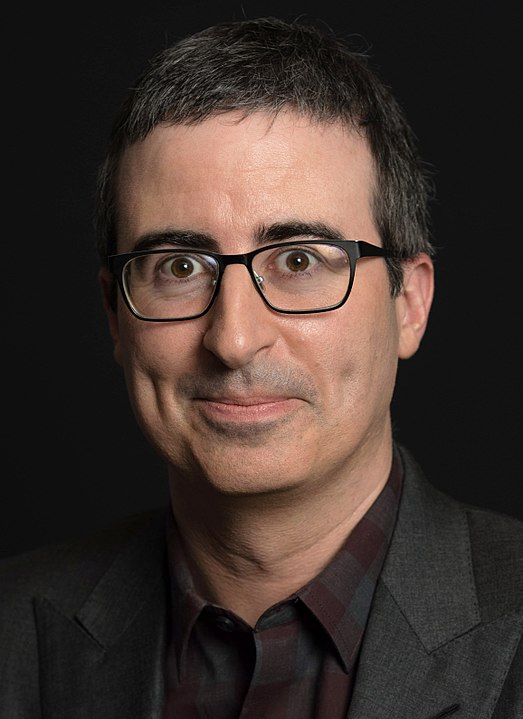
You’ve no doubt heard that the mental health care system in the U.S. is broken. You’ve probably experienced that for yourself. But have you heard what John Oliver had to say about it? On August 1, on Oliver’s Last Week Tonight program, the comedian/commentator devoted a full 25 minutes to examining the flaws that plague mental health care.

During the broadcast, Oliver presented appalling statistics (some of which even I had never heard before) and clips of interviews with participants in the mental health system, including people who have been affected by it, practitioners, and insurance executives. With his trademark sardonic humor, exasperated outrage, and comic zingers, Oliver deftly skewered the insurance industry and remote mental health companies, among other targets. It was an enlightening and satisfying performance.

Here are some of the highlights.

Oliver started with a flashback from the 1950s of women entering a beauty parlor (!) to receive makeovers that were supposed to solve their mental problems. “I don’t know what’s more alarming there — nurses being forced to take on the skills of a Sephora brand ambassador or the fact that ‘can make-up cure sad?’” Then he tackled the PSA on mental illness stigma featuring Harrison Ford, which was designed to make discussions of mental health “cool and trendy” and dissed the gallbladder for some reason.

Next, he went through some stats on why such a PSA was necessary – the lack of access to mental health care, particularly since “for every ten clinicians entering work in mental health clinics there, 13 leave. And if we continue at that rate, one day, we’re going to wind up with negative therapists.”

Oliver noted that nearly 85% of all psychologists are white, and ran an interview with an African-American couple. The man said that he “couldn’t find a black man to save my life,” which Oliver said was “something you expect to hear about the crowd on January 6th, or all ten seasons of “Friends.” He also played a video of another man who couldn’t find treatment. His friends said, “Everything will be fine tomorrow. Suck it up, buttercup,” a response that to him meant “a 12-pack of something or a bottle of something.”

Oliver also reported on the fact that hospital ERs are overrun, with one interviewee suffering a stay of 27 days there, and then receiving advice to go from the ER to a doctor. Oliver noted that 27 days in an ER is “not calming” and that seeking help is serious, that “you can’t just put off mental healthcare indefinitely. It’s not a check engine light.”

Some of Oliver’s most biting comments were reserved for AI programs that claim to counsel users on mental health issues. One of the free services was Woebot – “Bot as in robot and ‘woe’ as in ‘Whoa, that’s a dumb name.'” Their mascot is a robot waving a wrench (“He’s going to fix my brain with that!”). And when questioned about anxiety and lack of sleep, which affect 18% of people, the AI responded, “I can’t wait to hop into my jammies later.” Oliver also reported that when Woebot was confronted by the BBC with a test case of a 12-year-old reporting sexual abuse, it replied with the comment that it “shows me how much you care about connection, and that’s really kind of beautiful.”

He did note that teletherapy is valuable and it can fill some the gaps in care. But Oliver also highlighted investigations of sites that were “pill mills,” one of which claimed that 95% percent of their users “should get a scrip.” Noting that it was not 100%, Oliver compared it to the saying, “It’s not arson if you only burn most of a building down.”

Regarding lack of accessibility and insurance parity despite laws requiring it, the program noted that the issue was complicated by finding a provider who will take your insurance. The Labor Department has investigated only 74 claims against insurance companies in the past year (but closed only 12 of the complaints) and has issued fines only 13 times since 2017.

And insurance payments are often based on their own opinions on when a treatment is “medically necessary.” Oliver likened it to an insurance company, saying, “Imagine an insurance company reversing their decision in the middle of any other serious treatment. ‘Hey, we love how this heart surgery is going, just popping in to say, it’s done. Yeah, it’s done now. Hit the showers, everyone, great job. Don’t bother closing anything up, that’s not medically necessary.’” California, Oliver noted, requires insurers to “base medical necessity determinations on current, generally accepted standards of mental health care, instead of just making up the criteria for themselves.”

Insurance companies also have “ghost networks” that offer patients providers who aren’t taking new patients or even practitioners who have died. Phone numbers can be wrong too, some of them reaching “jewelry stores and boutiques,” which Oliver admitted that, “to be fair, if you’re a woman in the 1950s, a boutique and a jewelry store is apparently the only mental health care you need.” 

The segment ended with the statement and plea, “It can’t be the case that, when people ask for help, our only option is to tell them to ‘suck it up, buttercup.’”

We can only hope that Last Week Tonight‘s take on the U.S. mental health care system will reach its literally millions of viewers with the news that something needs to be done – and soon. You can see the whole segment at https://www.youtube.com/watch?v=jtIZZs-GAOA or on John Oliver’s official website, https://iamjohnoliver.com/. It’s definitely worth a visit.

This post originally appeared on The Mighty (themighty.com).

Dissociative Identity Disorder: The Basics

I had a friend, Hal, who had Dissociative Identity Disorder (DID). I never met any of his alters until once we went to the corner store. He giggled. He grabbed numerous bags of chips and other snacks. When we got home, I mentioned this to him, and he said, “You just met Julie. She’s a teenage girl.” Later, I met an alter known only as The Angry Man, which is part of why we’re no longer friends.

DID, as its name says, is a dissociative disorder, one of three different kinds – Dissociative Amnesia, Depersonalization Disorder, and Dissociative Identity Disorder. DID is the most severe of the three conditions. All involve symptoms such as memory loss, “out of body” experiences, emotional numbness, and lack of self-identity. DID is thought to be a reaction to the trauma of extreme physical, emotional, and sexual abuse that occurs usually before the age of six.

Some trace the history of DID to 1584, when the records of a French woman who was exorcised recounted symptoms that today would very likely be attributed to DID. It’s likely that more cases that were actually DID have over the years been attributed to demonic possession. Later, it was seen as a form of hysteria, another disorder with dissociative symptoms.

DID really hit the big time in the 1950s through the 1970s, when the books The Three Faces of Eve and Sybil became best-sellers and were made into movies. The books, written by Corbett H. Thigpen and Flora Rheta Schreiber, respectively, were accounts from psychoanalysts about the diagnosis and treatment of DID, which was at the time called Multiple Personality Syndrome, since the disorder was notable for “alters,” or separate personalities that appeared while the primary personality was unaware that they existed. “Eve” had three alters, while “Sybil” had 16.

Since that time, both of those cases have been controversial, with exposes purporting to reveal that neither Eve nor Sybil really had multiple personalities. The theories were that either the subjects were faking the disorder, or that the doctors suggested to them via leading questions and hypnosis that they had multiple personalities. (This was related to the “repressed memory” controversy in the 1980s to 1990s, which raised many of the same issues. Healthline recently reported that “the majority of practicing psychologists, researchers, and other experts in the field question the whole concept of repressed memories. Even Freud later discovered many of the things his clients ‘remembered’ during psychoanalysis sessions weren’t real memories.”)

Still, DID is real enough to have made it into the DSM. (We should remember, though, that diagnoses of “illnesses” such as homosexuality were present in earlier editions but later removed.) There are therapists who treat it with Cognitive Behavioral Therapy (CBT), Dialectical Behavior Therapy (DBT), medications, Eye Movement Desensitization and Reprocessing (EMDR), and/or hypnosis, which started to be a treatment in the 1830s and is said to lead to a rapid recovery. Although hypnosis for diagnosis or treatment of DID is still controversial, it may be useful for reintegrating the alters back into the primary personality.

DID has also been used as a potential criminal defense in legal cases over the past several decades, in cases that range from drunk driving to murder. It has been used to support a plea of “Not Guilty by Reason of Insanity” (NGRI). This defense is used in less than 1% of felony cases and is successful in only a fraction of them. The theory that a crime was committed not by the primary personality but by one of the alters has not always proved persuasive. It’s difficult to prove, for one thing, and there are professional witnesses and psychologists who testify that either DID does not exist or that even if an alter committed the crime, the primary person is legally responsible for it. The DID defense did work in 1977 for Billy Milligan, who was said to have 24 separate personalities, two of whom were claimed to be responsible for his crimes of rape.

DID is subject to a number of myths or beliefs. For example, many people believe that DID is either nonexistent or an overdiagnosed “fad” seen only in North America. Some believe that it is caused by the doctors who treat it rather than by childhood trauma, or that it is in reality the same as Borderline Personality Disorder (BPD). However, there have been neuroanatomical changes recorded by MRI in cases of DID: “The neuroanatomical evidence for the existence of DID as a genuine disorder is growing and the structural differences seen in DID patients’ brains…contribute to that growth.” So, although DID is believed by some to be nonexistent, there are studies that back up its reality.

As for me, I have experienced a few mild instances of dissociation related to my bipolar disorder, but nothing even remotely like what occurs in DID. But then, I didn’t have the childhood trauma associated with it. (During the “repressed memory” days it was said that the only truthful answer to “Have you experienced extreme childhood trauma?” is “Not that I’m aware of.”) Nonetheless, I find the subject fascinating, as well as dissociation in general. (This is not intended to diminish the experiences of people who have a dissociative disorder.) But I look forward to learning more about DID, particularly the neuroanatomical changes when they become available.