Bipolar 2 From Inside and Out

Posts tagged ‘language’

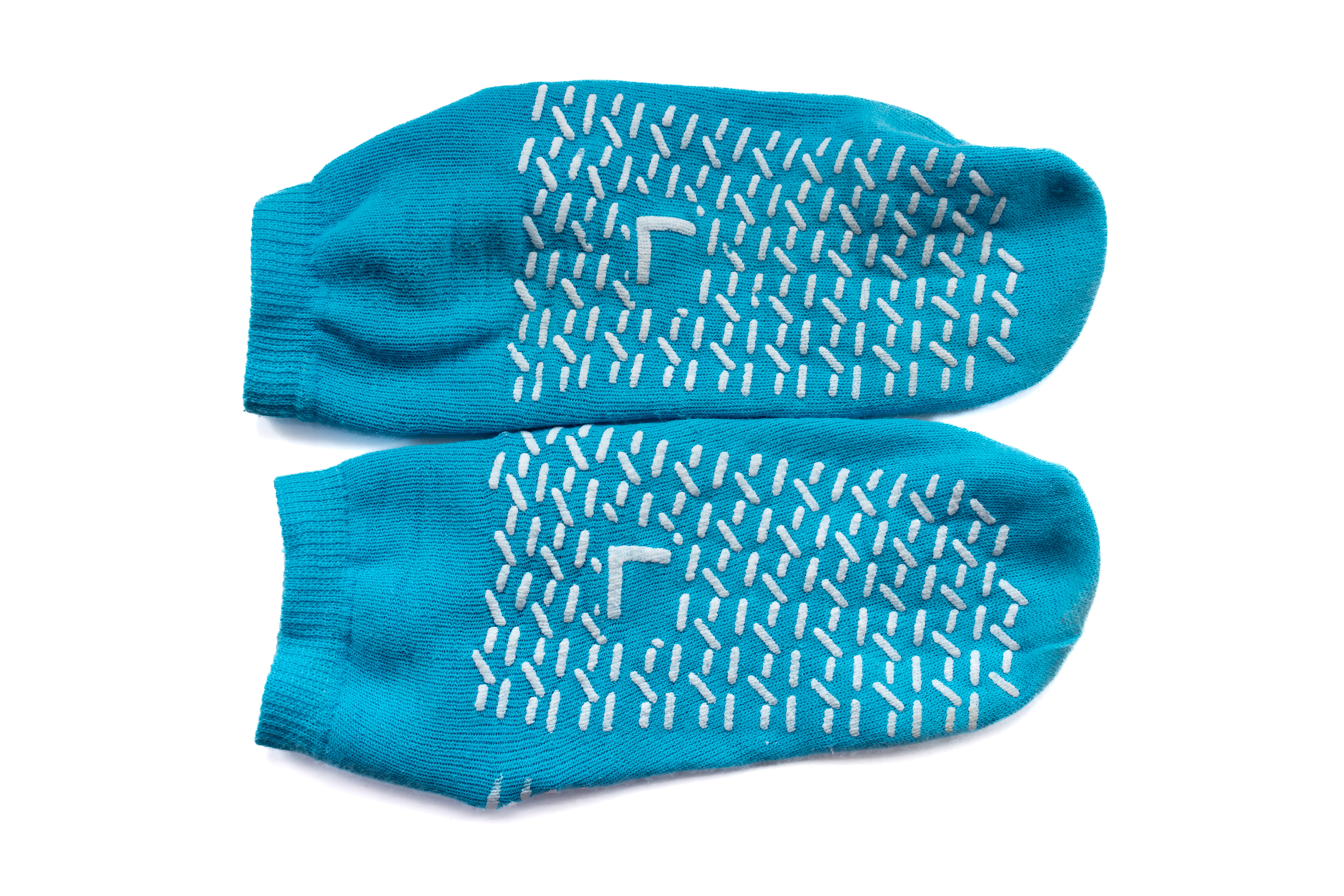
Grippy Socks and Sour Candy
My husband is a great help when I write my blogs. He keeps an eye out for news stories that deal with mental health in some fashion. So when he saw an article on new words related to the topic, he made sure I saw it. Then he asked me how I felt about it.

The story was about new language that young people were using to describe various mental health concepts.

First and foremost among them was “grippy socks vacay”—a reference to the footwear issued to people who have been committed, voluntarily or otherwise, to psych wards. But “vacay” is short for “vacation.” I can just picture a conversation using it: “Where’s Janet been?” “Oh, she’s been on a grippy socks vacay.” Or “I’m stressed. It’s time I went on a grippy socks vacay.” It seems unlikely that the people who say these things are always referring to an actual stay in a psych ward.

I was more than slightly appalled. It’s true that grippy socks evoke the image of a hospital stay. But grippy socks are a part of any stay in any department of a hospital, not just psych wards. And such a stay is hardly a vacation. It’s likely, I think, that people use this to mean something like “relaxing getaway” or “time to clear my head.” An actual stay in a psych ward, however, is not a relaxing getaway. It’s intense. It’s not supposed to be relaxing. And while it does provide time to clear one’s head, that’s still far from accurate. Medication, group therapy, and individual therapy may eventually clear one’s head or at least change one’s perspective, but it’s hardly just a time away from work and day-to-day stresses.

The article went on to discuss whether the phrase increased or decreased stigma. Some said one, some the other. I think it perpetuates stigma. It implies that someone who is in a psych ward is there to have a good time. “Grippy socks vacay” is demeaning when the hard work that mental patients must accomplish is considered.

If it’s used as a euphemism for an actual psych ward stay, it’s insensitive at the least. If it just means time off from daily cares, it’s still inaccurate and discounts the real experience. Those things can’t be good for reducing stigma.

Now, my friends and I have been known to use irreverent language to refer to our conditions. Robbin and I used to say on occasion that we needed a “check-up from the neck up.” We used it just between the two of us (well, I’ve also used it with my husband) to indicate that we needed to see our therapists. But I don’t see it as being demeaning, especially since we never used it in the context of anything but our own disorders, not a general description of someone the general populace would slangily describe as “crazy.” If we had said of any popular figure that they needed a check-up from the neck up, that would have been something else. But we didn’t.

Of course, you may disagree with this and I’d love to hear from you regarding your opinion.

The other article my husband shared with me was one that indicated that it was a trend on TikTok to use sour candy to ward off anxiety. The article even said that experts backed up the theory.

The idea is that the intense sensation of sourness distracts the brain from the cause of the anxiety. It’s a distraction technique, like snapping a rubber band on your wrist to take your mind away from unwanted thoughts. One expert interviewed for the article said, “Panic ensues when our amygdala triggers the flight or fight response. One way to dampen our amygdala’s response and mitigate panic is by turning our attention to the present moment through our senses: taste, smell, touch, sight, and hearing.” Mindfulness through candy, I guess, would be a way to describe it. The experts also advise grounding yourself with other sensations such as the scent of essential oils.

Other experts noted that sour candy is a kind of crutch and not a long-term solution. One called it “maladaptive.” Sensory distractions, they said, were most effective in conjunction with acceptance rather than avoidance.

What’s the takeaway from this? Aside from the potential boost in sales for Jolly Ranchers, I mean. I think it’s a good reminder that there are ways to short-circuit anxiety and panic. And for people who only experience occasional, momentary anxiety, it’s probably a good thing. But for someone with an actual anxiety or panic disorder, it’s likely to be only one tool they use — and a minor one, at that.

What have you been reading recently about mental health trends? I’d love for you to share that, too.

Language Lost

There are many words that are specific to psychology, including diagnoses, symptoms, and therapeutic techniques. Many of those terms, however, have worked their way into general conversation. Some think this is a good thing as it makes society more aware of the language we as psychiatric patients use. Others object to this use of language. They see it as diluting the meaning of the terms.

Two of the most common words that have made this shift are bipolar and OCD. Instead of diagnoses, they’re often used as descriptions of people or things that are thought to share the characteristics of the disorders. “The weather is bipolar this month.” “Beth’s house is really tidy. She’s so OCD.” These usages are, of course, inaccurate. Weather can’t have a psychiatric disorder, and a neat house is not enough to diagnose a person with OCD.

The thing is, people aren’t using them literally. Weather being bipolar is a metaphor. It conveys the idea that the weather is changeable, seemingly randomly. Calling weather bipolar expresses the concept more vividly, which is probably why it has become so popular. Calling someone OCD is an exaggeration used for effect. They’re saying that Beth is not just neat, but excessively neat. The people who use these expressions don’t have any real idea of what the terms mean. They’ve just heard them used and have only a vague, superficial idea of what they mean.

Spoons is another metaphor gone astray. Originally, it was used to describe the depletion of energy that someone with an “invisible illness” feels when they’re required to do more than they’re capable of on any given day. Spoons are a variable commodity. The neurodivergent or physically challenged never know how many “spoons” they will have at the beginning of a day and when they’ll run out of them. It’s a very powerful metaphor which makes it easier to understand the concept.

Nowadays, however, it’s used by people who don’t face these challenges to mean simply “I’m tired” or “I’m done for the day.” But these people don’t have a widely varying amount of energy at the start of each day. Oh, they may be more or less tired depending on the quantity and quality of their sleep. But they don’t begin with so few spoons that getting out of bed requires an enormous expenditure of spoons that depletes them for the rest of the day.

The word triggers is not a metaphor, but a word that has weakened over time. In psychological terms, a trigger is something that brings back vivid memories and sensations of a traumatic incident. The person who is triggered cannot control their reactions and will experience the event as if it were actually occurring in real-time. In its new meaning, a trigger is anything that a person doesn’t like or causes them to be uncomfortable. This discomfort is minor and fleeting, and does not cause sensory overload. People who use “triggered” this way betray a deep misunderstanding of the term and often make fun of the concept altogether.

These and other terms like neurodivergent and spectrum are also frequently misunderstood or misused. Some are still being defined and arguments about what they really mean often occur.

People who use the words in their specific, technical sense sometimes speak of “reclaiming” them. They are offended by the perceived misuse of the various terms and want to restrict them to their original, technical meanings. They want other people to stop using them in their new senses. They feel the new usage cheapens the words.

The thing is, language doesn’t work that way. Once a word or phrase has “escaped into the wild” and is being used with a different shade of meaning, there’s no getting it back. No matter how much you try to educate people about the “real” meaning of the word, most people will not even realize they are using it “wrong” and won’t stop using it in the new sense. In fact, the first dictionary definition of bipolar is “having or relating to two poles or extremities,” not the disorder. The non-psychiatric sense of OCD as an adjective hasn’t made it to the dictionary yet, but it’s only a matter of time now.

Personally, I can think of things a lot more heinous than describing me and the weather the same way. Is it ignorant? Yes. Is it insulting? Probably. I just think it’s a waste of time correcting one person at a time or trying to educate the masses about it. Millions of people are still going to do it, and there are more important things to educate them about.

Does It Matter What We Say?

Words matter. I preach that all the time. Language is what gives our thoughts reality and how we make essential connections. Ideas become more concrete when they have words attached to them. It’s hard – perhaps impossible – to convey a thought without language of some kind. And how we use words is dependent on how and what we think.

Words matter. Think about how the terms “rioters” and “protesters” reveal a person’s opinions about the motivations of the people in the “mob” or “crowd.”

Words matter. Our community has been pushing back against words such as “psycho” and “crazy” when it comes to referring to people who need psychiatric help. Many people are gradually realizing that such words are equivalent to slurs and are no longer acceptable. (Except in the aftermath of violence, of course. Then, those terms are tossed around indiscriminately.)

Words matter. But how do we in the community refer to ourselves? What words are advocates using? And how do we want the general public to refer to psychiatric problems?

I’ve written before about the terms “behavioral health” (bad) and “mental illness” (better). But what’s best? Increasingly, the words du jour are “brain illness” and “brain disease.” We’re watching linguistic change in action.

But linguistic change happens at a glacial pace. Words that were used in Elizabethan England are still used today. Think about all the words and phrases that Shakespeare invented that are still used today, and with the same meanings – unreal, lonely, and green-eyed (as in jealousy), for example.

Linguistic change, on the other hand, also happens blindingly fast. Slang, tech terms, and jargon in particular appear and disappear in the blink of an eye (as it were). Think about the terms that refer to female beauty. There were times when “phat,” “fresh,” and “fly” were all applied to women. (Yes, I’m dating myself. I don’t even know what the current term is, but I bet it’ll be gone next month. At least I know that “fire” has replaced “awesome,” “boss,” and “da bomb.”)

So, where are we in the (something) community now that we’ve left “behavioral health” behind? “Mental health” was the clear frontrunner for a time. Then it was “mental illness,” then “serious mental illness.” Now the term being put forward is “brain illness” – or even “brain disease.”

I’ve talked about the implications that various words have. What are the connotations of the new terminology? “Mental illness,” as opposed to “mental health,” drives home the point that “mental health” is a euphemism. It’s not health that’s the problem – it’s the opposite of health. “Brain illness,” as opposed to “mental illness” says that the problem is not in the mind, it’s in the brain.

I think that’s a tough concept for the general public to take in. To most, the mind and the brain are synonymous. Whether that’s accurate or not is hard to say. It’s true that the brain is the physical embodiment of thought, emotion, and cognition. These things can’t exist separate from the brain. They are so intertwined that it’s hard to think of one without the other – especially for laypeople.

But “mental illness” implies that the mind – the thinking – is what is disordered. “Brain illness,” on the other hand, says that the problems lie in the functioning – the physical structure – of the brain. In my opinion, it’ll be tough sledding to make the public understand the sometimes subtle difference between the two.

Recently I saw an online post that decried the fact that advocates and professionals aren’t yet using the terms “brain illness” and “brain disease.” And there’s some truth in that. My own therapist doesn’t. But practitioners are engaged in dealing with the general public as well as those in the community. There’s something to be said for addressing those people in language they understand better. There’s the possibility that when hearing “brain disease,” most people will think “brain tumor” rather than what we are really talking about. And there’s the problem with the slowness of linguistic change.

Words matter. But so does the speed of change. Of course, if we want to change the dialogue, we need to use more accurate terms to promote our message. But it’s probably too soon to expect everyone to be on board. I’m not saying that we should give up on the process of fostering change. I am saying that we shouldn’t be beating each other up for not yet having made that progress, even among ourselves. It’s a process, and not everyone progresses at the same rate.

Incremental change is better than none. Indeed, unless you’re talking about a fad, it’s the only way change happens. And we’re not talking about a fad here. We’re talking about a fundamentally new understanding of what it means to have schizophrenia, bipolar disorder, major depressive disorder, and other illnesses.

That’s going to take serious time.

Keep This Blog Alive!

Choose an amount

¤2.50
¤5.00
¤10.00

Or enter a custom amount

¤

Your contribution is appreciated.

Donate

How Do We Talk About Mental Illness?

Language matters. What we call things matters. Does language shape thought or does thought shape language? Either way, both are important when it comes to brains.

The latest discussion in the debates over language is what to call mental illness (which is what I’m used to saying). Many of the words and phrases that have been in use for years no longer seem quite accurate.

Take mental health, for example. When policymakers talk about subjects like mass violence, they often speak of “mental health issues” and what should be done about them. The thing is, if someone is mentally healthy, nothing really needs to be done about that. But mental illness is a term that doesn’t sound so easily addressed. Policymakers are notorious for using language that soft-pedals actual problems. Not to mention the fact that when they talk about mental health, they’re usually talking about addiction issues or homelessness (though they still aren’t particularly effective in addressing those either).

Mental health is still a better term than “behavioral health.” I remember when community treatment centers and insurance programs were called behavioral health plans. Again, there was a lot of lumping psychiatric illnesses and addiction together. It was also wildly inaccurate. It was not the behavior that was unhealthy (the way smoking is). Behavior may have looked like the problem, but it wasn’t the cause. Something to do with thought or the brain was. Also, there was no equivalent term “behavioral illness.” That wouldn’t even make sense.

So. We have mental illness as the term currently most used, with SMI (Serious Mental Illness) often used for disorders like bipolar and schizophrenia. Lately, though, there has been a push to replace those terms with “brain illness.” (The companion term is “brain health.”) It hasn’t caught on yet with the general public, though it’s gaining some traction among practitioners, advocates, and those affected by assorted conditions. I’ve heard some people are frustrated that it hasn’t caught on more widely already. They feel the process is going too slowly.

Calling schizophrenia, bipolar, and other disorders “brain illnesses” certainly makes one sit up and take notice more than “behavioral health.” And it jibes with the notion that these mental disorders (there’s another term) are caused by something going wrong in the brain. This is not without controversy, however. There are those who think that referring to depression or bipolar disorder as “chemical imbalances” in the brain or faulty neurotransmitters (or their receptors) is inaccurate. There are various theories as to what causes these conditions, all the way from childhood trauma to gut bacteria. To me, the most likely scenario is that there’s a combination of brain-related factors and environmental influences at work here. Nature and nurture, in other words.

Brain illness is certainly an attention-getting term. That should make it more likely to catch on with policymakers, but I suspect it won’t. It’s not a comfortable concept and there are no easy-sounding solutions to it. I doubt that it will catch on with the general public either. We still haven’t gotten people to move away from crazy, insane, maniac, psycho, or even nuts and stop throwing them around indiscriminately. Hell, we haven’t even been able to convince people that psychiatric institutions don’t use straightjackets anymore.

Does “brain illness” make these conditions sound more treatable? Is it likely to increase compassion for those who have them? Is it likely to make any kind of a difference? I don’t think we’ll really know until it penetrates the consciousness of the person-on-the-street. And I have my doubts about when or if that might happen.

Keep This Blog Alive!

Choose an amount

¤2.50
¤5.00
¤10.00

Or enter a custom amount

¤

Your contribution is appreciated.

Donate

Words Matter

“Sticks and stones may break my bones, but words will never hurt me” is one of the worst lies that grownups tell to children. Children threw stones at me when I was a child (though they fortunately never broke my bones). But the many, many words they hurled hurt me deeply internally, rather than externally. I was bleeding inside from them, as much as I bled externally from the rocks.

Plenty of children feel the pain of words. We say, “Children are cruel” and leave it at that, or tell children to simply ignore cruel remarks. We have anti-bullying campaigns that are notably ineffective, especially in the face of cyberbullying. Children who hear demeaning words from their parents, teachers, or other adults are likely the most damaged.

People with mental disorders feel the pain of words, too. There are many ways this happens.

One of the most common taunts, often used in popular media, is “psycho.” One may possibly excuse Robert Bloch, who wrote the book Psycho in 1959, and Alfred Hitchcock, who made the movie in 1960, because they were products of their time, when microaggressions and the concept of nonracial slurs did not exist. American Psycho (2000), has much less of an excuse. In movies such as these, “psycho” is shorthand for “serial killer.”

But now “psycho” is in common usage in phrases such as “psycho bitch from hell” (which is anti-woman as well as offensive to persons with mental illness). Songs such as “Sweet But Psycho,” “I Might Just Go Psycho,” and “Am I Psycho?” are recorded.

“Craziness” is also taken lightly in words and phrases such as “cray-cray,” “cuckoo,” “maniac,” “lunatic,” and “cracked,” not to mention “bonkers,” “bananas,” and the more offensive “batshit crazy,” “bug-fuck crazy,” and dozens of other words. There’s even the stereotype of “crazy cat lady.” It may seem cute or silly to call a friend one of these words in a joking manner, but the person who does have a mental illness hears such a word as an insult. Even if it is just overheard, it tells a lot about how the speaker regards the seriousness – or unseriousness – of mental disorders.

There are lots of other examples. “Off their meds” is one. It, along with plain “crazy” or “psycho,” is quite often applied to mass shooters, suicide bombers, and other offenders. While it is true that some of such people have mental disorders, the terms are thrown around long before anyone finds out whether the person is diagnosed with a mental illness or is on psychotropic medication. It is the default explanation. Julie Beck, in an article in the Atlantic, called the easy leap from mass killing to mental illness “a consistent and dangerous narrative.”

Other usages seem innocent enough, but really aren’t. “The weather is bipolar,” meaning it changes quickly, is common. It isn’t accurate, however. Only a person can have bipolar disorder, a serious illness. Applying it to oneself when you change your mind or have a momentary mood swing, is also inaccurate. Likewise, “schizophrenic” is used to describe something or someone that has two sides, or that seems incomprehensible to the viewer. “Multiple personality” (more correctly called Dissociative Identity Disorder, or DID) is shorthand for someone who exhibits different sides of his or her personality on different occasions. People who disagree with you politically are not “insane” or “crazy” either, unless they have been diagnosed with a psychiatric disorder by a professional.

These ways of speaking hurt the persons they are spoken about, but also the mental health community. Fear of being called “psycho” or “crazy” is one reason that some people don’t seek treatment for a disorder or conceal it if they do.

And that’s a sin and a shame.

The Languages of Love and Bipolar Disorder

In 1995, Dr. Gary Chapman published his popular relationship book, The Five Love Languages. In it he proposed that there are different ways – or “languages”  – that people use to communicate their love. Problems happen when one partner doesn’t speak the same language as the other; for example, when one gives the other literal gifts while the other yearns for time together.

I’ve been thinking quite a bit about love and bipolar disorder lately and it occurred to me that the five love languages could be a helpful lens for looking at relationships. In particular, they might help a person realize what the other one needs when experiencing symptoms of the disorder.

Here are the five love languages and how they might be helpful if you are in a relationship with someone who has bipolar disorder.

Words of affirmation. I’m not talking here about the kinds of affirmation we are supposed to look in the mirror and give ourselves. I mean words of affirmation that come from outside, from another person, and are gifts of love. Everyone needs affirmations at times, but for people whose love language is words of affirmation, they can be positively soul-feeding.

For the bipolar person, these affirmations can be as simple as, “Thank you for coming out with me,” or “Congratulations on getting the bills paid,” or even, “I know you can do it,” or “I knew you could do it!” And for the bipolar person who struggles with self-esteem, imposter syndrome, or lack of motivation, these can be the words that keep us going.

Quality time. Quality time doesn’t have to mean an elaborate outing or a two-week vacation. It can be as simple as sitting on the sofa with your partner watching a movie, or cooking together. Especially when there’s something else you could be doing. Giving up that other activity to spend time with your loved one is another kind of love-gift.

Quality time – extended periods of togetherness – can be extra special to someone with bipolar who feels lonely, isolated, or unlovable. Just the idea that someone wants to spend time with you, even though you can barely stand to be with yourself, sends a powerful message.

Receiving gifts. There are people who value physical gifts and see in them the care and attention that another person spends selecting just the right thing. Diamond rings are unnecessary. In this language of love, a simple houseplant can even be preferable.

You probably shouldn’t expect a physical gift to “cheer up” a person with bipolar depression. As with any gift, the important thing is knowing what the person values and providing it to them. Comfort objects such as plush animals, mp3s of calming or favorite music, or a weighted blanket to ward off panic may be just the thing. Even a silly coffee mug with an appropriate saying can become a treasured item.

Acts of service. If the person you love values acts of service, then your way of speaking that love is accomplished when you do something for her or him. Doing the dishes or some other chore that usually falls to the loved one is one example.

For the bipolar person, acts of service that speak of love may be as simple as handling phone calls and visitors, or doing the shopping when he or she just can’t face the grocery store. “I’ll do it for you” is a powerful message that says, “I care about you and want to help ease your burdens.”

Physical touch. Strange as it may seem, some people never think of physical touch as a language of love unless they’re talking about sex. Of course, the physical and emotional intimacy of sex can speak love, but other kinds of touch do just as well for some people.

Bipolar people in the manic phase can have a high sex drive and appreciate some sexual attention even if you wouldn’t ordinarily want it at that time of day, for example.  But the bipolar person can crave touch without sex as well. Hugging and cuddling, sitting close with an arm around the shoulders, and even a touch on the shoulder as you leave a room can speak volumes.

The important part of this is to learn and know what your partner values – what language of love she or he speaks – and to give it to them. Mixed signals, speaking the language that you would want instead of the one that your partner does, will not be processed as love. Physical gifts to one who hears love in affirmations will miss the mark.

Obviously, the best thing to do is to ask your partner which “language” they speak. But she or he may not even realize that there are different languages or which one is theirs. Observation, attention, and even trial and error may be necessary to get the communication going. But if you want to speak love to a person with bipolar disorder, these are communication skills that can be vital.