Bipolar 2 From Inside and Out

Posts tagged ‘coping mechanisms’

A Bipolar Breakup

A recent issue of BP magazine had an article on surviving a breakup as a person with bipolar disorder. It noted that “a split can trigger manic or depressive episodes.” It also noted that “there’s typically a period of destabilizing upheaval as the newly single adjust to life on their own, perhaps in different surroundings.”

I can vouch for the mood episodes and destabilizing upheaval. My senior year in college, I experienced a breakup that was not just destabilizing but devastating. At the time, I was not diagnosed, but it’s now clear that I was in the grip of a major depressive episode, between not having any idea what would happen to me after college and the train wreck that was the relationship.

The article also described how to maintain stability, avoid dangerous rebounds, and prioritize self-care when a relationship ends. They advised readers to avoid rebound relationships, not stop their medication, see or seek a mental health professional, avoid isolation by using their social support network, take their time, and allow themselves to heal.

This is no doubt good advice, but it’s easier said than done. I wasn’t able to put all of it into practice. I had no mental health professional (and wasn’t ready to look for one), and was unmedicated, unless you count the benzo I was given for my TMJ problem and the wine our neighbors poured for me.

As for rebound relationships, I met the man I would eventually marry the weekend before I left where I was living to return to my home state. But it’s hard to call it a rebound relationship, as for over a year, we saw each other only twice, but simply corresponded. So I guess you could say I took my time.

However, one year wasn’t all I needed to heal. Neither the flashbacks and nightmares nor the crying were finished in that time. I had to repair my relationship with my parents. I had to realize that I needed psychiatric help and begin that journey. I had to rebuild my social support system and find the wherewithal to interact with them.

When you consider everything, it took more than a decade. By the time my “rebound” guy and I got married, I was still not healed. He had to cope with my distress as I tried to shake off the memories. He tried to understand my longstanding depression (but really couldn’t until he experienced a depression of his own). The people in my support system soon realized that I would back out of plans, often at the last minute, and that if I did show up, I could be preoccupied and uncommunicative.

The good news is that I finally did heal. My husband and I now have a strong relationship unclouded by the specter of that failed one.

So, what would I advise someone to do in the aftermath of a bipolar breakup?

First of all, take the time you need to heal, and don’t worry if it doesn’t happen quickly. The death of a relationship engenders grief. And as with the death of a person you cared about, grief takes as long as it takes. There is no official timeline or cut-off point. I’m not saying you should dwell on a past relationship, but that there are many facets to such a breakup, and you may have to heal from one after another. You can’t rush it, so don’t try. Unresolved memories and grief can pop up again when you least expect them.

Next, while you’re taking your time to heal, also take the time to do the work. Find a therapist or psychiatrist and go to your appointments faithfully. If they give advice (they may not), take it. If they give you homework, do it. If they say something that resonates with you, think deeply about it. See where it fits into your life and your situation. If it doesn’t seem to do so, discuss it further in a later session.

Finally, don’t overlook “glimmers.” These fleeting reminders of the things that remain good in your world are worth treasuring. What they are will be personal to you. The sight of a blue jay flying past your window or hummingbirds fighting over a feeder. The smell of cinnamon rolls baking. The sound of a song you love being played over the sound system of a restaurant you visit. The cuddly warmth of a blanket or a hug. The taste of your favorite kind of chocolate. Use all your senses to identify the presence of things that bring you, if not joy, at least a smile.

Give it time. You will get over that relationship.

Time Out

It’s been a while since you’ve heard from me, and I wanted to explain. I’ve been in and out of the hospital.

No, not the mental hospital. All this was purely physical. Well, it had certain effects on my mental health, but the reasons for my multiple stays were due to my body, not my brain or emotions.

It all started back in April, when I had my left knee replaced. This was a long-anticipated thing, necessitated by the fact that my knee was “bone on bone” (the doctor’s words) and the fact that the steroid shots were no longer working.

I will admit to having possibly unwarranted fears that I would wake up from anesthesia with mental deficits. I was assured that this had never happened. (I assume they meant while having a knee replacement, not ever. It has to have happened ever.) So I sucked it up and went under the knife, as the saying goes.

The operation went well. The aftermath, not so much. Time in the hospital, learning how to use a transfer board and walker. So far, so good. But when I went home, it turned out that I wasn’t healed sufficiently to be on my own. I fell. And kept falling. After one fall resulted in a pretty bloody shin, I was advised to go back to the hospital to make sure the artificial knee was still in its proper place. I then went to a post-acute care facility (nursing home), where it turned out I had an infection on my still-not-entirely-closed scar. I stayed and got PT.

Back home. No more falling (thanks, PT). But three days later, my leg swelled up from my toes to above my knee. I called the nurse hotline, and they advised me to go back to the hospital, where they determined that the fluid was not building up in my heart, as feared. Back to the rehab. I practiced walking and got to the point where I could (sort of) climb stairs.

Back home. Then I fell in my study and broke both sides of my ankle. Back to the hospital (fentanyl in the ambulance, ketamine anesthesia while they set it, and general anesthesia while they put in metal pins and plates). Back to the rehab, leg swathed in bandages and not allowed to put weight on it. (Ever tried standing while putting no weight on one foot? Don’t.) PT became interesting. The only way I could use a walker was with a knee sling, which is, at the least, awkward.

Finally, I got a boot and was able to put some weight on the foot. PT went better from then on, and after a while, they took the boot off and allowed me to put full weight on the foot. Eventually, I came home.

While I was at the rehab, I didn’t take my laptop. In addition to the fact that I was on pain meds and muscle relaxants for a lot of the time, I worried that my electronics would be stolen. So, no writing.

Now I’m at home, having outpatient PT, and I walked 250 steps with the walker yesterday.

But this blog is about my bipolar disorder. So, here’s what happened to my moods.

I tried hard and managed to stay mostly positive, like those TV commercials where people hold a little smiley face card in front of their faces. I faked this by slapping on a perky affect and making my voice rise in pitch when I say, “Yes, I’d love to go to PT.” “Yes, a shower sounds great.” “Can I try 15 minutes on the stationary bike today?” or “Next, I’d like to learn how to stand and pivot. Is that something I’d be able to do now?”

I did this especially for the PT folks, who took my willingness to try as a sign of progress. But there were times when I realized how impaired I actually was, and I felt depression. My husband has been very supportive, but he’s also pressuring me to get to where I can climb stairs again and walk up and down the wheelchair ramp we had installed. I can’t walk the ramp or the stairs with my walker, so doing that would mean I’d have to use a cane, which I do have but haven’t used in months. I need to have better balance and more stamina before I can even try that.

But I can write. So I am.

What Won’t Work

Actor/comedian Stephen Fry discovered at age 37 that he “had a diagnosis that explains the massive highs and miserable lows I’ve lived with all my life.” It was, of course, bipolar disorder. In documentaries, podcasts, and books, he has talked very openly about his condition, spreading the word about stigma and the necessity of getting help.

Fry once said, “You can’t reason yourself back into cheerfulness any more than you can reason yourself into an extra six inches of height.” And he’s right. If one could, I would have done so. With years of debate behind me and an extensive knowledge of rhetorical fallacies, I can argue nearly any proposition into the ground. I should have been able to reason my way out of depression.

But no.

Fry was right. There’s no way to reason cheerfulness into your life. Emotions are not so easily controllable, especially if you have bipolar disorder or another mental illness.

Nor can you reason yourself into having thicker skin. Throughout my youth, I was described as “too sensitive.” I was genuinely puzzled. I had no idea how to make my skin thicker (and it was never explained to me how such a thing could be done). It took a long time and many life lessons and mistakes to make any progress at all.

There are other things that won’t make you mentally well, either. Expecting the first medication you try to be the cure is unrealistic. It can take a long time (in my case, years) before a medication or even a combination of medications will ease your suffering. And if you can’t work out a medication regimen that works, other treatments such as ECT, TMS, EMDR, or ketamine therapy are not guaranteed to work, or at least not completely. If you go into those kinds of therapy expecting a complete cure, you may be disappointed.

Trying to wait it out or tough it out is likewise ineffective. Again, this is a strategy I have tried. I used to believe that my depressive episodes would abate if only I waited through them until they went away naturally. Eventually, my mood might improve slightly, but that was due to another mood cycle kicking in. Naturally, depression was still there, waiting for me to fall back into it.

I know this may be controversial to say, but religion won’t cure mental illness, either. Having a supportive religious community around you can be an asset—if you happen to find a church, synagogue, mosque, or other community that treats people with mental illness in a caring way. Prayer and sacred music can be a great adjunct to other treatments, but by themselves, they’re not a cure.

Exercise and yoga are not cures. They are also great adjuncts to other treatments. They can increase your number of spoons—if you have enough spoons to do them. But if someone with bipolar disorder or depression can’t manage to get out of bed, how are they going to avail themselves of the benefits?

Likewise nature. It’s a great way to lift your spirits to walk among spring flowers or autumn leaves or to plant a vegetable garden. But again, you have to be at a certain level of recovery to be able to do these things.

Changes in your physical circumstances may lighten your mood for a while, but they aren’t a cure. My mother used to believe that if only I got a better job, my depression would lift. And it did, but only for a little while. It certainly didn’t cure me. There were plenty of things about the job and about my brain that brought the depression roaring back.

So, what are we left with? Therapy and meds, and other medical treatments such as ECT, TMS, and maybe ketamine or other novel medications. One can hope that science will discover better ways, like fMRI, that can determine which treatments will be more effective. But it’s far from clear how soon that will be and when they will be available to the average person.

So, when is your reason an asset? When you’re deciding which treatment and which adjuncts are right (or possible) for you. For example, I had to think long and hard—and do extensive research—on whether I should try ECT.

I’m not a doctor, and Your Mileage May Vary, but for now, all I can recommend is to keep on keeping on with what we know can work. There’s no guarantee that these options will work, at least not for everyone. But they’re the best options we have.

Anxiety Lies, Too

There are a number of mantras in the mental healthcare field: Mental Health Matters, My Story Isn’t Over, It’s Okay to Not Be Okay, Men’s Mental Health: Let’s Talk About It, You Are Stronger Than You Think.

The most common expression, perhaps, is: Depression Lies. Lots of people say it to themselves and others. Jenny Lawson says it frequently in her blog posts and books. It means that when you’re depressed, your mind tells you things that aren’t true—that you’re hopeless, useless, bad, unlovable, unloved, incompetent, incapable of ever feeling any better. And because you’re depressed, you believe them. You have an inner critic that repeats the false messages. They’re with you all the time, whatever you do. They keep you mired in your hopeless condition. It takes a long time to turn off those inner voices and their negative messages. It takes work.

But another truism that doesn’t get as much attention is this: Anxiety lies, too.

Anxiety tells you that you’ll fail, that only bad things await you, that you shouldn’t even try to achieve your goals, that something will thwart you, that you have only bad luck and you can’t change it, that every fear you have will come true, no matter what you do.

Anxiety can keep you from doing the things you want to do, whether that’s getting on an airplane, applying for a job, or starting a conversation. The inner critic from depression has its anxiety equivalent: your inner defeatist.

And when you have something to do that by all objective standards would make anyone anxious, like having an operation, taking a final exam, or getting married, your inner defeatist won’t let you accomplish it, or at least not without immobilizing fear. When I say immobilizing, I mean that literally. You can become so anxious that you can’t move—can’t get out of bed or out of your house, stop your hands or knees from shaking, force yourself to enter a room, or even speak.

So, what can you do when anxiety lies to you? How can you defeat your inner defeatist?

I have help on this one. My husband serves as my outer realist. When my anxiety soars and I’m catastrophizing, he helps me stay grounded. He tells me when my fears are unrealistic. He goes with me to difficult occasions like visits to the dentist. He reminds me of times when I’ve gotten through similar situations in the past. I can—and do—lean on him. He reminds me that anxiety lies.

But what can you do if you don’t have an outer realist like Dan? One thing you could try is to seek your inner Mr. Spock. Ask yourself if it’s logical to fear this event. Is it logical to think you’ll get a zero on the test you’ve studied all week for? No. You may not get 100, but getting a zero isn’t likely or logical. However, this strategy doesn’t usually work. Anxiety whispers: “You’ve been studying the wrong things. You’ll freeze up.” But it lies.

Another way to try defeating anxiety is to make a list of what you’re anxious about and assign a probability to each one. How likely is it that your plane will crash? Find statistics to reach a reasonable answer. (The answer is seven fatal accidents in over 40.6 million flights.) But, practical as this sounds, it doesn’t work well either. Anxiety whispers in your brain: “You’ll be on the one that crashes.” But it lies.

Another technique is to look at your track record. Of all the times you’ve been introduced to a stranger, how many times have you been unable to even say hello? Never? Anxiety whispers: “This time you won’t be able to.” Anxiety lies.

You could also find a sympathetic support person who can walk you through your anxiety. It doesn’t have to be someone who’s around all the time, like my husband is. You may have a friend that you can call for a reality check and a pep talk, or someone who will go with you to that doctor’s appointment. An outer supporter is more powerful than an inner defeatist. Someone who has been through it themselves can tell you from lived experience: Anxiety lies.

Perhaps the most effective way to defeat your inner defeatist is to talk back to it. Say, “I know you’re lying. My anxiety is real, but I know I can do the thing, or at least part of it. You don’t exist. I don’t have to listen to you.”

And of course, your therapist and your meds can help you during times when anxiety lies to you, when you are inclined to believe what it whispers to you anyway.

Let this become your mantra: Anxiety lies. Say it whenever anxiety whispers its dire warnings.

Anxiety lies.

Politics, Mood, and Self-Care

It’s difficult for me to maintain a positive mental attitude when I’m troubled by bipolar disorder, especially the depression part. It’s even more difficult in today’s political landscape.

I don’t care what your political persuasion is or who you voted for. I don’t care if you’re for or against DEI or ICE. What I care about these days is what’s happening to mental healthcare in our country. But let’s leave government policies and programs for another day. Right now, I want to discuss politics and mood disorders.

We seem to be overwhelmed by politics, but also by our reactions to politics. Friendships have broken. Families have been torn apart. Lots of people suffer from cognitive dissonance when their brains try to balance their love for friends and family and distress at their views.

None of us knows what to expect next. The difficulty isn’t limited to one side or the other. People who want smaller government are learning that the cuts will include public services such as extreme weather forecasting and disaster recovery. Others with differing views are afraid to travel abroad because they fear that, even with passports, they may be detained when they try to return.

The situation is especially hard on people with mood disorders. People who have phobias or anxiety disorders can find their feelings increasingly out of control. Those who suffer from depression have exaggerated fears. Most debilitating of all is the not-knowing. Am I overreacting? Are these fears reasonable or exaggerated? Will the things I fear never happen? Should I watch the news? Should I avoid watching the news?

I’m suffering from news-dependent symptoms myself. I hesitate to discuss politics with friends unless I already know their opinions are similar to mine. And with new acquaintances on Facebook, I share memes and chat about books.

But when it comes to not getting overwhelmed, I have a few suggestions. Most of them you may already know—they’re versions of basic self-care.

Remove yourself from the trigger. Get out of the room or the house when the talk turns to politics. Offer to go on a beer run. Leave the room and make yourself a cup of tea. Tell your friends or relatives you need to get some air. The outdoors is largely a politics-free zone, aside from bumper stickers and billboards. If you walk with a friend, stay on non-threatening topics like your pets. And prepare a neutral topic to suggest: Do you think the Dodgers have a chance this year? What do you think of Beyoncé’s country album? Should I go on a Disney cruise this year or a trek to the Grand Canyon?

Self-soothing. Music is another way to distract yourself from the present chaos when you take that walk or any other time. Personally, I prefer music with lyrics, as instrumental music gives me too much time and space to contemplate difficult topics. If you wear earbuds (even without music), people are less likely to engage you in conversation.

Use distractions. If you read, stay away from news magazines, the internet, and newspapers. Instead, you may want to revisit books from your childhood. There’s nothing wrong with reading children’s books. They may take you back to a more pleasant time, or you may discover aspects of a book that you never noticed when you were young. Or try a new genre, such as a romance or mystery that isn’t likely to contain much politics. Old classics like Dickens or Austen are good choices, too.

Limit your exposure. Allow yourself 20 minutes for listening to or reading the news. You can do this more than once a day, but leave a couple of hours in between. Clean the bathroom or watch a reality show. Organize your closet. Plant flowers or herbs.

Do things that lift you up. Pray. Sing. Bake bread. Work on a journal or a painting. Do life-affirming activities that will improve your outlook and your spirit.

Oh, yeah. And remember to take your meds, especially if you have an anti-anxiety pill. You’ll need them.

Weed: Yes Please or No Thanks?

I know that some people swear by the benefits of marijuana for relieving their psychiatric symptoms. They find it calms their anxiety, lifts their depression, and helps them sleep. I know others who avoid it completely. It makes them dizzy and paranoid, which isn’t relaxing at all. Which group is right? Or is either side wholly right? Is marijuana a potential treatment or a potential setback? Or do both these views have their merits?

Let’s start with a look at medical cannabis. In 1850, cannabis was officially recognized as a treatment for a variety of conditions, including gout, snakebite, excessive menstrual bleeding, leprosy, rabies, and insanity, among others. It was inexpensive, widely available, and didn’t require a prescription. But its use declined because it was difficult to control the dosage, opiate-derived medications became popular, and cannabis couldn’t be administered by injection. Recreational use of cannabis was prohibited in all states, thanks in large part to scare campaigns. Fees and regulations made it less likely that doctors would prescribe it. By 1941, it was no longer considered a medical drug. Recreational use, of course, continued. By the 1970s, marijuana was prohibited in all contexts including medical, but investigation of its medical uses increased because it was reported to help cancer and AIDS patients with pain and nausea. It was also beneficial in treating glaucoma patients. State and federal laws differed, however, and in practical terms, marijuana might or might not be available legally.

By the 2000s and 2010s, many states permitted the sale of marijuana or CBD (which is not psychoactive) for medical use, including relieving seizures in children. CBD products are legal in some jurisdictions and not in others, and enforcement varies. Laws in some places are so liberal that there are legal commercial stores on many streets.

The conditions cannabis can be used for differ from state to state, and the restrictions change frequently. It’s hard to keep up with which states allow it for what conditions. PTSD is the psychiatric illness most likely to qualify for medical marijuana use. Some doctors believe that it’s also useful for anxiety, depression, Tourette’s syndrome, and anorexia. CBD and THC (the psychoactive component) are being studied for the treatment of bipolar disorder.

The medical community cautions people with psychiatric disorders about using marijuana. One study cited by the Psychiatric Times found “a strong increased risk of manic symptoms associated with cannabis … an earlier age of onset of bipolar disorder, greater overall illness severity, more rapid cycling, poorer life functioning, and poorer adherence with prescribed treatments.” On the other hand, Medical News Today has reported that users say marijuana use has reduced their anger, depression, and tension, and created higher energy levels.

Other studies have found that marijuana use had negative results on memory, decision-making, coordination, emotions, and reaction time, as well as an increased likelihood of disorientation, anxiety, and paranoia. Some reports suggest that marijuana use makes it more “likely” that psychiatric patients will develop schizophrenia and psychoses.

So, what are the takeaways? First, the results from all these studies are generally self-reported by the marijuana users and therefore subjective. Second, now that medical marijuana is in greater use and easier to get, there may be more thorough studies in the future (much of the cited studies were done 8-10 years ago, though they were still being reported as recently as 2024).

Bipolar patients have been using marijuana to alleviate both manic and depressive symptoms and report that it works better for them than conventional medications and also alleviates the side effects of those drugs. The drug’s calming effects may help with manic symptoms and the euphoric effects may explain the relief of depression reported. But heavy use has been associated with increased symptoms, thoughts of suicide, and the development of social anxiety disorder.

Perhaps the positive effects of marijuana for bipolar disorder are influenced by the expectations of the users: If they expect it to decrease anxiety or lighten their mood, it’s likely to. Still, heavy or daily use should likely be avoided because of possible negative side effects.

My own use of CBD has been confined to legal hemp-based gummies. I have found them to produce unhelpful, uncomfortable sensations, making me unbalanced and prone to falling, which I really don’t need. But that’s me, and it’s anecdotal evidence. Another person I know experiences relaxation and euphoria with no negative side effects.

To answer the question posed in the title, my personal answer is “No thanks,” but I’m not saying that should be the answer for everyone. It looks like a case of “Use at your own risk.”

Overeating and Bipolar Disorder

When you think about co-occurring disorders associated with bipolar disorder, you generally think of drug or alcohol abuse. But there’s another one you should consider: eating disorders.

For example, binge eating is a problem that many people with bipolar experience. Both conditions typically begin at a fairly young age. Both are experienced in cyclical patterns. And both are associated with changes in energy levels and eating patterns.

There’s scientific evidence that the two conditions are related. For example, research has shown that 30% of people with bipolar disorder also have problems with binge eating, Binge Eating Disorder (BED), or bulimia, and more than 9% of people with BED also have bipolar disorder.

The two disorders are intertwined, affecting each other. Someone experiencing a manic episode may be likely to overeat or binge, probably because of impaired impulse control. Depression, on the other hand, may lead to decreased appetite and low energy that makes it difficult to prepare food.

That’s not always true, though. The revved-up feeling of mania can lead someone to skip meals. Depression can lead a person to eat more “comfort foods,” which are often laden with carbs and sugar, as a coping mechanism, however maladaptive. These foods may increase serotonin and so make the person feel better temporarily. Either way, the over/undereating can cause stress while shopping or preparing food, or result in dissatisfaction with body image.

Medication for bipolar disorder can also have an effect on eating behaviors. We all know that certain drugs cause weight gain as a side effect. Antipsychotics, for instance, may contribute to increased eating because of changes in the brain’s reward system and a decreased ability to tell when you are full. And weight gain may lead to cycles of bingeing and purging.

Research has also shown that people with co-occurring bipolar and an eating disorder also may have PTSD, indicating a possible link between the conditions. It’s thought that people who have experienced trauma may use eating as a control mechanism.

At any rate, the combination of the two disorders is complex, and it’s likely that a person with both conditions may need help from a team or a holistic approach to treatment, both psychological and medical. It’s been suggested that topiramate (Topamax) or lamotrigine (Lamictal) can be considered, as these mood stabilizers don’t appear to result in weight gain.

Personally, I had a combination of the comfort food eating/skipping meals cycle. When I was in college, my weight fluctuated from roughly normal to too thin. Since then, thinness has not been a problem, possibly because of the medication I take. I certainly have a desire for comfort foods like mashed potatoes, pasta, and large amounts of cheese. One of my crazier comfort foods has been ridged potato chips with cream cheese, topped with M&Ms. My husband knows that when I want those particular ingredients, I’m sliding into depression. Lately, I’ve been swinging between comfort foods and skipping meals. On the other hand, I’ve lost 18 pounds since the spring. (My doctor asked me how I did it and I replied, “Eating less” rather than “skipping meals.” He thought I meant portion control, which I do try to do.) My bipolar disorder, while mostly stable, is still a cause of (less extreme) mood swings. My eating habits are likely just that—habits that I need to break. And I need to increase my activity, which should be easier once I get my knees replaced.

At any rate, I’ll try to keep an eye on my consumption and ask my husband to help me when it comes to eating better. Now that the holidays are almost over, it’s time to get back on track. Losing another 18 pounds sure wouldn’t do me any harm.

The Varieties of Grief

Loss and grief affect us all. If you’re lucky enough that they haven’t yet, they’re coming. You won’t know when or why or how, but they’re unavoidable. There’s no way to prepare for them, either. Loss and grief rock your emotional balance and your mental health.

You’ve no doubt heard of Elizabeth Kubler-Ross’s Five Stages of Death and Dying—denial, anger, bargaining, depression, and acceptance. (Some people say there are seven stages, including the usual five plus shock and guilt.) The stages apply to other kinds of grief besides death and dying.

The thing is, not everyone experiences grief in the same way. You may not experience all five (or seven) of the stages or not in the order they’re usually presented. You might skip anger, for example, or begin with depression. It depends on the type of loss you’re experiencing and your psychological makeup. If you suffer from clinical depression, for example, it’s easy to get stuck in that stage of grieving a loss. If you have anger management issues, you might experience that before you get to denial, or you might skip over bargaining.

Nor is there a time limit on grief. The experts say that six months to a year is a “normal” time for grief to last. Obviously, this is not hard and fast. If it takes you two years or more to return to full functioning, that’s how long it takes. No one should push you to “get over it” in what they consider to be an acceptable length of time (but they probably will).

That said, there is a condition called Prolonged Grief Disorder. When grief lasts for years and interferes with your daily life and functioning, you may be suffering from it. If this is the case, you should consider getting professional help.

Grief enters your life in any number of ways, and not always ones you expect. Here are some of the common and less common ones.

Death

Death is what you usually think of when you consider grief and loss. This is usually the death of a loved one, but it can even be caused by the death of a public figure such as John F. Kennedy or someone you look up to and admire even if they’re not a family member or close friend. Even the death of a beloved pet can lead to very real grief that often is not understood by others.

Loss

There are kinds of loss other than death. If you work at your dream job and the company suddenly goes under or you are let go, you can feel grief and go through the same stages of grief as someone who experiences a death. You might be in denial, for example, or experience a period of bargaining or anger. Losing your home to financial reversals or a natural disaster is another example.

Health

If your health deteriorates severely, you can experience grief or a sense of loss over the things you used to be able to do. If you lose a limb, for example, or are paralyzed by disease or accident, you can feel grief over your new situation and again, denial, anger, bargaining, and depression. Even normal aging and the loss of abilities that often accompany it can cause you grief.

Relationships

The death of a relationship can also cause grief. Whether it’s by divorce, estrangement, or abandonment, you suffer because of the loss. You could obsess over the good times you spent together or be troubled by memories of the relationship when you least expect them, such as when you encounter a reminder of the person.

Ambiguous Grief

Ambiguous grief occurs when the outcome of a situation is unknown. A missing child is an obvious example. You don’t know whether they’re still alive or whether they’ve been abducted and killed. You bounce between hope and despair. You may be angry at God for allowing the situation or at the police for not solving the case quickly. If you have a loved one who is homeless and experiencing a serious brain illness, you may not know where they are or if they’re safe. You imagine the worst. You could blame yourself, even if it’s not logical. Bargaining is one typical response, a case of the “if only’s.”

There are support groups for many kinds of grief, such as for the bereaved, crime victims, or those with a family member in hospice. (This could be called anticipatory grief.) Other kinds of grief, such as grief over the loss of a job, home, or friend, usually don’t have any kind of support group. Friends and family members may try to offer support, but that’s not the same as a group with a mental health professional as a facilitator. Being with other people who have also experienced a particular variety of loss or grief can be a profound relief or lead to healing and acceptance. At the least, it’s a safe, nonjudgmental space where you can process your feelings.

Grief is deeply personal. Although there are commonalities to the experience, there is no one blueprint for grief. What you experience is in some ways unique to your situation. Length and depth of grieving can’t be quantified or predicted.

Meltdown

I haven’t had a meltdown in a good, long while. And I’d prefer to keep it that way. But this week, I had one.

What brought it on? As usual, too many crises all hitting at once. One of every kind—financial, legal, emotional, work, medical, and family. The kind with no obvious solutions.

Individually, I’ve had versions of all these crises before, and gotten through them somehow. I’ve developed any number of coping mechanisms that I can pull out of a hat if I need to. But the hat holds only so much. I can’t keep pulling things out of it if there are no more in there. Hence, the meltdown.

I often turn to my husband when I have a meltdown, but this time I can’t. He’s having a meltdown of his own. It isn’t identical to mine, but they do overlap. Neither one of us has much to offer the other. We do try to support each other to the extent of our abilities. But there’s no denying that we’re both depleted, with not much ability to soothe or strategize.

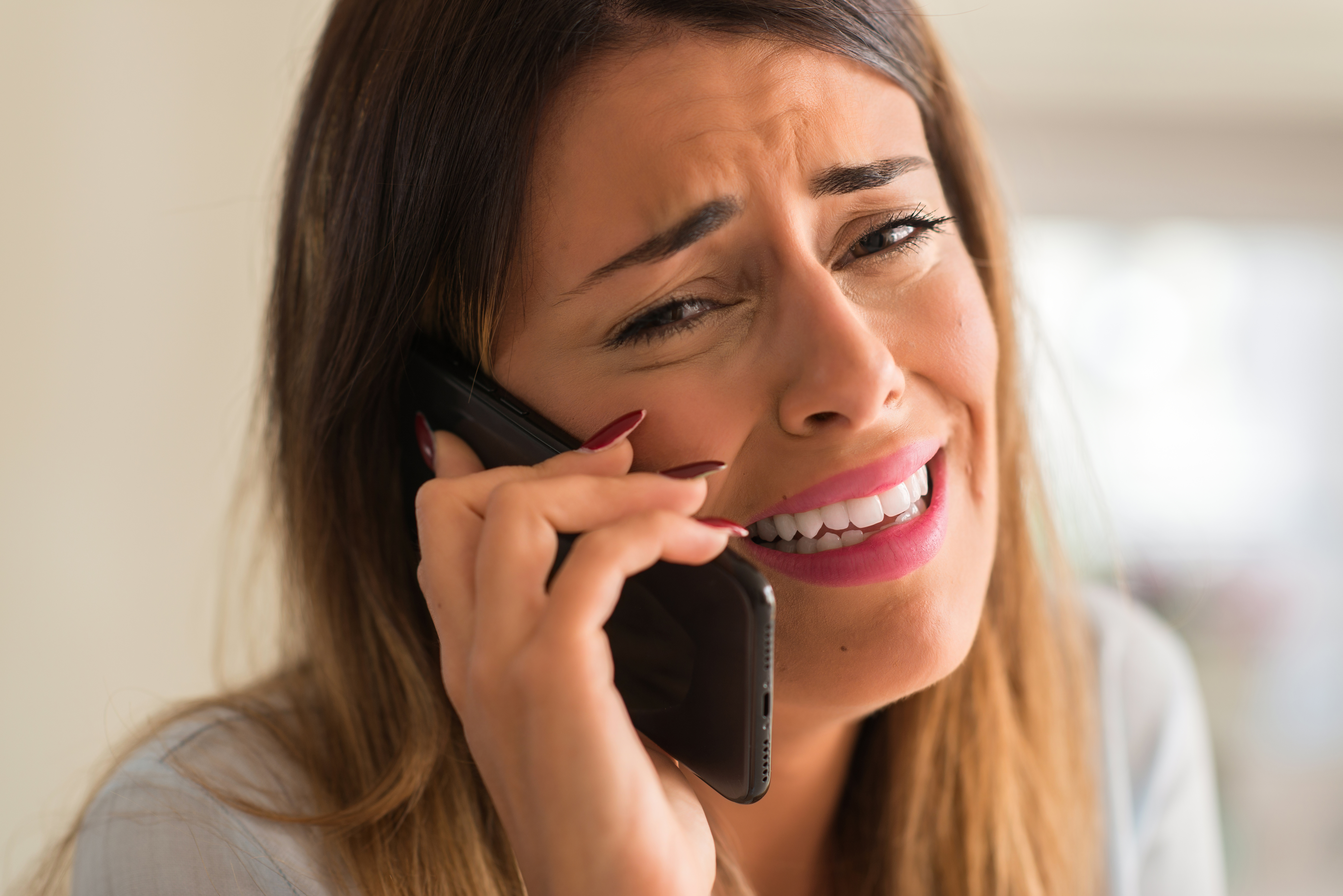
One thing I could do, and did, was call on a friend so I could let it all out. I’ve known him for years, and he’s seen this happen to me before. And, wonder of wonders, one of the first things he asked was whether I needed advice on my problems or just a listening ear. I chose the listening. What I needed most at that point was to let it all out. And I did.

Once that happened, I was able to pick myself back up and start coming up with solutions. Moving money around. Getting a lawyer. Gathering phone numbers and making calls. Taking notes. Helping my husband calm down when he was having a panic attack and a meltdown of his own.

Another thing I did was reconnect with my therapist. I hadn’t had a session in a few years. She had moved to another practice, I was fairly stable, and our sessions had gotten shorter and shorter because I just didn’t have issues that needed addressing. I had sensibly put the new practice’s number in my phone, just in case. I used it, and within a day heard back from her. I have an appointment scheduled for next week.

I know I’ve done the right things, the things most likely to help resolve the problems, but somehow that doesn’t help yet. I need to get all the assorted crises worked out or at least put on hold before I can return to something resembling stability. Next week will be a rough one, and my phone friend may just get another call. I don’t want to overburden him, but honestly, it’s been years since he’s dealt with me in the middle of a meltdown. I anticipate that Monday will be particularly difficult, with two crises, one major and one relatively minor coming to a head then.

I’m trying to shut down my emotions as much as possible in order to get through all this. I know that’s not ideal, but honestly, I don’t see how I’ll manage without doing that. Of course, that makes the meltdown afterward more likely and potentially more severe. I need to make sure that all my meds are refilled and try to establish a better sleeping schedule, which has been eluding me lately.

Time to make phone calls now, and more later. Wish me luck.

When You’re Threatened

We’ve all heard the phrase fight-or-flight and know generally what it means—the two basic reactions to threats. The fight-or-flight response to threats was a literal life-saver for our ancestors. If they were being attacked by a saber-tooth tiger, for example, their best bets were to try to kill it or to run away from it. It was a simple matter of survival.

Nowadays, however, we don’t find ourselves in that sort of situation very often, unless we encounter a bear or other dangerous animal. For most of us, the obvious response is to run away. There have been accounts of people who were able to fight off mountain lions, but most times, it’s just not realistic to fight unless there’s no other choice.

But when it comes to psychology, the fight-or-flight response often refers to a response to a verbal or emotional attack. When someone yells at you, you can either fight back by attacking them verbally too, or by running away, leaving the situation. Fighting back is usually counterproductive and fleeing is sometimes not physically possible or only a temporary solution. If you’ve been in a physically or emotionally abusive situation, you know what I mean.

There are other reactions to threats that are possible, and they’re not usually under your control. The first is to freeze. Of course, this would not be a very good reaction to a vicious animal unless you believe it won’t attack if you don’t move either toward or away from it. If the attack is already underway, freezing prevents you from trying any other, potentially better, reaction.

It’s not a very helpful response to a psychological threat, though. It can make the other person escalate their behavior. I’ve experienced this in the case of someone who was emotionally abusive. I froze and couldn’t respond to what he was saying. He responded by saying he wanted to kick me when I didn’t answer. We were on the phone, though, so he had no way to do it at the time. And by the time we were back home, he didn’t repeat the threatening remark, which I now realize was a verbal threat only, an expression of anger but not an actual threat of physical violence. At the time, though, it was frightening. If anything, I froze more.

The other potential reaction to a threat (and one that also begins with f) is to fawn or try to appease the threatening person. You give in to what they’re saying or promise to do better. You could retreat into people-pleasing mode and try to defuse the conflict that way. Or you could try to smooth over the situation with expressions of love and devotion.

This isn’t a very helpful response, either. Basically, it gives the threatening or abusive person what they want—compliance and “good behavior.” It may defuse the situation in the present moment, but it can set up a pattern in which you always respond with self-blame or praise for the abuser.

Fawning can be a tactic that you learned in your early childhood. If your parents or caregivers withheld praise or insisted on superior performance, you may have learned that you had to “perform” in order to receive love. That trait can persist in adulthood.

Another reaction that’s been suggested is “face.” This is proposed as the preferred reaction to verbal or emotional threats. It means standing firm when a threat of this kind happens. Admittedly, it seems to be the most mature option, a choice rather than an automatic reaction. And it could disarm the threatening person since you don’t react in an expected way to the threat. But the “face” reaction takes practice. It doesn’t come naturally to someone who feels truly threatened. And it can be read as defiance, which could escalate the situation.

Still, facing the threat preserves a person’s self-esteem and sense of agency. And for those reasons, it’s worth a try, if you feel it’s safe.