Bipolar 2 From Inside and Out

Posts tagged ‘brain illness’

We Don’t Talk About It
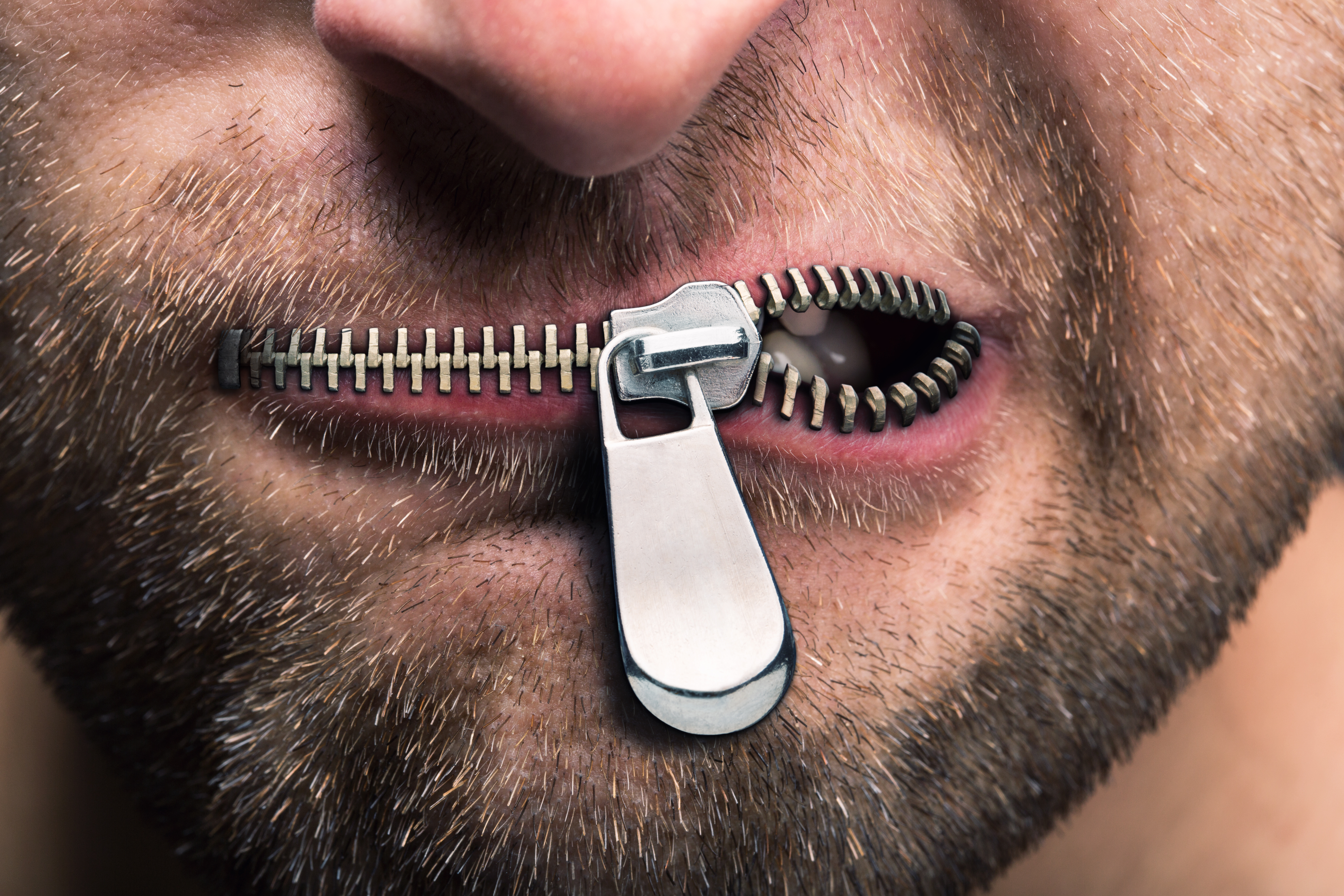
When I was first diagnosed with depression (later bipolar disorder), my family was somewhat less than understanding. My father was concerned that he might have to go to family counseling, with the implication that it would involve analyzing or blaming him. My mother informed me that Prozac, which I was prescribed, was “a ticking time bomb” and later said that she thought that if I got a better job, I wouldn’t be depressed anymore. And my sister was dismissive about paying someone a lot of money just so I could talk.

I admit that I did not handle this terribly well. I missed the opportunity to educate my family about these psychological conditions. (I did tell my sister that I was going to a community mental health service that had a sliding scale for payment.) In my defense, I was new to the concepts too, and had barely begun to educate myself about them. I did gradually learn more, but their initial reactions kept me from saying much about it to my family.

As stigma goes, this was pretty mild. They didn’t try to tell me there was nothing wrong with me. They didn’t blame or shame me for reaching out for therapy (other than my sister). But because of this, I didn’t receive much support from my family which would have made my journey easier. That only happened when I married a man who knew something about psychology and learned what would help and what wouldn’t.

Stigma can be a familial problem, but it also happens at a societal level. But mental health concerns are very low on the list of many legislators’ concerns and priorities. Some have denied that mental illness even exists or responded to it by clearing away the unhoused or creating sober houses. Mental illness is seen as a consequence of PTSD, which is talked about mostly in the context of veterans, seldom about other causes like abuse. Also, most of the fundraising for veterans seems to concentrate on limb loss and traumatic brain injury. If funds are going to specific mental disorders other than PTSD, it isn’t emphasized, despite the need.

A lot of what we hear about mental illness is about SMI or serious mental illness. And that often gets conflated with the problems of homelessness, addiction, and violence. But what about all the people with Major Depressive Disorder, Bipolar Disorder, Anxiety Disorders, Personality Disorders, and even Schizophrenia who live in homes and families, who have families of their own, and who have jobs? They’re very rarely talked about. They don’t get emergency funding. They don’t require street psychiatry, emergency housing, forced commitment, and other services that are needed for the most severely ill. They’re not high-profile.

They’re called “high-functioning” and then largely ignored, left to deal with their disorders on their own. Many of them miss out on the therapy, meds, and lifestyle changes that might help them, either because they don’t know where to go or don’t have the funds to access them. Insurance pays for quick fixes of 6-8 weeks, which are the merest band-aid on their problems. Supportive families, biological or chosen, can help them maintain their relationships, living situations, and jobs, but public attention isn’t focused on them in any meaningful way. There are ad campaigns that say “It’s okay not to be okay” and encourage friends to reach out, but they’re vague and short on what to do when you realize you need help. Hotlines focus on suicide and self-harm. They’re certainly needed, but so are resources for the day-to-day, less dramatic disorders.

Stigma, confusion, lack of education, ignorance, and even hostility keep us from the conversations that might lead to actual, useful change. Let’s open up those conversations with our families, friends, coworkers, the press, local and national government, and anyone else who’ll listen. Blogging and maintaining a Facebook group (Hope for Troubled Minds) are among my contributions to the effort.

I’ll keep trying if you will.

Does It Matter What We Say?

Words matter. I preach that all the time. Language is what gives our thoughts reality and how we make essential connections. Ideas become more concrete when they have words attached to them. It’s hard – perhaps impossible – to convey a thought without language of some kind. And how we use words is dependent on how and what we think.

Words matter. Think about how the terms “rioters” and “protesters” reveal a person’s opinions about the motivations of the people in the “mob” or “crowd.”

Words matter. Our community has been pushing back against words such as “psycho” and “crazy” when it comes to referring to people who need psychiatric help. Many people are gradually realizing that such words are equivalent to slurs and are no longer acceptable. (Except in the aftermath of violence, of course. Then, those terms are tossed around indiscriminately.)

Words matter. But how do we in the community refer to ourselves? What words are advocates using? And how do we want the general public to refer to psychiatric problems?

I’ve written before about the terms “behavioral health” (bad) and “mental illness” (better). But what’s best? Increasingly, the words du jour are “brain illness” and “brain disease.” We’re watching linguistic change in action.

But linguistic change happens at a glacial pace. Words that were used in Elizabethan England are still used today. Think about all the words and phrases that Shakespeare invented that are still used today, and with the same meanings – unreal, lonely, and green-eyed (as in jealousy), for example.

Linguistic change, on the other hand, also happens blindingly fast. Slang, tech terms, and jargon in particular appear and disappear in the blink of an eye (as it were). Think about the terms that refer to female beauty. There were times when “phat,” “fresh,” and “fly” were all applied to women. (Yes, I’m dating myself. I don’t even know what the current term is, but I bet it’ll be gone next month. At least I know that “fire” has replaced “awesome,” “boss,” and “da bomb.”)

So, where are we in the (something) community now that we’ve left “behavioral health” behind? “Mental health” was the clear frontrunner for a time. Then it was “mental illness,” then “serious mental illness.” Now the term being put forward is “brain illness” – or even “brain disease.”

I’ve talked about the implications that various words have. What are the connotations of the new terminology? “Mental illness,” as opposed to “mental health,” drives home the point that “mental health” is a euphemism. It’s not health that’s the problem – it’s the opposite of health. “Brain illness,” as opposed to “mental illness” says that the problem is not in the mind, it’s in the brain.

I think that’s a tough concept for the general public to take in. To most, the mind and the brain are synonymous. Whether that’s accurate or not is hard to say. It’s true that the brain is the physical embodiment of thought, emotion, and cognition. These things can’t exist separate from the brain. They are so intertwined that it’s hard to think of one without the other – especially for laypeople.

But “mental illness” implies that the mind – the thinking – is what is disordered. “Brain illness,” on the other hand, says that the problems lie in the functioning – the physical structure – of the brain. In my opinion, it’ll be tough sledding to make the public understand the sometimes subtle difference between the two.

Recently I saw an online post that decried the fact that advocates and professionals aren’t yet using the terms “brain illness” and “brain disease.” And there’s some truth in that. My own therapist doesn’t. But practitioners are engaged in dealing with the general public as well as those in the community. There’s something to be said for addressing those people in language they understand better. There’s the possibility that when hearing “brain disease,” most people will think “brain tumor” rather than what we are really talking about. And there’s the problem with the slowness of linguistic change.

Words matter. But so does the speed of change. Of course, if we want to change the dialogue, we need to use more accurate terms to promote our message. But it’s probably too soon to expect everyone to be on board. I’m not saying that we should give up on the process of fostering change. I am saying that we shouldn’t be beating each other up for not yet having made that progress, even among ourselves. It’s a process, and not everyone progresses at the same rate.

Incremental change is better than none. Indeed, unless you’re talking about a fad, it’s the only way change happens. And we’re not talking about a fad here. We’re talking about a fundamentally new understanding of what it means to have schizophrenia, bipolar disorder, major depressive disorder, and other illnesses.

That’s going to take serious time.

Keep This Blog Alive!

Choose an amount

¤2.50
¤5.00
¤10.00

Or enter a custom amount

¤

Your contribution is appreciated.

Donate

How Do We Talk About Mental Illness?

Language matters. What we call things matters. Does language shape thought or does thought shape language? Either way, both are important when it comes to brains.

The latest discussion in the debates over language is what to call mental illness (which is what I’m used to saying). Many of the words and phrases that have been in use for years no longer seem quite accurate.

Take mental health, for example. When policymakers talk about subjects like mass violence, they often speak of “mental health issues” and what should be done about them. The thing is, if someone is mentally healthy, nothing really needs to be done about that. But mental illness is a term that doesn’t sound so easily addressed. Policymakers are notorious for using language that soft-pedals actual problems. Not to mention the fact that when they talk about mental health, they’re usually talking about addiction issues or homelessness (though they still aren’t particularly effective in addressing those either).

Mental health is still a better term than “behavioral health.” I remember when community treatment centers and insurance programs were called behavioral health plans. Again, there was a lot of lumping psychiatric illnesses and addiction together. It was also wildly inaccurate. It was not the behavior that was unhealthy (the way smoking is). Behavior may have looked like the problem, but it wasn’t the cause. Something to do with thought or the brain was. Also, there was no equivalent term “behavioral illness.” That wouldn’t even make sense.

So. We have mental illness as the term currently most used, with SMI (Serious Mental Illness) often used for disorders like bipolar and schizophrenia. Lately, though, there has been a push to replace those terms with “brain illness.” (The companion term is “brain health.”) It hasn’t caught on yet with the general public, though it’s gaining some traction among practitioners, advocates, and those affected by assorted conditions. I’ve heard some people are frustrated that it hasn’t caught on more widely already. They feel the process is going too slowly.

Calling schizophrenia, bipolar, and other disorders “brain illnesses” certainly makes one sit up and take notice more than “behavioral health.” And it jibes with the notion that these mental disorders (there’s another term) are caused by something going wrong in the brain. This is not without controversy, however. There are those who think that referring to depression or bipolar disorder as “chemical imbalances” in the brain or faulty neurotransmitters (or their receptors) is inaccurate. There are various theories as to what causes these conditions, all the way from childhood trauma to gut bacteria. To me, the most likely scenario is that there’s a combination of brain-related factors and environmental influences at work here. Nature and nurture, in other words.

Brain illness is certainly an attention-getting term. That should make it more likely to catch on with policymakers, but I suspect it won’t. It’s not a comfortable concept and there are no easy-sounding solutions to it. I doubt that it will catch on with the general public either. We still haven’t gotten people to move away from crazy, insane, maniac, psycho, or even nuts and stop throwing them around indiscriminately. Hell, we haven’t even been able to convince people that psychiatric institutions don’t use straightjackets anymore.

Does “brain illness” make these conditions sound more treatable? Is it likely to increase compassion for those who have them? Is it likely to make any kind of a difference? I don’t think we’ll really know until it penetrates the consciousness of the person-on-the-street. And I have my doubts about when or if that might happen.

Keep This Blog Alive!

Choose an amount

¤2.50
¤5.00
¤10.00

Or enter a custom amount

¤

Your contribution is appreciated.

Donate