Bipolar 2 From Inside and Out

We’ve all heard the phrase fight-or-flight and know generally what it means—the two basic reactions to threats. The fight-or-flight response to threats was a literal life-saver for our ancestors. If they were being attacked by a saber-tooth tiger, for example, their best bets were to try to kill it or to run away from it. It was a simple matter of survival.

Nowadays, however, we don’t find ourselves in that sort of situation very often, unless we encounter a bear or other dangerous animal. For most of us, the obvious response is to run away. There have been accounts of people who were able to fight off mountain lions, but most times, it’s just not realistic to fight unless there’s no other choice.

But when it comes to psychology, the fight-or-flight response often refers to a response to a verbal or emotional attack. When someone yells at you, you can either fight back by attacking them verbally too, or by running away, leaving the situation. Fighting back is usually counterproductive and fleeing is sometimes not physically possible or only a temporary solution. If you’ve been in a physically or emotionally abusive situation, you know what I mean.

There are other reactions to threats that are possible, and they’re not usually under your control. The first is to freeze. Of course, this would not be a very good reaction to a vicious animal unless you believe it won’t attack if you don’t move either toward or away from it. If the attack is already underway, freezing prevents you from trying any other, potentially better, reaction.

It’s not a very helpful response to a psychological threat, though. It can make the other person escalate their behavior. I’ve experienced this in the case of someone who was emotionally abusive. I froze and couldn’t respond to what he was saying. He responded by saying he wanted to kick me when I didn’t answer. We were on the phone, though, so he had no way to do it at the time. And by the time we were back home, he didn’t repeat the threatening remark, which I now realize was a verbal threat only, an expression of anger but not an actual threat of physical violence. At the time, though, it was frightening. If anything, I froze more.

The other potential reaction to a threat (and one that also begins with f) is to fawn or try to appease the threatening person. You give in to what they’re saying or promise to do better. You could retreat into people-pleasing mode and try to defuse the conflict that way. Or you could try to smooth over the situation with expressions of love and devotion.

This isn’t a very helpful response, either. Basically, it gives the threatening or abusive person what they want—compliance and “good behavior.” It may defuse the situation in the present moment, but it can set up a pattern in which you always respond with self-blame or praise for the abuser.

Fawning can be a tactic that you learned in your early childhood. If your parents or caregivers withheld praise or insisted on superior performance, you may have learned that you had to “perform” in order to receive love. That trait can persist in adulthood.

Another reaction that’s been suggested is “face.” This is proposed as the preferred reaction to verbal or emotional threats. It means standing firm when a threat of this kind happens. Admittedly, it seems to be the most mature option, a choice rather than an automatic reaction. And it could disarm the threatening person since you don’t react in an expected way to the threat. But the “face” reaction takes practice. It doesn’t come naturally to someone who feels truly threatened. And it can be read as defiance, which could escalate the situation.

Still, facing the threat preserves a person’s self-esteem and sense of agency. And for those reasons, it’s worth a try, if you feel it’s safe.

One of the things that people who see a therapist dread is a breach of confidentiality. Fortunately, it almost never happens. Therapists have client-therapist confidentiality that forbids it. It’s like the seal of the confessional for priests.

There’s an exception, however, and that’s the Tarasoff warning. Here’s how it came to be.

Way back in 1969, a young woman named Tatiana Tarasoff, a student at the University of California, Berkeley, was murdered. The killer was Prosenjit Poddar, also a student at the university. They knew each other and had gone on several dates. Unfortunately, as happens way too often, the couple had differing opinions on where the relationship should go.

Poddar became obsessed with Tarasoff. She was no longer interested. So he began stalking her. He had an emotional crisis and began seeing a therapist at the university medical center.

So far, it’s a pretty typical story of a relationship, a breakup, and an extreme emotional reaction. However, it soon became much more than that.

One day, Poddar admitted to his therapist that he wanted to kill Tarasoff. (He didn’t refer to her by name, but her identity was clear). The therapist said that, if Poddar kept issuing death threats, he would have to be hospitalized. Poddar stopped coming to therapy.

The therapist was left with a dilemma as to what he should do next.

The therapist and his supervisor decided to write a letter to campus police regarding the death threats. The police interviewed Poddar in the room he shared with Tarasoff’s brother. When Poddar denied everything and said he would stay away from Tatiana, the investigation was halted. The supervisor instructed the therapist to destroy all his case notes.

Of course, Poddar continued stalking Tarasoff and confronted her. When she tried to run away, he stabbed her with the knife he was carrying, killing her. He was arrested, tried, and convicted of first-degree murder (though he had tried to plea-bargain down to manslaughter). He served five years and was deported to his native India.

Tarasoff’s parents sued the university and the therapists on the grounds that they should have warned their daughter about the death threats. The therapists countered with the client-therapist confidentiality argument and won. Later, however, the case was retried and this time, in 1976, the Tarasoffs prevailed.

Since then, over half of US states have enacted “Tarasoff laws.” Others leave the decision up to the therapist. And Maine, North Carolina, North Dakota, and Nevada have specifically ruled that Tarasoff laws don’t apply there. The laws are still controversial. For one thing, the university therapists did call the campus police. For another, it leaves the burden of deciding whether a threat is credible solely on the therapist. And it left it up to the therapist whether to breach confidentiality. And there have been debates on whether Tarasoff warnings should be given regarding threats of physical violence that fall short of murder.

So, what’s a therapist to do? Warn clients that if they make threats, they’ll be reported? That can have the effect of causing the client to leave therapy. Guess—and it really is a guess—whether a threat is real or perhaps a fantasy? Err on the side of caution? Give priority to the confidentiality requirement? Risk a malpractice lawsuit brought by the client if the therapist does report the potential threat? A wrongful death suit for not acting in time?

Which prevails: the duty to warn a potential victim or the duty to preserve confidentiality? And is it a duty to warn or a duty to protect? (These distinctions have been made in some places.) We’ve become used to the phrase “harm to self or others” when it comes to involuntary treatment. But this question goes further. What does a therapist owe to a specific individual who may be killed? Sectioning the client? Reporting the threat to the police? Directly warning the potential victim?

It’s an awful lot to place on the shoulders of a therapist: determine the reality of a threat, make a prediction about future violent behavior, and determine an appropriate response. Weighing patient confidentiality and harm or death to another is a huge burden. But in the interests of there never being another Tarasoff-style murder, I’m coming down on the side of the duty to warn.

Loneliness Reigns

For some of us, those with bipolar disorder, depression, agoraphobia, and anxiety, it’s like the COVID restrictions were never lifted. We remain at home as if we were still sheltering in place. We’ve lost touch with many of the people in our lives. The thin threads of social media aren’t enough to provide solid connections, though we’ve had practice during the pandemic.

There’s also the “reaching out” problem. We’re perpetually advised to reach out to others when we’re lonely or having difficulties. But of course, reaching out is too much to expect for many. Often, we’re not even able to make a connection when someone reaches in. Whether it’s a matter of not believing that we’re really worth someone else’s time or being submerged in misery, the loneliness of depression or anxiety does not allow us to respond.

Lately, though, there have been a lot of headlines and articles saying that America in general is experiencing an epidemic of loneliness. I don’t know about you, but for me, loneliness is nothing new. Depression does that to a person, even if loneliness is not one of the diagnostic criteria in the DSM.

Of course, the articles point out that the loneliness epidemic coincided with the COVID epidemic. People were sheltering in place, many working from home. We couldn’t get out and see our friends or go to school, church, or family gatherings. We missed weddings, birthdays, reunions, funerals. We missed seeing coworkers and friends. We even missed chatting with the people we encountered in our daily lives—nail technicians, servers, sales clerks, plumbers, and all the other people you don’t even think about missing until you miss them. Even our doctors and therapists took care of us online instead of in person.

But that’s largely over. What’s driving widespread loneliness now? Apparently, it’s a chicken-and-egg dilemma. Does loneliness come first? Do psychiatric illnesses? Recent research “suggests a correlation between loneliness and depressive symptoms, with one potentially leading to the other, although the causal direction remains unclear.”

The Journal of Clinical and Diagnostic Research has published a study that says there are three kinds of loneliness: situational, developmental, and internal. Situational loneliness involves environmental factors such as interpersonal conflicts, accidents, and disasters. Developmental loneliness appears with conditions including physical and psychological disabilities. Internal loneliness is associated with “personality factors, locus of control, mental distress, low self-esteem, guilt feeling, and poor coping strategies with situations.” Two other kinds of loneliness have been reported as well: emotional and social loneliness. It seems to me that those are the two that are behind the “loneliness epidemic” that headlines tout. Among the psychiatric and other disorders they say are associated with loneliness are depression, suicidal ideation, personality disorders as well as bereavement, Alzheimer’s, and physical illnesses.

The research is all well and good, but what’s to be done? The usual remedies don’t work very well. The report cited above recommends developing social skills, recognizing maladaptive social cognition, giving social support, and developing opportunities for social interaction. Not much help there. The last two rely on other people to provide intervention, which is obviously uncontrollable by the person experiencing loneliness. And the first two require therapy of one sort or another.

At any rate, the continued advice of the general public remains, “Cheer up,” “Get out more,” and variations on “Get over it,” as if the loneliness were the sufferer’s fault. Antidepressants may help but they don’t attack the root cause of social isolation. There are still social media, which help me a lot. But I interact with various people and groups, which not everyone is able to do. My husband gets me out of the house at times, usually with the lure of a restaurant meal. And that primarily connects me with the person I’m already most in contact with. He’s my social support. I have a high school reunion coming up, with a number of different events scheduled, but so far I’ve only talked myself into the most casual one.

Am I lonely? At times I am. But my loneliness is not the overwhelming sort that attacks many people. There are some ways to ameliorate the condition, but most of them require getting out of the house, which many lonely people are simply unable to do; having good friends who reach in (assuming that we have the wherewithal to reach back; and the long, slow slog of antidepressants and therapy, which may or may not “cure” the problem. Advertisements are beginning to address the problem of loneliness with advice to reach in and talk to friends and acquaintances who aren’t doing well, those these are minimal compared to all the ads for the latest drugs.

Obviously, there are other aspects of brain illnesses that the experts are working on more vigorously. But I, for one, hope that more research and interventions can be devoted to solving the problem, not just defining it.

Their names were Sarah, Edna, Wilma, and Helen Morlok, but they went down in psychiatric history as the Genain quads, Nora, Iris, Myra, and Hester, thanks to papers and books written about them at NIMH, where they lived for a while. NIMH was interested because all four girls developed schizophrenia.

Born in 1930 in Lansing, Michigan, the quads first became famous for the undeniable fact that they were four identical little girls. Their appeal was irresistible (at least until the Dionne quints came along in 1934). Unlike the five Dionne girls, the Morlok girls were not swept away to an institutional setting—at least not yet. They lived at home with their parents Sadie and Carl (who was appalled at their birth, comparing their mother to a “bitch dog”), under the scrutiny of the inquisitive, possessive townspeople around them. They wore identical outfits, of course, and performed tap dance and comedy onstage.

The girls seemed to provide evidence that schizophrenia was caused by a faulty gene or genes. Now, however, psychiatrists are exploring the effects of trauma in contributing to schizophrenia. And the Morlok girls had plenty of trauma. Nowadays, we would say they probably had C-PTSD. Their father was abusive to them and their mother. The youngest and smallest, Helen, came in for particular physical, emotional, and sexual abuse, along with her sister Wilma. Helen’s propensity for masturbation and sex play with Wilma led to both of them being tied to their beds at night and subjected to clitoridectomies.

The trauma continued into their schooling, when the girls were molested by a janitor and a teacher. Helen was considered slow and never graduated high school, but her three sisters did and went on to hold secretarial jobs. All were victims of attempted or actual sexual assault on the job, but were disbelieved or dismissed. Their schizophrenic tendencies may have begun in their teen years, but by the time they entered the world of work, they were having hallucinations and delusions, as well as the very real perceptions that they were still being abused.

The family members were all relocated to NIMH, the National Institute of Mental Health (part of the National Institutes of Health), where they lived, underwent extensive testing, and eventually were treated with Thorazine and other antipsychotics as they became available. Although the quads’ parents had raised them with an extreme fear of romantic relationships and sexuality, some of them found boyfriends at the facility. They were treated mostly by Dr. David Rosenthal, who formed a bond with the sisters and even visited them in Michigan after they left the institution.

One of the sisters, Sarah, was relieved of her symptoms to the extent that she was able to marry and have two sons. The other three lived at home, or independently at times and sometimes with one of their sisters. As of June 2023, Sara Morlok Cotton was still alive, living in an assisted living facility.

The book Girls and Their Monsters: The Genain Quadruplets and the Making of Madness in America by Audrey Clare Farley goes beyond the facts of the quads’ lives, however. It also explores the societal trends that affected the understanding of brain illnesses and trauma over the years. The book covers topics including structural racism and the civil rights movement. (Malcolm X’s mother, Louise Little, is featured in the book as a contrast to the Morloks. Little was institutionalized for 25 years when she was deemed incapable of caring alone for her eight children during the Depression.)

The gradual realization that incest and sexual abuse were rampant in society and their effects were decried in the book, as were the religiously repressive ideas of child discipline and the anti-feminist/anti-daycare agendas of the “Satanic Panic.” These societal developments as well as “recovered memories” were implicated in the treatment of those with brain illnesses. And, of course, John F. Kennedy’s legislation regarding community mental health and Ronald Reagan’s dismantling of it highlighted the lack of options for those with schizophrenia in particular.

Girls and Their Monsters also follows the development of psychiatry, from the days when schizophrenia was thought to have a biological origin to latter-day genetic theories that fueled the interest in the Morlok quads. The role of trauma in causing schizophrenia was also discussed. There was no treatment available until the advent of Thorazine, Compazine, and other powerful psychotropics. The role of psychotherapy is not mentioned, largely because of the predominately biological approaches to treatment.

The book covers a lot of territory in its brief pages. It makes for fascinating reading, even if there are no definitive answers. The sisters’ stories provide a mixture of tragedy and hope. Debilitated by their disorder, most of them managed to construct for themselves a life apart from the ravages of schizophrenia. None of them became homeless, and they were never permanently institutionalized. Their lives were difficult, but ultimately inspiring. The Morlok sisters’ struggles show the resilience of the human spirit, even while they lived with one of the most feared and misunderstood illnesses of their—and our—time.

Anxiety about health is a common phenomenon. It’s only natural to worry about the human body breaking down, especially as one ages. But how much anxiety is too much? How little is too little?

When anything goes awry with my body, I get panicky. I catastrophize, imagining the worst. I have anxiety disorder in addition to bipolar, so that’s not surprising.

Once, for example, I woke up in the middle of the night with something strange happening to my arm. There was a hard spot along the side of it the size and shape of a cuttlefish bone. Instantly, I got dressed and headed to the emergency room. They took x-rays (which were ambiguous) and sent me home. If I hadn’t been so panicky, I would have realized that the problem could easily have waited until the next morning or whenever I could get in to see my doctor. But I was frightened and anxious because it was something I had never heard of and couldn’t explain.

It turned out to be sarcoid, which was treated with steroids. (There was also a spot of it on my head, which my doctor biopsied, so I now have a divot on my forehead.) The sarcoid backed off, leaving me embarrassed at having reacted so strongly.

My husband, who doesn’t have anxiety, is just the opposite. He takes injuries and illnesses much more lightly. He’s a bit accident-prone, often cutting himself or otherwise mangling his fingers and hands cooking or doing repair work. I used to have to burst into tears to get him to go for treatment, stitches, or whatever was called for. He would wrap the injury in a paper towel and some duct tape, which I understand is a guy thing. (A heart attack that he almost waited too long to get help for changed his ways. Now I don’t have to cry. He goes to the ER as needed.)

Now, however, we’re facing more serious medical possibilities. I won’t go into Dan’s, since he’d prefer to keep that story private, but it’s Big Life Stuff.

I have plenty of anxiety to talk about. Over the past few years, my knees have been getting worse and worse. At first, it only affected my balance, which was enough to make me anxious right there, fearing that I would fall in public. I started using a cane. I did fall once, at a student union where my therapist’s office was located. A flock of young women (nursing students?) swooped in, picked me up, and offered me a hot beverage. Ever since, my anxiety about falling has increased, exacerbated by a couple of falls at home.

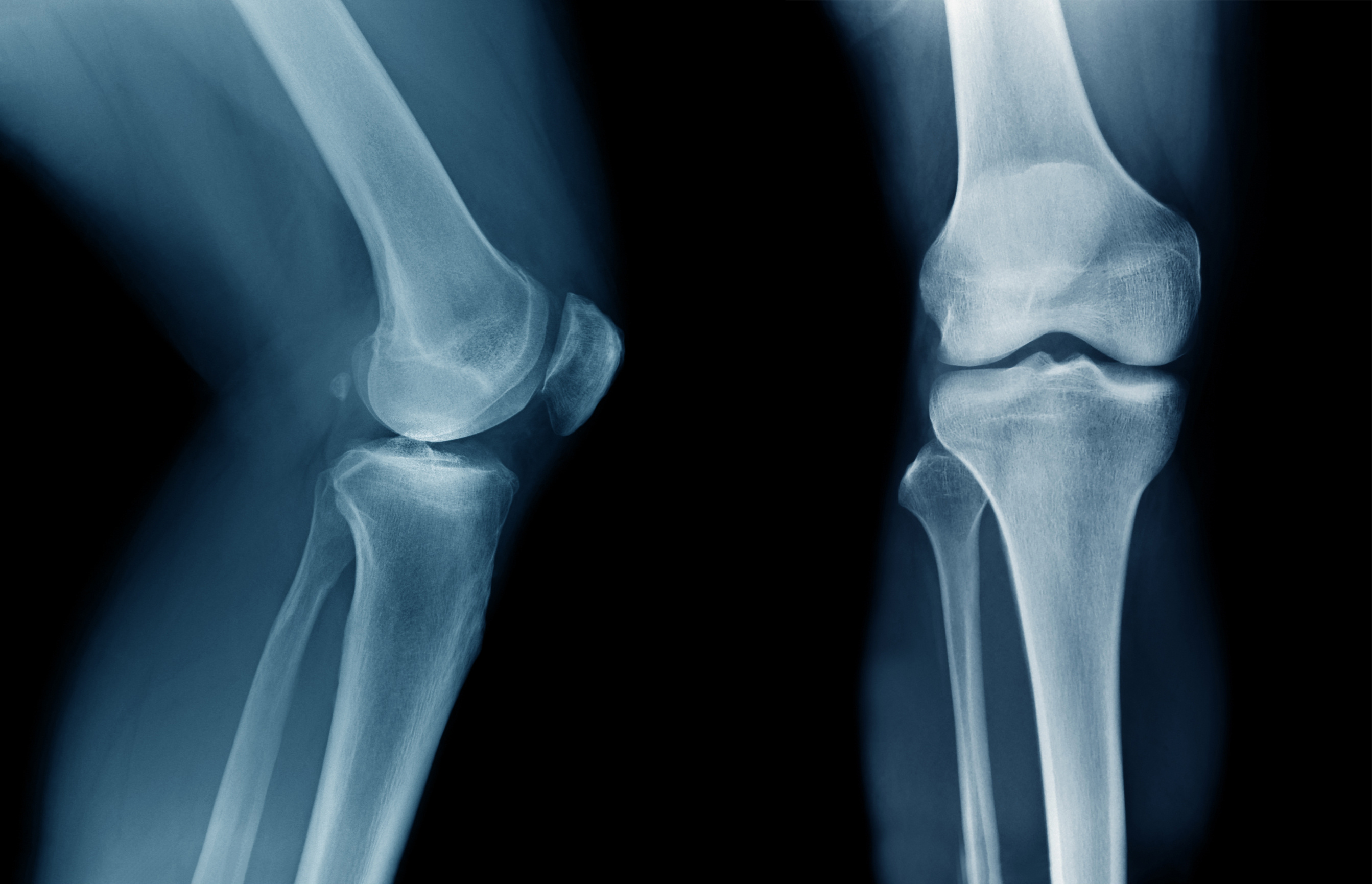
Now, however, I’m facing more serious anxiety. My knees have deteriorated to the point that I need steroid shots every six weeks and am afraid to walk. (The doctor’s words were “bone on bone.”) The steroids work for now but won’t last. Eventually, I’ll have to get both my knees replaced. And that ramps up my anxiety to new levels.

Today, I stumbled on the stairs and my left knee almost gave out. My right knee took up the slack, but I envisioned myself lying in a heap at the bottom of the stairs. Since then, my left knee has been twinging, and I’m doubting its ability to hold up until the next round of steroids.

The orthopedist says I could need the knee replacements anytime from six weeks to six years from now. So, of course, I’m anxious that it will be sooner rather than later. I’m catastrophizing, envisioning weeks lying immobile on the couch, taking pain pills, and unable to care for myself. I understand that the doctor said it might not happen for years, but I’m reacting as if it will be next month.

To me, this is Big Life Stuff, and not just because it’s a major operation (two actually, one for each knee). I fear losing control of my body. I worry that knee replacement won’t help. I anticipate going downhill rather than improving. It’s not that I don’t trust my doctors. I’m just consumed by anxiety. I’m looking at ads for mobility scooters and fold-out chair-beds for my study. I can’t envision a future in which things will be any better.

I’m being crippled with anxiety about being crippled. And no amount of reassurance, education, or time is lessening it.

Review: Bipolarized

My husband pointed out to me a movie available on one of our streaming services—Bipolarized: Rethinking Mental Illness, a 2014 documentary created by Ross McKenzie, a man who was diagnosed with bipolar disorder himself. In the film, he documented his journey to find treatments other than drugs for his condition. I watched it with interest and wanted to share my impressions with you. (IMDb gave it 5.7 out of 10 and said it “challenges conventional wisdom about mental illness and drug therapy through the raw personal journey of a man diagnosed as bipolar.”)

First, full disclosure: I take psychotropic medication (though not lithium, the villain of this piece) and am very satisfied with the results. However, I know that not everyone has the same experience and that there are people who are virulently against it. I’m not here to debate that today. I want to share what I learned from the movie.

The film follows McKenzie—not always in linear fashion—through his experiences with mental illness, psychotropic medications, and natural treatments. I’ll do my best here to unravel the chronology. The child of a seemingly perfect Canadian family (and more on that later), McKenzie experienced a psychotic break in 1993 when he gave away his money and clothes to street people in New York City and thought he could fly off the Empire State Building and land safely. His family convinced him to come home and were shocked at his manic behavior. At first, he was diagnosed as schizophrenic and hospitalized.

McKenzie escaped from the hospital, barged into a stranger’s house to use their phone, and ended up running down the street naked until he was subdued by police, taken back to the hospital, and put in a straightjacket in a padded room. (I didn’t know they still did that, even in 1993.) These scenes were recreated for the film.

At some point (I’m not too clear on this) his diagnosis was changed to bipolar disorder and he was given lithium. McKenzie became anhedonic, and the doctors told him this was it for the rest of his life—lithium and never accomplishing much of anything.

Determined to get his life back, McKenzie began a journey to heal himself through natural means. In 2010, he went through a lithium detox in Costa Rica. He notes that he had already tried to wean himself off lithium unsafely, making him debilitated and depressed. In Costa Rica, his detox included screaming headaches and vomiting, but was successful in getting him to kick lithium.

Next, McKenzie went to a naturopath who diagnosed him with lithium toxicity (two and a half years after he kicked it in Costa Rica) and prescribed a series of 30-40 chelation treatments to get the substance out of his system. The doctor measured his neurotransmitter levels, his bloodwork, and his kidney function for residual effects of the lithium. He also noted that McKenzie had high levels of lead and mercury (though those don’t come from lithium) and treated him for those as well.

McKenzie then traveled to Colombia, where he was treated by a shaman/psychic/psychic surgeon. It involved lying on a bed for two hours, covered in sheets of aluminum foil which were later bundled up and spit on, and meeting with his deceased father’s spirit. When back in the US, he also sampled cupping, acupuncture, and yoga, which he said helped ground him.

Other scenes in the movie include a parody commercial for “addictarin,” with McKenzie frolicking in a lawn sprinkler and sharing ice cream with a dog, before a crawl of “side effects” ran on and on, ending with death and halitosis. There was a visit with a former big pharma rep who had since denounced the system that she said was designed to addict people to psychotropics. There was footage of a protest outside an APA conference in Philadelphia which included marchers holding signs and chanting, “Hey, hey, APA! How many kids have you killed today?” McKenzie also interviewed debunker Robert Whitaker, author of Mad in America and Anatomy of an Epidemic.

At last, McKenzie saw Dr. Charles Whitfield, who said that half of patients with a psychiatric history of drugs and trauma actually have PTSD. Whitfield said McKenzie was never bipolar. Another practitioner, Peter Levine, a somatic therapist, worked with McKenzie in front of an audience to explore his family of origin and surface memories of his domineering, abusive father. One exercise involved imagining both himself and his father as seven-year-olds interacting.

The film, although it won awards, was not universally lauded. A review by H. Steven Moffic in Psychiatric Times titled “Warning: This Movie May Have Psychiatric Side Effects,” called the film a “movie selfie” and pointed out that there was no mention in it of conventional psychotherapy—only drug therapy. It also noted that no mention was made of McKenzie’s family’s evident privilege, which allowed him to travel to Costa Rica and Colombia for treatment. Most of the review, however, cited the film’s polarizing effect, pitting alternative treatments against mainstream ones, and said that he would be “very cautious” about recommending it to patients or the public. (I can’t imagine who else would be interested. Maybe psychologists?)

All in all, it was a difficult documentary to watch at times, and I thought some of the treatments seemed unlikely to help (especially the “psychic surgeon”). I’ve heard most of the debunking of psychotropic drugs before, but this was particularly vivid in the film. I think its major value lies in exposing the traumatic effects of McKenzie’s going on lithium in the first place.

Ross McKenzie now offers “mental health coaching services,” and, as stated in his 2024 blog, specializes in people “disempowered by labels” whose “perceptions were distorted by powerful psychotropics.”

The Overwhelming Problem

screaming (Uma painting)It’s been said that time is nature’s way of keeping one damn thing after another from being every damn thing all at once. I know that taking things one at a time—eating the elephant one bite at a time—is a sound idea.

However, every now and then the damn things gang up on you. The elephant is starting to go bad and you have to eat all you can right away – to use a disgusting metaphor that I will not take any further. (You’re welcome.)

Last month was one of those months. They happen every so often. But if they happen very often, I tend to get overwhelmed. And when I get overwhelmed for too long, my brain breaks. I have a meltdown, or I decompensate, or whatever the proper psychiatric term is. In practical terms, it means that I’m severely depressed and non-functional, for longer than usual. Days. Weeks. Months. Even years.

The things that overwhelm me are quite predictable – financial difficulties, health problems, relationship glitches, and free-floating anxiety of all sorts, either my own or my loved one’s. I know that these are situations that cause difficulty for everyone, but to a person with bipolar disorder, they can seemor even be—insurmountable. Especially when they cluster and refuse to go away.

Over the years I have become good (or at least better) at recognizing when I am about to be overwhelmed. I know the symptoms—the whirling thoughts, the jumping-out-of-my-skin feeling, the insomnia, the inability to concentrate, and the feeling that doom or disaster is impending.

There is little I can do to stave off these feelings. But I know I have to. I have to keep functioning at some level, higher or lower, to maintain the things that I want to have – productive work, a loving relationship, a nice house, caring friends, and so forth. At the time of my last major breakdown, I came uncomfortably close to losing much of that.

I try my usual remedies for anxiety, of course. I distract myself. I color. I watch mindless TV. I play stupid clicky games on the computer. I turn off my phone. But if the anxiety builds up too much, if the feared disaster is real and really is impending, none of these works. The anxiety shreds my last nerve, and the depression starts to settle in. I isolate. I stay in bed. One task at a time, I stop being able to function.

I have taken one step that has helped, however. An anti-anxiety pill is one of my daily medications—one in the morning and one at night. A few years ago, as the stress was building and approaching overwhelming, I asked my psychiatrist if I could have permission to take one more a day if I needed it.

He agreed.

I have not needed to take the extra pill every day. Sometimes I take one in the mid-afternoon if I start feeling jumpy, twitchy, or panicky. Sometimes I take one at night if I haven’t gotten to sleep within 2 – 3 hours after taking my regular nighttime pills. I know it sounds strange that a depressant helps me stave off depression, but my diagnosis is actually bipolar disorder and anxiety disorder. The med catches me at the point where the one starts to turn into the other.

I’m glad my psychiatrist trusted me not to abuse what I consider a privilege as well as a necessity. By the time I made this request, of course, we had been working together for a number of years and had built up a certain trust. I think there have been only a couple of times when I have had to take two extra pills in a day—one in the afternoon and an additional one at night. And both times, I felt guilty about it and made sure I didn’t make it a habit.

I don’t want to start gobbling pills at the least sign of difficulty. All I want is to be able to eat my elephant in peace and in pieces.

We all hate side effects. They go from bad to worse to horrible. (A popular meme says that people wish they had side effects like multiple orgasms. Alas, no one’s invented a drug with that side effect yet.)

In my journey through the process of settling on reasonably effective medications, I’ve experienced a number of side effects, including violent nightmares, paranoia, and feeling numb all over. I switched to other meds, but really, those weren’t so bad.

Two of the worst side effects are Tardive Dyskinesia (TD) and Stevens-Johnson Syndrome.

TD, according to Penn Medicine, is “stereotypical involuntary movements of the tongue, neck, and facial muscles, truncal musculature, and limbs.” These movements “can range from slight tremor to uncontrollable movement of the entire body,” explains NIH. Basically, these movements often consist of facial movements like grimacing, sucking, sticking out the tongue, rapid blinking, and chewing motions. The bodily movements can include ones of the arms, legs, and pelvis, from tapping your feet or fingers to rocking the pelvis, swaying, and uncontrolled movements while walking.” (One description of it was “waddling.”)

The medications that can bring on TD include antipsychotics such as Haldol, Risperdal, Abilify, and Seroquel; antidepressants including (but not limited to) Sinequan, Elavil, and Prozac; antiseizure medications such as Lamictal and Dilantin; and, of course, lithium, particularly if taken along with other medications. (I’m currently taking meds in three of these categories and have in the past taken others, though never lithium. I’ve never experienced TD.)

You may have seen commercials on TV with information on treatments for TD. Although they’re designed to prevent a particularly troubling side-effect, they have side effects of their own. A list of these includes depression, suicidal thoughts, mood symptoms, heart abnormalities, allergic reactions, dizziness, weight gain, loss of balance or falls, stomach pains, frequent urination, and constipation. Oh, and there’s one more—uncontrollable body movements that may become permanent. That’s right. The anti-TD meds can cause exactly the symptom they’re supposed to alleviate. Sounds like a good deal to me. Admittedly, the incidence of these side effects is likely less than the incidence of TD from lithium, but would you be willing to roll the dice? Maybe you would, if there’s a chance it could protect you from TD. It’s up to the individual. Me? I’m not sure.

Another undesirable side effect is Stevens-Johnson Syndrome. It’s a condition that at first causes a skin rash that isn’t really itchy and often first appears around the nose and mouth or other mucous membranes. Unless you get immediate treatment, the rash can spread and turn into blisters and painful sores. It can develop into toxic epidermal necrolysis (TEN), a condition in which skin all over the body peels off. It’s potentially fatal. In 80% of cases, a psychotropic medication is the cause. (My psychiatrist prescribed me an antipsychotic particularly associated with the disorder and told me, “Don’t look it up on the internet. It’s gross.” Of course, I did look it up, and he was right. It is gross.)

I’ve had my bouts with side effects over the years. In every case, my doctor listened to me, weaned me off the drug that was causing the problem and titrated me up on a different one until we finally found a regimen that works. I’m fortunate that none of the side effects have been TD, Stevens-Johnson, or TEN. And I’m profoundly thankful.

The only advice I can give is to be mindful of the potential side effects of the drugs you take. On TV commercials, they run through them so rapidly and print them in such small type that they’re difficult to notice. But they matter. It’s your physical health as well as your mental health that’s at stake. If that means you need to do research on the internet, do it. I know there’s a danger that you’ll expect the side effects you read about but, in my opinion, it’s a trade-off worth making, especially with all the new drugs on the market and the potential severity of the side effects you’re facing.

You May Be Bipolar

If you take three different meds at night and two more in the morning…you may be bipolar.

If your therapist is on your speed dial…you may be bipolar.

If you know the difference between rapid cycling and ultra-rapid cycling…you may be bipolar.

If you have depression clothes and mania clothes…you may be bipolar.

If you’ve stayed in bed for three days and not gone to bed for three days…you may be bipolar.

If your significant other is also your emotional support animal…you may be bipolar.

If all your Facebook friends have psych diagnoses…you may be bipolar.

If your refrigerator door has 40 affirmations on it…you may be bipolar.

If you know who Gabe Howard is…you may be bipolar.

If you have a semicolon tattoo…you may be bipolar.

If you’ve ever watched a show with a bipolar character and said to yourself, “No, that’s not it”…you may be bipolar.

If Carrie Fisher is one of your heroes and you call her “Space Mom”…you may be bipolar.

If you’ve gone through a dozen medications trying to find one that works…you may be bipolar.

If you’ve ever felt depressed and jazzed at the same time…you may be bipolar.

If taking a shower is a major event…you may be bipolar.

If you keep a box of Cocoa Puffs beside your bed…you may be bipolar.

If you’ve had a yearly raise and spent it in a month…you may be bipolar.

If all these statements apply to you…you’re DEFINITELY bipolar.

Is It Bipolar or BPD?

When I first started looking at the literature regarding SMI, I became confused by the abbreviation BPD. At first, I thought it was a typo or an alternative for Bipolar Disorder. Of course, I found out that it wasn’t—BPD stood for Borderline Personality Disorder.

Even if you know what the abbreviation means, it’s easy enough to get confused between the two. In fact, bipolar is often misdiagnosed for borderline, or vice versa. There are some similarities between the two disorders as well. Both involve mood swings. Both can cause reckless behavior. Both can be associated with childhood trauma. And both can lead to suicidal ideation or completed suicide. They’re both very serious diagnoses.

Johns Hopkins says that Borderline Personality Disorder “may also be called emotionally unstable personality disorder. People with BPD have unstable moods and can act recklessly. They also have a hard time managing their emotions. If you have BPD, you may have problems with daily tasks, obligations, and life events. You may have trouble keeping jobs and relationships.”

Sounds familiar, doesn’t it? The same could be said of bipolar disorder. So what’s the difference between the two?

VeryWellMind says the difference lies in the fact that “People with bipolar disorder tend to experience mania and depression, while people with BPD experience intense emotional pain and feelings of emptiness, desperation, anger, hopelessness, and loneliness. In BPD, mood changes are often more short-lived. They may last for only a few hours at a time.”

Not to get picky about it, but as a person with bipolar, I’ve experienced intense emotional pain and feelings of emptiness, desperation, hopelessness, and loneliness while in the throes of a major depressive episode. (Not so much anger.) They did, however, last for months rather than a few hours at a time.

People with BPD can also experience dissociation and paranoia, and reckless behavior. They tend to have intense, unstable relationships. Dissociation is sometimes also seen in manic episodes of bipolar disorder and reckless behavior is a symptom of bipolar mania as well. Bipolar disorder can cause difficulty with relationships too. In between mood episodes, the person with bipolar can achieve stability, while that’s less likely for BPD.

So it seems that BPD might be seen as “bipolar on fast-forward.” The short time span of BPD episodes is one of the major differences between the two conditions. (It’s been described as “pervasive instability.”) But since the two sets of symptoms overlap, even clinicians sometimes mistake one for the other. BPD appears to have a strong genetic component; the cause of bipolar is thought to be a combination of brain functions, genetics, and early trauma.

When it comes to treatment, there are more options for bipolar than BPD. With BPD, medication is generally limited to symptomatic relief, such as with antianxiety agents. Dialectic behavioral therapy is the treatment of choice, along with psychotherapy. There are dozens of medications available for bipolar, as we know from TV commercials if nothing else.

It’s important to note that the two diagnoses can coexist. When they both affect a person, which is possible, they can be even more difficult to diagnose and treat. It’s easy to see how that can happen. Mood swings, reckless behavior, and potential dissociation can be effects of either one. Seeing a person only once a week, as many therapists do, can make it difficult to track the symptoms and see the patterns. And if the person sees a therapist or psychiatrist less often than that, the difficulty is compounded. Symptomatic relief may seem sufficient at first, but long-term is no solution.

Am I satisfied with my bipolar diagnosis? I’d have to say I am. While I despise the long-lasting mood swings, those are now largely controlled on medication. My destructive relationships haven’t been quick but have still been intense, and now I’ve achieved stability in that too. All things considered, I’ll stick with what I’ve got—not that I have a choice in the matter. If I had been afflicted with BPD, I hope I would have done as well.