Bipolar 2 From Inside and Out

Author Archive

A Bipolar Breakup

A recent issue of BP magazine had an article on surviving a breakup as a person with bipolar disorder. It noted that “a split can trigger manic or depressive episodes.” It also noted that “there’s typically a period of destabilizing upheaval as the newly single adjust to life on their own, perhaps in different surroundings.”

I can vouch for the mood episodes and destabilizing upheaval. My senior year in college, I experienced a breakup that was not just destabilizing but devastating. At the time, I was not diagnosed, but it’s now clear that I was in the grip of a major depressive episode, between not having any idea what would happen to me after college and the train wreck that was the relationship.

The article also described how to maintain stability, avoid dangerous rebounds, and prioritize self-care when a relationship ends. They advised readers to avoid rebound relationships, not stop their medication, see or seek a mental health professional, avoid isolation by using their social support network, take their time, and allow themselves to heal.

This is no doubt good advice, but it’s easier said than done. I wasn’t able to put all of it into practice. I had no mental health professional (and wasn’t ready to look for one), and was unmedicated, unless you count the benzo I was given for my TMJ problem and the wine our neighbors poured for me.

As for rebound relationships, I met the man I would eventually marry the weekend before I left where I was living to return to my home state. But it’s hard to call it a rebound relationship, as for over a year, we saw each other only twice, but simply corresponded. So I guess you could say I took my time.

However, one year wasn’t all I needed to heal. Neither the flashbacks and nightmares nor the crying were finished in that time. I had to repair my relationship with my parents. I had to realize that I needed psychiatric help and begin that journey. I had to rebuild my social support system and find the wherewithal to interact with them.

When you consider everything, it took more than a decade. By the time my “rebound” guy and I got married, I was still not healed. He had to cope with my distress as I tried to shake off the memories. He tried to understand my longstanding depression (but really couldn’t until he experienced a depression of his own). The people in my support system soon realized that I would back out of plans, often at the last minute, and that if I did show up, I could be preoccupied and uncommunicative.

The good news is that I finally did heal. My husband and I now have a strong relationship unclouded by the specter of that failed one.

So, what would I advise someone to do in the aftermath of a bipolar breakup?

First of all, take the time you need to heal, and don’t worry if it doesn’t happen quickly. The death of a relationship engenders grief. And as with the death of a person you cared about, grief takes as long as it takes. There is no official timeline or cut-off point. I’m not saying you should dwell on a past relationship, but that there are many facets to such a breakup, and you may have to heal from one after another. You can’t rush it, so don’t try. Unresolved memories and grief can pop up again when you least expect them.

Next, while you’re taking your time to heal, also take the time to do the work. Find a therapist or psychiatrist and go to your appointments faithfully. If they give advice (they may not), take it. If they give you homework, do it. If they say something that resonates with you, think deeply about it. See where it fits into your life and your situation. If it doesn’t seem to do so, discuss it further in a later session.

Finally, don’t overlook “glimmers.” These fleeting reminders of the things that remain good in your world are worth treasuring. What they are will be personal to you. The sight of a blue jay flying past your window or hummingbirds fighting over a feeder. The smell of cinnamon rolls baking. The sound of a song you love being played over the sound system of a restaurant you visit. The cuddly warmth of a blanket or a hug. The taste of your favorite kind of chocolate. Use all your senses to identify the presence of things that bring you, if not joy, at least a smile.

Give it time. You will get over that relationship.

Does Being Paranoid Make Sense?

Everyone has heard the joke: It’s not paranoia if they really are out to get you.

It used to be that it was a joke. But now, with the increasing growth of the “surveillance society,” it’s more and more possible that you have something to be paranoid about.

First, let’s clarify: Paranoid Personality Disorder (PPD) is a diagnosis in itself. On its own, paranoia can be a symptom of other mental conditions. Or it can be a fairly normal reaction to modern life.

PPD means that you have a persistent, long-standing belief that adds up to a pattern of distrust and suspicion of others. It’s more common in men than women, and may have a genetic component. It limits a person’s social life because they feel distrust that is out of proportion to reality. It can also make the person feel that they are in danger, and then make them look for evidence that their suspicions are true. They fear other people’s hidden motives or believe that they will be exploited or harmed. Other symptoms include social isolation, an inability to work with others, detachment, or hostility.

Although paranoid people are often mocked as being part of the “tin-foil hat squad,” PPD is nothing to be laughed at. A person’s life can be severely impacted. Because of their disorder, they are likely to be detached and hostile. That doesn’t make for good work or social relations. However, the person with PPD may not realize that their feelings are abnormal.

While there’s no real cure for PPD, the symptoms can be lessened by treatments like cognitive behavioral therapy, family therapy, reality testing, or meds that reduce stress and anxiety. Atypical antipsychotics, antidepressants, and mood stabilizers can also be prescribed. Various vitamins, minerals, and acupuncture have been tried, but were found to be largely ineffective.

Paranoia can be a symptom of other mental illnesses, too. Several conditions that can include paranoia symptoms are schizophrenia, schizoaffective disorder, delusional disorder (persecutory type), and extreme cases of depression, anxiety, or bipolar disorder. Paranoia can even affect someone who’s simply under severe stress.

But now, the distrust may not be out of proportion with the reality. Cameras are everywhere. People on the street take pictures of any interesting building or tree and don’t care who’s in the background. The police monitor how fast you drive; record your license plate if you cross a bridge; and subpoena surveillance tapes from hotels, casinos, parking lots, and ATMs. Anything you put out on the internet is there forever, discoverable and shareable. Big box stores have even been known to note when a person buys a pregnancy test kit and start sending them coupons for diapers and such. And airports! They’re increasingly full of facial recognition devices and revealing body scanners. You don’t have to be a criminal to have your image, movements, spending habits, and other activities collected in one way or another.

Scientific American suggests “being watched can provoke psychological discomfort and physical fight-or-flight responses such as sweating.” They also report that “researchers have found that being watched also affects cognitive functions such as memory and attention….The research so far suggests that bringing more surveillance into workplaces—usually an attempt to boost productivity—could be counterproductive. It also suggests that testing in online environments where students are watched through webcams by human proctors or AI could lead to lower performance.” 

What can the average person do when confronted by a friend or family member with PPD or paranoia caused by another condition? Dealing with the content of the delusions doesn’t usually help. You can’t simply talk someone out of something they deeply believe, however mistaken they are.

Instead, focus on what they’re feeling rather than what they fear. Comfort your friend or family member, but be general: not “The CIA doesn’t care what you think,” but “You’re safe. I’m here. Everything’s fine.” Then suggest an activity to distract the person from their thoughts: “Let’s go for ice cream,” or “Didn’t you want to see that new rom-com movie?” Let them know that you’ll be there when they need you. Then, prove it to them by showing up when they feel distressed.

Just as you would for someone with any other mental illness.

Lifelong Meds?

I was in my 20s when I started taking Prozac. Now I’m nearing 70 and still taking SSRIs, though the names have changed over the years.

When I was first diagnosed with depression (which was before I was diagnosed with bipolar 2 and anxiety), I understood it to be a lifelong condition. When my diagnosis changed, I still thought of it as a lifelong disorder requiring lifelong treatment. So far, that has proved to be true. I have been on antidepressants ever since and fully expect to stay on them forever, or at least until a cure is at last found.

Recently, however, the New York Times published an article that examined whether the received wisdom was still true. Did someone, once prescribed antidepressants, whether for depression, OCD, PTSD, or another mental illness, have to continue taking them for the rest of their life? The article noted that the FDA’s approval of the drugs was based on trials that lasted only a few months. Other “in-depth” studies lasted two years or fewer. The Times also noted, “Current clinical guidelines do not specify the optimal amount of time they should be taken for.”

Many people stop taking antidepressants on their own, based on side effects and a dislike of them, the fact that the drugs seem to stop working (either fairly quickly or over the long term), or simply because they dislike taking pills. According to the Times, however, “The answer depends on your symptoms, diagnosis, response to the medication, side effects, and other factors—all things to discuss with a medical professional.” In other words, cold turkey isn’t the way to go. With psychotropic drugs such as benzos, it’s positively dangerous, and quitting antidepressants brings the risk of falling back into the depression you and your doctor were trying to alleviate. Tapering off the drug with the help of your prescribing physician is recommended.

And about those side effects—some disappear over time as the body gets used to the medication, but others, particularly annoying ones like weight gain, sexual dysfunction, and possibly increased heart symptoms, linger. A doctor can prescribe a different drug in hopes that the side effects will not be so severe, but they may only be similar or worse. Patients generally don’t like tinkering with their medication and having to wait weeks until the effects appear and the side effects disappear. It’s a tedious and discouraging prospect.

What do the clinical guidelines say? Experts say that antidepressants, once they work, should be taken for four to nine months. Any quicker than that, relapse may occur. To maintain the positive effects, they should be taken for two to four years. Taking them for longer periods is sometimes advised, depending on how long the depression lasted and whether the patient has had several depressive episodes. Long-term use depends on whether the illness has continued for a long time and whether the depression is very severe, causing hospital stays and a loss of the ability to perform daily functions.

All in all, says Dr. Paul Nestadt, the medical director of the Center for Suicide Prevention at the Johns Hopkins Bloomberg School of Public Health, “I’m still of the opinion that, in people who have real depression, the benefits outweigh the risk.”

So, continuing to take antidepressants is really up to me and my doctor. At this point in my life, I see my doctor quarterly for a med check. We sometimes tinker with the dosages, based on my symptoms at the time, but for the most part, we stick with what has been working. As the saying goes, “If it ain’t broke, don’t fix it.” And since it ain’t broke, I’m content to keep taking my antidepressant (and other medications) for the foreseeable future.

Note: This post is not medical advice and should not be taken as such. Discuss medical questions with your physician, especially before stopping a medication.

What’s the Future of Ketamine Treatment?

You’ve likely heard about the use of ketamine and other psychedelic drugs in the treatment of SMI. Many people have found it helpful for alleviating—though not curing—treatment-resistant depression and PTSD. Ketamine, long used as a surgical anesthetic, is given for mental health purposes via IV or injection as an off-label use or as an FDA-approved nasal spray, under the supervision of a doctor.

It’s that supervision of a doctor that’s proving to be a problem, now in Texas and perhaps in other states soon.

On December 3rd of this year, MindSite News Daily published a story about ketamine being under fire in Texas.

The state of Texas has permitted clinics to administer ketamine if they’re under the supervision of a licensed physician, such as an anesthesiologist—though not always one onsite. The off-site doctor sometimes has nurse practitioners, paramedics, or physicians’ assistants perform the actual procedure at the clinic. It’s a form of telemedicine. But a change in the rules, influenced by the Texas Medical Board and the Texas Society of Anesthesiologists, might mean that Texas clinics will have to have a doctor physically present.

It’s true that ketamine has been known to produce trance-like hallucinations or, in some cases, even heart failure. And it may interact with other medications like benzos that a patient may be taking. In non-medical circles, ketamine is known as a “party drug” referred to as “Special K.” And, naturally, no physician is usually present at these parties.

But when used correctly under the supervision of a professional, ketamine may result in a trance-like state that can even alleviate suicidal thoughts. Until now, Texas has been a leader in using psychedelics such as ketamine and exploring psilocybin or ibogaine to treat PTSD or MDD in particular. The number of veterans living in Texas makes this procedure especially needed.

I experienced ketamine recently, as an anesthetic after I broke my ankle in two places. The doctors seemed a little wary about giving it to me, given all my other meds. But they discussed it with me and I decided that it was better than being put all the way out.

Ketamine is definitely a psychedelic. When the drug hit, I began seeing everything as a series of see-through squares, like the kind of glass they use for bathroom windows, except they stretched and moved. It reminded me of the movie Minecraft, where everything is made of blocks. My husband watched as the doctor manipulated my foot in unpleasant ways. What I felt wasn’t pain—more of a stretching sensation that made me groan a bit. (My husband said that I cried out, but it didn’t seem like that to me.) That was probably when they hit me with another dose. Gradually, I came down, and the squares resolved themselves into emergency room curtains and assorted medical gear and people. Then I was trundled off to the operating room for more traditional anesthesia so they could put in some pins and plates.

All in all, it altered my perceptions for a short time, but at no time did I feel euphoric. It did its job in regard to pain, but had no lingering psychological effects that I could see. But then, the doses I received were calibrated for a specific purpose, which had nothing to do with my mental difficulties.

Would I have tried ketamine treatment for the medication-resistant depression I once had? I might have—at least if I had experienced its pain-relieving qualities. Having grown up in the 1960s, I was wary of psychedelics and their reported effects and dangers. Then again, I was ready to try ECT until another medication, added to what I was already taking, finally proved effective.

Then again, the off-label use is not likely to be approved by insurance, and I don’t have the kind of money a course of treatment would require. The nasal spray is a relatively new method of administration and is generally covered by insurance. So it’s highly unlikely that I would ever have agreed to ketamine treatment for my SMI, at least until a broken ankle introduced me to it.

Staying Home

This is our house, and it’s pretty great. When I first saw it, I thought it looked like it had just grown up out of the earth. The main bedroom is large, and there are two smaller bedrooms that have become studies, one each for my husband and me. A great room. A deck. Over and under double ovens. Over and under space-saving washer and dryer. All electric. Over an acre of land, mostly woods, with lots of flowers in the front yard. Quiet cul-de-sac. A modern, new hospital practically within walking distance. A mall and other stores nearby. Close to my husband’s work, my doctor and PT, restaurants, and assorted other amenities.

I almost never leave my wonderful house.

Oh, I go out to doctor’s and PT appointments. My husband can occasionally get me to go out to have a meal. And I get out for other reasons from time to time.

But not often.

We have only one working car, and Dan needs it for work. He works in a big grocery/home goods store and does what shopping I can’t do online. I work from home, doing ghostwriting and editing, and take care of our financial matters online, too. I keep track of all our appointments and subscriptions. Anything that can be done on the phone or computer, I do. I’m not completely useless.

However, I stay home most of the time, living in pajamas or sweats. I know there are people with agoraphobia, movement disabilities, depression, and other conditions that keep them from going outside.

That’s not me. There’s no mental or physical reason I can’t leave the house, though there are limitations on how long I can stand and how far I can walk. These are (I hope) temporary. I do have an anxiety disorder, which may contribute to staying home, but back in the day, I used to travel domestically and abroad, sometimes with my mother or husband, or by myself.

There are excuses I use for not going out. Too much walking. Bad weather—heat, rain, snow, or cold. Fear of falling. My husband’s hours at work. Not having a car I can use when he’s at work. Errands that require only one person to do, such as getting the car’s oil changed.

Back in the day, Dan had a cat that was so chill he could ride in a car without causing a ruckus. When I didn’t want to run errands with him, Dan would scoop up the cat and say, “C’mon, Matches. You’re coming with me.” And off they’d go. I wasn’t properly treated for bipolar back then and had many profound depressive episodes. I knew this maneuver was directed at me, but I didn’t care.

If I do have to go out, we try to make it an occasion—having a meal out before or after PT, for example, if we have the money. I’ve been to a couple of special movies shown on the big screen, with dinner before or after. Visiting a friend in the nursing home and bringing her a gift or treat. But if I don’t have to go out, I simply don’t. And if I do go out, it had better be within five miles of our house.

So, the choices for why I stay home: I still have depressive spells that immobilize me; I still have anxiety that makes braving the world outside seem treacherous; I’m content to let Dan do everything that needs to be done elsewhere; or I simply prefer not to leave the cozy place where I have everything I need.

I would like to travel again, though. But that won’t happen until my purely physical problems are resolved. Until then, I’ll do the best I can inside four walls of safety.

Love, Hate, and Mania

Mania, or in my case hypomania, is easy to love. It creates a buzz that carries you along, although you’re not always sure where to. Ordinary things become extraordinary, and extraordinary things become magical. I love mania. It can be fizzy, like champagne.

I hate mania, too. When it leaves, it leaves a hole behind. It leaves depression that’s like a nasty hangover. And many times, it can leave consequences. Sometimes dangerous. Sometimes shameful. Always unexpected.

I’m in the grip of hypomania right now. I recently got through a series of medical difficulties. Now, I’m back home, and not dependent on nurses and aides to bring me meals and wipe my ass. It’s glorious. And I’m celebrating by enjoying a burst of benevolence. It’s holiday time, and I’m back to my computer with a debit card and a desire to shop. That gives me an excuse, if not a reason.

I’m buying gifts for Dan and a few friends. I’ve bought so many for Dan that, now that the packages have started arriving, even I am a bit embarrassed. Fortunately, he has a birthday in April, and I can save some of the gifts for that.

In the past, Dan had the advantage. He could follow me around and watch what I oohed and aahed over, then sneak back and get it for me. But I am buying exclusively online now because I rarely go out. Dan doesn’t know how to buy online. I’ve offered to show him, but all the financial stuff goes to me, so I’d know where he bought stuff and how much he spent on it. This leaves only the store where he works to buy gifts. And he says he doesn’t know what to get me anymore, as I spend most of the day in pajamas and don’t wear earrings at home, so clothes and jewelry are pretty much out.

Anyway, I’m definitely manicky. I can tell. And I’m definitely spending more than I should. Fortunately, I just got paid for a freelance job I did, more than I usually get, so I haven’t gotten us into financial trouble, though it was a close thing. The check came just in time.

So. I’ve loved buying presents. I hate that I almost overdrew the bank account. I’m happy that I was saved by a check. I hate that the shower of presents may embarrass Dan, who won’t be able to reciprocate in a like manner.

Manic and hypomanic episodes are like that. A buzz and then self-doubt. A thrill and then regret.

I used to wish that I had mania too, instead of just depression. My theory was that if I were manic, I would get more accomplished. But I once knew a woman who had bipolar 1, rather than 2, so her manic episodes were more extreme. And her plans crashed and burned around her. She would start a project, tear it up, and redo it, even more than once. Her sense of humor was extreme and not really funny. (Once she mimed swallowing a whole bottle of pills.)

After that, I no longer wanted to be manic. But, as it happens, when my depression stabilized, my hypomania had more room to express itself. I haven’t indulged in the more dangerous behaviors, like drinking and driving. But this month, I can’t deny that I have hypomania.

I’m getting better at telling when it’s going to happen. Once I’m in the episode, I know. I feel the buzz. I notice the bank account dwindling.

Dan notices when I’m getting manicky, too. I can usually tell him that I feel it coming on and check it out with him. But this time, secrecy was part and parcel (literally) of it. Once it was getting beyond my control, I told him. Not about almost overdrawing our account, though. Once there was money back in the bank account, it didn’t seem necessary.

I’m not quite over this episode. I’m cooled down enough to rein in the buying. Just a couple more small presents for friends. I swear. It’s progress, anyway.

Time Out

It’s been a while since you’ve heard from me, and I wanted to explain. I’ve been in and out of the hospital.

No, not the mental hospital. All this was purely physical. Well, it had certain effects on my mental health, but the reasons for my multiple stays were due to my body, not my brain or emotions.

It all started back in April, when I had my left knee replaced. This was a long-anticipated thing, necessitated by the fact that my knee was “bone on bone” (the doctor’s words) and the fact that the steroid shots were no longer working.

I will admit to having possibly unwarranted fears that I would wake up from anesthesia with mental deficits. I was assured that this had never happened. (I assume they meant while having a knee replacement, not ever. It has to have happened ever.) So I sucked it up and went under the knife, as the saying goes.

The operation went well. The aftermath, not so much. Time in the hospital, learning how to use a transfer board and walker. So far, so good. But when I went home, it turned out that I wasn’t healed sufficiently to be on my own. I fell. And kept falling. After one fall resulted in a pretty bloody shin, I was advised to go back to the hospital to make sure the artificial knee was still in its proper place. I then went to a post-acute care facility (nursing home), where it turned out I had an infection on my still-not-entirely-closed scar. I stayed and got PT.

Back home. No more falling (thanks, PT). But three days later, my leg swelled up from my toes to above my knee. I called the nurse hotline, and they advised me to go back to the hospital, where they determined that the fluid was not building up in my heart, as feared. Back to the rehab. I practiced walking and got to the point where I could (sort of) climb stairs.

Back home. Then I fell in my study and broke both sides of my ankle. Back to the hospital (fentanyl in the ambulance, ketamine anesthesia while they set it, and general anesthesia while they put in metal pins and plates). Back to the rehab, leg swathed in bandages and not allowed to put weight on it. (Ever tried standing while putting no weight on one foot? Don’t.) PT became interesting. The only way I could use a walker was with a knee sling, which is, at the least, awkward.

Finally, I got a boot and was able to put some weight on the foot. PT went better from then on, and after a while, they took the boot off and allowed me to put full weight on the foot. Eventually, I came home.

While I was at the rehab, I didn’t take my laptop. In addition to the fact that I was on pain meds and muscle relaxants for a lot of the time, I worried that my electronics would be stolen. So, no writing.

Now I’m at home, having outpatient PT, and I walked 250 steps with the walker yesterday.

But this blog is about my bipolar disorder. So, here’s what happened to my moods.

I tried hard and managed to stay mostly positive, like those TV commercials where people hold a little smiley face card in front of their faces. I faked this by slapping on a perky affect and making my voice rise in pitch when I say, “Yes, I’d love to go to PT.” “Yes, a shower sounds great.” “Can I try 15 minutes on the stationary bike today?” or “Next, I’d like to learn how to stand and pivot. Is that something I’d be able to do now?”

I did this especially for the PT folks, who took my willingness to try as a sign of progress. But there were times when I realized how impaired I actually was, and I felt depression. My husband has been very supportive, but he’s also pressuring me to get to where I can climb stairs again and walk up and down the wheelchair ramp we had installed. I can’t walk the ramp or the stairs with my walker, so doing that would mean I’d have to use a cane, which I do have but haven’t used in months. I need to have better balance and more stamina before I can even try that.

But I can write. So I am.

One or the Other? How About Both?

Who does this sound like?

Someone—child or adult—who hyper-focuses on a particular topic or interest, exhibits repetitive behaviors, responds to routines and consistency, and can be diagnosed in early childhood.

And who does this sound like?

Someone—child or adult—who needs novelty and change; is distractible, restless, and impulsive; and who is usually diagnosed as an adult.

I bet you said an autistic person for the first description and someone with ADHD for the second. But recently, there has been a diagnosis that covers people with both conditions: AuDHD.

At first, it sounds illogical that someone could have both disorders, given the very different traits. But if you look at them closely, there are places where they overlap. And sometimes the same trait is expressed in different ways. Both may interrupt conversations, have difficulty maintaining friendships, have sensory differences, and seek sensory stimulation. This overlap can make it difficult to diagnose AuDHD.

Still, there are noticeable differences. For example, people with autism need familiarity, while those with ADHD want novelty. With autism, a person is detail-oriented and resistant to change. In ADHD, there’s a tendency to miss details and crave change and novelty.

But the combination of autism and ADHD sometimes produces surprising strengths. People with AuDHD are creative problem-solvers and think outside the box. They love puzzles. They can hyperfocus. Someone with AuDHD can be productive. The combination of traits can be balanced and lead to valuable strengths.

Of course, there are drawbacks to a person having AuDHD. They may not have the combination of traits that make them handy in business, for example. They’re bundles of neurodivergent traits that may or may not line up in ways that suit neurotypical individuals. And they are susceptible to the stigma and harassment that come with being neurodivergent.

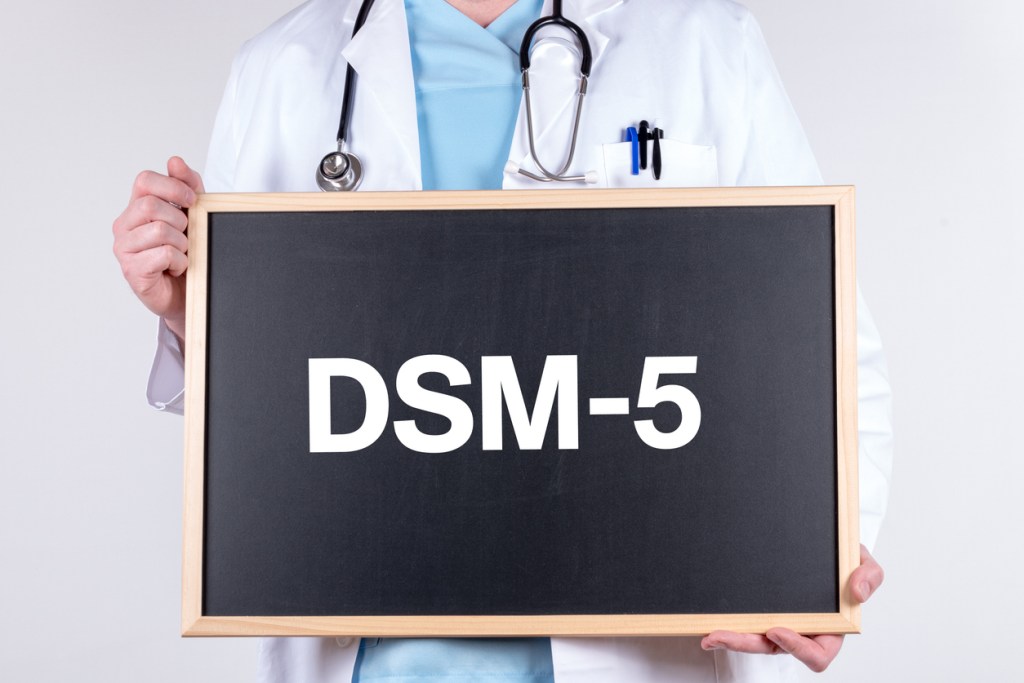
AuDHD is not a medical diagnosis that appears in the DSM. AuDHD is often self-diagnosed, particularly as an adult, based on symptoms. It’s a condition recognized by the neurotypical people themselves, much as ADHD sometimes is (though it requires a professional to make an official diagnosis). Even professionals can have a hard time recognizing it, though. Because of the difficulties in diagnosing the condition and its relative newness, AuDHD isn’t well understood. Research usually focuses on either autism or ADHD, so there isn’t a lot of scientific data about the prevalence of AuDHD or treatments for it. And AuDHD is perhaps underdiagnosed in women and girls, given the difference in diagnoses of autism and ADHD. Also, autism is often stigmatized, even more so than ADHD.

While there are diagnostic criteria that point to a diagnosis of autism and ones that appear with ADHD, there aren’t any official ones for AuDHD. The phenomenon is so new that not much research has been done on it. And because many cases are self-diagnosed, therapy professionals may not be up on how to help or even react to someone who believes that they have the co-occurring diagnoses.

That being said, professionals sometimes start with a diagnosis of autism (sometimes difficult to pinpoint itself) and then look for characteristics of ADHD. Sona Charaipotra suggests that the non-medical condition be diagnosed by combining autism with one of the subsets of ADHD (inattentive or impulsive/hyperactive), demonstrating five characteristics of either one. A combination diagnosis would require five traits from each of the subtypes. And the traits must cause some kind of functional impairment.

Treatment for the condition? Therapy is the first option. But because there is no medication treatment for autism, medications like Ritalin that are used for ADHD are sometimes prescribed. Lifestyle and environmental supports are also called for. Persons with AuDHD can help by suggesting what accommodations they need. After all, they know better than many psychiatric patients what they’re feeling and thinking, and what they need.

This is just a brief overview of AuDHD. There’s so much that still isn’t understood that, as time goes by, more exact definitions, diagnoses, and treatments for it will begin to emerge.

What Won’t Work

Actor/comedian Stephen Fry discovered at age 37 that he “had a diagnosis that explains the massive highs and miserable lows I’ve lived with all my life.” It was, of course, bipolar disorder. In documentaries, podcasts, and books, he has talked very openly about his condition, spreading the word about stigma and the necessity of getting help.

Fry once said, “You can’t reason yourself back into cheerfulness any more than you can reason yourself into an extra six inches of height.” And he’s right. If one could, I would have done so. With years of debate behind me and an extensive knowledge of rhetorical fallacies, I can argue nearly any proposition into the ground. I should have been able to reason my way out of depression.

But no.

Fry was right. There’s no way to reason cheerfulness into your life. Emotions are not so easily controllable, especially if you have bipolar disorder or another mental illness.

Nor can you reason yourself into having thicker skin. Throughout my youth, I was described as “too sensitive.” I was genuinely puzzled. I had no idea how to make my skin thicker (and it was never explained to me how such a thing could be done). It took a long time and many life lessons and mistakes to make any progress at all.

There are other things that won’t make you mentally well, either. Expecting the first medication you try to be the cure is unrealistic. It can take a long time (in my case, years) before a medication or even a combination of medications will ease your suffering. And if you can’t work out a medication regimen that works, other treatments such as ECT, TMS, EMDR, or ketamine therapy are not guaranteed to work, or at least not completely. If you go into those kinds of therapy expecting a complete cure, you may be disappointed.

Trying to wait it out or tough it out is likewise ineffective. Again, this is a strategy I have tried. I used to believe that my depressive episodes would abate if only I waited through them until they went away naturally. Eventually, my mood might improve slightly, but that was due to another mood cycle kicking in. Naturally, depression was still there, waiting for me to fall back into it.

I know this may be controversial to say, but religion won’t cure mental illness, either. Having a supportive religious community around you can be an asset—if you happen to find a church, synagogue, mosque, or other community that treats people with mental illness in a caring way. Prayer and sacred music can be a great adjunct to other treatments, but by themselves, they’re not a cure.

Exercise and yoga are not cures. They are also great adjuncts to other treatments. They can increase your number of spoons—if you have enough spoons to do them. But if someone with bipolar disorder or depression can’t manage to get out of bed, how are they going to avail themselves of the benefits?

Likewise nature. It’s a great way to lift your spirits to walk among spring flowers or autumn leaves or to plant a vegetable garden. But again, you have to be at a certain level of recovery to be able to do these things.

Changes in your physical circumstances may lighten your mood for a while, but they aren’t a cure. My mother used to believe that if only I got a better job, my depression would lift. And it did, but only for a little while. It certainly didn’t cure me. There were plenty of things about the job and about my brain that brought the depression roaring back.

So, what are we left with? Therapy and meds, and other medical treatments such as ECT, TMS, and maybe ketamine or other novel medications. One can hope that science will discover better ways, like fMRI, that can determine which treatments will be more effective. But it’s far from clear how soon that will be and when they will be available to the average person.

So, when is your reason an asset? When you’re deciding which treatment and which adjuncts are right (or possible) for you. For example, I had to think long and hard—and do extensive research—on whether I should try ECT.

I’m not a doctor, and Your Mileage May Vary, but for now, all I can recommend is to keep on keeping on with what we know can work. There’s no guarantee that these options will work, at least not for everyone. But they’re the best options we have.

The Difference a Diagnosis Makes

Is a diagnosis of mental illness a bad thing or a good thing? It depends on whom you ask.

On one hand, some argue that a diagnosis is merely a label. It puts people into neat little boxes defined by the DSM and determines how society reacts to and treats them. (The DSM, of course, is for doctors, but some version of what it says sneaks out into the general public. Then it’s fair game for tossing around and labeling people by the uninformed or the barely-informed.)

The labels are harmful, this school of thought goes. A schizophrenic is violent and incurable. Bipolar disorder means daily giant mood swings and real danger if said person goes “off their meds.” Narcissists, gaslighters, and sociopaths are people who act in any way that you don’t appreciate. Autism, notoriously and according to people who should know better, is the gateway to a valueless life.

With diagnosis come stereotyping and shame. Rather than reacting to these harmful effects, some people focus instead on what creates the stereotyping and shame—the diagnosis, which is seen as a lifelong label. Protests decrying this labelling happen outside psychiatric and psychological gatherings and garner media attention. And if that makes life easier for a person with a diagnosis or generates greater understanding, then it’s a good thing.

Diagnosis-as-label is an example of the harm that diagnosis can do. Nor is it limited to the general public. Once a person is in the system with a diagnosis of whatever condition, they’re generally stuck with it. Reassessment and a realization that a diagnosis is misapplied come too rarely. Personality disorders, for example, are squishy around the edges. Similar criteria could lead to a diagnosis of narcissistic personality disorder or sociopathy, to use an extreme example. Careful consideration will distinguish between the two, but how often are such distinctions applied? Once “in the system” with a particular diagnosis, a person tends to remain in that slot despite different doctors and different treatments.

But that’s not the way it’s supposed to be. A diagnosis, rather than being a lifelong label, is meant to be a signpost pointing toward likely development of the illness and ways to treat it successfully. That’s the ideal, of course, and sometimes, being only human, practitioners can get sloppy or too narrowly focused and add to the ills of bad diagnosing.

I can truly speak only for what happened to me. At a certain point in my life, I didn’t know what was wrong with me, but it was clear to me that I was not mentally healthy, the term used at the time. I went to a community mental health center and was diagnosed with major depression. That was a good diagnosis, as far as it went. It put my life more squarely in focus and allowed me to get the medication and therapy I so desperately needed.

I lived for many years with that diagnosis and was considerably helped by the treatments for it. But, eventually, a doctor put together the puzzle pieces and rediagnosed me. Instead of having depression, I had bipolar disorder, type 2, with anxiety. This diagnosis more clearly reflected my symptoms and led to more effective treatment. In that way, one diagnosis improved my life, and a second, more accurate one improved my life more. I can only think of this as a good thing.

Was the diagnosis seen by some as a label and a stereotype? Of course. I can think of one particular coworker, hearing that I was bipolar, gave me the look that said, “You have two heads,” pasted on a strained smile, and backed away slowly. But, on the whole, the diagnosis helped me.

A recent article in the New York Times had this to say about diagnosis: “The shame that once accompanied many disorders has lifted. Screening for mental health problems is now common in schools. Social media gives us the tools to diagnose ourselves. And clinicians, in a time of mental health crisis, see an opportunity to treat illnesses early….As our diagnostic categories expand to include ever milder versions of disease, researchers propose that the act of naming a malady can itself bring relief.”

It’s something to hope for, anyway.