Bipolar 2 From Inside and Out

Posts tagged ‘being overwhelmed’

Overthinking Night and Day

Like many people with SMI, my superpower is overthinking. In fact, even as I write this, it’s 2:30 a.m. I can’t sleep because I have hamster brain, a phenomenon I’m sure will be familiar to most of you.

I’ve got plenty to overthink about. I’m starting a new writing assignment and am confronted with a big, messy outline that I didn’t write and have to make into a coherent book. We don’t have the money to get a plumber, only the downstairs toilet works, and there’s only a trickle in the showers. Between the two of us, over the next six weeks, we have a total of six assorted doctor appointments coming up, for everything from nail fungus to heart meds to psych meds to test results to steroid shots. There’s the trip we have booked in January to see Dan’s 96-year-old mother. There’s our senior cat whose health is holding for now, but who knows? Pick any one. Or two. Or more.

If only overthinking were productive. Wouldn’t it be great if all that thinking led to creative problem-solving? But no. The problems remain and continue rolling over and over.

Overthinking is tied to anxiety, at least in my case. I do have an anxiety disorder, so my overthinking is something prodigious. And, as exemplified by the hamster brain analogy, it’s cyclical. Anxiety causes overthinking causes anxiety and so on and on. The more out-of-control your problems are, the more out-of-control your thoughts become.

Overthinking is also a symptom of other mental disorders, such as PTSD, OCD, and depression. Another perhaps related phenomenon is intrusive thoughts, the ones that seem to appear spontaneously in your mind for no apparent reason. Perfectionism can be involved, too, if you obsess about doing everything just right. Catastrophizing and all-or-nothing thinking can also contribute to overthinking.

But those are facts. And overthinking has little to do with facts. Take that upcoming trip, for example. The flights are booked, the accommodations are arranged, the rental car is reserved. All three are already paid for. All this was taken care of months ago. But I still overthink. I check the airline reservations to make sure they haven’t changed (they did at least once, with a layover in a different city). I hope we can get an accessible condo. I worry about paying for gas and food. I feel panicky about getting to the next gate during layovers. I have done everything I can think of to make sure the trip runs smoothly, but still…

It’s exhausting, so it’s ironic that I can’t sleep.

How to stop overthinking? Mindfulness and meditation are often recommended, but those don’t work for me. I just can’t shut off the over-thoughts long enough to accomplish them. Distractions are another recommendation, and I try that, but they only provide temporary relief. Reframing negative thoughts is yet another suggestion, but I don’t know how to reframe having to go downstairs to pee in the middle of the night. Self-acceptance or self-compassion, forgiveness, and gratitude—nothing seems to work.

I do take antianxiety meds, and I do have permission to take an extra one if I have more than usual anxiety. I have a prescription for a sleeping aid, but I don’t like to take it very often. More often I just say the hell with it and get up, read or write or watch TV. My sleep-wake schedule is off for days, along with my meals, but if I can just stop the thoughts for a while, I’ll take it.

For me, overthinking happens mostly at night, but it doesn’t have to. There’s plenty of fodder for overthinking during my waking hours. Perhaps I just don’t notice it as much because during the daytime I’m usually doing something that distracts me from my thoughts. Today I was overthinking how to get an accessible room at the condo where we’re staying in January. I made phone calls and stayed on hold, but I got put off until four weeks before the trip. That started me overthinking about what to do if we can’t get an accessible room. I’d have to get one of those shower substitute wipes they use for people who are bedridden. Then I started looking those up online. Maybe I should order some, just in case. Or, I thought, I could wash up in the sink every day. Or some combination of the above. It’s ridiculous how long I spent contemplating the possibilities. All I really have to do is request an accessible unit when I show up, and they’ll tell me whether one is available that day. But do you think I’ll be able to wait until we show up? No, I’ll keep overthinking it. And get the wipes just in case.

Because that’s just what I do.

Where Does the Money Go?

Though it embarrasses me to write this, it’s true that when I’m hypomanic, I overspend. That’s one of the ways I can tell that I’m actually hypomanic, when I go on spending sprees. Online shopping is my downfall.

I buy things for myself. I’m still in search of the perfect bra, and I like to have a good supply of underwear. I buy exotic jewelry—amber, picture jasper, zoisite—this despite the fact that I almost never leave the house. I end up wearing the jewelry to my doctor’s appointments. And I know it doesn’t really go with my t-shirt collection.

I buy books. Lots of books. I have an e-reader with almost 2,000 books on it. I know I’ll never read all of them, but I can’t resist something really interesting or by a favorite author.

I buy presents. I see things online that I think my husband might like, buy them, and squirrel them away until his birthday or our anniversary or Christmas. Half the time I don’t even know what he’ll do with them. My latest purchase for him was an articulated copper trilobite. I figure he has a curio cabinet and, if he can’t figure out anything else to do with it, he could put it there.

I buy presents for friends, too. Recently I bought carved stone guitar picks, for no reason, for two of my dear friends who play the guitar. And I sent a friend one of his favorite treats for his birthday.

Has this gotten me into financial trouble? I’d have to say yes. We’ve had some financial reverses recently, but truthfully, we could have absorbed them better if we still had the money I spent. There’s no room left on our credit cards. At the end of the month, things get tight and we have to watch every penny until our Social Security comes in.

Of course, my husband has his own fits of reckless spending. He buys presents, too, mostly for me or his mother. And he buys lots of garden supplies, everything from individual plants to truckloads of mulch. He also indulges in fossilized wood, spheres of polished stone, antiques, and the like. He can’t resist the discount shelves at the grocery store and brings home expensive (but bargain!) delicacies like canned banana leaves and pumpkin pasta sauce. We both like to eat out.

So, how do I try to keep these hypomanic spending jags down? I do try.

First of all, I take my meds faithfully. They include a mood leveler, which I hope will cut down on the hypomania.

Second, I listen to my husband. He often notices when I’m teetering on the edge of hypomania and tells me so.

Third, I try to spend the least amount possible when I do spend money. I buy books when they are discounted to $3 or less. (When we ran out of money at the end of last month, I didn’t even look at the ads for bargain books, just deleted them.) I buy underwear only when it is on a closeout sale. I use gift cards when I have them.

I also try to set limits. I try not to buy things that cost more than $25. (Sometimes I don’t make it.) I watch for sales, free shipping, and 2-for-1 offers. When I consider a larger expense, I talk it over with my husband. (Sometimes he enables me, however.)

Then too, I’m the one who pays the bills and monitors the credit cards and bank account. Sometimes I miscalculate, but I almost always know how much is in the bank and what bills are due and when. There are times when I tell my husband how much we can spend on groceries for the week (not that he always sticks to what I tell him).

Of course, the consequences of my hypomanic spending increase my anxiety, to the point where I’m almost immobilized. (That’s where I am right now.) I’m not sleeping well, or some nights at all. But I am trying to find ways to bring in more money to supplement our Social Security and my husband’s job. But my work is unpredictable and so are my earnings. There are steady months, but right now my assignments are in a slump.

Oh, well. I guess overspending is better than hypersexuality.

The Varieties of Grief

Loss and grief affect us all. If you’re lucky enough that they haven’t yet, they’re coming. You won’t know when or why or how, but they’re unavoidable. There’s no way to prepare for them, either. Loss and grief rock your emotional balance and your mental health.

You’ve no doubt heard of Elizabeth Kubler-Ross’s Five Stages of Death and Dying—denial, anger, bargaining, depression, and acceptance. (Some people say there are seven stages, including the usual five plus shock and guilt.) The stages apply to other kinds of grief besides death and dying.

The thing is, not everyone experiences grief in the same way. You may not experience all five (or seven) of the stages or not in the order they’re usually presented. You might skip anger, for example, or begin with depression. It depends on the type of loss you’re experiencing and your psychological makeup. If you suffer from clinical depression, for example, it’s easy to get stuck in that stage of grieving a loss. If you have anger management issues, you might experience that before you get to denial, or you might skip over bargaining.

Nor is there a time limit on grief. The experts say that six months to a year is a “normal” time for grief to last. Obviously, this is not hard and fast. If it takes you two years or more to return to full functioning, that’s how long it takes. No one should push you to “get over it” in what they consider to be an acceptable length of time (but they probably will).

That said, there is a condition called Prolonged Grief Disorder. When grief lasts for years and interferes with your daily life and functioning, you may be suffering from it. If this is the case, you should consider getting professional help.

Grief enters your life in any number of ways, and not always ones you expect. Here are some of the common and less common ones.

Death

Death is what you usually think of when you consider grief and loss. This is usually the death of a loved one, but it can even be caused by the death of a public figure such as John F. Kennedy or someone you look up to and admire even if they’re not a family member or close friend. Even the death of a beloved pet can lead to very real grief that often is not understood by others.

Loss

There are kinds of loss other than death. If you work at your dream job and the company suddenly goes under or you are let go, you can feel grief and go through the same stages of grief as someone who experiences a death. You might be in denial, for example, or experience a period of bargaining or anger. Losing your home to financial reversals or a natural disaster is another example.

Health

If your health deteriorates severely, you can experience grief or a sense of loss over the things you used to be able to do. If you lose a limb, for example, or are paralyzed by disease or accident, you can feel grief over your new situation and again, denial, anger, bargaining, and depression. Even normal aging and the loss of abilities that often accompany it can cause you grief.

Relationships

The death of a relationship can also cause grief. Whether it’s by divorce, estrangement, or abandonment, you suffer because of the loss. You could obsess over the good times you spent together or be troubled by memories of the relationship when you least expect them, such as when you encounter a reminder of the person.

Ambiguous Grief

Ambiguous grief occurs when the outcome of a situation is unknown. A missing child is an obvious example. You don’t know whether they’re still alive or whether they’ve been abducted and killed. You bounce between hope and despair. You may be angry at God for allowing the situation or at the police for not solving the case quickly. If you have a loved one who is homeless and experiencing a serious brain illness, you may not know where they are or if they’re safe. You imagine the worst. You could blame yourself, even if it’s not logical. Bargaining is one typical response, a case of the “if only’s.”

There are support groups for many kinds of grief, such as for the bereaved, crime victims, or those with a family member in hospice. (This could be called anticipatory grief.) Other kinds of grief, such as grief over the loss of a job, home, or friend, usually don’t have any kind of support group. Friends and family members may try to offer support, but that’s not the same as a group with a mental health professional as a facilitator. Being with other people who have also experienced a particular variety of loss or grief can be a profound relief or lead to healing and acceptance. At the least, it’s a safe, nonjudgmental space where you can process your feelings.

Grief is deeply personal. Although there are commonalities to the experience, there is no one blueprint for grief. What you experience is in some ways unique to your situation. Length and depth of grieving can’t be quantified or predicted.

Sleeping or Not

Sleep is one of the most problematic aspects of bipolar and many other brain illnesses. With bipolar disorder, you tend to sleep too much when you’re depressed and not enough when you’re manic. For adults, the recommended amount of deep, restorative sleep is 7–9 hours. That allows someone to have the proper proportion of REM sleep, which is when you dream and when your brain consolidates memories and experiences.

To this, many of us say, “Hah!”

Right now, I’m torn between the two extremes. I’ve been having mixed episodes, so there are days when I want to stay in bed all day. On other days, I can’t get that restful, uninterrupted sleep. I wake up at around 2:00 a.m. and can’t get back to sleep until at least 6:00. I take a nap in the afternoon, and then can’t get to sleep until around 2:00. Or I’m so exhausted that I go to bed by 8:00 and again wake up at 2:00. Once in a great while I go to bed around 9:00 and wake up in time to see my husband off to work at 5:30. Those are the good days.

It’s true that I’ve had a lot of stress lately. Financial, legal, health, and emotional problems have been piling up for both me and my husband. I read at night after taking my bedtime meds, and I feel sleepy in about half an hour. But when I put down my book and try to sleep, I get racing thoughts about every impending disaster—and there are plenty to choose from. The anti-anxiety med I take does nothing, even if I take a second one (which my doctor allows).

If and when I finally do get to sleep, it’s not restful and restorative. I know that I do enter REM sleep, because I dream. One night recently, every single impending disaster combined into a vision of ultimate dread. It wasn’t just that everything that could go wrong did. They all were over the top, all my fears taken to the extreme with vivid color and sound. Worst of all, I couldn’t talk to my husband about my disturbing dream as I usually do. He was dealing with the same fears and facing the same disasters. It seemed unfair to dump my terrors on him. Although he was involved in the dream, I didn’t want him to think I was blaming him.

Along with the terror dream, I’ve had the normal variety of unpleasant dreams that express frustration or inadequacy—missing a plane, losing a competition—the kind that I can generally shrug off. Now, however, they seem to linger in the back of my brain all day.

There is one thing that helps, but I know I shouldn’t do it. That’s taking a sleeping pill. I don’t currently have a prescription for it, though I did in the past. I stopped taking it when I learned that I slept okay without it. But I still had half a dozen pills and didn’t get rid of them. I thought I might use them if I needed to sleep on a long flight. Instead, I remembered I had them during the current series of crises. And they work. But I have to dole them out carefully. I don’t see my psychiatrist until next month, and he doesn’t prescribe over the phone. I tried to make an appointment to see him earlier, but I don’t have transportation on the days he sees clients.

My best bet at this point is to hope that some of the crises resolve before my appointment and I don’t need the sleeping pill anymore. There’s a chance that some of them will, but then again, they may not resolve in our favor. It looks like more hamster brain for me.

Meltdown

I haven’t had a meltdown in a good, long while. And I’d prefer to keep it that way. But this week, I had one.

What brought it on? As usual, too many crises all hitting at once. One of every kind—financial, legal, emotional, work, medical, and family. The kind with no obvious solutions.

Individually, I’ve had versions of all these crises before, and gotten through them somehow. I’ve developed any number of coping mechanisms that I can pull out of a hat if I need to. But the hat holds only so much. I can’t keep pulling things out of it if there are no more in there. Hence, the meltdown.

I often turn to my husband when I have a meltdown, but this time I can’t. He’s having a meltdown of his own. It isn’t identical to mine, but they do overlap. Neither one of us has much to offer the other. We do try to support each other to the extent of our abilities. But there’s no denying that we’re both depleted, with not much ability to soothe or strategize.

One thing I could do, and did, was call on a friend so I could let it all out. I’ve known him for years, and he’s seen this happen to me before. And, wonder of wonders, one of the first things he asked was whether I needed advice on my problems or just a listening ear. I chose the listening. What I needed most at that point was to let it all out. And I did.

Once that happened, I was able to pick myself back up and start coming up with solutions. Moving money around. Getting a lawyer. Gathering phone numbers and making calls. Taking notes. Helping my husband calm down when he was having a panic attack and a meltdown of his own.

Another thing I did was reconnect with my therapist. I hadn’t had a session in a few years. She had moved to another practice, I was fairly stable, and our sessions had gotten shorter and shorter because I just didn’t have issues that needed addressing. I had sensibly put the new practice’s number in my phone, just in case. I used it, and within a day heard back from her. I have an appointment scheduled for next week.

I know I’ve done the right things, the things most likely to help resolve the problems, but somehow that doesn’t help yet. I need to get all the assorted crises worked out or at least put on hold before I can return to something resembling stability. Next week will be a rough one, and my phone friend may just get another call. I don’t want to overburden him, but honestly, it’s been years since he’s dealt with me in the middle of a meltdown. I anticipate that Monday will be particularly difficult, with two crises, one major and one relatively minor coming to a head then.

I’m trying to shut down my emotions as much as possible in order to get through all this. I know that’s not ideal, but honestly, I don’t see how I’ll manage without doing that. Of course, that makes the meltdown afterward more likely and potentially more severe. I need to make sure that all my meds are refilled and try to establish a better sleeping schedule, which has been eluding me lately.

Time to make phone calls now, and more later. Wish me luck.

SMI in Higher Ed

I recently discovered a book written by Katie Rose Guest Pryal called Life of the Mind Interrupted: Essays on Mental Health and Disability in Higher Education. I was a little behind on reading the book—it came out in 2017. But I can’t imagine much in academia has changed since then.

In the book, Pryal presents short, readable essays about her experiences and those of other people who experience bipolar disorder, OCD, anxiety, ADD, and schizophrenia and must navigate the systems of working in academia. Pryal herself, now a law professor specializing in disability studies, says in the introduction that “academia isn’t an easy place to be if your brain isn’t quite right.” One interviewee remarked, “They hired you for your mind…Why would you volunteer that there’s something wrong with it?” The first chapter includes essays on disclosure.

If that were all the book covered, it would still be a revelation and an important work. But The Mind Interrupted is relevant to people with SMI in other areas of life as well. Just look at these essay titles: Disclosure Blues, Breaking the Mad Genius Myth, Working When Your Brain Isn’t, Handling Personal Tragedies Around You, How to Have the Accommodations Talk, Believe Your Colleagues With Disabilities, Trigger Warnings Are a Disability Issue, and more. These are issues that everyone with SMI has to deal with, whether they work in a burger joint, a business office, or aren’t employed at all. Given her circumstances, it’s understandable that Pryal focuses on higher education, but I feel that this is a valuable book for anyone living with SMI.

I’ve written before about how we refer to mental illness, SMI, brain illness, behavioral health, etc. Pryal uses a term that hadn’t occurred to me—psychiatric disability. It brought me up short. I have bipolar disorder. Is my condition a psychiatric disability? Ignoring the fact that I didn’t get disability when I applied for it, I would have to say it is. I have limitations that interfere with my ability to make a living. I have to deal with the question of whether to disclose my mental status whenever I apply for a job. I’m lucky that I now work independently from home and can basically make my own hours, an accommodation that likely would not have been available in the publishing companies where I used to work, even if I had asked for it.

When I was in academia as a grad student and teaching assistant, I hadn’t been diagnosed with bipolar, but I certainly had it. The stress was nearly incapacitating. I remember having a meltdown in a poetry class, which was ignored by the other students and the professor, aside from a few sidelong looks. I got one bad student review—scathing, really—and couldn’t bring myself to read any student reviews for the remaining three semesters. It’s similar to an experience that Pryal recounts in Life of the Mind Interrupted.

My experiences bear out what Pryal says in her book. As she explains, “This is a book about mental illness and academia. But this is also a book about so much more than that: it’s about grief, and friendship, and collegiality, and accessibility, and tragedy. It is about trying to get by in a world that fears you, that believes you are unfit for your job, that wants to take your children away….I’d spent my years in academia in hiding.” And so did the people Pryal interviewed for her book. As they were struggling to reach the safety of tenure, disclosure was not an option. Accommodations such as altered schedules were not requested or offered, even though people with mental illness are a protected class under ADA.

There’s so much more in Life of the Mind Interrupted: intersectionality, motherhood, creativity, language, students with disabilities, stigma, teaching, allies, privacy, and other essential topics. If you skip this book because you’re not in the institutions of higher education, you’re missing something truly important.

Anxiety and Big Life Stuff

Anxiety about health is a common phenomenon. It’s only natural to worry about the human body breaking down, especially as one ages. But how much anxiety is too much? How little is too little?

When anything goes awry with my body, I get panicky. I catastrophize, imagining the worst. I have anxiety disorder in addition to bipolar, so that’s not surprising.

Once, for example, I woke up in the middle of the night with something strange happening to my arm. There was a hard spot along the side of it the size and shape of a cuttlefish bone. Instantly, I got dressed and headed to the emergency room. They took x-rays (which were ambiguous) and sent me home. If I hadn’t been so panicky, I would have realized that the problem could easily have waited until the next morning or whenever I could get in to see my doctor. But I was frightened and anxious because it was something I had never heard of and couldn’t explain.

It turned out to be sarcoid, which was treated with steroids. (There was also a spot of it on my head, which my doctor biopsied, so I now have a divot on my forehead.) The sarcoid backed off, leaving me embarrassed at having reacted so strongly.

My husband, who doesn’t have anxiety, is just the opposite. He takes injuries and illnesses much more lightly. He’s a bit accident-prone, often cutting himself or otherwise mangling his fingers and hands cooking or doing repair work. I used to have to burst into tears to get him to go for treatment, stitches, or whatever was called for. He would wrap the injury in a paper towel and some duct tape, which I understand is a guy thing. (A heart attack that he almost waited too long to get help for changed his ways. Now I don’t have to cry. He goes to the ER as needed.)

Now, however, we’re facing more serious medical possibilities. I won’t go into Dan’s, since he’d prefer to keep that story private, but it’s Big Life Stuff.

I have plenty of anxiety to talk about. Over the past few years, my knees have been getting worse and worse. At first, it only affected my balance, which was enough to make me anxious right there, fearing that I would fall in public. I started using a cane. I did fall once, at a student union where my therapist’s office was located. A flock of young women (nursing students?) swooped in, picked me up, and offered me a hot beverage. Ever since, my anxiety about falling has increased, exacerbated by a couple of falls at home.

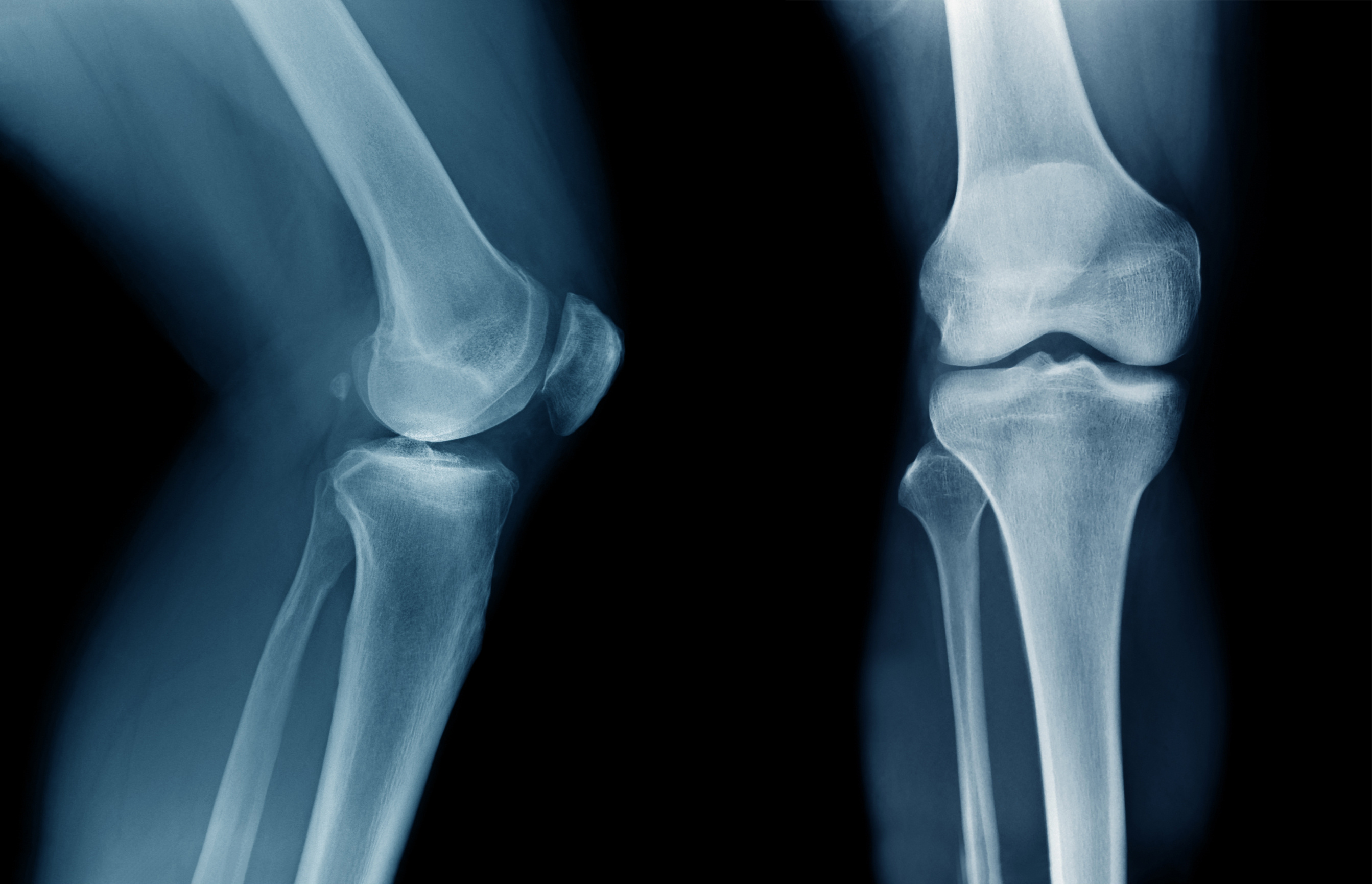
Now, however, I’m facing more serious anxiety. My knees have deteriorated to the point that I need steroid shots every six weeks and am afraid to walk. (The doctor’s words were “bone on bone.”) The steroids work for now but won’t last. Eventually, I’ll have to get both my knees replaced. And that ramps up my anxiety to new levels.

Today, I stumbled on the stairs and my left knee almost gave out. My right knee took up the slack, but I envisioned myself lying in a heap at the bottom of the stairs. Since then, my left knee has been twinging, and I’m doubting its ability to hold up until the next round of steroids.

The orthopedist says I could need the knee replacements anytime from six weeks to six years from now. So, of course, I’m anxious that it will be sooner rather than later. I’m catastrophizing, envisioning weeks lying immobile on the couch, taking pain pills, and unable to care for myself. I understand that the doctor said it might not happen for years, but I’m reacting as if it will be next month.

To me, this is Big Life Stuff, and not just because it’s a major operation (two actually, one for each knee). I fear losing control of my body. I worry that knee replacement won’t help. I anticipate going downhill rather than improving. It’s not that I don’t trust my doctors. I’m just consumed by anxiety. I’m looking at ads for mobility scooters and fold-out chair-beds for my study. I can’t envision a future in which things will be any better.

I’m being crippled with anxiety about being crippled. And no amount of reassurance, education, or time is lessening it.

The Overwhelming Problem

screaming (Uma painting)It’s been said that time is nature’s way of keeping one damn thing after another from being every damn thing all at once. I know that taking things one at a time—eating the elephant one bite at a time—is a sound idea.

However, every now and then the damn things gang up on you. The elephant is starting to go bad and you have to eat all you can right away – to use a disgusting metaphor that I will not take any further. (You’re welcome.)

Last month was one of those months. They happen every so often. But if they happen very often, I tend to get overwhelmed. And when I get overwhelmed for too long, my brain breaks. I have a meltdown, or I decompensate, or whatever the proper psychiatric term is. In practical terms, it means that I’m severely depressed and non-functional, for longer than usual. Days. Weeks. Months. Even years.

The things that overwhelm me are quite predictable – financial difficulties, health problems, relationship glitches, and free-floating anxiety of all sorts, either my own or my loved one’s. I know that these are situations that cause difficulty for everyone, but to a person with bipolar disorder, they can seem—or even be—insurmountable. Especially when they cluster and refuse to go away.

Over the years I have become good (or at least better) at recognizing when I am about to be overwhelmed. I know the symptoms—the whirling thoughts, the jumping-out-of-my-skin feeling, the insomnia, the inability to concentrate, and the feeling that doom or disaster is impending.

There is little I can do to stave off these feelings. But I know I have to. I have to keep functioning at some level, higher or lower, to maintain the things that I want to have – productive work, a loving relationship, a nice house, caring friends, and so forth. At the time of my last major breakdown, I came uncomfortably close to losing much of that.

I try my usual remedies for anxiety, of course. I distract myself. I color. I watch mindless TV. I play stupid clicky games on the computer. I turn off my phone. But if the anxiety builds up too much, if the feared disaster is real and really is impending, none of these works. The anxiety shreds my last nerve, and the depression starts to settle in. I isolate. I stay in bed. One task at a time, I stop being able to function.

I have taken one step that has helped, however. An anti-anxiety pill is one of my daily medications—one in the morning and one at night. A few years ago, as the stress was building and approaching overwhelming, I asked my psychiatrist if I could have permission to take one more a day if I needed it.

He agreed.

I have not needed to take the extra pill every day. Sometimes I take one in the mid-afternoon if I start feeling jumpy, twitchy, or panicky. Sometimes I take one at night if I haven’t gotten to sleep within 2 – 3 hours after taking my regular nighttime pills. I know it sounds strange that a depressant helps me stave off depression, but my diagnosis is actually bipolar disorder and anxiety disorder. The med catches me at the point where the one starts to turn into the other.

I’m glad my psychiatrist trusted me not to abuse what I consider a privilege as well as a necessity. By the time I made this request, of course, we had been working together for a number of years and had built up a certain trust. I think there have been only a couple of times when I have had to take two extra pills in a day—one in the afternoon and an additional one at night. And both times, I felt guilty about it and made sure I didn’t make it a habit.

I don’t want to start gobbling pills at the least sign of difficulty. All I want is to be able to eat my elephant in peace and in pieces.

Sensory Overload

I know that sensory overload can be a problem for people on the autism spectrum. Too much noise, uncomfortable touch, and assaults on the other senses can affect them negatively.

I discovered this firsthand when my best friend, Robbin, and her ten-year-old daughter, Kelly, visited my house. My husband collects clocks, and the sound of all the ticking bothered the young lady. Then the clocks started to chime. They were not synchronized, and they sounded off one after the other, sometimes overlapping. It was noon. Kelly was visibly distressed by the sound, and they left soon after.

I’ve had some indication that, though I’m not on the spectrum, I’m sensitive to noise as well. When Kelly was six, I brought Robbin a fluffy black-and-white kitten that she had admired. The squealing noises the little girl made cut right through me. I looked over at Robbin, who just shrugged.

It turned out that I’m particularly sensitive to the high-pitched sounds of children laughing and shouting. I learned to avoid Chuck-E-Cheese and Cici’s pizza—basically, any place with a ball pit. High-pitched women’s voices like Judy Holliday’s in Born Innocent bother me. It’s one of my husband’s favorite movies, but I can’t stand to watch it with him. Loud voices are a problem, too. If I’m in a room where people are shouting at each other, I make an excuse to leave until they settle down.

Much more typical is my aversion to two or more sounds. TV and talking, for example. If my husband talks to me while the TV is on, I can’t make out either one, which is particularly difficult when what he’s saying is, “What did that guy say?” And if I’m doing something on the computer, I’m completely lost. I’d be lost at a cocktail party, too, so it’s lucky we’re never invited to them.

WebMD has this to say about sensory overload: “Sensory overload and anxiety are mental health conditions that are deeply related to one another. When a person feels anxious or already overwhelmed, they may be more prone to experiencing sensory overload in certain situations. Likewise, experiencing sensory overload can make you feel a sense of anxiety.” They also say, in addition to autism, that PTSD, ADHD, PTSD, Generalized Anxiety Disorder, and Tourette Syndrome are mental conditions associated with sensory overload. They recommend anti-anxiety or antidepressant meds, self-care, therapy, mindfulness, and meditation as ways to address the problem. Avoiding triggers is another recommendation, and that’s the one I use (see not going to Chuck-E-Cheese, above). That’s the one that seems to have the most beneficial effects.

PsychCentral lists the stimuli that can lead to sensory overload:

  • bright lights, chaotic movement, or a cluttered environment
  • rough, tight, or itchy clothes
  • loud noises, voices, or music
  • scents including chemicals and perfumes
  • foods with strong flavors
  • hot or cold temperatures

And they list the possible effects:

  • overwhelm that makes you want to either shut down or have a meltdown
  • irritation or rage
  • tension in your face, neck, shoulders, or back
  • having either too many thoughts in your mind, or none at all
  • exhaustion
  • dissociation, or being separated from yourself and your surroundings

They add: “It’s possible for sensory overload to cause a panic attack. This could be because much overlap exists between parts of the brain involved with the panic response and those responsible for sensory processing.”

Not being a neuroscientist of any stripe, I can’t speak to the truth of that, but it also seems to me that a panic attack can lead to sensory overload. My other notable experience with sensory overload was having an anxiety attack in the grocery store, where I was overwhelmed by the visual noise of the bright colors on the cereal boxes. As I recall, I took an anti-anxiety pill, went home, and lay down. I don’t remember if I bought the cereal or not.

Control/No Control

When I was a kid, my family used to go to visit relatives in Campton and Beattyville, Kentucky. It was always a good time. There were barns to play in and fishing, berrying, eggs to gather, and so forth. To get there, we took what was then a toll road called the Mountain Parkway. I loved dropping change in the bucket as we passed through the toll stations.

The road wound and twisted up into the mountains. There were steep dropoffs along the sides. I don’t remember railings, though I suppose there were some. We visited there about once a year during summer vacation. My Dad drove.

I have a number of things on my List of Things I’ll Never Be Able to Do Again, and going to Campton is one of them. For one thing, I have no relatives left there anymore—most were quite aged back then and their children have scattered. But the more important reason is that I could not handle the drive.

When I was in Ireland with my husband, we rented a car and drove around the country. The GPS that came with the car was sketchy at best. It took us on one-lane roads that meandered through the hills. On the larger roads, there were many rotaries, which we hadn’t driven before. Eventually, we started relying on my phone and Google Maps, which didn’t get us lost as often or run us off into ditches. We still ended up going on twisty back roads.

But I was terrified the entire time we were driving. Dan had to drive since I couldn’t adjust to driving on the left (I tried once and gave up). My nerves couldn’t handle it. The entire time we were driving, I had my hand braced against the roof of the car. When it was particularly frightening, I made a peculiar humming noise that Dan had to learn to ignore. He’d remind me that I had anti-anxiety meds I could take, too. I did, but they didn’t stop my symptoms.

Fast forward a couple of years. We were in Gatlinburg, Tennessee, driving around looking for where we stayed and where we were going. Again, we used Google Maps on my phone. Again, we were traveling on twisty back roads with sudden hills and no shoulders to speak of. Again I clung to the Oh Shit handle and made the weird humming noise as we navigated the convoluted routes. Again I took anti-anxiety meds.

Then I had a revelation: I could never go to Campton again, even if Dan was driving. The bends in the road and the steep drop-offs would prove too daunting. I don’t want to put myself through that again if I don’t have to. And I don’t want to have to.

I don’t have trouble driving on surface streets or highways, even alone. Those I can handle—even for four- or five-hour drives.

When I’m driving, I feel in control of the vehicle and don’t have the massive anxiety. That is, unless the circumstances involve something that makes me feel out of control, like left-side driving or narrow roads with switchbacks and doglegs. Even if Dan drives and I navigate, I still do the clutching and humming thing. It’s exhausting. If I were driving, I would have to go 20 mph and mightily piss off the cars behind me.

The bottom line? I can drive myself places, but only under certain conditions when I feel in control. If there’s a factor—or more than one—that makes me feel out of control, I can’t do it.

I like to think that I’m not a control freak under other circumstances. There’s just something about a machine that weighs that much going at a speed that feels unsafe in terrain that strikes me as difficult. This still leaves me a lot of places I can go, even without Dan. But not everywhere. And that makes me feel sad and incompetent, two feelings that I don’t like and that there’s no medication for.