Bipolar 2 From Inside and Out

Posts tagged ‘being overwhelmed’

Meltdown

I haven’t had a meltdown in a good, long while. And I’d prefer to keep it that way. But this week, I had one.

What brought it on? As usual, too many crises all hitting at once. One of every kind—financial, legal, emotional, work, medical, and family. The kind with no obvious solutions.

Individually, I’ve had versions of all these crises before, and gotten through them somehow. I’ve developed any number of coping mechanisms that I can pull out of a hat if I need to. But the hat holds only so much. I can’t keep pulling things out of it if there are no more in there. Hence, the meltdown.

I often turn to my husband when I have a meltdown, but this time I can’t. He’s having a meltdown of his own. It isn’t identical to mine, but they do overlap. Neither one of us has much to offer the other. We do try to support each other to the extent of our abilities. But there’s no denying that we’re both depleted, with not much ability to soothe or strategize.

One thing I could do, and did, was call on a friend so I could let it all out. I’ve known him for years, and he’s seen this happen to me before. And, wonder of wonders, one of the first things he asked was whether I needed advice on my problems or just a listening ear. I chose the listening. What I needed most at that point was to let it all out. And I did.

Once that happened, I was able to pick myself back up and start coming up with solutions. Moving money around. Getting a lawyer. Gathering phone numbers and making calls. Taking notes. Helping my husband calm down when he was having a panic attack and a meltdown of his own.

Another thing I did was reconnect with my therapist. I hadn’t had a session in a few years. She had moved to another practice, I was fairly stable, and our sessions had gotten shorter and shorter because I just didn’t have issues that needed addressing. I had sensibly put the new practice’s number in my phone, just in case. I used it, and within a day heard back from her. I have an appointment scheduled for next week.

I know I’ve done the right things, the things most likely to help resolve the problems, but somehow that doesn’t help yet. I need to get all the assorted crises worked out or at least put on hold before I can return to something resembling stability. Next week will be a rough one, and my phone friend may just get another call. I don’t want to overburden him, but honestly, it’s been years since he’s dealt with me in the middle of a meltdown. I anticipate that Monday will be particularly difficult, with two crises, one major and one relatively minor coming to a head then.

I’m trying to shut down my emotions as much as possible in order to get through all this. I know that’s not ideal, but honestly, I don’t see how I’ll manage without doing that. Of course, that makes the meltdown afterward more likely and potentially more severe. I need to make sure that all my meds are refilled and try to establish a better sleeping schedule, which has been eluding me lately.

Time to make phone calls now, and more later. Wish me luck.

SMI in Higher Ed

I recently discovered a book written by Katie Rose Guest Pryal called Life of the Mind Interrupted: Essays on Mental Health and Disability in Higher Education. I was a little behind on reading the book—it came out in 2017. But I can’t imagine much in academia has changed since then.

In the book, Pryal presents short, readable essays about her experiences and those of other people who experience bipolar disorder, OCD, anxiety, ADD, and schizophrenia and must navigate the systems of working in academia. Pryal herself, now a law professor specializing in disability studies, says in the introduction that “academia isn’t an easy place to be if your brain isn’t quite right.” One interviewee remarked, “They hired you for your mind…Why would you volunteer that there’s something wrong with it?” The first chapter includes essays on disclosure.

If that were all the book covered, it would still be a revelation and an important work. But The Mind Interrupted is relevant to people with SMI in other areas of life as well. Just look at these essay titles: Disclosure Blues, Breaking the Mad Genius Myth, Working When Your Brain Isn’t, Handling Personal Tragedies Around You, How to Have the Accommodations Talk, Believe Your Colleagues With Disabilities, Trigger Warnings Are a Disability Issue, and more. These are issues that everyone with SMI has to deal with, whether they work in a burger joint, a business office, or aren’t employed at all. Given her circumstances, it’s understandable that Pryal focuses on higher education, but I feel that this is a valuable book for anyone living with SMI.

I’ve written before about how we refer to mental illness, SMI, brain illness, behavioral health, etc. Pryal uses a term that hadn’t occurred to me—psychiatric disability. It brought me up short. I have bipolar disorder. Is my condition a psychiatric disability? Ignoring the fact that I didn’t get disability when I applied for it, I would have to say it is. I have limitations that interfere with my ability to make a living. I have to deal with the question of whether to disclose my mental status whenever I apply for a job. I’m lucky that I now work independently from home and can basically make my own hours, an accommodation that likely would not have been available in the publishing companies where I used to work, even if I had asked for it.

When I was in academia as a grad student and teaching assistant, I hadn’t been diagnosed with bipolar, but I certainly had it. The stress was nearly incapacitating. I remember having a meltdown in a poetry class, which was ignored by the other students and the professor, aside from a few sidelong looks. I got one bad student review—scathing, really—and couldn’t bring myself to read any student reviews for the remaining three semesters. It’s similar to an experience that Pryal recounts in Life of the Mind Interrupted.

My experiences bear out what Pryal says in her book. As she explains, “This is a book about mental illness and academia. But this is also a book about so much more than that: it’s about grief, and friendship, and collegiality, and accessibility, and tragedy. It is about trying to get by in a world that fears you, that believes you are unfit for your job, that wants to take your children away….I’d spent my years in academia in hiding.” And so did the people Pryal interviewed for her book. As they were struggling to reach the safety of tenure, disclosure was not an option. Accommodations such as altered schedules were not requested or offered, even though people with mental illness are a protected class under ADA.

There’s so much more in Life of the Mind Interrupted: intersectionality, motherhood, creativity, language, students with disabilities, stigma, teaching, allies, privacy, and other essential topics. If you skip this book because you’re not in the institutions of higher education, you’re missing something truly important.

Anxiety and Big Life Stuff

Anxiety about health is a common phenomenon. It’s only natural to worry about the human body breaking down, especially as one ages. But how much anxiety is too much? How little is too little?

When anything goes awry with my body, I get panicky. I catastrophize, imagining the worst. I have anxiety disorder in addition to bipolar, so that’s not surprising.

Once, for example, I woke up in the middle of the night with something strange happening to my arm. There was a hard spot along the side of it the size and shape of a cuttlefish bone. Instantly, I got dressed and headed to the emergency room. They took x-rays (which were ambiguous) and sent me home. If I hadn’t been so panicky, I would have realized that the problem could easily have waited until the next morning or whenever I could get in to see my doctor. But I was frightened and anxious because it was something I had never heard of and couldn’t explain.

It turned out to be sarcoid, which was treated with steroids. (There was also a spot of it on my head, which my doctor biopsied, so I now have a divot on my forehead.) The sarcoid backed off, leaving me embarrassed at having reacted so strongly.

My husband, who doesn’t have anxiety, is just the opposite. He takes injuries and illnesses much more lightly. He’s a bit accident-prone, often cutting himself or otherwise mangling his fingers and hands cooking or doing repair work. I used to have to burst into tears to get him to go for treatment, stitches, or whatever was called for. He would wrap the injury in a paper towel and some duct tape, which I understand is a guy thing. (A heart attack that he almost waited too long to get help for changed his ways. Now I don’t have to cry. He goes to the ER as needed.)

Now, however, we’re facing more serious medical possibilities. I won’t go into Dan’s, since he’d prefer to keep that story private, but it’s Big Life Stuff.

I have plenty of anxiety to talk about. Over the past few years, my knees have been getting worse and worse. At first, it only affected my balance, which was enough to make me anxious right there, fearing that I would fall in public. I started using a cane. I did fall once, at a student union where my therapist’s office was located. A flock of young women (nursing students?) swooped in, picked me up, and offered me a hot beverage. Ever since, my anxiety about falling has increased, exacerbated by a couple of falls at home.

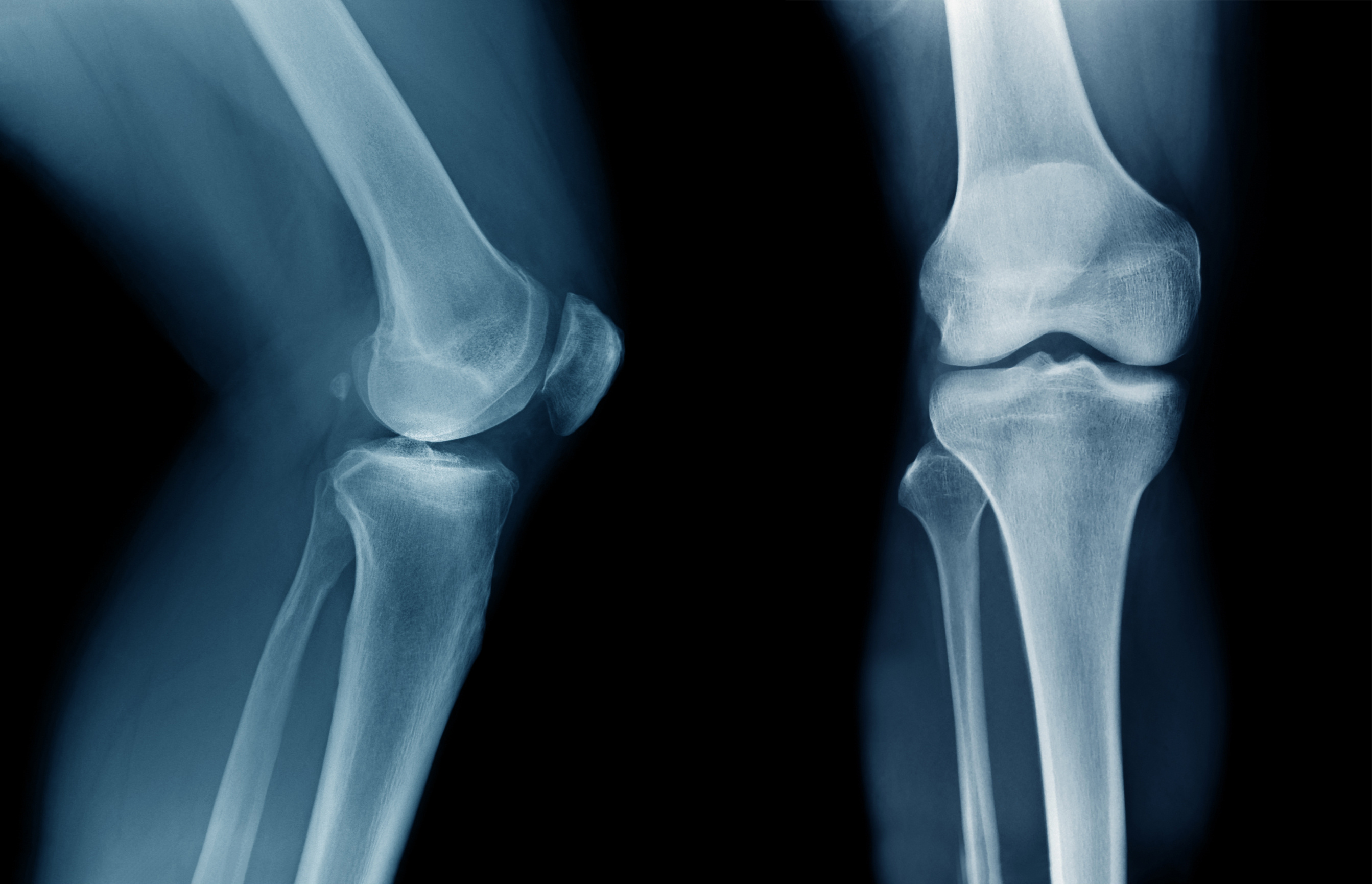
Now, however, I’m facing more serious anxiety. My knees have deteriorated to the point that I need steroid shots every six weeks and am afraid to walk. (The doctor’s words were “bone on bone.”) The steroids work for now but won’t last. Eventually, I’ll have to get both my knees replaced. And that ramps up my anxiety to new levels.

Today, I stumbled on the stairs and my left knee almost gave out. My right knee took up the slack, but I envisioned myself lying in a heap at the bottom of the stairs. Since then, my left knee has been twinging, and I’m doubting its ability to hold up until the next round of steroids.

The orthopedist says I could need the knee replacements anytime from six weeks to six years from now. So, of course, I’m anxious that it will be sooner rather than later. I’m catastrophizing, envisioning weeks lying immobile on the couch, taking pain pills, and unable to care for myself. I understand that the doctor said it might not happen for years, but I’m reacting as if it will be next month.

To me, this is Big Life Stuff, and not just because it’s a major operation (two actually, one for each knee). I fear losing control of my body. I worry that knee replacement won’t help. I anticipate going downhill rather than improving. It’s not that I don’t trust my doctors. I’m just consumed by anxiety. I’m looking at ads for mobility scooters and fold-out chair-beds for my study. I can’t envision a future in which things will be any better.

I’m being crippled with anxiety about being crippled. And no amount of reassurance, education, or time is lessening it.

The Overwhelming Problem

screaming (Uma painting)It’s been said that time is nature’s way of keeping one damn thing after another from being every damn thing all at once. I know that taking things one at a time—eating the elephant one bite at a time—is a sound idea.

However, every now and then the damn things gang up on you. The elephant is starting to go bad and you have to eat all you can right away – to use a disgusting metaphor that I will not take any further. (You’re welcome.)

Last month was one of those months. They happen every so often. But if they happen very often, I tend to get overwhelmed. And when I get overwhelmed for too long, my brain breaks. I have a meltdown, or I decompensate, or whatever the proper psychiatric term is. In practical terms, it means that I’m severely depressed and non-functional, for longer than usual. Days. Weeks. Months. Even years.

The things that overwhelm me are quite predictable – financial difficulties, health problems, relationship glitches, and free-floating anxiety of all sorts, either my own or my loved one’s. I know that these are situations that cause difficulty for everyone, but to a person with bipolar disorder, they can seemor even be—insurmountable. Especially when they cluster and refuse to go away.

Over the years I have become good (or at least better) at recognizing when I am about to be overwhelmed. I know the symptoms—the whirling thoughts, the jumping-out-of-my-skin feeling, the insomnia, the inability to concentrate, and the feeling that doom or disaster is impending.

There is little I can do to stave off these feelings. But I know I have to. I have to keep functioning at some level, higher or lower, to maintain the things that I want to have – productive work, a loving relationship, a nice house, caring friends, and so forth. At the time of my last major breakdown, I came uncomfortably close to losing much of that.

I try my usual remedies for anxiety, of course. I distract myself. I color. I watch mindless TV. I play stupid clicky games on the computer. I turn off my phone. But if the anxiety builds up too much, if the feared disaster is real and really is impending, none of these works. The anxiety shreds my last nerve, and the depression starts to settle in. I isolate. I stay in bed. One task at a time, I stop being able to function.

I have taken one step that has helped, however. An anti-anxiety pill is one of my daily medications—one in the morning and one at night. A few years ago, as the stress was building and approaching overwhelming, I asked my psychiatrist if I could have permission to take one more a day if I needed it.

He agreed.

I have not needed to take the extra pill every day. Sometimes I take one in the mid-afternoon if I start feeling jumpy, twitchy, or panicky. Sometimes I take one at night if I haven’t gotten to sleep within 2 – 3 hours after taking my regular nighttime pills. I know it sounds strange that a depressant helps me stave off depression, but my diagnosis is actually bipolar disorder and anxiety disorder. The med catches me at the point where the one starts to turn into the other.

I’m glad my psychiatrist trusted me not to abuse what I consider a privilege as well as a necessity. By the time I made this request, of course, we had been working together for a number of years and had built up a certain trust. I think there have been only a couple of times when I have had to take two extra pills in a day—one in the afternoon and an additional one at night. And both times, I felt guilty about it and made sure I didn’t make it a habit.

I don’t want to start gobbling pills at the least sign of difficulty. All I want is to be able to eat my elephant in peace and in pieces.

Sensory Overload

I know that sensory overload can be a problem for people on the autism spectrum. Too much noise, uncomfortable touch, and assaults on the other senses can affect them negatively.

I discovered this firsthand when my best friend, Robbin, and her ten-year-old daughter, Kelly, visited my house. My husband collects clocks, and the sound of all the ticking bothered the young lady. Then the clocks started to chime. They were not synchronized, and they sounded off one after the other, sometimes overlapping. It was noon. Kelly was visibly distressed by the sound, and they left soon after.

I’ve had some indication that, though I’m not on the spectrum, I’m sensitive to noise as well. When Kelly was six, I brought Robbin a fluffy black-and-white kitten that she had admired. The squealing noises the little girl made cut right through me. I looked over at Robbin, who just shrugged.

It turned out that I’m particularly sensitive to the high-pitched sounds of children laughing and shouting. I learned to avoid Chuck-E-Cheese and Cici’s pizza—basically, any place with a ball pit. High-pitched women’s voices like Judy Holliday’s in Born Innocent bother me. It’s one of my husband’s favorite movies, but I can’t stand to watch it with him. Loud voices are a problem, too. If I’m in a room where people are shouting at each other, I make an excuse to leave until they settle down.

Much more typical is my aversion to two or more sounds. TV and talking, for example. If my husband talks to me while the TV is on, I can’t make out either one, which is particularly difficult when what he’s saying is, “What did that guy say?” And if I’m doing something on the computer, I’m completely lost. I’d be lost at a cocktail party, too, so it’s lucky we’re never invited to them.

WebMD has this to say about sensory overload: “Sensory overload and anxiety are mental health conditions that are deeply related to one another. When a person feels anxious or already overwhelmed, they may be more prone to experiencing sensory overload in certain situations. Likewise, experiencing sensory overload can make you feel a sense of anxiety.” They also say, in addition to autism, that PTSD, ADHD, PTSD, Generalized Anxiety Disorder, and Tourette Syndrome are mental conditions associated with sensory overload. They recommend anti-anxiety or antidepressant meds, self-care, therapy, mindfulness, and meditation as ways to address the problem. Avoiding triggers is another recommendation, and that’s the one I use (see not going to Chuck-E-Cheese, above). That’s the one that seems to have the most beneficial effects.

PsychCentral lists the stimuli that can lead to sensory overload:

  • bright lights, chaotic movement, or a cluttered environment
  • rough, tight, or itchy clothes
  • loud noises, voices, or music
  • scents including chemicals and perfumes
  • foods with strong flavors
  • hot or cold temperatures

And they list the possible effects:

  • overwhelm that makes you want to either shut down or have a meltdown
  • irritation or rage
  • tension in your face, neck, shoulders, or back
  • having either too many thoughts in your mind, or none at all
  • exhaustion
  • dissociation, or being separated from yourself and your surroundings

They add: “It’s possible for sensory overload to cause a panic attack. This could be because much overlap exists between parts of the brain involved with the panic response and those responsible for sensory processing.”

Not being a neuroscientist of any stripe, I can’t speak to the truth of that, but it also seems to me that a panic attack can lead to sensory overload. My other notable experience with sensory overload was having an anxiety attack in the grocery store, where I was overwhelmed by the visual noise of the bright colors on the cereal boxes. As I recall, I took an anti-anxiety pill, went home, and lay down. I don’t remember if I bought the cereal or not.

Control/No Control

When I was a kid, my family used to go to visit relatives in Campton and Beattyville, Kentucky. It was always a good time. There were barns to play in and fishing, berrying, eggs to gather, and so forth. To get there, we took what was then a toll road called the Mountain Parkway. I loved dropping change in the bucket as we passed through the toll stations.

The road wound and twisted up into the mountains. There were steep dropoffs along the sides. I don’t remember railings, though I suppose there were some. We visited there about once a year during summer vacation. My Dad drove.

I have a number of things on my List of Things I’ll Never Be Able to Do Again, and going to Campton is one of them. For one thing, I have no relatives left there anymore—most were quite aged back then and their children have scattered. But the more important reason is that I could not handle the drive.

When I was in Ireland with my husband, we rented a car and drove around the country. The GPS that came with the car was sketchy at best. It took us on one-lane roads that meandered through the hills. On the larger roads, there were many rotaries, which we hadn’t driven before. Eventually, we started relying on my phone and Google Maps, which didn’t get us lost as often or run us off into ditches. We still ended up going on twisty back roads.

But I was terrified the entire time we were driving. Dan had to drive since I couldn’t adjust to driving on the left (I tried once and gave up). My nerves couldn’t handle it. The entire time we were driving, I had my hand braced against the roof of the car. When it was particularly frightening, I made a peculiar humming noise that Dan had to learn to ignore. He’d remind me that I had anti-anxiety meds I could take, too. I did, but they didn’t stop my symptoms.

Fast forward a couple of years. We were in Gatlinburg, Tennessee, driving around looking for where we stayed and where we were going. Again, we used Google Maps on my phone. Again, we were traveling on twisty back roads with sudden hills and no shoulders to speak of. Again I clung to the Oh Shit handle and made the weird humming noise as we navigated the convoluted routes. Again I took anti-anxiety meds.

Then I had a revelation: I could never go to Campton again, even if Dan was driving. The bends in the road and the steep drop-offs would prove too daunting. I don’t want to put myself through that again if I don’t have to. And I don’t want to have to.

I don’t have trouble driving on surface streets or highways, even alone. Those I can handle—even for four- or five-hour drives.

When I’m driving, I feel in control of the vehicle and don’t have the massive anxiety. That is, unless the circumstances involve something that makes me feel out of control, like left-side driving or narrow roads with switchbacks and doglegs. Even if Dan drives and I navigate, I still do the clutching and humming thing. It’s exhausting. If I were driving, I would have to go 20 mph and mightily piss off the cars behind me.

The bottom line? I can drive myself places, but only under certain conditions when I feel in control. If there’s a factor—or more than one—that makes me feel out of control, I can’t do it.

I like to think that I’m not a control freak under other circumstances. There’s just something about a machine that weighs that much going at a speed that feels unsafe in terrain that strikes me as difficult. This still leaves me a lot of places I can go, even without Dan. But not everywhere. And that makes me feel sad and incompetent, two feelings that I don’t like and that there’s no medication for.

Time Out From Life

I was stuck during my first year in college. I was a linguistics major and couldn’t see my way clear to a career in the field. I thought about changing my major to random ones like landscape architecture and hotel management. I had no passion for either one, but I figured at least I could get a job.

I was also suffering from a major depressive swing. I missed classes, though I managed to pass them. I couldn’t sleep. I spent hours in the middle of the night sitting in the hallway, staring at an ornate coloring poster on the opposite wall, hypnotized by its intricate black outlines.

I decided to take a year off. I was incapacitated and couldn’t go on at that time. I figured I could reassess my choice of majors while I pulled my head together. I always had the intention of going back at the end of that time out.

I also needed money for that next year of college, so I got a job as a cashier and waitress on the second shift at a local Frisch’s restaurant. I was a good cashier and a lousy waitress, and I spent quite a bit of time in the bathroom, crying into the roller towel. I learned how to swear. My coworkers noticed that I was either worried and anxious or numb and sad. (One manager asked me, “What does a girl your age have to worry about except am I pregnant?” The other told me to smile more. Needless to say, this was not helpful.)

That time out from college was important to me psychologically. It didn’t solve my problems, and I was still undiagnosed and unmedicated. I began to realize that my problems went further than what my major was. And I made friends at work and learned a lot about self-reliance. I had time and space to think. My parents and my high school friends formed my support system.

I did go back to college the next year. I changed my major to English, which was more satisfying and more in line with my interests (though not really better on career possibilities). I continued through the next three years without taking more time off. As you may have guessed, the anxiety and depression didn’t leave. I had a fling with a musician – my first – and when it ended, I didn’t know how to handle it. Then I had a totally disastrous relationship, fraught with gaslighting. Again, I had trouble sleeping. I lost weight. I drank too much. The swings between hypomania and depression were noticeable.

When I graduated, I went back to working at the restaurant, then got a job at an advertising agency as an assistant to the treasurer. I moved into my own apartment and began a long-distance relationship with my eventual husband. I considered going back to school for an M.A., again in English, which I eventually did. I was still untethered, but I went into treatment for depression. (It wasn’t until many years later that I learned that my diagnosis was really bipolar.)

A depressive swing also caused me to take a time out from work later in life. This was the one that lasted two years and had me applying for disability. (I didn’t get it.) It was only psychologically important in that it graphically demonstrated how badly I needed help. At least the time I missed from college was something I chose to do rather than something that blindsided me.

The takeaway from all this, I think, is that the ups and downs of bipolar disorder mean that my life was destined not to go smoothly. While I am pretty high-functioning – I was able to earn college degrees and hold various jobs, at least for a while – there have been times when my illness has overwhelmed me and I need time out from my “normal life.” And those occasions come on me unpredictably, as is the way of bipolar mood swings. While I haven’t needed to, or been forced to, take a time out lately, I know it could still happen. That’s just the nature of the disorder. I hope my medication and therapy will make the possibility less likely, though.

If you’ve taken a time out too, I’d encourage you not to think of it as a permanent thing. It could be something that you needed to do, and something that may have relevant significance for you as you look back on it, as was true for me. Most of all, I hope you get help and support to get through it.

What Is It With Showers Anyway?

Girl is choosing cosmetics in bathroomIt is fairly widely known that people with bipolar disorder and/or depression have trouble taking a daily shower. It’s not that we don’t know what’s involved in taking a shower, or why it would be good for us to do so, it’s simply that showering uses up a tremendous number of spoons.

Here’s what showering looks like according to Andrew Solomon, author of the now-classic The Noonday Demon:

I ran through the individual steps in my mind: You sit up, turn and put your feet on the floor, stand, walk to the bathroom, open the bathroom door, go to the edge of the tub…I divided it into fourteen steps as onerous as the Stations of the Cross.

I performed a similar exercise in one of my blog posts and here’s my version:

First I have to find a clean towel and a bar of soap, get undressed without seeing myself in the mirror, fiddle with the water temperature, wash and shampoo, dry off, find clean underwear, and that’s not even thinking about drying my hair and figuring out what I can wear! Oh, my God, I’ve used up all my spoons just thinking about it! I should just eat Cocoa Puffs and go back to bed.

Now let me say, first of all, that I don’t really like showers. I grew up taking baths and have never enjoyed the sensation of water spraying in my face. But with my bad back and bad knees, getting up from sitting in a bathtub is nearly impossible these days. (Please don’t ask me why anyone would want to sit in dirty water. Everyone says that when I say I prefer baths. I have a nice long soak, steeping in the clean water like a big teabag, and only then wash up and get right out. Used to, I mean.)

To most people, showering is a single act that requires the expenditure of a single spoon. Take a shower; that’s it. But for those of us with invisible illnesses, each separate step may require its own spoon. Take something as simple as finding a towel, for instance. Go to the linen closet, grab a towel and voilà! Only a fraction of a spoon, if that.

But surely you don’t think I have had the spoons to fold and put away my laundry. It is all there in a jumble on top of the dryer. (Who needs a wrinkle-free towel anyway?) I have to root around to find one, and maybe twice if a cat has thrown up on the first one I pick. (They love sitting on clean laundry.)

If I have to go to a business meeting I force myself to use some of those spoons showering and getting dressed and acting respectable. But I will pay for it later, collapsing after the meeting in need of a mega-nap.

Now here’s a little secret I’ll tell you. Most people believe you gain spoons by going out of the house – walking in the fresh air, meeting friends for lunch, shopping, going for a drive (does anyone do that anymore?). But the fact is that, according to Spoon Theory, you get a certain number of spoons every day when you wake up. You cannot gain, buy, beg, borrow, or steal any more spoons, not even by breathing fresh air. You can only spend them.

Given the mathematics of spoons, I don’t spend a single one that I don’t absolutely have to. Not going out? No shower. Have to go out for a loaf of bread or a drive-through meal? Wash up in the sink. If I need a shower between outings, my husband reminds me and facilitates by, for example, rummaging on the dryer for a clean towel and clean clothes or a clean nightshirt.

I need those spoons for doing my work at home in my smelly pajamas more than I do for the ordeal of showering.

Burnout Ahead

This was first published seven years ago. I’m glad to say that things are better now.

What do you get when you take two people, three doctors, eleven prescriptions, two pharmacies, and an insurance company?

No, wait – I’m not finished.

THEN add another person, two banks, a credit card company, a missing check, and a disputed charge.

Mix in bipolar disorder, clinical depression, and several months of previous stress.

What you get, first of all, is something that rhymes with fuster-cluck, and then a dangerous situation: Two people under pressure, neither of whom can function well enough to find any solutions, running out of psychotropics.

There is enormous inertia. You make a few calls, get a few responses. Fine, you think. That’s taken care of. Except that days later, it isn’t. There are overdraft notices, nearly exhausted supplies of psychotropics, and occasional fits of tears.

So you take another swing at it. More phone calls. More revolving phone trees. More dropped calls. More suggestions that you really need to get someone else to call someone other else to resolve it and here’s a handy 1-800 number that takes you to a department that never heard of you, your problem, or the companies you’re dealing with.

Yes, they all agree. It’s important that you don’t run out of your psychotropics. It would sure be nice if there were enough money in the account to pay the premium for the crappy insurance. It’s a mystery why no one has any record of the complaint you asked them to file.

Another day. Another no check. Another no drug delivery. By now we’re getting into mixed states: immobilizing depression and nail-biting, catastrophizing anxiety.

You look for possible work-arounds. Maybe the local pharmacy can sell you enough pills to tide you over. But, oopsie! Your bank balance just went from -$53 to -$82. And the insurance won’t pay for drugs at the local pharmacy anymore – only through mail order. Which brings us back to D’oh!

This is not hypothetical. This is happening.

What do we do now?

Well, we split up the tasks. I work on the drugs and insurance end, while my husband works on the banking problem. We both hover over the mailbox, waiting for the check.

We take turns with symptoms. Both of us having a meltdown at the same time is not pretty. I’ve seen it. Trust me on this.

We do all we can do and then stop. For the moment anyway. When the pitch of my voice starts rising to dog whistle range and I start sniffling and tearing up, I know I’m just moments away from becoming incoherent, which may demonstrate the need for the psychotropics, but is not actually any help in getting them.

We try to take care of ourselves. Dan can sleep (I can’t), so he does. He buys me comfort foods (fried rice, mashed potatoes). I decide that this may not be the best time to be reading a new, fast-paced zombie apocalypse thriller and switch to a familiar old standby character study.

There’s never a good time for these cosmic pile-ups to happen, but now is unusually bad. The last few months have brought assorted financial and medical troubles (the two being related, of course), plus the death of three elderly pets within a couple of weeks of each other. Dan is dealing with the fact that the house he grew up in is up for sale. I haven’t been getting as much work as usual. Soon, I will have to look into expanding my client base or finding another line of work.

After I get the drugs. And after they start to work. Whenever that is.

Sorry I don’t have anything encouraging or amusing or informative to share this week. That’s just the way it is sometimes. And now is one of those times.

I Want to Go Home to Bed With My Kitties

Kittens. Jumping. I want to go home to bed with my kitties. These are my mantras. Or something. I repeat these phrases, under my breath if anyone is around who doesn’t know I do this. At least I think it’s under my breath. I have at times walked out of a restroom stall to see people looking at me strangely. My husband says they are “grounding statements,” though I understand proper grounding statements are usually more like affirmations – “I am safe.” “I can handle this.” “I am a good person.” How I ended up with mine I don’t quite know. I do know that I mutter or say them when I am anxious. “Kittens” indicates a general level of anxiety, while “jumping” is reserved for increased levels. “I want to go home to bed with my kitties” is an all-encompassing statement of stress or dissatisfaction and the only one that I can say nearly out loud around people with only mild looks of incomprehension. A very few people who know me well are used to this phenomenon and even have responses. When I say, “kittens,” my friend Leslie says, “puppies,” and my husband says, “Do you like them?” When I say, “jumping,” he says, “up and down?” and my friend Robbin said, “You must really be nervous.” My husband occasionally joins me in a chorus of “I want to go home to bed with my kitties.” (The extended version is “I want to go home. I want to go to bed. I want my kitties.” The short form is “Home. Bed. Kitties.”) I know that I use these vocalizations a lot when I have anticipatory anxiety or after a protracted spell of having to be competent, social, and appropriate. I say them a lot in my car or after coming home from braving the outside world. In a crowded, noisy space like a restaurant, I say them in a very matter-of-fact manner, as if I’m having a conversation with my husband. I assume the background noise covers them up. The National Mental Health Association says, “People with obsessive-compulsive disorder try to cope with anxiety by repeating words or phrases.” Fair enough. I do have a few OCD-like traits, though no diagnosis. (That’s all I need – another diagnosis!) But to me, the grounding statements explanation makes the most sense. I would argue that for me, home, bed, and kitties are all things that remind me of safety and bring me comfort. How jumping fits in, I’m not sure, except that I have hyperactive nerves and do a fair amount of it. But it certainly isn’t associated with safety or comfort. Quite the opposite, in fact. The New York Times called it “kitten therapy” in a personal story of how a kitten helped lessen a man’s depression. I can testify to that effect. Cats or kittens have stayed up with me through bouts of insomnia, snuggled when I needed touch, purred gently when I needed quiet, demanded attention when I needed distraction, and yes, even jumped on me when I needed amusement. Home is a touchstone for me. My parents’ house was home to me, but after I moved out, nothing ever seemed like home again. Not the dorm, of course. Not the sorority house. Not the basement apartment. Not the house I shared. Not the apartment. Not the second floor. Not the half-double. Not even the rent-to-own house. (That one came close.) But the house that I found, looking like it grew up out of the ground, has felt like home, has been home. Even when it was destroyed by a tornado and had to be rebuilt, it was home. While we moved among motel, hotel, rented home, and crummy apartment, home was just waiting around the temporal corner for us to come back to. Bed is wonderful. I can stay in it all day – and have, when depression hits hard. It’s sturdy Amish furniture that made it through the tornado. In fact, I was lying on it when the tornado took the roof off and all I could do was put a pillow over my head and hope for the best. I love its solidity. I love the cozy quilts that I can wrap myself up in like a burrito. And yes, I love it especially when the kitties come and join me. Is it any wonder that “home, bed, kitties” is my mantra?