Bipolar 2 From Inside and Out

Posts tagged ‘anxiety’

Sleeping or Not

Sleep is one of the most problematic aspects of bipolar and many other brain illnesses. With bipolar disorder, you tend to sleep too much when you’re depressed and not enough when you’re manic. For adults, the recommended amount of deep, restorative sleep is 7–9 hours. That allows someone to have the proper proportion of REM sleep, which is when you dream and when your brain consolidates memories and experiences.

To this, many of us say, “Hah!”

Right now, I’m torn between the two extremes. I’ve been having mixed episodes, so there are days when I want to stay in bed all day. On other days, I can’t get that restful, uninterrupted sleep. I wake up at around 2:00 a.m. and can’t get back to sleep until at least 6:00. I take a nap in the afternoon, and then can’t get to sleep until around 2:00. Or I’m so exhausted that I go to bed by 8:00 and again wake up at 2:00. Once in a great while I go to bed around 9:00 and wake up in time to see my husband off to work at 5:30. Those are the good days.

It’s true that I’ve had a lot of stress lately. Financial, legal, health, and emotional problems have been piling up for both me and my husband. I read at night after taking my bedtime meds, and I feel sleepy in about half an hour. But when I put down my book and try to sleep, I get racing thoughts about every impending disaster—and there are plenty to choose from. The anti-anxiety med I take does nothing, even if I take a second one (which my doctor allows).

If and when I finally do get to sleep, it’s not restful and restorative. I know that I do enter REM sleep, because I dream. One night recently, every single impending disaster combined into a vision of ultimate dread. It wasn’t just that everything that could go wrong did. They all were over the top, all my fears taken to the extreme with vivid color and sound. Worst of all, I couldn’t talk to my husband about my disturbing dream as I usually do. He was dealing with the same fears and facing the same disasters. It seemed unfair to dump my terrors on him. Although he was involved in the dream, I didn’t want him to think I was blaming him.

Along with the terror dream, I’ve had the normal variety of unpleasant dreams that express frustration or inadequacy—missing a plane, losing a competition—the kind that I can generally shrug off. Now, however, they seem to linger in the back of my brain all day.

There is one thing that helps, but I know I shouldn’t do it. That’s taking a sleeping pill. I don’t currently have a prescription for it, though I did in the past. I stopped taking it when I learned that I slept okay without it. But I still had half a dozen pills and didn’t get rid of them. I thought I might use them if I needed to sleep on a long flight. Instead, I remembered I had them during the current series of crises. And they work. But I have to dole them out carefully. I don’t see my psychiatrist until next month, and he doesn’t prescribe over the phone. I tried to make an appointment to see him earlier, but I don’t have transportation on the days he sees clients.

My best bet at this point is to hope that some of the crises resolve before my appointment and I don’t need the sleeping pill anymore. There’s a chance that some of them will, but then again, they may not resolve in our favor. It looks like more hamster brain for me.

Meltdown

I haven’t had a meltdown in a good, long while. And I’d prefer to keep it that way. But this week, I had one.

What brought it on? As usual, too many crises all hitting at once. One of every kind—financial, legal, emotional, work, medical, and family. The kind with no obvious solutions.

Individually, I’ve had versions of all these crises before, and gotten through them somehow. I’ve developed any number of coping mechanisms that I can pull out of a hat if I need to. But the hat holds only so much. I can’t keep pulling things out of it if there are no more in there. Hence, the meltdown.

I often turn to my husband when I have a meltdown, but this time I can’t. He’s having a meltdown of his own. It isn’t identical to mine, but they do overlap. Neither one of us has much to offer the other. We do try to support each other to the extent of our abilities. But there’s no denying that we’re both depleted, with not much ability to soothe or strategize.

One thing I could do, and did, was call on a friend so I could let it all out. I’ve known him for years, and he’s seen this happen to me before. And, wonder of wonders, one of the first things he asked was whether I needed advice on my problems or just a listening ear. I chose the listening. What I needed most at that point was to let it all out. And I did.

Once that happened, I was able to pick myself back up and start coming up with solutions. Moving money around. Getting a lawyer. Gathering phone numbers and making calls. Taking notes. Helping my husband calm down when he was having a panic attack and a meltdown of his own.

Another thing I did was reconnect with my therapist. I hadn’t had a session in a few years. She had moved to another practice, I was fairly stable, and our sessions had gotten shorter and shorter because I just didn’t have issues that needed addressing. I had sensibly put the new practice’s number in my phone, just in case. I used it, and within a day heard back from her. I have an appointment scheduled for next week.

I know I’ve done the right things, the things most likely to help resolve the problems, but somehow that doesn’t help yet. I need to get all the assorted crises worked out or at least put on hold before I can return to something resembling stability. Next week will be a rough one, and my phone friend may just get another call. I don’t want to overburden him, but honestly, it’s been years since he’s dealt with me in the middle of a meltdown. I anticipate that Monday will be particularly difficult, with two crises, one major and one relatively minor coming to a head then.

I’m trying to shut down my emotions as much as possible in order to get through all this. I know that’s not ideal, but honestly, I don’t see how I’ll manage without doing that. Of course, that makes the meltdown afterward more likely and potentially more severe. I need to make sure that all my meds are refilled and try to establish a better sleeping schedule, which has been eluding me lately.

Time to make phone calls now, and more later. Wish me luck.

An Irrational Thought

I just bought a laptop because the air conditioner isn’t working. If that seems like an irrational thought I acted on, it is. It’s also a measure of my anxiety. And a consequence of my current mixed state.

Let me explain.

Our central air conditioner puts out a tiny bit of coolish air, but not enough to make the house comfortable. The weather has gotten up into the 80s, and the temp in the house is sometimes higher than that. And I know that July and August are coming, so temps over 100 degrees are likely. I’m afraid I’ll have heat stroke and die or at least have heat exhaustion and be incapacitated. I spend most of the day working at my desk, with fans on and cold beverages readily available, but still the heat gets to me. And I really need to do the work. We need the money, modest as my pay is.

So why (I hear you ask) don’t we call an AC repair service? My anxiety plus hoarding mean we don’t let people in the house. I suppose there’s a chance that they would only have to look at the outdoor unit, but I can’t count on that. There’s still a possible solution my husband can try. He’s going to get a tester and check the fuses. If that’s the problem, it’s easily fixable.

There’s the anxiety. What about the mixed state?

When I get hypomanic, one of my behaviors is online shopping. And there was just a sale at Best Buy on Apple computers that lasted three days. I ordered a laptop. I made sure it was a refurbished one to keep the price down, but I also bought the mouse, the subscription to Microsoft Office, and a carrying case. It was a tidy sum, money that we don’t have because of car repairs, but I put it on our Best Buy credit card. I also told myself that it was still cheaper than air conditioning repair. (A quick Google suggests that it’s likely a wash.)

How does this solve the air conditioning dilemma? If I have a laptop computer, I can take it to Panera, McDonald’s, or some other air-conditioned place and do my work while sipping on iced tea. (Panera has plugs and outlets conveniently located, I know.) Work accomplished. Body temperature regulated. Achievement unlocked.

Of course, I realize this is a slightly ridiculous plan. I know that my anxiety and hypomania are largely responsible. Ultimately, though, I’m responsible.

There’s still the chance that Dan can get the AC working again, if the fuses are the problem. If that happens, I can return the laptop (within 15 days after I receive it). So I have options, which I love.

I’m still left with confusing feelings. Maybe I’m too fearful of the heat or too dubious about being able to do my work in an overheated room. (I don’t think so, because I’m older and have had bad reactions to heat before. Computers also have bad reactions to heat.) Maybe I was too impulsive when I ordered a new laptop and all the fixings. Maybe even with the money I earn, the credit card expense will strain our finances further. I fortuitously just received a raise at work, so maybe that will help make up the difference.

I’m not asking for advice. I’ll work this out on my own somehow or at least with the help of my husband. He knows I’m in a mixed state, but the family finances are my responsibility and he usually goes with what I think we should do.

Things should be clearer by the time I post this.

Loneliness Reigns

For some of us, those with bipolar disorder, depression, agoraphobia, and anxiety, it’s like the COVID restrictions were never lifted. We remain at home as if we were still sheltering in place. We’ve lost touch with many of the people in our lives. The thin threads of social media aren’t enough to provide solid connections, though we’ve had practice during the pandemic.

There’s also the “reaching out” problem. We’re perpetually advised to reach out to others when we’re lonely or having difficulties. But of course, reaching out is too much to expect for many. Often, we’re not even able to make a connection when someone reaches in. Whether it’s a matter of not believing that we’re really worth someone else’s time or being submerged in misery, the loneliness of depression or anxiety does not allow us to respond.

Lately, though, there have been a lot of headlines and articles saying that America in general is experiencing an epidemic of loneliness. I don’t know about you, but for me, loneliness is nothing new. Depression does that to a person, even if loneliness is not one of the diagnostic criteria in the DSM.

Of course, the articles point out that the loneliness epidemic coincided with the COVID epidemic. People were sheltering in place, many working from home. We couldn’t get out and see our friends or go to school, church, or family gatherings. We missed weddings, birthdays, reunions, funerals. We missed seeing coworkers and friends. We even missed chatting with the people we encountered in our daily lives—nail technicians, servers, sales clerks, plumbers, and all the other people you don’t even think about missing until you miss them. Even our doctors and therapists took care of us online instead of in person.

But that’s largely over. What’s driving widespread loneliness now? Apparently, it’s a chicken-and-egg dilemma. Does loneliness come first? Do psychiatric illnesses? Recent research “suggests a correlation between loneliness and depressive symptoms, with one potentially leading to the other, although the causal direction remains unclear.”

The Journal of Clinical and Diagnostic Research has published a study that says there are three kinds of loneliness: situational, developmental, and internal. Situational loneliness involves environmental factors such as interpersonal conflicts, accidents, and disasters. Developmental loneliness appears with conditions including physical and psychological disabilities. Internal loneliness is associated with “personality factors, locus of control, mental distress, low self-esteem, guilt feeling, and poor coping strategies with situations.” Two other kinds of loneliness have been reported as well: emotional and social loneliness. It seems to me that those are the two that are behind the “loneliness epidemic” that headlines tout. Among the psychiatric and other disorders they say are associated with loneliness are depression, suicidal ideation, personality disorders as well as bereavement, Alzheimer’s, and physical illnesses.

The research is all well and good, but what’s to be done? The usual remedies don’t work very well. The report cited above recommends developing social skills, recognizing maladaptive social cognition, giving social support, and developing opportunities for social interaction. Not much help there. The last two rely on other people to provide intervention, which is obviously uncontrollable by the person experiencing loneliness. And the first two require therapy of one sort or another.

At any rate, the continued advice of the general public remains, “Cheer up,” “Get out more,” and variations on “Get over it,” as if the loneliness were the sufferer’s fault. Antidepressants may help but they don’t attack the root cause of social isolation. There are still social media, which help me a lot. But I interact with various people and groups, which not everyone is able to do. My husband gets me out of the house at times, usually with the lure of a restaurant meal. And that primarily connects me with the person I’m already most in contact with. He’s my social support. I have a high school reunion coming up, with a number of different events scheduled, but so far I’ve only talked myself into the most casual one.

Am I lonely? At times I am. But my loneliness is not the overwhelming sort that attacks many people. There are some ways to ameliorate the condition, but most of them require getting out of the house, which many lonely people are simply unable to do; having good friends who reach in (assuming that we have the wherewithal to reach back; and the long, slow slog of antidepressants and therapy, which may or may not “cure” the problem. Advertisements are beginning to address the problem of loneliness with advice to reach in and talk to friends and acquaintances who aren’t doing well, those these are minimal compared to all the ads for the latest drugs.

Obviously, there are other aspects of brain illnesses that the experts are working on more vigorously. But I, for one, hope that more research and interventions can be devoted to solving the problem, not just defining it.

Anxiety and Big Life Stuff

Anxiety about health is a common phenomenon. It’s only natural to worry about the human body breaking down, especially as one ages. But how much anxiety is too much? How little is too little?

When anything goes awry with my body, I get panicky. I catastrophize, imagining the worst. I have anxiety disorder in addition to bipolar, so that’s not surprising.

Once, for example, I woke up in the middle of the night with something strange happening to my arm. There was a hard spot along the side of it the size and shape of a cuttlefish bone. Instantly, I got dressed and headed to the emergency room. They took x-rays (which were ambiguous) and sent me home. If I hadn’t been so panicky, I would have realized that the problem could easily have waited until the next morning or whenever I could get in to see my doctor. But I was frightened and anxious because it was something I had never heard of and couldn’t explain.

It turned out to be sarcoid, which was treated with steroids. (There was also a spot of it on my head, which my doctor biopsied, so I now have a divot on my forehead.) The sarcoid backed off, leaving me embarrassed at having reacted so strongly.

My husband, who doesn’t have anxiety, is just the opposite. He takes injuries and illnesses much more lightly. He’s a bit accident-prone, often cutting himself or otherwise mangling his fingers and hands cooking or doing repair work. I used to have to burst into tears to get him to go for treatment, stitches, or whatever was called for. He would wrap the injury in a paper towel and some duct tape, which I understand is a guy thing. (A heart attack that he almost waited too long to get help for changed his ways. Now I don’t have to cry. He goes to the ER as needed.)

Now, however, we’re facing more serious medical possibilities. I won’t go into Dan’s, since he’d prefer to keep that story private, but it’s Big Life Stuff.

I have plenty of anxiety to talk about. Over the past few years, my knees have been getting worse and worse. At first, it only affected my balance, which was enough to make me anxious right there, fearing that I would fall in public. I started using a cane. I did fall once, at a student union where my therapist’s office was located. A flock of young women (nursing students?) swooped in, picked me up, and offered me a hot beverage. Ever since, my anxiety about falling has increased, exacerbated by a couple of falls at home.

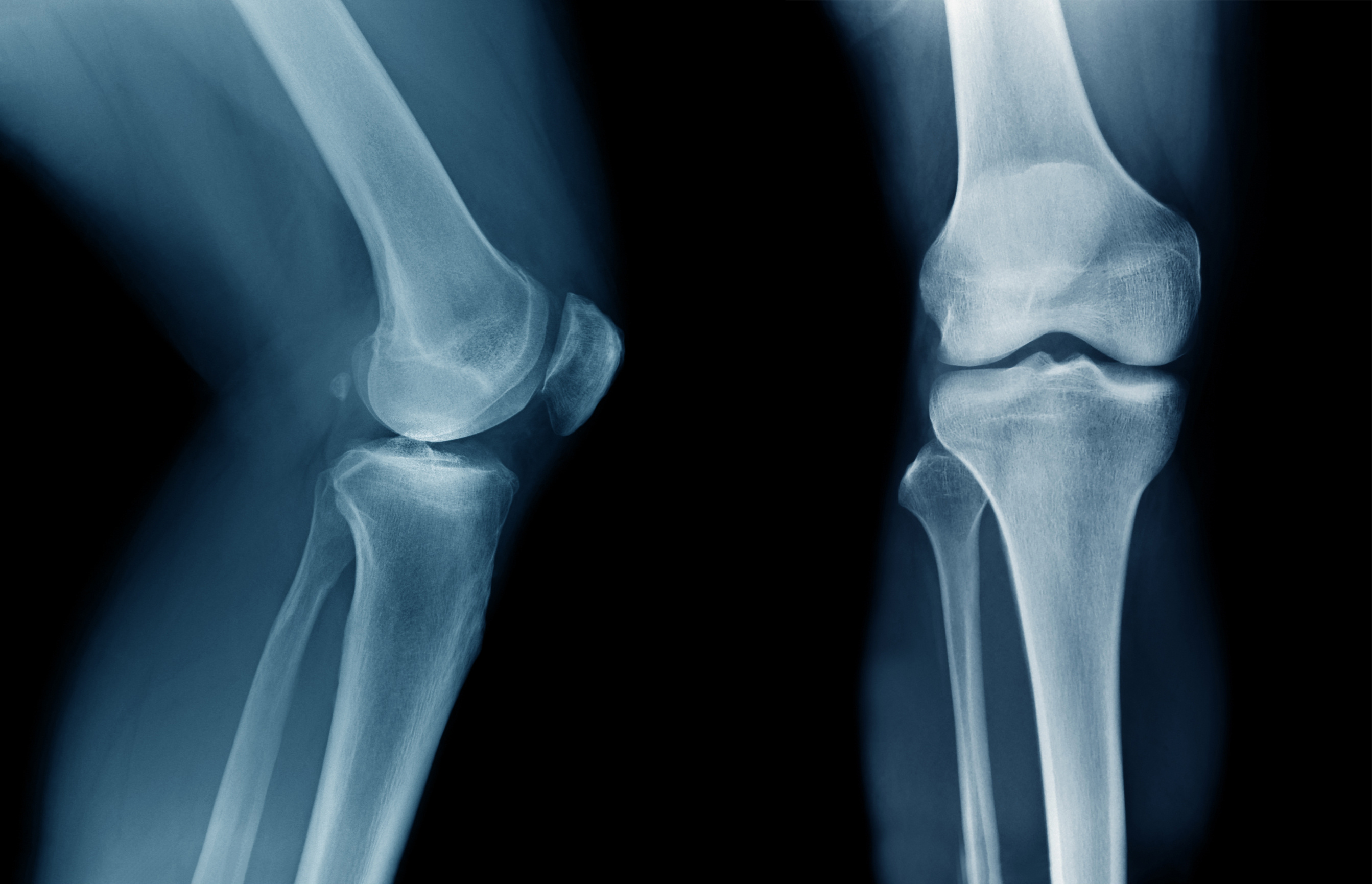
Now, however, I’m facing more serious anxiety. My knees have deteriorated to the point that I need steroid shots every six weeks and am afraid to walk. (The doctor’s words were “bone on bone.”) The steroids work for now but won’t last. Eventually, I’ll have to get both my knees replaced. And that ramps up my anxiety to new levels.

Today, I stumbled on the stairs and my left knee almost gave out. My right knee took up the slack, but I envisioned myself lying in a heap at the bottom of the stairs. Since then, my left knee has been twinging, and I’m doubting its ability to hold up until the next round of steroids.

The orthopedist says I could need the knee replacements anytime from six weeks to six years from now. So, of course, I’m anxious that it will be sooner rather than later. I’m catastrophizing, envisioning weeks lying immobile on the couch, taking pain pills, and unable to care for myself. I understand that the doctor said it might not happen for years, but I’m reacting as if it will be next month.

To me, this is Big Life Stuff, and not just because it’s a major operation (two actually, one for each knee). I fear losing control of my body. I worry that knee replacement won’t help. I anticipate going downhill rather than improving. It’s not that I don’t trust my doctors. I’m just consumed by anxiety. I’m looking at ads for mobility scooters and fold-out chair-beds for my study. I can’t envision a future in which things will be any better.

I’m being crippled with anxiety about being crippled. And no amount of reassurance, education, or time is lessening it.

The Overwhelming Problem

screaming (Uma painting)It’s been said that time is nature’s way of keeping one damn thing after another from being every damn thing all at once. I know that taking things one at a time—eating the elephant one bite at a time—is a sound idea.

However, every now and then the damn things gang up on you. The elephant is starting to go bad and you have to eat all you can right away – to use a disgusting metaphor that I will not take any further. (You’re welcome.)

Last month was one of those months. They happen every so often. But if they happen very often, I tend to get overwhelmed. And when I get overwhelmed for too long, my brain breaks. I have a meltdown, or I decompensate, or whatever the proper psychiatric term is. In practical terms, it means that I’m severely depressed and non-functional, for longer than usual. Days. Weeks. Months. Even years.

The things that overwhelm me are quite predictable – financial difficulties, health problems, relationship glitches, and free-floating anxiety of all sorts, either my own or my loved one’s. I know that these are situations that cause difficulty for everyone, but to a person with bipolar disorder, they can seemor even be—insurmountable. Especially when they cluster and refuse to go away.

Over the years I have become good (or at least better) at recognizing when I am about to be overwhelmed. I know the symptoms—the whirling thoughts, the jumping-out-of-my-skin feeling, the insomnia, the inability to concentrate, and the feeling that doom or disaster is impending.

There is little I can do to stave off these feelings. But I know I have to. I have to keep functioning at some level, higher or lower, to maintain the things that I want to have – productive work, a loving relationship, a nice house, caring friends, and so forth. At the time of my last major breakdown, I came uncomfortably close to losing much of that.

I try my usual remedies for anxiety, of course. I distract myself. I color. I watch mindless TV. I play stupid clicky games on the computer. I turn off my phone. But if the anxiety builds up too much, if the feared disaster is real and really is impending, none of these works. The anxiety shreds my last nerve, and the depression starts to settle in. I isolate. I stay in bed. One task at a time, I stop being able to function.

I have taken one step that has helped, however. An anti-anxiety pill is one of my daily medications—one in the morning and one at night. A few years ago, as the stress was building and approaching overwhelming, I asked my psychiatrist if I could have permission to take one more a day if I needed it.

He agreed.

I have not needed to take the extra pill every day. Sometimes I take one in the mid-afternoon if I start feeling jumpy, twitchy, or panicky. Sometimes I take one at night if I haven’t gotten to sleep within 2 – 3 hours after taking my regular nighttime pills. I know it sounds strange that a depressant helps me stave off depression, but my diagnosis is actually bipolar disorder and anxiety disorder. The med catches me at the point where the one starts to turn into the other.

I’m glad my psychiatrist trusted me not to abuse what I consider a privilege as well as a necessity. By the time I made this request, of course, we had been working together for a number of years and had built up a certain trust. I think there have been only a couple of times when I have had to take two extra pills in a day—one in the afternoon and an additional one at night. And both times, I felt guilty about it and made sure I didn’t make it a habit.

I don’t want to start gobbling pills at the least sign of difficulty. All I want is to be able to eat my elephant in peace and in pieces.

You May Be Bipolar

If you take three different meds at night and two more in the morning…you may be bipolar.

If your therapist is on your speed dial…you may be bipolar.

If you know the difference between rapid cycling and ultra-rapid cycling…you may be bipolar.

If you have depression clothes and mania clothes…you may be bipolar.

If you’ve stayed in bed for three days and not gone to bed for three days…you may be bipolar.

If your significant other is also your emotional support animal…you may be bipolar.

If all your Facebook friends have psych diagnoses…you may be bipolar.

If your refrigerator door has 40 affirmations on it…you may be bipolar.

If you know who Gabe Howard is…you may be bipolar.

If you have a semicolon tattoo…you may be bipolar.

If you’ve ever watched a show with a bipolar character and said to yourself, “No, that’s not it”…you may be bipolar.

If Carrie Fisher is one of your heroes and you call her “Space Mom”…you may be bipolar.

If you’ve gone through a dozen medications trying to find one that works…you may be bipolar.

If you’ve ever felt depressed and jazzed at the same time…you may be bipolar.

If taking a shower is a major event…you may be bipolar.

If you keep a box of Cocoa Puffs beside your bed…you may be bipolar.

If you’ve had a yearly raise and spent it in a month…you may be bipolar.

If all these statements apply to you…you’re DEFINITELY bipolar.

Sensory Overload

I know that sensory overload can be a problem for people on the autism spectrum. Too much noise, uncomfortable touch, and assaults on the other senses can affect them negatively.

I discovered this firsthand when my best friend, Robbin, and her ten-year-old daughter, Kelly, visited my house. My husband collects clocks, and the sound of all the ticking bothered the young lady. Then the clocks started to chime. They were not synchronized, and they sounded off one after the other, sometimes overlapping. It was noon. Kelly was visibly distressed by the sound, and they left soon after.

I’ve had some indication that, though I’m not on the spectrum, I’m sensitive to noise as well. When Kelly was six, I brought Robbin a fluffy black-and-white kitten that she had admired. The squealing noises the little girl made cut right through me. I looked over at Robbin, who just shrugged.

It turned out that I’m particularly sensitive to the high-pitched sounds of children laughing and shouting. I learned to avoid Chuck-E-Cheese and Cici’s pizza—basically, any place with a ball pit. High-pitched women’s voices like Judy Holliday’s in Born Innocent bother me. It’s one of my husband’s favorite movies, but I can’t stand to watch it with him. Loud voices are a problem, too. If I’m in a room where people are shouting at each other, I make an excuse to leave until they settle down.

Much more typical is my aversion to two or more sounds. TV and talking, for example. If my husband talks to me while the TV is on, I can’t make out either one, which is particularly difficult when what he’s saying is, “What did that guy say?” And if I’m doing something on the computer, I’m completely lost. I’d be lost at a cocktail party, too, so it’s lucky we’re never invited to them.

WebMD has this to say about sensory overload: “Sensory overload and anxiety are mental health conditions that are deeply related to one another. When a person feels anxious or already overwhelmed, they may be more prone to experiencing sensory overload in certain situations. Likewise, experiencing sensory overload can make you feel a sense of anxiety.” They also say, in addition to autism, that PTSD, ADHD, PTSD, Generalized Anxiety Disorder, and Tourette Syndrome are mental conditions associated with sensory overload. They recommend anti-anxiety or antidepressant meds, self-care, therapy, mindfulness, and meditation as ways to address the problem. Avoiding triggers is another recommendation, and that’s the one I use (see not going to Chuck-E-Cheese, above). That’s the one that seems to have the most beneficial effects.

PsychCentral lists the stimuli that can lead to sensory overload:

  • bright lights, chaotic movement, or a cluttered environment
  • rough, tight, or itchy clothes
  • loud noises, voices, or music
  • scents including chemicals and perfumes
  • foods with strong flavors
  • hot or cold temperatures

And they list the possible effects:

  • overwhelm that makes you want to either shut down or have a meltdown
  • irritation or rage
  • tension in your face, neck, shoulders, or back
  • having either too many thoughts in your mind, or none at all
  • exhaustion
  • dissociation, or being separated from yourself and your surroundings

They add: “It’s possible for sensory overload to cause a panic attack. This could be because much overlap exists between parts of the brain involved with the panic response and those responsible for sensory processing.”

Not being a neuroscientist of any stripe, I can’t speak to the truth of that, but it also seems to me that a panic attack can lead to sensory overload. My other notable experience with sensory overload was having an anxiety attack in the grocery store, where I was overwhelmed by the visual noise of the bright colors on the cereal boxes. As I recall, I took an anti-anxiety pill, went home, and lay down. I don’t remember if I bought the cereal or not.

Running Out of Meds

Isolated Empty Pill BottlesRunning out of your medications is scary.

I know. It’s happened to me several times.

Sometimes it was a matter of supply. My usual pharmacy ran out of a sleep aid and wasn’t going to get any more until after the weekend. Fortunately, they recommended a mom-and-pop pharmacy (yes, such things do still exist) just down the street and helped me transfer my prescription there.

Another time the problem was the prescription. I ran out of an anti-anxiety med, but when I called in for a refill, I was told that it wasn’t time for one. When I looked at the bottle more closely, I discovered that they had given me 60 pills, as if I were taking two a day, instead of the three a day actually prescribed. (I was changing doctors about that time and there was miscommunication.)

Yet another time, it was money. I ran out of an antipsychotic and was told that even with insurance, it would cost me $800 for a month’s supply because of the out-of-pocket required minimum. I spent a couple of days arguing with the insurance company, researching solutions online, and making sure a local pharmacy would take the coupon I found, which lowered the price to under $200. That was still a hefty chunk of our budget, but we managed to scrape it together until the drug went generic a couple of months later. (I also had to stand in line while the pharmacy called the coupon people and the insurance company to see how to enter it all in their system.)

And of course there are the everyday screw-ups. My husband forgot to pick up my scrips (one time he remembered to pick them up but left the bag in the car and drove 500 miles away), or he forgot which pharmacy they were at, or he didn’t hear me say that I was completely out, or the pharmacy didn’t open until 10:00, or they had my pills in two different bags and only gave us one. There are lots of ways it can happen.

Once I even took my entire supply on a weekend getaway and left them in a drawer at the bed-and-breakfast. I know. Stupid.

Most of the time running out of drugs isn’t a crisis. It just feels like one.

Of course, there are exceptions. It is a crisis if you run out of certain anti-anxiety drugs and you don’t get any for several days. You can have withdrawal – actual, physical as well as psychological withdrawal. I’ve heard that benzo withdrawal can be as bad as opiates. That’s one reason it’s important to replace your meds as soon as possible.

A lot of psychotropic medications build up to a therapeutic level in your bloodstream, so a day or two without them probably won’t even be noticeable. When you start taking them again, your levels will even out.

But even if the med you run out of is one that you can easily tolerate a day or two without, you may have some psychological effects. When I run out of a prescription, even for a short time, I become twitchy and agitated – my hypomania kicks in and comes out as anxiety, the way it usually does for me. I fear crashing back into that deadly unmedicated space where all is misery and despair. Intellectually, I know that likely won’t happen. But it sure feels like it will. This is one way my none-too-stable mind plays tricks on me.

It’s like the opposite of the placebo effect – believing that a sugar pill will help you and experiencing gains until you learn that the pill is fake. In my version, I believe that not taking the pill will cause relapse, even though it actually won’t.

Whatever else you feel or do, DO NOT use missing a couple of pills as an opportunity to go off your meds entirely. This is another lie your brain can tell you: “You’re doing fine without it. Why keep taking it?” It may not in the short term, but you will feel the effects of not taking your meds, and then there you are, back in the Pit of Despair or rocketing to the skies. It won’t be pretty.

For me and a lot of others like me, the key to effective medication is consistency. Once you find the right “cocktail,” stick with it. But if you run out, don’t panic. Keep Calm & Get a Refill.

Grippy Socks and Sour Candy

My husband is a great help when I write my blogs. He keeps an eye out for news stories that deal with mental health in some fashion. So when he saw an article on new words related to the topic, he made sure I saw it. Then he asked me how I felt about it.

The story was about new language that young people were using to describe various mental health concepts.

First and foremost among them was “grippy socks vacay”—a reference to the footwear issued to people who have been committed, voluntarily or otherwise, to psych wards. But “vacay” is short for “vacation.” I can just picture a conversation using it: “Where’s Janet been?” “Oh, she’s been on a grippy socks vacay.” Or “I’m stressed. It’s time I went on a grippy socks vacay.” It seems unlikely that the people who say these things are always referring to an actual stay in a psych ward.

I was more than slightly appalled. It’s true that grippy socks evoke the image of a hospital stay. But grippy socks are a part of any stay in any department of a hospital, not just psych wards. And such a stay is hardly a vacation. It’s likely, I think, that people use this to mean something like “relaxing getaway” or “time to clear my head.” An actual stay in a psych ward, however, is not a relaxing getaway. It’s intense. It’s not supposed to be relaxing. And while it does provide time to clear one’s head, that’s still far from accurate. Medication, group therapy, and individual therapy may eventually clear one’s head or at least change one’s perspective, but it’s hardly just a time away from work and day-to-day stresses.

The article went on to discuss whether the phrase increased or decreased stigma. Some said one, some the other. I think it perpetuates stigma. It implies that someone who is in a psych ward is there to have a good time. “Grippy socks vacay” is demeaning when the hard work that mental patients must accomplish is considered.

If it’s used as a euphemism for an actual psych ward stay, it’s insensitive at the least. If it just means time off from daily cares, it’s still inaccurate and discounts the real experience. Those things can’t be good for reducing stigma.

Now, my friends and I have been known to use irreverent language to refer to our conditions. Robbin and I used to say on occasion that we needed a “check-up from the neck up.” We used it just between the two of us (well, I’ve also used it with my husband) to indicate that we needed to see our therapists. But I don’t see it as being demeaning, especially since we never used it in the context of anything but our own disorders, not a general description of someone the general populace would slangily describe as “crazy.” If we had said of any popular figure that they needed a check-up from the neck up, that would have been something else. But we didn’t.

Of course, you may disagree with this and I’d love to hear from you regarding your opinion.

The other article my husband shared with me was one that indicated that it was a trend on TikTok to use sour candy to ward off anxiety. The article even said that experts backed up the theory.

The idea is that the intense sensation of sourness distracts the brain from the cause of the anxiety. It’s a distraction technique, like snapping a rubber band on your wrist to take your mind away from unwanted thoughts. One expert interviewed for the article said, “Panic ensues when our amygdala triggers the flight or fight response. One way to dampen our amygdala’s response and mitigate panic is by turning our attention to the present moment through our senses: taste, smell, touch, sight, and hearing.” Mindfulness through candy, I guess, would be a way to describe it. The experts also advise grounding yourself with other sensations such as the scent of essential oils.

Other experts noted that sour candy is a kind of crutch and not a long-term solution. One called it “maladaptive.” Sensory distractions, they said, were most effective in conjunction with acceptance rather than avoidance.

What’s the takeaway from this? Aside from the potential boost in sales for Jolly Ranchers, I mean. I think it’s a good reminder that there are ways to short-circuit anxiety and panic. And for people who only experience occasional, momentary anxiety, it’s probably a good thing. But for someone with an actual anxiety or panic disorder, it’s likely to be only one tool they use — and a minor one, at that.

What have you been reading recently about mental health trends? I’d love for you to share that, too.