Bipolar 2 From Inside and Out

Posts tagged ‘antidepressants’

Loneliness Reigns

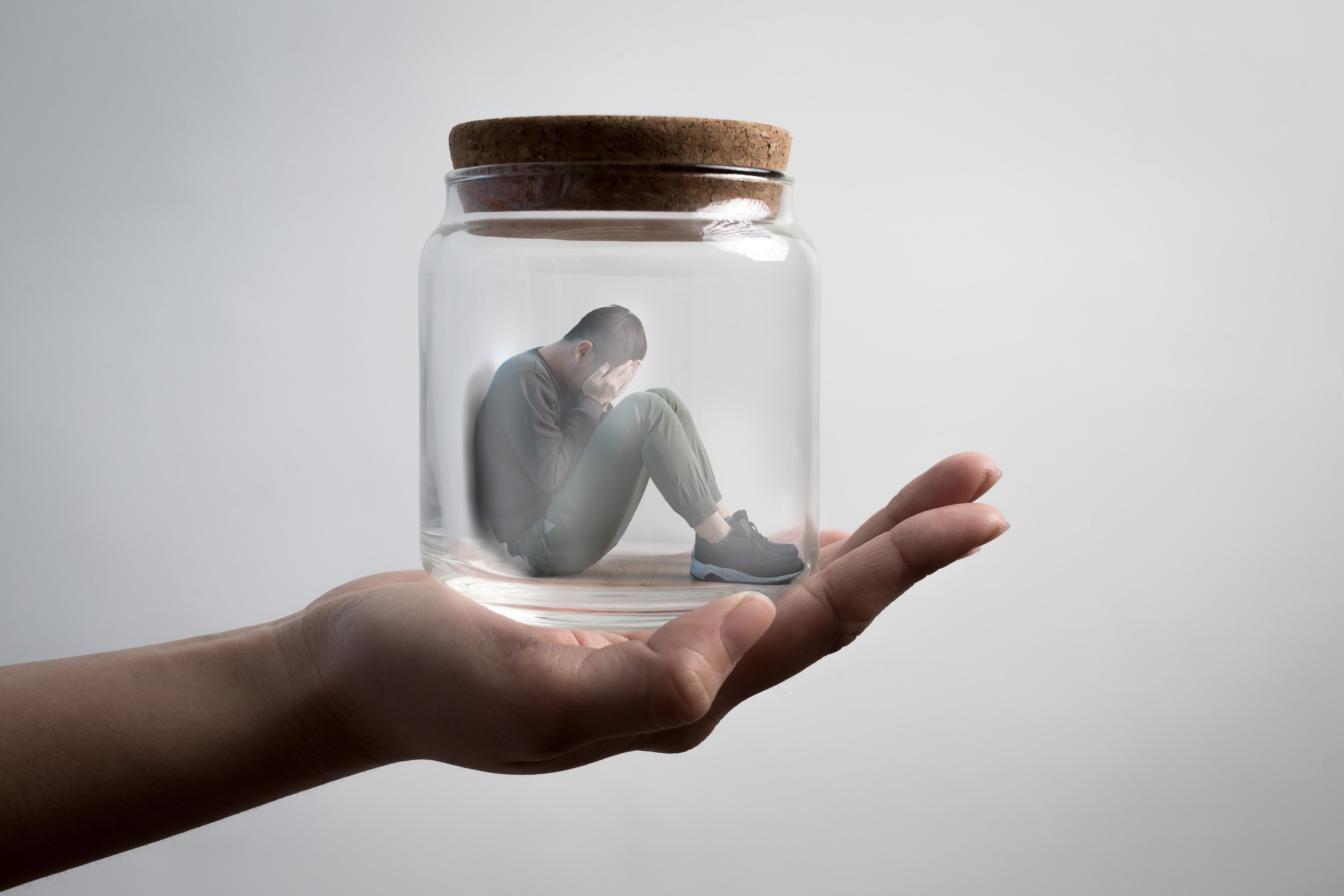
For some of us, those with bipolar disorder, depression, agoraphobia, and anxiety, it’s like the COVID restrictions were never lifted. We remain at home as if we were still sheltering in place. We’ve lost touch with many of the people in our lives. The thin threads of social media aren’t enough to provide solid connections, though we’ve had practice during the pandemic.

There’s also the “reaching out” problem. We’re perpetually advised to reach out to others when we’re lonely or having difficulties. But of course, reaching out is too much to expect for many. Often, we’re not even able to make a connection when someone reaches in. Whether it’s a matter of not believing that we’re really worth someone else’s time or being submerged in misery, the loneliness of depression or anxiety does not allow us to respond.

Lately, though, there have been a lot of headlines and articles saying that America in general is experiencing an epidemic of loneliness. I don’t know about you, but for me, loneliness is nothing new. Depression does that to a person, even if loneliness is not one of the diagnostic criteria in the DSM.

Of course, the articles point out that the loneliness epidemic coincided with the COVID epidemic. People were sheltering in place, many working from home. We couldn’t get out and see our friends or go to school, church, or family gatherings. We missed weddings, birthdays, reunions, funerals. We missed seeing coworkers and friends. We even missed chatting with the people we encountered in our daily lives—nail technicians, servers, sales clerks, plumbers, and all the other people you don’t even think about missing until you miss them. Even our doctors and therapists took care of us online instead of in person.

But that’s largely over. What’s driving widespread loneliness now? Apparently, it’s a chicken-and-egg dilemma. Does loneliness come first? Do psychiatric illnesses? Recent research “suggests a correlation between loneliness and depressive symptoms, with one potentially leading to the other, although the causal direction remains unclear.”

The Journal of Clinical and Diagnostic Research has published a study that says there are three kinds of loneliness: situational, developmental, and internal. Situational loneliness involves environmental factors such as interpersonal conflicts, accidents, and disasters. Developmental loneliness appears with conditions including physical and psychological disabilities. Internal loneliness is associated with “personality factors, locus of control, mental distress, low self-esteem, guilt feeling, and poor coping strategies with situations.” Two other kinds of loneliness have been reported as well: emotional and social loneliness. It seems to me that those are the two that are behind the “loneliness epidemic” that headlines tout. Among the psychiatric and other disorders they say are associated with loneliness are depression, suicidal ideation, personality disorders as well as bereavement, Alzheimer’s, and physical illnesses.

The research is all well and good, but what’s to be done? The usual remedies don’t work very well. The report cited above recommends developing social skills, recognizing maladaptive social cognition, giving social support, and developing opportunities for social interaction. Not much help there. The last two rely on other people to provide intervention, which is obviously uncontrollable by the person experiencing loneliness. And the first two require therapy of one sort or another.

At any rate, the continued advice of the general public remains, “Cheer up,” “Get out more,” and variations on “Get over it,” as if the loneliness were the sufferer’s fault. Antidepressants may help but they don’t attack the root cause of social isolation. There are still social media, which help me a lot. But I interact with various people and groups, which not everyone is able to do. My husband gets me out of the house at times, usually with the lure of a restaurant meal. And that primarily connects me with the person I’m already most in contact with. He’s my social support. I have a high school reunion coming up, with a number of different events scheduled, but so far I’ve only talked myself into the most casual one.

Am I lonely? At times I am. But my loneliness is not the overwhelming sort that attacks many people. There are some ways to ameliorate the condition, but most of them require getting out of the house, which many lonely people are simply unable to do; having good friends who reach in (assuming that we have the wherewithal to reach back; and the long, slow slog of antidepressants and therapy, which may or may not “cure” the problem. Advertisements are beginning to address the problem of loneliness with advice to reach in and talk to friends and acquaintances who aren’t doing well, those these are minimal compared to all the ads for the latest drugs.

Obviously, there are other aspects of brain illnesses that the experts are working on more vigorously. But I, for one, hope that more research and interventions can be devoted to solving the problem, not just defining it.

Stone Cold Depression

I saw an ad online recently for a crystal antidepressant necklace. It was basically a crystal point hung from a chain.  The crystal was pink in color, which meant it was either rose quartz or pretending to be.

When I looked at the website, there were other colors available, such as clear (quartz), turquoise (turquoise), purple (amethyst), and black (maybe onyx?). Of course, there was always the possibility that these were not naturally occurring colors and that every crystal was plain quartz died some other hue. The turquoise certainly looked dyed to enhance its turquoise-ness, and isn’t a crystal anyway. I also had my doubts about the black one.

In point of fact, I had my doubts about all of them. Not that they weren’t authentic crystals, but that they would work. I’ll be honest here. I don’t believe in crystals as channels of psychic power or healing or whatever. I think they’re beautiful and make great jewelry, though. I have quite a collection of necklaces and earrings made from semi-precious stones, some of which are crystals. I feel better when I wear them, but that’s because I actually have taken the time to accessorize before I go out.

I think that, if crystals have any effect at all, it is the placebo effect, which I’m not discounting. That at least is a real thing. But the ad for the depression crystals got me thinking. If the 12 or so widely varied stones that were featured in the ad are all good for depression, what’s the point? I thought at least specific crystals were supposed to be good for different things.

So I researched some of the advertised crystals to see what effects they were supposed to have and how they might relate to mental health. Here are some of the associations I found:

rose quartz – emotional healing, releasing toxic emotions

turquoise – spiritual expansion, a path to your vibrationally highest self

onyx – inner strength, balance, confidence, protection

amethyst – release of addiction, relaxing energy, sound sleep

I’ll admit right off that I don’t know what “a path to your vibrationally highest self” means, but then again, turquoise is not one of my favorite stones. I have worn rose quartz, amethyst, and occasionally onyx, but felt nothing in particular regarding my emotions, confidence, or sleep (though, to be fair, I never have worn amethysts to bed). Amethysts for relief of addictions most likely goes back to medieval days, when they were thought to counteract poisons.

Then I checked another site, which connected assorted crystals and stones specifically with mental health issues. Here the results were more specific and more focused. Rose quartz was again associated with emotional turmoil, which is pretty close to releasing toxic emotions. Blue lace agate, a very pretty stone, was associated with journaling, which was both different and interesting.

Even more interesting to me were the purported beneficial effects of amber, unakite, tiger’s eye, and smoky quartz. According to this website, amber, perhaps my favorite semiprecious gem (though not technically a crystal), is particularly effective for seasonal affective disorder (SAD). Unakite, a little-known stone that mixes gray-green and dusky pink colors, is said to be beneficial for anxiety and negative thoughts, both of which I, of course, have in abundance.

Smoky quartz appears to be the recommended crystal for depression and tiger eye for mood swings. Both should therefore help with my bipolar disorder. (I don’t remember whether smoky quartz was among the crystals and stones offered in the antidepression crystal ad, but according to this website, it should have been.) I used to wear a ring of tiger’s eye, but it did nothing to ward off bipolar.

I can’t see any scientific basis for crystals having any sort of effect on a person’s emotional states. But I suppose that if these stones bring you some solace or seem to encourage your healing, I shouldn’t put them (or you) down. I don’t happen to believe in their alleged powers myself, but I also know that affirmations, CBT, and positive thinking don’t work for me, as far as my mental health goes, while they do work for other people.

But I do think it is disingenuous at best and fraudulent at worst for that particular website to advertise that these varied stones and crystals all have antidepressant effects. Even those who believe in the power of crystals believe that different ones have different effects.

Personally, I think that a black crystal would do more to reinforce depression than to ward it off. I know someone will tell me if they think I’m wrong.


Self-Medicating: Bipolar and Booze

Self-medicating – using alcohol or drugs to dull the emotional pain of a mood disorder – is pretty common among people with bipolar and other mental disorders, particularly the undiagnosed.

It’s a dangerous thing to do. People with major depression are said to be twice as likely to develop a drinking problem if they self-medicate with alcohol a lot. Then there’s the possible interaction between alcohol or drugs with a person’s prescribed meds.

To be perfectly honest, there were times in my life when I self-medicated with wine, beer, or liquor. During one particularly dark time, when I had been prescribed benzos for a physical ailment, that was thrown into the mix. And, again with the honesty, I still sometimes have wine or beer with dinner, though I know I shouldn’t. I could say that I know how much I can drink without it affecting my reaction to my meds, but the fact is that I just shouldn’t.

Recently, however, a study was published in the journal Nature Communications which said that “getting drunk causes the same molecular changes in the brain as taking rapid antidepressants.” Here are the basics.

It was a study done on mice, which means it’s a long way yet from applying to human beings. The set-up was this: Mice were given alcohol, then placed in a container of water. Being passive and willing to drown was taken as an indication that the hapless creature was depressed. Sure enough, the mice that were given alcohol proved to be more active and energetic in trying to swim, which was taken as a sign of not being depressed.

The study did not end happily for any of the mice, however. Their brains were examined to determine how the alcohol achieved its antidepressant effects.  The scientists say that changes in the boozy mouse brains showed that alcohol has effects on neurotransmitters that were similar to the way antidepressants affect the brain. That’s a long way from saying that alcohol is good for the depressed, though.

The premise of the experiment sounds a little shaky to me. I mean, assuming the swimming mice to be less depressed than the drowning mice strikes me as just a wee bit anthropomorphic. Plus, the mice seem to have been situationally depressed (by being left to drown), rather than chronically, as in clinical depression. However, the brain study seems more interesting to me. After all, it compared the effects of alcohol directly with the effects that antidepressants have on neurotransmitters and said that the former “mimicked” the latter.

What’s the takeaway from all this? Well, first of all, it’s hardly blanket permission for the depressed to go out and indulge indiscriminately. Further experiments are needed, presumably ones that will work their way up the animal kingdom until they come to depressed humans, though one hopes that they are not thrown into water to sink or swim.

If those further studies go the same way as the mouse study, I rather imagine the result will be something like the medical advice that you can take a glass of red wine to stave off heart disease – not a blanket approval, but the use of a potentially hazardous thing to ward off a potentially worse thing. Of course, that will not apply to alcoholics or others who must avoid the substance altogether for any of a variety of reasons.

I also note that the study focused on the effects of alcohol in relation to depression only. The manic phase of bipolar disorder was not part of the study and drinking while manic is well known to be a really bad, though often occurring, thing. Of course the same can be said of drinking and depression.

For now, the best advice is simply not to drink if you are depressed or bipolar. Don’t use me as an example. I’m not sharing this to encourage anyone to indulge in potentially destructive, even lethal, behavior. As always, Your Mileage May Vary, especially when compared with that of drunken, depressed, or dead mice. But drinking is still far from a good idea for the bipolar.  And don’t mix it with benzos either.  Trust me on this. It’s a slippery slope.