Bipolar 2 From Inside and Out

Posts tagged ‘triggers’

Language Lost

There are many words that are specific to psychology, including diagnoses, symptoms, and therapeutic techniques. Many of those terms, however, have worked their way into general conversation. Some think this is a good thing as it makes society more aware of the language we as psychiatric patients use. Others object to this use of language. They see it as diluting the meaning of the terms.

Two of the most common words that have made this shift are bipolar and OCD. Instead of diagnoses, they’re often used as descriptions of people or things that are thought to share the characteristics of the disorders. “The weather is bipolar this month.” “Beth’s house is really tidy. She’s so OCD.” These usages are, of course, inaccurate. Weather can’t have a psychiatric disorder, and a neat house is not enough to diagnose a person with OCD.

The thing is, people aren’t using them literally. Weather being bipolar is a metaphor. It conveys the idea that the weather is changeable, seemingly randomly. Calling weather bipolar expresses the concept more vividly, which is probably why it has become so popular. Calling someone OCD is an exaggeration used for effect. They’re saying that Beth is not just neat, but excessively neat. The people who use these expressions don’t have any real idea of what the terms mean. They’ve just heard them used and have only a vague, superficial idea of what they mean.

Spoons is another metaphor gone astray. Originally, it was used to describe the depletion of energy that someone with an “invisible illness” feels when they’re required to do more than they’re capable of on any given day. Spoons are a variable commodity. The neurodivergent or physically challenged never know how many “spoons” they will have at the beginning of a day and when they’ll run out of them. It’s a very powerful metaphor which makes it easier to understand the concept.

Nowadays, however, it’s used by people who don’t face these challenges to mean simply “I’m tired” or “I’m done for the day.” But these people don’t have a widely varying amount of energy at the start of each day. Oh, they may be more or less tired depending on the quantity and quality of their sleep. But they don’t begin with so few spoons that getting out of bed requires an enormous expenditure of spoons that depletes them for the rest of the day.

The word triggers is not a metaphor, but a word that has weakened over time. In psychological terms, a trigger is something that brings back vivid memories and sensations of a traumatic incident. The person who is triggered cannot control their reactions and will experience the event as if it were actually occurring in real-time. In its new meaning, a trigger is anything that a person doesn’t like or causes them to be uncomfortable. This discomfort is minor and fleeting, and does not cause sensory overload. People who use “triggered” this way betray a deep misunderstanding of the term and often make fun of the concept altogether.

These and other terms like neurodivergent and spectrum are also frequently misunderstood or misused. Some are still being defined and arguments about what they really mean often occur.

People who use the words in their specific, technical sense sometimes speak of “reclaiming” them. They are offended by the perceived misuse of the various terms and want to restrict them to their original, technical meanings. They want other people to stop using them in their new senses. They feel the new usage cheapens the words.

The thing is, language doesn’t work that way. Once a word or phrase has “escaped into the wild” and is being used with a different shade of meaning, there’s no getting it back. No matter how much you try to educate people about the “real” meaning of the word, most people will not even realize they are using it “wrong” and won’t stop using it in the new sense. In fact, the first dictionary definition of bipolar is “having or relating to two poles or extremities,” not the disorder. The non-psychiatric sense of OCD as an adjective hasn’t made it to the dictionary yet, but it’s only a matter of time now.

Personally, I can think of things a lot more heinous than describing me and the weather the same way. Is it ignorant? Yes. Is it insulting? Probably. I just think it’s a waste of time correcting one person at a time or trying to educate the masses about it. Millions of people are still going to do it, and there are more important things to educate them about.
Surprise!

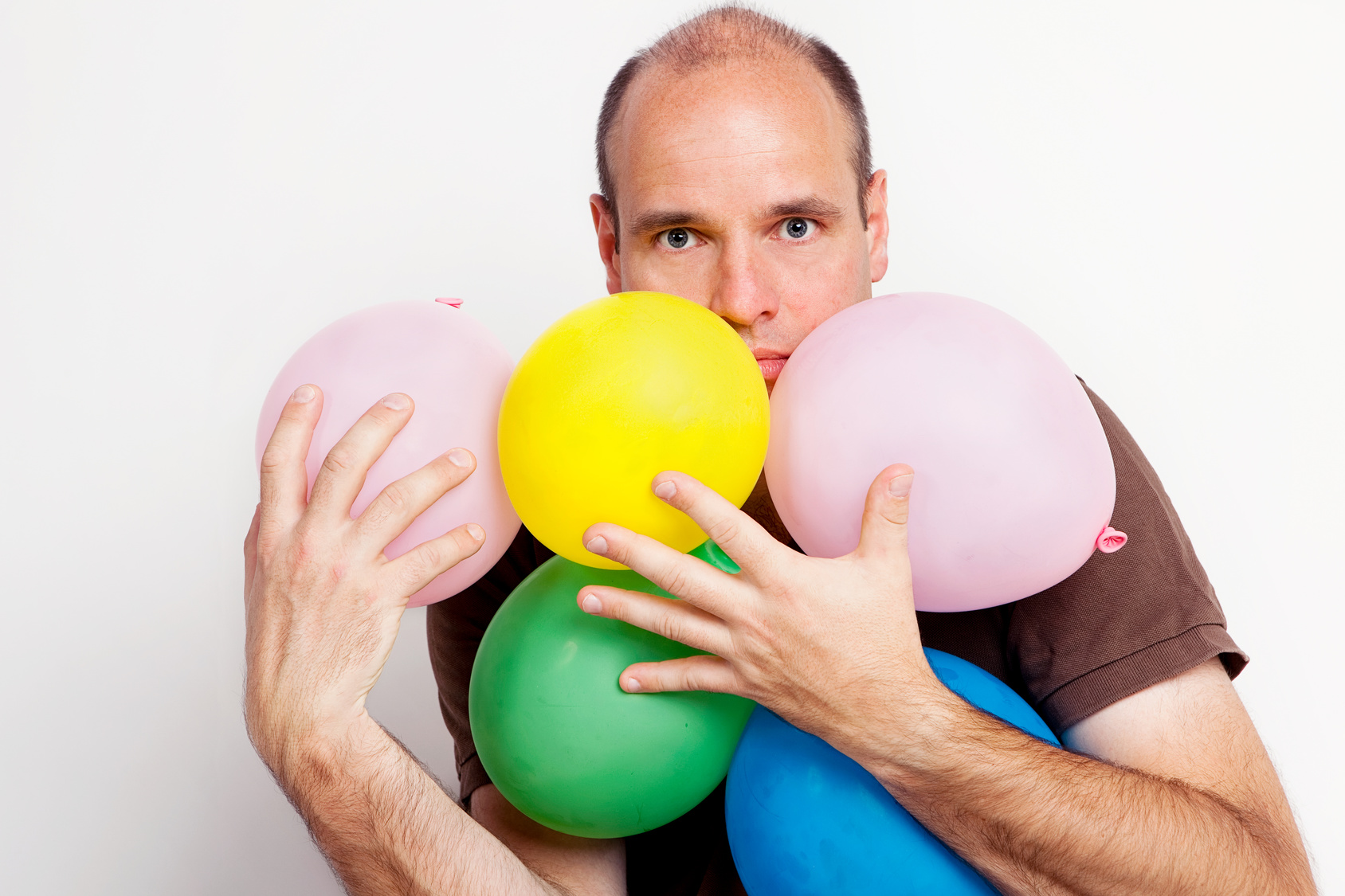
Surprise parties are fun for everyone, right?

Wrong!

While many people enjoy the surprise element (probably the guests do more than the honoree), even neurotypical people can shy away from the practice. Coming home to a darkened house, only to be greeted by bright lights and loud noise, can be an alarming experience.

For a person with bipolar depression, autism spectrum disorder, PTSD, or other mental conditions, it can be a nightmare.

My husband once decided to throw me a small surprise party. We and another couple were cleaning up an old house while a few friends gathered back at home.

One of the people had actively discouraged Dan from having the party. Robert had experienced depression and Dissociative Identity Disorder (DID), and knew how difficult such an event would be for him. He also knew about my depression and some of the incidents associated with birthday parties in my mind.

For instance, when I was a young teen, my “best friend” and I were supervising a party of younger children. During the game of Pin-the-Tail-on-the-Donkey, while I was blindfolded, she kicked me in the ass. Literally. In front of all the kids.

It was the occasion of my first major meltdown. For years afterward, I would not even admit to having a birthday, much less let anyone celebrate it.

Robert had experienced similar traumas involving groups of children, humiliation, and abuse. He was not able to cope with surprise parties and thought I might freak out as well.

Fortunately, decades had gone by since my traumatic party experience. I had been diagnosed and properly medicated and counseled about my issues. Dan knew me well enough to realize that I could tolerate a small, low-key surprise party. And so I did.

Still, Robert was right to be concerned.

Common events at surprise parties are triggers for many people. My friend Joanie has panic attacks when there’s lightning. Would flash photography set her off? I don’t know, but I don’t want to be the one who finds out. If the party is held in a restaurant, a person who hates being singled out in a crowd of strangers may have problems. People hiding in one’s home could cause flashbacks of a home invasion. My startle reflex is hypersensitive and could easily be triggered by sudden, unexpected shouts of “Happy birthday!”

Even opening presents in front of others can be difficult if one is weak in social skills, appropriate facial expressions, or spontaneous conversation.

So how do you give a surprise party for someone with certain types of mental illness?

Don’t.

If you think you must, ask the person what kind of party he or she would prefer, and abide by those wishes. You can suggest a surprise party, with the time and place being the surprises, but again, abide by the person’s wishes.

Prepare a small, low-key surprise rather than a party. Give a present a day or two before the actual date. Pack a slice of cake in the person’s lunch. Or take the person out to lunch. (Warn the restaurant personnel not to march around singing and waving balloons, if you mention that it’s a birthday lunch at all.)

Do not have party games, unless they are non-threatening ones such as mad-libs or trivia. Forget ones involving physical contact like Twister or ones that involve sensory deprivation like Blind Man’s Bluff.

You may wish to avoid serving alcohol, especially if the honoree is on anti-anxiety medications. Booze-fueled parties tend to become loud and rowdy.

Make it short. Personally, spending an hour with a group of four or more, even if they are all my friends, is about all I can take. And then I want a lie-down afterward.

Personally, I could live my life happily without ever having another surprise party thrown for me (even though the one Dan threw would have to be called a success). Nor will I be upset if I never get invited to another surprise party. I’ll be too busy worrying what it might be doing to the honoree to enjoy myself.


Trigger Warning: Trigger Warnings

What is a trigger warning?

Let’s start with a more basic question. What is a trigger?

Just as a literal trigger activates a gun, a figurative trigger activates your mental disorder. It’s a stimulus that sets off either a manic or depressive phase, or a bout of PTSD.

Triggers are usually unique to the individual. What sets you off may not affect me at all.

Over the years I’ve learned what my triggers are, and so do most bipolar or PTSD sufferers. Loud noises and large crowds trigger my anxiety, which is why I could never work at a Chuck E. Cheese. My depressive phases don’t often have triggers except for bad dreams about an ex-boyfriend. Most of my depressive episodes just happen without a trigger.

Generally, one avoids triggers, because who needs more manic or depressive phases in addition to those that occur naturally, with no prompting?

A trigger warning is something else. It is a notice that someone puts at the beginning of a piece of writing to warn readers that the subject matter may be intense. Ordinarily, trigger warnings are given for major life events that have caused trauma and may cause flashbacks, severe stress  or other extreme reactions.

Some of the most common trigger warnings are for graphic depictions of rape, suicide, self harm, or physical or sexual abuse. The trigger warning says to a potential reader: If you don’t want to encounter this material, if you think it will make your illness worse, or cause you undue stress, don’t read any further.

Although we call relatively minor stimuli triggers, they usually do not require trigger warnings. If you’re going to write about having a fight with your mother, you probably don’t need to put a trigger warning on it. If your mother hit you in the face with a frying pan and sent you to the ER, you might need to place a trigger warning on your post about it.

Online, the standard form for trigger warnings is first to state, often in all caps, TRIGGER WARNING and state the type of trigger it is – TRIGGER WARNING: SELF-HARM, TRIGGER WARNING: SUICIDAL THOUGHTS, etc. To be extra sensitive, the writer leaves a number of blank spaces or a few dots before beginning to write the difficult material. This gives the reader the choice of whether to scroll down and read it or not.

Trigger warnings have become controversial, particularly in schools and colleges. Many pieces of literature and even textbooks on history or sociology discuss difficult topics that may be triggering. For example, a novel might feature a rape as a plot point, or a history text might discuss slavery.

Some people believe that a trigger warning will help a prospective reader know whether reading further will provoke a strong reaction. Other people believe that trigger warnings are a way of coddling the weak and letting students avoid challenging material that is necessary for the class.

My own opinion is that a trigger warning is like chicken soup: It won’t hurt and might help. It may mean that a student asks for an alternative reading or assignment, but it also may mean that the student simply wants to be in a safe space – not surrounded by strangers, for example – before reading the material.

People that believe trigger warnings should not be given have usually not experienced the kind of emotional breakdown that can result from unexpectedly confronting a traumatic topic. Very likely they have never even been in the presence of someone who has had such an extreme reaction.

I suppose that ideally, we could all read any material and simply brush it off if we found it troubling. Unfortunately, for those of us with mental disorders such as bipolar illness, PTSD, and anxiety disorders, this is simply not possible. A trigger warning may prevent someone from having a public meltdown and others from having to witness one.

I don’t know why that should be controversial. It seems like simple courtesy to me.